Genetic Information
Gene & Transcript Details
| ID | Status | Details |
|---|---|---|
| NM_006218.2 | Alternative | 3724 nt | 158–3364 |
| NM_006218.3 | Alternative | 9104 nt | 158–3364 |
| NM_006218.4 | MANE Select | 9259 nt | 324–3530 |
Variant Details
Clinical & Population Data
Population Frequency
gnomADClinVar
Open""
COSMIC Somatic Evidence
Open
Functional Impact & Domains
Functional Domain
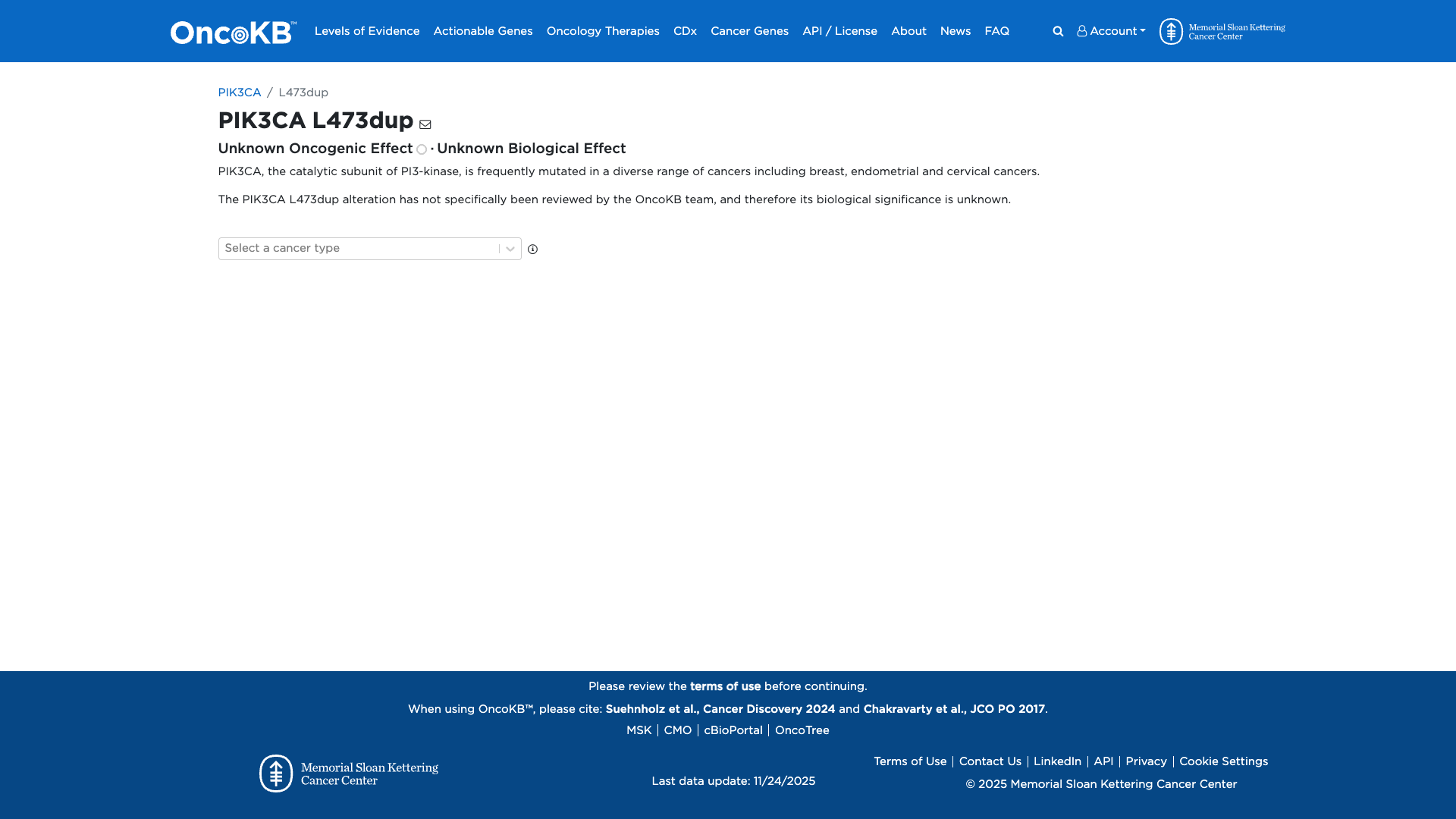
Computational Analysis
Pathogenicity Predictions
SpliceAISpliceAI Scores
Window: ±500bp| Effect Type | Score | Position |
|---|---|---|
| Acceptor Loss (AL) | 0.02 | -30 bp |
| Donor Loss (DL) | 0.0 | 33 bp |
| Acceptor Gain (AG) | 0.0 | -207 bp |
| Donor Gain (DG) | 0.01 | -99 bp |
VCEP Guidelines
Applied ACMG/AMP Criteria (VCEP Specific)
PVS1 (Not Applied)
According to standard ACMG guidelines, the rule for PVS1 is: "Null Variant (nonsense, fs, start codon, splicing +1/2, startgain, single or multi-exon deletion) in a gene where LOF is a known mechanism of disease". The evidence for this variant shows: an in-frame duplication (L473dup) that does not introduce a premature stop codon or disrupt splicing at a canonical site. Therefore, this criterion is not applied.
PS1 (Not Applied)
According to VCEP guidelines, the rule for PS1 is: "Same amino acid change as a previously established pathogenic variant regardless of nucleotide change". The evidence for this variant shows: no prior reports of a pathogenic L473dup or equivalent amino acid change at this residue. Therefore, this criterion is not applied.
PS2 (Not Applied)
According to VCEP guidelines, the rule for PS2 (Strong) is: de novo occurrence with confirmed maternity and paternity and detectable allele fraction absent in parents plus tissue comparison (Criteria 1 and 2) or (Moderate) if only Criteria 1 or 2 is met. The evidence for this variant shows: no data on parental testing or tissue allele fraction. Therefore, this criterion is not applied.
PS3 (Not Applied)
According to VCEP guidelines, the rule for PS3 is: functional assay meeting VCEP/BMVCEP quality metrics demonstrating a damaging effect. The evidence for this variant shows: no functional studies of L473dup have been performed. Therefore, this criterion is not applied.
PS4 (Not Applied)
According to VCEP guidelines, the rule for PS4 is: absent from controls (PM2) plus phenotype points ≥0.5 for Supporting up to ≥16 for Very Strong. The evidence for this variant shows: no case-level phenotype or literature reports. Therefore, this criterion is not applied.
PM1 (Not Applied)
According to VCEP guidelines, the rule for PM1 (Supporting) is: residue affecting a critical functional domain per gene‐specific Table 4. The evidence for this variant shows: L473 is not listed as a critical hotspot or functional domain in PIK3CA. Therefore, this criterion is not applied.
PM2 (Supporting)
According to VCEP guidelines, the rule for PM2 is: "Absent/rare from controls in an ethnically-matched cohort population sample (≥1)". The evidence for this variant shows: not found in gnomAD or other population databases (MAF=0%). Therefore, this criterion is applied at Supporting strength because the variant is absent from controls.
PM3 (Not Applied)
According to standard ACMG guidelines, the rule for PM3 is: detected in trans with a pathogenic variant for a recessive disorder. The evidence for this variant shows: no data on trans configuration with another pathogenic allele. Therefore, this criterion is not applied.
PM4 (Not Applied)
According to standard ACMG guidelines, the rule for PM4 is: in-frame indels or stop-loss variants in non-repeat regions that change protein length. The evidence for this variant shows: an in-frame single amino acid duplication but without evidence of pathogenic impact or localization to a repetitive region. Therefore, this criterion is not applied.
PM5 (Not Applied)
According to VCEP guidelines, the rule for PM5 is: novel missense change at a residue with a known pathogenic missense. The evidence for this variant shows: this is an in-frame duplication rather than a missense substitution at L473. Therefore, this criterion is not applied.
PM6 (Not Applied)
According to standard ACMG guidelines, the rule for PM6 is: assumed de novo without confirmation of paternity or maternity. The evidence for this variant shows: no parental or de novo data. Therefore, this criterion is not applied.
PP1 (Not Applied)
According to standard ACMG guidelines, the rule for PP1 is: co-segregation with disease in multiple affected family members. The evidence for this variant shows: no segregation data. Therefore, this criterion is not applied.
PP2 (Not Applied)
According to VCEP guidelines, the rule for PP2 is: missense constraint (z-score >3.09) applied to missense variants. The evidence for this variant shows: it is an in-frame duplication, not a missense. Therefore, this criterion is not applied.
PP3 (Not Applied)
According to standard ACMG guidelines, the rule for PP3 is: multiple lines of computational evidence support a deleterious effect. The evidence for this variant shows: SpliceAI predicts no splicing impact, but this criterion applies only to missense or splicing predictions for non-synonymous SNVs. Therefore, this criterion is not applied.
PP4 (Not Applied)
According to standard ACMG guidelines, the rule for PP4 is: patient’s phenotype highly specific for gene. The evidence for this variant shows: no phenotype data provided. Therefore, this criterion is not applied.
PP5 (Not Applied)
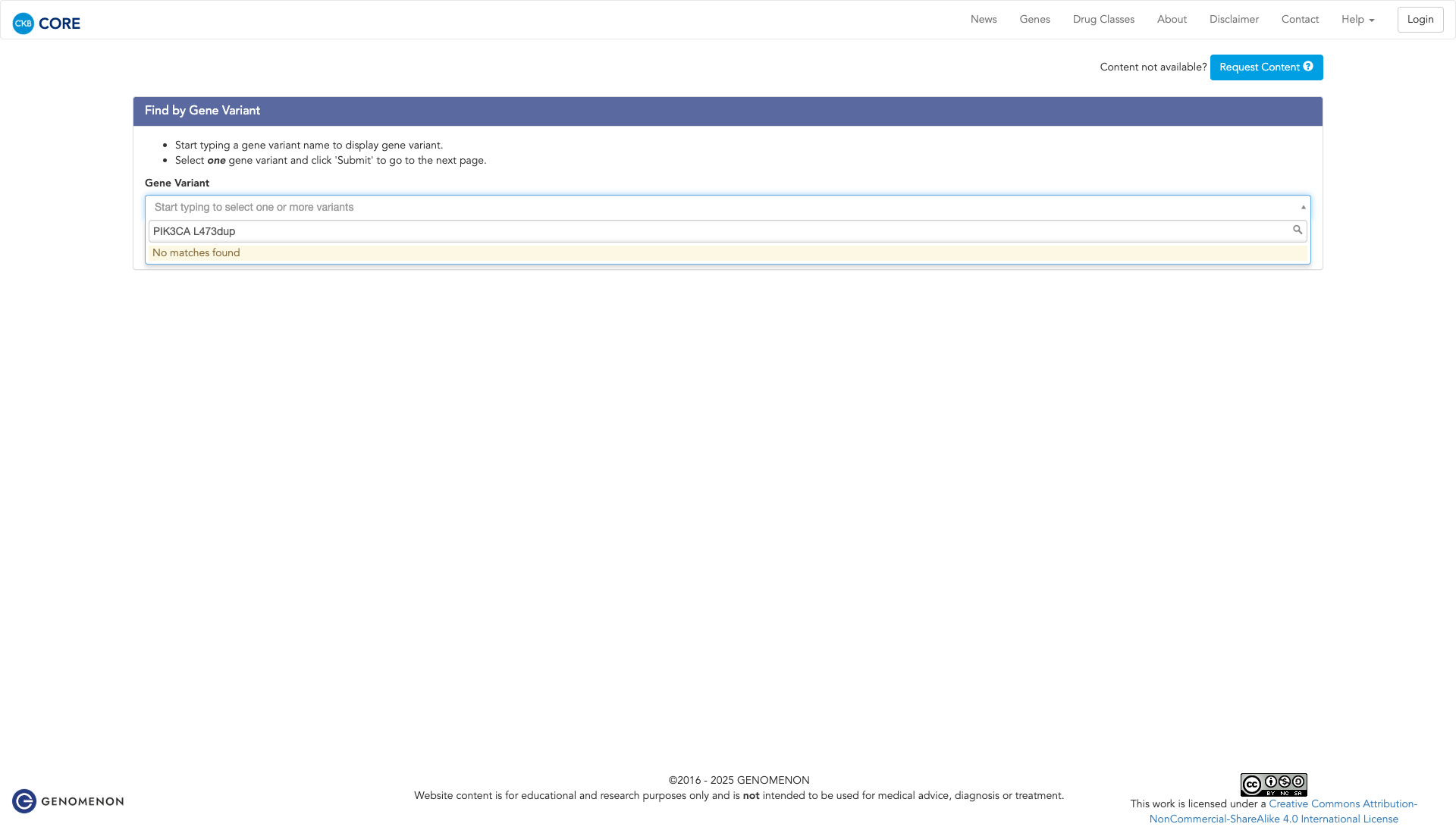
According to standard ACMG guidelines, the rule for PP5 is: reputable source reports variant as pathogenic. The evidence for this variant shows: not found in ClinVar or other databases. Therefore, this criterion is not applied.
BA1 (Not Applied)
According to VCEP guidelines, the rule for BA1 is: allele frequency >0.0926% in population. The evidence for this variant shows: MAF=0% in available databases. Therefore, this criterion is not applied.
BS1 (Not Applied)
According to VCEP guidelines, the rule for BS1 is: allele frequency >0.0185%. The evidence for this variant shows: absent from gnomAD. Therefore, this criterion is not applied.
BS2 (Not Applied)
According to VCEP guidelines, the rule for BS2 is: ≥3 homozygotes or heterozygotes in healthy individuals. The evidence for this variant shows: no such observations. Therefore, this criterion is not applied.
BS3 (Not Applied)
According to VCEP guidelines, the rule for BS3 is: well‐validated functional studies show no damaging effect. The evidence for this variant shows: no functional studies available. Therefore, this criterion is not applied.
BS4 (Not Applied)
According to standard ACMG guidelines, the rule for BS4 is: lack of segregation in multiple affected family members. The evidence for this variant shows: no segregation data. Therefore, this criterion is not applied.
BP1 (Not Applied)
According to standard ACMG guidelines, the rule for BP1 is: missense in a gene where only truncating variants cause disease. The evidence for this variant shows: PIK3CA disease mechanism is predominantly activating missense. Therefore, this criterion is not applied.
BP2 (Not Applied)
According to VCEP guidelines, the rule for BP2 is: observed in cis/trans with a known pathogenic variant. The evidence for this variant shows: no such observations. Therefore, this criterion is not applied.
BP3 (Not Applied)
According to standard ACMG guidelines, the rule for BP3 is: in-frame indels in repetitive regions. The evidence for this variant shows: L473dup is not in a repetitive region. Therefore, this criterion is not applied.
BP4 (Not Applied)
According to VCEP guidelines, the rule for BP4 is: two of three splicing tools predict no impact for synonymous or non-coding variants. The evidence for this variant shows: it is an in-frame coding duplication, not applicable under BP4. Therefore, this criterion is not applied.
BP5 (Not Applied)
According to standard ACMG guidelines, the rule for BP5 is: variant found in a case with an alternate molecular basis for disease. The evidence for this variant shows: no such context. Therefore, this criterion is not applied.
BP6 (Not Applied)
According to standard ACMG guidelines, the rule for BP6 is: reputable source reports variant as benign. The evidence for this variant shows: no such reports. Therefore, this criterion is not applied.
BP7 (Not Applied)
According to VCEP guidelines, the rule for BP7 is: synonymous/intronic non-conserved with no splicing impact. The evidence for this variant shows: it is a coding duplication. Therefore, this criterion is not applied.