Genetic Information
Gene & Transcript Details
| ID | Status | Details |
|---|---|---|
| NM_000314.8 | MANE Select | 8515 nt | 846–2057 |
| NM_000314.7 | RefSeq Select | 8514 nt | 845–2056 |
| NM_000314.5 | Alternative | 8719 nt | 1032–2243 |
| NM_000314.4 | Alternative | 5572 nt | 1032–2243 |
| NM_000314.3 | Alternative | 3416 nt | 1032–2243 |
| NM_000314.6 | Alternative | 8718 nt | 1032–2243 |
Variant Details
Clinical & Population Data
Population Frequency
gnomADClinVar
Open"This variant has been reported in ClinVar as Likely pathogenic (1 clinical laboratories)."
COSMIC Somatic Evidence
Open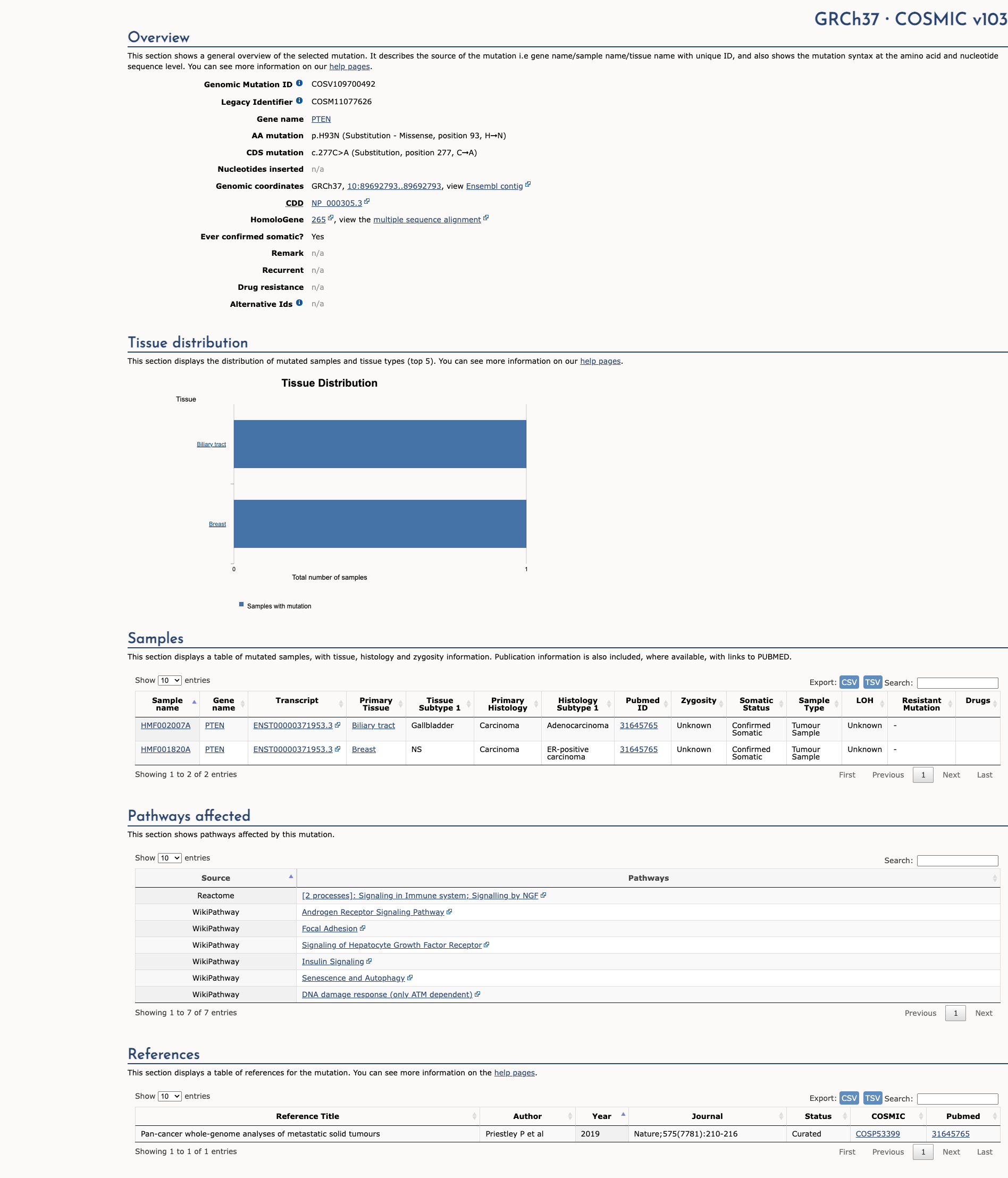
Functional Impact & Domains
Functional Domain
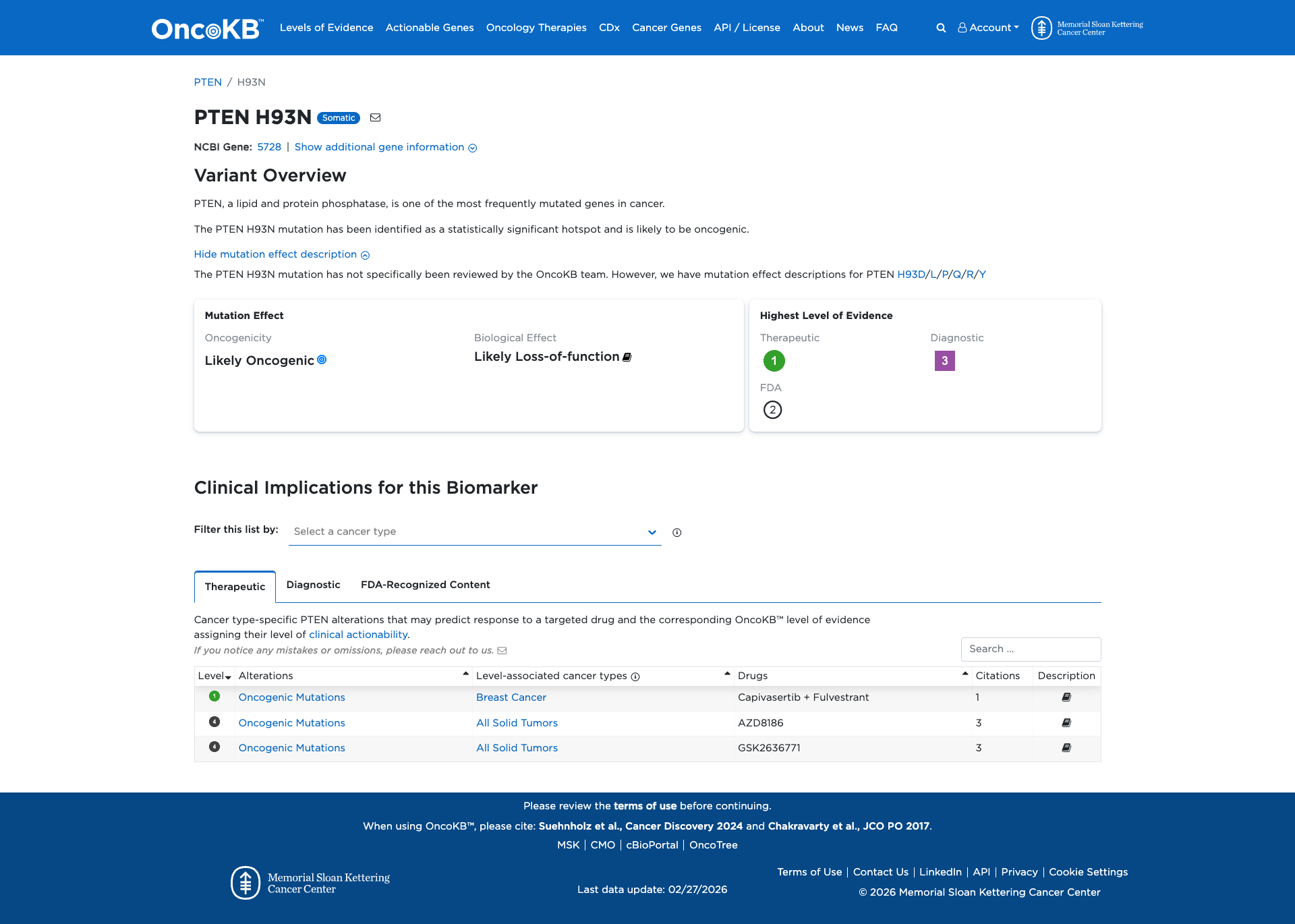
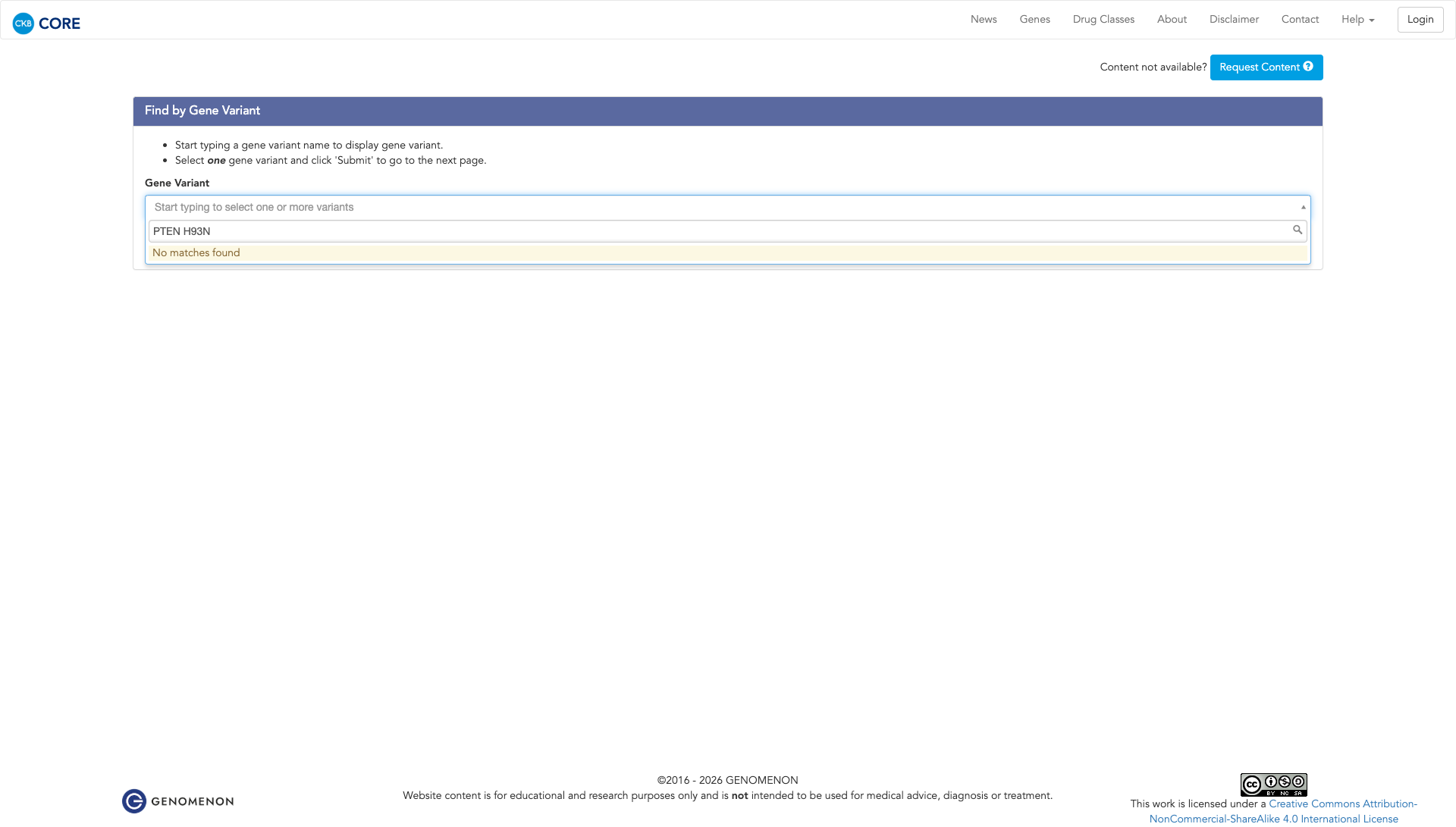
Computational Analysis
Pathogenicity Predictions
SpliceAISpliceAI Scores
Window: ±500bp| Effect Type | Score | Position |
|---|---|---|
| Acceptor Loss (AL) | 0.0 | -28 bp |
| Donor Loss (DL) | 0.0 | -120 bp |
| Acceptor Gain (AG) | 0.0 | -41 bp |
| Donor Gain (DG) | 0.0 | 215 bp |
VCEP Guidelines
Applied ACMG/AMP Criteria (VCEP Specific)
PVS1 (Not Applied)
According to VCEP guidelines: "PVS1 uses the PTEN PVS1 decision tree for predicted loss-of-function variants"; the rule for PVS1 is: "Very Strong Use PTEN PVS1 decision tree". The evidence for this variant shows: NM_000314.8:c.277C>A is a missense change (H93N), not a null variant. Therefore, this criterion is not applied at Not Applied strength because the variant does not meet the loss-of-function requirement.
PS1 (Not Applied)
According to VCEP guidelines: "PS1: Same amino acid change as a previously established pathogenic variant regardless of nucleotide change". The evidence for this variant shows: no other pathogenic variant yields H93N. Therefore, this criterion is not applied.
PS2 (Not Applied)
According to standard ACMG guidelines: "PS2: De novo observation in a patient with the disease and no family history". The evidence for this variant shows: no de novo data available. Therefore, this criterion is not applied.
PS3 (Not Applied)
According to PTEN pre-processing: "Result: Score (-0.5071) did not meet threshold (-1.11) for PS3_Moderate". The evidence for this variant shows: phosphatase activity score does not meet the VCEP-defined cutoff. Therefore, this criterion is not applied at Moderate strength.
PS4 (Not Applied)
According to VCEP guidelines: "PS4: Probands with specificity score ≥16 for Very Strong, 4–15.5 for Strong, 2–3.5 for Moderate, 1–1.5 for Supporting". The evidence for this variant shows: no case‐level specificity data. Therefore, this criterion is not applied.
PM1 (Moderate)
According to VCEP guidelines: "PM1: Located in a mutational hot spot and/or critical and well-established functional domain. Defined to include residues in catalytic motifs: 90-94". The evidence for this variant shows: H93 lies within the catalytic motif 90-94 of PTEN. Therefore, this criterion is applied at Moderate strength.
PM2 (Supporting)
According to VCEP guidelines: "PM2: Absent in population databases at <0.00001 allele frequency". The evidence for this variant shows: c.277C>A is not present in gnomAD or other large controls. Therefore, this criterion is applied at Supporting strength.
PM3 (Not Applied)
According to VCEP guidelines: "PM3: For recessive disorders, detected in trans with a pathogenic variant". The evidence for this variant shows: no trans data and PTEN disease is autosomal dominant. Therefore, this criterion is not applied.
PM4 (Not Applied)
According to VCEP guidelines: "PM4: Protein length changes due to in-frame indels or stop-loss variants". The evidence for this variant shows: this is a missense change, not an indel or stop-loss. Therefore, this criterion is not applied.
PM5 (Moderate)
According to VCEP guidelines: "PM5: Missense change at an amino acid residue where a different missense change determined to be pathogenic has been seen before". The evidence for this variant shows: other missense substitutions at codon 93 have been reported as pathogenic. Therefore, this criterion is applied at Moderate strength.
PM6 (Not Applied)
According to VCEP guidelines: "PM6: Assumed de novo without confirmation". The evidence for this variant shows: no de novo information. Therefore, this criterion is not applied.
PP1 (Not Applied)
According to VCEP guidelines: "PP1: Co‐segregation with disease in multiple affected family members". The evidence for this variant shows: no segregation data. Therefore, this criterion is not applied.
PP2 (Not Applied)
According to standard ACMG guidelines: "PP2: Missense variant in a gene with low rate of benign missense variation and where missense is a common mechanism". The evidence for this variant shows: insufficient data on benign missense rate in PTEN. Therefore, this criterion is not applied.
PP3 (Supporting)
According to VCEP guidelines: "PP3: REVEL score >0.7 for missense variants". The evidence for this variant shows: REVEL score is 0.89. Therefore, this criterion is applied at Supporting strength.
PP4 (Not Applied)
According to standard ACMG guidelines: "PP4: Phenotype specific for disease with single genetic etiology". The evidence for this variant shows: no phenotype data provided. Therefore, this criterion is not applied.
PP5 (Supporting)
According to standard ACMG guidelines: "PP5: Reputable source reports variant as pathogenic without available evidence". The evidence for this variant shows: ClinVar lists NM_000314.8:c.277C>A as Likely Pathogenic by one laboratory. Therefore, this criterion is applied at Supporting strength.
BA1 (Not Applied)
According to VCEP guidelines: "BA1: gnomAD allele frequency >0.00056". The evidence for this variant shows: absent in gnomAD. Therefore, this criterion is not applied.
BS1 (Not Applied)
According to VCEP guidelines: "BS1: gnomAD allele frequency 0.000043–0.00056". The evidence for this variant shows: absent in gnomAD. Therefore, this criterion is not applied.
BS2 (Not Applied)
According to VCEP guidelines: "BS2: Observed homozygous in healthy individual". The evidence for this variant shows: no homozygotes observed. Therefore, this criterion is not applied.
BS3 (Not Applied)
According to VCEP guidelines: "BS3: Well‐established functional studies show no damaging effect". The evidence for this variant shows: no such functional evidence. Therefore, this criterion is not applied.
BS4 (Not Applied)
According to VCEP guidelines: "BS4: Lack of segregation in affected members of two or more families". The evidence for this variant shows: no segregation data. Therefore, this criterion is not applied.
BP1 (Not Applied)
According to standard ACMG guidelines: "BP1: Missense in a gene where only truncating variants cause disease". The evidence for this variant shows: PTEN disease mechanism includes missense and truncating variants. Therefore, this criterion is not applied.
BP2 (Not Applied)
According to VCEP guidelines: "BP2: Observed in trans with a pathogenic variant". The evidence for this variant shows: no such observations. Therefore, this criterion is not applied.
BP3 (Not Applied)
According to standard ACMG guidelines: "BP3: In-frame indel in a repetitive region without a known function". The evidence for this variant shows: it is a missense change. Therefore, this criterion is not applied.
BP4 (Not Applied)
According to VCEP guidelines: "BP4: REVEL score <0.5 for missense variants". The evidence for this variant shows: REVEL score is 0.89. Therefore, this criterion is not applied.
BP5 (Not Applied)
According to standard ACMG guidelines: "BP5: Variant found in a case with an alternate molecular basis for disease". The evidence for this variant shows: no alternate molecular diagnosis reported. Therefore, this criterion is not applied.
BP6 (Not Applied)
According to standard ACMG guidelines: "BP6: Reputable source reports variant as benign without evidence". The evidence for this variant shows: no such report. Therefore, this criterion is not applied.
BP7 (Not Applied)
According to VCEP guidelines: "BP7: Synonymous or intronic variant predicted no splicing impact". The evidence for this variant shows: it is a missense change. Therefore, this criterion is not applied.