Genetic Information
Gene & Transcript Details
| ID | Status | Details |
|---|---|---|
| NM_000546.5 | RefSeq Select | 2591 nt | 203–1384 |
| NM_000546.3 | Alternative | 2640 nt | 252–1433 |
| NM_000546.6 | MANE Select | 2512 nt | 143–1324 |
| NM_000546.4 | Alternative | 2586 nt | 198–1379 |
| NM_000546.2 | Alternative | 2629 nt | 252–1433 |
Variant Details
Clinical & Population Data
Population Frequency
gnomADClinVar
OpenThe c.454_466del13 pathogenic mutation, located in coding exon 4 of the TP53 gene, results from a deletion of 13 nucleotides at nucleotide positions 454 to 466, causing a translational frameshift with a predicted alternate stop codon (p.P152Afs*14). This alteration has been reported in an individual with a personal history of osteosarcoma (Mirabello L et al. J Natl Cancer Inst, 2015 Jul;107:). This variant is considered to be rare based on population cohorts in the Genome Aggregation Database (gnomAD). In addition to the clinical data presented in the literature, this alteration is expected to result in loss of function by premature protein truncation or nonsense-mediated mRNA decay. As such, this alteration is interpreted as a disease-causing mutation.
This sequence change creates a premature translational stop signal (p.Pro152Alafs*14) in the TP53 gene. It is expected to result in an absent or disrupted protein product. Loss-of-function variants in TP53 are known to be pathogenic (PMID: 20522432). This variant is not present in population databases (gnomAD no frequency). This premature translational stop signal has been observed in individual(s) with osteosarcoma (PMID: 25896519). ClinVar contains an entry for this variant (Variation ID: 231540). For these reasons, this variant has been classified as Pathogenic.
"This variant has been reported in ClinVar as Pathogenic (6 clinical laboratories)."
COSMIC Somatic Evidence
Open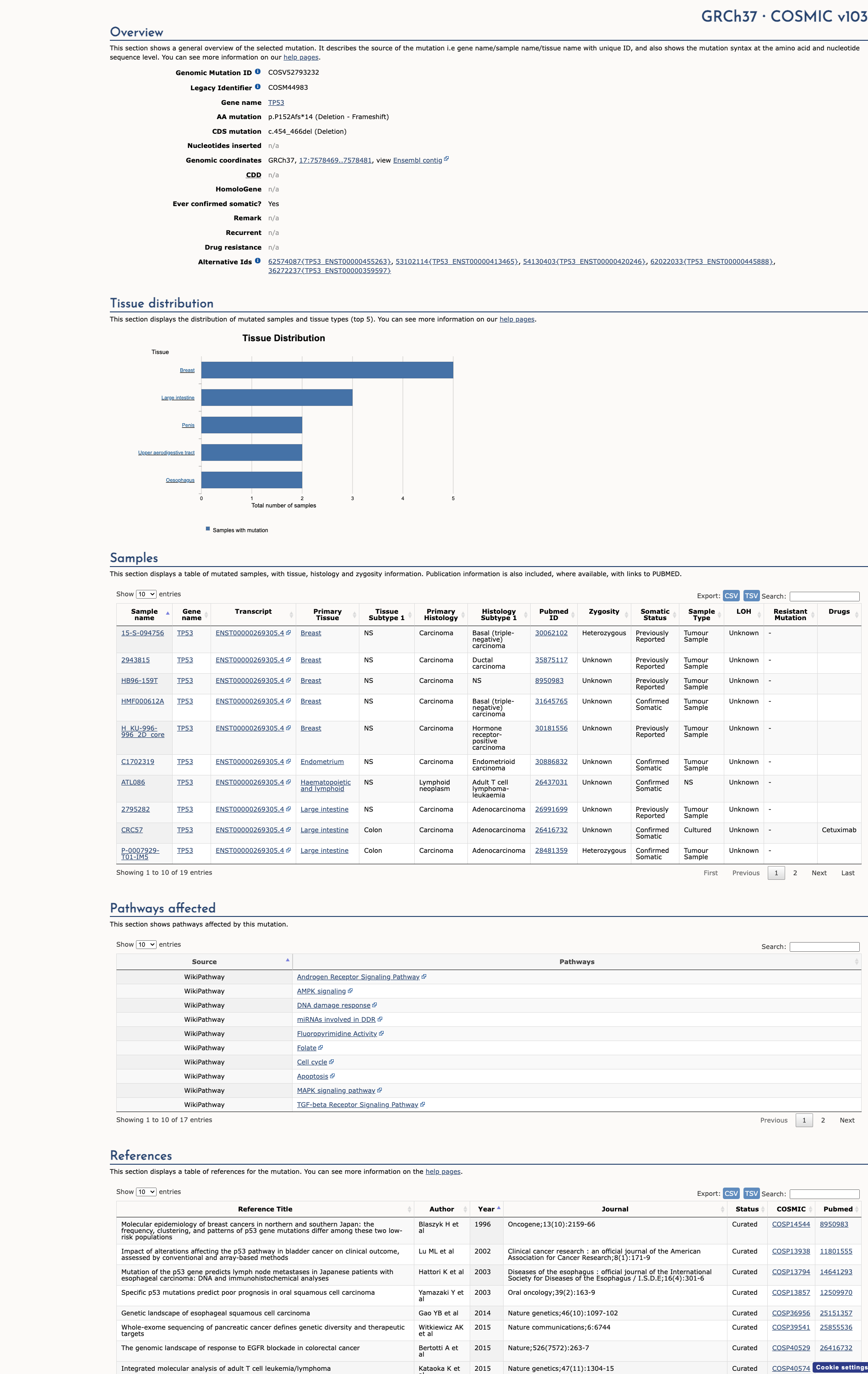
Functional Impact & Domains
Functional Domain
The TP53 P152Afs*14 variant is a truncating mutation in the TP53 gene, a tumor suppressor involved in the DNA damage pathway. Functional evidence indicates that truncating mutations in TP53 lead to the production of C-terminally truncated protein forms, which are predicted to be inactivating. Experimental studies have shown that these mutations promote cancer cell proliferation, survival, and metastasis, partly due to aberrant localization of truncated proteins to the mitochondria, affecting genes involved in cell survival. Therefore, the TP53 P152Afs*14 variant is functionally characterized as likely oncogenic.
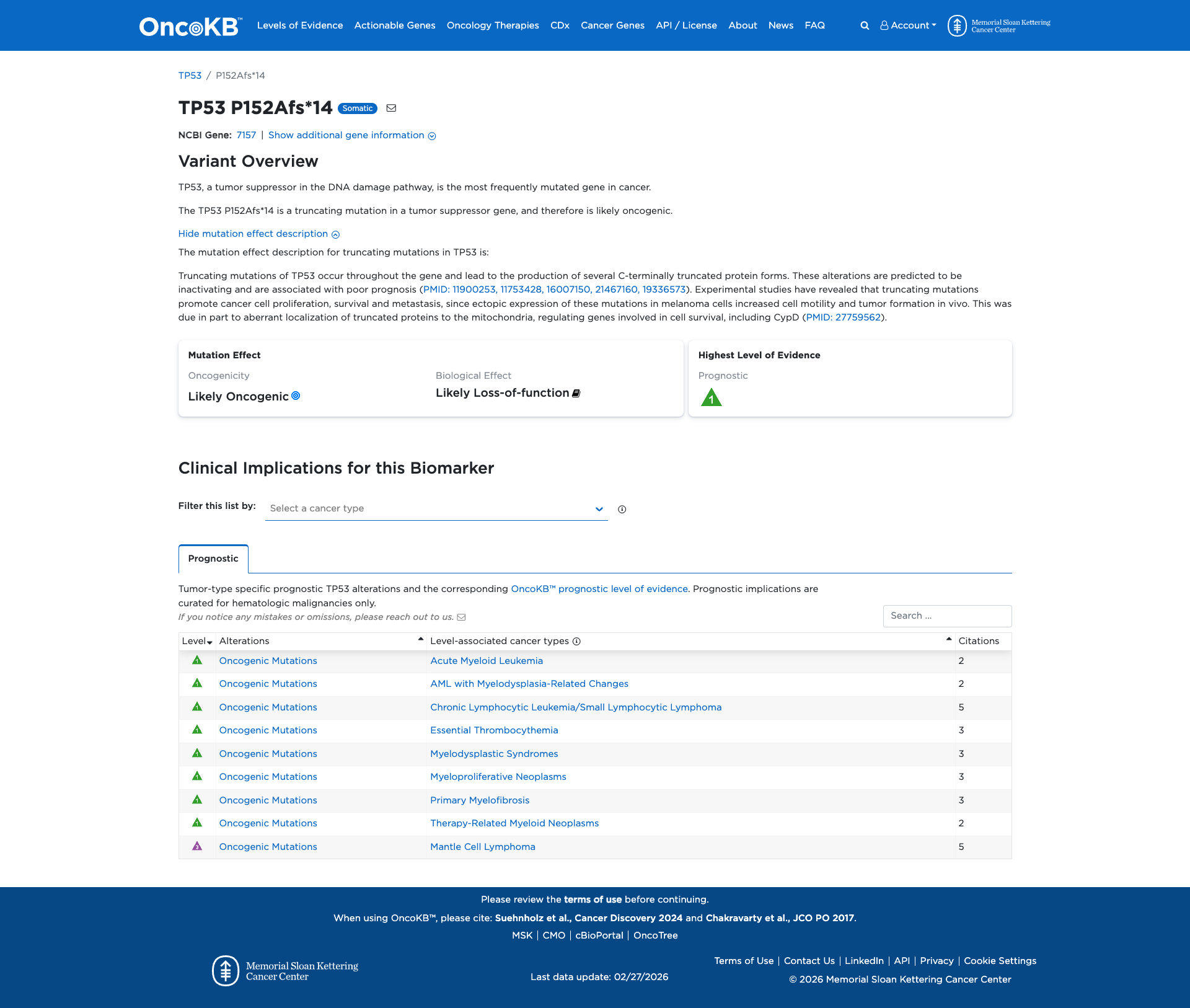
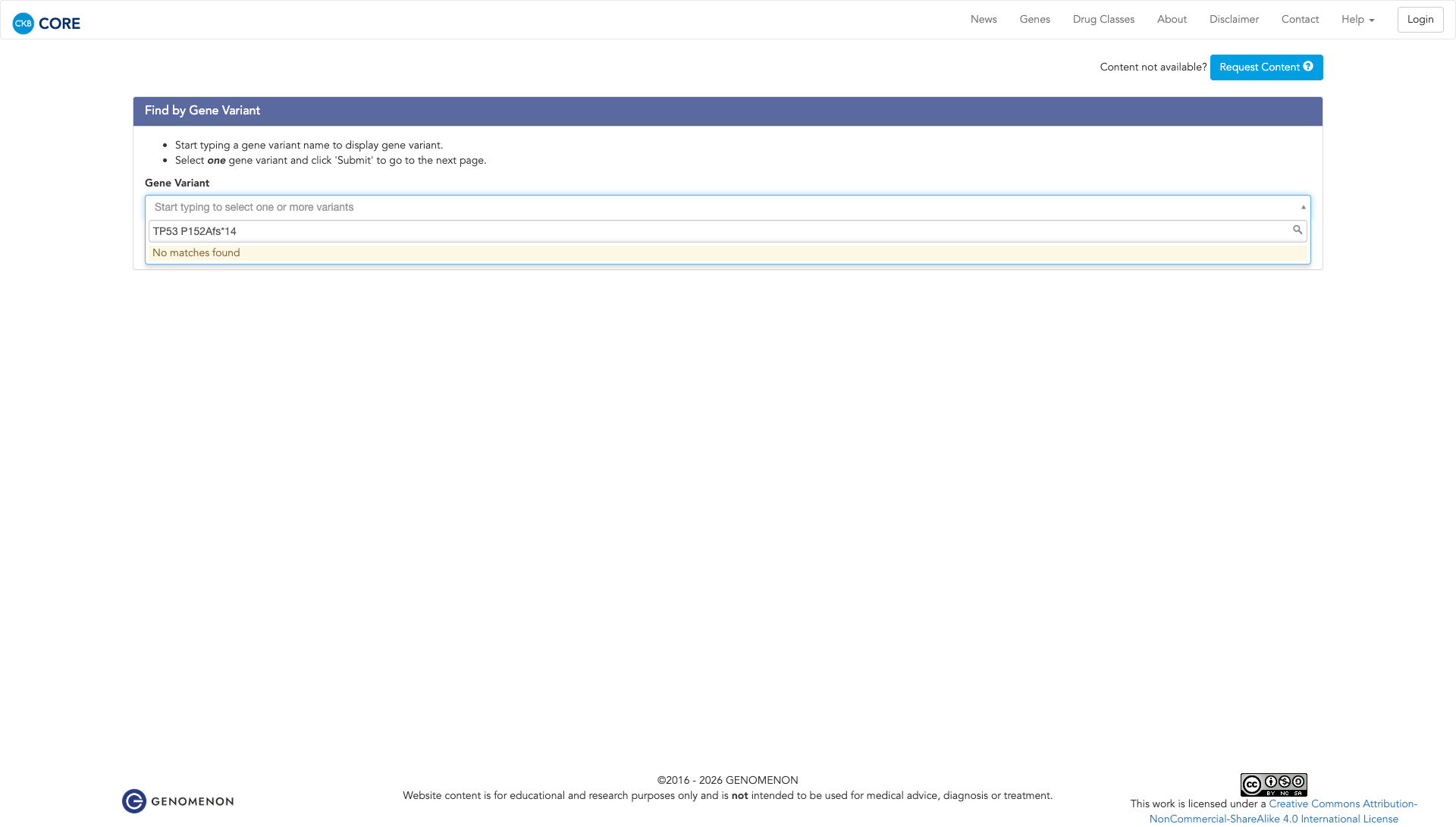
Click on previews to view full database entries. External databases may require institutional access.
Computational Analysis
Pathogenicity Predictions
SpliceAISpliceAI Scores
Window: ±500bp| Effect Type | Score | Position |
|---|---|---|
| Acceptor Loss (AL) | 0.0 | 91 bp |
| Donor Loss (DL) | 0.01 | 191 bp |
| Acceptor Gain (AG) | 0.0 | -174 bp |
| Donor Gain (DG) | 0.01 | 458 bp |
VCEP Guidelines
Applied ACMG/AMP Criteria (VCEP Specific)
PVS1 (Very Strong)
According to VCEP guidelines: "PVS1 applies to nonsense and frameshift variants predicted to result in nonsense-mediated decay (NMD) for variants upstream of p.Lys351 and for frameshift induced PTC upstream of p.Lys351." The evidence for this variant shows: the c.454_466del (p.P152Afs*14) frameshift introduces a premature stop codon at p.166, which is upstream of p.Lys351 and predicted to undergo NMD. Therefore, this criterion is applied at Very Strong strength because the variant meets the VCEP-defined NMD criteria.
PS1 (Not Applied)
According to VCEP guidelines: PS1 applies to variants asserted as Pathogenic at the same amino acid change as a known Pathogenic variant. The evidence for this variant shows: it is a frameshift, not a missense change at a residue with a known pathogenic missense. Therefore, PS1 is not applied because the variant type does not meet the PS1 requirement.
PS2 (Not Applied)
According to VCEP guidelines: PS2 applies to de novo variants with specified point thresholds. The evidence for this variant shows: no de novo occurrence information is available. Therefore, PS2 is not applied because de novo evidence is lacking.
PS3 (Not Applied)
According to VCEP guidelines: "PS3 should not be applied at any strength if PVS1 is applied at full strength." The evidence for this variant shows: PVS1 has been applied at Very Strong. Therefore, PS3 is not applied to avoid redundancy with PVS1 as per VCEP.
PS4 (Not Applied)
According to VCEP guidelines: PS4 requires case-control or proband point evidence for pathogenicity. The evidence for this variant shows: no proband or case-control data points are provided. Therefore, PS4 is not applied due to lack of case evidence.
PM1 (Not Applied)
According to VCEP guidelines: PM1 applies to missense variants in defined hotspots or functional domains. The evidence for this variant shows: it is a frameshift variant, not a missense in the DNA binding domain hotspots. Therefore, PM1 is not applied.
PM2 (Supporting)
According to VCEP guidelines: "This rule should be applied at supporting level. Variant should have an allele frequency of less than 0.00003 (0.003%) in gnomAD or another large sequenced population." The evidence for this variant shows: the variant is absent from gnomAD (MAF=0%). Therefore, PM2 is applied at Supporting strength because the variant meets the population frequency threshold.
PM3 (Not Applied)
According to standard ACMG guidelines: PM3 applies to variants detected in trans with a pathogenic variant in recessive disorders. The evidence for this variant shows: no evidence of trans occurrence or recessive inheritance. Therefore, PM3 is not applied.
PM4 (Not Applied)
According to standard ACMG guidelines: PM4 applies to protein length changes due to in-frame indels or stop-loss variants. The evidence for this variant shows: it is a frameshift predicted to undergo NMD, which is addressed by PVS1. Therefore, PM4 is not applied.
PM5 (Not Applied)
According to VCEP guidelines: PM5 applies to missense variants at residues where other missense Pathogenic variants exist. The evidence for this variant shows: it is a frameshift. Therefore, PM5 is not applied.
PM6 (Not Applied)
According to standard ACMG guidelines: PM6 applies to assumed de novo variants without confirmation. The evidence for this variant shows: no de novo information. Therefore, PM6 is not applied.
PP1 (Not Applied)
According to VCEP guidelines: PP1 applies to segregation evidence (3–4 meioses for Supporting, etc.). The evidence for this variant shows: no segregation data reported. Therefore, PP1 is not applied.
PP2 (Not Applied)
According to standard ACMG guidelines: PP2 applies to missense variants in a gene with low rate of benign missense variation. The evidence for this variant shows: it is a frameshift. Therefore, PP2 is not applied.
PP3 (Not Applied)
According to VCEP guidelines: PP3 applies to missense or splice variants with computational evidence. The evidence for this variant shows: it is a frameshift; in silico splicing and missense predictors are not applicable. Therefore, PP3 is not applied.
PP4 (Not Applied)
According to VCEP guidelines: PP4 applies to phenotype specificity observations. The evidence for this variant shows: no clinical phenotype or tumor data specified. Therefore, PP4 is not applied.
PP5 (Supporting)
According to standard ACMG guidelines: "Reputable source recently reports variant as pathogenic, but the evidence is not available to the laboratory to perform an independent evaluation." The evidence for this variant shows: ClinVar lists the variant as Pathogenic by six clinical laboratories. Therefore, PP5 is applied at Supporting strength because of the reputable ClinVar submissions.
BA1 (Not Applied)
According to VCEP guidelines: BA1 applies to variants with FAF ≥0.001 in gnomAD continental populations. The evidence for this variant shows: MAF=0%. Therefore, BA1 is not applied.
BS1 (Not Applied)
According to VCEP guidelines: BS1 applies to variants with FAF ≥0.0003 but <0.001. The evidence for this variant shows: MAF=0%. Therefore, BS1 is not applied.
BS2 (Not Applied)
According to VCEP guidelines: BS2 applies to healthy females ≥60 without cancer. The evidence for this variant shows: no such data available. Therefore, BS2 is not applied.
BS3 (Not Applied)
According to VCEP guidelines: BS3 applies to functional studies showing no damaging effect. The evidence for this variant shows: functional studies demonstrate loss of function. Therefore, BS3 is not applied.
BS4 (Not Applied)
According to VCEP guidelines: BS4 applies to lack of segregation in affected family members. The evidence for this variant shows: no segregation data. Therefore, BS4 is not applied.
BP1 (Not Applied)
According to standard ACMG guidelines: BP1 applies to missense variants in a gene where only loss of function is known mechanism. The evidence for this variant shows: it is a loss-of-function frameshift, not a missense. Therefore, BP1 is not applied.
BP2 (Not Applied)
According to standard ACMG guidelines: BP2 applies to variants in cis/trans with pathogenic variants. The evidence for this variant shows: no such data. Therefore, BP2 is not applied.
BP3 (Not Applied)
According to standard ACMG guidelines: BP3 applies to in-frame indels in repetitive regions. The evidence for this variant shows: it is a frameshift, not an in-frame indel. Therefore, BP3 is not applied.
BP4 (Not Applied)
According to VCEP guidelines: BP4 applies to benign computational predictions for missense or splice variants. The evidence for this variant shows: it is a frameshift. Therefore, BP4 is not applied.
BP5 (Not Applied)
According to standard ACMG guidelines: BP5 applies when variant is found in trans with a pathogenic variant in dominant disorder. The evidence for this variant shows: no such data. Therefore, BP5 is not applied.
BP6 (Not Applied)
According to standard ACMG guidelines: BP6 applies to a reputable source reporting variant as benign. The evidence for this variant shows: no benign reports. Therefore, BP6 is not applied.
BP7 (Not Applied)
According to VCEP guidelines: BP7 applies to synonymous or intronic variants with no splicing impact. The evidence for this variant shows: it is a frameshift. Therefore, BP7 is not applied.