Starting
Initialising…
0%
Legacy Engine
Ready
View Legacy →
Classification rationale
1

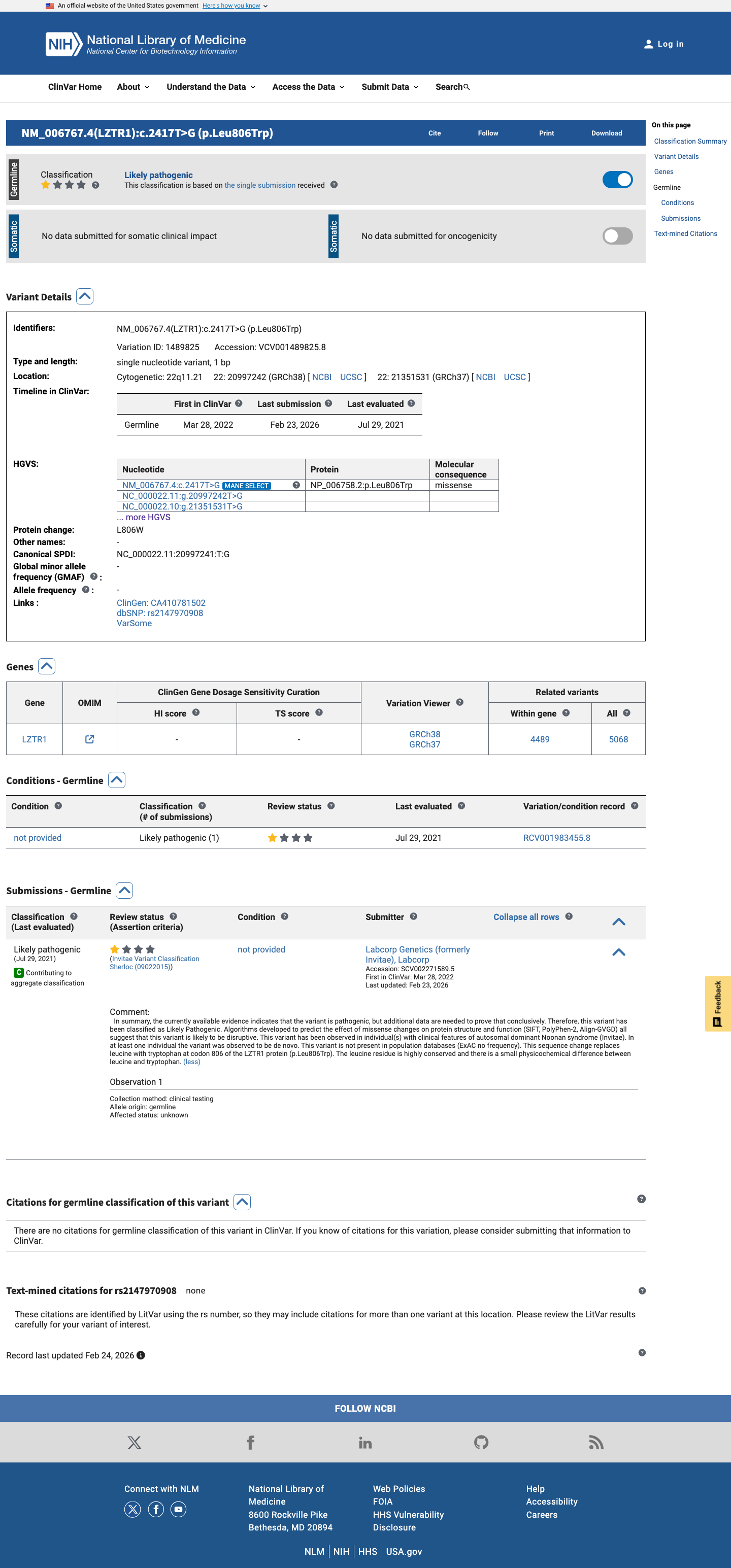
The LZTR1 c.2417T>G (p.Leu806Trp) variant has not been observed in somatic cancers in COSMIC and has been reported in ClinVar as likely pathogenic by a single clinical laboratory.

clinvar ↗
2

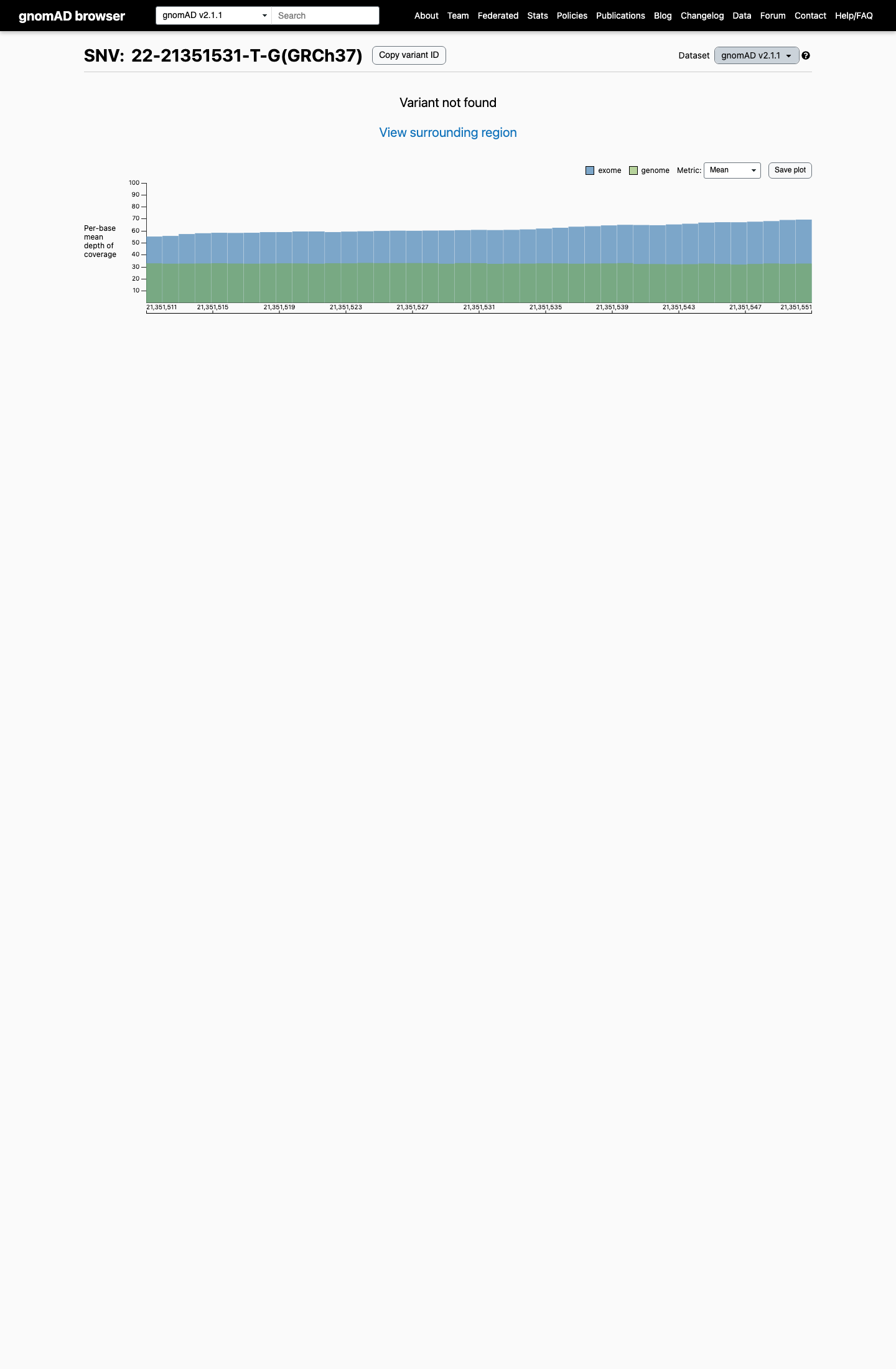
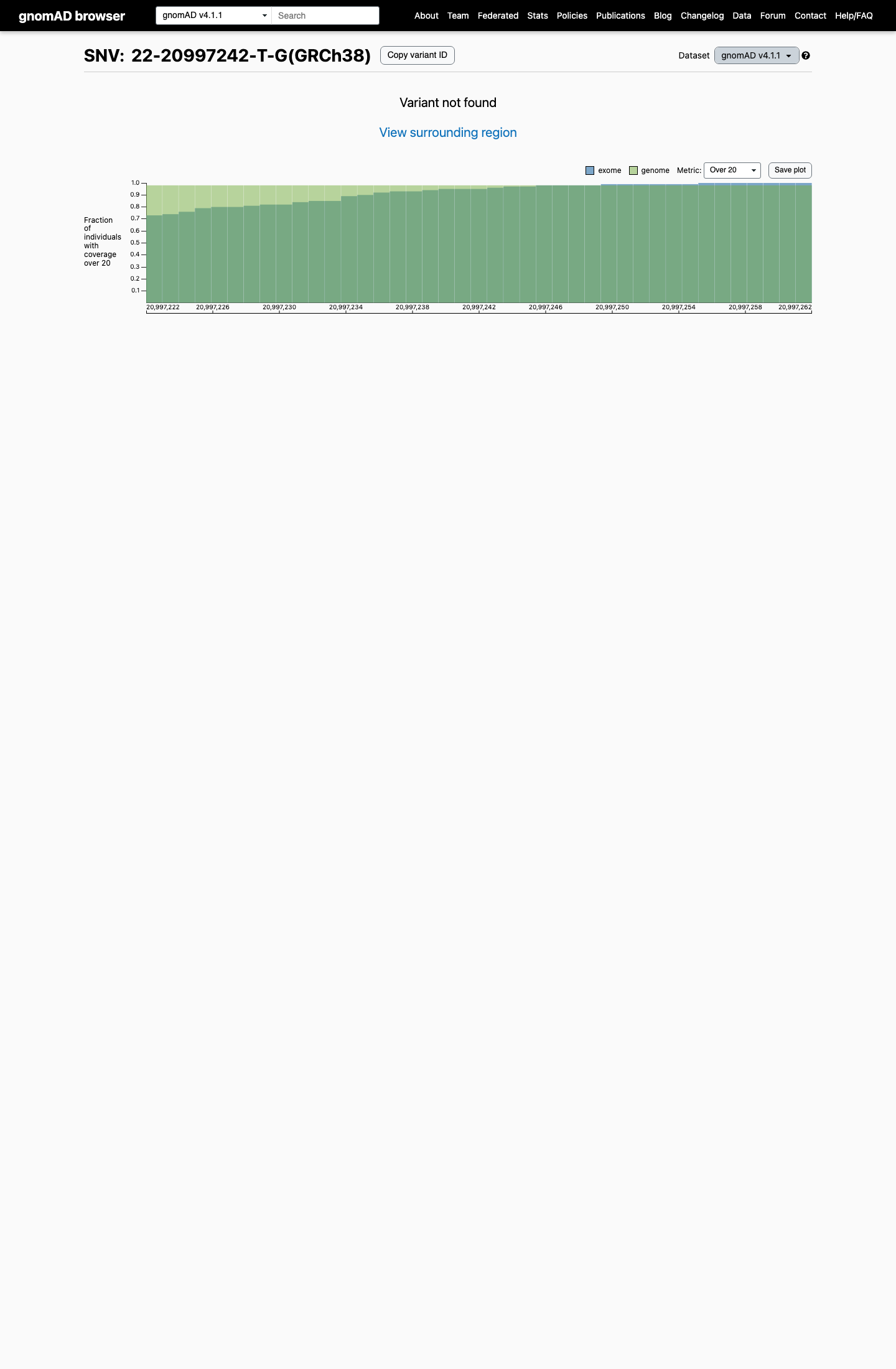
This variant is absent from gnomAD v2.1 and gnomAD v4.1, corresponding to an observed allele frequency of 0 in both datasets.

gnomad_v2 ↗ gnomad_v4 ↗
3

Computational evidence supports a benign interpretation because REVEL is 0.174, below the LZTR1 BP4 threshold of 0.3, SpliceAI predicts no splice effect with a maximum delta score of 0.00, and BayesDel is -0.202983.

cspec ↗ spliceai ↗
Applied criteria
Met
Not met
Not assessed
N/A
Very strong
Strong
Moderate
Supporting
Pathogenic evidence
PVS
PVS1
PS
PS1
PS2
PS3
PS4
PM
PM1
PM2
PM3
PM4
PM5
PM6
PP
PP1
PP2
PP3
PP4
PP5
Benign evidence
BA
BA1
BS
BS1
BS2
BS3
BS4
BP
BP1
BP2
BP3
BP4
BP5
BP6
BP7
PVS1
Rationale
Select a criterion to inspect its explanation.
Evidence used
Gaps remaining
Rule
Publications
Research and evidence
ClinVar evidence
02
ClinVar
This variant has been reported in ClinVar as Likely pathogenic (1 clinical laboratory).
Functional evidence
03
Functional
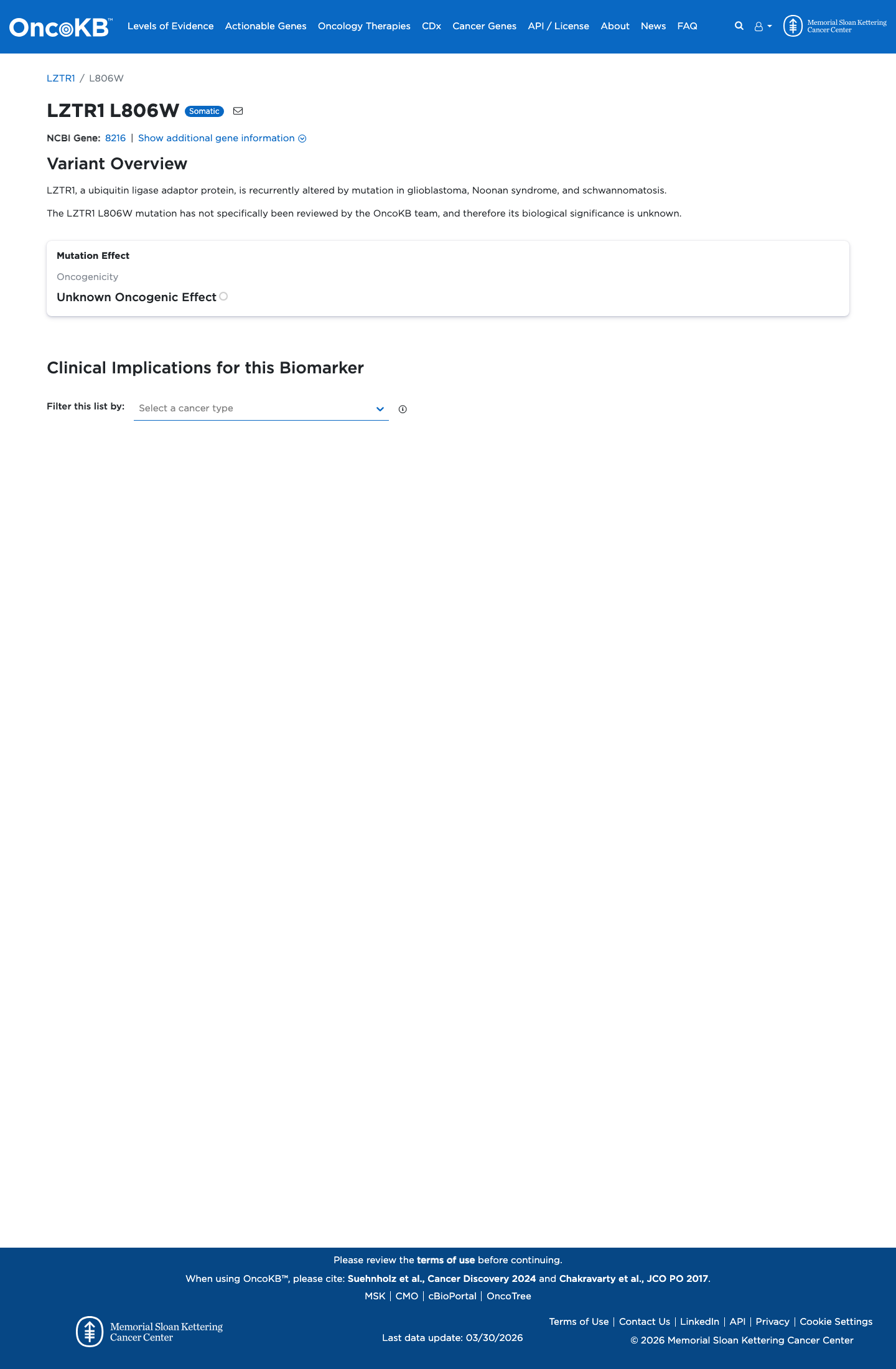
OncoKB: Unknown Oncogenic Effect
OncoKB did not identify variant-specific reviewed functional evidence for this variant; gene-level curated context is available for reviewer follow-up. LZTR1, a ubiquitin ligase adaptor protein, is recurrently altered by mutation in glioblastoma, Noonan syndrome, and schwannomatosis.
In silico evidence
04
In silico
SpliceAI predicts no significant splice impact for this variant (max delta score = 0.00). REVEL score = 0.174. BayesDel score = -0.202983.
COSMIC evidence
05
COSMIC
This variant does not lie in a statistically significant hotspot. This variant has not previously been reported in somatic cancers (COSMIC).
Cancer hotspots evidence
06
Cancer hotspots Not found
This variant does not lie in a statistically significant hotspot.
ResidueL806