PS1
No validated evidence was identified showing that a different nucleotide change causing the same p.Glu2986Lys amino acid substitution is already established as pathogenic or likely pathogenic.
PS2
No confirmed de novo occurrence data were identified for this variant.
PS3
No published functional study was identified that directly tested the effect of this specific variant.
PS4
No case-control or statistically enriched case series evidence was identified for this variant.
PM1
Available hotspot review did not identify this residue within a statistically significant mutational hotspot or other well-established critical functional region.
PM2
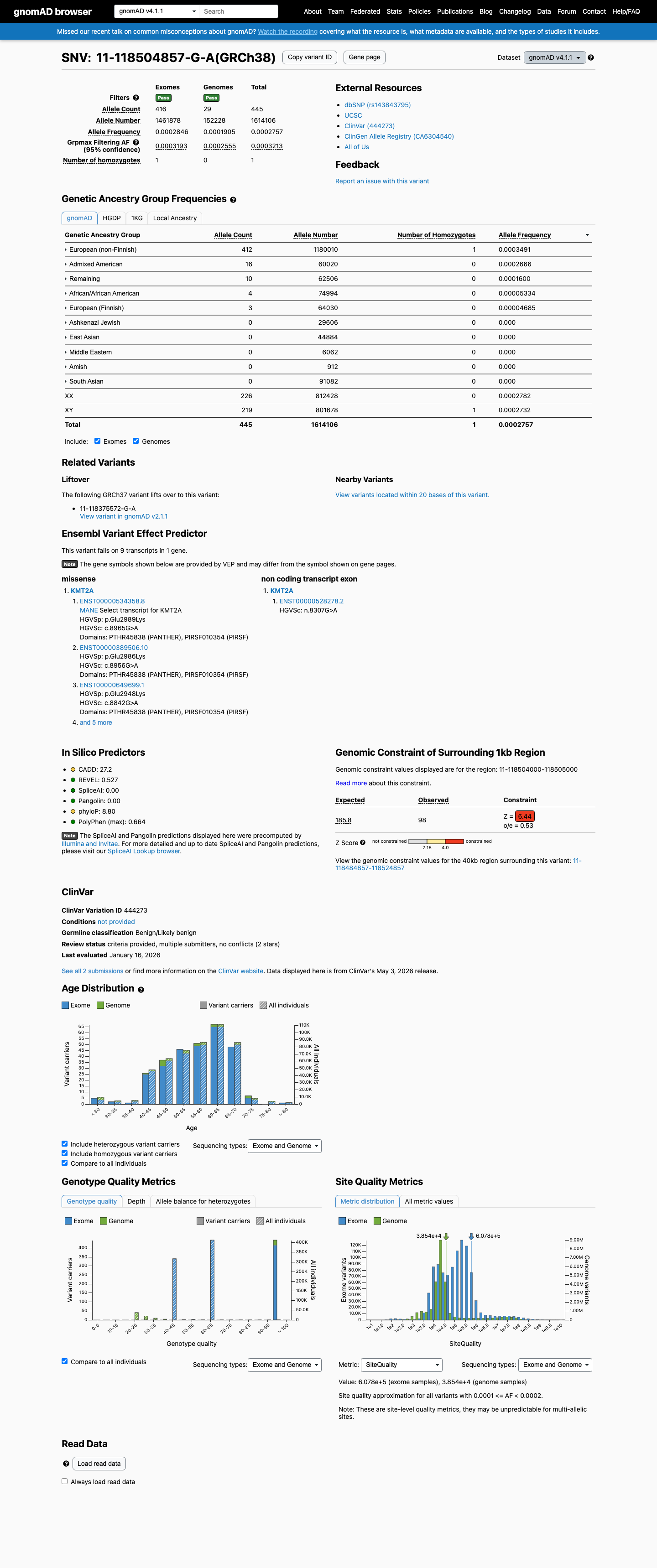
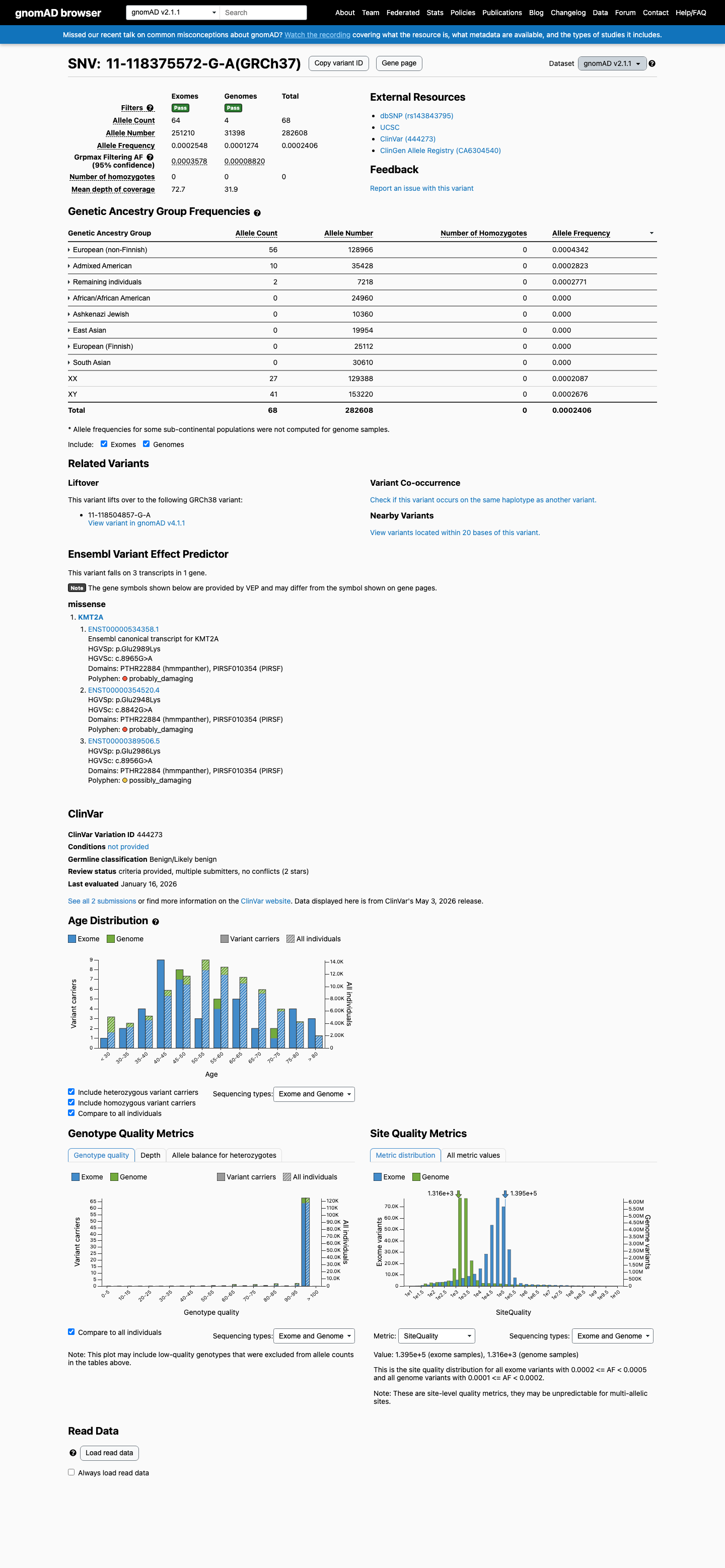
This variant is present in population databases rather than absent or near-absent, with gnomAD v2.1 AF 0.02406% (68/282608) and gnomAD v4.1 AF 0.02757% (445/1614106), including 1 homozygote in v4.1.
PM3
No recessive-phase or trans observation data were identified for this variant.
PM6
No assumed de novo occurrence data were identified for this variant.
PP1
No segregation data were identified for this variant.
PP2
Available evidence does not establish a gene-specific setting in which missense variation is a common disease mechanism and benign missense variation is rare enough to support PP2.
PP3
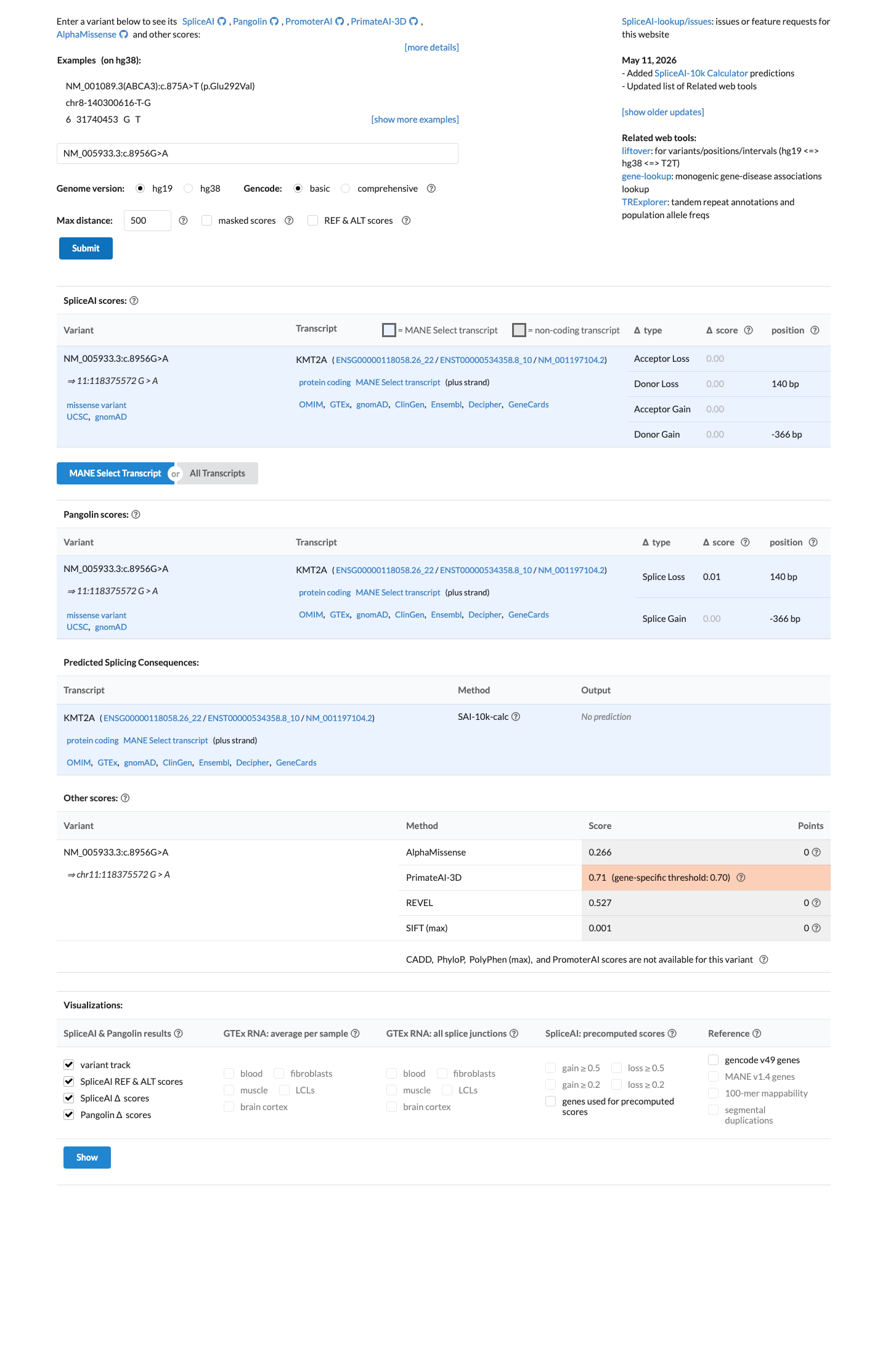
Computational results are not concordantly damaging.
PP4
No phenotype or clinical presentation data were provided that would support a highly specific KMT2A-related syndrome attribution for this variant.
PP5
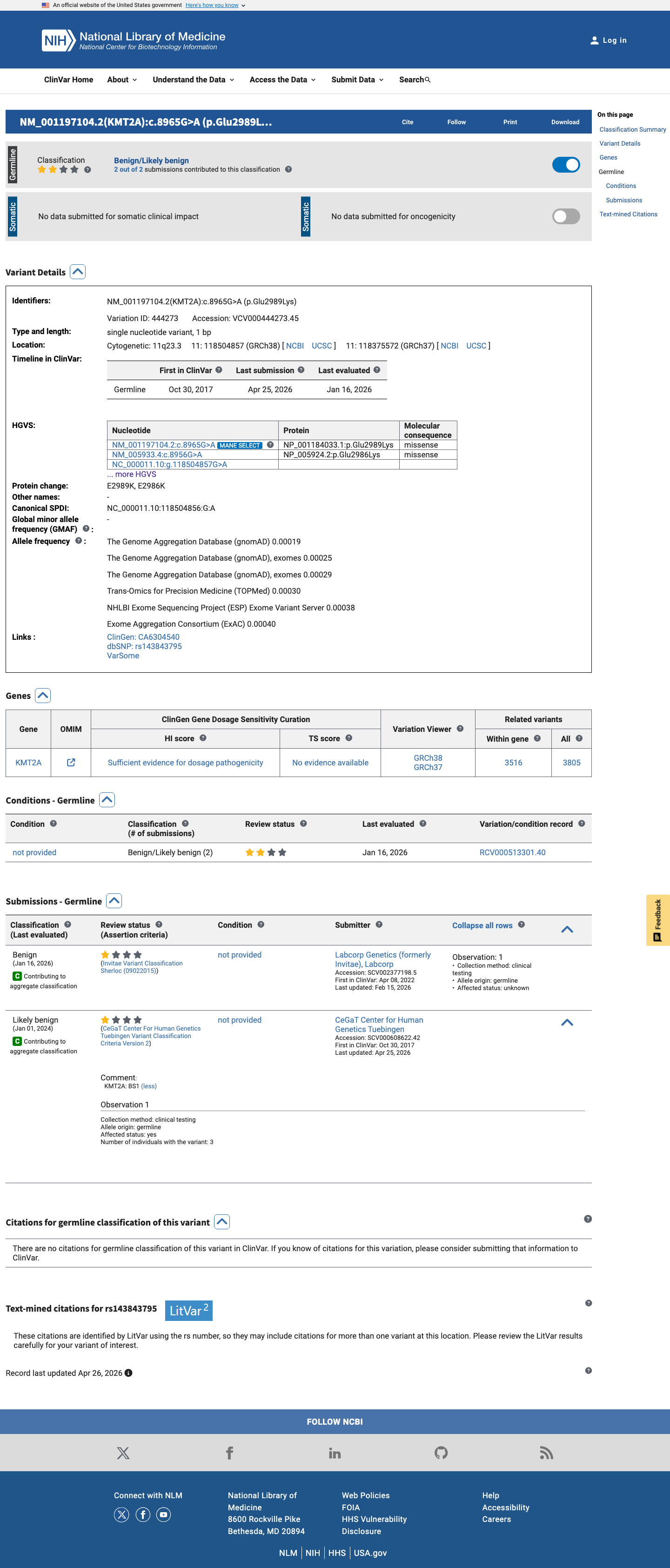
No pathogenic assertion from an expert panel or other sufficiently authoritative source was identified for use under PP5.