NM_000249.4:c.1094G>A (p.Ser365Asn) is a missense variant in exon 12 of MLH1, absent from gnomAD v4.1 and v2.1 (PM2_Supporting per VCEP v2.0.0).1 In silico predictors strongly favor a benign effect: HCI prior probability is 0.0025 (BP4_Supporting per VCEP, threshold <0.11), REVEL score is 0.321, and BayesDel score is -0.220172.2 SpliceAI predicts no splicing impact (max delta score 0.01), confirming the variant does not create a cryptic splice site.3 The InSiGHT Locus-Specific Database (Thompson et al. 2013, PMID:22949387) classifies this variant as Class 5 (Pathogenic) based on a multifactorial likelihood model incorporating yeast-based MMR functional defect data and co-segregation in multiple families, but the quantitative calibrated functional odds and segregation likelihood ratios required for VCEP PS3 and PP1 strength assignment were not available in the case materials.4 ClinVar reports this variant as Uncertain Significance (4 clinical laboratories, criteria provided single submitter, ClinVar ID 1790197).5 No tumor pathology data (MSI status, MMR IHC, BRAF V600E, MLH1 methylation) was available to assess PP4 or BP5. Several criteria designated as Not Applicable by the VCEP were not assessed: PVS1 (missense, not null), PS4, PM1, PM6, PP2, PP5, BP1, BP2, BP6, BP7.6
Final classification
Uncertain Significance - Conflicting Evidence
PM2BP4
MLH1
c.1094G>A
p.Ser365Asn
This variant
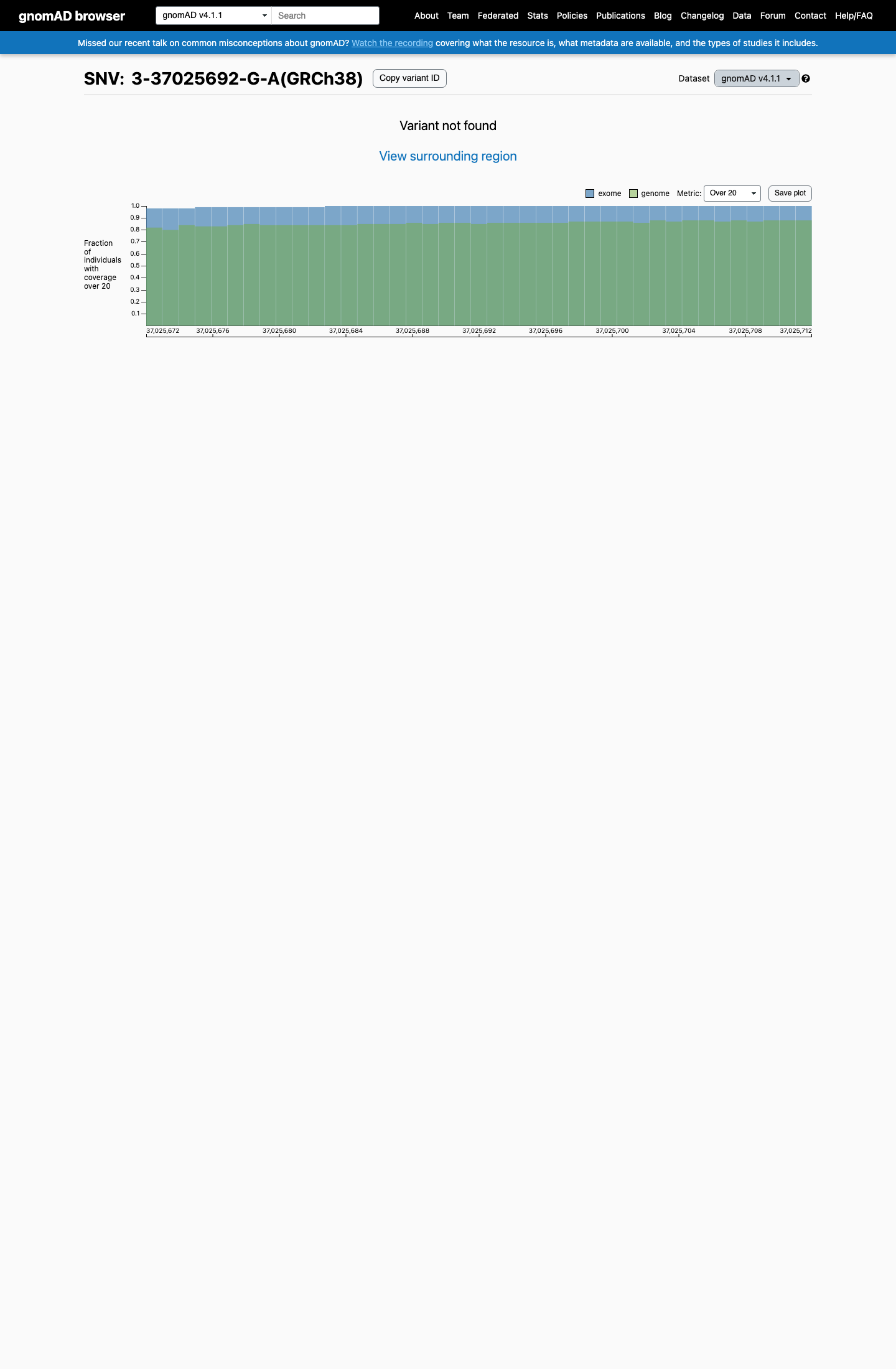
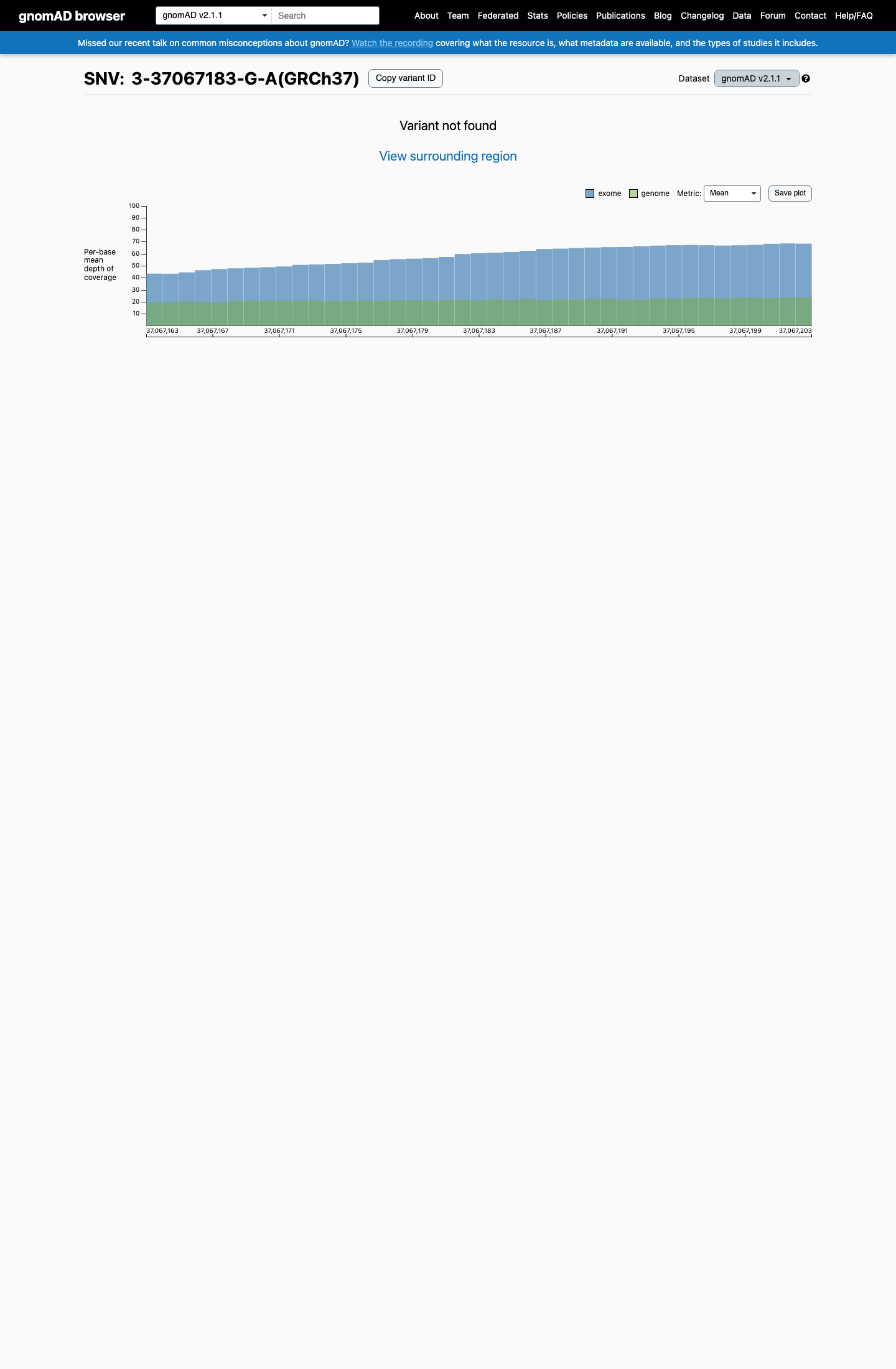
NM_000249.4:c.1094G>A (p.Ser365Asn) is a missense variant in exon 12 of MLH1, absent from gnomAD v4.1 and v2.1 (PM2_Supporting per VCEP v2.0.0).
ClinGen InSiGHT Hereditary Colorectal Cancer/Polyposis Expert Panel Specifications to the ACMG/AMP Variant Interpretation Guidelines for MLH1 Version 2.0.0 v2.0.0 criteria-combination framework: matched Rule31 (Benign.Supporting >=1 + Pathogenic.Supporting >=1) with applied criteria: PM2 supporting, BP4 supporting benign; maps to Uncertain Significance - Conflicting Evidence.
Classification rationale
PM2
BP4
Uncertain Significance - Conflicting Evidence
MLH1 c.1094G>A
PM2 + BP4
→
Uncertain Significance - Conflicting Evidence
LYFE Sciences is an AI system, and it can make mistakes. Criteria
may be applied incorrectly, sources may be misread, and a confident-looking
classification can still be wrong. Double-check every criterion and
its underlying evidence before relying on any call.
Gene diagram
· NM_000249.4 · variants mapped to exon structure
MLH1
NM_000249.4
Fetching transcript structure from UCSC…
Applied criteria · 2 applied · 13 assessed
MetEvidence satisfies this criterion.
Not metEvaluated against available evidence; threshold not reached.
Not assessedApplies in principle, but no evidence was found to evaluate it.
N/ADoesn't apply to this variant type.
Applied · 2
Strength
Supporting
Moderate
Strong
Very strong
PM2
supporting
Pathogenic
NM_000249.4:c.1094G>A is absent from gnomAD v4.1 (and v2.1), satisfying the VCEP PM2_Supporting rule: absent/extremely rare allele frequency <0.00002 (<1 in 50,000 alleles) in the gnomAD v4 dataset.
Variant is absent from gnomAD v4.1 (0 alleles). Also absent from gnomAD v2.1. Meets VCEP PM2_Supporting threshold (<0.00002).
BP4
supporting
Benign
Per the MLH1 VCEP v2.0.0, BP4_Supporting is met when the HCI prior probability of pathogenicity is <0.11 for missense variants. The HCI prior for c.1094G>A (p.Ser365N) is 0.0025, which is well below the threshold. Additionally, REVEL score is 0.321 and BayesDel score is -0.220172, both consistent with a benign in silico prediction profile.
HCI prior probability = 0.0025 (<0.11 threshold for BP4_Supporting). REVEL = 0.321 (below typical pathogenic threshold). BayesDel = -0.220 (negative score consistent with benign).
Assessed · not applied
· 5 not met · 8 not assessed
Pathogenic
PS1
PS1 requires a different nucleotide change encoding the same amino acid (Ser365Asn) previously established as Pathogenic by this VCEP.
PS2
No de novo occurrence reports were identified for NM_000249.4:c.1094G>A.
PS3
The InSiGHT Locus-Specific Database (Thompson et al.
PM5
PM5 requires a different missense change at the same amino acid residue (Ser365) previously classified as Pathogenic or Likely Pathogenic by this VCEP.
PP1
The InSiGHT Locus-Specific Database (PMID:22949387) reports co-segregation of c.1094G>A with Lynch syndrome-spectrum cancers in multiple families, contributing to its Class 5 (Pathogenic) classification.
PP3
Per the MLH1 VCEP v2.0.0, PP3 for missense variants is assessed by HCI prior probability: >0.81 = PP3_Moderate, >0.68 and ≤0.81 = PP3_Supporting.
PP4
The VCEP PP4 criterion requires MSI-H colorectal or endometrial tumors with loss of MMR protein expression consistent with the variant location, with MLH1 promoter methylation excluded.
Benign
BA1
Per the MLH1 VCEP v2.0.0, BA1 requires gnomAD v4 Grpmax filtering allele frequency ≥0.001 (0.1%) with exclusion as a founder pathogenic variant.
BS1
Per the MLH1 VCEP v2.0.0, BS1 requires gnomAD v4 Grpmax filtering allele frequency ≥0.0001 and <0.001 (0.01-0.1%) with exclusion as a founder pathogenic variant.
BS2
BS2 requires co-occurrence in trans with a known pathogenic MLH1 variant in a patient with colorectal cancer after age 45 (or other LS cancer above median age of onset) without clinical manifestations of CMMRD.
BS3
BS3 requires calibrated functional assays showing functional odds for pathogenicity ≤0.05 (Strong) or >0.05 and ≤0.48 (Supporting), or proficient function per the MMR functional assay flowchart.
BS4
BS4 requires lack of co-segregation with disease in pedigrees (combined Bayes Likelihood Ratio <0.05 for Strong, >0.05 and ≤0.48 for Supporting).
BP5
BP5 requires specific tumor data: ≥4 MSS tumors with no loss of MMR expression (Strong), or 2-3 such tumors (Supporting), or BRAF V600E/MLH1 methylation in MSI-H tumors.
N/A · 10
PVS1 · PS4 · PM1 · PM6 · PP2 · PP5 · BP1 · BP2 · BP6 · BP7
Research & evidence
Population frequency
gnomAD v4.1
gnomAD v2.1
v4.1
Absent from gnomAD v4.1.
v2.1
Absent from gnomAD v2.1.
🇨🇦 CA
This variant is absent from gnomAD-Canada.
Allele frequency by ancestry
three datasets · side by side
gnomAD v4.1
Absent
· 0 / ?
0 hom
0 hom
Not observed in any ancestry group.
gnomAD v2.1
Absent
· 0 / ?
0 hom
0 hom
Not observed in any ancestry group.
gnomAD Canada 🇨🇦
Absent
· 0 / ?
0 hom
0 hom
Not observed in any ancestry group.
ClinVar
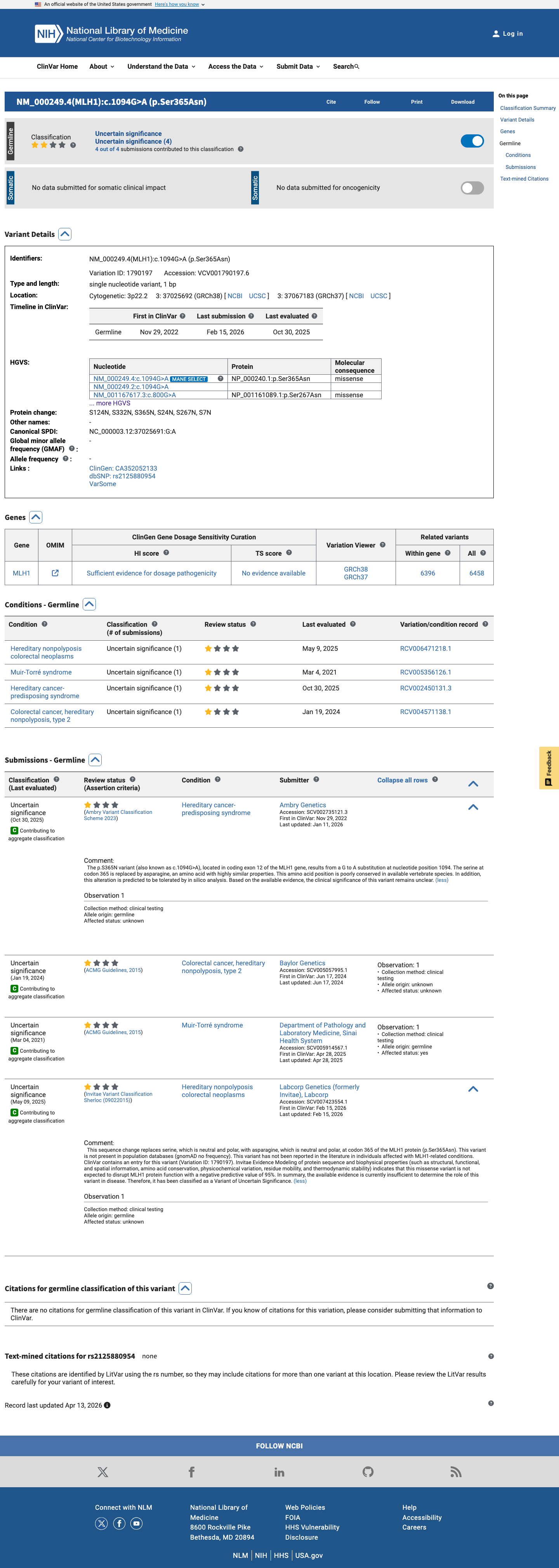
This variant has been reported in ClinVar as Uncertain significance (4 clinical laboratories). (ClinVarID = 1790197)

In silico
SpliceAI predicts no significant splice impact for this variant (max delta score = 0.01). REVEL score = 0.321. BayesDel score = -0.220172. HCI prior probability for pathogenicity = 0.0025. Custom PP2 score = 0.007.
Functional
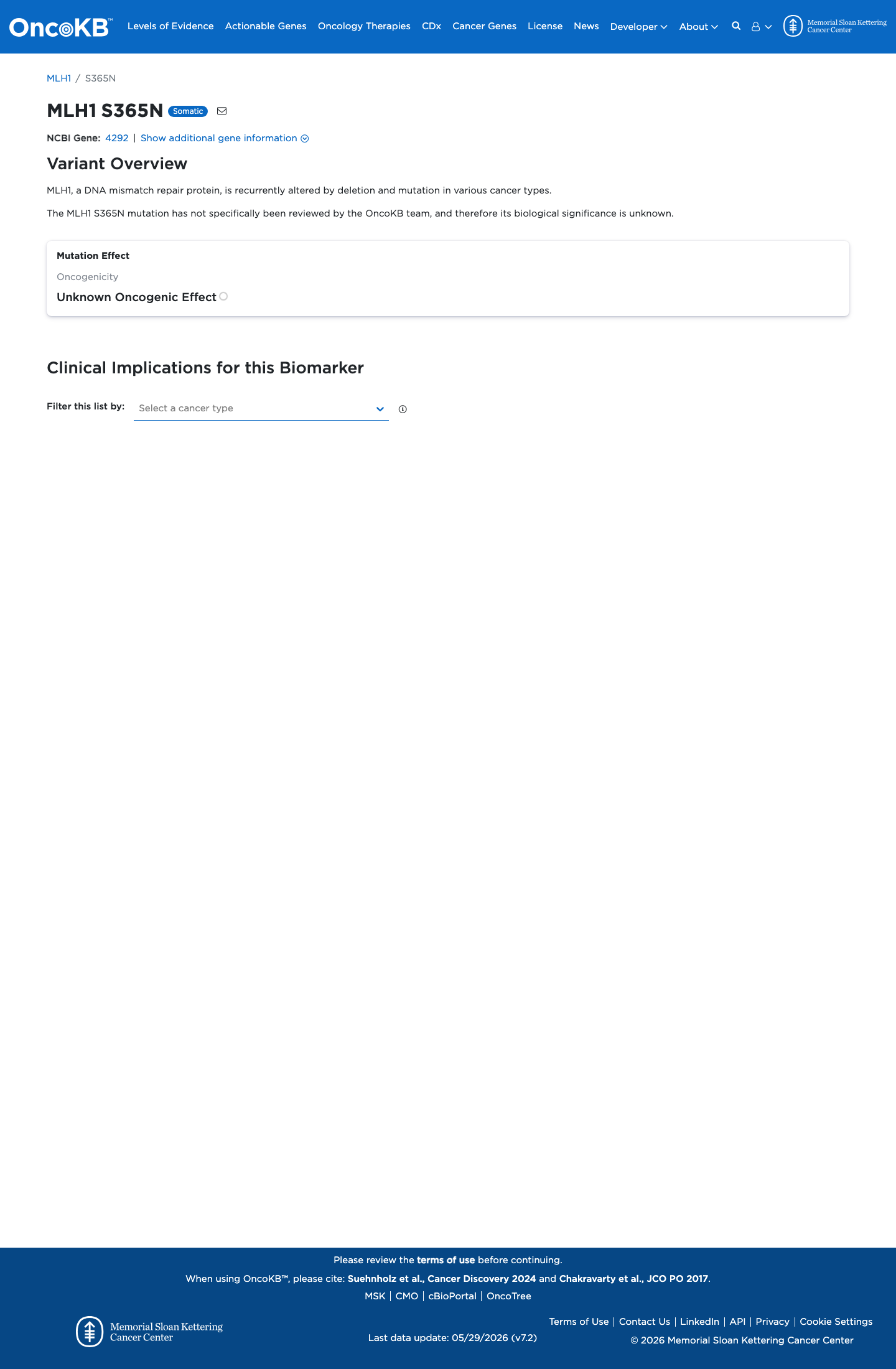
Unknown Oncogenic Effect
OncoKB did not identify variant-specific reviewed functional evidence for this variant; gene-level curated context is available for reviewer follow-up. MLH1, a DNA mismatch repair protein, is recurrently altered by deletion and mutation in various cancer types.

COSMIC

Cancer hotspots
Somatic evidence
Not in COSMIC / hotspots
COSMIC
This variant does not lie in a statistically significant hotspot. This variant has not previously been reported in somatic cancers (COSMIC).
Hotspots
This variant does not lie in a statistically significant hotspot.
Sources & reference links
Triaged references · 9 PMIDs not cited in assessment
15662714 ↗
Identification of Muir-Torre syndrome among patients with sebaceous tumors and keratoacanthomas: role of clinical features, microsatellite instability, and immunohistochemistry.
CLINVAR
25070057 ↗
Guidelines on genetic evaluation and management of Lynch syndrome: a consensus statement by the US Multi-society Task Force on colorectal cancer.
CLINVAR
25645574 ↗
ACG clinical guideline: Genetic testing and management of hereditary gastrointestinal cancer syndromes.
CLINVAR
25741868 ↗
Standards and guidelines for the interpretation of sequence variants: a joint consensus recommendation of the American College of Medical Genetics and Genomics and the Association for Molecular Pathology.
CLINVAR
11598466 ↗
Practice parameters for the identification and testing of patients at risk for dominantly inherited colorectal cancer--supporting documentation.
CLINVAR
15604628 ↗
Genetic cancer risk assessment and counseling: recommendations of the national society of genetic counselors.
CLINVAR
20065170 ↗
American Society of Clinical Oncology policy statement update: genetic and genomic testing for cancer susceptibility.
CLINVAR
28492532 ↗
Sherloc: a comprehensive refinement of the ACMG-AMP variant classification criteria.
CLINVAR