NM_004448.4:c.2264T>C (p.Leu755Ser) in ERBB2 is a missense variant located in the protein kinase domain at a statistically significant mutational hotspot. This variant is absent from gnomAD v2.1 and v4.1 population databases (PM2_moderate).1 The variant lies in the kinase domain (aa 720–987), a critical functional region with no benign variation observed at this residue, meeting PM1 at the moderate level.2 Multiple well-established in vitro functional studies demonstrate p.Leu755Ser is an activating (gain-of-function) mutation that hyperactivates downstream RAS/MAPK and PI3K/AKT signaling and confers resistance to endocrine and HER2-targeted therapies (PS3_moderate).3 In silico meta-predictor REVEL yields a score of 0.86, supporting a deleterious effect (PP3_supporting).4 No de novo occurrence, co-segregation data, or germline case-control studies have been reported for this variant. Per generic ACMG/AMP 2015 combination rules (PMID:25741868), the evidence profile of 3 moderate criteria (PS3, PM1, PM2) and 1 supporting criterion (PP3) meets the Likely Pathogenic classification threshold (≥3 moderate criteria).5
Final classification
Likely Pathogenic
PS3PM1PM2PP3
ERBB2
c.2264T>C
p.Leu755Ser
This variant
NM_004448.4:c.2264T>C (p.Leu755Ser) in ERBB2 is a missense variant located in the protein kinase domain at a statistically significant mutational hotspot.
gene-specific framework lacked a usable explicit final combination framework, so generic ACMG/AMP 2015 final-combination rules were applied as fallback; applied criteria: PS3 moderate, PM1 moderate, PM2 moderate, PP3 supporting; combination = 3 moderate + 1 supporting, which maps to Likely Pathogenic.
Classification rationale
PS3PM1PM2PP3
Likely Pathogenic
ERBB2 c.2264T>C
PS3 + PM1 + PM2 + PP3
→
Likely Pathogenic
LYFE Sciences is an AI system, and it can make mistakes. Criteria
may be applied incorrectly, sources may be misread, and a confident-looking
classification can still be wrong. Double-check every criterion and
its underlying evidence before relying on any call.
Gene diagram
· NM_004448.4 · variants mapped to exon structure
ERBB2
NM_004448.4
Fetching transcript structure from UCSC…
Applied criteria · 4 applied · 19 assessed
MetEvidence satisfies this criterion.
Not metEvaluated against available evidence; threshold not reached.
Not assessedApplies in principle, but no evidence was found to evaluate it.
N/ADoesn't apply to this variant type.
Applied · 4
Strength
Supporting
Moderate
Strong
Very strong
PS3
moderate
Pathogenic
Multiple well-established in vitro functional studies demonstrate that p.Leu755Ser is an activating (gain-of-function) mutation in the ERBB2 kinase domain, conferring resistance to endocrine therapies and hyperactivating downstream RAS/MAPK and PI3K/AKT signaling. At least two independent studies (PMID:30531871 and PMID:28487443) confirm the damaging functional effect.
PMID:30531871 (Nayar et al. 2019): Full text confirms L755S is an acquired activating HER2 kinase domain mutation. In T47D and MCF7 cellsL755S confers strong resistance to estrogen deprivationtamoxifen
PM1
moderate
Pathogenic
The variant is located in the ERBB2 protein kinase domain (aa 720–987), a critical functional region. Residue Leu755 lies in a statistically significant mutational hotspot with recurrent somatic missense alterations (L755S, L755P, L755W) and no benign variation observed at this position.
Residue 755 is in the kinase domain (aa 720–987)essential for ERBB2 catalytic activity.Statistically significant hotspot per cancerhotspots.org.
PM2
moderate
Pathogenic
This variant is absent from gnomAD v2.1 and v4.1 (allele frequency <0.1%), meeting the PM2 threshold for a rare variant absent from population controls.
Absent from gnomAD v2.1 (exomes).Absent from gnomAD v4.1 (exomes).Allele frequency effectively 0
PP3
supporting
Pathogenic
In silico meta-predictor REVEL gives a score of 0.86, above the 0.5 threshold, supporting a deleterious effect. BayesDel is intermediate (0.313). SpliceAI predicts no splice impact (max delta 0.02), which is neutral for a missense variant. The REVEL score supports PP3 at the supporting level.
REVEL score: 0.86 (damaging).BayesDel score: 0.313 (intermediatenon-contributory).
Assessed · not applied
· 17 not met · 2 not assessed
Pathogenic
PS1
No alternative nucleotide change at c.2264 producing the same p.(Leu755Ser) amino acid change has been identified and classified as pathogenic in ClinVar or the literature.
PS2
No de novo germline occurrence of c.2264T>C (p.Leu755Ser) has been reported.
PS4
No germline case-control study comparing allele frequency of c.2264T>C in affected individuals versus healthy controls has been performed.
PM5
No pathogenic germline missense variant at the same residue (Leu755) with a different amino acid change was identified.
PM6
No de novo germline observation of this variant has been reported, with or without confirmed parentage.
PP1
No published co-segregation study for ERBB2 c.2264T>C (p.Leu755Ser) in a germline cancer predisposition family was identified.
PP2
Insufficient data to establish that ERBB2 has a low rate of benign missense variation in the germline context.
PP4
No patient phenotype or family history data was provided with this case.
PP5
No reputable source has independently classified this variant as pathogenic in a germline context.
Benign
BA1
This variant is absent from gnomAD v2.1 and v4.1 (allele frequency = 0).
BS1
This variant is absent from gnomAD v2.1 and v4.1.
BS2
No observation of this variant in a healthy adult individual has been reported for a recessive or fully penetrant disorder.
BS3
Well-established functional studies (PMID:30531871, PMID:28487443) demonstrate that p.Leu755Ser has a gain-of-function, activating effect on ERBB2 kinase activity and downstream signaling.
BS4
No co-segregation data are available for this variant in affected families.
BP1
BP1 applies when a missense variant occurs in a gene where primarily truncating variants cause disease.
BP2
No observation of this variant in trans with a pathogenic variant in a fully penetrant dominant disorder has been reported.
BP4
REVEL score of 0.86 predicts a damaging effect.
BP5
No evidence that this variant has been observed in a case with an alternate molecular basis for disease.
BP6
No reputable source has classified this variant as benign.
N/A · 2
PVS1 · BP7
Research & evidence
Population frequency · supports pathogenic
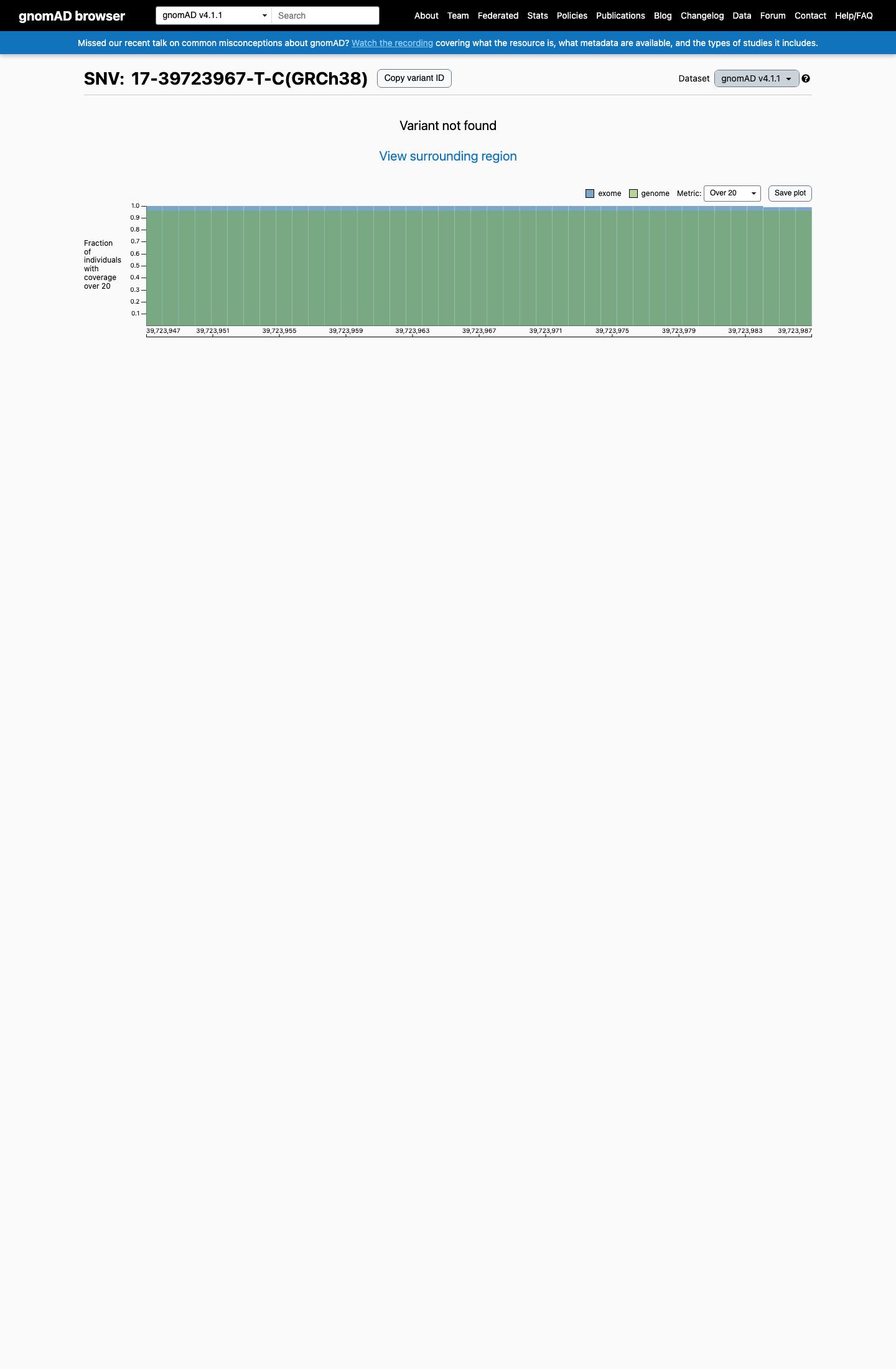
gnomAD v4.1
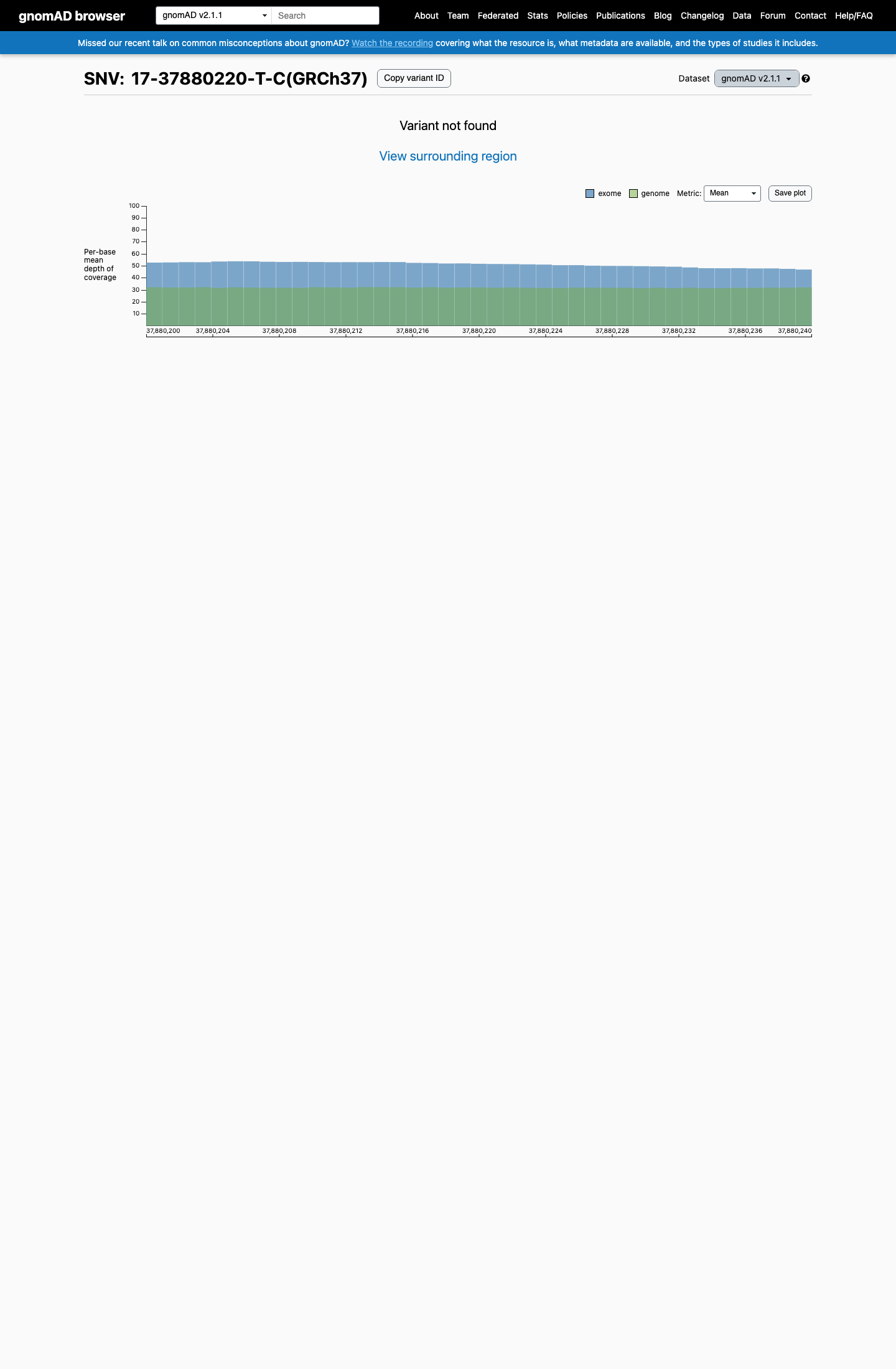
gnomAD v2.1
v4.1
Absent from gnomAD v4.1.
v2.1
Absent from gnomAD v2.1.
🇨🇦 CA
This variant is absent from gnomAD-Canada.
Allele frequency by ancestry
three datasets · side by side
gnomAD v4.1
Absent
· 0 / ?
0 hom
0 hom
Not observed in any ancestry group.
gnomAD v2.1
Absent
· 0 / ?
0 hom
0 hom
Not observed in any ancestry group.
gnomAD Canada 🇨🇦
Absent
· 0 / ?
0 hom
0 hom
Not observed in any ancestry group.
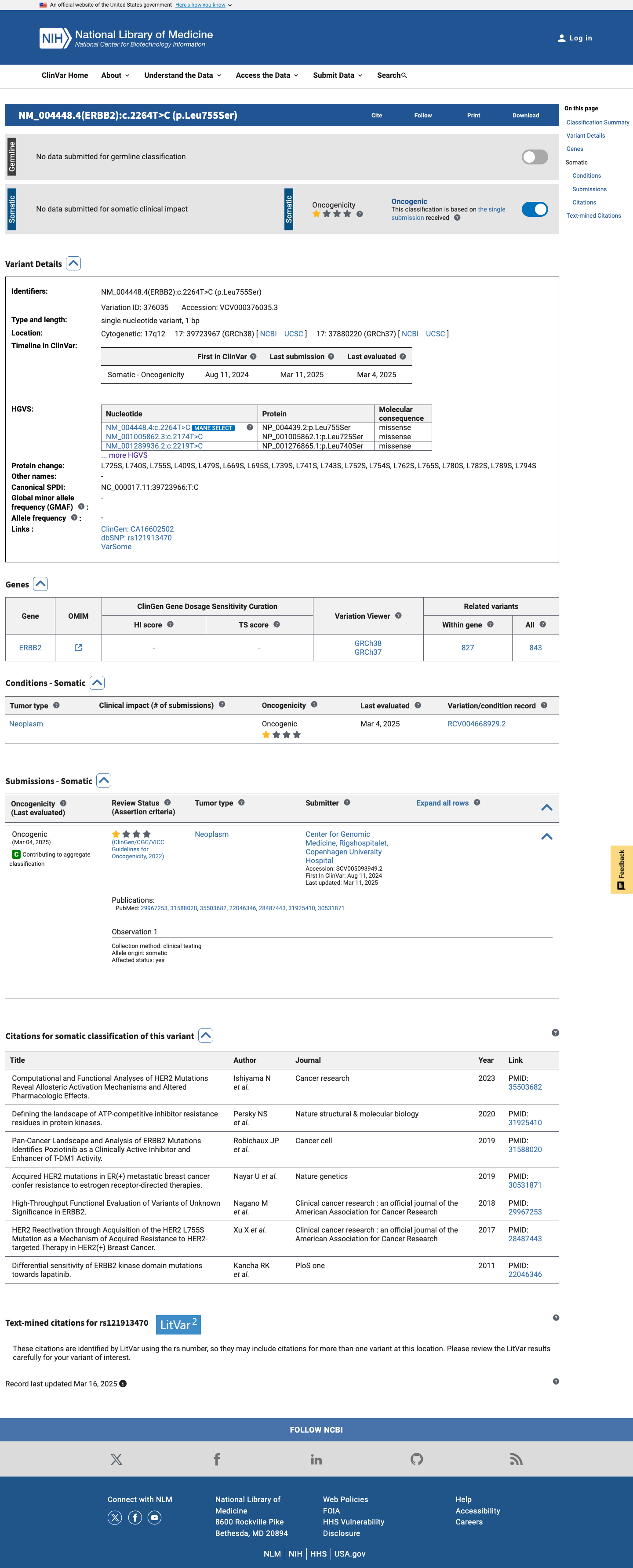
ClinVar
This variant has been reported in ClinVar but submission details could not be extracted. (ClinVarID = 376035)
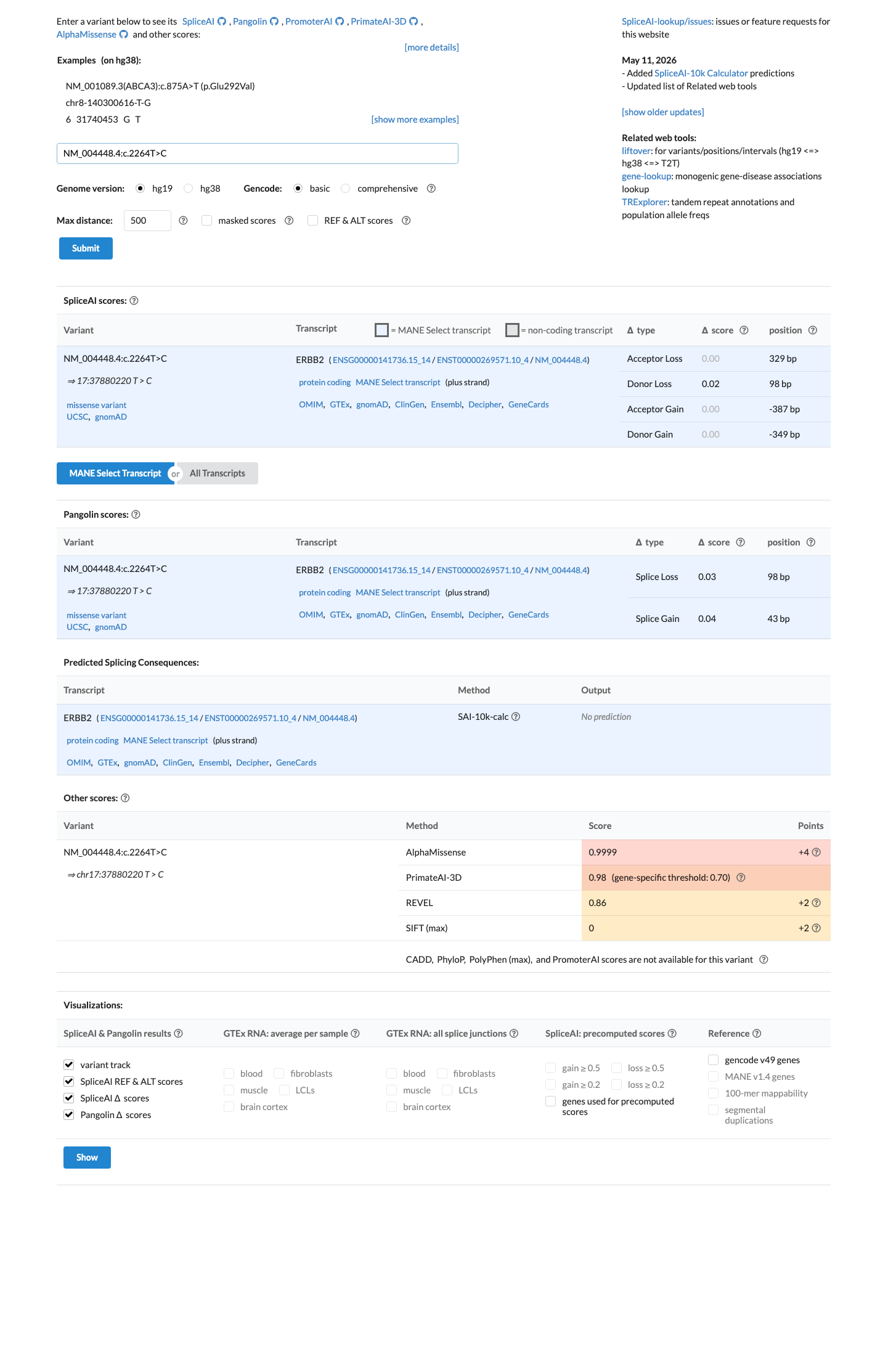
In silico
SpliceAI predicts no significant splice impact for this variant (max delta score = 0.02). REVEL score = 0.86. BayesDel score = 0.312741.
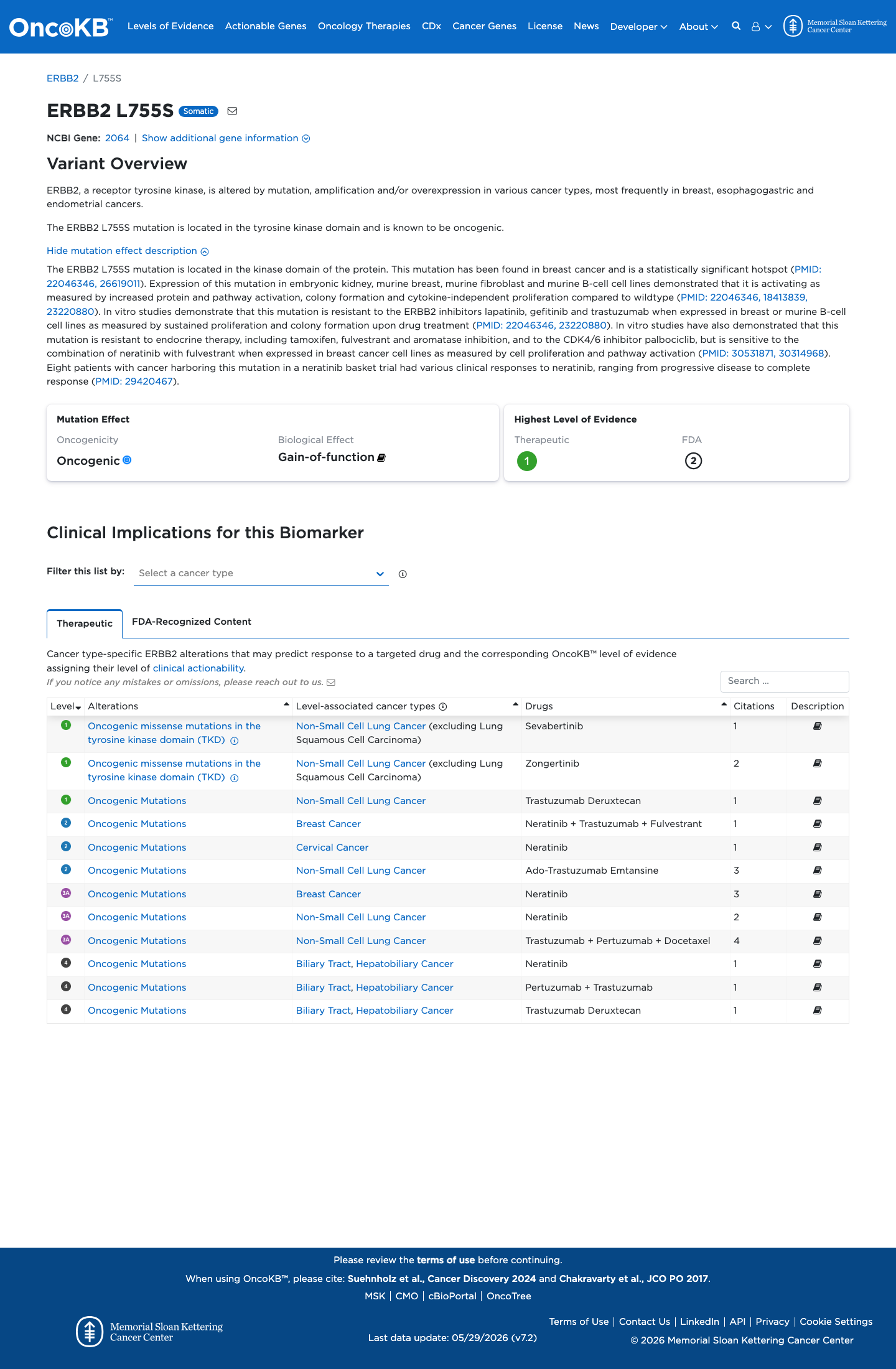
Functional
Oncogenic
OncoKB identified variant-specific curated literature and context relevant to functional review; biological-effect context: Gain-of-function; curated oncogenicity label: Oncogenic.
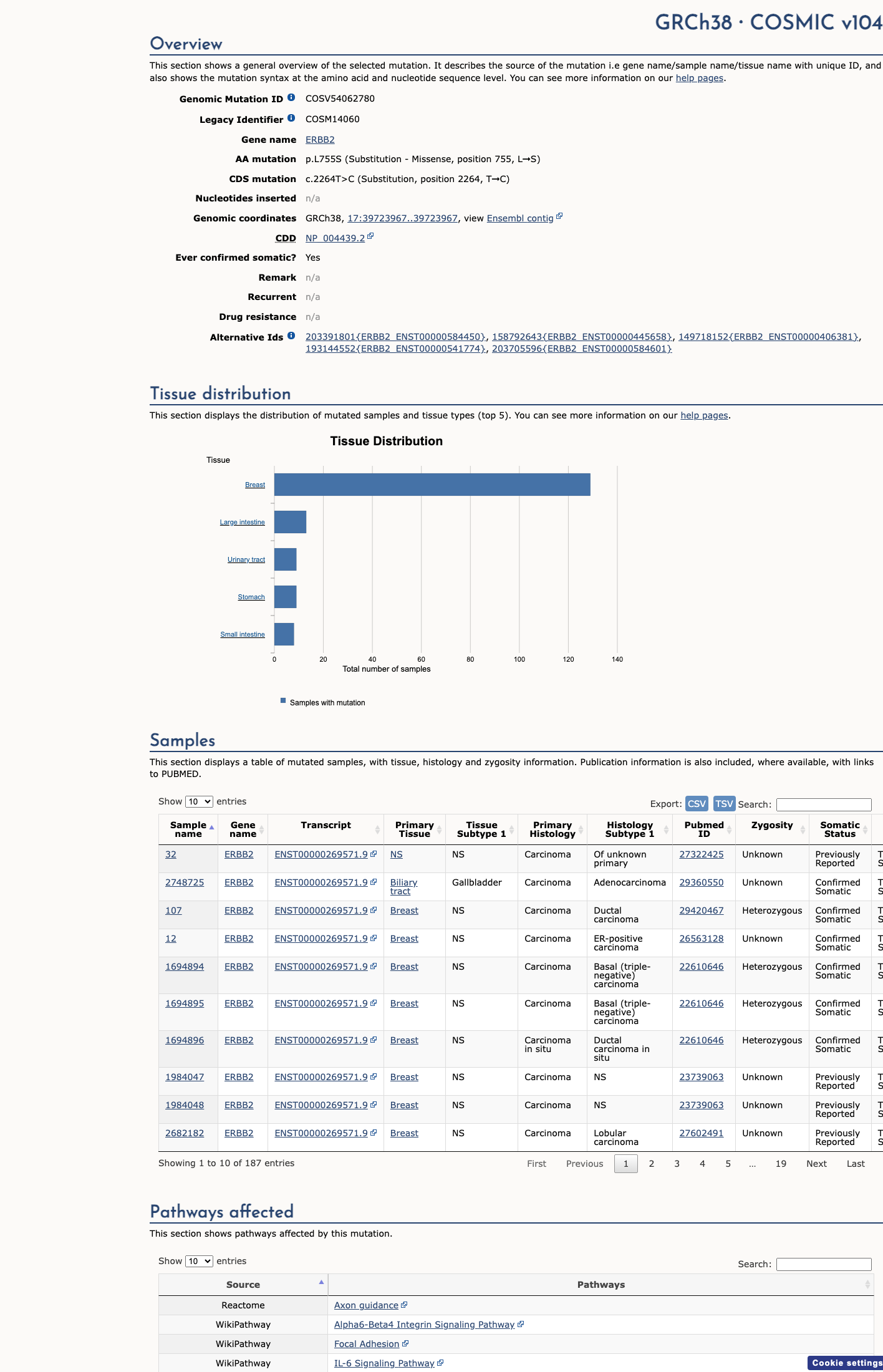
COSMIC

Cancer hotspots
Somatic evidence
Hotspot
COSMIC
This variant lies in a statistically significant hotspot. This variant has previously been reported in somatic cancers (COSMIC; COSV54062780, n = 173 times).
Hotspots
This variant lies in a statistically significant hotspot.
Literature · how each cited paper was used
2papers cited
Each card is an audit: what was searched, what was found, whether it names the variant, which criteria it fed, and why. 7 further PMIDs triaged but not cited — see Sources & references.
HER2 Reactivation through Acquisition of the HER2 L755S Mutation as a Mechanism of Acquired Resistance to HER2-targeted Therapy in HER2(+) Breast Cancer.
Found
(Xu et al.
Applied to
→PS3
moderate
Acquired HER2 mutations in ER+ metastatic breast cancer confer resistance to estrogen receptor-directed therapies.
Searched
c.2264T>Cp.Leu755SerL755S
Found
L755S conferred resistance to estrogen deprivation, tamoxifen, fulvestrant, and GDC-0810 in T47D and MCF7 ER+ breast cancer cells, with hyperphosphorylation of ERK and AKT, suppression of ER signaling (downregulated ESR1, PGR, GREB1), and induction of a RAS/MAPK transcriptional signature. Neratinib restored fulvestrant sensitivity.
Variant
✓ Names this variant — characterised directly
Applied to
→PS3
met
Why
Variant-specific functional data confirmed gain-of-function effect with endocrine and HER2-targeted therapy resistance; referenced in PS3 (moderate) and BS3 (not met, contradictory) assessments.
The kinase domain mutants HER2 p.Leu755Ser, p.Val777Leu, and p.Leu869Arg have previously been identified and characterized as activating in breast cancer
Location Results para 1 (patient cohort); Figure 3a–g (functional assays); Figure 6a–d (neratinib rescue) · Context T47D and MCF7 ER+ breast cancer cell lines; lentiviral transduction; CellTiter-Glo viability assay; western blot for p-ERK/p-AKT; qRT-PCR for ER target genes; RNA-seq transcriptomic profiling · full text
Sources & reference links
Triaged references · 7 PMIDs not cited in assessment
18413839 ↗
EXEL-7647 inhibits mutant forms of ErbB2 associated with lapatinib resistance and neoplastic transformation.
ONCOKB
26619011 ↗
Identifying recurrent mutations in cancer reveals widespread lineage diversity and mutational specificity.
ONCOKB
30314968 ↗
Combined Blockade of Activating ERBB2 Mutations and ER Results in Synthetic Lethality of ER+/HER2 Mutant Breast Cancer.
ONCOKB
23619274 ↗
American College of Medical Genetics and Genomics technical standards and guidelines: microarray analysis for chromosome abnormalities in neoplastic disorders.
CLINVAR