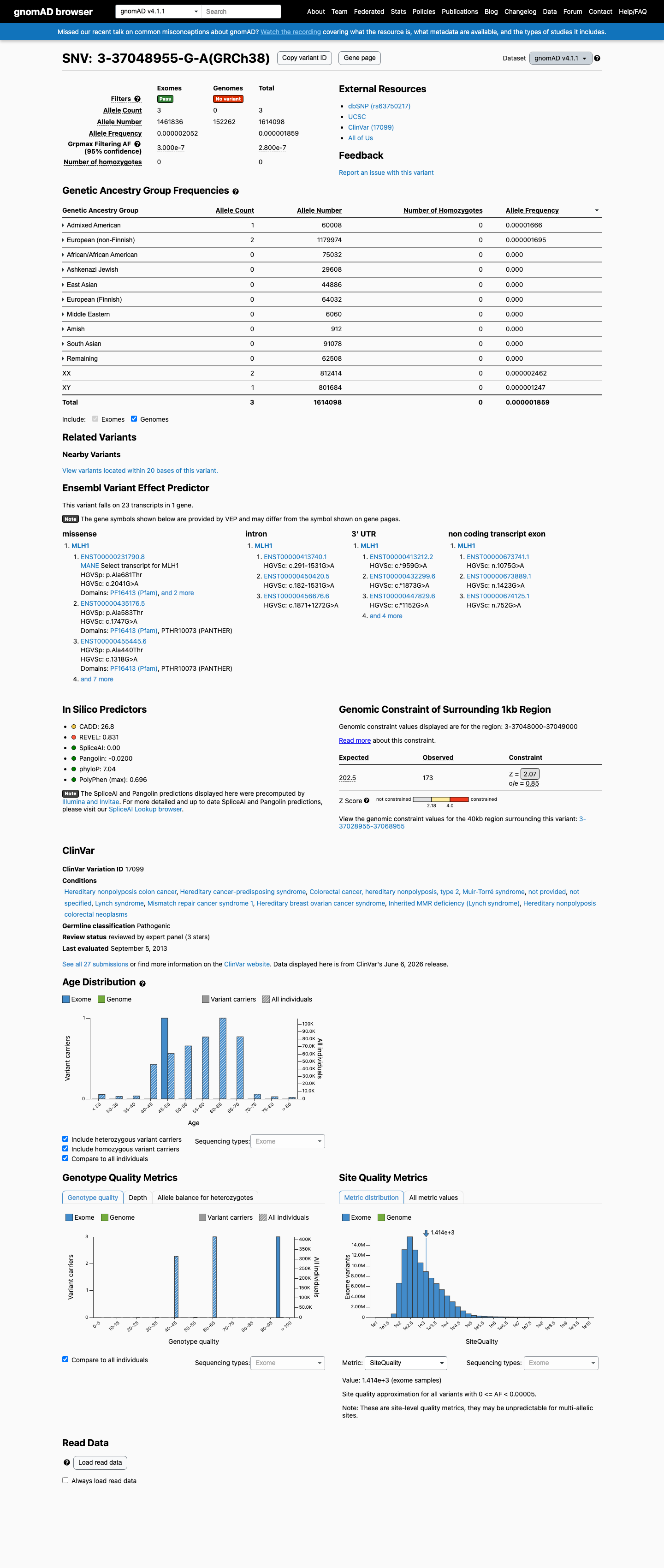
PM2_Supporting is met: the variant is extremely rare in gnomAD v4.1 (AF=1.86e-6, grpmax FAF=2.8e-7, well below the VCEP threshold of <0.00002).1 PP1_Strong is met: the variant cosegregates with Lynch syndrome in 11 individuals from an extended Scottish kindred and 5 Polish cancer families (PMID:23403630), with a combined Bayes Likelihood Ratio exceeding 18.7.2 PP4_Strong is met: among 43 reported carriers, 88% (15/17) of tumors tested were MSI-H and 100% (15/15) showed loss of MLH1 protein by IHC, exceeding the VCEP threshold of ≥3 independent MSI-H tumors in ≥2 families (PMID:23403630).3 BP4_Supporting is met: the HCI prior probability of pathogenicity is 0.0273 (<0.11), suggesting a benign computational prediction. However, this is contradicted by strong clinical evidence.4 The InSiGHT VCEP MLH1 v2.0.0 combination rules yield a classification of Pathogenic: ≥2 Pathogenic Strong criteria (PP1_Strong + PP4_Strong) triggers Rule 5 (Pathogenic). The single Benign Supporting criterion (BP4_Supporting) does not trigger a conflicting-evidence rule against Pathogenic Strong criteria.5
Final classification
Pathogenic
PM2PP1PP4BP4
MLH1
c.2041G>A
p.Ala681Thr
This variant
PM2_Supporting is met: the variant is extremely rare in gnomAD v4.1 (AF=1.86e-6, grpmax FAF=2.8e-7, well below the VCEP threshold of <0.00002).
ClinGen InSiGHT Hereditary Colorectal Cancer/Polyposis Expert Panel Specifications to the ACMG/AMP Variant Interpretation Guidelines for MLH1 Version 2.0.0 v2.0.0 criteria-combination framework: matched Rule5 (Pathogenic.Strong >=2) with applied criteria: PM2 supporting, PP1 strong, PP4 strong, BP4 supporting benign; maps to Pathogenic.
Classification rationale
PM2PP1PP4
BP4
Pathogenic
MLH1 c.2041G>A
PM2 + PP1 + PP4 + BP4
→
Pathogenic
4
hci_prior
5
cspec ↗final_classification_framework
LYFE Sciences is an AI system, and it can make mistakes. Criteria
may be applied incorrectly, sources may be misread, and a confident-looking
classification can still be wrong. Double-check every criterion and
its underlying evidence before relying on any call.
Gene diagram
· NM_000249.4 · variants mapped to exon structure
MLH1
NM_000249.4
Fetching transcript structure from UCSC…
Applied criteria · 4 applied · 11 assessed
MetEvidence satisfies this criterion.
Not metEvaluated against available evidence; threshold not reached.
Not assessedApplies in principle, but no evidence was found to evaluate it.
N/ADoesn't apply to this variant type.
Applied · 4
Strength
Supporting
Moderate
Strong
Very strong
PM2
supporting
Pathogenic
The variant is extremely rare in population databases. In gnomAD v4.1, the allele frequency is 1.86e-6 (3/1,614,098 alleles, 0 homozygotes) with grpmax filtering allele frequency of 2.8e-7, which is well below the InSiGHT VCEP threshold of <0.00002 (<1 in 50,000 alleles). The variant is absent from gnomAD v2.1 and gnomAD-Canada v1.0.
gnomAD v4.1: AF=1.86e-6 (3/1614098)
PP1
strong
Pathogenic
Strong cosegregation with Lynch syndrome has been demonstrated in multiple families. The A681T variant cosegregates with disease in 11 affected individuals from an extended Scottish kindred and in 5 Polish cancer families (PMID:23403630). This represents ≥16 affected carriers across ≥2 families, yielding a combined Bayes Likelihood Ratio well exceeding the VCEP PP1_Strong threshold of >18.7.
Cosegregation in 11 individuals from extended Scottish kindredcosegregation in 5 Polish cancer families (PMID:23403630 Table 1)
PP4
strong
Pathogenic
Multiple independent tumors from A681T carriers demonstrate MSI-H and loss of MLH1 protein expression by immunohistochemistry. Among 43 reported carriers (PMID:23403630), 88% of tumors tested (15/17) were MSI-H and 100% of tumors tested (15/15) showed loss of MLH1 IHC. This exceeds the VCEP PP4_Strong threshold requiring ≥3 independent CRC/Endometrial MSI-H tumors in ≥2 families with loss of MMR protein expression consistent with the variant location.
88% MSI-H (15/17 tumors)100% loss of MLH1 IHC (15/15 tumors)43 reported carriers across multiple families (PMID:23403630 Table 1)
BP4
supporting
Benign
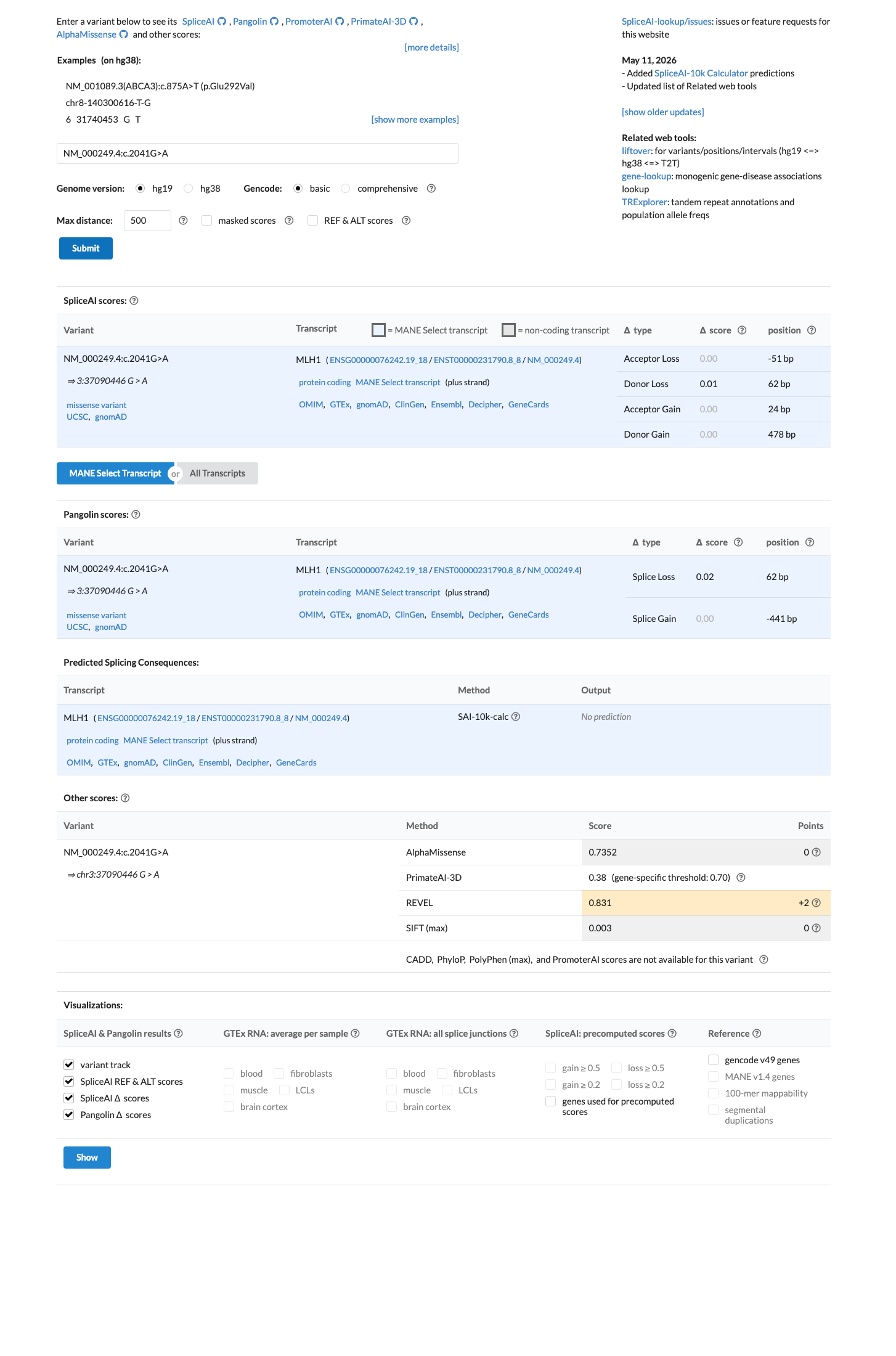
The HCI prior probability of pathogenicity for c.2041G>A (p.Ala681Thr) is 0.0273, which is below the InSiGHT VCEP BP4_Supporting threshold of <0.11. This indicates that computational evidence suggests a benign impact. SpliceAI shows no splicing impact (max delta = 0.01). BayesDel score is 0.47. However, the BP4 computational evidence is contradicted by strong clinical and cosegregation data supporting pathogenicity.
HCI prior = 0.0273 (<0.11 threshold for BP4_Supporting)SpliceAI max delta = 0.01BayesDel = 0.47
Assessed · not applied
· 8 not met · 3 not assessed
Pathogenic
PS1
No alternative nucleotide change encoding the same amino acid substitution (p.Ala681Thr) has been classified as Pathogenic by the InSiGHT VCEP.
PS2
No de novo occurrence data were identified in the literature or ClinVar submissions for this variant.
PS3
The MLH1 p.Ala681Thr variant is MMR proficient in vitro and shows ~52% protein expression relative to wild-type (PMID:23403630).
PM5
Under InSiGHT VCEP PM5 rules, a missense change at the same residue must have been classified as Pathogenic (PM5_Moderate) or Likely Pathogenic (PM5_Supporting) by this VCEP.
PP3
The HCI prior probability of pathogenicity for c.2041G>A (p.Ala681Thr) is 0.0273, which is far below the InSiGHT VCEP PP3_Supporting threshold of >0.68.
Benign
BA1
The grpmax filtering allele frequency in gnomAD v4.1 is 2.8e-7 (0.000028%), far below the InSiGHT VCEP BA1 threshold of ≥0.001 (0.1%).
BS1
The grpmax filtering allele frequency in gnomAD v4.1 is 2.8e-7 (0.000028%), far below the InSiGHT VCEP BS1 threshold of ≥0.0001 (0.01%).
BS2
No evidence of co-occurrence in trans with a known pathogenic MLH1 variant was identified in the available data.
BS3
The A681T variant is MMR proficient in in vitro repair assays (PMID:23403630).
BS4
Strong positive cosegregation with disease has been demonstrated (see PP1).
BP5
No evidence of MSS tumors or BRAF V600E/MLH1 methylation with retained MMR protein expression was identified for this variant.
N/A · 11
PVS1 · PS4 · PM1 · PM6 · PP2 · PP5 · BP1 · BP2 · BP3 · BP6 · BP7
Research & evidence
Population frequency · supports pathogenic
gnomAD v4.1
gnomAD v2.1
v4.1
This variant is present in gnomAD v4.1 (AF= 1.85862e-06; MAF= 0.00019%, 3/1614098 alleles, homozygotes = 0) and has highest observed frequency in the Admixed American population (AF= 1.66644e-05; MAF= 0.00167%, 1/60008 alleles, homozygotes = 0); grpmax FAF= 2.8e-07.
v2.1
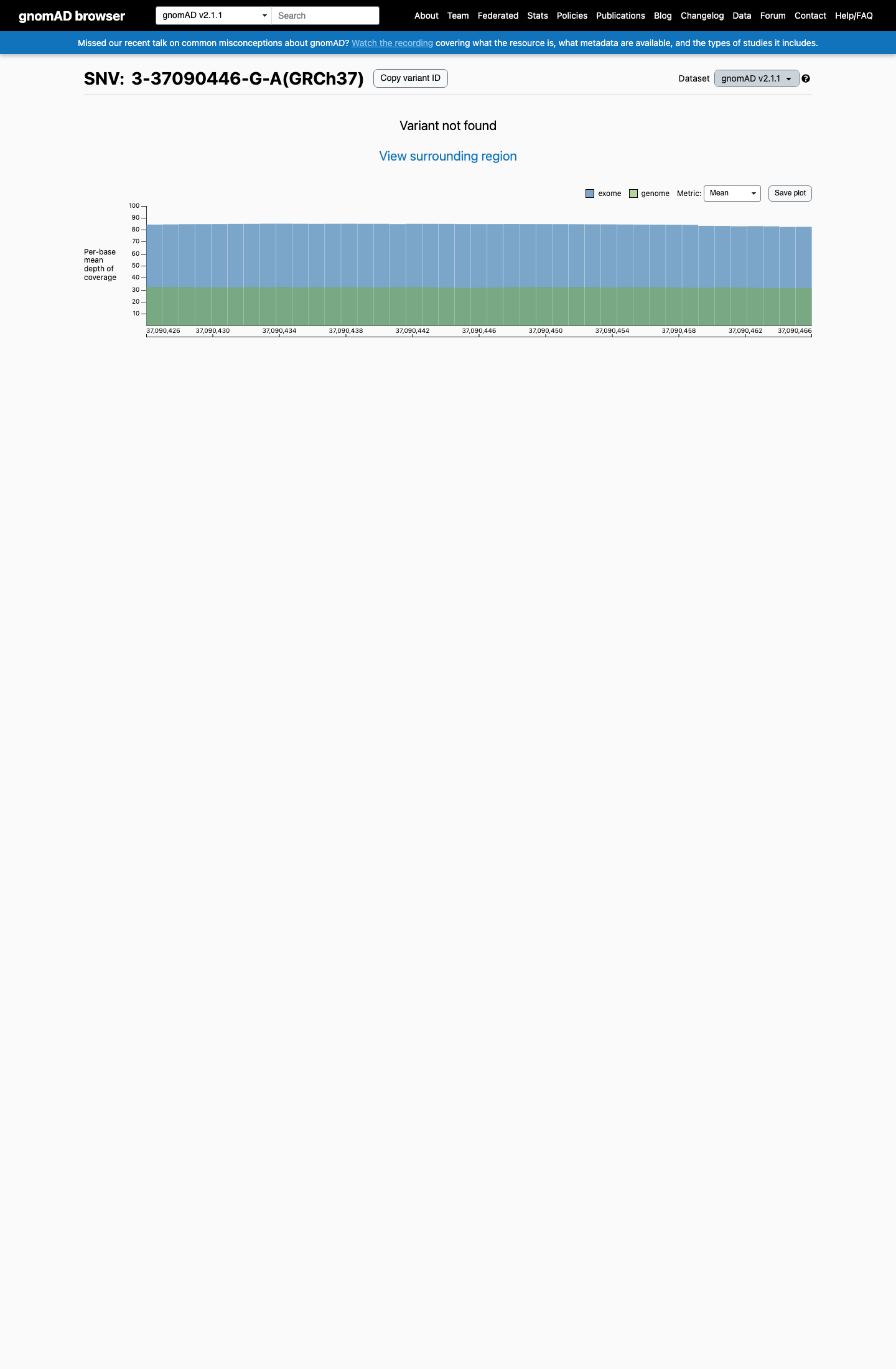
Absent from gnomAD v2.1.
🇨🇦 CA
Absent from gnomAD-Canada v1.0.
Allele frequency by ancestry
three datasets · side by side
gnomAD v4.1
0.00019%
· 3 / 1,614,098
0 hom · FAF 2.8e-05%
0 hom · FAF 2.8e-05%
Admixed American 1 / 60,008 |
0.0017% |
European (non-Finnish) 2 / 1,179,974 |
0.00017% |
+ 8 not observed (Remaining individuals, European (Finnish), Amish, East Asian, Middle Eastern, South Asian, Ashkenazi Jewish, African/African American)
gnomAD v2.1
Absent
· 0 / ?
0 hom
0 hom
Not observed in any ancestry group.
gnomAD Canada 🇨🇦
Absent
· 0 / ?
0 hom
0 hom
Not observed in any ancestry group.

ClinVar
This variant is present in ClinVar (Variation ID: 17099); submission details unavailable.
In silico
SpliceAI predicts no significant splice impact for this variant (max delta score = 0.01). REVEL score = 0.831. BayesDel score = 0.470252. HCI prior probability for pathogenicity = 0.0273. MAPP score = 8.22. Custom PP2 score = 0.198.
Functional
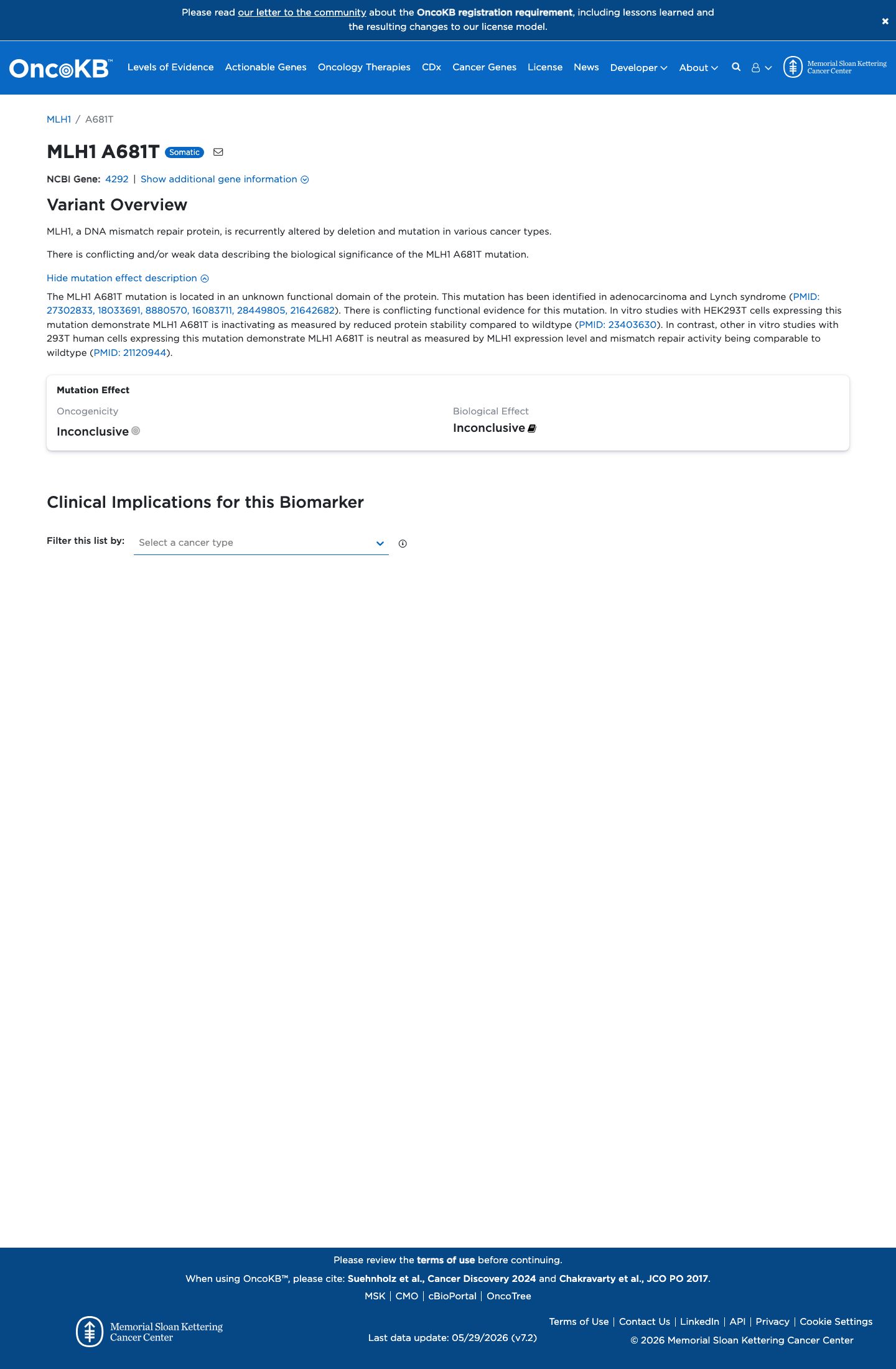
Inconclusive
OncoKB identified variant-specific curated literature and context relevant to functional review; biological-effect context: Inconclusive; curated oncogenicity label: Inconclusive.

COSMIC

Cancer hotspots
Somatic evidence
Not in COSMIC / hotspots
COSMIC
This variant does not lie in a statistically significant hotspot. This variant has not previously been reported in somatic cancers (COSMIC).
Hotspots
This variant does not lie in a statistically significant hotspot.
Literature · how each cited paper was used
1papers cited
Each card is an audit: what was searched, what was found, whether it names the variant, which criteria it fed, and why. 4 further PMIDs triaged but not cited — see Sources & references.
Expression defect size among unclassified MLH1 variants determines pathogenicity
Searched
c.2041G>Ap.Ala681ThrA681T
Found
MLH1 p.Ala681T was one of 38 missense variants functionally characterized. The variant was MMR proficient but showed a protein expression defect (~52% of wild-type) due to reduced stability (half-life decreased to 43% of wild-type). Clinical evaluation of 43 carriers showed average age at diagnosis of 42.6 years, 55% Amsterdam-positive, 88% tumor MSI, 100% loss of MLH1 IHC, and strong cosegregation in 11 individuals from a Scottish kindred and 5 Polish families. The variant was classified as pathogenic based on expression defect falling below the established pathogenicity threshold between neutral V716M and pathogenic A681T.
Variant
✓ Names this variant — characterised directly
Applied to
→PP1
met
→PP4
met
Why
Variant-specific functional and clinical evidence confirmed; expression defect and clinical data support PP1_Strong and PP4_Strong. Functional assay does not meet VCEP PS3 calibrated thresholds (MMR proficient, expression 52% not <10%).
Three as pathogenic (A681T, L622H, P654L). All seven variants were proficient in mismatch repair but showed defects in expression.
Location Abstract; Results (Table 1, Figure 4); Discussion · Context Transient transfection in HEK293T cells; in vitro MMR assay; qPCR for transcript quantification; pulse-chase protein stability assay; differential scanning fluorimetry for thermal stability · full text
Sources & reference links
9Sources
Triaged references · 4 PMIDs not cited in assessment