NM_024675.4:c.1652A>G (p.Tyr551Cys) is a missense variant in PALB2, a gene where loss of function is an established disease mechanism for PALB2-related cancer predisposition (autosomal dominant) and Fanconi anemia complementation group N (autosomal recessive).1 The variant is absent from gnomAD v2.1, v4.1, and gnomAD-Canada v1.0 across all populations, meeting the CSPEC PM2_Supporting threshold of ≤ 0.000333% allele frequency (PM2_Supporting).2 CSPEC PALB2 v1.2.0 applies BP1 (Supporting) to all missense variants, based on evidence that PALB2 has a very low rate of functional missense variants and true pathogenic missense changes are thought to be exceedingly rare (BP1_Supporting).3 Multiple CSPEC criteria are explicitly not applicable to PALB2 missense variants: PS1, PM1, PM5, PP2, PP3, and BP4 are all prohibited by VCEP rules because missense pathogenic variation is not yet confirmed as a disease mechanism for PALB2.4 PS3 and BS3 (functional studies) are marked not applicable by CSPEC; PS2 and PM6 (de novo) are not applicable; PP4 (phenotype specificity) and PP5 (reputable source) are not applicable for this VCEP; BP2, BP5, BP6, and BP7 are not applicable for this variant type.5 PS4 (case-control), PP1 (co-segregation), BS2 (FA probands), and BS4 (lack of segregation) could not be assessed due to absence of clinical proband, segregation, or case-control data in the evidence set.6 The variant has been reported in ClinVar as Uncertain Significance (VCV000856757) by 3 clinical laboratories with review status 'criteria provided, single submitter.' No expert panel classification is available.7 No variant-specific functional or clinical evidence was identified in the literature. All PMIDs associated with this ClinVar entry are general guidelines or review articles (ACMG/AMP standards, genetic counseling recommendations, USPSTF statements) that do not mention NM_024675.4:c.1652A>G or p.Tyr551Cys.8 Criterion summary: one pathogenic supporting criterion met (PM2_Supporting) and one benign supporting criterion met (BP1_Supporting). Per ACMG/AMP 2015 combining rules adopted by the CSPEC PALB2 framework (Rule31), the presence of both benign supporting and pathogenic supporting evidence results in a classification of Uncertain Significance with conflicting evidence.9
Final classification
Uncertain Significance - Conflicting Evidence
PM2BP1
PALB2
c.1652A>G
p.Tyr551Cys
This variant
NM_024675.4:c.1652A>G (p.Tyr551Cys) is a missense variant in PALB2, a gene where loss of function is an established disease mechanism for PALB2-related cancer predisposition (autosomal dominant) and Fanconi anemia complementation group N (autosomal recessive).
Richards et.al., 2015 - Combining rules v1.2.0 criteria-combination framework: matched Rule31 (Benign.Supporting >=1 + Pathogenic.Supporting >=1) with applied criteria: PM2 supporting, BP1 supporting benign; maps to Uncertain Significance - Conflicting Evidence.
Classification rationale
PM2
BP1
Uncertain Significance - Conflicting Evidence
PALB2 c.1652A>G
PM2 + BP1
→
Uncertain Significance - Conflicting Evidence
LYFE Sciences is an AI system, and it can make mistakes. Criteria
may be applied incorrectly, sources may be misread, and a confident-looking
classification can still be wrong. Double-check every criterion and
its underlying evidence before relying on any call.
Gene diagram
· NM_024675.4 · variants mapped to exon structure
PALB2
NM_024675.4
Fetching transcript structure from UCSC…
Applied criteria · 2 applied · 6 assessed
MetEvidence satisfies this criterion.
Not metEvaluated against available evidence; threshold not reached.
Not assessedApplies in principle, but no evidence was found to evaluate it.
N/ADoesn't apply to this variant type.
Applied · 2
Strength
Supporting
Moderate
Strong
Very strong
PM2
supporting
Pathogenic
Variant is absent from gnomAD v2.1, v4.1, and gnomAD-Canada v1.0. This meets the CSPEC PM2_Supporting threshold of frequency ≤ 0.000333% (≤ 1/300,000) in gnomAD v4. Per CSPEC, PM2 is used at Supporting strength, not Moderate.
Absent from gnomAD v2.1 (0 alleles)Absent from gnomAD v4.1 (0 alleles)Absent from gnomAD-Canada v1.0 (0 alleles)
BP1
supporting
Benign
CSPEC PALB2 v1.2.0 explicitly states: 'Apply to all missense variants.' Based on published and unpublished functional studies, PALB2 has a low rate of missense variants that are non-functional in relevant assays. True missense pathogenic variants are thought to be exceedingly rare. This rule applies to all missense variants, including p.Tyr551Cys.
CSPEC BP1: Supporting — apply to all missense variants in PALB2Variant is a missense substitution (p.Tyr551Cys)
Assessed · not applied
· 2 not met · 4 not assessed
Pathogenic
PS4
CSPEC PS4 requires case-control studies with p ≤ 0.05 AND (OR/HR/RR ≥ 3 OR lower 95% CI ≥ 1.5).
PP1
CSPEC PP1 requires quantitative co-segregation analysis (LOD scores or Bayes Factor LR) for AD disease or segregation in affected relatives for AR disease.
Benign
BA1
CSPEC BA1 requires Grpmax Filtering AF > 0.1% in gnomAD v4.
BS1
CSPEC BS1 requires Grpmax Filtering AF > 0.01% in gnomAD v4.
BS2
CSPEC BS2 requires Fanconi Anemia BS2 proband point-counting tables (BS2_Strong ≥ 4 points, BS2_Moderate = 2 points, BS2_Supporting = 1 point).
BS4
CSPEC BS4 requires quantitative co-segregation analysis (LOD ≤ -1.28 or LR ≤ 0.053 for Strong; LOD ≤ -0.64 or LR ≤ 0.23 for Moderate; LOD ≤ -0.32 or LR ≤ 0.48 for Supporting).
N/A · 20
PVS1 · PS1 · PS2 · PS3 · PM1 · PM3 · PM4 · PM5 · PM6 · PP2 · PP3 · PP4 · PP5 · BS3 · BP2 · BP3 · BP4 · BP5 · BP6 · BP7
Research & evidence
Population frequency
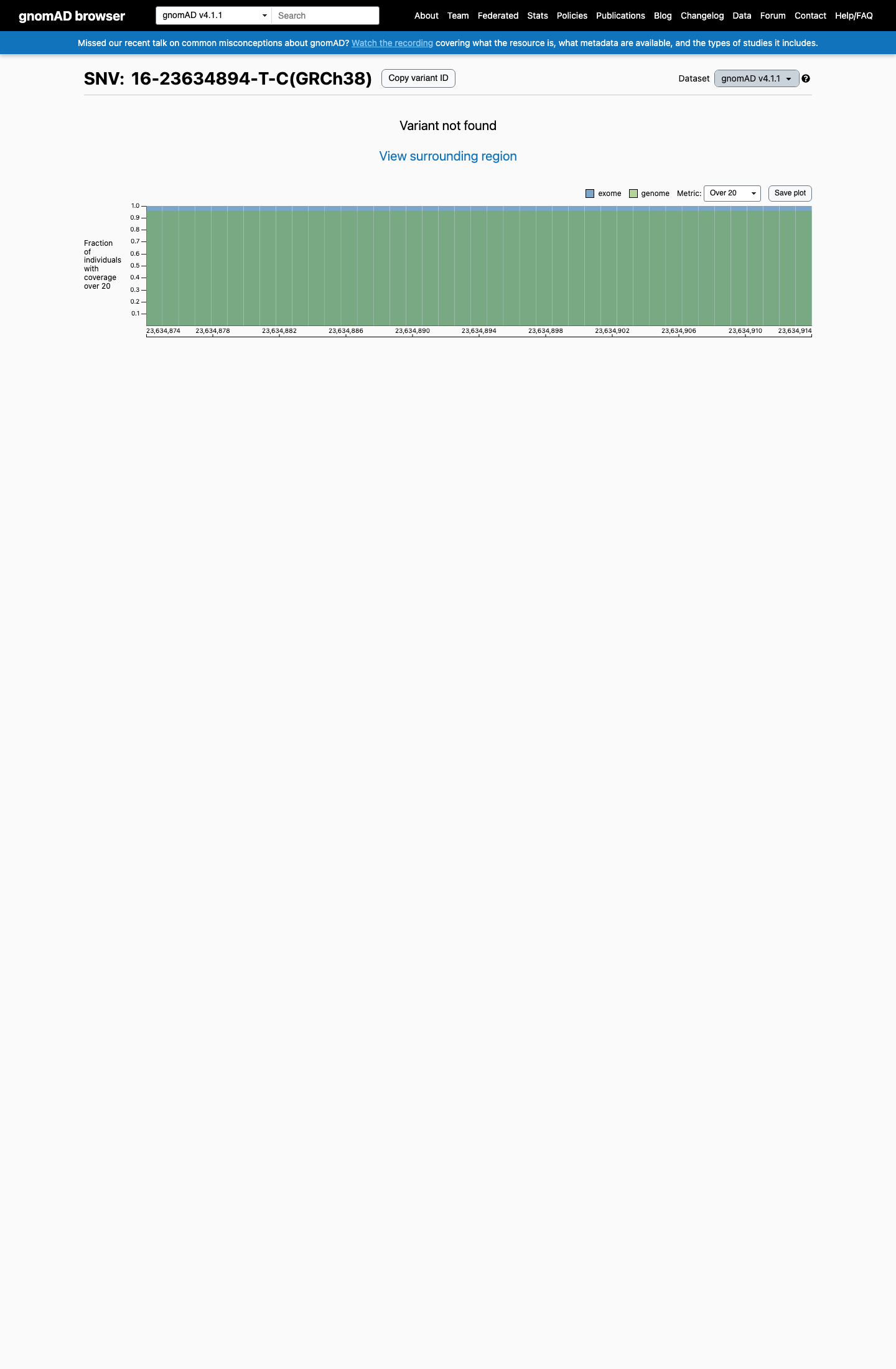
gnomAD v4.1
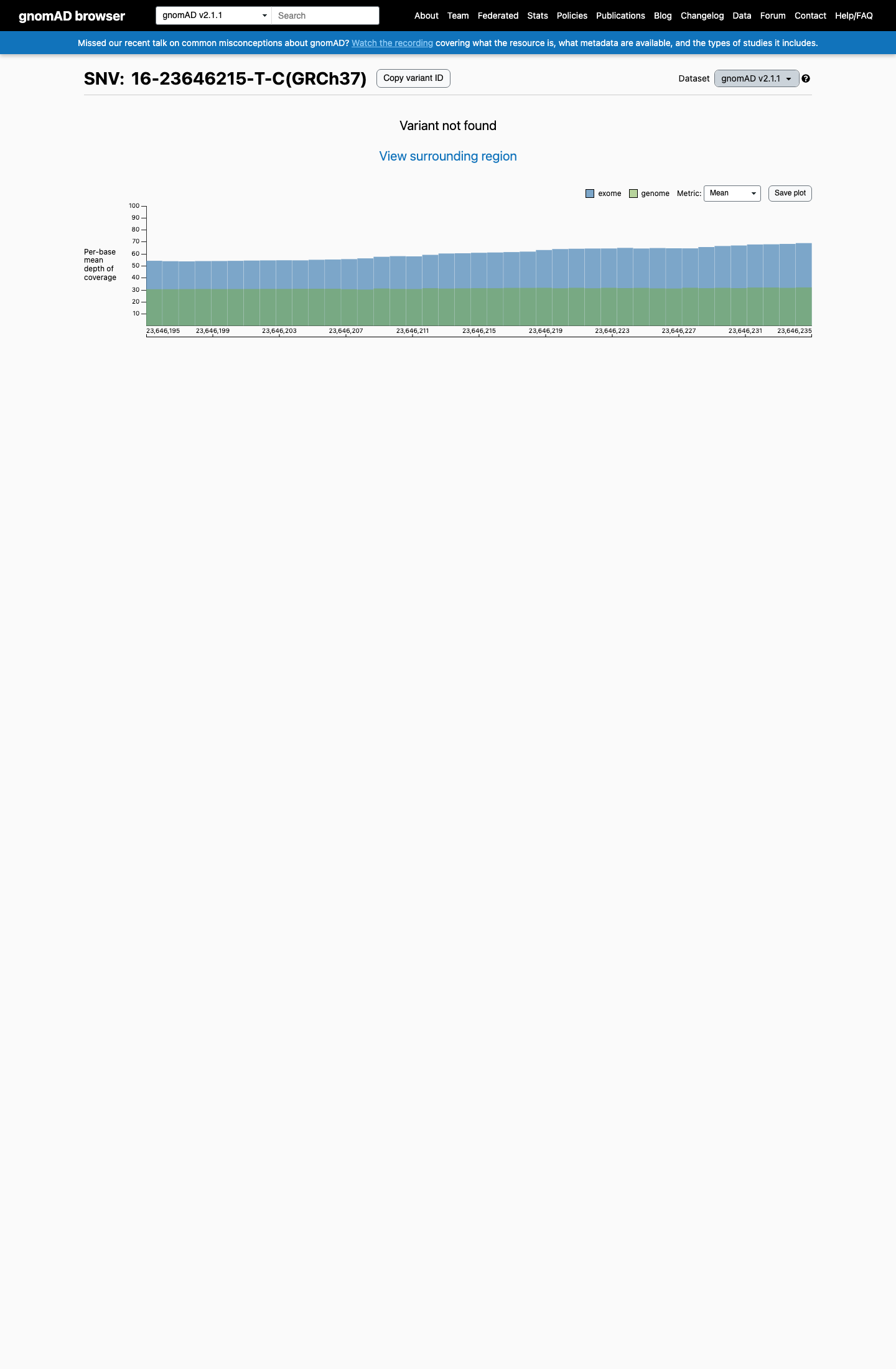
gnomAD v2.1
v4.1
Absent from gnomAD v4.1.
v2.1
Absent from gnomAD v2.1.
🇨🇦 CA
Absent from gnomAD-Canada v1.0.
Allele frequency by ancestry
three datasets · side by side
gnomAD v4.1
Absent
· 0 / ?
0 hom
0 hom
Not observed in any ancestry group.
gnomAD v2.1
Absent
· 0 / ?
0 hom
0 hom
Not observed in any ancestry group.
gnomAD Canada 🇨🇦
Absent
· 0 / ?
0 hom
0 hom
Not observed in any ancestry group.
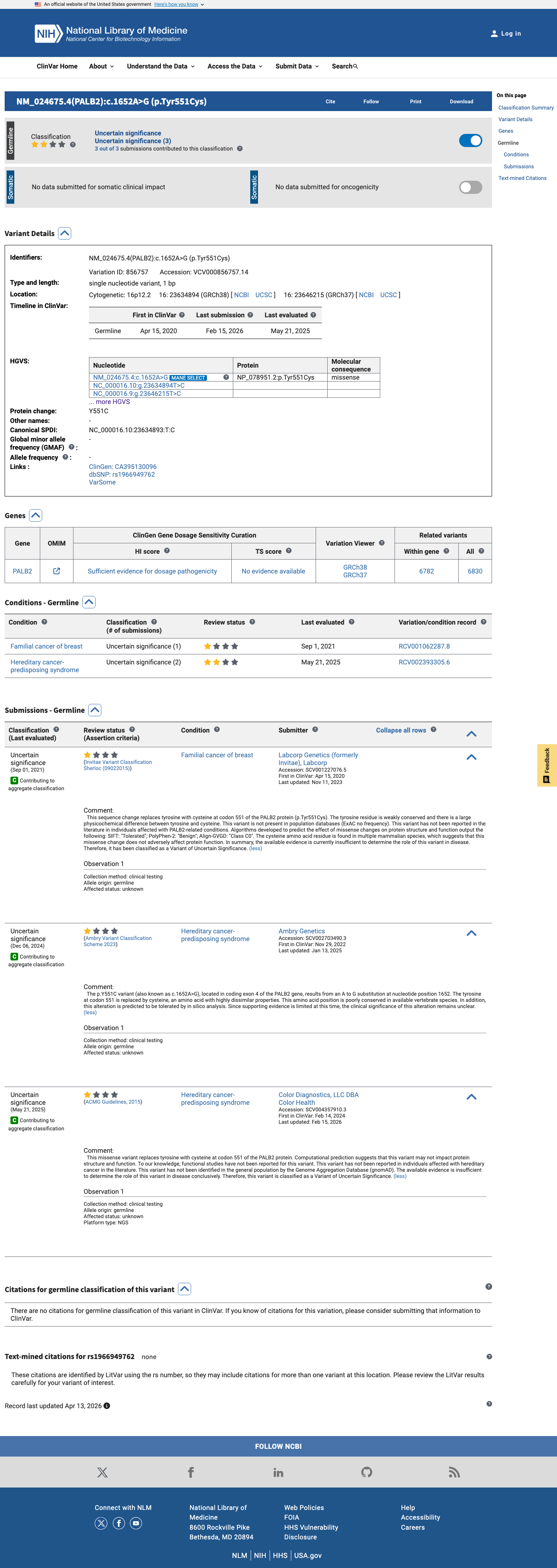
ClinVar
This variant has been reported in ClinVar as Uncertain significance (3 clinical laboratories). (ClinVarID = 856757)
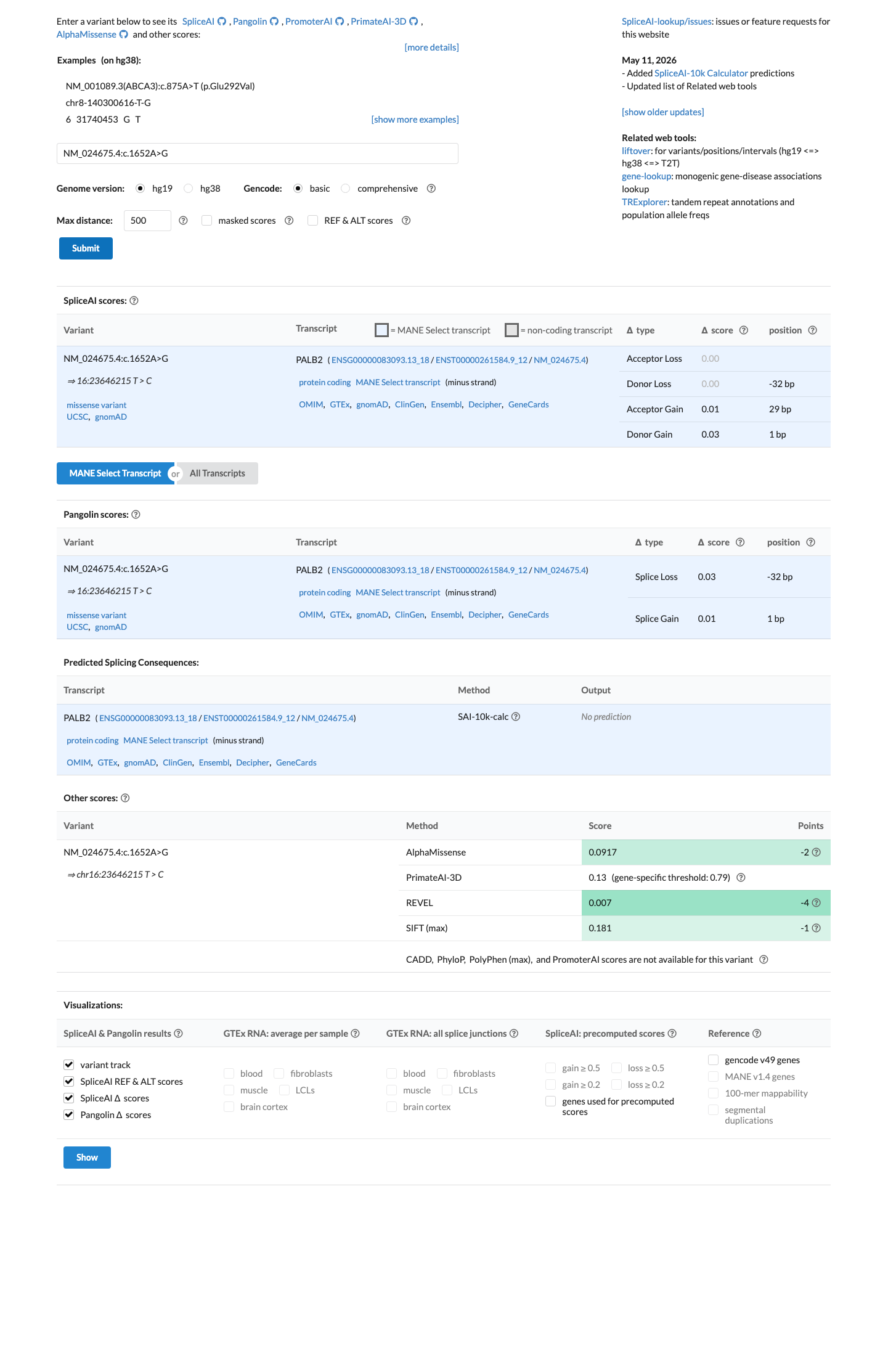
In silico
SpliceAI predicts no significant splice impact for this variant (max delta score = 0.03). REVEL score = 0.007. BayesDel score = -0.668197.
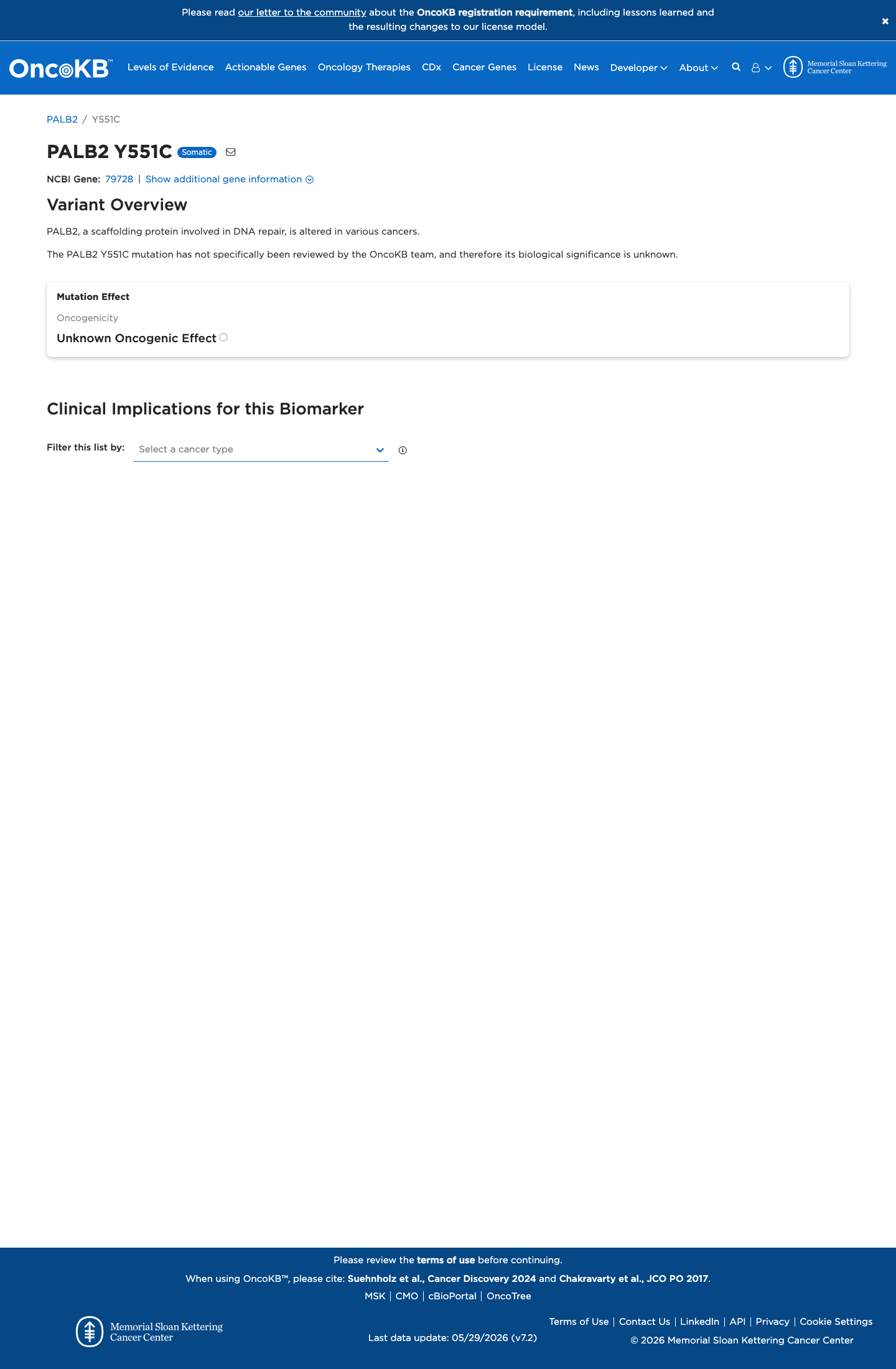
Functional
Unknown Oncogenic Effect
OncoKB did not identify variant-specific reviewed functional evidence for this variant; gene-level curated context is available for reviewer follow-up. PALB2, a scaffolding protein involved in DNA repair, is altered in various cancers.
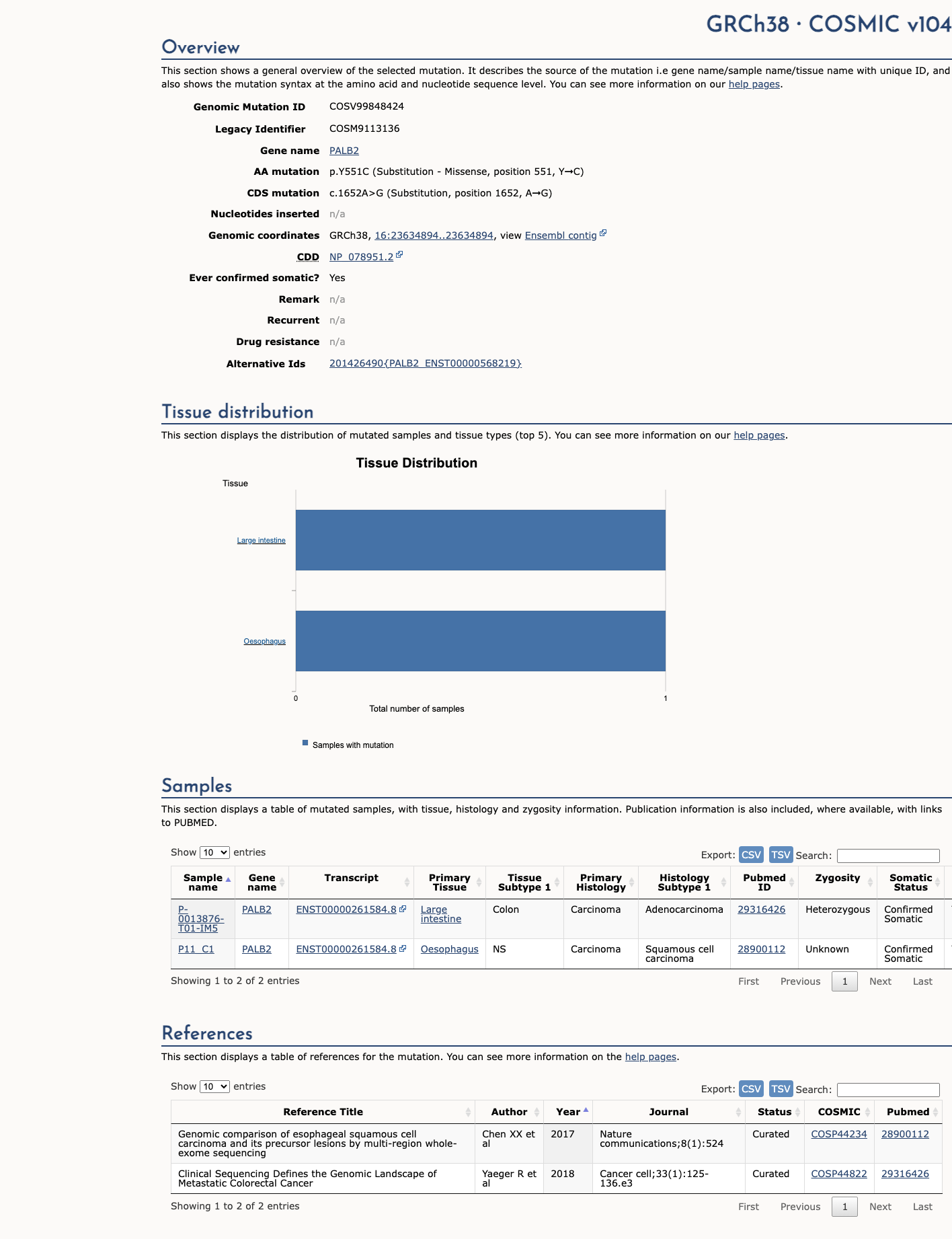
COSMIC

Cancer hotspots
Somatic evidence
Not in COSMIC / hotspots
COSMIC
This variant does not lie in a statistically significant hotspot. This variant has previously been reported in somatic cancers (COSMIC; COSV99848424, n = 2 times).
Hotspots
This variant does not lie in a statistically significant hotspot.
Sources & reference links
9Sources
Triaged references · 6 PMIDs not cited in assessment
25741868 ↗
Standards and guidelines for the interpretation of sequence variants: a joint consensus recommendation of the American College of Medical Genetics and Genomics and the Association for Molecular Pathology.
CLINVAR
15604628 ↗
Genetic cancer risk assessment and counseling: recommendations of the national society of genetic counselors.
CLINVAR
26389258 ↗
Cancer Genetics Risk Assessment and Counseling (PDQ®): Health Professional Version.
CLINVAR
31429903 ↗
Risk Assessment, Genetic Counseling, and Genetic Testing for BRCA-Related Cancer: US Preventive Services Task Force Recommendation Statement.
CLINVAR