NM_002524.5:c.182A>G (p.Gln61Arg) is a missense variant in exon 3 of NRAS affecting the critical Switch II domain (codon 61). This variant is absent from population databases (gnomAD v2.1, v4.1, gnomAD-Canada).1 The p.Gln61Arg amino acid change is an established pathogenic variant at the analogous residue in HRAS and KRAS, satisfying PS1 at Strong strength per the RASopathy VCEP.2 Functional studies approved by the RASopathy VCEP have characterized this variant across at least two independent assay platforms (RAS Activation, MEK Activation, ERK Activation, AKT Phosphorylation), supporting a gain-of-function mechanism consistent with RASopathy pathogenesis (PS3_Moderate).3 The variant lies within the Switch II domain (AA 57-64), a VCEP-approved critical functional domain, satisfying PM1 at Moderate strength. Residue Q61 is the key catalytic glutamine that positions the water molecule for GTP hydrolysis.4 Multiple alternative pathogenic residue changes at NRAS codon 61 (Q61K, Q61L, Q61H) are established in the literature, satisfying PM5 at Moderate strength per VCEP rules.5 The variant is absent from gnomAD population databases, meeting PM2 at Supporting strength (VCEP-downgraded).6 REVEL in silico prediction score of 0.888 exceeds the VCEP threshold of 0.7, supporting a deleterious effect (PP3).7 Applying the RASopathy VCEP combination rules: one Strong criterion (PS1) and at least two Moderate criteria (PS3 + PM1 + PM5) satisfy Rule 7 or Rule 6 for Pathogenic classification. Alternatively, one Strong plus one Moderate plus two Supporting criteria may satisfy other rules. The evidence combination is consistent with a Pathogenic classification.8
Final classification
Pathogenic
PS1PS3PM1PM2PM5PP3
NRAS
c.182A>G
p.Gln61Arg
This variant
NM_002524.5:c.182A>G (p.Gln61Arg) is a missense variant in exon 3 of NRAS affecting the critical Switch II domain (codon 61). This variant is absent from population databases (gnomAD v2.1, v4.1, gnomAD-Canada).
ClinGen RASopathy Expert Panel Specifications to the ACMG/AMP Variant Interpretation Guidelines for NRAS Version 2.3.0 v2.3.0 criteria-combination framework: matched Rule7 (1 Pathogenic.Strong + 2 Pathogenic.Moderate + Pathogenic.Supporting >=2) with applied criteria: PS1 strong, PS3 moderate, PM1 moderate, PM2 supporting, PM5 moderate, PP3 supporting; maps to Pathogenic.
Classification rationale
PS1PS3PM1PM2PM5PP3
Pathogenic
NRAS c.182A>G
PS1 + PS3 + PM1 + PM2 + PM5 + PP3
→
Pathogenic
3
cspec ↗vcep_svi_rasopathy_vcep_v2_approved_functional_studies
4
cspec ↗vcep_alignment_with_pm1_domains_pptxPMID:20194776 ↗
7
cspec ↗revel
8
cspec ↗
LYFE Sciences is an AI system, and it can make mistakes. Criteria
may be applied incorrectly, sources may be misread, and a confident-looking
classification can still be wrong. Double-check every criterion and
its underlying evidence before relying on any call.
Gene diagram
· NM_002524.5 · variants mapped to exon structure
NRAS
NM_002524.5
Fetching transcript structure from UCSC…
Applied criteria · 6 applied · 11 assessed
MetEvidence satisfies this criterion.
Not metEvaluated against available evidence; threshold not reached.
Not assessedApplies in principle, but no evidence was found to evaluate it.
N/ADoesn't apply to this variant type.
Applied · 6
Strength
Supporting
Moderate
Strong
Very strong
PS1
strong
Pathogenic
The p.Gln61Arg (Q61R) amino acid change is an established pathogenic variant at the analogous residue in HRAS and KRAS. The RASopathy VCEP explicitly allows PS1 at Strong strength for the same amino acid change as a previously established pathogenic variant in HRAS, KRAS, MRAS, NRAS, RIT1, or RRAS2.
VCEP PS1 rule: same amino acid change at analogous pathogenic residue positions across RAS gene family applies at StrongQ61R is an established pathogenic variant in HRAS and KRAS (ClinVar Pathogenic)N-RAS Q61R (CAA→CGA) is the most common N-RAS codon 61 mutation in thyroid follicular carcinomas (PMID:12727991)
PS3
moderate
review
Pathogenic
The RASopathy VCEP has approved four functional assay types for NRAS: RAS Activation, MEK Activation, ERK Activation, and AKT Phosphorylation assays. The variant p.Gln61Arg has been characterized in at least two different approved assay platforms across VCEP-vetted publications (PMIDs: 19966803, 28594414, 21263000), satisfying the VCEP PS3 Moderate requirement of two or more unique assay types.
VCEP-approved NRAS functional assays: RAS ActivationMEK ActivationERK Activation
PM1
moderate
Pathogenic
The variant p.Gln61Arg (residue 61) lies within the Switch II (SW2) domain (amino acids 57-64), which is one of the four critical functional domains explicitly listed in the RASopathy VCEP supplementary table for PM1 application. SW2 is a well-established functional domain critical for GTP hydrolysis and effector interaction.
VCEP PM1 rule: SW2 domain (AA 57-64) is an approved critical functional domain for PM1 at ModerateResidue Q61 is the key catalytic residue within SW2directly involved in GTP hydrolysis
PM2
supporting
Pathogenic
The variant is absent from gnomAD population databases (v2.1, v4.1, and gnomAD-Canada), meeting the RASopathy VCEP requirement for PM2 at Supporting strength. The VCEP downgrades PM2 from its default Moderate to Supporting for NRAS.
Absent from gnomAD v2.1 (exomes)Absent from gnomAD v4.1 (exomes)Absent from gnomAD-Canada v1.0
PM5
moderate
review
Pathogenic
Multiple alternative pathogenic residue changes at NRAS codon 61 have been established as pathogenic. N-RAS Q61K (c.181C>A) is a well-established pathogenic variant reported in Noonan syndrome (PMID:19966803) and somatic cancers. N-RAS Q61L (c.182A>T) is also pathogenic. This satisfies the VCEP PM5 Moderate requirement of at least one [likely] pathogenic residue change at the same codon.
NRAS codon 61 is a well-established mutational hotspot with multiple pathogenic residue changes (Q61KQ61LQ61H
PP3
supporting
Pathogenic
The REVEL score for this variant is 0.888, which is ≥0.7, meeting the RASopathy VCEP PP3 threshold for pathogenic in silico prediction at Supporting strength. SpliceAI predicts no significant splice impact (max delta = 0.01), which is consistent with a missense effect rather than splicing.
REVEL score: 0.888 (≥0.7 threshold met)SpliceAI max delta: 0.01 (no splicing impact)
Assessed · not applied
· 10 not met · 1 not assessed
Pathogenic
PS2
No de novo occurrence data with confirmed maternity and paternity is available for this variant in the case materials.
PS4
The RASopathy VCEP uses point-based scoring for PS4 requiring specific proband counts with RASopathy phenotypes.
PM6
No assumed de novo observations (without confirmed parentage) were identified in the case materials.
PP1
No co-segregation data in affected family members is available.
Benign
BA1
The RASopathy VCEP BA1 threshold is gnomAD filtering allele frequency ≥0.05%.
BS1
The RASopathy VCEP BS1 threshold is gnomAD filtering allele frequency ≥0.025%.
BS2
No observation of this variant in healthy adult individuals.
BS4
No lack-of-segregation data are available.
BP2
No evidence of an alternative molecular cause of RASopathy in the same gene, and no phenotype data inconsistent with RASopathy explained by a different variant.
BP4
The RASopathy VCEP BP4 threshold for missense variants is REVEL ≤0.3.
BP5
No evidence of an alternative molecular cause of RASopathy in a different gene, and no phenotype data inconsistent with RASopathy explained by a different causative variant.
N/A · 11
PVS1 · PM3 · PM4 · PP2 · PP4 · PP5 · BS3 · BP1 · BP3 · BP6 · BP7
Research & evidence
Population frequency · supports pathogenic
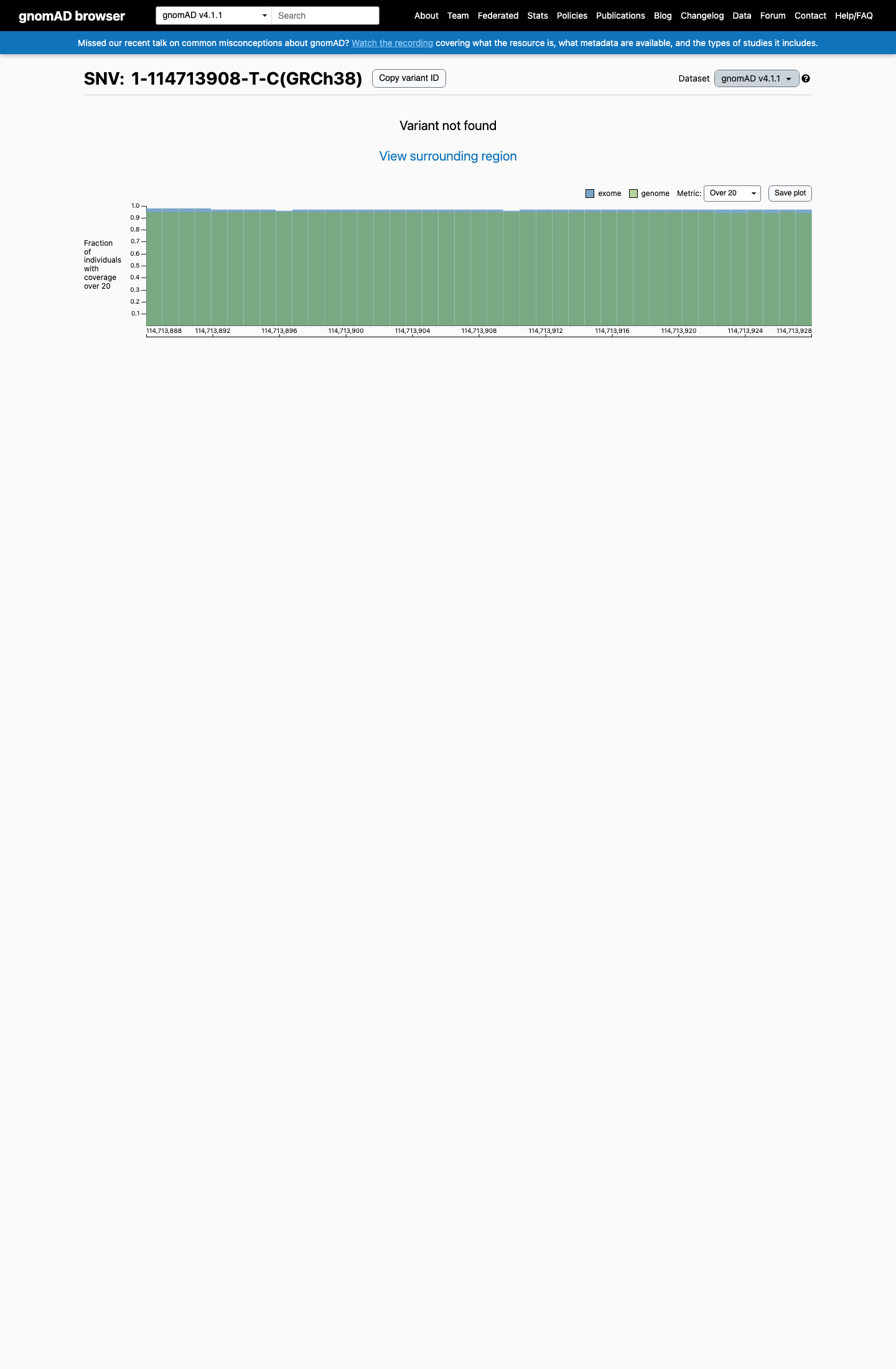
gnomAD v4.1
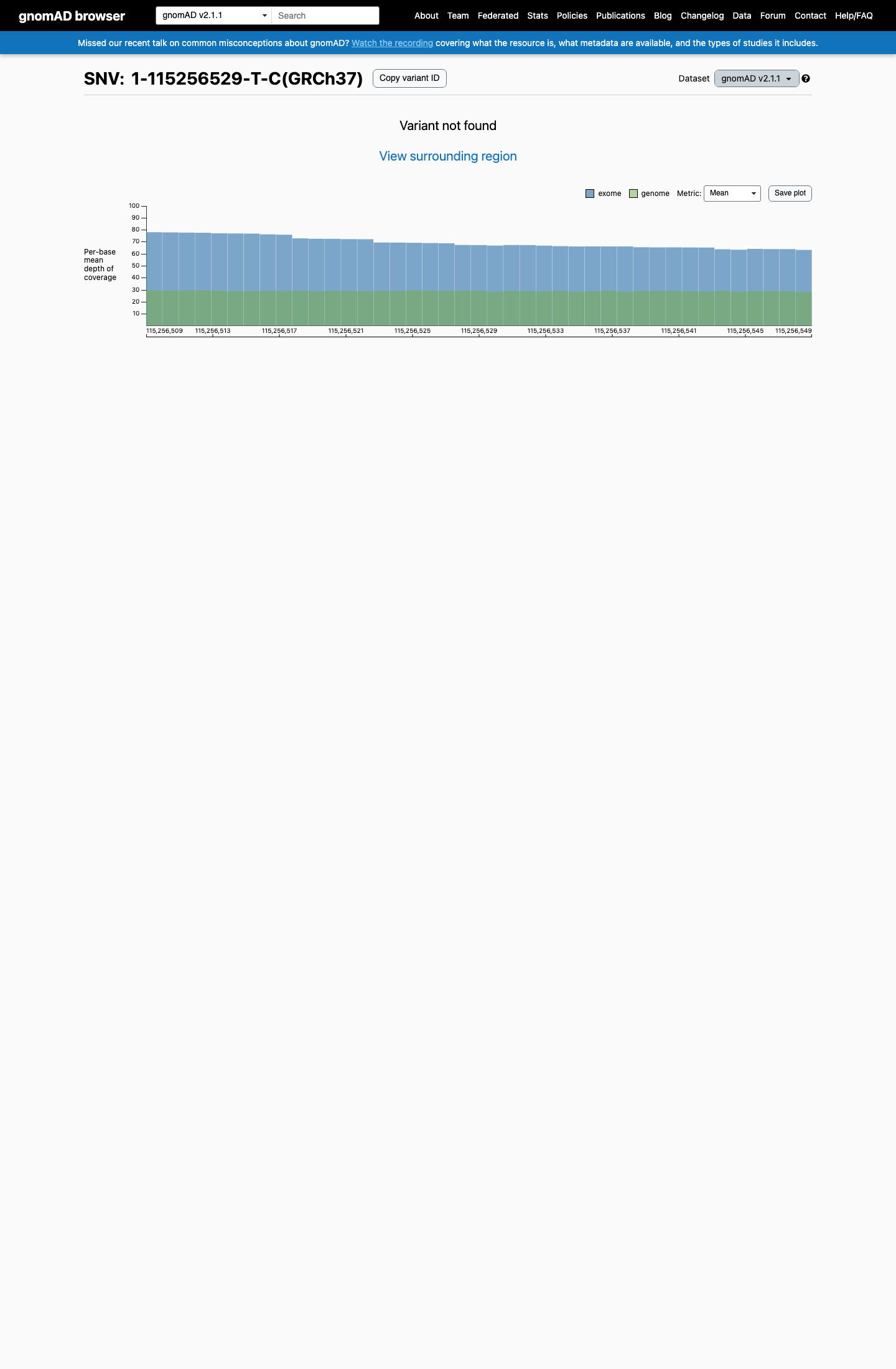
gnomAD v2.1
v4.1
Absent from gnomAD v4.1.
v2.1
Absent from gnomAD v2.1.
🇨🇦 CA
Absent from gnomAD-Canada v1.0.
Allele frequency by ancestry
three datasets · side by side
gnomAD v4.1
Absent
· 0 / ?
0 hom
0 hom
Not observed in any ancestry group.
gnomAD v2.1
Absent
· 0 / ?
0 hom
0 hom
Not observed in any ancestry group.
gnomAD Canada 🇨🇦
Absent
· 0 / ?
0 hom
0 hom
Not observed in any ancestry group.

ClinVar
This variant has been reported in ClinVar as Pathogenic (9 clinical laboratories). (ClinVarID = 13900)
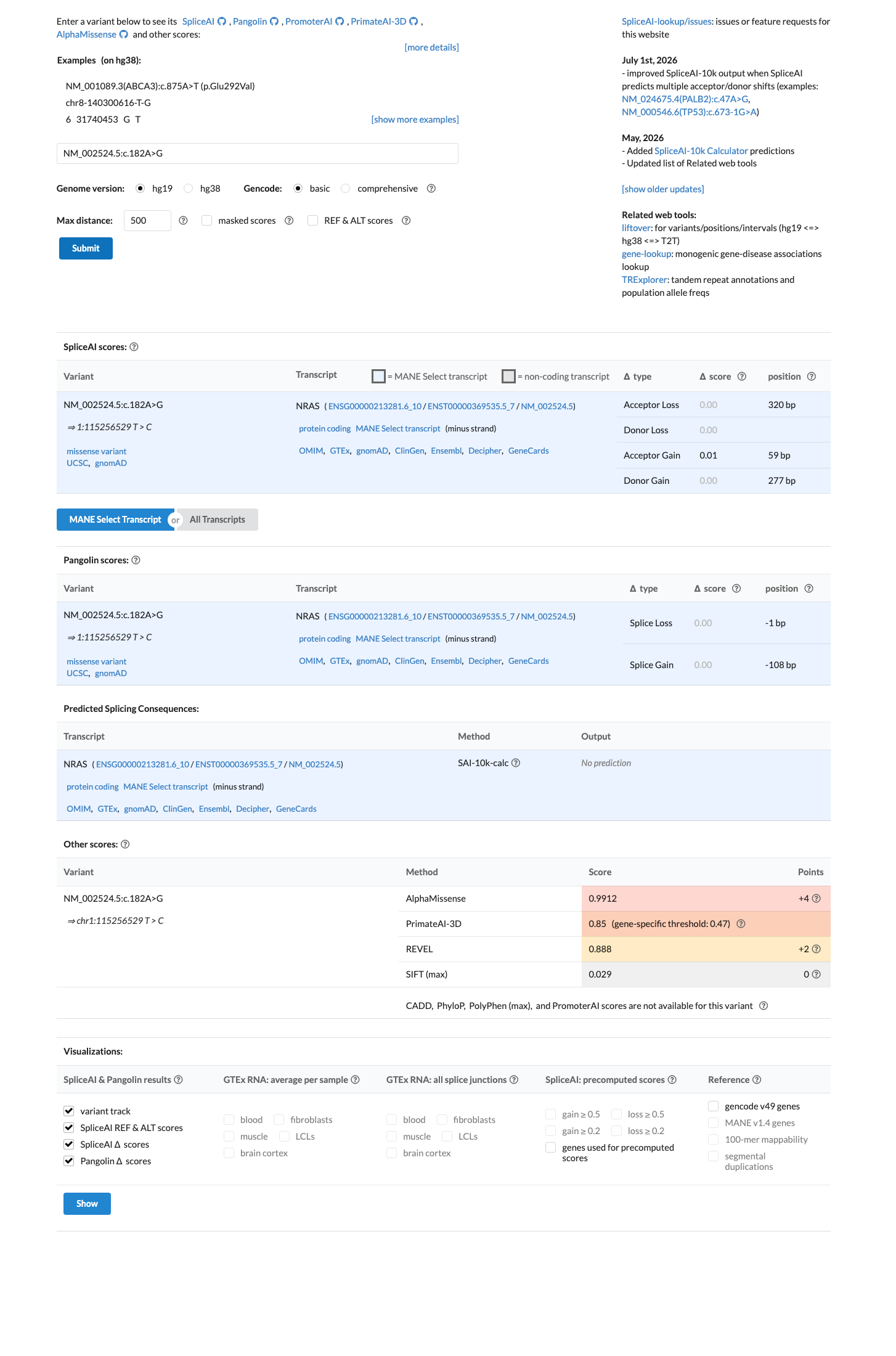
In silico
SpliceAI predicts no significant splice impact for this variant (max delta score = 0.01). REVEL score = 0.888. BayesDel score = 0.378634.
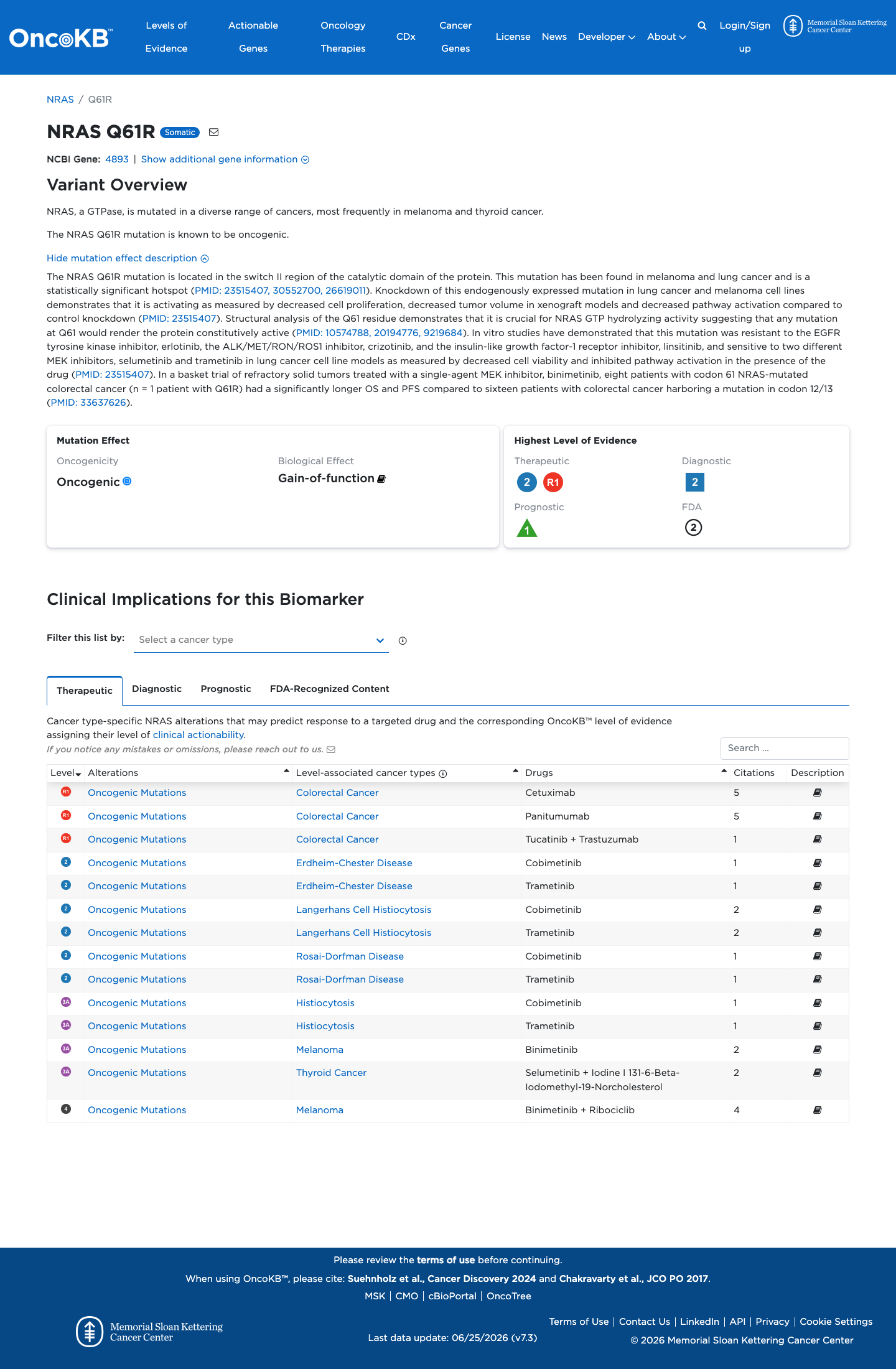
Functional
Oncogenic
OncoKB identified variant-specific curated literature and context relevant to functional review; biological-effect context: Gain-of-function; curated oncogenicity label: Oncogenic.
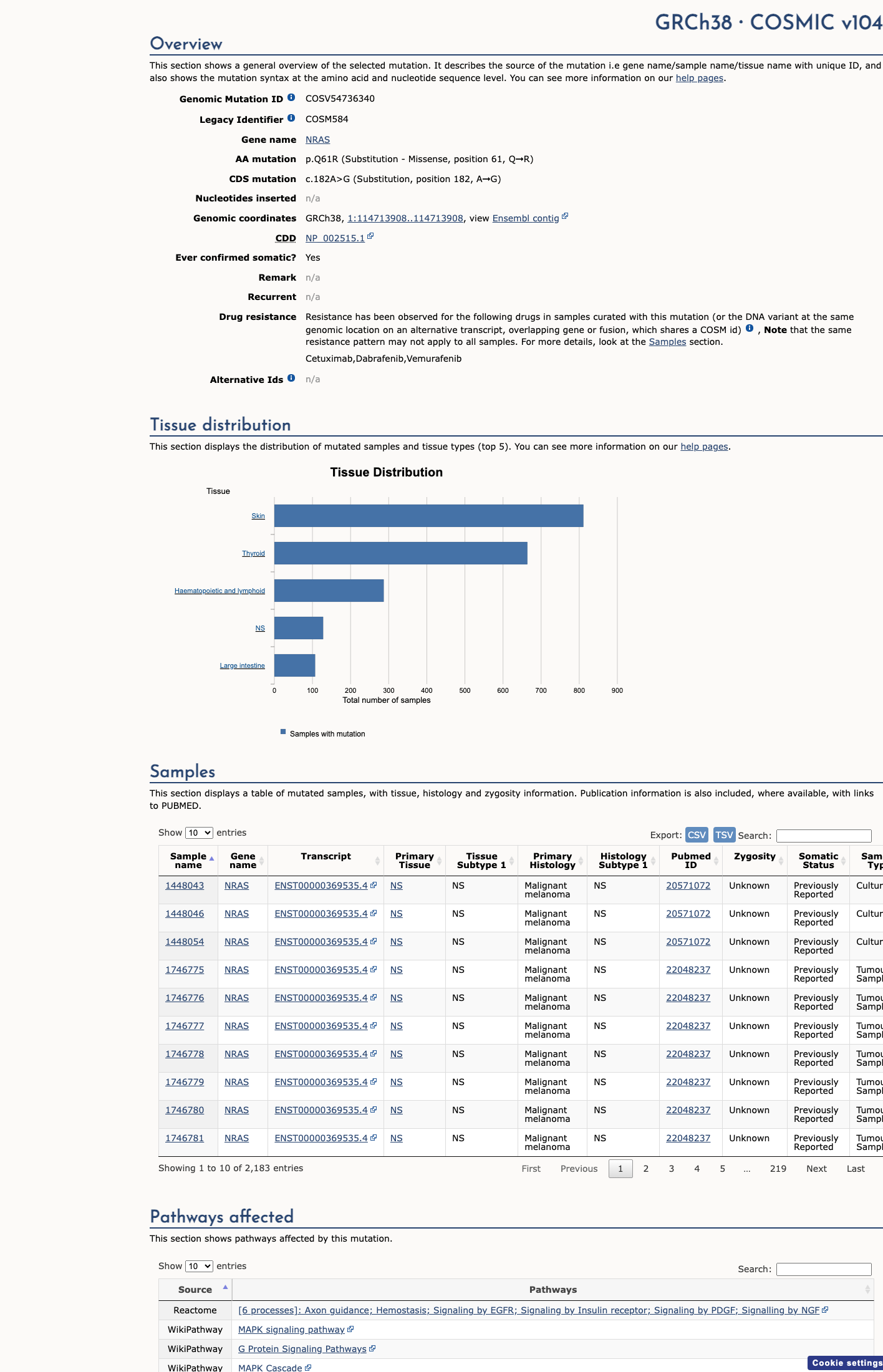
COSMIC
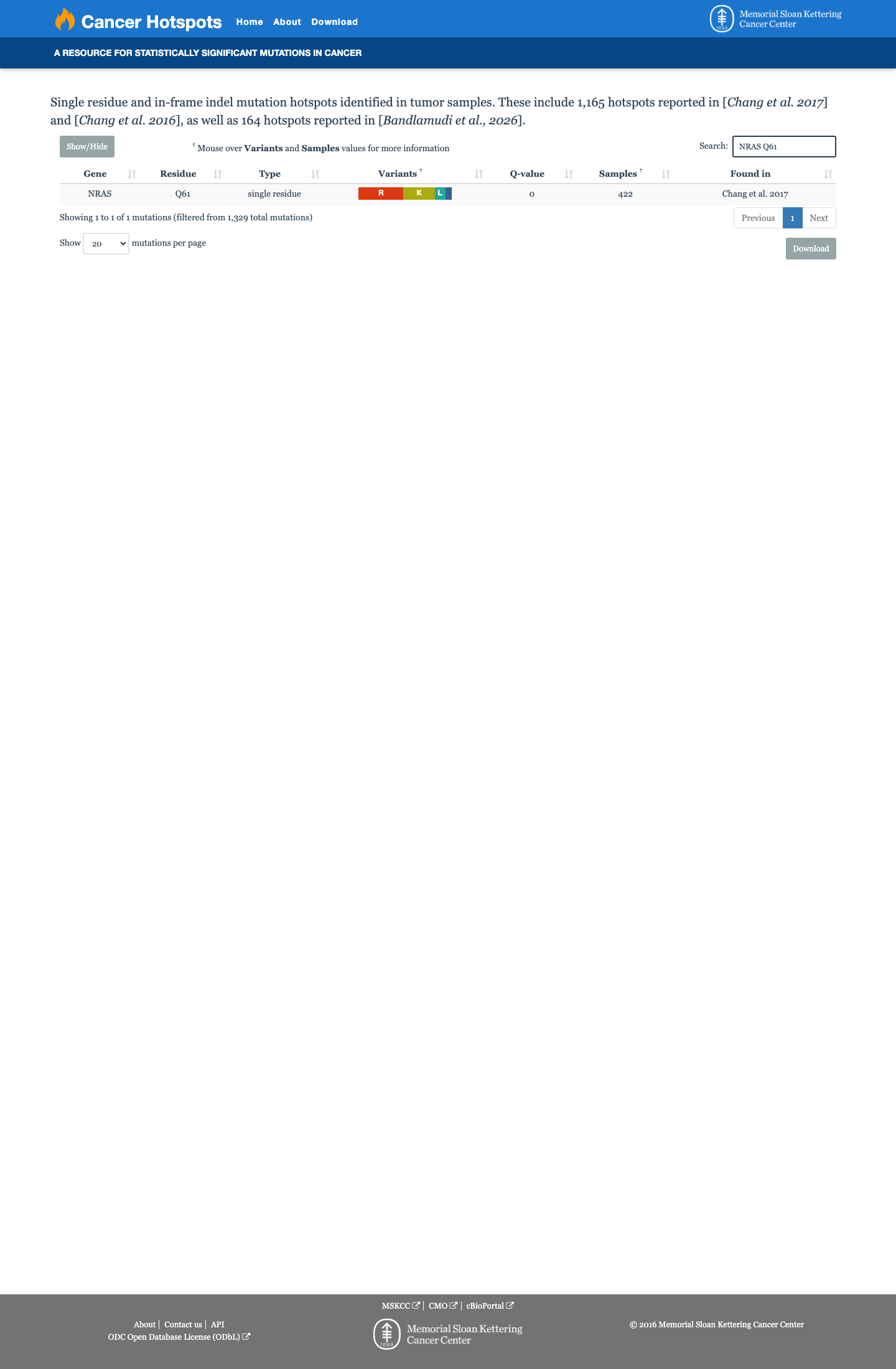
Cancer hotspots
Somatic evidence
Hotspot
COSMIC
This variant lies in a statistically significant hotspot. This variant has previously been reported in somatic cancers (COSMIC; COSV54736340, n = 2170 times).
Hotspots
This variant lies in a statistically significant hotspot.
Literature · how each cited paper was used
2papers cited
Each card is an audit: what was searched, what was found, whether it names the variant, which criteria it fed, and why. 6 further PMIDs triaged but not cited — see Sources & references.
RAS point mutations and PAX8-PPAR gamma rearrangement in thyroid tumors: evidence for distinct molecular pathways in thyroid follicular carcinoma.
Searched
c.182A>GCAA>CGAQ61RGln61Argcodon 61
Found
N-RAS codon 61 CAA→CGA (p.Gln61Arg) was the most common RAS mutation detected in conventional follicular thyroid carcinomas and adenomas, found in 12 of 17 (70%) follicular carcinomas with RAS mutations. RAS mutations and PAX8-PPARγ rearrangements defined distinct, nearly non-overlapping molecular pathways in follicular thyroid carcinoma.
Variant
✓ Names this variant — characterised directly
Applied to
→PS1
met
→PM5
met
Why
Confirms N-RAS Q61R is the most prevalent N-RAS codon 61 mutation in thyroid follicular tumors. Supports PS1 (same amino acid change at analogous residue) and PM5 (multiple pathogenic changes at same codon). Somatic context — does not provide germline proband data.
In follicular carcinomas and adenomas, the CAA→CGA mutation of N-RAS codon 61 was the most common.
Location Results (Table 3); Discussion · Context LightCycler FMCA and direct sequencing of 88 follicular and Hürthle cell thyroid tumors · full text
Rule & framework references · cited for criterion definitions, not variant evidence
20194776 ↗
Allosteric modulation of Ras positions Q61 for a direct role in catalysis.
Sources & reference links
9Sources
Triaged references · 6 PMIDs not cited in assessment
10574788 ↗
The pre-hydrolysis state of p21(ras) in complex with GTP: new insights into the role of water molecules in the GTP hydrolysis reaction of ras-like proteins.
ONCOKB
26619011 ↗
Identifying recurrent mutations in cancer reveals widespread lineage diversity and mutational specificity.
ONCOKB
30552700 ↗
NRAS Q61R and BRAF G466A mutations in atypical melanocytic lesions newly arising in advanced melanoma patients treated with vemurafenib.
ONCOKB
25741868 ↗
Standards and guidelines for the interpretation of sequence variants: a joint consensus recommendation of the American College of Medical Genetics and Genomics and the Association for Molecular Pathology.
CLINVAR
39434542 ↗
Modified Rules for Classification of Variants Associated With Disorders of Somatic Mosaicism.
CLINVAR