NM_177438.2:c.1468C>T (p.Arg490Cys) is a missense variant in exon 9 of DICER1. This variant is present in gnomAD v4.1 at an overall allele frequency of 2.73e-05 (44/1,613,964 alleles) and at 3.18e-05 in v2.1 (9/282,736 alleles), with the highest subpopulation frequency in South Asians (v4.1: 0.00011). No homozygotes have been observed.1 The variant does not meet the VCEP PM2 threshold (AF < 5.0e-06 with ≤1 allele per subpopulation), as the overall frequency exceeds this cutoff and multiple alleles are present in the South Asian subpopulation.2 The variant has been reported in ClinVar (Variation ID 242039) as Uncertain significance by multiple clinical laboratories and as Likely benign by one submitter; review status is 'criteria provided, single submitter' with no expert panel classification.3 The variant was observed as a somatic finding in one pineoblastoma tumor (RBTC779, MYC subgroup) without evident loss of heterozygosity, described as 'potentially deleterious' in a study of pineoblastoma molecular subgroups.4 Computational predictors are indeterminate: REVEL score is 0.502 (borderline; VCEP PP3 requires ≥0.750, BP4 requires <0.500), SpliceAI predicts no splicing impact (max delta = 0.00), and BayesDel score is 0.158.5 The variant is located at p.Arg490, which lies outside the VCEP-defined metal ion-binding residues and RNase IIIb domain; it is not in a statistically significant cancer hotspot.6 No functional studies, de novo observations, segregation data, or tumor second-hit data were identified that would support application of any pathogenic or benign criterion at any strength level under the ClinGen DICER1 VCEP v1.4.0 framework.7 Under the VCEP Tavtigian point-based system, no criteria are met in either the pathogenic or benign direction, yielding a total point value of 0, which classifies as Uncertain Significance (Rule3: -1 to 5 points).8
Final classification
VUS
DICER1
c.1468C>T
p.Arg490Cys
This variant
NM_177438.2:c.1468C>T (p.Arg490Cys) is a missense variant in exon 9 of DICER1.
ClinGen DICER1 and miRNA-Processing Gene Expert Panel Specifications to the ACMG/AMP Variant Interpretation Guidelines for DICER1 Version 1.4.0 v1.4.0 point-based framework: no point-contributing criteria = 0 points, which maps to VUS.
Classification rationale
VUS
DICER1 c.1468C>T
LYFE Sciences is an AI system, and it can make mistakes. Criteria
may be applied incorrectly, sources may be misread, and a confident-looking
classification can still be wrong. Double-check every criterion and
its underlying evidence before relying on any call.
Gene diagram
· NM_177438.2 · variants mapped to exon structure
DICER1
NM_177438.2
Fetching transcript structure from UCSC…
Applied criteria · 0 applied · 17 assessed
MetEvidence satisfies this criterion.
Not metEvaluated against available evidence; threshold not reached.
Not assessedApplies in principle, but no evidence was found to evaluate it.
N/ADoesn't apply to this variant type.
Applied · 0
No criteria were applied for this variant.
Assessed · not applied
· 17 not met · 0 not assessed
Pathogenic
PS1
PS1 requires a different nucleotide change at the same amino acid position previously classified as pathogenic by the ClinGen DICER1 VCEP.
PS2
No de novo observations were identified in the literature or ClinVar submissions for this variant.
PS3
No functional studies (RNA assay, in vitro cleavage assay, or other validated functional data) were identified for this variant.
PS4
No variant-specific proband counts or phenotype points meeting VCEP PS4 thresholds were identified.
PM1
The variant is at p.Arg490, which lies outside the VCEP-defined metal ion-binding residues (p.S1344, p.E1705, p.D1709, p.D1713, p.G1809, p.D1810, p.E1813) and outside the RNase IIIb domain (p.Y1682–p.S1846).
PM2
gnomAD v4.1 overall AF = 2.73e-05 exceeds the VCEP PM2 threshold of <5.0e-06.
PM5
No pathogenic missense comparator at the same residue (p.Arg490) classified by the ClinGen DICER1 VCEP was identified.
PP1
No co-segregation data across affected family members were identified.
PP3
REVEL score = 0.502, which is below the VCEP PP3 threshold of ≥0.750.
PP4
VCEP PP4 requires somatic tumor testing demonstrating a known RNase IIIb hotspot second hit in a DICER1-associated neoplasm, with retention of the germline variant.
Benign
BA1
Highest gnomAD subpopulation AF is 0.00011 (South Asian, v4.1), far below the VCEP BA1 threshold of >0.003 (0.3%).
BS1
Highest gnomAD subpopulation AF is 0.00011 (South Asian, v4.1), below the VCEP BS1 threshold of >0.0003 (0.03%) and with fewer than the minimum 5 alleles required in the v2.1 SAS subpopulation (3 alleles).
BS2
No data on tumor-free females through age 50 or homozygous observations in healthy individuals were available for this variant.
BS3
No in vitro or in vivo functional studies demonstrating no damaging effect on DICER1 protein function or splicing were identified for this variant.
BS4
No segregation data demonstrating phenotype-positive, genotype-negative relatives were identified.
BP2
No observations of this variant in trans with a P/LP DICER1 variant or in cis/phase unknown with multiple P/LP DICER1 variants were identified.
BP4
REVEL score = 0.502, which is not < 0.500 as required by VCEP BP4 for missense variants.
N/A · 11
PVS1 · PM3 · PM4 · PM6 · PP2 · PP5 · BP1 · BP3 · BP5 · BP6 · BP7
Research & evidence
Population frequency
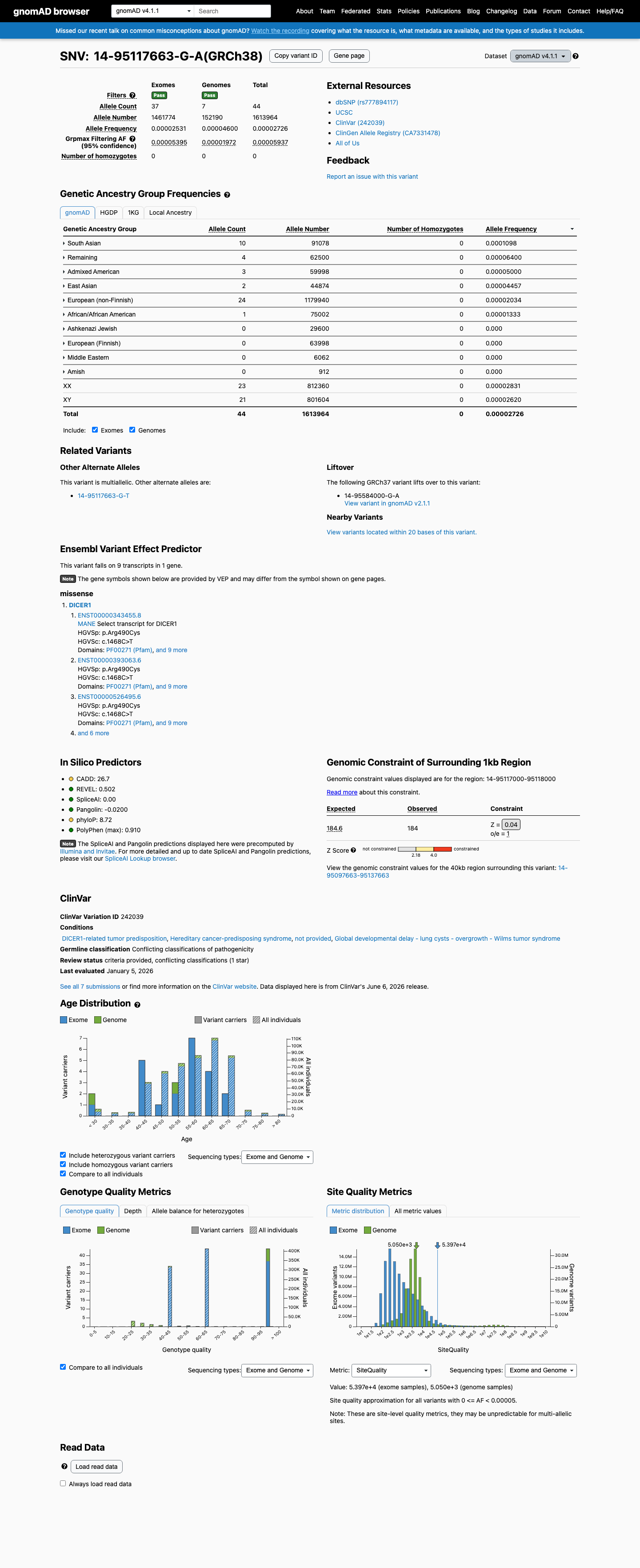
gnomAD v4.1
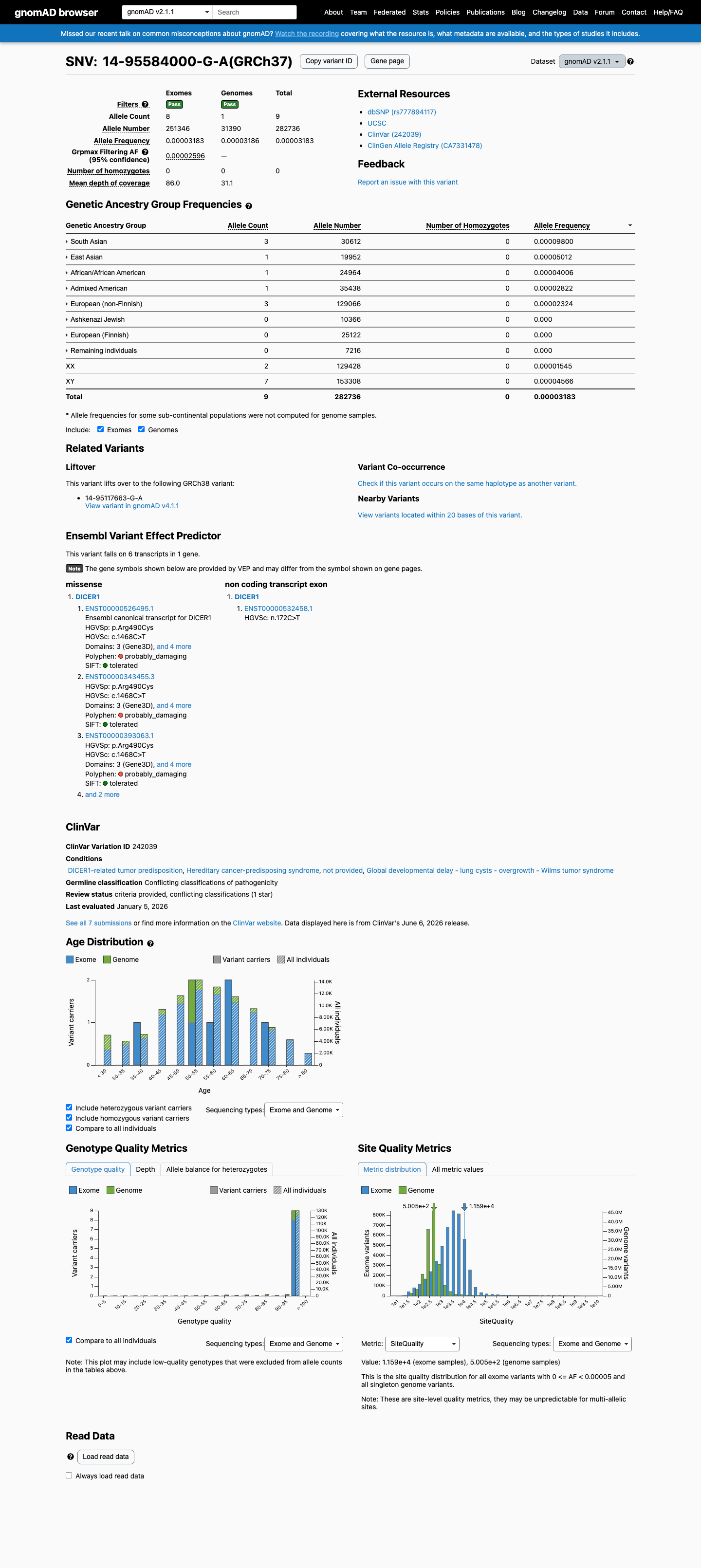
gnomAD v2.1
v4.1
This variant is present in gnomAD v4.1 (AF= 2.72621e-05; MAF= 0.00273%, 44/1613964 alleles, homozygotes = 0) and has highest observed frequency in the South Asian population (AF= 0.000109796; MAF= 0.01098%, 10/91078 alleles, homozygotes = 0); grpmax FAF= 5.937e-05.
v2.1
This variant is present in gnomAD v2.1 (AF= 3.18318e-05; MAF= 0.00318%, 9/282736 alleles, homozygotes = 0) and has highest observed frequency in the South Asian population (AF= 9.80008e-05; MAF= 0.00980%, 3/30612 alleles, homozygotes = 0); grpmax FAF= 2.596e-05.
🇨🇦 CA
Absent from gnomAD-Canada v1.0.
Allele frequency by ancestry
three datasets · side by side
gnomAD v4.1
0.0027%
· 44 / 1,613,964
0 hom · FAF 0.0059%
0 hom · FAF 0.0059%
South Asian 10 / 91,078 |
0.011% |
Remaining individuals 4 / 62,500 |
0.0064% |
Admixed American 3 / 59,998 |
0.005% |
East Asian 2 / 44,874 |
0.0045% |
European (non-Finnish) 24 / 1,179,940 |
0.002% |
African/African American 1 / 75,002 |
0.0013% |
+ 4 not observed (European (Finnish), Amish, Middle Eastern, Ashkenazi Jewish)
gnomAD v2.1
0.0032%
· 9 / 282,736
0 hom · FAF 0.0026%
0 hom · FAF 0.0026%
South Asian 3 / 30,612 |
0.0098% |
East Asian 1 / 19,952 |
0.005% |
African/African American 1 / 24,964 |
0.004% |
Admixed American 1 / 35,438 |
0.0028% |
European (non-Finnish) 3 / 129,066 |
0.0023% |
+ 3 not observed (Ashkenazi Jewish, European (Finnish), Remaining individuals)
gnomAD Canada 🇨🇦
Absent
· 0 / ?
0 hom
0 hom
Not observed in any ancestry group.
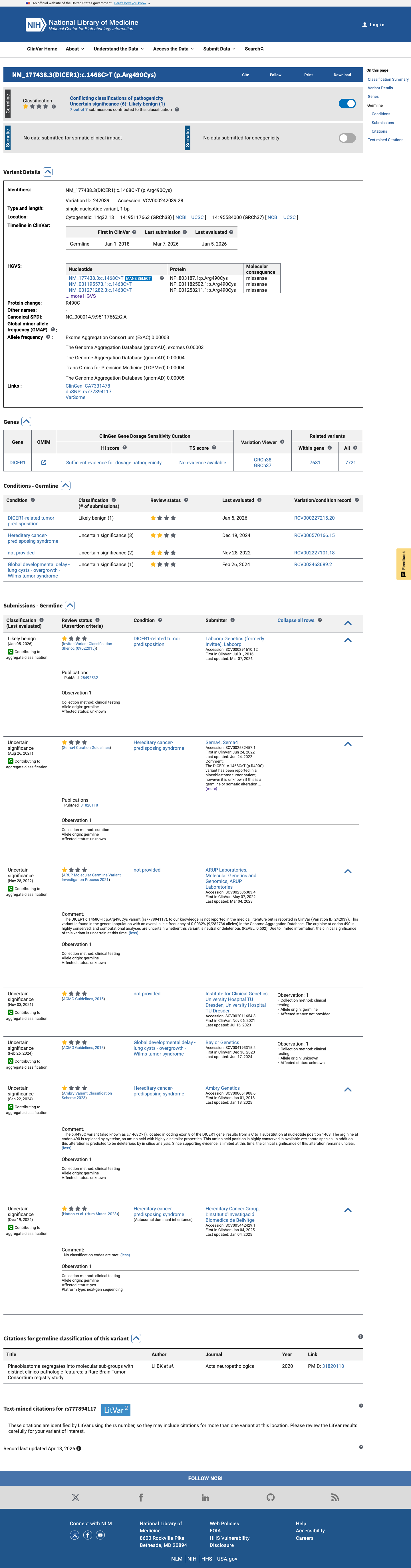
ClinVar
This variant has been reported in ClinVar as Uncertain significance (5 clinical laboratories) and as Likely benign (1 clinical laboratory). (ClinVarID = 242039)
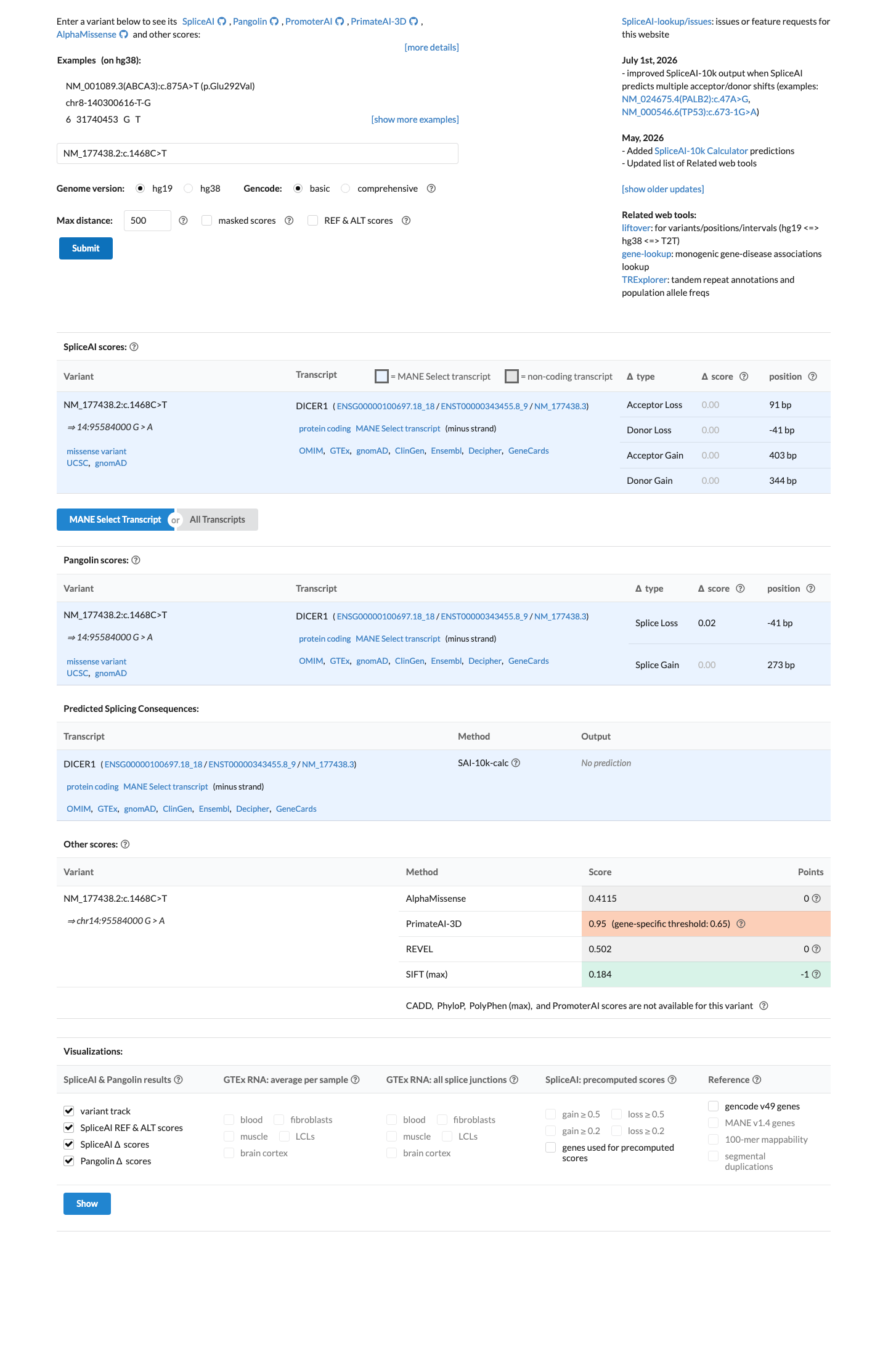
In silico
SpliceAI predicts no significant splice impact for this variant (max delta score = 0.00). REVEL score = 0.502. BayesDel score = 0.158285.
Functional
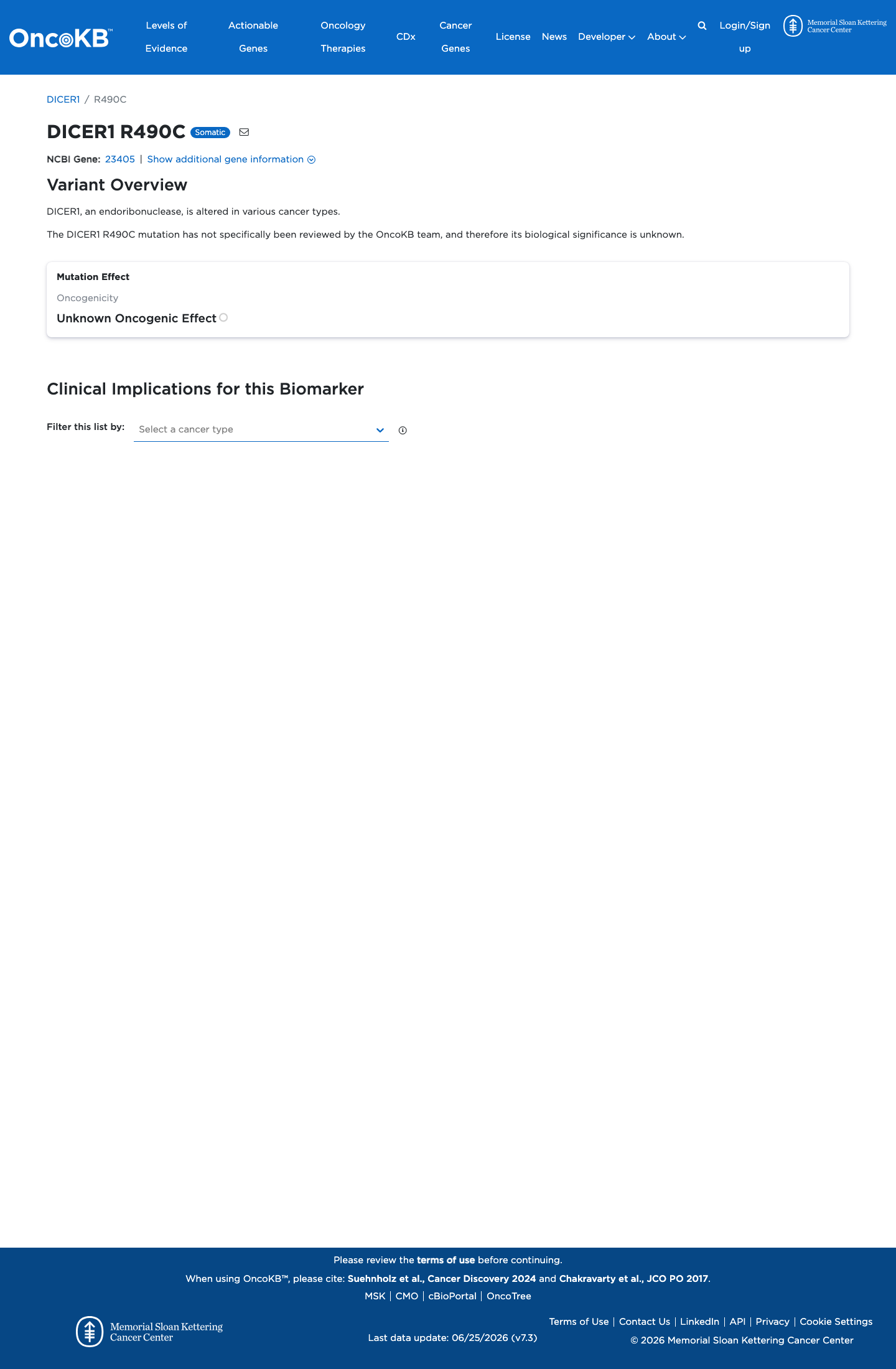
Unknown Oncogenic Effect
OncoKB did not identify variant-specific reviewed functional evidence for this variant; gene-level curated context is available for reviewer follow-up. DICER1, an endoribonuclease, is altered in various cancer types.
COSMIC

Cancer hotspots
Somatic evidence
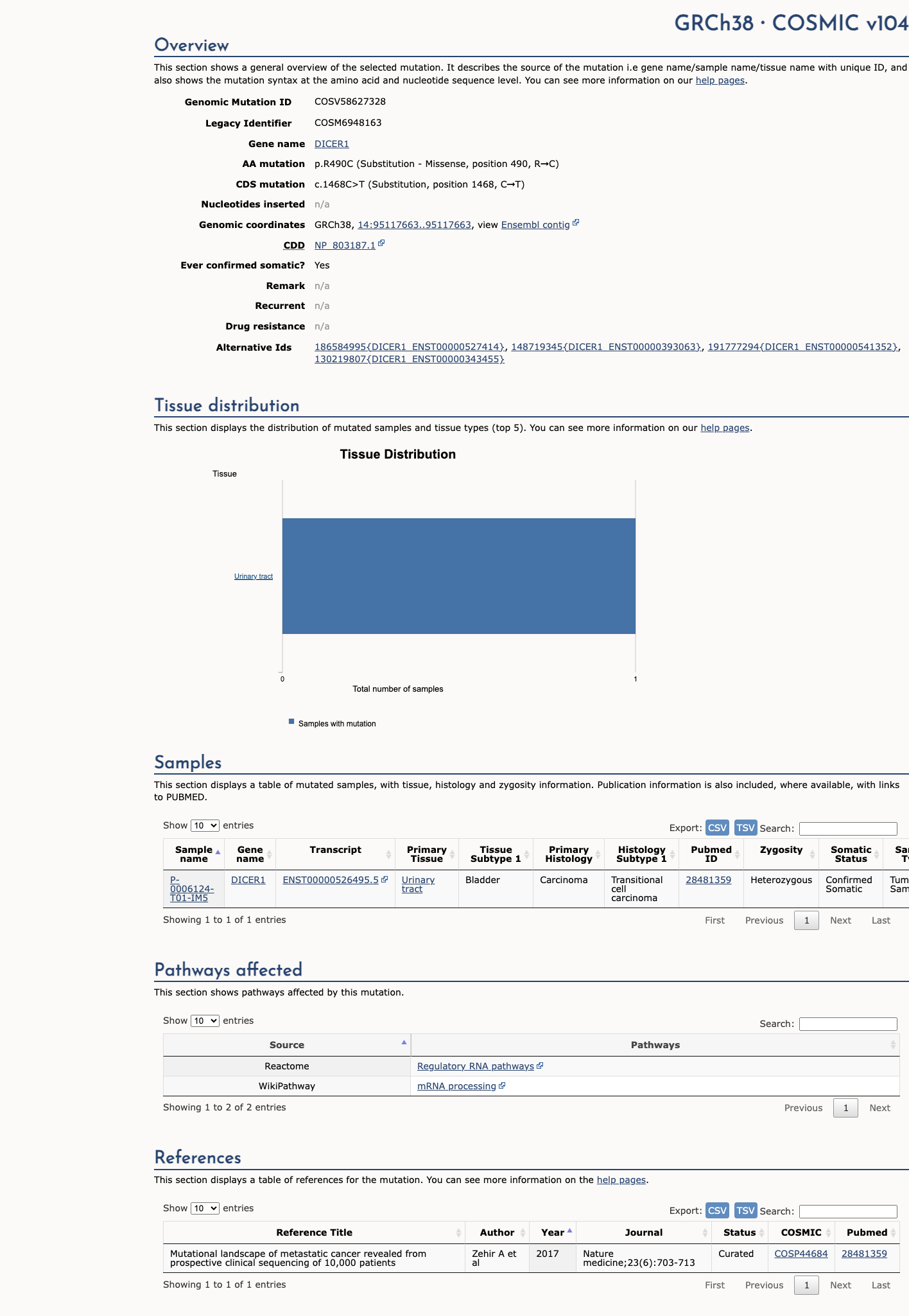
Not in COSMIC / hotspots
COSMIC
This variant does not lie in a statistically significant hotspot. This variant has previously been reported in somatic cancers (COSMIC; COSV58627328, n = 1 times).
Hotspots
This variant does not lie in a statistically significant hotspot.
Sources & reference links
9Sources
Triaged references · 6 PMIDs not cited in assessment
25741868 ↗
Standards and guidelines for the interpretation of sequence variants: a joint consensus recommendation of the American College of Medical Genetics and Genomics and the Association for Molecular Pathology.
CLINVAR
31820118 ↗
Pineoblastoma segregates into molecular sub-groups with distinct clinico-pathologic features: a Rare Brain Tumor Consortium registry study.
CLINVAR
38084291 ↗
Specifications of the ACMG/AMP Variant Classification Guidelines for Germline DICER1 Variant Curation.
CLINVAR
25394175 ↗
A practice guideline from the American College of Medical Genetics and Genomics and the National Society of Genetic Counselors: referral indications for cancer predisposition assessment.
CLINVAR
28492532 ↗
Sherloc: a comprehensive refinement of the ACMG-AMP variant classification criteria.
CLINVAR