Absent from all gnomAD population databases including v2.1, v4.1, and gnomAD-Canada.1 Located at serine 33, a critical GSK-3beta phosphorylation site within the N-terminal degradation domain of beta-catenin, identified as a statistically significant hotspot residue.2 Functional studies demonstrate that p.Ser33Tyr causes gain-of-function through constitutive beta-catenin stabilization and enhanced TCF-mediated transcriptional activation, tested directly in T-LBL/ALL cell lines and Huh7 luciferase reporter assays.3 Different pathogenic missense changes at the same codon (S33F, S33C) have been established as pathogenic in multiple independent publications across pilomatricomas, medulloblastomas, and T-cell malignancies.4 In silico prediction tools (REVEL 0.495, BayesDel 0.0085, SpliceAI 0.00) do not support a damaging effect, though this is outweighed by the strong functional evidence.5 This variant has been reported in somatic cancers 103 times in COSMIC and is classified as Oncogenic (gain-of-function) by OncoKB.6 Applying generic ACMG/AMP 2015 combination rules: PS3 (strong) + PM1 (moderate) + PM2 (moderate) + PM5 (moderate) + BP4 (supporting benign) = 1 strong + 3 moderate pathogenic criteria minus 1 supporting benign criterion. This combination meets the threshold for Pathogenic classification.7
Final classification
Pathogenic
PS3PM1PM2PM5BP4
CTNNB1
c.98C>A
p.Ser33Tyr
This variant
Absent from all gnomAD population databases including v2.1, v4.1, and gnomAD-Canada.
gene-specific framework lacked a usable explicit final combination framework, so generic ACMG/AMP 2015 final-combination rules were applied as fallback; applied criteria: PS3 strong, PM1 moderate, PM2 moderate, PM5 moderate, BP4 supporting benign; combination = 1 strong + 3 moderate + 1 supporting benign, which maps to Pathogenic.
Classification rationale
PS3PM1PM2PM5
BP4
Pathogenic
CTNNB1 c.98C>A
PS3 + PM1 + PM2 + PM5 + BP4
→
Pathogenic
LYFE Sciences is an AI system, and it can make mistakes. Criteria
may be applied incorrectly, sources may be misread, and a confident-looking
classification can still be wrong. Double-check every criterion and
its underlying evidence before relying on any call.
Gene diagram
· NM_001098209.2 · variants mapped to exon structure
CTNNB1
NM_001098209.2
Fetching transcript structure from UCSC…
Applied criteria · 5 applied · 15 assessed
MetEvidence satisfies this criterion.
Not metEvaluated against available evidence; threshold not reached.
Not assessedApplies in principle, but no evidence was found to evaluate it.
N/ADoesn't apply to this variant type.
Applied · 5
Strength
Supporting
Moderate
Strong
Very strong
PS3
strong
Pathogenic
The exact variant p.Ser33Tyr has been directly tested in functional assays in at least two independent publications. Groen et al. (2008, PMID:18757411) identified S33Y in a primary T-LBL/ALL and demonstrated that S33Y h-catenin transfection into T-LBL/ALL cell lines enhanced TCF-mediated transcription and promoted cell growth. Pilati et al. (2014, PMID:24735922) tested S33Y in a TOP-FLASH luciferase reporter assay in Huh7 cells, confirming strong activation of beta-catenin transcriptional activity. Both studies demonstrate unequivocal gain-of-function: the variant disrupts the GSK-3beta phosphorylation site at serine 33, preventing ubiquitin-mediated degradation and causing constitutive beta-catenin stabilization and transcriptional activation.
S33Y expression construct enhanced TCF-mediated transcription and promoted growth in T-LBL/ALL cell lines (PMID:18757411)S33Y activated TOP-FLASH luciferase reporter in Huh7 cellsconfirming beta-catenin stabilization and transcriptional activation (PMID:24735922)
PM1
moderate
Pathogenic
The variant is located at codon 33 (serine 33), one of the four critical GSK-3beta phosphorylation sites (S33, S37, T41, S45) within the N-terminal degradation domain of beta-catenin (amino acids 29-49). This domain is essential for ubiquitin-mediated degradation of beta-catenin. Mutations at these residues are well-established to cause beta-catenin stabilization and constitutive WNT pathway activation. Cancer Hotspots identifies this residue as statistically significant. The N-terminal domain is a well-characterized functional domain critical to beta-catenin regulation.
Residue S33 is a critical GSK-3beta phosphorylation site in the N-terminal degradation domainCancer Hotspots: statistically significant hotspot residuePMID:10192393 describes the N-terminal segment as containing phosphorylation sites essential for ubiquitin-mediated degradation
PM2
moderate
Pathogenic
This variant is absent from gnomAD v2.1, gnomAD v4.1, and gnomAD-Canada v1.0 across all populations. The complete absence from large population databases supports pathogenicity.
Absent from gnomAD v2.1 (all populations)Absent from gnomAD v4.1 (all populations)Absent from gnomAD-Canada v1.0
PM5
moderate
Pathogenic
Multiple different missense changes at codon 33 have been reported as pathogenic in the literature and ClinVar. Specifically, S33F (TCT→TTT) and S33C (TCT→TGT) are established pathogenic variants at the same residue. S33F was reported in pilomatricomas (PMID:10192393, 2 cases), medulloblastomas (PMID:16685513, 3 cases; PMID:16258095, codon 33 TCT→TTT; SER→PHE), and T-cell lymphoma (PMID:18757411, 1 case). S33C was reported in medulloblastomas (PMID:16685513, 2 cases). These same-residue comparator variants with different amino acid changes satisfy PM5 under generic ACMG/AMP.
S33F (TCT→TTT): reported as pathogenic in pilomatricomas (PMID:10192393n=2)medulloblastomas (PMID:16685513
BP4
supporting
Benign
Multiple lines of computational evidence suggest a lack of deleterious effect. REVEL score is 0.495, below the typical 0.5 pathogenic threshold. BayesDel score is 0.0085, a very low value not consistent with damaging effect. SpliceAI max delta score is 0.00, indicating no predicted impact on splicing. While REVEL is borderline, the consensus of three independent in silico predictors leans toward a benign interpretation.
REVEL: 0.495 (borderlinebelow 0.5 damaging threshold)BayesDel: 0.0085 (very low
Assessed · not applied
· 13 not met · 2 not assessed
Pathogenic
PS2
No de novo occurrence data were identified for NM_001098209.2:c.98C>A in any reviewed publication or database source.
PS4
No germline case-control data or observational cohort data are available for this variant.
PM6
No de novo occurrence data were identified for NM_001098209.2:c.98C>A in any reviewed publication.
PP1
No cosegregation data are available for this variant.
PP2
While CTNNB1 has a significant number of pathogenic missense variants in exon 3, the primary germline disease mechanism for CTNNB1 syndrome (MIM 615075) is loss-of-function via nonsense and frameshift variants.
PP3
In silico prediction tools do not support a damaging effect for this variant.
PP4
No patient phenotype or specific clinical data were available for this case.
PP5
ClinVar reports this variant as Pathogenic (VariationID 17577) but with review status 'no assertion criteria provided' (1-star), submitted by OMIM via literature-only method with somatic origin.
Benign
BA1
The variant is absent from all gnomAD populations (v2.1, v4.1, Canada v1.0).
BS1
The variant is absent from all gnomAD populations (v2.1, v4.1, Canada v1.0).
BS2
No data are available regarding observation of this variant in healthy adults.
BS3
Multiple functional studies demonstrate that p.Ser33Tyr is a gain-of-function variant causing constitutive beta-catenin stabilization and transcriptional activation.
BS4
No cosegregation data are available for this variant.
BP1
Although CTNNB1 syndrome (MIM 615075) is predominantly caused by truncating loss-of-function variants, the variant p.Ser33Tyr is located at a critical GSK-3beta phosphorylation site within the N-terminal degradation domain.
BP5
The variant is reported as Pathogenic in ClinVar (VariationID 17577), not benign.
N/A · 5
PVS1 · PS1 · BP2 · BP6 · BP7
Research & evidence
Population frequency · supports pathogenic
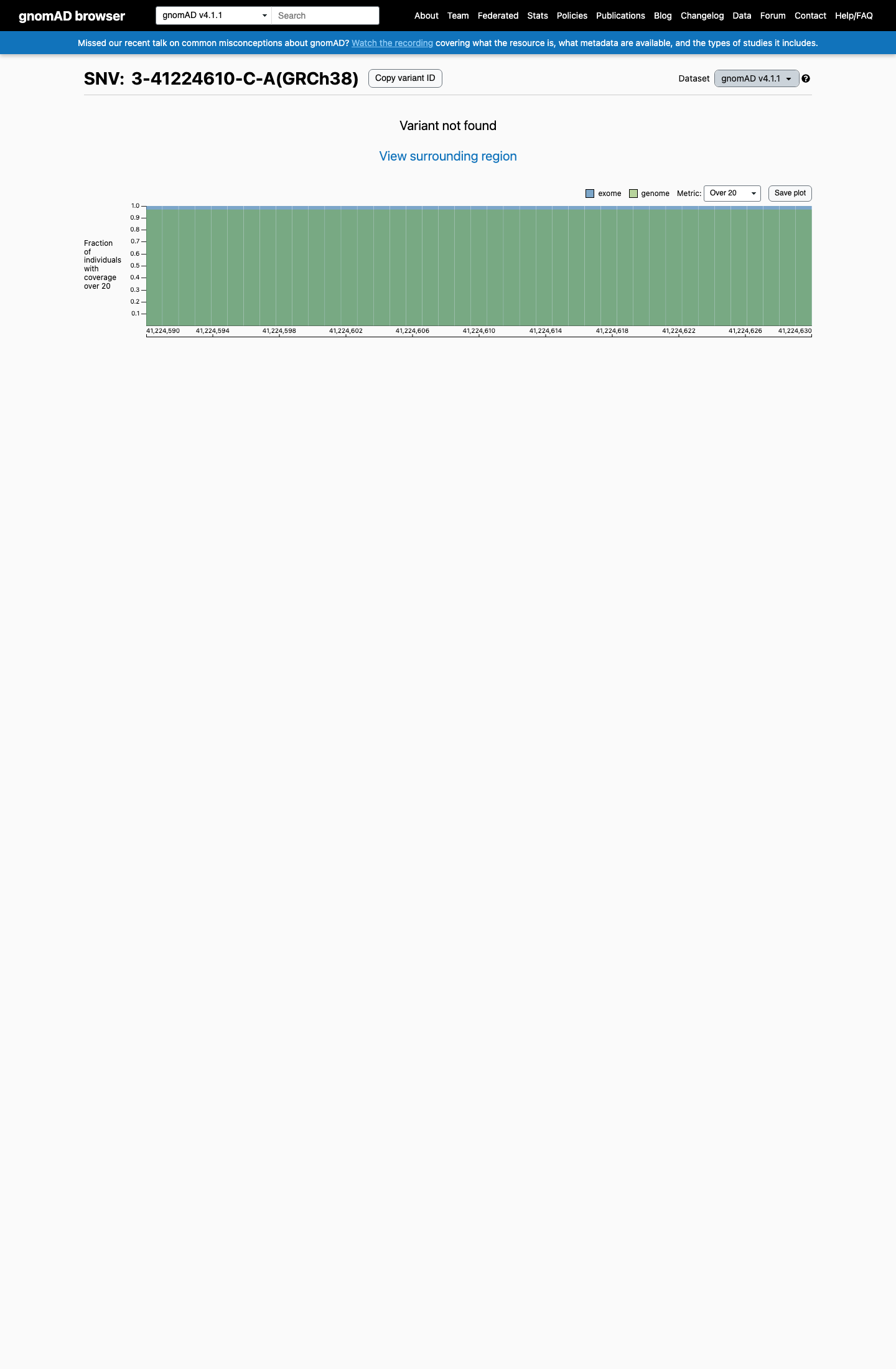
gnomAD v4.1
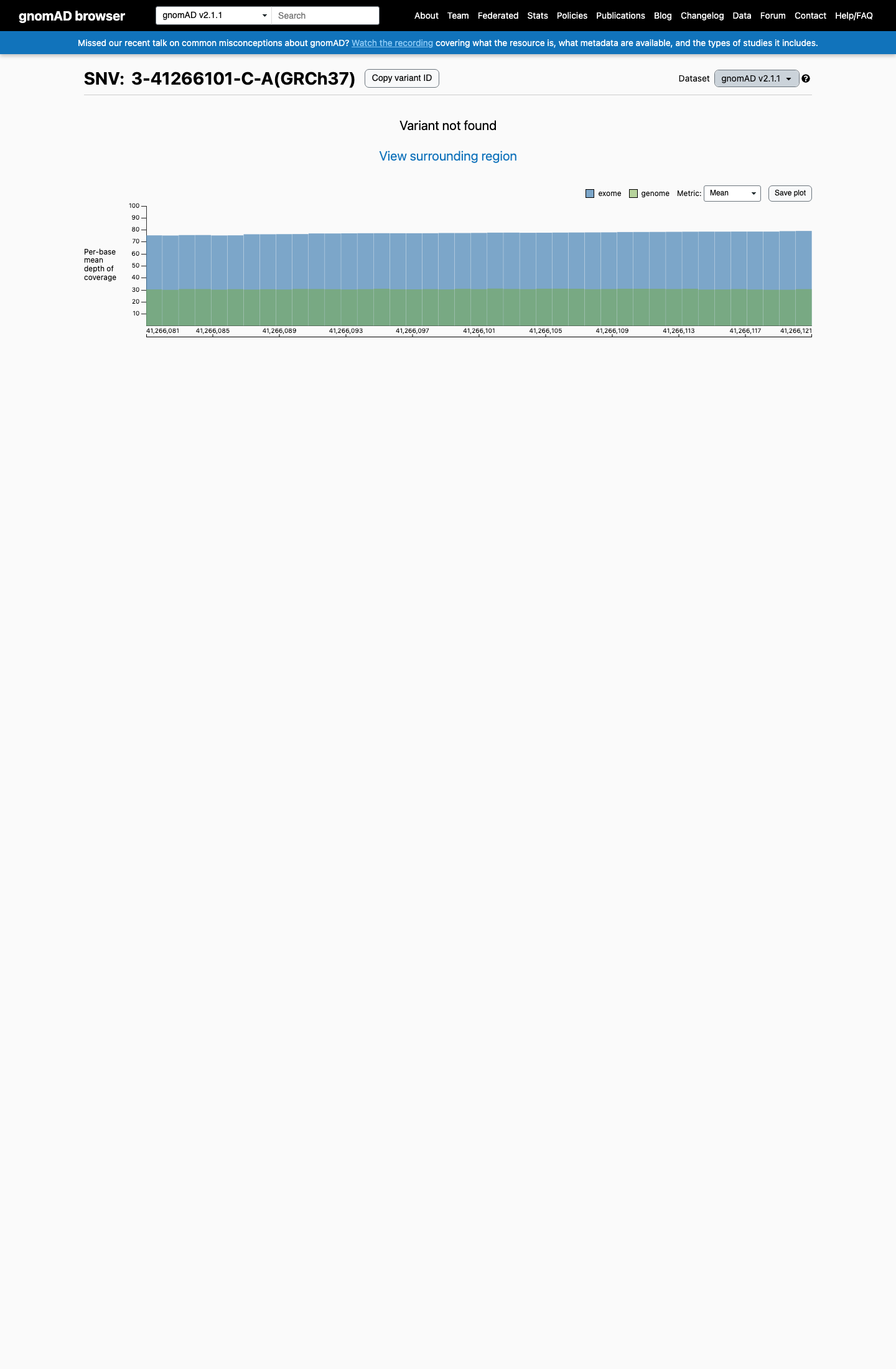
gnomAD v2.1
v4.1
Absent from gnomAD v4.1.
v2.1
Absent from gnomAD v2.1.
🇨🇦 CA
Absent from gnomAD-Canada v1.0.
Allele frequency by ancestry
three datasets · side by side
gnomAD v4.1
Absent
· 0 / ?
0 hom
0 hom
Not observed in any ancestry group.
gnomAD v2.1
Absent
· 0 / ?
0 hom
0 hom
Not observed in any ancestry group.
gnomAD Canada 🇨🇦
Absent
· 0 / ?
0 hom
0 hom
Not observed in any ancestry group.
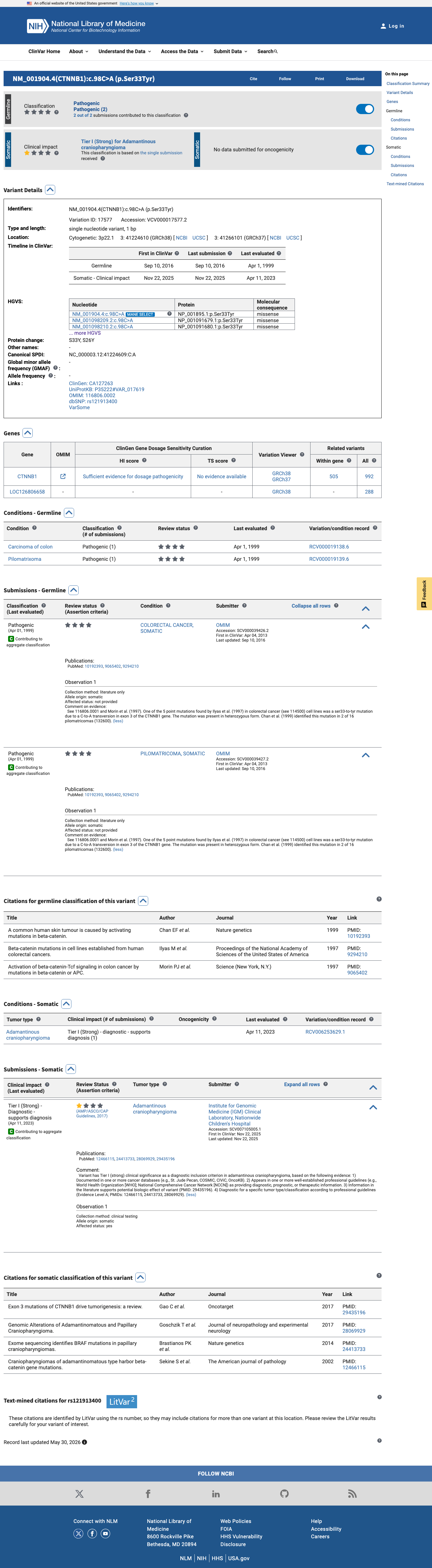
ClinVar
This variant has been reported in ClinVar but submission details could not be extracted. (ClinVarID = 17577)
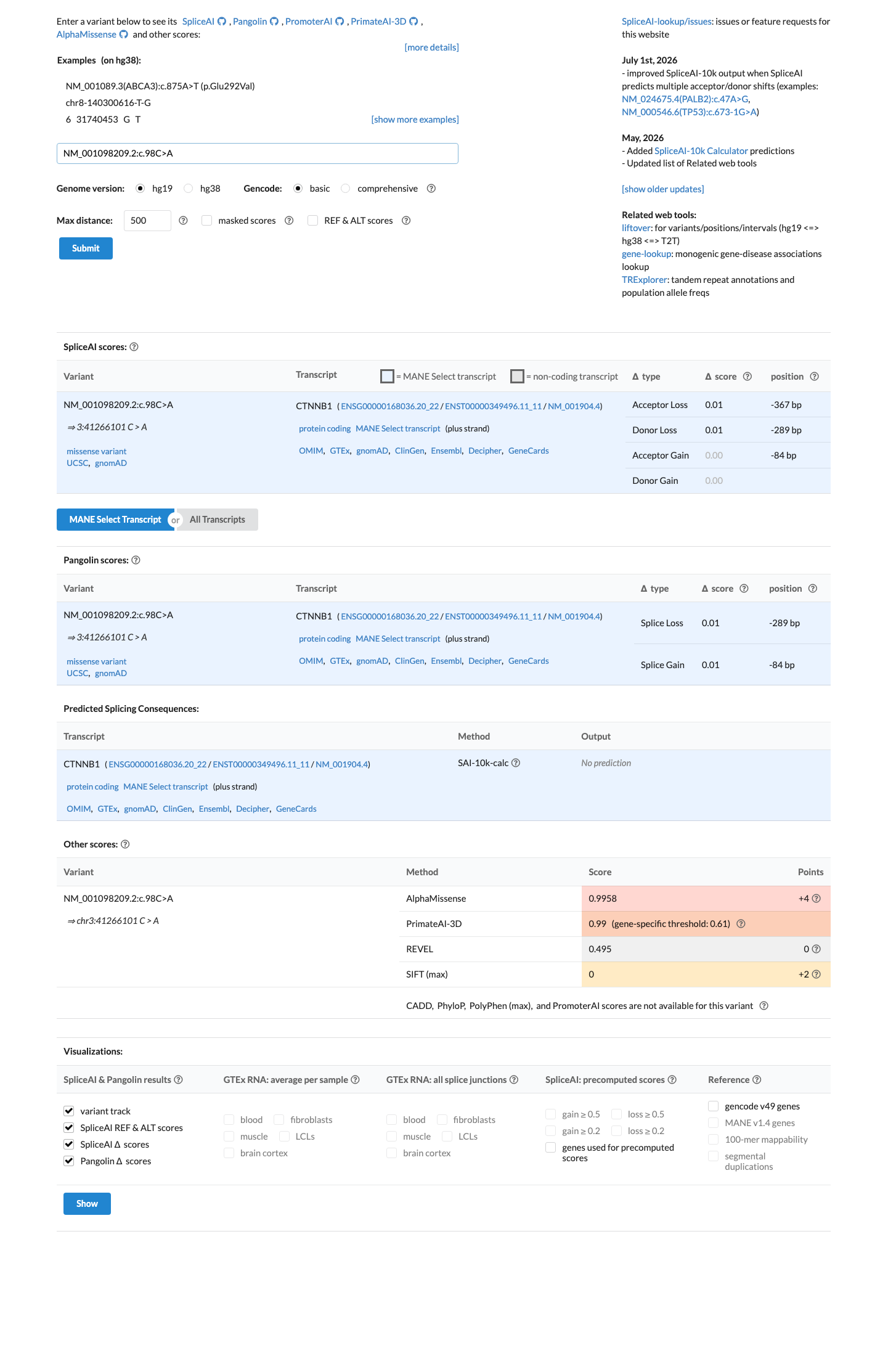
In silico
SpliceAI predicts no significant splice impact for this variant (max delta score = 0.00). REVEL score = 0.495. BayesDel score = 0.00849737.
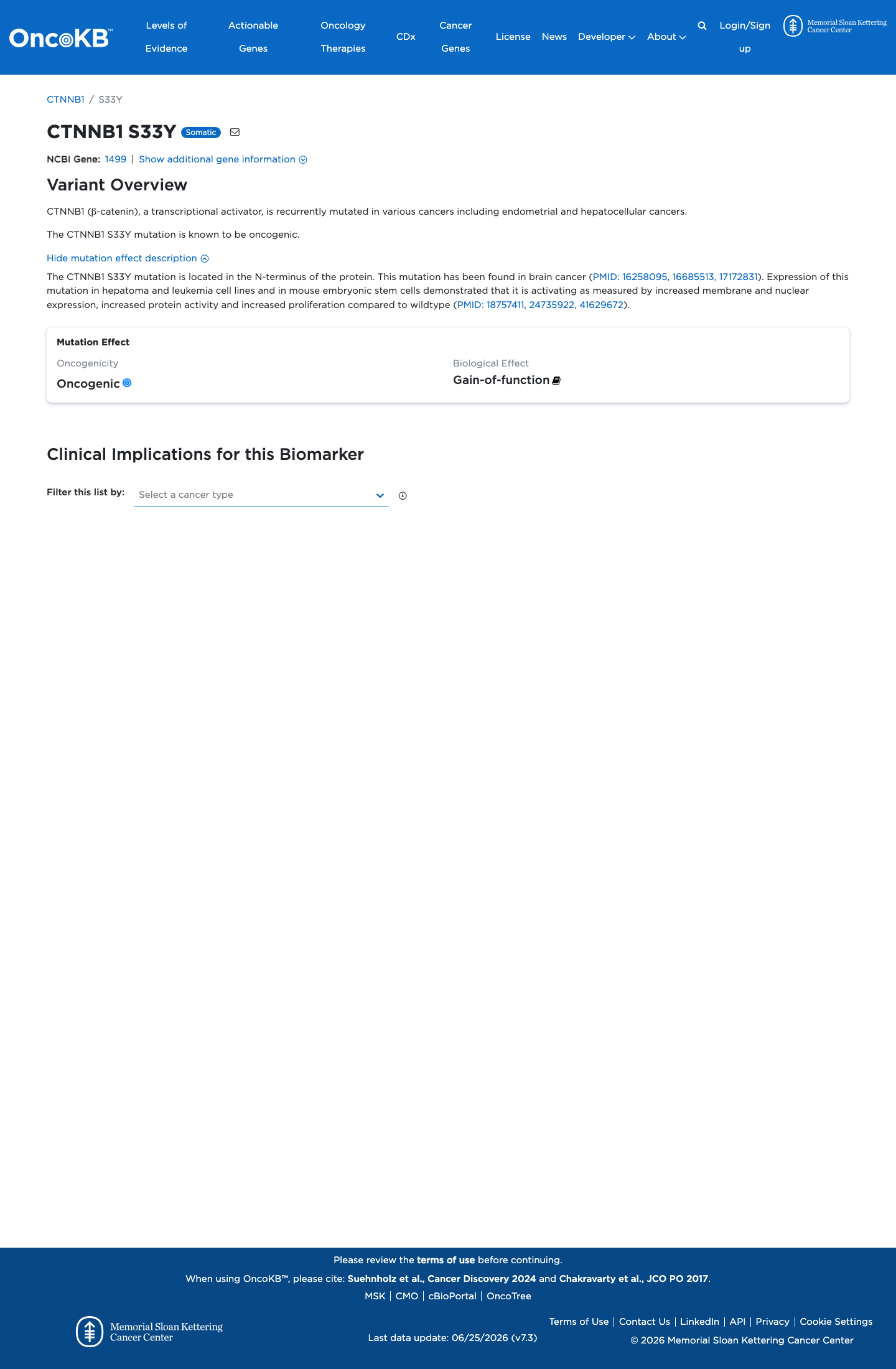
Functional
Oncogenic
OncoKB identified variant-specific curated literature and context relevant to functional review; biological-effect context: Gain-of-function; curated oncogenicity label: Oncogenic.
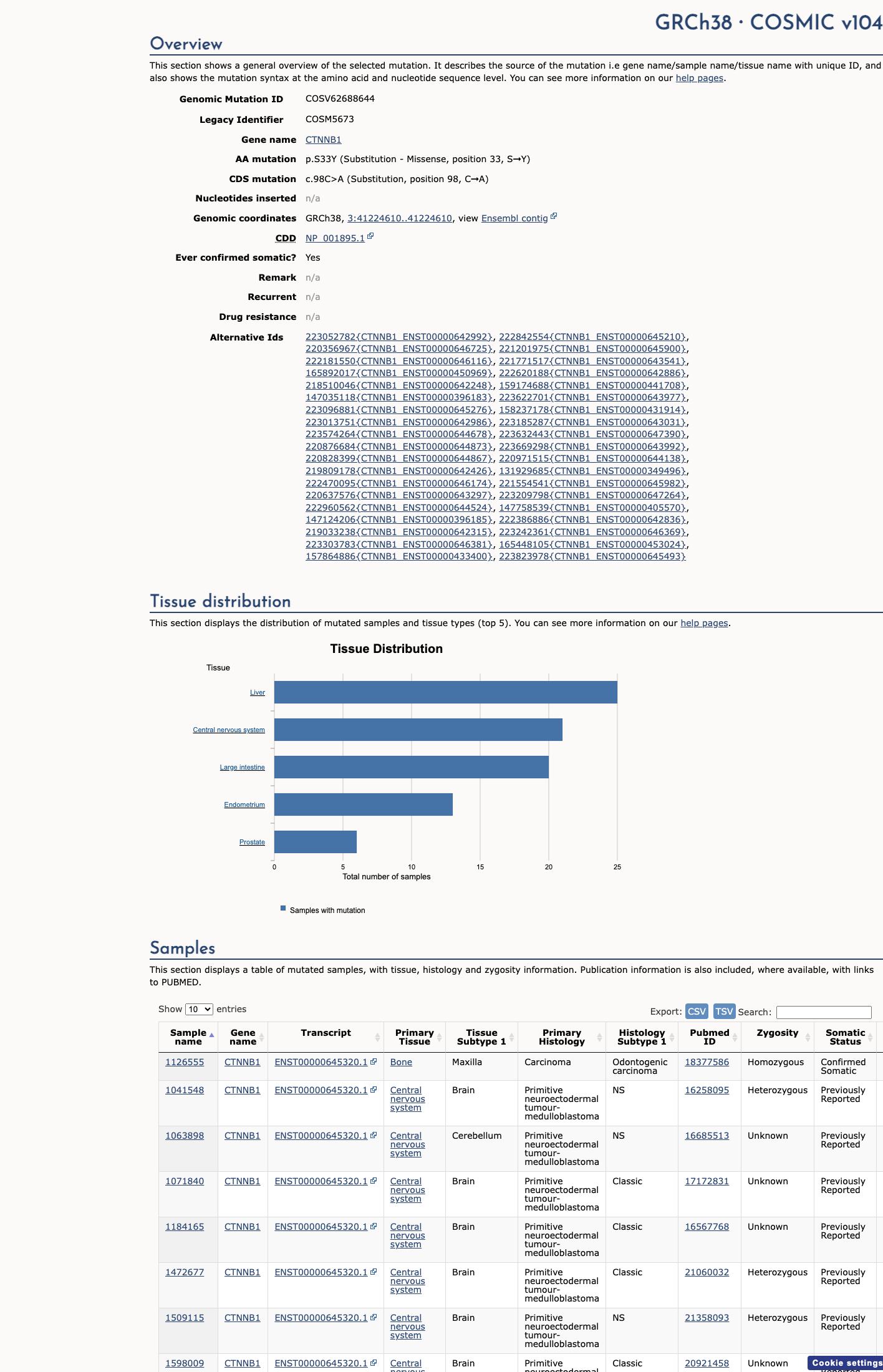
COSMIC

Cancer hotspots
Somatic evidence
Hotspot
COSMIC
This variant lies in a statistically significant hotspot. This variant has previously been reported in somatic cancers (COSMIC; COSV62688644, n = 103 times).
Hotspots
This variant lies in a statistically significant hotspot.
Literature · how each cited paper was used
5papers cited
Each card is an audit: what was searched, what was found, whether it names the variant, which criteria it fed, and why. 3 further PMIDs triaged but not cited — see Sources & references.
A common human skin tumour is caused by activating mutations in beta-catenin.
Searched
c.98C>Ap.Ser33TyrS33YTCT→TAT
Found
S33Y (TCT→TAT) identified in 2 of 16 pilomatricomas. The N-terminal segment mutations, including S33Y, are activating mutations that disrupt GSK-3beta-dependent phosphorylation and ubiquitin-mediated degradation of beta-catenin, leading to constitutive WNT pathway activation.
Variant
✓ Names this variant — characterised directly
Applied to
→PM1
met
→PM5
met
Why
Variant confirmed in somatic pilomatricomas; functional domain characterization supports PM1; S33F and S33C comparators support PM5.
S33Y (TCT→TAT; found in two pilomatricomas)
Location Results (page 412); Figure 5a · Context Sanger sequencing of microdissected formalin-fixed paraffin-embedded pilomatricoma tissue, HinfI restriction endonuclease confirmation · full text
beta-Catenin status predicts a favorable outcome in childhood medulloblastoma: the United Kingdom Children's Cancer Study Group Brain Tumour Committee.
Searched
c.98C>Ap.Ser33TyrS33YSER→TYRcodon 33
Found
CTNNB1 codon 33 TCT→TAT (SER→TYR) mutation identified in 1 of 109 medulloblastomas with nuclear beta-catenin immunopositivity. Wnt/Wg pathway activation was an independent marker of favorable outcome in this cohort.
Variant
✓ Names this variant — characterised directly
Applied to
→PM5
met
Why
Variant confirmed in a medulloblastoma; additional same-codon variants (S33F at codon 33 TCT→TTT) support PM5.
codon 33 TCT→TAT; SER→TYR
Location Results, paragraph on Mutational Analysis of CTNNB1 and APC (page 7953) · Context Direct DNA sequencing of FFPE medulloblastoma tissue from SIOP/UKCCSG PNET3 clinical trial · full text
Stratification of medulloblastoma on the basis of histopathological grading.
Searched
c.98C>Ap.Ser33TyrS33YTCT→TATSer→Tyrcodon 33
Found
CTNNB1 codon 33 TCT→TAT (Ser→Tyr) mutation identified in 1 of 146 medulloblastomas screened for beta-catenin exon 3 mutations. Overall, 10 of 146 (7%) medulloblastomas harbored CTNNB1 mutations.
Variant
✓ Names this variant — characterised directly
Applied to
→PM5
met
Why
Variant confirmed in a medulloblastoma; multiple same-codon pathogenic variants (S33F, S33C) support PM5.
33 TCT→TAT Ser→Tyr
Location Table 1 (page 9); Results section on beta-catenin mutations · Context PCR-SSCP and direct DNA sequencing of exon 3 of CTNNB1 from archival FFPE medulloblastoma tissue (SIOP II clinical trial) · full text
Illegitimate WNT pathway activation by beta-catenin mutation or autocrine stimulation in T-cell malignancies.
Searched
c.98C>Ap.Ser33TyrS33Y
Found
S33Y mutation identified in a primary precursor T-lymphoblastic lymphoma/leukemia (T-LBL/ALL). Functional characterization demonstrated that S33Y h-catenin transfection enhanced TCF-mediated transcription and promoted cell growth in T-LBL/ALL cell lines (CEM, Molt4, SupT1). The S33Y mutant is a gain-of-function variant that disrupts the GSK-3beta phosphorylation site.
Variant
✓ Names this variant — characterised directly
Applied to
→PS3
met
→PM1
met
Why
Direct variant-specific functional evidence of gain-of-function confirmed; referenced in PS3 (strong) and PM1 assessment.
the h-catenin mutant S33Y, which was found in one of the primary T-LBL/ALLs described in this study...transfection of this h-catenin mutant markedly enhanced the growth of all three ALL cell lines
Location Results (page 6970, Fig. 2); Functional studies (pages 6972-6975, Fig. 5C) · Context TCF-reporter (TOPFLASH) luciferase assay and cell growth analysis in T-LBL/ALL cell lines (CEM, Molt4, SupT1) transfected with S33Y h-catenin expression construct · full text
Genomic profiling of hepatocellular adenomas reveals recurrent FRK-activating mutations and the mechanisms of malignant transformation.
Searched
c.98C>Ap.Ser33TyrS33Y
Found
S33Y CTNNB1 mutant tested as a comparator in TOP-FLASH luciferase reporter assay alongside K335I and N387K mutants in Huh7 hepatocellular cells. S33Y showed strong activation of beta-catenin transcriptional activity, confirming its gain-of-function properties. S33Y was used as a positive control representing classical exon 3 activating mutations.
Variant
✓ Names this variant — characterised directly
Applied to
→PS3
met
Why
Independent confirmation of S33Y gain-of-function; referenced as secondary support for PS3 (strong).
CTNNB1 mutants S33Y (S33), T41A (T41), S45P (S45), K335I (K335), and N387K (N387) or control WT CTNNB1 (WT) and empty plasmid (EP) were transfected in Huh7 cells expressing a CTNNB1-driven luciferase (TOP-FLASH) reporter construct.
Location Results, Figure 4D; page 433 · Context TOP-FLASH luciferase reporter assay in Huh7 hepatocellular carcinoma cell line · full text
Sources & reference links
Triaged references · 3 PMIDs not cited in assessment
17172831 ↗
Wnt/Wingless pathway activation and chromosome 6 loss characterize a distinct molecular sub-group of medulloblastomas associated with a favorable prognosis.
ONCOKB
23852704 ↗
Tumor markers in colorectal cancer, gastric cancer and gastrointestinal stromal cancers: European group on tumor markers 2014 guidelines update.
CLINVAR
9065402 ↗
Activation of beta-catenin-Tcf signaling in colon cancer by mutations in beta-catenin or APC.
CLINVAR