NM_002834.4:c.179G>T (p.Gly60Val) in PTPN11 is a missense variant in the N-SH2 domain, a critical functional domain that regulates SHP2 autoinhibition.1 This variant is completely absent from gnomAD v2.1, v4.1, and gnomAD-Canada population databases (PM2).2 Functional studies demonstrate that SHP2 G60V exhibits increased basal phosphatase activity compared to wild-type, consistent with a gain-of-function mechanism in RASopathies (PS3_Supporting).3 The variant is located at a residue (Gly60) within the N-SH2 domain where multiple pathogenic missense changes have been reported (PM1).4 A different pathogenic missense change at the same residue, Gly60Ala (c.179G>C), has been reported in Noonan syndrome (PM5).5 Multiple in silico predictors support a deleterious effect: REVEL score 0.931 and BayesDel score 0.596 (PP3).6 PP2 is applicable per the RASopathy VCEP specification for all curated RASopathy genes (PP2).7 This variant has been reported in ClinVar as Pathogenic by 9 clinical laboratories and Likely pathogenic by 2 clinical laboratories (ClinVar variation ID 55797).8
Final classification
Likely Pathogenic
PS3PM1PM2PM5PP2PP3
PTPN11
c.179G>T
p.Gly60Val
This variant
NM_002834.4:c.179G>T (p.Gly60Val) in PTPN11 is a missense variant in the N-SH2 domain, a critical functional domain that regulates SHP2 autoinhibition.
ClinGen RASopathy Expert Panel Specifications to the ACMG/AMP Variant Interpretation Guidelines Version 1.0 v1.0 lacked a usable explicit final combination framework, so generic ACMG/AMP 2015 final-combination rules were applied as fallback; applied criteria: PS3 supporting, PM1 moderate, PM2 moderate, PM5 moderate, PP2 supporting, PP3 supporting; combination = 3 moderate + 3 supporting, which maps to Likely Pathogenic.
Classification rationale
PS3PM1PM2PM5PP2PP3
Likely Pathogenic
PTPN11 c.179G>T
PS3 + PM1 + PM2 + PM5 + PP2 + PP3
→
Likely Pathogenic
LYFE Sciences is an AI system, and it can make mistakes. Criteria
may be applied incorrectly, sources may be misread, and a confident-looking
classification can still be wrong. Double-check every criterion and
its underlying evidence before relying on any call.
Gene diagram
· NM_002834.4 · variants mapped to exon structure
PTPN11
NM_002834.4
Fetching transcript structure from UCSC…
Applied criteria · 6 applied · 13 assessed
MetEvidence satisfies this criterion.
Not metEvaluated against available evidence; threshold not reached.
Not assessedApplies in principle, but no evidence was found to evaluate it.
N/ADoesn't apply to this variant type.
Applied · 6
Strength
Supporting
Moderate
Strong
Very strong
PS3
supporting
Pathogenic
SHP2 G60V demonstrated increased basal phosphatase activity compared to wild-type SHP2 in a quantitative DiFMUP-based phosphatase assay (PMID:30375388). This assay type (SHP-2 Phosphatase Activity) is an approved functional assay for PTPN11 per the RASopathy VCEP supplemental material. The VCEP spreadsheet assigns PS3_Supporting strength for approved functional studies. G60V showed intermediate activation between F285S and S502P/E76K and conferred resistance to allosteric inhibition by SHP099 in cellular assays, consistent with a gain-of-function mechanism.
SHP2 G60V exhibits increased basal phosphatase activity relative to WT (DiFMUP assayFig. 3bPMID:30375388)
PM1
moderate
review
Pathogenic
Gly60 is located in the N-SH2 domain of SHP2, a critical functional domain that forms the autoinhibitory interface with the PTP domain. Multiple pathogenic missense changes have been reported at this residue (G60A, G60C, G60V), and disruption of Gly60 destabilizes the autoinhibited conformation, leading to constitutive phosphatase activation. The N-SH2 domain is a well-established critical functional domain in SHP2.
Gly60 resides in the N-SH2 domainpart of the autoinhibitory interface with PTP domain (PMID:11992261)Multiple pathogenic missense variants at Gly60 (G60A
PM2
moderate
Pathogenic
NM_002834.4:c.179G>T is completely absent from gnomAD v2.1 (exomes), gnomAD v4.1 (exomes), and gnomAD-Canada v1.0 (genomes), meeting the VCEP requirement of complete absence from all population databases.
Absent from gnomAD v2.1Absent from gnomAD v4.1Absent from gnomAD-Canada v1.0
PM5
moderate
Pathogenic
A different missense change at the same residue, Gly60Ala (c.179G>C, p.Gly60Ala), has been previously reported as a pathogenic variant in Noonan syndrome (PMID:11992261). Both G60A and G60V are non-conservative substitutions at a glycine residue critical to the autoinhibitory interface. Under the RASopathy VCEP, one established pathogenic missense at the same residue qualifies for PM5 at moderate strength.
G60A (c.179G>C) reported as pathogenic Noonan syndrome variant in Tartaglia et al. 2002 (Table 3)
PP2
supporting
Pathogenic
The RASopathy VCEP explicitly states that PP2 is applicable to all RASopathy genes described and curated in the specification. PTPN11 is a RASopathy gene, and c.179G>T is a missense variant in a gene where missense variants are a common mechanism of disease.
VCEP specification: PP2 applicable to all RASopathy genes
PP3
supporting
Pathogenic
Multiple lines of computational evidence support a deleterious effect: REVEL score of 0.931 (strongly deleterious) and BayesDel score of 0.596 (deleterious). Both in silico predictors independently suggest a damaging effect on the gene product. SpliceAI predicts no significant splice impact (max delta score 0.05), indicating the effect is at the protein level.
REVEL score 0.931 (deleterious)BayesDel score 0.596 (deleterious)
Assessed · not applied
· 13 not met · 0 not assessed
Pathogenic
PS1
PS1 requires the same amino acid change (Gly60Val) to have been previously established as pathogenic via a different nucleotide change.
PS2
No de novo occurrence with confirmed paternity and maternity was identified for NM_002834.4:c.179G>T in the reviewed literature.
PS4
While ClinVar contains 11 clinical laboratory submissions classifying this variant as Pathogenic (9) or Likely pathogenic (2), these represent submissions, not independently ascertained proband occurrences.
PM6
No assumed or confirmed de novo occurrence of NM_002834.4:c.179G>T was identified in the reviewed literature.
PP1
No co-segregation data with informative meioses is available for this variant in the reviewed literature.
Benign
BA1
The variant is absent from gnomAD v2.1, v4.1, and gnomAD-Canada.
BS1
The variant is absent from gnomAD v2.1, v4.1, and gnomAD-Canada.
BS2
The VCEP specifies that general population data should not be used for BS2 in RASopathies due to variable expressivity.
BS3
Functional data from PMID:30375388 demonstrates that SHP2 G60V has increased basal phosphatase activity compared to wild-type, consistent with a gain-of-function mechanism.
BS4
No segregation data demonstrating lack of segregation in affected family members is available for this variant.
BP2
No data available on whether this variant has been observed in trans with a pathogenic variant or in cis with a pathogenic variant in any inheritance pattern.
BP4
Multiple lines of computational evidence (REVEL 0.931, BayesDel 0.596) support a deleterious effect on the gene product rather than no impact.
BP5
No evidence was identified that this variant has been found in a case with an alternate molecular basis for disease.
N/A · 9
PVS1 · PM3 · PM4 · PP4 · PP5 · BP1 · BP3 · BP6 · BP7
Research & evidence
Population frequency · supports pathogenic
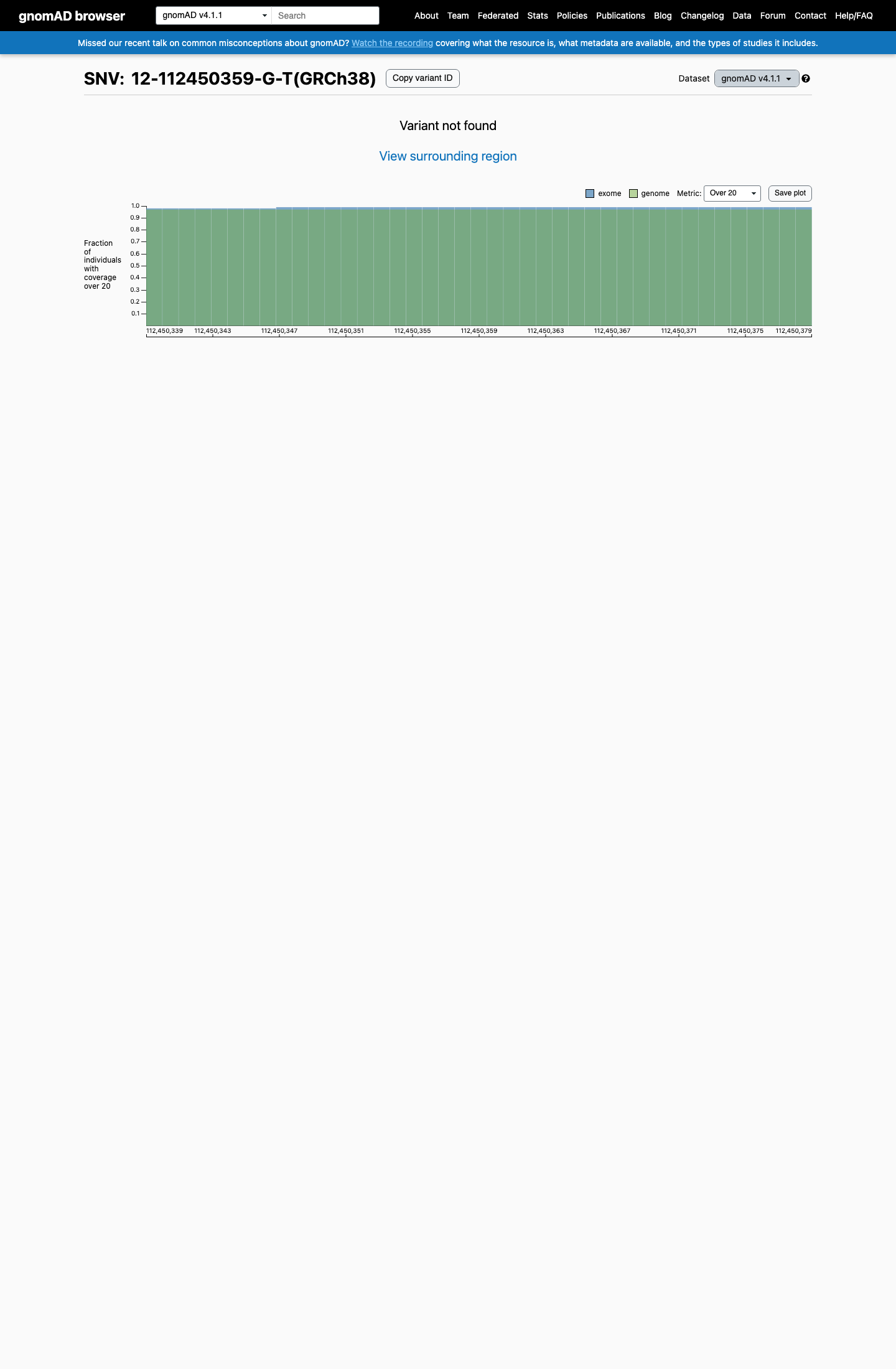
gnomAD v4.1
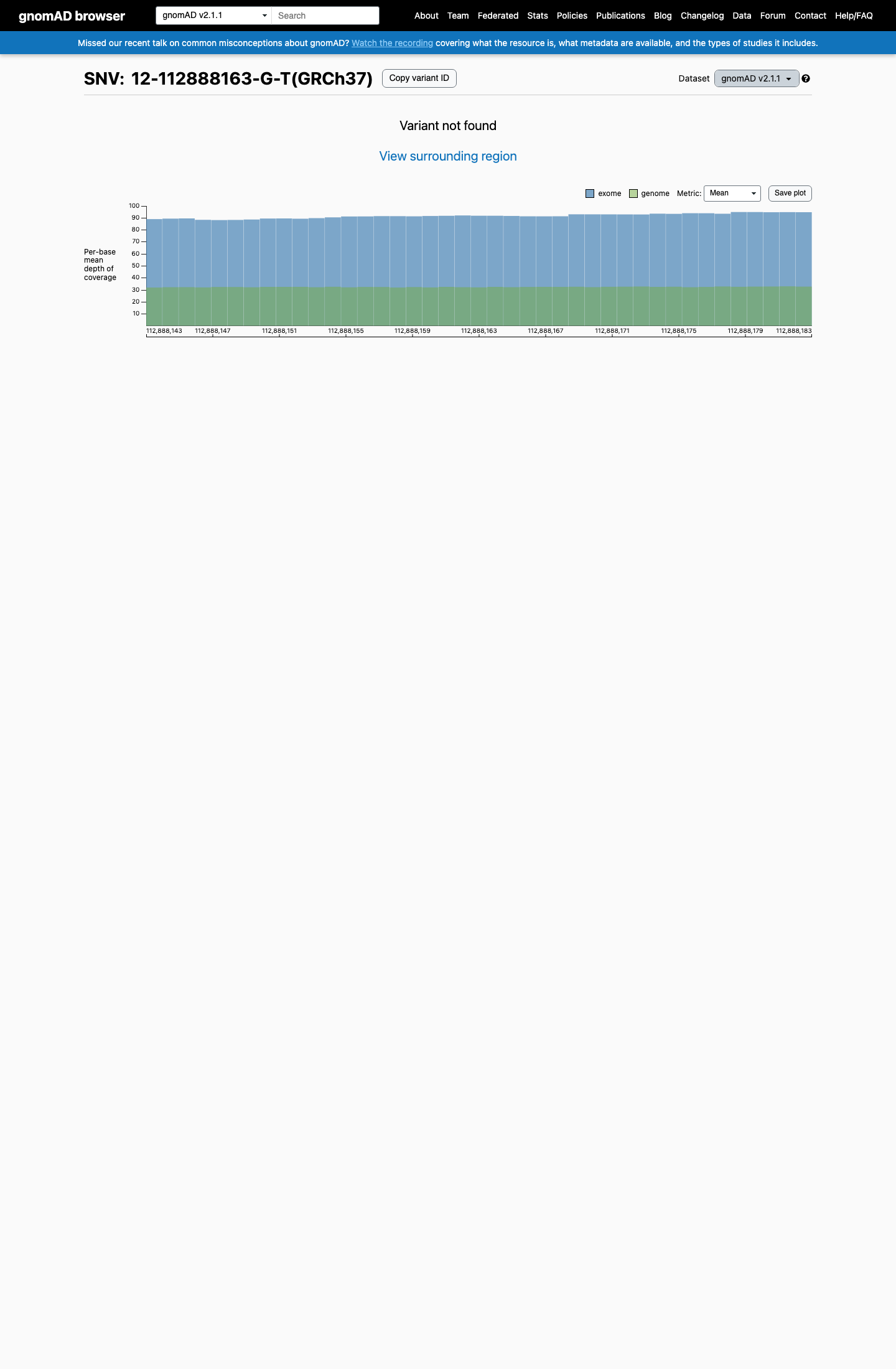
gnomAD v2.1
v4.1
Absent from gnomAD v4.1.
v2.1
Absent from gnomAD v2.1.
🇨🇦 CA
Absent from gnomAD-Canada v1.0.
Allele frequency by ancestry
three datasets · side by side
gnomAD v4.1
Absent
· 0 / ?
0 hom
0 hom
Not observed in any ancestry group.
gnomAD v2.1
Absent
· 0 / ?
0 hom
0 hom
Not observed in any ancestry group.
gnomAD Canada 🇨🇦
Absent
· 0 / ?
0 hom
0 hom
Not observed in any ancestry group.

ClinVar
This variant has been reported in ClinVar as Pathogenic (9 clinical laboratories) and as Likely pathogenic (2 clinical laboratories). (ClinVarID = 55797)
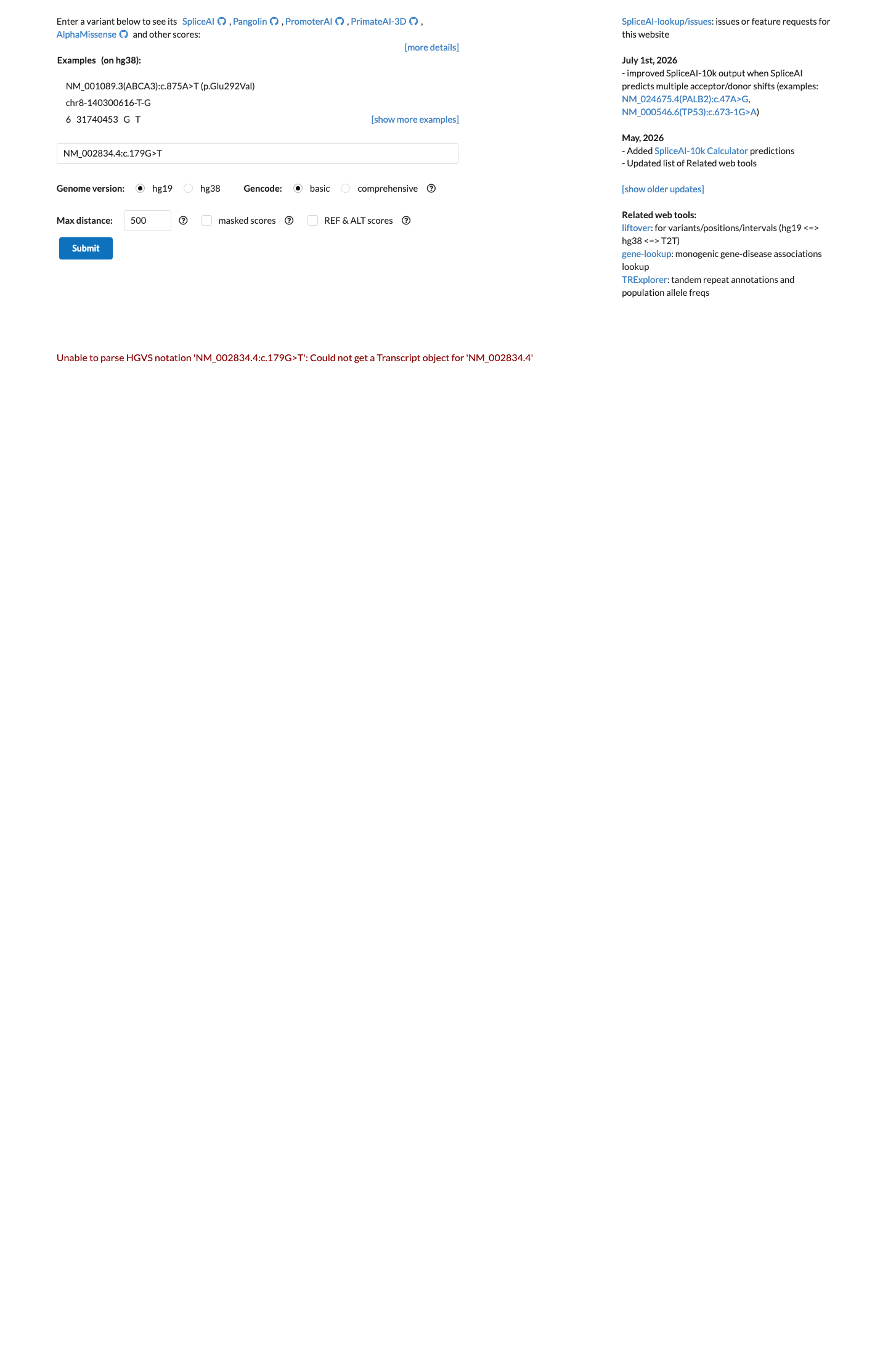
In silico
SpliceAI predicts no significant splice impact for this variant (max delta score = 0.05). REVEL score = 0.931. BayesDel score = 0.596115.
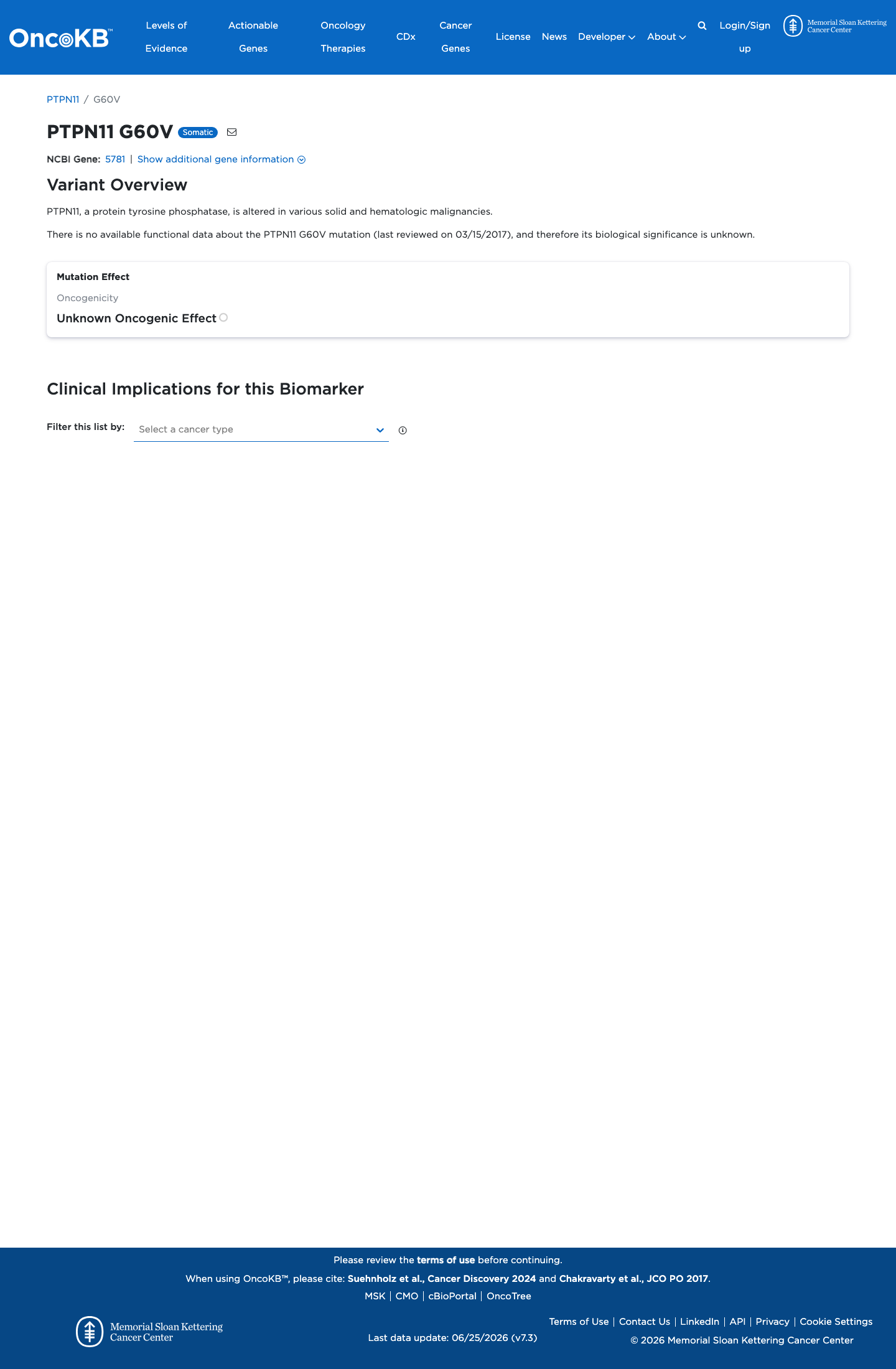
Functional
Unknown Oncogenic Effect
OncoKB did not identify variant-specific reviewed functional evidence for this variant; gene-level curated context is available for reviewer follow-up. PTPN11, a protein tyrosine phosphatase, is altered in various solid and hematologic malignancies.
COSMIC
Cancer hotspots
Somatic evidence
Not in COSMIC / hotspots
COSMIC
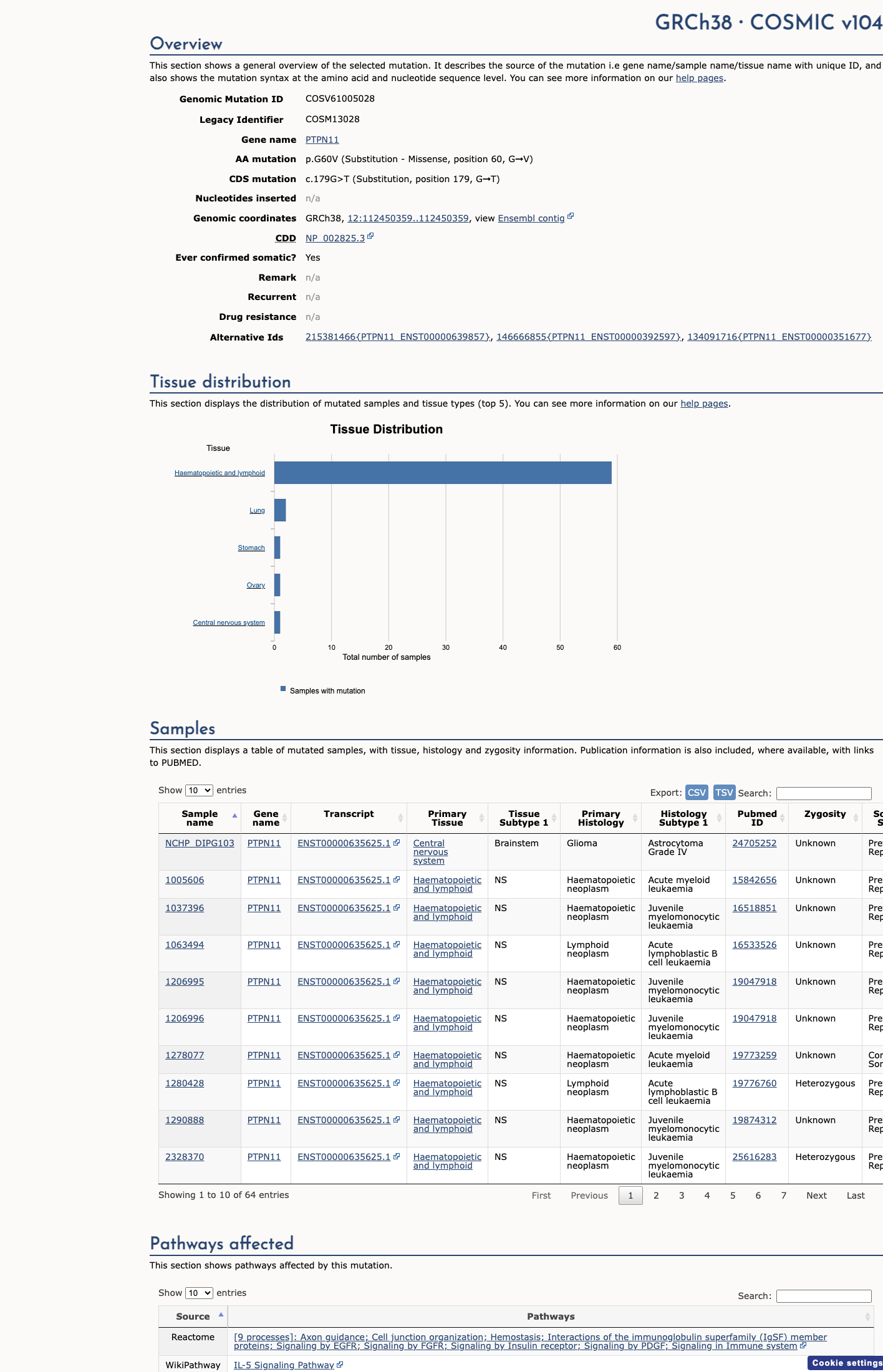
This variant does not lie in a statistically significant hotspot. This variant has previously been reported in somatic cancers (COSMIC; COSV61005028, n = 64 times).
Hotspots
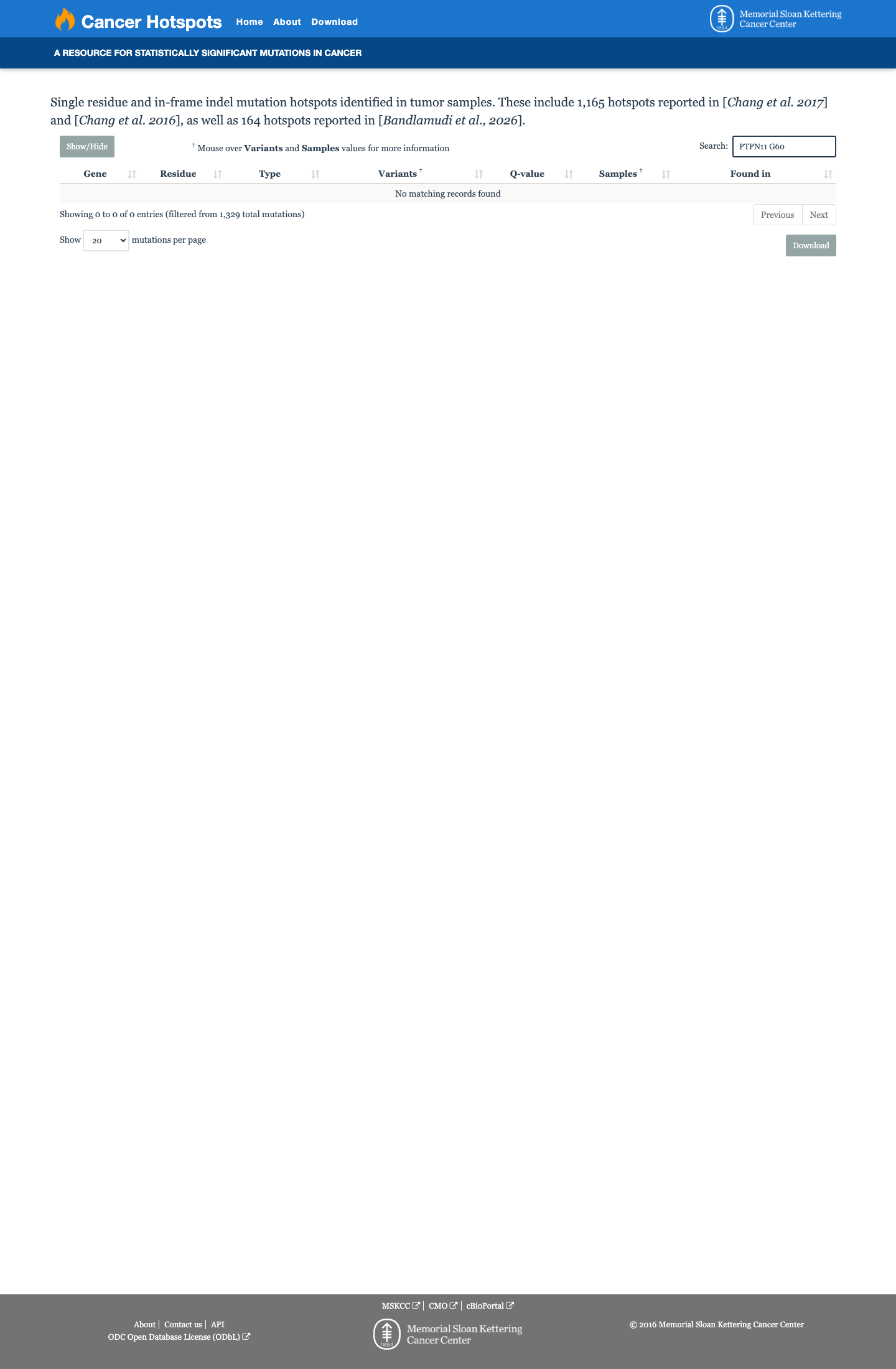
This variant does not lie in a statistically significant hotspot.
Literature · how each cited paper was used
3papers cited
Each card is an audit: what was searched, what was found, whether it names the variant, which criteria it fed, and why. 7 further PMIDs triaged but not cited — see Sources & references.
Structural reorganization of SHP2 by oncogenic mutations and implications for oncoprotein resistance to allosteric inhibition.
Searched
G60VGly60Valc.179G>T
Found
SHP2 G60V was directly tested in phosphatase activity assays using the fluorogenic substrate DiFMUP. G60V showed increased basal phosphatase activity intermediate between F285S and S502P/E76K. In PTPN11-null U2OS cells expressing SHP2 G60V, pErk levels were approximately 5-fold higher than parental cells, and the variant conferred resistance to allosteric inhibition by SHP099.
Variant
✓ Names this variant — characterised directly
Applied to
→PS3
met
→PM1
met
Why
Variant-specific functional data confirmed; referenced in PS3 supporting assessment and PM1 domain-level assessment.
the basal activity of the SHP2 variants investigated here increases from SHP2 WT < SHP2 F285S < SHP2 G60V < SHP2 S502P < SHP2 E76K
Location Results, SHP2 oncoprotein sensitivity to allosteric modulators; Fig. 3b; Fig. 6b; Methods, Quantification of basal SHP2 phosphatase activity · Context In vitro phosphatase assay using purified recombinant SHP2 proteins with DiFMUP substrate; cellular pErk assay in PTPN11-null U2OS cells expressing SHP2 G60V · full text
Rule & framework references · cited for criterion definitions, not variant evidence
11992261 ↗
PTPN11 mutations in Noonan syndrome: molecular spectrum, genotype-phenotype correlation, and phenotypic heterogeneity.
16263833 ↗
Noonan syndrome: relationships between genotype, growth, and growth factors.
Sources & reference links
9Sources
Triaged references · 7 PMIDs not cited in assessment
17020470 ↗
PTPN11 gene analysis in 74 Brazilian patients with Noonan syndrome or Noonan-like phenotype.
CLINVAR
18701506 ↗
Mutation of genes affecting the RAS pathway is common in childhood acute lymphoblastic leukemia.
CLINVAR
22097954 ↗
De novo P102L mutation in a patient with Gerstmann-Sträussler-Scheinker disease.
CLINVAR
25741868 ↗
Standards and guidelines for the interpretation of sequence variants: a joint consensus recommendation of the American College of Medical Genetics and Genomics and the Association for Molecular Pathology.
CLINVAR
25173338 ↗
2014 ESC Guidelines on diagnosis and management of hypertrophic cardiomyopathy: the Task Force for the Diagnosis and Management of Hypertrophic Cardiomyopathy of the European Society of Cardiology (ESC).
CLINVAR
28492532 ↗
Sherloc: a comprehensive refinement of the ACMG-AMP variant classification criteria.
CLINVAR