NM_000368.4:c.2215C>T (p.Gln739Ter) is a nonsense variant in exon 18 of the TSC1 gene, which encodes hamartin. TSC1 loss of function is a well-established mechanism for Tuberous Sclerosis Complex, an autosomal dominant disorder. This variant is predicted to trigger nonsense-mediated decay and removes the coiled-coil domain critical for TSC1-TSC2 interaction.1 This variant is absent from all gnomAD population databases (v2.1, v4.1, Canada; AF = 0.0%), meeting PM2 at moderate strength.2 The premature stop at p.Gln739 lies within the coiled-coil domain (aa 719-998), a well-characterized functional domain that mediates hamartin-tuberin heterodimerization. Truncation removes this domain and the C-terminal TBC1D7 binding region, satisfying PM1 at moderate strength.3 This variant has been reported in ClinVar as Pathogenic by 4 clinical laboratories (ClinVar Variation ID: 499737). Four of five submissions are from clinical testing laboratories using ACMG criteria.4 Classification: Pathogenic. 1 Very Strong (PVS1) + 2 Moderate (PM1, PM2) meets the generic ACMG/AMP 2015 pathogenic threshold (1 Very Strong + >=2 Moderate). Combined criteria: PVS1 + PM1 + PM2.5
Final classification
Pathogenic
PVS1PM1PM2
TSC1
c.2215C>T
p.Gln739Ter
This variant
NM_000368.4:c.2215C>T (p.Gln739Ter) is a nonsense variant in exon 18 of the TSC1 gene, which encodes hamartin. TSC1 loss of function is a well-established mechanism for Tuberous Sclerosis Complex, an autosomal dominant disorder. This variant is predicted to trigger nonsense-mediated decay and removes the coiled-coil domain critical for TSC1-TSC2 interaction.
gene-specific framework lacked a usable explicit final combination framework, so generic ACMG/AMP 2015 final-combination rules were applied as fallback; applied criteria: PVS1 very strong, PM1 moderate, PM2 moderate; combination = 1 very strong + 2 moderate, which maps to Pathogenic.
Classification rationale
PVS1PM1PM2
Pathogenic
TSC1 c.2215C>T
PVS1 + PM1 + PM2
→
Pathogenic
1
pvs1_gene_contextpvs1_variant_assessmentPMID:10227394 ↗
5
generic_acmg_combination_rules
LYFE Sciences is an AI system, and it can make mistakes. Criteria
may be applied incorrectly, sources may be misread, and a confident-looking
classification can still be wrong. Double-check every criterion and
its underlying evidence before relying on any call.
Gene diagram
· NM_000368.4 · variants mapped to exon structure
TSC1
NM_000368.4
Fetching transcript structure from UCSC…
Applied criteria · 3 applied · 16 assessed
MetEvidence satisfies this criterion.
Not metEvaluated against available evidence; threshold not reached.
Not assessedApplies in principle, but no evidence was found to evaluate it.
N/ADoesn't apply to this variant type.
Applied · 3
Strength
Supporting
Moderate
Strong
Very strong
PVS1
very strong
Pathogenic
This nonsense variant (p.Gln739Ter) in exon 18 of 23 introduces a premature termination codon predicted to trigger nonsense-mediated decay. TSC1 loss of function is an established disease mechanism for autosomal dominant Tuberous Sclerosis Complex. Under the ClinGen SVI PVS1 framework (PMC6185798), nonsense variants in genes with confirmed LoF mechanism qualify for PVS1 at full strength. The truncated protein would lack the coiled-coil domain (aa 719-998) critical for TSC1-TSC2 interaction and the C-terminal TBC1D7 binding region. No downgrade factors identified: the variant is not in the last exon, NMD is predicted, and the affected exon is not enriched for population LoF variation.
Nonsense variant p.Gln739Ter in exon 18/23TSC1 LoF mechanism confirmed for Tuberous Sclerosis ComplexNMD predicted
PM1
moderate
Pathogenic
The variant introduces a premature stop codon at position 739 within the coiled-coil domain (aa 719-998) of hamartin, a well-characterized functional domain critical for TSC1-TSC2 heterodimerization. Truncation at p.Gln739 removes the entire coiled-coil domain and C-terminal TBC1D7 binding region. Disruption of this functionally characterized domain satisfies PM1 at the domain level.
Coiled-coil domain (aa 719-998) mediates TSC1-TSC2 interactionVariant creates stop codon at aa 739removing the coiled-coil domain and C-terminal region
PM2
moderate
Pathogenic
This variant is absent from gnomAD v2.1, gnomAD v4.1, and gnomAD-Canada v1.0, with zero observations across all populations. AF = 0.0%, well below the 0.1% PM2 threshold for a rare-disease variant.
gnomAD v2.1: absent (AF=0)gnomAD v4.1: absent (AF=0)gnomAD-Canada: absent
Assessed · not applied
· 12 not met · 4 not assessed
Pathogenic
PS2
No confirmed de novo occurrence of NM_000368.4:c.2215C>T with confirmed paternity and maternity has been identified in the reviewed literature.
PS3
No variant-specific functional studies directly testing NM_000368.4:c.2215C>T were identified.
PS4
Insufficient statistical data for case-control comparison.
PM6
No de novo observation of NM_000368.4:c.2215C>T has been identified in the reviewed literature.
PP1
No co-segregation data available for this variant.
PP3
In silico predictors do not support a deleterious effect for this variant.
PP4
No patient-specific phenotypic data was provided for this case.
PP5
ClinVar reports this variant as Pathogenic from 4 clinical laboratories, but the aggregate review status is 1-star (criteria provided, single submitter).
Benign
BA1
This variant is absent from gnomAD v2.1, v4.1, and gnomAD-Canada (AF = 0.0%), far below the BA1 threshold of >1% (or >5%).
BS1
This variant is absent from all gnomAD populations (AF = 0.0%), well below the BS1 threshold of >0.3% for a rare autosomal dominant disorder.
BS2
This variant has not been observed in healthy adult controls.
BS3
No well-established functional studies demonstrate a benign effect for this variant.
BS4
No segregation data are available to assess lack of segregation in affected family members.
BP2
No phase information is available to determine whether this variant has been observed in trans with a known pathogenic TSC1 variant.
BP5
No data are available indicating this variant is observed in a case with an alternate molecular basis for disease.
BP6
ClinVar reports this variant as Pathogenic, not benign.
N/A · 9
PS1 · PM3 · PM4 · PM5 · PP2 · BP1 · BP3 · BP4 · BP7
Research & evidence
Population frequency · supports pathogenic
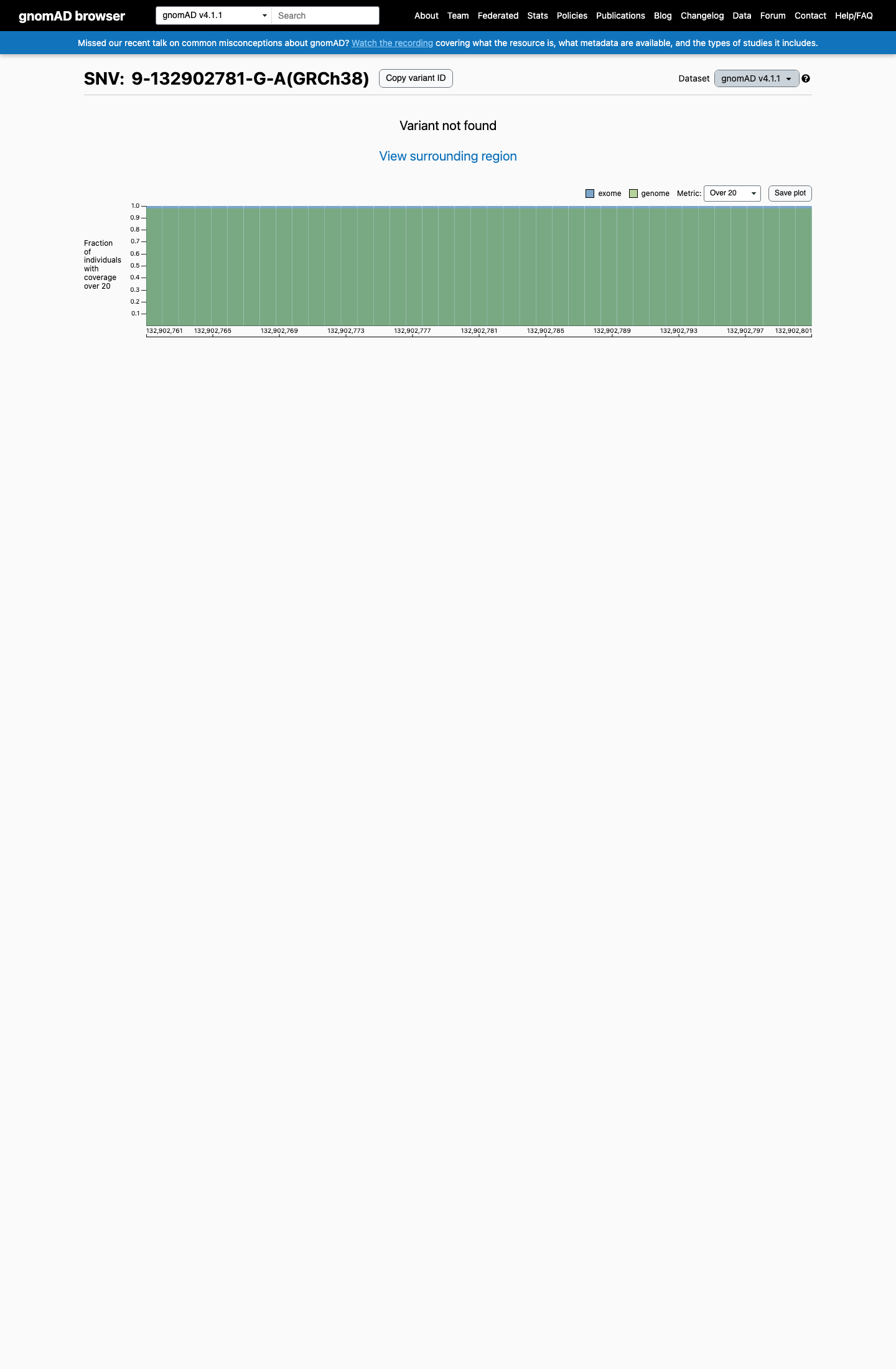
gnomAD v4.1
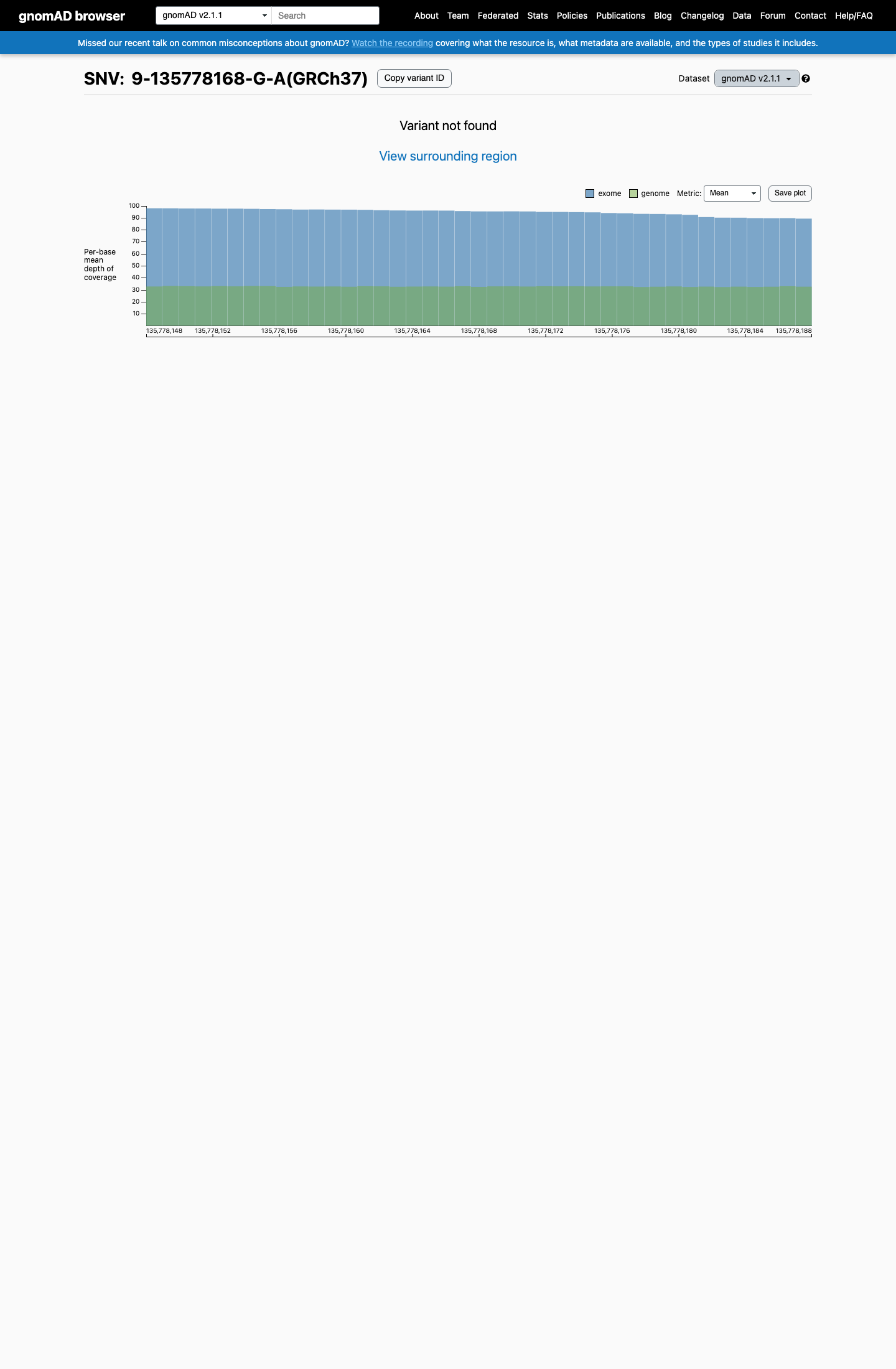
gnomAD v2.1
v4.1
Absent from gnomAD v4.1.
v2.1
Absent from gnomAD v2.1.
🇨🇦 CA
Absent from gnomAD-Canada v1.0.
Allele frequency by ancestry
three datasets · side by side
gnomAD v4.1
Absent
· 0 / ?
0 hom
0 hom
Not observed in any ancestry group.
gnomAD v2.1
Absent
· 0 / ?
0 hom
0 hom
Not observed in any ancestry group.
gnomAD Canada 🇨🇦
Absent
· 0 / ?
0 hom
0 hom
Not observed in any ancestry group.
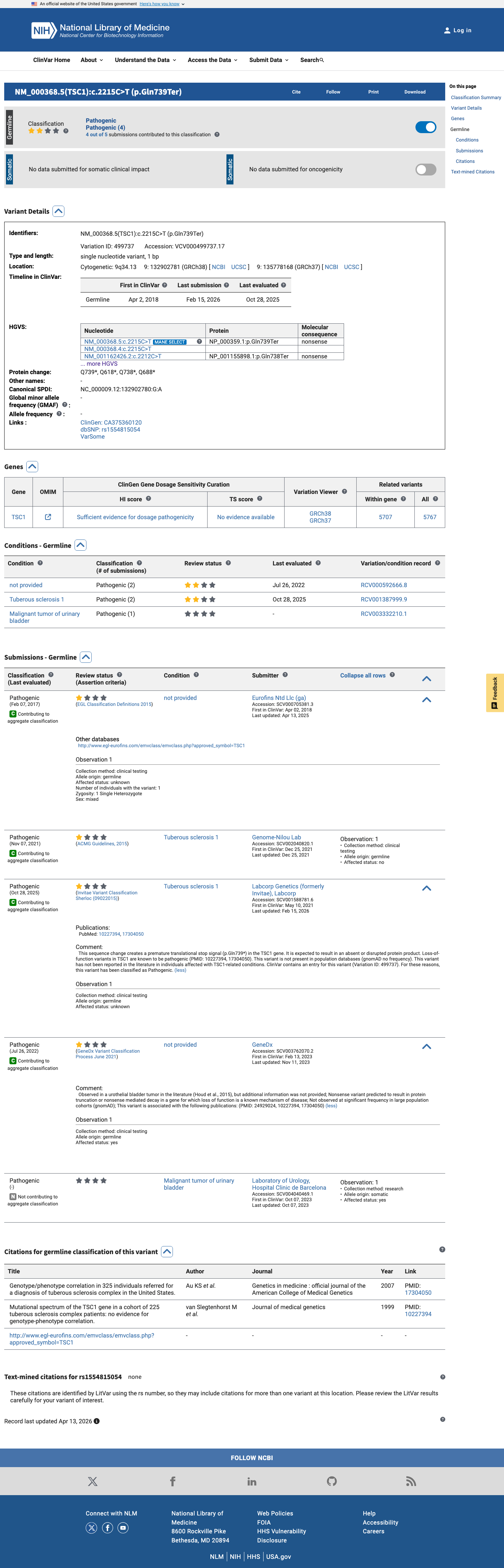
ClinVar
This variant has been reported in ClinVar as Pathogenic (4 clinical laboratories). (ClinVarID = 499737)
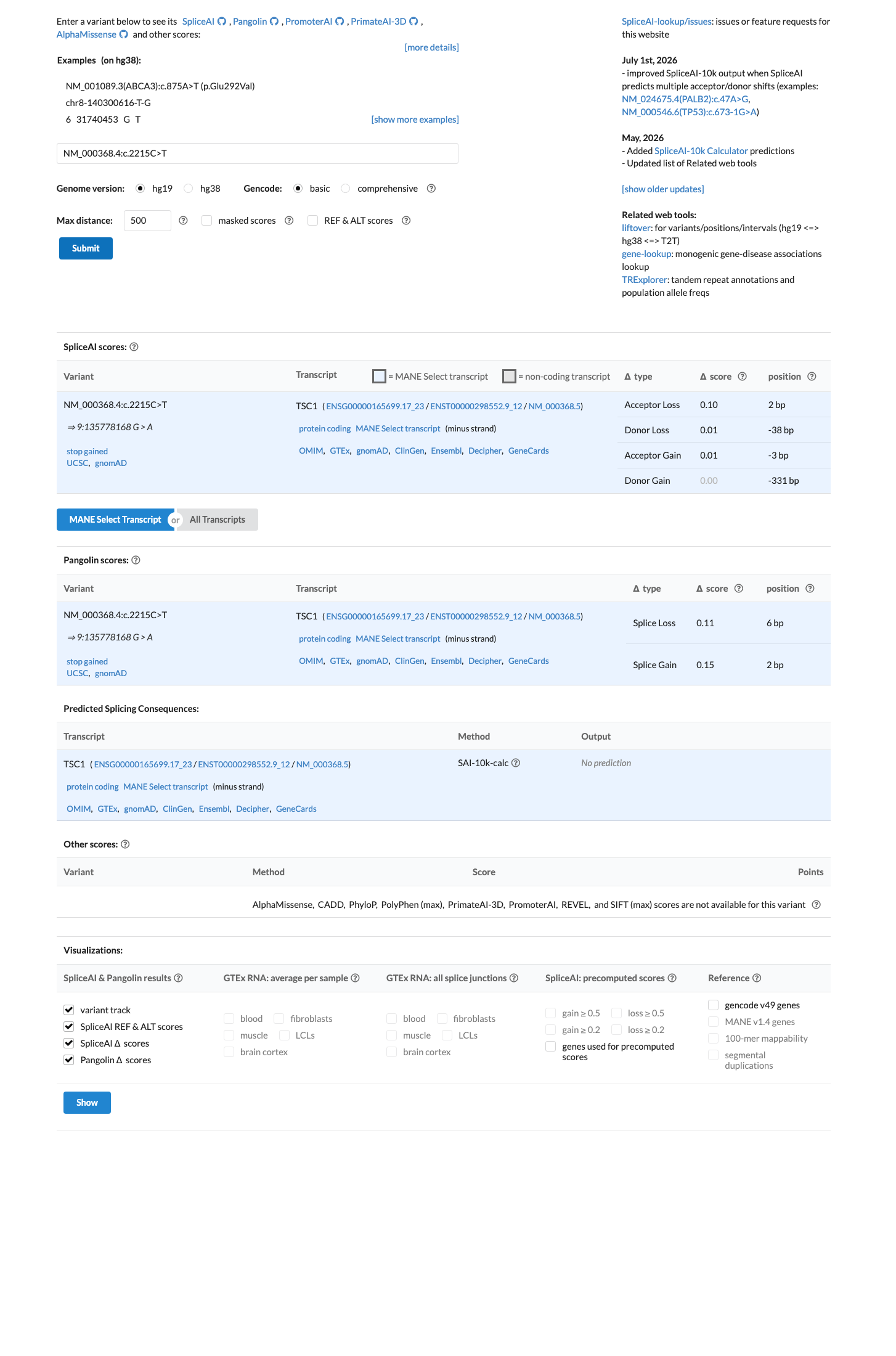
In silico
SpliceAI predicts no significant splice impact for this variant (max delta score = 0.10). BayesDel score = 0.558747.
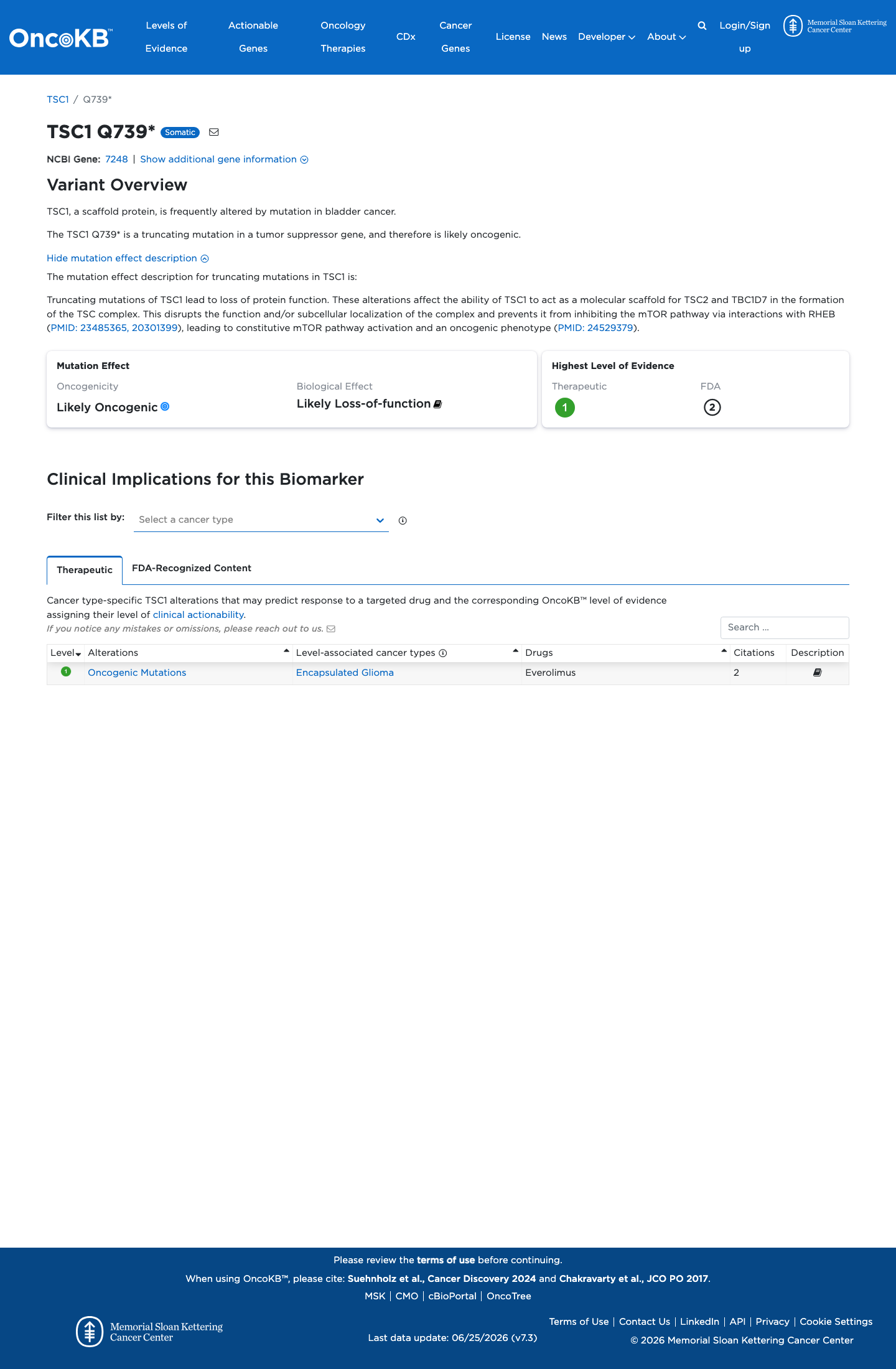
Functional
Likely Oncogenic
OncoKB identified variant-specific curated literature and context relevant to functional review; biological-effect context: Likely Loss-of-function; curated oncogenicity label: Likely Oncogenic.
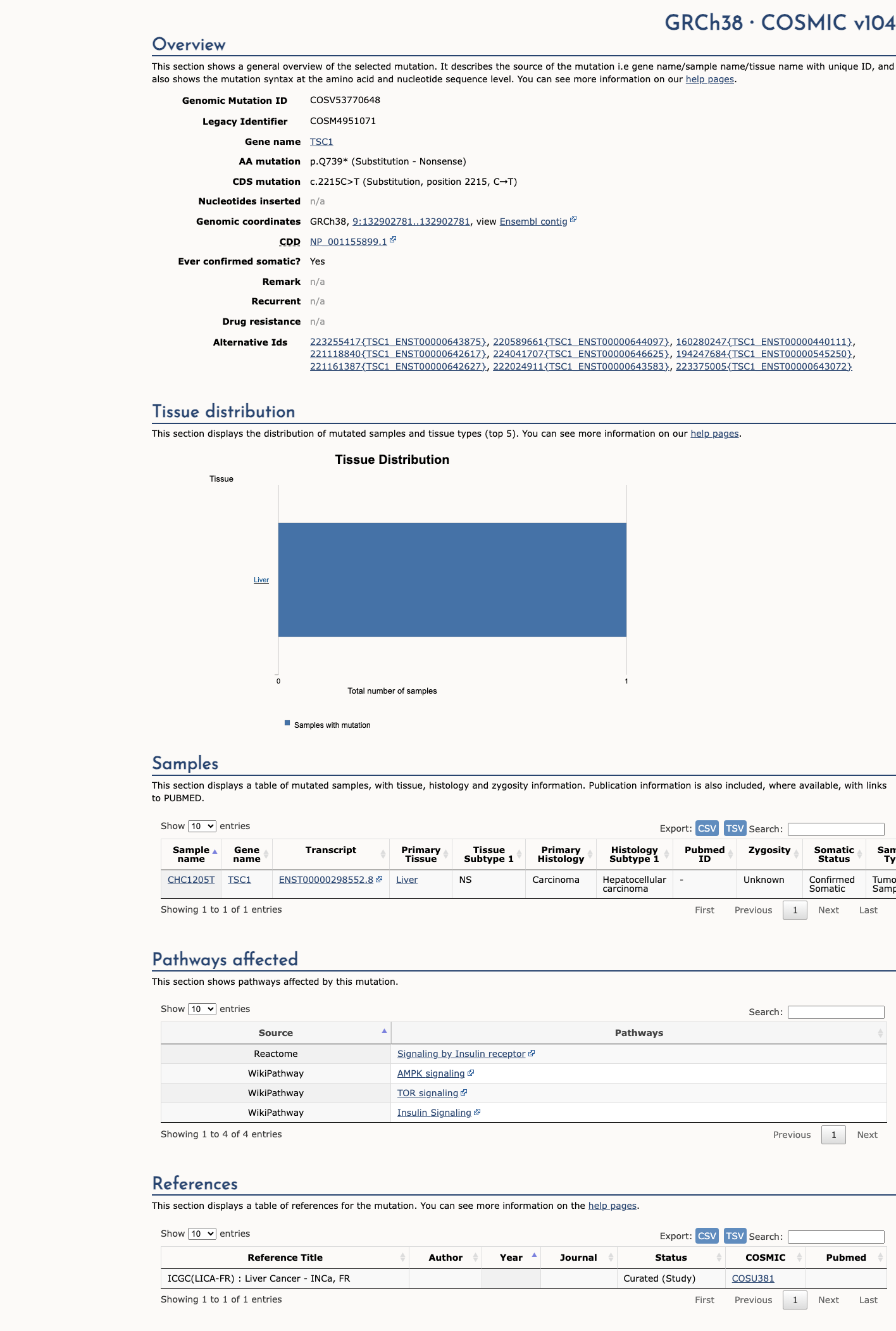
COSMIC
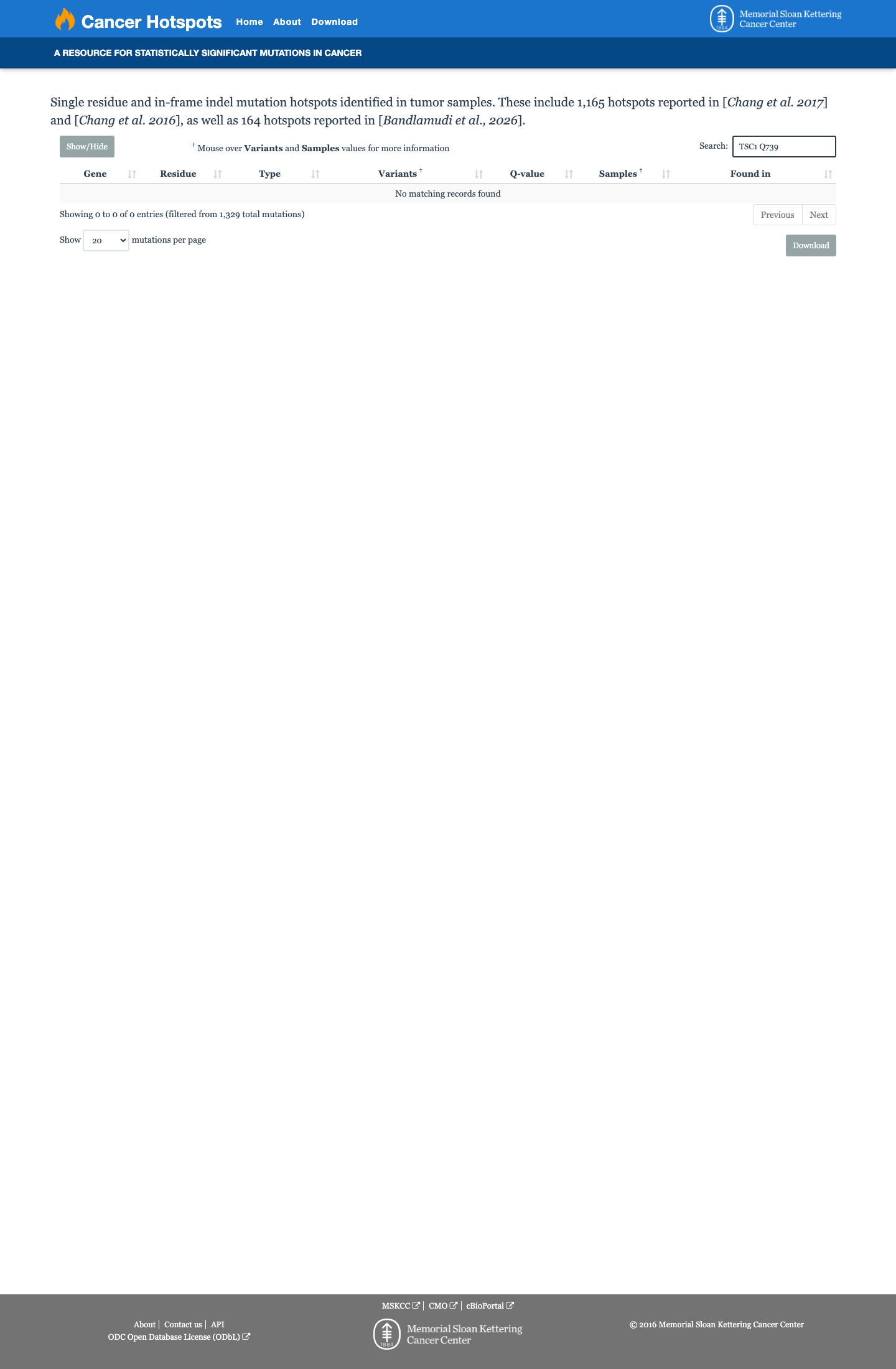
Cancer hotspots
Somatic evidence
Not in COSMIC / hotspots
COSMIC
This variant does not lie in a statistically significant hotspot. This variant has previously been reported in somatic cancers (COSMIC; COSV53770648, n = 1 times).
Hotspots
This variant does not lie in a statistically significant hotspot.
Literature · how each cited paper was used
1papers cited
Each card is an audit: what was searched, what was found, whether it names the variant, which criteria it fed, and why. 7 further PMIDs triaged but not cited — see Sources & references.
Rule & framework references · cited for criterion definitions, not variant evidence
10227394 ↗
Mutational spectrum of the TSC1 gene in a cohort of 225 tuberous sclerosis complex patients: no evidence for genotype-phenotype correlation.
Sources & reference links
Triaged references · 7 PMIDs not cited in assessment
23485365 ↗
A circuitry and biochemical basis for tuberous sclerosis symptoms: from epilepsy to neurocognitive deficits.
ONCOKB
24529379 ↗
Spatial control of the TSC complex integrates insulin and nutrient regulation of mTORC1 at the lysosome.
ONCOKB
17304050 ↗
Genotype/phenotype correlation in 325 individuals referred for a diagnosis of tuberous sclerosis complex in the United States.
CLINVAR
25741868 ↗
Standards and guidelines for the interpretation of sequence variants: a joint consensus recommendation of the American College of Medical Genetics and Genomics and the Association for Molecular Pathology.
CLINVAR
23519317 ↗
Clinical genetics evaluation in identifying the etiology of autism spectrum disorders: 2013 guideline revisions.
CLINVAR
23788249 ↗
ACMG recommendations for reporting of incidental findings in clinical exome and genome sequencing.
CLINVAR