NM_016215.4:c.812_815del is a frameshift deletion in exon 11 of EGFL7, predicted to cause a C-terminal truncation (p.Lys271ThrfsTer37). Under the ClinGen SVI PVS1 framework (PMC6185798), frameshift variants in the terminal exon with potential NMD escape are downgraded to moderate strength. The supporting literature for EGFL7 germline loss-of-function mechanism requires additional validation — the PMIDs cited in gene context review (35282432, 42009739) do not directly mention EGFL7 in their full text. The variant is extremely rare in population databases (gnomAD v4.1 AF=0.02045%) meeting PM2 at supporting level.1 This variant is absent from ClinVar with no clinical assertions, no functional studies, and no segregation data. No publications were identified that specifically mention NM_016215.4:c.812_815del.2 With one moderate criterion (PVS1) and one supporting criterion (PM2) under the generic ACMG/AMP 2015 classification framework (PMID:25741868), this variant does not meet the threshold for Likely Pathogenic (requires 1 Strong + 1-2 Moderate, or 1 Very Strong + 1 Moderate, or 3 Moderate, or 2 Moderate + 2 Supporting, or 1 Moderate + 4 Supporting). The variant is classified as a Variant of Uncertain Significance (VUS).3
EGFL7
Final classification
VUS
EGFL7 c.812_815del · p.Lys271ThrfsTer37
EGFL7
NM_016215.4:c.812_815del is a frameshift deletion in exon 11 of EGFL7, predicted to cause a C-terminal truncation (p.Lys271ThrfsTer37). Under the ClinGen SVI PVS1 framework (PMC6185798), frameshift variants in the terminal exon with potential NMD escape are downgraded to moderate strength. The supporting literature for EGFL7 germline loss-of-function mechanism requires additional validation — the PMIDs cited in gene context review (35282432, 42009739) do not directly mention EGFL7 in their full text. The variant is extremely rare in population databases (gnomAD v4.1 AF=0.02045%) meeting PM2 at supporting level.
gene-specific framework lacked a usable explicit final combination framework, so generic ACMG/AMP 2015 final-combination rules were applied as fallback; applied criteria: PVS1 moderate, PM2 supporting; combination = 1 moderate + 1 supporting, which maps to VUS.
Classification rationale
PVS1PM2
VUS
EGFL7 c.812_815del
PVS1 + PM2
→
VUS
Gene diagram
· NM_016215.4 · variants mapped to exon structure
EGFL7
NM_016215.4
Fetching transcript structure from UCSC…
Applied criteria · 2 applied · 15 assessed
Applied · 2
Strength
Supporting
Moderate
Strong
Very strong
✓
PVS1
moderate
review
Pathogenic
NM_016215.4:c.812_815del is a frameshift variant predicted to result in premature termination (NP_057299.1:p.Lys271ThrfsTer37) occurring in the terminal exon (exon 11/11). The EGFL7 protein is 274 amino acids; truncation at residue 271 removes only the last 3 residues and appends 37 novel amino acids before a premature stop. Under ClinGen SVI PVS1 recommendations (PMC6185798), C-terminal truncations in the last exon with potential NMD escape are downgraded from very strong to moderate. The gene-level evidence for EGFL7 germline loss-of-function disease mechanism requires further validation — literature review identified candidate disease associations but the specific PMIDs cited (35282432, 42009739) do not directly mention EGFL7 in their full text.
Frameshift variant c.812_815del predicted to cause p.Lys271ThrfsTer37Variant in terminal exon (11/11) with potential NMD escape — downgraded per PMC6185798EGFL7 germline LoF mechanism flagged by gene context review but supporting literature citations require verification
✓
PM2
supporting
Pathogenic
NM_016215.4:c.812_815del is observed at very low frequency in population databases. In gnomAD v2.1, the overall allele frequency is 0.01320% (37/280,402 alleles, 0 homozygotes) with a grpmax FAF of 0.02238%. In gnomAD v4.1, the overall allele frequency is 0.02045% (330/1,613,304 alleles, 1 homozygote) with a grpmax FAF of 0.02392%. Both frequencies are well below the 0.1% PM2 threshold. The variant is largely restricted to the European (non-Finnish) population and is absent from most other populations.
gnomAD v2.1: AF=0.01320% (37/280402)grpmax FAF=0.02238%
Assessed · not applied
Pathogenic
PS2
No de novo observation has been reported for NM_016215.4:c.812_815del in any publication or clinical database reviewed.
PS3
No functional data exists for NM_016215.4:c.812_815del or a systematically characterized range that includes residue 271 of EGFL7.
PS4
No case-control or cohort data are available demonstrating enrichment of NM_016215.4:c.812_815del in affected individuals.
PM1
The variant does not lie within a statistically significant mutational hotspot (cancerhotspots.org negative for residue K271).
PM6
No de novo observation has been reported for NM_016215.4:c.812_815del.
PP1
No segregation data are available for NM_016215.4:c.812_815del in affected families.
PP3
SpliceAI predicts no significant splice impact (max delta score = 0.00; Pangolin splice gain = 0.01, splice loss = -0.08).
PP4
No patient phenotype or clinical data are available to evaluate whether the variant carrier phenotype is consistent with an EGFL7-related disorder.
Benign
BA1
The variant allele frequency is 0.01320% in gnomAD v2.1 and 0.02045% in gnomAD v4.1, well below the BA1 threshold of >1% (0.01).
BS1
The variant allele frequency is 0.01320% in gnomAD v2.1 and 0.02045% in gnomAD v4.1, below the BS1 threshold of >0.3%.
BS2
While gnomAD v4.1 reports one homozygous individual for this variant, BS2 requires observation of the variant in a healthy adult homozygous state for a fully penetrant dominant disorder.
BS3
No functional data exist demonstrating that NM_016215.4:c.812_815del has no deleterious effect on protein function.
BS4
No segregation data are available to demonstrate lack of cosegregation with disease in affected families.
BP2
No observation of NM_016215.4:c.812_815del in trans with a known pathogenic variant in EGFL7 has been reported.
BP4
SpliceAI predicts no significant splice impact (max delta score = 0.00) and Pangolin splice scores are weak (SG=0.01, SL=-0.08).
N/A · 11
PS1 · PM3 · PM4 · PM5 · PP2 · PP5 · BP1 · BP3 · BP5 · BP6 · BP7
Research & evidence
Population frequency
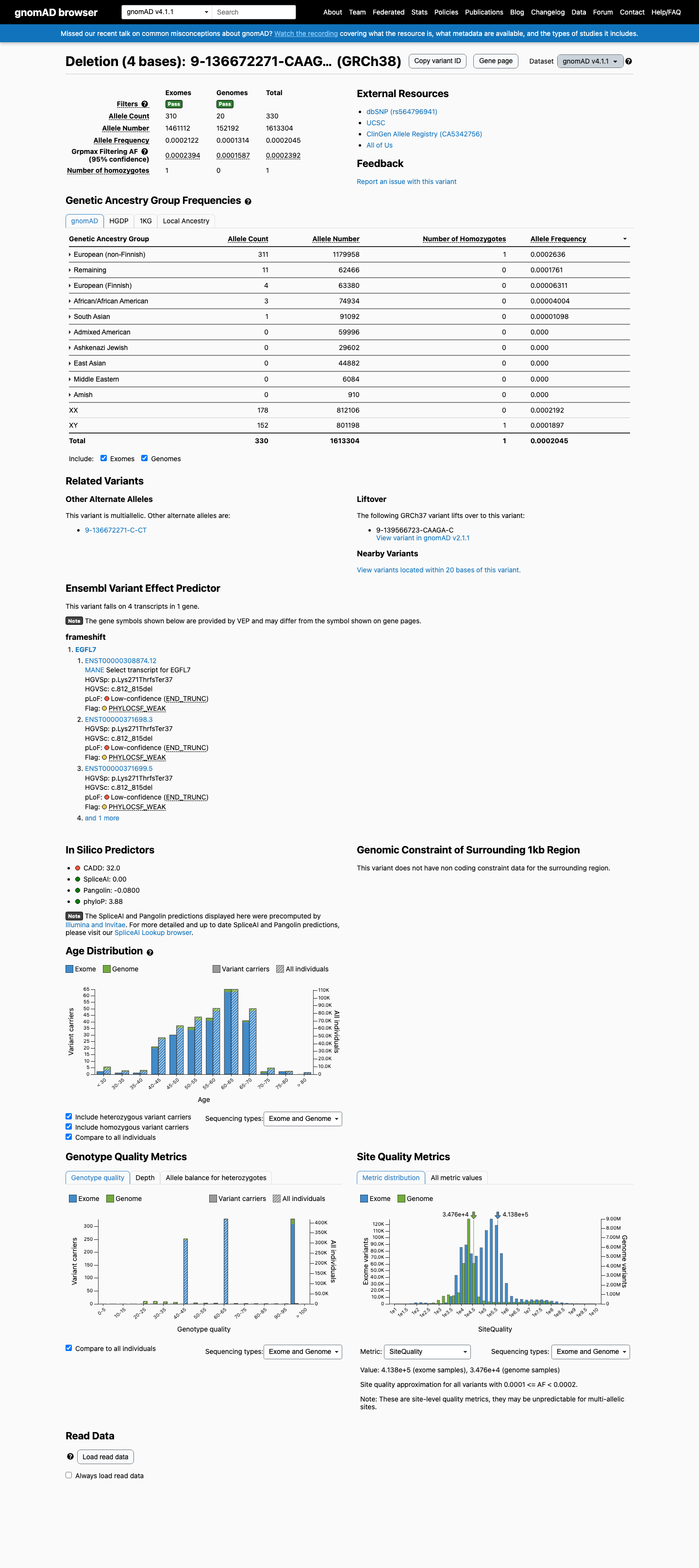
gnomAD v4.1
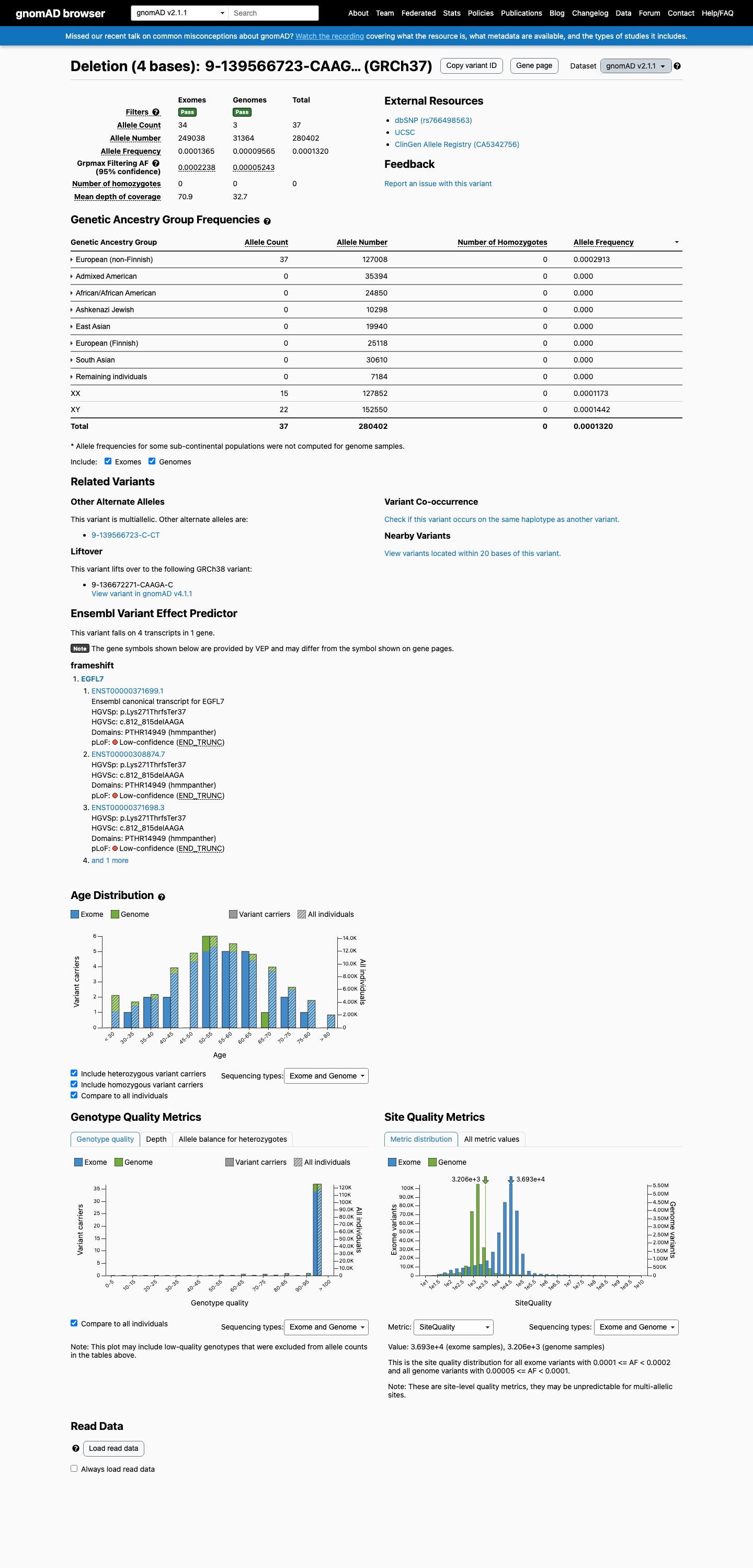
gnomAD v2.1
v4.1
This variant is present in gnomAD v4.1 (AF= 0.000204549; MAF= 0.02045%, 330/1613304 alleles, homozygotes = 1) and has highest observed frequency in the European (non-Finnish) population (AF= 0.000263569; MAF= 0.02636%, 311/1179958 alleles, homozygotes = 1); grpmax FAF= 0.00023919.
v2.1
This variant is present in gnomAD v2.1 (AF= 0.000131953; MAF= 0.01320%, 37/280402 alleles, homozygotes = 0) and has highest observed frequency in the European (non-Finnish) population (AF= 0.00029132; MAF= 0.02913%, 37/127008 alleles, homozygotes = 0); grpmax FAF= 0.00022376.
🇨🇦 CA
Absent from gnomAD-Canada v1.0.
Allele frequency by ancestry
three datasets · side by side
gnomAD v4.1
0.02%
· 330 / 1,613,304
1 hom · FAF 0.024%
1 hom · FAF 0.024%
European (non-Finnish) 311 / 1,179,958 |
0.026% 1 hom |
Remaining individuals 11 / 62,466 |
0.018% |
European (Finnish) 4 / 63,380 |
0.0063% |
African/African American 3 / 74,934 |
0.004% |
South Asian 1 / 91,092 |
0.0011% |
+ 5 not observed (Admixed American, Amish, East Asian, Middle Eastern, Ashkenazi Jewish)
gnomAD v2.1
0.013%
· 37 / 280,402
0 hom · FAF 0.022%
0 hom · FAF 0.022%
European (non-Finnish) 37 / 127,008 |
0.029% |
+ 7 not observed (African/African American, Admixed American, Ashkenazi Jewish, East Asian, European (Finnish), Remaining individuals, South Asian)
gnomAD Canada 🇨🇦
Absent
· 0 / ?
0 hom
0 hom
Not observed in any ancestry group.
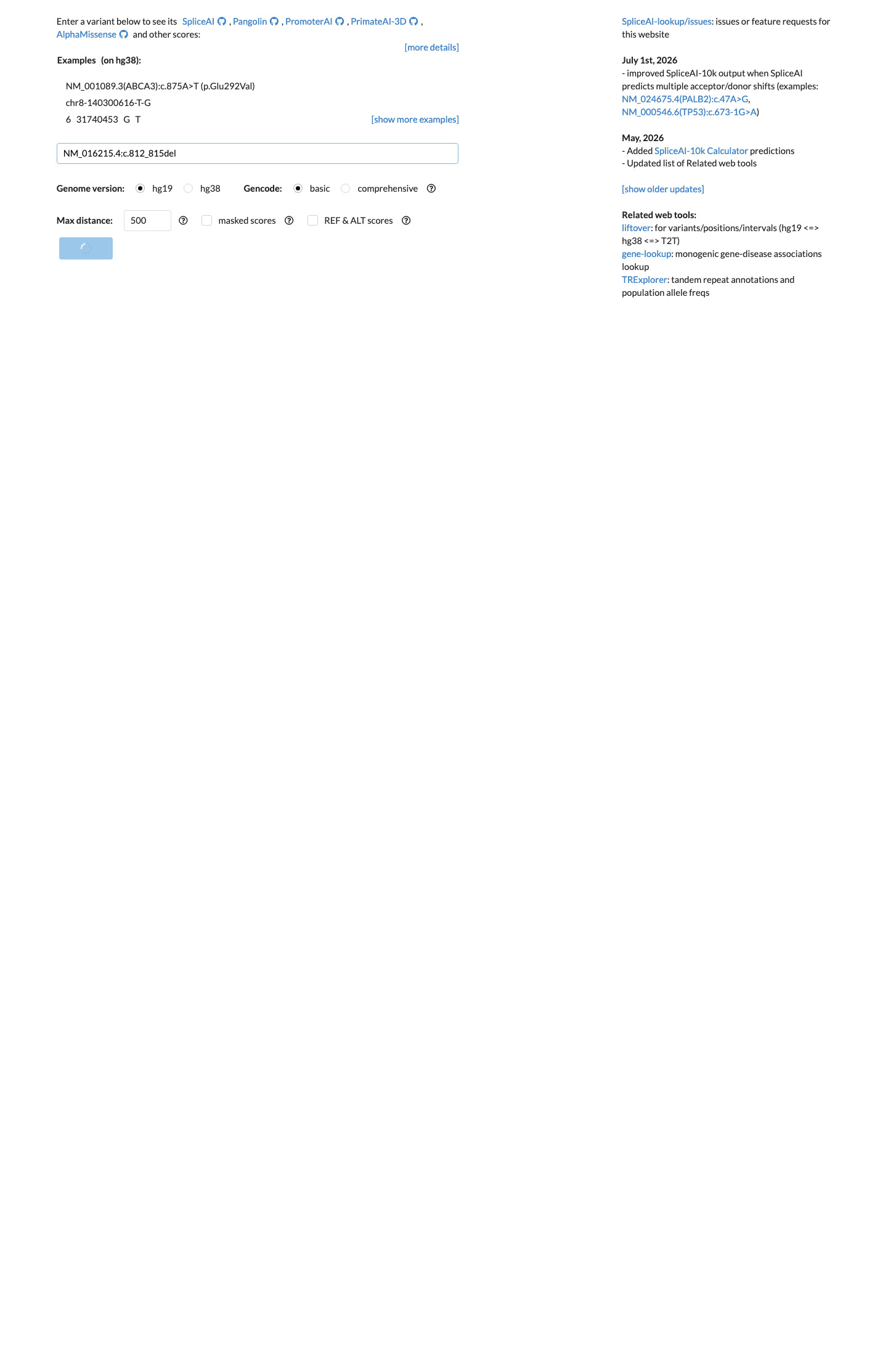
In silico
SpliceAI predicts no significant splice impact for this variant (max delta score = 0.00).
Functional
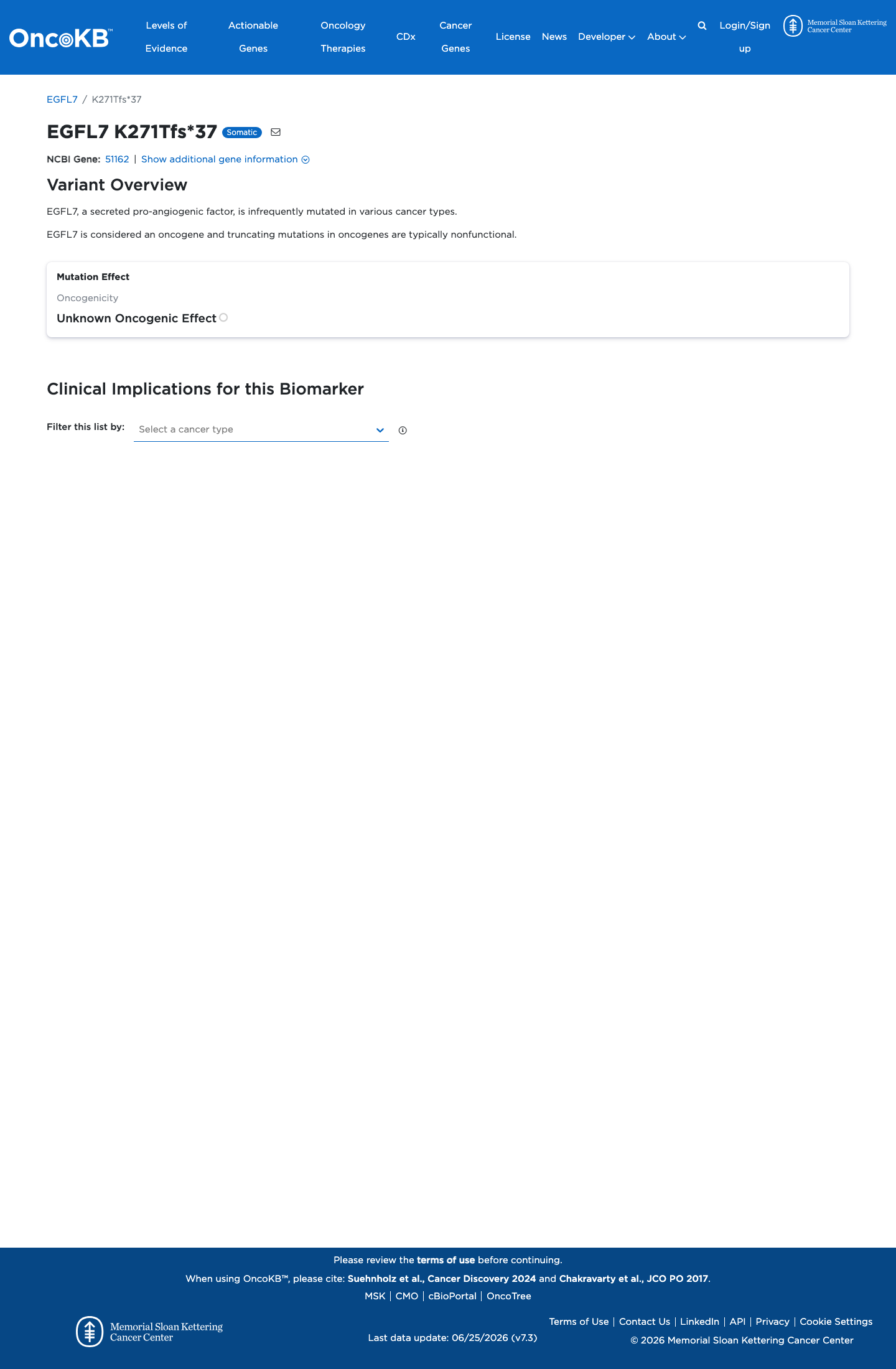
Unknown Oncogenic Effect
OncoKB identified curated literature and non-variant-specific oncogenicity context for review; listed oncogenicity label: Unknown Oncogenic Effect.

COSMIC

Cancer hotspots
Somatic evidence
Not in COSMIC / hotspots
COSMIC
This variant does not lie in a statistically significant hotspot. This variant has not previously been reported in somatic cancers (COSMIC).
Hotspots
This variant does not lie in a statistically significant hotspot.
Sources & reference links