PS3 (strong): Two independent publications (PMID:21641335, PMID:22309944) directly tested the exact IDH2 R172G variant, demonstrating loss of wild-type enzymatic activity and gain of neomorphic 2-hydroxyglutarate production.1 PM1 (moderate): Variant is located at arginine 172, the catalytic active-site residue in IDH2 and a statistically significant mutational hotspot (cancerhotspots.org).2 PM2 (moderate): Variant is absent from gnomAD v2.1, v4.1, and gnomAD-Canada (allele frequency = 0.0).3 PP3 (supporting): REVEL score 0.669 predicts a deleterious effect on protein function.4 PP5 (supporting): Reported as Likely pathogenic in ClinVar by a clinical diagnostic laboratory with criteria provided (Variation ID: 376439).5 Overall classification: Pathogenic. The combination of 1 strong criterion (PS3), 2 moderate criteria (PM1, PM2), and 2 supporting criteria (PP3, PP5) satisfies the generic ACMG/AMP 2015 pathogenic threshold (1 Strong + 2 Moderate + 2 Supporting).6
IDH2
Final classification
Pathogenic
IDH2 c.514A>G · p.Arg172Gly
IDH2
PS3 (strong): Two independent publications (PMID:21641335, PMID:22309944) directly tested the exact IDH2 R172G variant, demonstrating loss of wild-type enzymatic activity and gain of neomorphic 2-hydroxyglutarate production.
gene-specific framework lacked a usable explicit final combination framework, so generic ACMG/AMP 2015 final-combination rules were applied as fallback; applied criteria: PS3 strong, PM1 moderate, PM2 moderate, PP3 supporting, PP5 supporting; combination = 1 strong + 2 moderate + 2 supporting, which maps to Pathogenic.
Classification rationale
PS3PM1PM2PP3PP5
Pathogenic
IDH2 c.514A>G
PS3 + PM1 + PM2 + PP3 + PP5
→
Pathogenic
4
revel
6
generic_acmg_combination_rules
Gene diagram
· NM_002168.3 · variants mapped to exon structure
IDH2
NM_002168.3
Fetching transcript structure from UCSC…
Applied criteria · 5 applied · 18 assessed
Applied · 5
Strength
Supporting
Moderate
Strong
Very strong
✓
PS3
strong
Pathogenic
Two independent publications directly tested the exact IDH2 R172G variant in cell line models, demonstrating loss of wild-type enzymatic activity and gain of neomorphic oncogenic function. PMID:21641335 showed that IDH2 R172G diminishes NADPH production and alters cellular proliferation. PMID:22309944 showed that IDH2 R172G overexpression induces HIF-1α upregulation and β-catenin nuclear accumulation. The neomorphic gain-of-function (2-hydroxyglutarate production) is a well-established consequence of IDH2 R172 mutations, corroborated by PMID:21326614 for the broader R172 class.
PMID:21641335: Site-directed mutagenesis of IDH2 R172G expressed in rat C6 glioma cellsdiminished wild-type IDH2 enzymatic activity (NADPH production)promoted cell proliferation
✓
PM1
moderate
Pathogenic
Variant is located at arginine 172, the catalytic active-site residue in IDH2 (analogous to IDH1 R132). This is a well-established critical functional domain in the enzyme active site and a statistically significant mutational hotspot (cancerhotspots.org). ClinVar submission SCV005902248 independently cites PM1 for this variant.
cancerhotspots.org identifies R172 as a statistically significant mutational hotspot.R172 is the catalytic arginine residue in the IDH2 active siteanalogous to IDH1 R132
✓
PM2
moderate
Pathogenic
Variant is absent from gnomAD v2.1, v4.1, and gnomAD-Canada v1.0 (allele frequency = 0.0). Meets PM2 threshold of <0.1% for non-VCEP generic ACMG application.
Absent from gnomAD v2.1 (exomes).Absent from gnomAD v4.1 (exomes).Absent from gnomAD-Canada v1.0 (genomes).
✓
PP3
supporting
Pathogenic
REVEL score 0.669 predicts a deleterious effect on protein function (>0.5 threshold). SpliceAI predicts no splice impact (max delta 0.03). Multiple in silico tools support a deleterious effect, though BayesDel (0.383) is borderline. Overall evidence supports a damaging in silico prediction.
REVEL score: 0.669 (deleterious>0.5 threshold).BayesDel score: 0.383 (borderline).
✓
PP5
supporting
Pathogenic
Reported as Likely pathogenic in ClinVar (Variation ID: 376439) by Clinical Genomics Laboratory, Washington University in St. Louis (SCV005902248, criteria provided, single submitter). A reputable clinical laboratory has classified this variant as likely pathogenic with supporting criteria; while a single-submitter submission without expert panel review carries less weight than a 3-star classification, the criteria-provided submission from a clinical diagnostic laboratory satisfies PP5 at supporting strength under generic ACMG.
ClinVar Variation ID: 376439classification: Likely pathogenic.Submitter: Clinical Genomics Laboratory
Assessed · not applied
Pathogenic
PS1
No evidence of a different nucleotide change at c.514 resulting in the same p.Arg172Gly amino acid substitution.
PS2
No evidence of confirmed de novo occurrence with both maternity and paternity confirmed.
PS4
No case-control data comparing variant prevalence in affected individuals versus the general population.
PM5
While other pathogenic missense changes at codon 172 are known (R172K, R172M in gliomas; R172W in AML), no same-residue comparator variants with germline pathogenic classification were confirmed in the case evidence.
PM6
No de novo observation data available.
PP1
No segregation data available.
PP2
HCI prior scores are not available for IDH2.
PP4
No phenotype specificity data available for this variant in a germline context.
Benign
BA1
Variant is absent from gnomAD.
BS1
Variant is absent from gnomAD.
BS2
No observations in homozygous state in population controls.
BS3
Functional studies demonstrate a deleterious effect: loss of wild-type enzymatic activity and gain of neomorphic 2-hydroxyglutarate production (PMID:21641335, PMID:22309944).
BS4
No segregation data available demonstrating non-segregation with disease.
BP1
IDH2 has known pathogenic missense variants at codon 172 (R172K, R172M in gliomas; R172W in AML).
BP2
No observation of this variant in trans with a known pathogenic variant.
BP4
REVEL score 0.669 predicts a deleterious effect; multiple computational tools suggest a damaging impact.
BP5
No case identified where this variant is found in an individual with an alternate molecular basis for disease.
BP6
ClinVar classification for this variant is Likely pathogenic, not benign.
N/A · 5
PVS1 · PM3 · PM4 · BP3 · BP7
Research & evidence
Population frequency · supports pathogenic
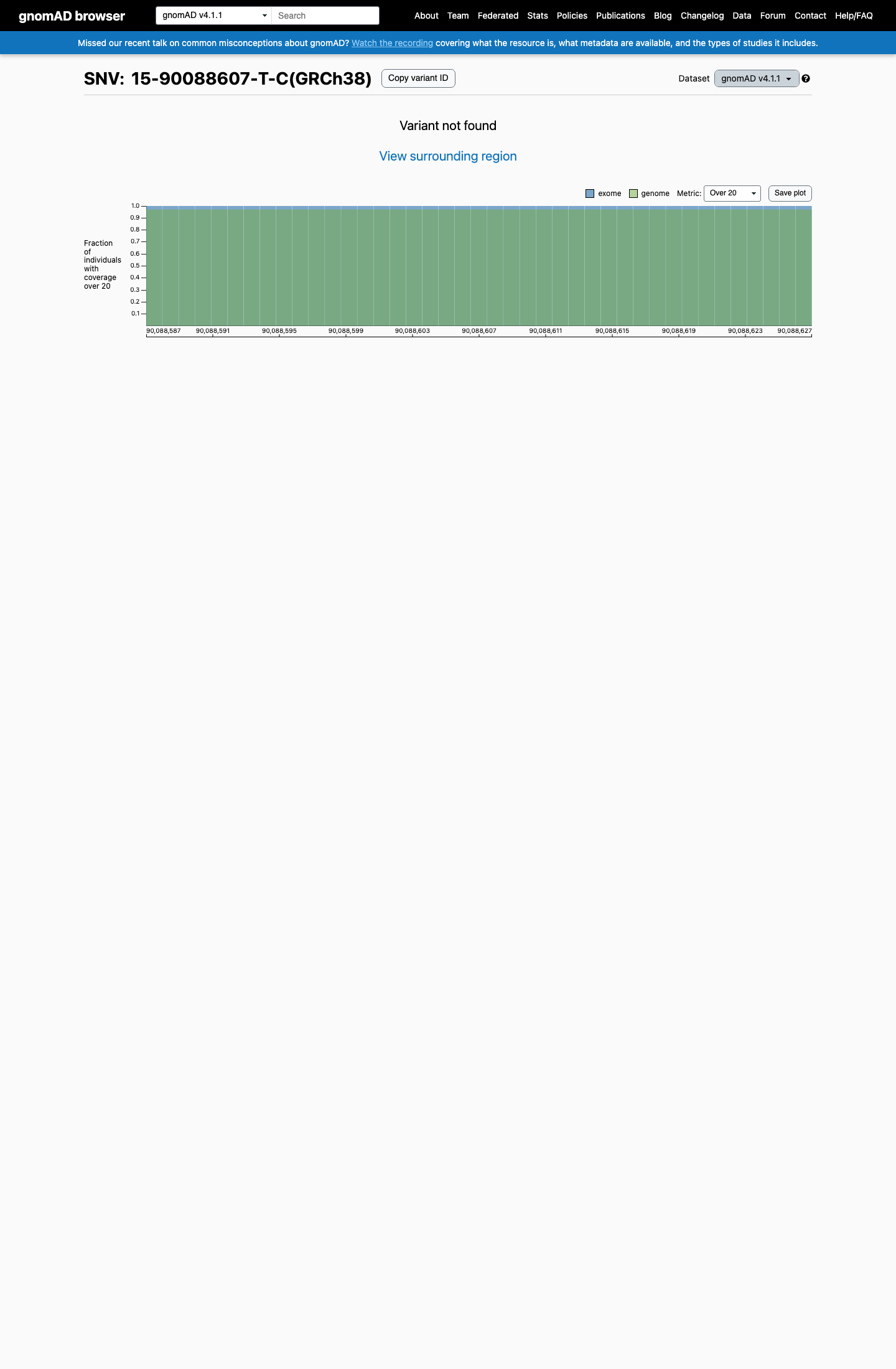
gnomAD v4.1
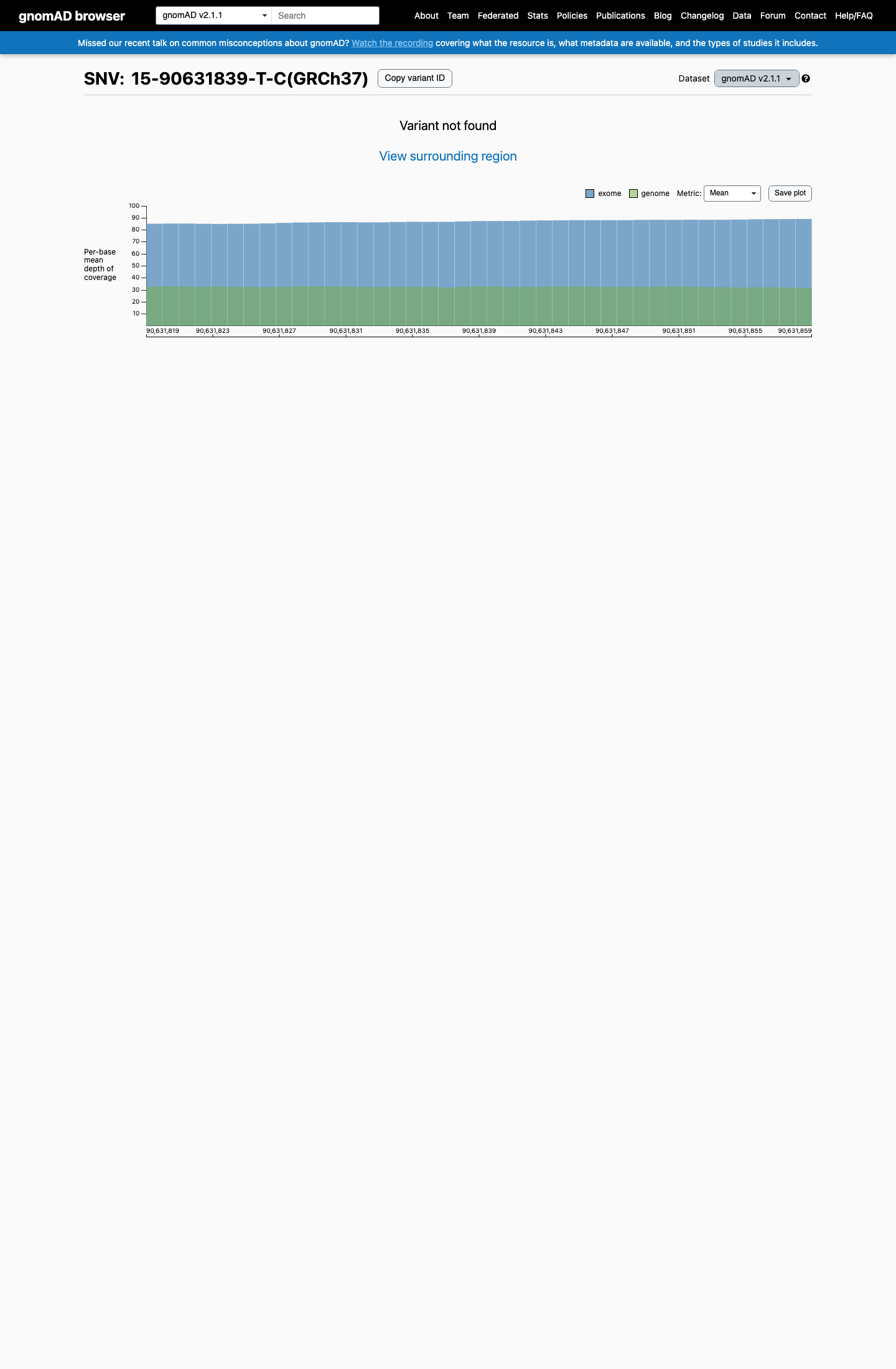
gnomAD v2.1
v4.1
Absent from gnomAD v4.1.
v2.1
Absent from gnomAD v2.1.
🇨🇦 CA
Absent from gnomAD-Canada v1.0.
Allele frequency by ancestry
three datasets · side by side
gnomAD v4.1
Absent
· 0 / ?
0 hom
0 hom
Not observed in any ancestry group.
gnomAD v2.1
Absent
· 0 / ?
0 hom
0 hom
Not observed in any ancestry group.
gnomAD Canada 🇨🇦
Absent
· 0 / ?
0 hom
0 hom
Not observed in any ancestry group.
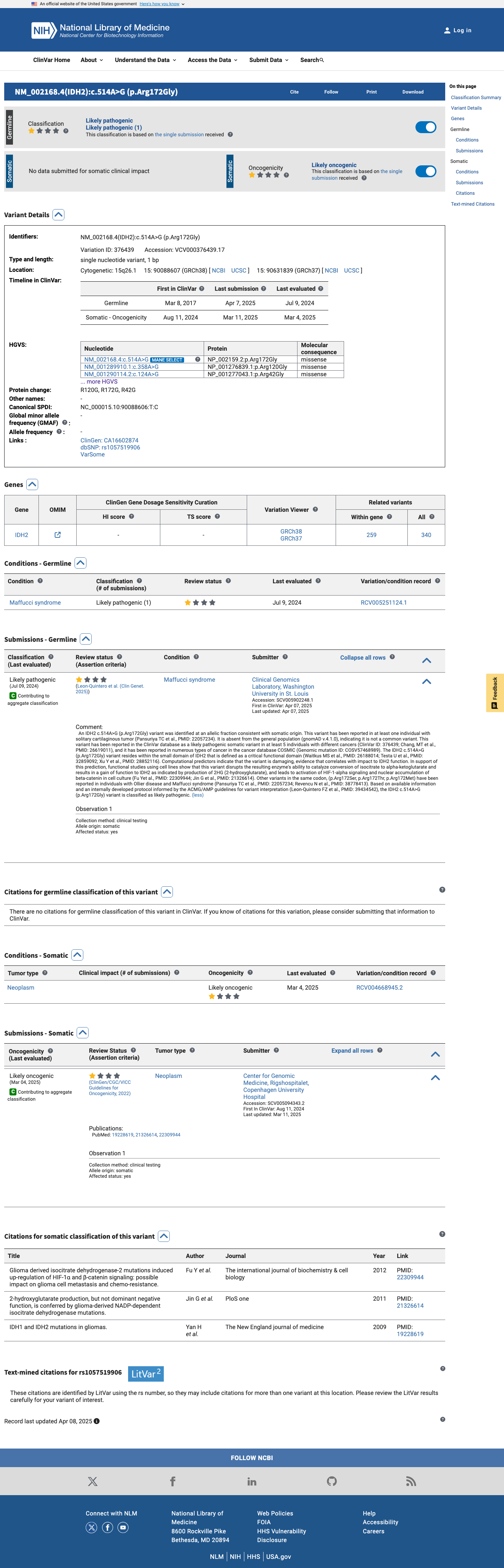
ClinVar
This variant has been reported in ClinVar as Likely pathogenic (1 clinical laboratory). (ClinVarID = 376439)

In silico
SpliceAI predicts no significant splice impact for this variant (max delta score = 0.03). REVEL score = 0.669. BayesDel score = 0.382927.
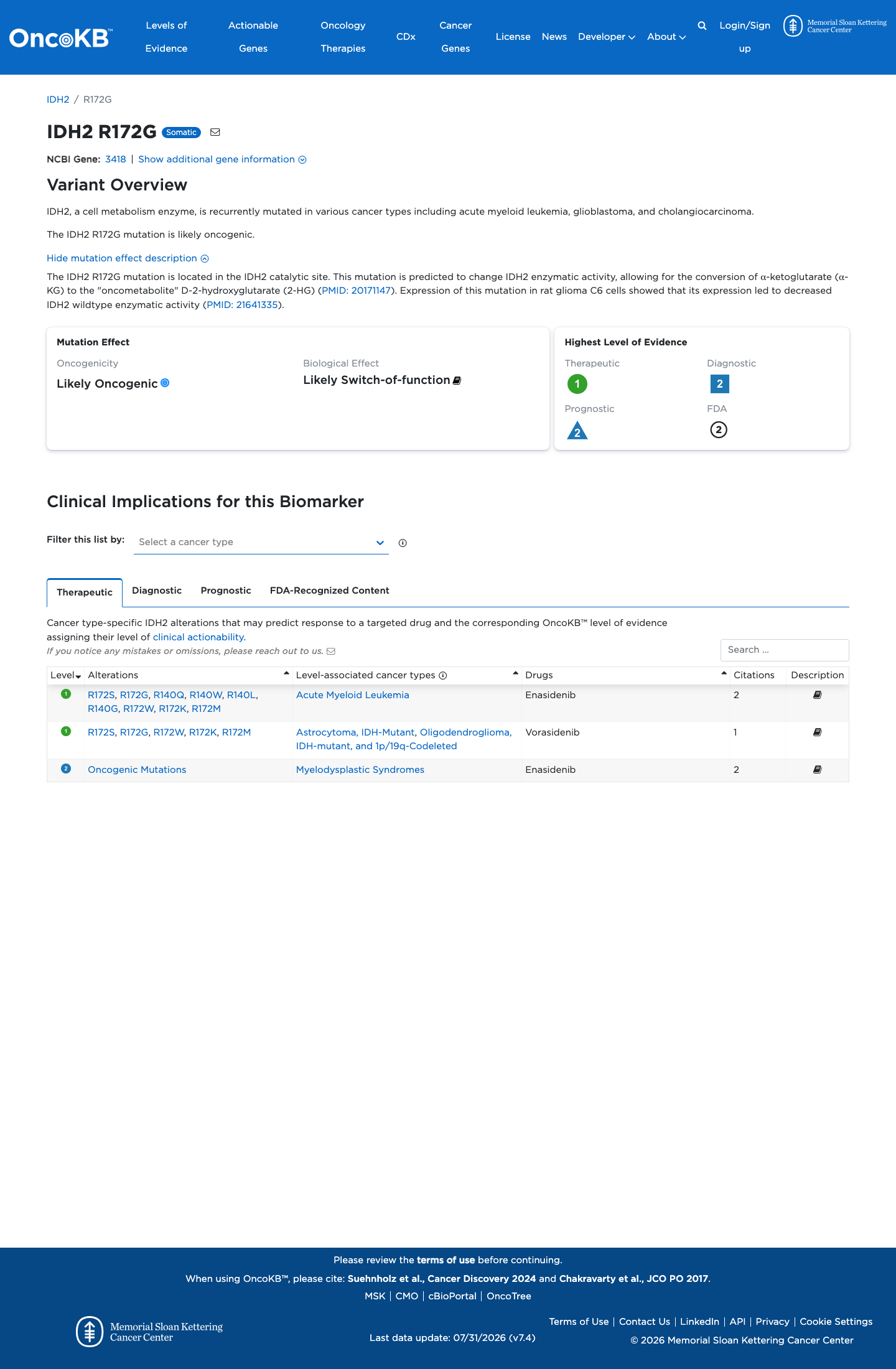
Functional
Likely Oncogenic
OncoKB identified variant-specific curated literature and context relevant to functional review; curated oncogenicity label: Likely Oncogenic.
COSMIC

Cancer hotspots
Somatic evidence
Hotspot
COSMIC
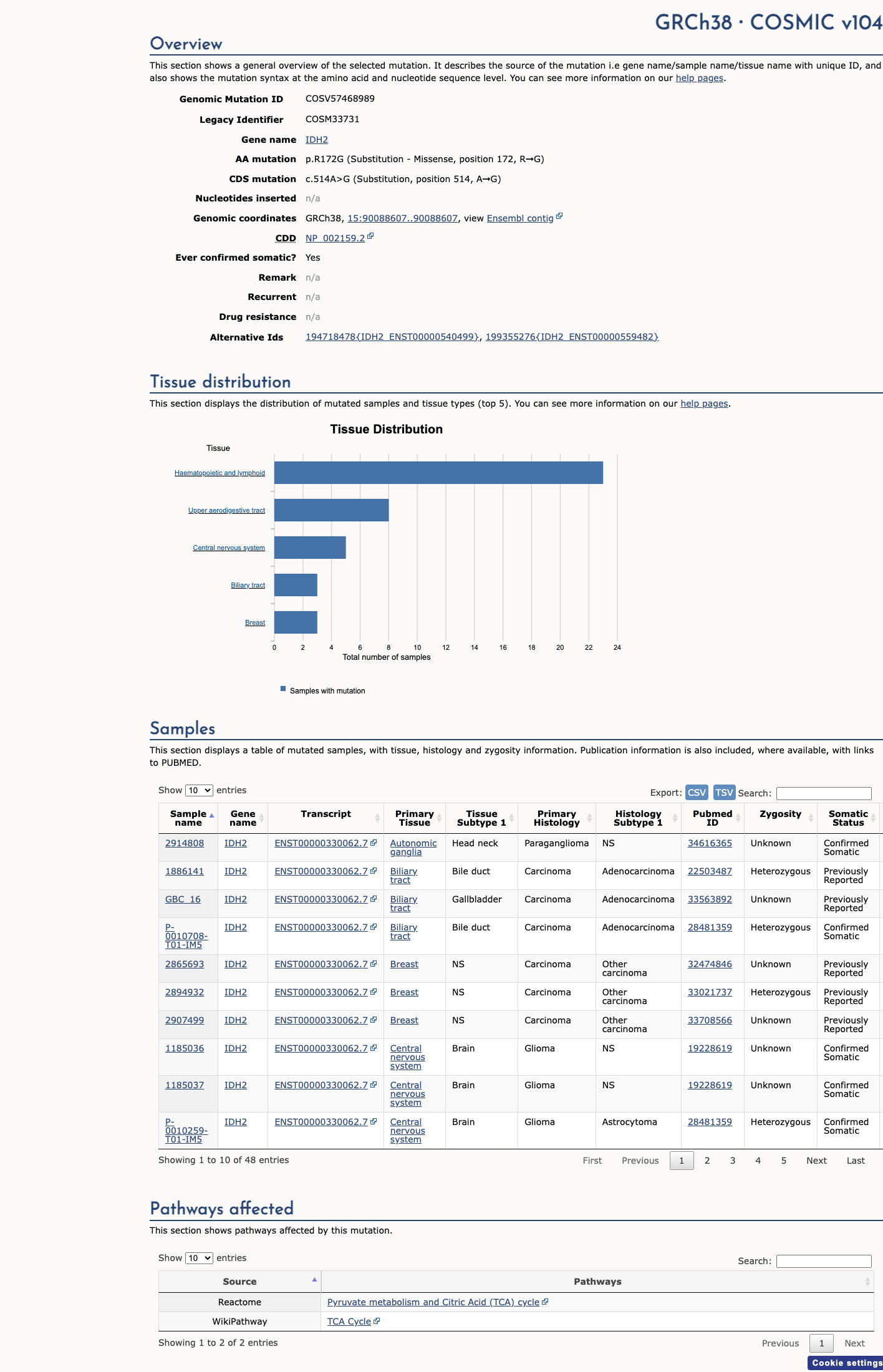
This variant lies in a statistically significant hotspot. This variant has previously been reported in somatic cancers (COSMIC; COSV57468989, n = 48 times).
Hotspots
This variant lies in a statistically significant hotspot.
Literature · how each cited paper was used
2papers cited
Each card is an audit: what was searched, what was found, whether it names the variant, which criteria it fed, and why. 6 further PMIDs triaged but not cited — see Sources & References.
Glioma-derived mutations in isocitrate dehydrogenase 2 beneficial to traditional chemotherapy.
Searched
c.514A>Gp.Arg172GlyR172GIDH2R172G
Found
IDH2 R172G was generated by site-directed mutagenesis and expressed in rat C6 glioma cells. The mutation diminished wild-type IDH2 enzymatic activity (NADPH production), promoted cell proliferation, and increased sensitivity to chemotherapy agents including adriamycin, cytarabine, teniposide, nimustine, and dactinomycin D.
Variant
✓ Names this variant — characterised directly
Applied to
→PS3 supports · met
Why
Variant-specific functional data confirmed loss of wild-type enzymatic activity and altered cellular behavior in a glioma cell model. Referenced in PS3 assessment as one of two independent publications with direct R172G testing.
exogenous expression of IDH2R172G reduces the generation of NADPH, which denotes that IDH2R172G mutation diminishes IDH2 activity
Location Results sections 3.2-3.5; Figures 3B, 3C, 4F-J · Context Rat C6 glioma cell line, site-directed mutagenesis, pEGFP-N1-IDH2R172G plasmid, MTT proliferation assay, NADPH enzymatic spectrophotometric assay, chemotherapy sensitivity assay · full text
Glioma derived isocitrate dehydrogenase-2 mutations induced up-regulation of HIF-1α and β-catenin signaling: possible impact on glioma cell metastasis and chemo-resistance.
Searched
c.514A>Gp.Arg172GlyR172GIDH2R172G
Found
IDH2 R172G overexpression in C6 glioma cells induced nuclear accumulation of β-catenin, up-regulation of HIF-1α signaling, and increased expression of proteins associated with tumor invasion (N-cadherin, MMP-2, MMP-9) and chemo-resistance.
Variant
✓ Names this variant — characterised directly
Applied to
→PS3 supports · met
Why
Variant-specific functional data confirmed downstream oncogenic signaling effects of R172G. Referenced in PS3 assessment as one of two independent publications with direct R172G testing.
C6 glioma cells transiently over-expressing IDH2R172G induced nuclear accumulation of β-catenin, up-regulation of HIF-1α signaling and corresponding proteins expression that were closely related with tumor invasion and chemo-resistance.
Location Results sections 3.1-3.4; Figures 1-6 · Context Rat C6 glioma cell line, pEGFP-N1-IDH2R172G transient overexpression, western blot, gelatin zymography, Matrigel invasion assays · full text
Sources & reference links
Triaged references · 6 PMIDs not cited in assessment
20171147 ↗
The common feature of leukemia-associated IDH1 and IDH2 mutations is a neomorphic enzyme activity converting alpha-ketoglutarate to 2-hydroxyglutarate.
ONCOKB
21326614 ↗
2-hydroxyglutarate production, but not dominant negative function, is conferred by glioma-derived NADP-dependent isocitrate dehydrogenase mutations.
CLINVAR
39434542 ↗
Modified Rules for Classification of Variants Associated With Disorders of Somatic Mosaicism.
CLINVAR
22918138 ↗
Opportunities and challenges associated with clinical diagnostic genome sequencing: a report of the Association for Molecular Pathology.
CLINVAR
34131312 ↗
Chromosomal microarray analysis, including constitutional and neoplastic disease applications, 2021 revision: a technical standard of the American College of Medical Genetics and Genomics (ACMG).
CLINVAR
23619274 ↗
American College of Medical Genetics and Genomics technical standards and guidelines: microarray analysis for chromosome abnormalities in neoplastic disorders.
CLINVAR