NM_001127510.3:c.608A>G (p.Gln203Arg) is a missense variant in APC exon 7. It is absent from gnomAD population databases (PM2_Supporting per APC VCEP).1 As a missense variant in APC, a gene where primarily truncating variants cause disease, BP1 is met at supporting benign strength. The variant lies at codon 203, outside the excluded β-catenin binding domain region (codons 1021-1035).2 No variant-specific functional data, de novo observations, co-segregation data, or case-control data are available. SpliceAI predicts no splicing impact (max delta 0.01). The variant is classified as Uncertain Significance in ClinVar (7 submissions, criteria provided single submitter).3 With one pathogenic supporting criterion (PM2_Supporting) and one benign supporting criterion (BP1), the evidence is balanced, consistent with a classification of Uncertain Significance per the APC VCEP rules for combining criteria.4
APC
Final classification
Unclassified
APC c.608A>G · p.Gln203Arg
APC
NM_001127510.3:c.608A>G (p.Gln203Arg) is a missense variant in APC exon 7. It is absent from gnomAD population databases (PM2_Supporting per APC VCEP).
Classification rationale
PM2
BP1
Unclassified
APC c.608A>G
· exon NC_000005.10
PM2 + BP1
→
Unclassified
Gene diagram
· NM_001127510.3 · variants mapped to exon structure
APC
NM_001127510.3
Fetching transcript structure from UCSC…
Applied criteria · 2 applied · 16 assessed
Applied · 2
Strength
Supporting
Moderate
Strong
Very strong
✓
PM2
supporting
Pathogenic
This variant is absent from gnomAD v2.1 and v4.1 (0/1,613,130 alleles). Per the APC VCEP PM2 rule, allele frequency <0.001% (0.00001) qualifies for PM2_Supporting when allele count is ≤1.
Absent from gnomAD v2.1.Absent from gnomAD v4.1 (0/1613
✓
BP1
supporting
Benign
This is a missense variant in APC, a gene where primarily truncating variants cause disease. The APC VCEP states BP1 is applicable to APC with the exception of missense variants in the first 15-amino acid repeat of the β-catenin binding domain (codons 1021-1035). This variant at codon 203 is not in the exclusion range.
APC VCEP BP1: applicable to APC missense variants except those in codons 1021-1035.Variant is at codon 203outside the excluded range.
Assessed · not applied
Pathogenic
PVS1
NM_001127510.3:c.608A>G (p.Gln203Arg) is a missense variant, not a null variant.
PS1
This variant results in p.Gln203Arg.
PS2
No de novo observation data are available for this variant in the case materials.
PS3
No functional studies testing NM_001127510.3:c.608A>G were identified.
PS4
No phenotype-scored probands with this variant are available in the case materials.
PM5
This variant causes p.Gln203Arg.
PM6
No de novo observations (assumed or confirmed) are available for this variant.
PP1
No co-segregation data are available.
PP3
Per the APC VCEP, for missense variants, computational prediction models for conservation and evolution must not be used; only in silico splicing predictors may be considered.
Benign
BA1
This variant is absent from gnomAD.
BS1
This variant is absent from gnomAD.
BS2
No healthy adult individuals carrying this variant were identified in the case materials.
BS3
No functional studies showing no damaging effect were identified for this variant.
BS4
No family segregation data are available to demonstrate lack of segregation in affected members.
BP2
No observation of this variant in trans with a (likely) pathogenic APC variant, and no observations in unknown phase with different (likely) pathogenic APC variants.
BP5
No alternate genetic basis for the colorectal polyposis phenotype has been identified in this case.
N/A · 7
PM1 · PP2 · PP4 · PP5 · BP4 · BP6 · BP7
Research & evidence
Population frequency
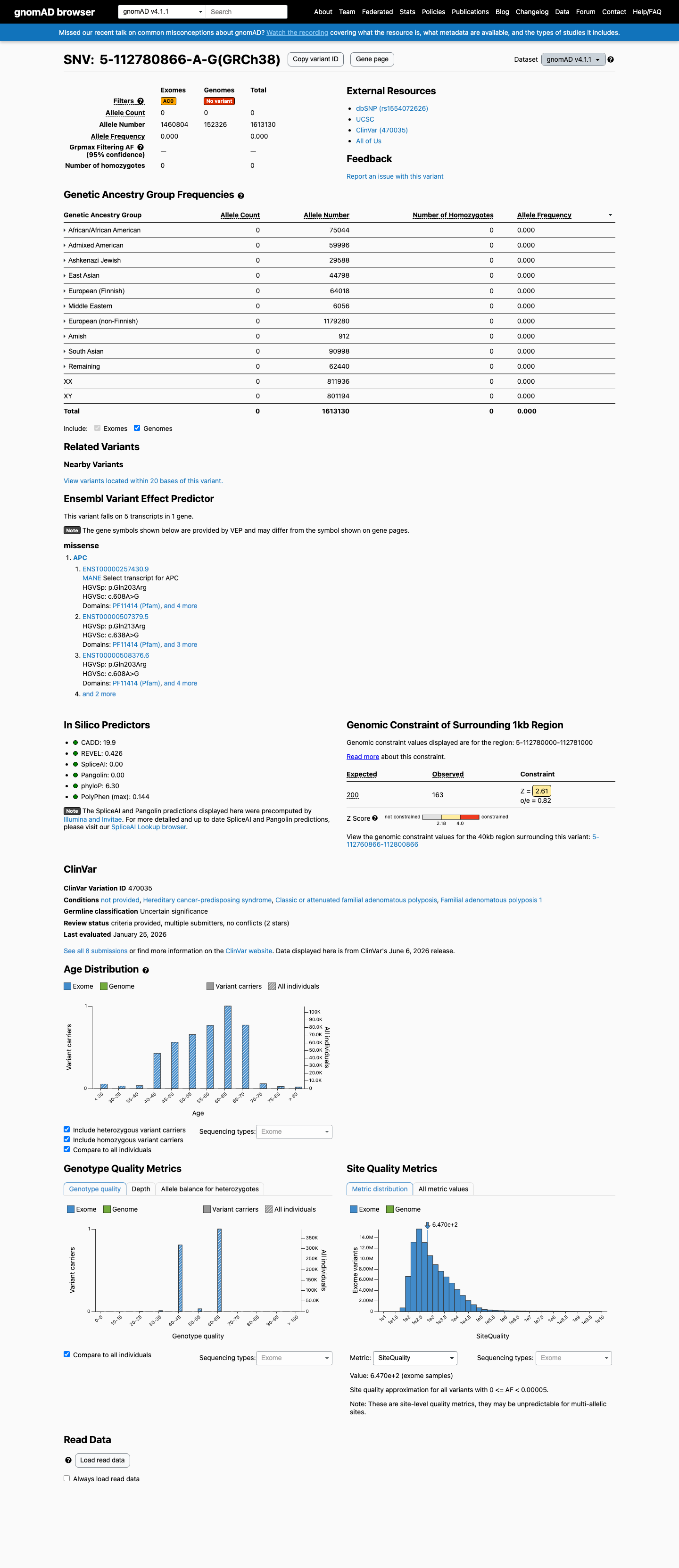
gnomAD v4.1
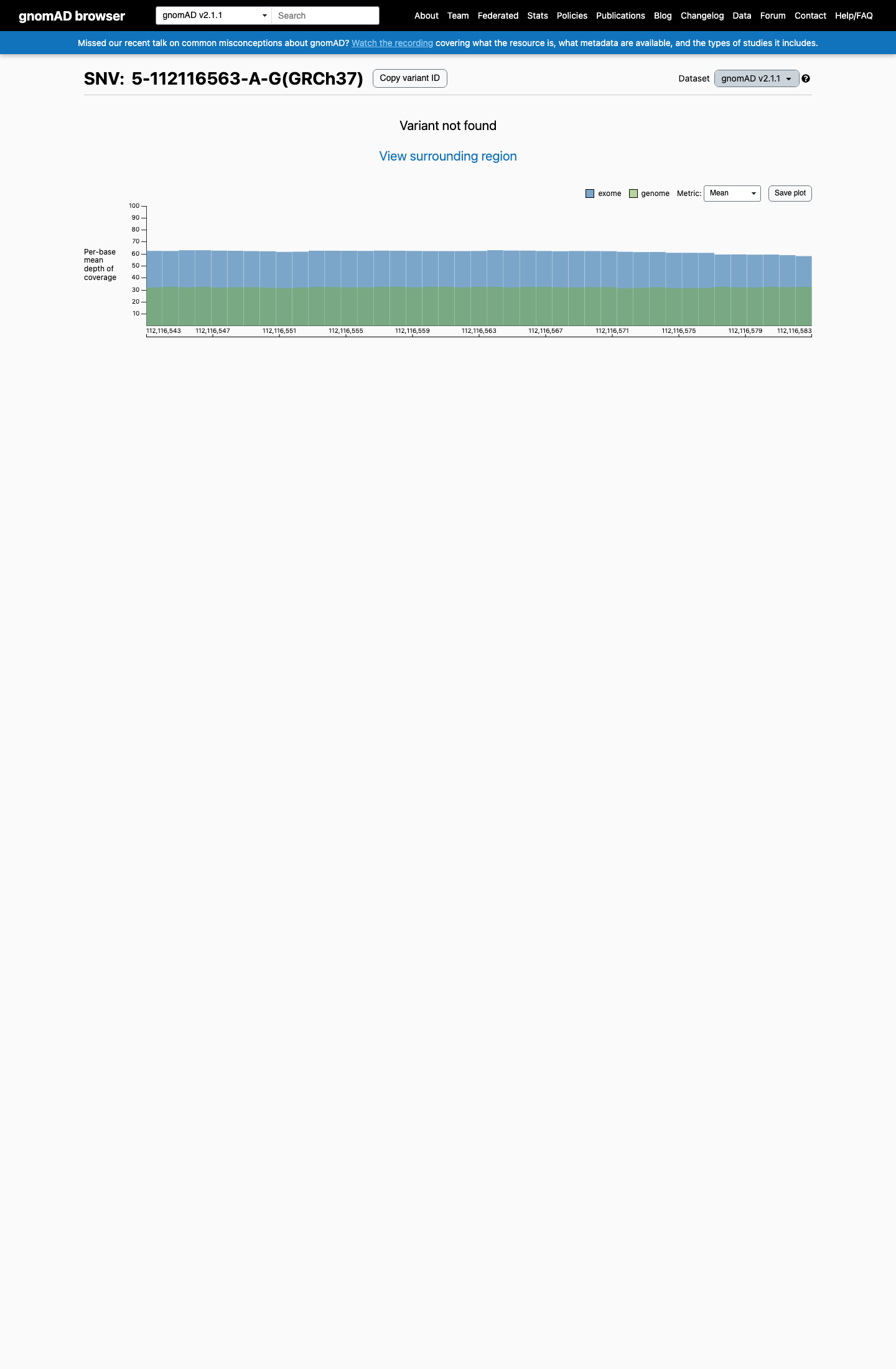
gnomAD v2.1
v4.1
This variant is present in gnomAD v4.1 (AF= 0; MAF= 0.00000%, 0/1613130 alleles, homozygotes = 0) and has highest observed frequency in the African/African American population (AF= 0; MAF= 0.00000%, 0/75044 alleles, homozygotes = 0).
v2.1
Absent from gnomAD v2.1.
🇨🇦 CA
Absent from gnomAD-Canada v1.0.
Allele frequency by ancestry
three datasets · side by side
gnomAD v4.1
Absent
· 0 / 1,613,130
0 hom
0 hom
Not observed in any ancestry group.
+ 10 not observed (Remaining individuals, Admixed American, European (Finnish), Amish, East Asian, Middle Eastern, South Asian, Ashkenazi Jewish, African/African American, European (non-Finnish))
gnomAD v2.1
Absent
· 0 / ?
0 hom
0 hom
Not observed in any ancestry group.
gnomAD Canada 🇨🇦
Absent
· 0 / ?
0 hom
0 hom
Not observed in any ancestry group.
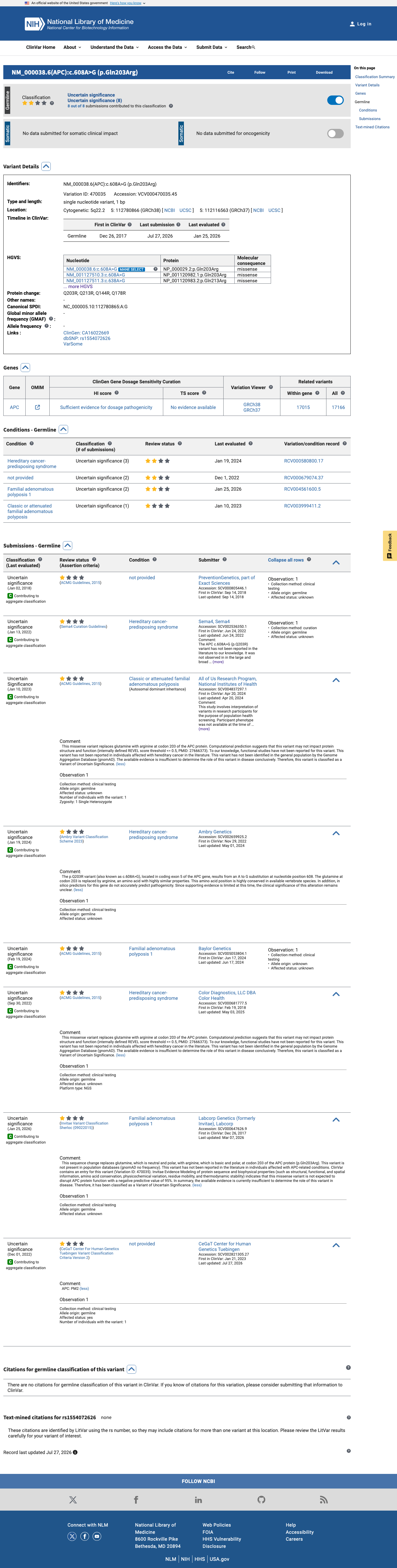
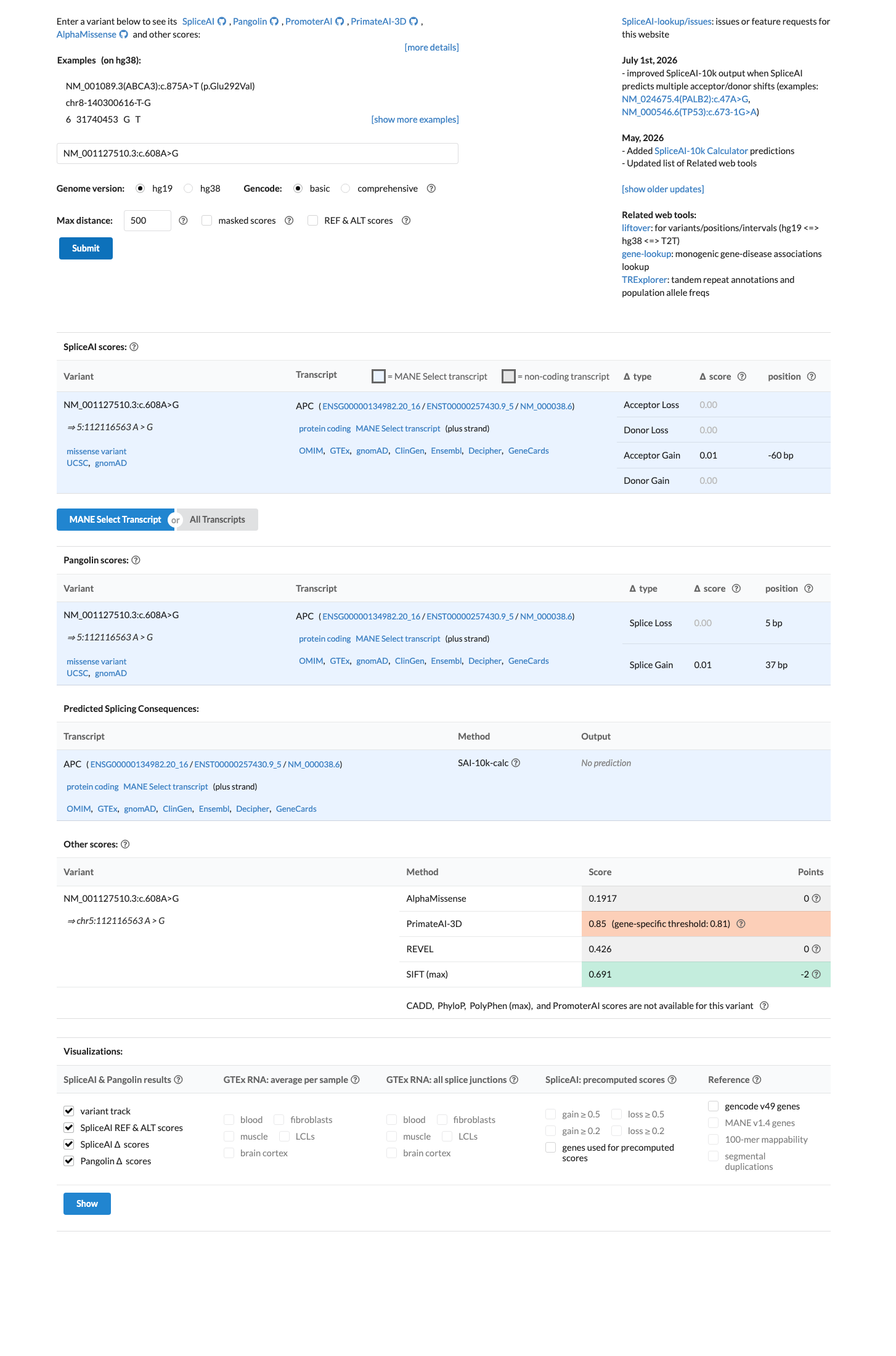


COSMIC

Cancer hotspots
Somatic evidence
Not in COSMIC / hotspots
COSMIC
In progress — evidence not uploaded yet.
Hotspots
This variant does not lie in a statistically significant hotspot.
Sources & reference links
9Sources
Triaged references · 6 PMIDs not cited in assessment
25741868 ↗
Standards and guidelines for the interpretation of sequence variants: a joint consensus recommendation of the American College of Medical Genetics and Genomics and the Association for Molecular Pathology.
CLINVAR
15604628 ↗
Genetic cancer risk assessment and counseling: recommendations of the national society of genetic counselors.
CLINVAR
21368914 ↗
Clinical utility gene card for: familial adenomatous polyposis (FAP) and attenuated FAP (AFAP).
CLINVAR
25356965 ↗
ACMG policy statement: updated recommendations regarding analysis and reporting of secondary findings in clinical genome-scale sequencing.
CLINVAR
25394175 ↗
A practice guideline from the American College of Medical Genetics and Genomics and the National Society of Genetic Counselors: referral indications for cancer predisposition assessment.
CLINVAR