MLH1 encodes a DNA mismatch repair protein that, together with partners such as PMS2, corrects errors that arise during DNA replication. Loss of this repair function leads to the accumulation of mutations, particularly in repetitive microsatellite sequences, and tumors with defective MLH1 typically show high microsatellite instability. Germline mutations in MLH1 cause Lynch syndrome (hereditary non-polyposis colorectal cancer), which strongly predisposes to colorectal, endometrial, ovarian, and other cancers, while biallelic mutations cause constitutional mismatch repair deficiency (CMMRD). Because it normally protects against cancer by maintaining genomic stability, MLH1 acts as a tumor suppressor, and mismatch-repair-deficient tumors often respond well to immunotherapy.
This variant
MLH1 encodes a DNA mismatch-repair protein whose loss destabilizes the genome and causes Lynch syndrome, predisposing carriers to colorectal, endometrial, and ovarian cancers. This Pathogenic classification indicates the splice-acceptor disruption is predicted to abolish MLH1 repair function through nonsense-mediated decay, placing carriers at the elevated Lynch-spectrum cancer risks associated with this gene.
Transcript
NM_000249.4
HGVS · transcript:coding
NM_000249.4:c.1732-2A>G
GRCh38
chr3:37047517 A>G
GRCh37
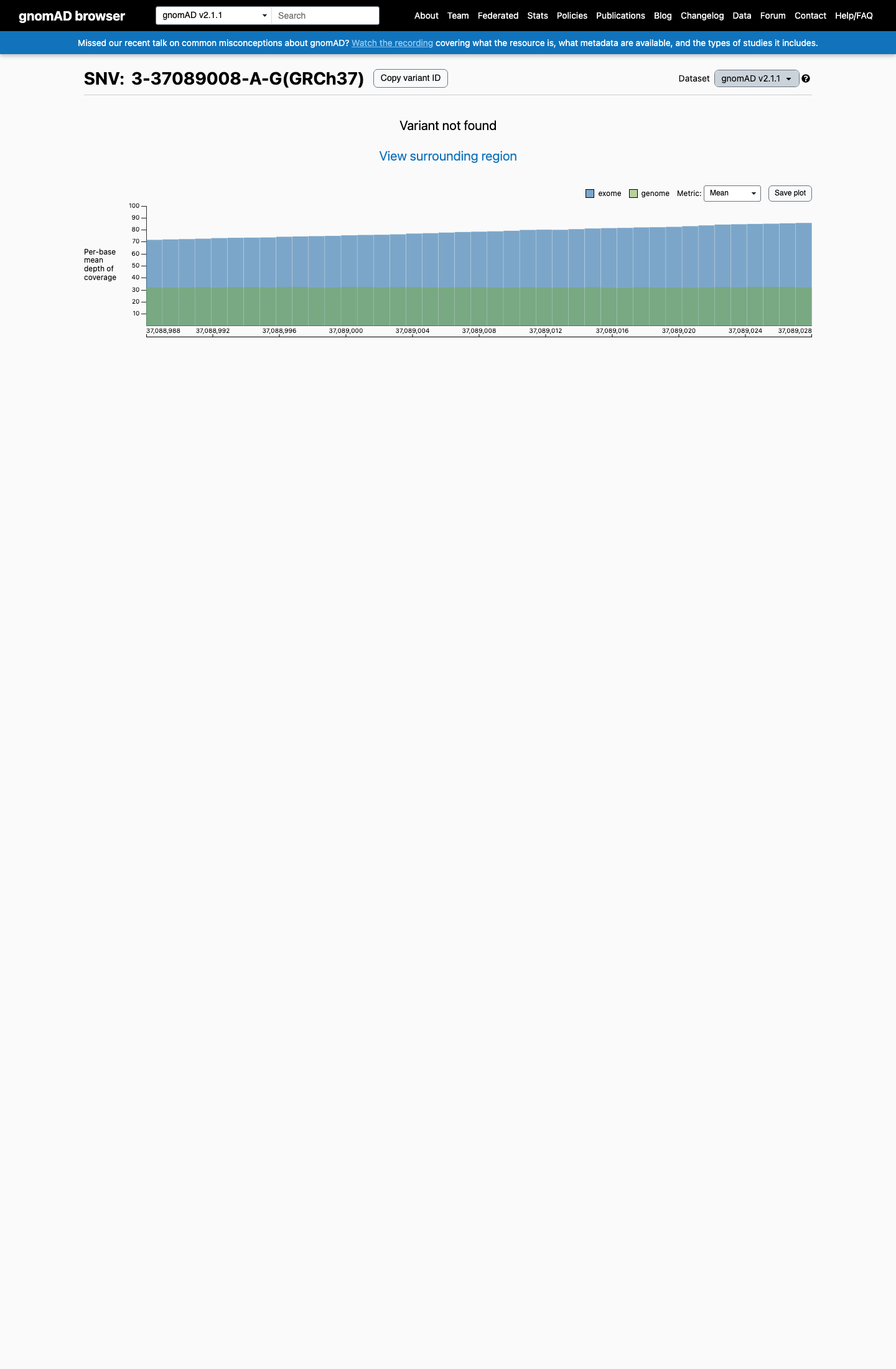
chr3:37089008 A>G
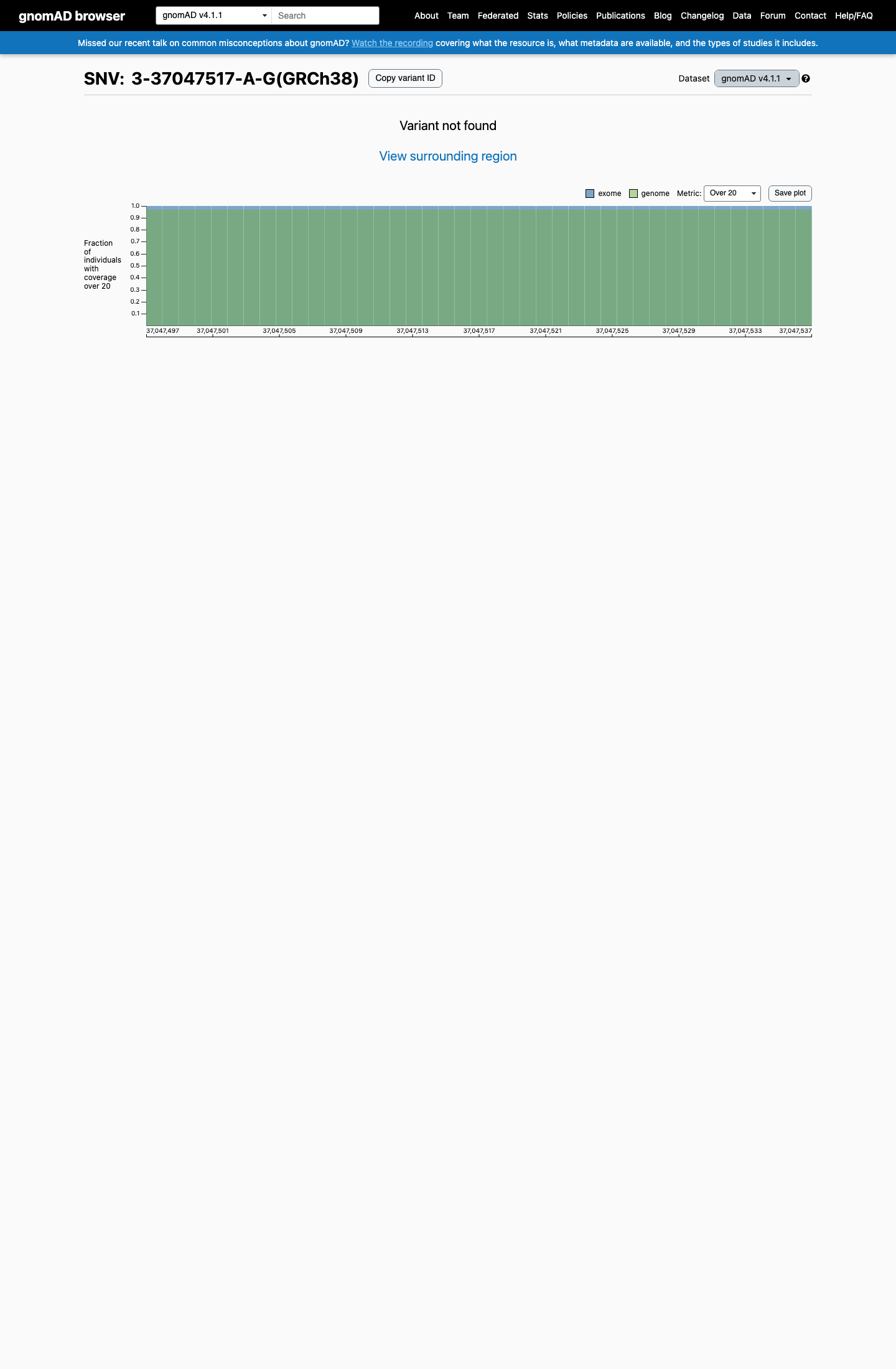
BasisPathogenic under the InSiGHT/ClinGen MLH1 VCEP v2.0: PVS1 Very Strong plus PM2 and PP5 Supporting (absent from gnomAD v4.1; InSiGHT Likely pathogenic) match Rule 4 (1 Very Strong + 2 Supporting).▾
Pathogenic under the InSiGHT/ClinGen MLH1 VCEP v2.0: PVS1 Very Strong plus PM2 and PP5 Supporting (absent from gnomAD v4.1; InSiGHT Likely pathogenic) match Rule 4 (1 Very Strong + 2 Supporting).
Classification rationale
PVS1PM2PP5Pathogenic
MLH1 c.1732-2A>Gcanonical_splice · exon 15i
PVS1 (Very Strong): disrupts the canonical splice-acceptor AG dinucleotide, predicting exon 16 skipping that shifts the reading frame and triggers nonsense-mediated decay. PM2 (Supporting): variant is absent from gnomAD v4.1. PP5 (Supporting): InSiGHT expert panel classifies the exact variant as Likely pathogenic (ClinVar 3-star). Overall: Pathogenic, per Rule 4 (1 Very Strong + 2 Supporting) of the InSiGHT/ClinGen MLH1 VCEP v2.0 framework.
PVS1 + PM2 + PP5→Pathogenic
Gene diagram
· NM_000249.4 · variants mapped to exon structure
MLH1NM_000249.4
Fetching transcript structure from UCSC…
Exons
—
Transcript span
—
Strand
—
Variants mapped
—
Source
UCSC ncbiRefSeqCurated
All variants in MLH1—click a row to locate it on the plot · use the link column to open its page
Variant ↕
Protein
Location
Classification
Link
Applied criteria · 3 applied · 12 assessed
MetEvidence satisfies this criterion.
Not metEvaluated against available evidence; threshold not reached.
Not assessedApplies in principle, but no evidence was found to evaluate it.
N/ADoesn't apply to this variant type.
Applied · 3
Strength Supporting Moderate Strong Very strong
✓
PVS1very strongreviewPathogenic
Met (Very Strong): disrupts the canonical splice-acceptor AG dinucleotide, predicting exon 16 skipping that shifts the reading frame and triggers nonsense-mediated decay. Flagged for human review: the reported SpliceAI max delta of 0.00 conflicts with expected biology and appears to be a tool artifact.
VariantValidator (prefetch.json) places c.1732-2A>G at the intron 15/exon 16 boundary ('start_exon'/'end_exon' = '15i'), confirming this is the canonical -2 acceptor position of intron 15.InSiGHT/ClinGen MLH1 VCEP Version 2.0 PVS1 rule (case_summary.json / prefetch.json cspec criteria) specifies default Very Strong for 'Variants at IVS±1 or IVS±2 ... where exon skipping or use of a cryptic splice site disrupts reading frame and is predicted to undergo NMD', with the caveat 'Not to be combined with PP3'.pvs1_gene_context.json establishes MLH1 germline loss-of-function as an official VCEP-endorsed disease mechanism (pvs1_gate = eligible), satisfying the PVS1 gene-level gate.
Met (Supporting): absent from gnomAD v4.1, below the required allele-frequency threshold of 0.00002.
The MLH1 InSiGHT VCEP Version 2.0 rule defines PM2 Supporting as absent/extremely rare allele frequency <0.00002 (<1 in 50,000 alleles) in gnomAD v4.gnomAD v4.1 query for NC_000003.12:g.37047517A>G reports the variant as absent.
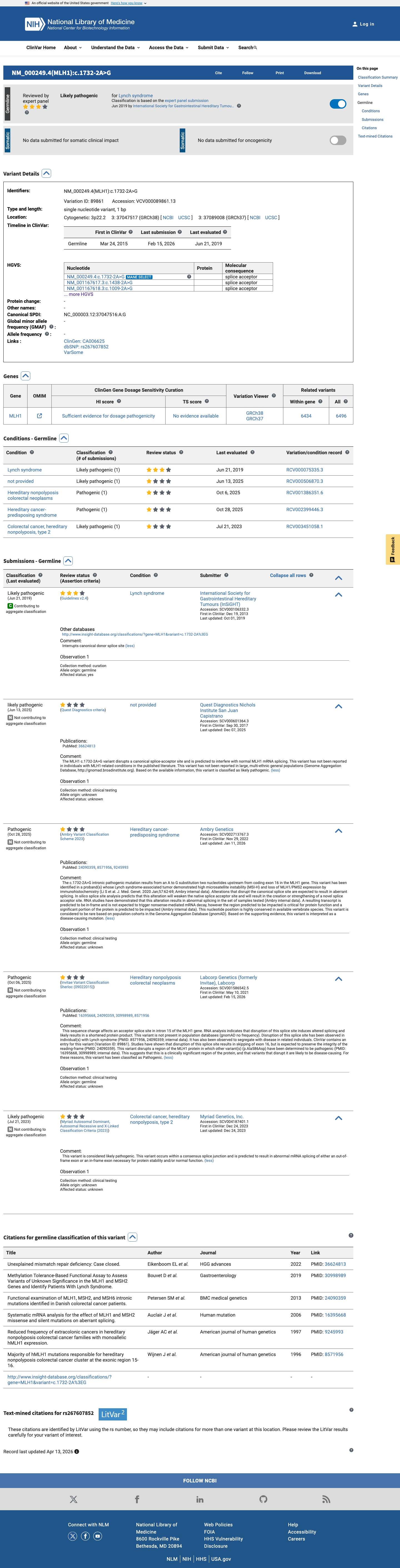
Met (Supporting): the InSiGHT expert panel classified this exact variant as Likely pathogenic (ClinVar 3-star).
ClinVar identifies the exact transcript-level variant NM_000249.4(MLH1):c.1732-2A>G and an InSiGHT expert-panel classification of Likely pathogenic with three-star review status.The separate ClinVar laboratory submissions were excluded from PP5; only the exact-variant expert-panel assertion was used.ClinVar expert panel classification
Assessed · not applied
· 3 not met · 9 not assessed
Pathogenic
PS2Not assessed: no parental testing or other evidence establishes that the variant arose de novo.
PS3Not assessed: no functional assay of this exact variant is available; a minigene study tested the related c.1732-2A>T change, not this A>G allele.
PM3Not assessed: no second MLH1 variant, phase information, or CMMRD clinical evidence was available to apply the co-occurrence rule.
PP1Not assessed: only an unverified statement of familial segregation was available, with no pedigree or informative meioses to quantify.
PP4Not assessed: tumor findings were reported, but without a primary source or confirmation that MLH1 promoter methylation was excluded.
Benign
BA1Not met: BA1 requires allele frequency >=0.001, but the variant is absent from gnomAD v4.1.
BS1Not met: BS1 requires allele frequency 0.0001-0.001, but the variant is absent from gnomAD v4.1.
BS2Not assessed: no confirmed in-trans co-occurrence with a pathogenic MLH1 variant was available.
BS3Not assessed: no functional assay demonstrates normal splicing or protein function; the benign no-aberration rule does not apply to canonical splice sites.
BS4Not assessed: no affected relative tested negative for the variant, so no non-segregation evidence exists.
BP5Not assessed: insufficient evidence on tumor phenotype, MMR loss, or BRAF/methylation status to apply the inconsistency rule.
BP6Not met: the expert-panel classification is Likely pathogenic, not benign, so no benign assertion supports BP6.
This variant has been reported in ClinVar as Pathogenic (2 clinical laboratories) and as likely pathogenic (1 clinical laboratory) and as Likely pathogenic (1 clinical laboratory) and as Likely pathogenic by International Society for Gastrointestinal Hereditary Tumours (InSiGHT) (expert panel). (ClinVarID = 89861)
Triaged references · 8 PMIDs not cited in assessment
16395668 ↗Systematic mRNA analysis for the effect of MLH1 and MSH2 missense and silent mutations on aberrant splicing.CLINVAR
24090359 ↗Functional examination of MLH1, MSH2, and MSH6 intronic mutations identified in Danish colorectal cancer patients.CLINVAR
25645574 ↗ACG clinical guideline: Genetic testing and management of hereditary gastrointestinal cancer syndromes.CLINVAR
26467025 ↗A Standardized DNA Variant Scoring System for Pathogenicity Assessments in Mendelian Disorders.CLINVAR
30998989 ↗Methylation Tolerance-Based Functional Assay to Assess Variants of Unknown Significance in the MLH1 and MSH2 Genes and Identify Patients With Lynch Syndrome.CLINVAR
8571956 ↗Majority of hMLH1 mutations responsible for hereditary nonpolyposis colorectal cancer cluster at the exonic region 15-16.CLINVAR
9245993 ↗Reduced frequency of extracolonic cancers in hereditary nonpolyposis colorectal cancer families with monoallelic hMLH1 expression.CLINVAR
24310308 ↗ACMG technical standards and guidelines for genetic testing for inherited colorectal cancer (Lynch syndrome, familial adenomatous polyposis, and MYH-associated polyposis).CLINVAR