MET encodes a receptor tyrosine kinase that serves as the cell-surface receptor for hepatocyte growth factor (HGF). Upon HGF binding, the receptor activates signaling pathways that promote cell growth, survival, movement, and blood vessel formation, and it plays important roles in embryonic development and tissue repair. Mutations in MET are associated with papillary renal cell carcinoma, hepatocellular carcinoma, and various head and neck cancers, and amplification or overexpression of the gene is found in many human cancers, where it can drive tumor growth and spread.
This variant
MET encodes an HGF receptor tyrosine kinase linked to papillary renal cell carcinoma, hepatocellular carcinoma, and head and neck cancers, where altered signaling can drive tumor growth. This c.3082G>C (p.Asp1028His) variant is classified as a VUS: it is absent from population databases and predicted to affect splicing, but no functional, segregation, or clinical phenotype data establish pathogenicity. The classification means this variant cannot currently be used to guide clinical decisions, and any splicing effect should be confirmed experimentally before interpretation changes.
Transcript
NM_001127500.2
HGVS · transcript:coding
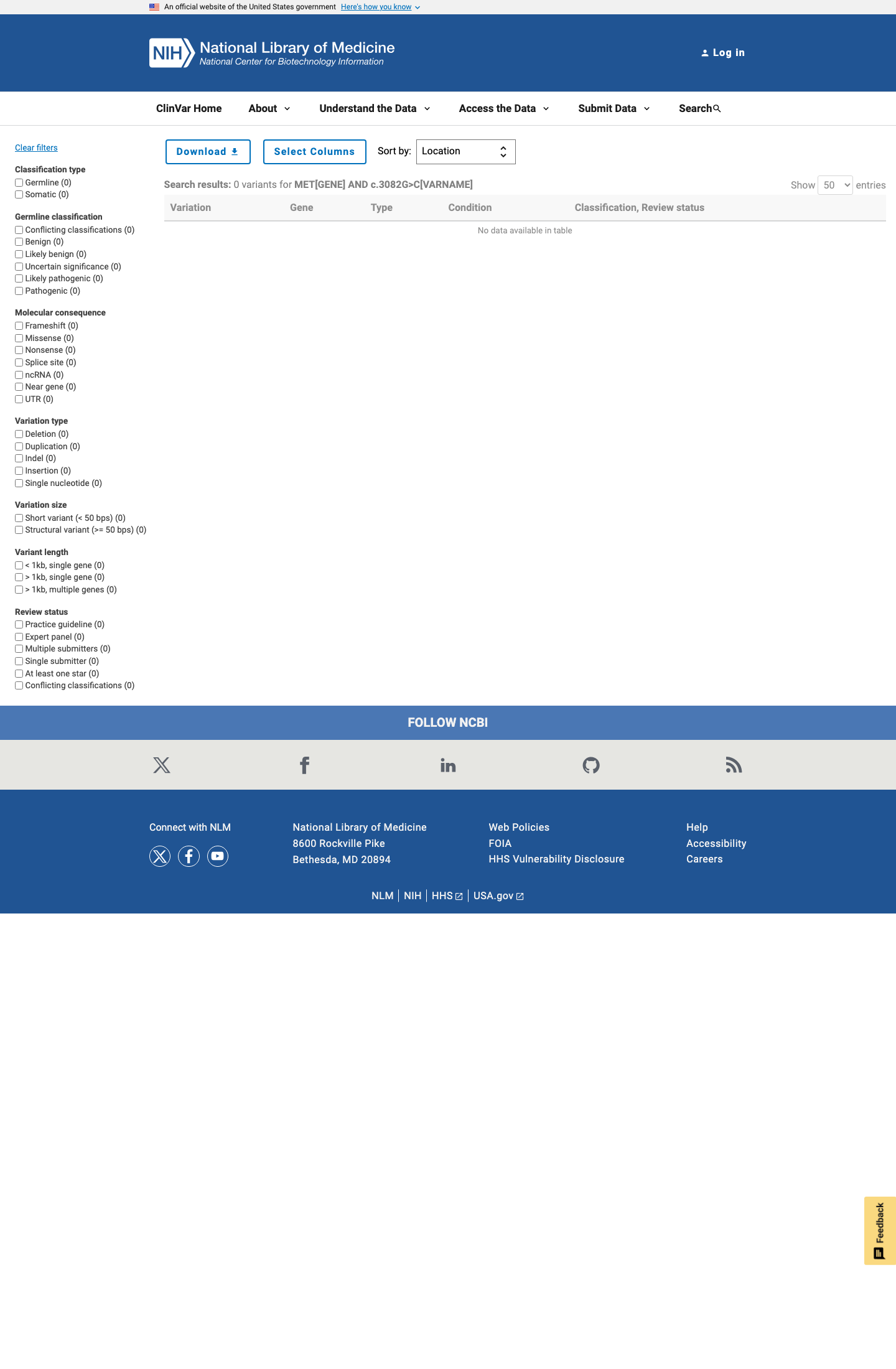
NM_001127500.2:c.3082G>C
GRCh38
chr7:116771989 G>C
GRCh37
chr7:116412043 G>C
BasisVUS: two supporting criteria — PM2 (absent from gnomAD) and PP3 (SpliceAI donor-loss 0.925) — do not reach the evidence threshold for pathogenic or benign classification.▾
VUS: two supporting criteria — PM2 (absent from gnomAD) and PP3 (SpliceAI donor-loss 0.925) — do not reach the evidence threshold for pathogenic or benign classification.
Classification rationale
PM2PP3VUS
MET c.3082G>Cmissense · exon 14
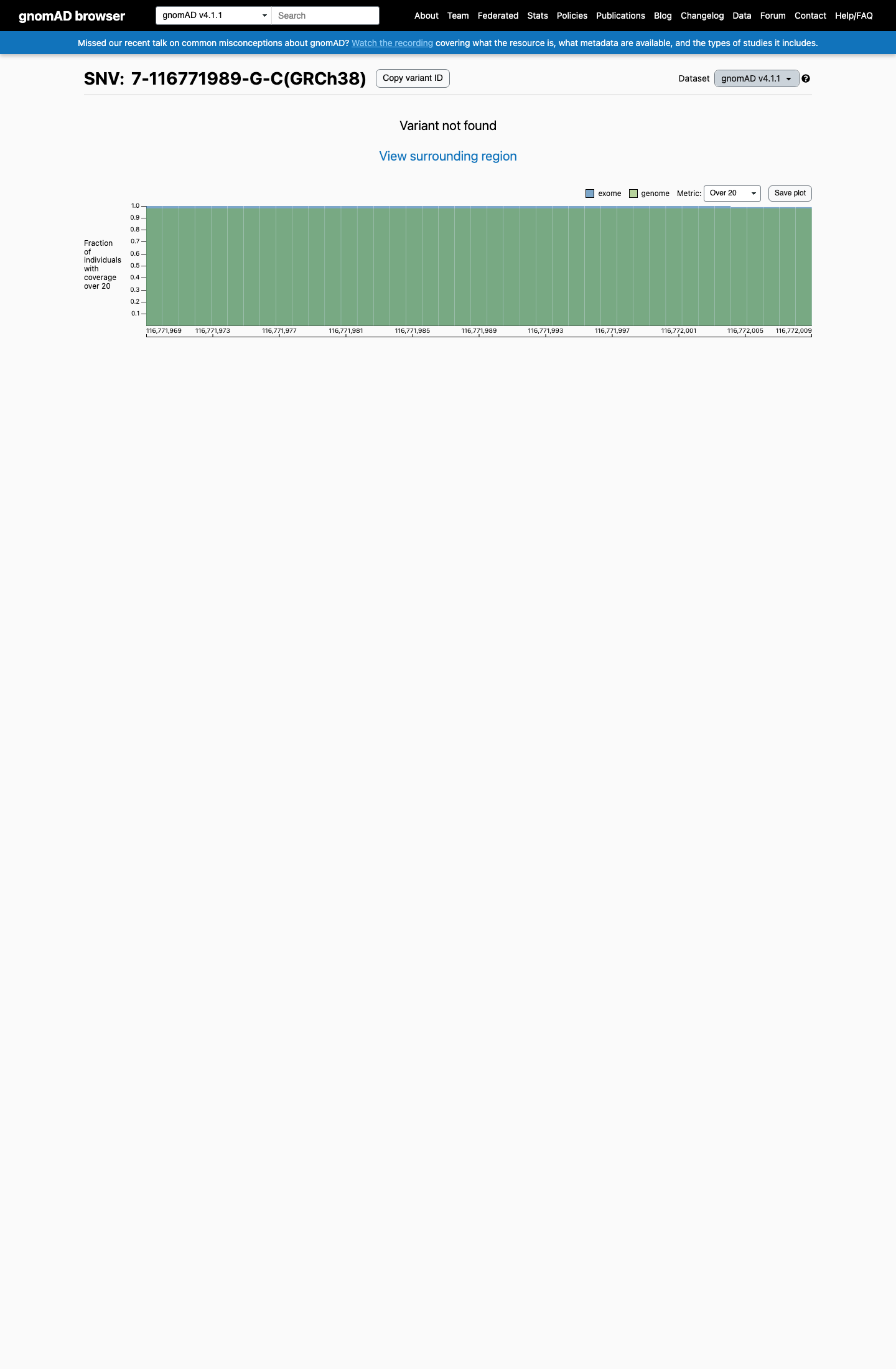
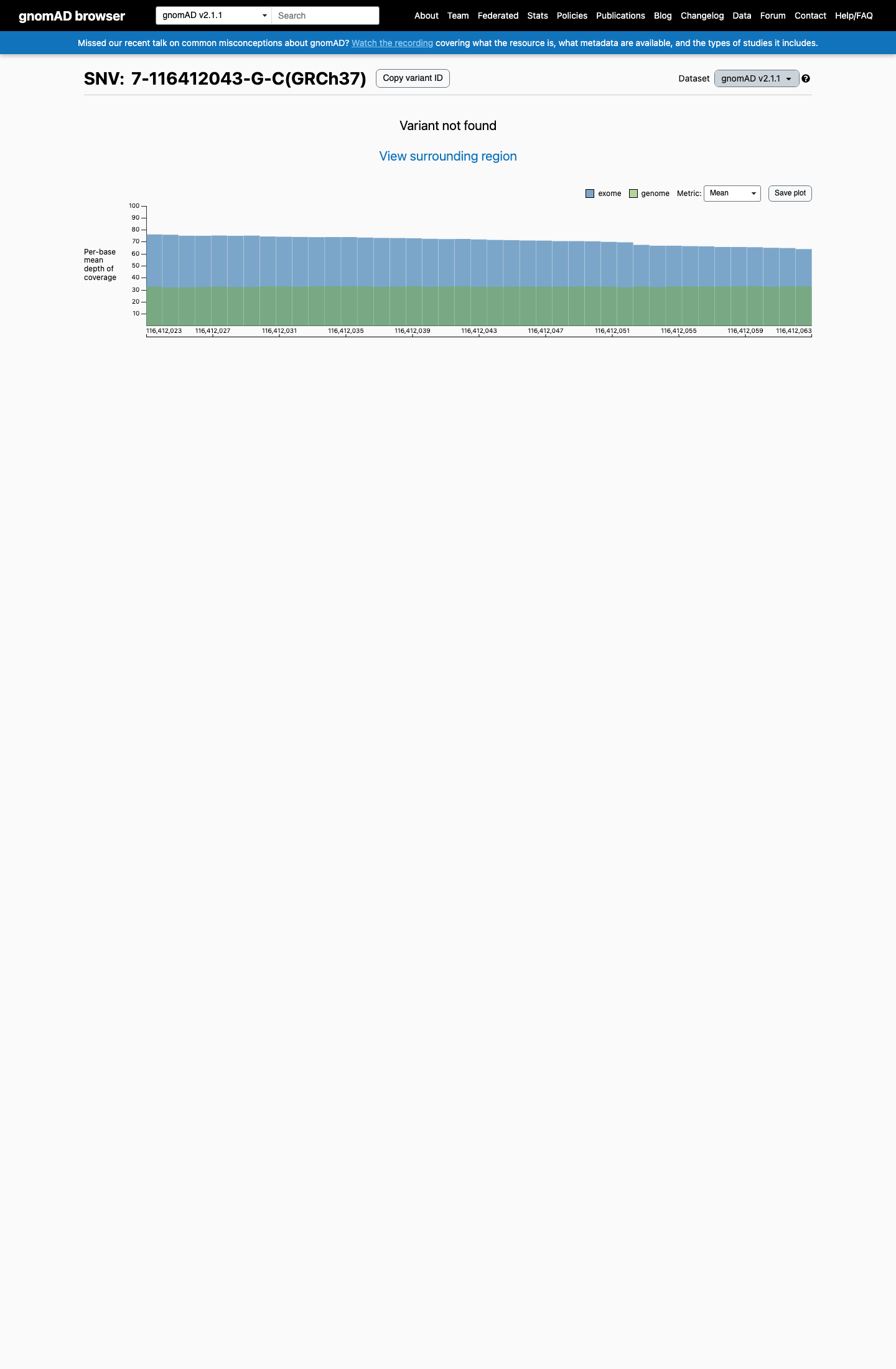
PM2 (Supporting): variant absent from gnomAD v2.1, gnomAD v4.1, and gnomAD-Canada v1.0. PP3 (Supporting): SpliceAI predicts splice-donor loss at the annotated donor position (max delta 0.925, above the 0.8 high-precision tier). Final classification: VUS — under generic ACMG/AMP 2015 rules, two supporting criteria (PM2 and PP3) do not combine to pathogenic or benign.
PM2 + PP3→VUS
Gene diagram
· NM_001127500.2 · variants mapped to exon structure
METNM_001127500.2
Fetching transcript structure from UCSC…
Exons
—
Transcript span
—
Strand
—
Variants mapped
—
Source
UCSC ncbiRefSeqCurated
All variants in MET—click a row to locate it on the plot · use the link column to open its page
Variant ↕
Protein
Location
Classification
Link
Applied criteria · 2 applied · 21 assessed
MetEvidence satisfies this criterion.
Not metEvaluated against available evidence; threshold not reached.
Not assessedApplies in principle, but no evidence was found to evaluate it.
N/ADoesn't apply to this variant type.
Applied · 2
Strength Supporting Moderate Strong Very strong
✓
PM2supportingreviewPathogenic
Met (Supporting): allele absent from gnomAD v2.1, gnomAD v4.1, and gnomAD-Canada v1.0.
gnomAD v2.1 reports NM_001127500.2:c.3082G>C as absent.gnomAD v4.1 reports NM_001127500.2:c.3082G>C as absent.gnomAD-Canada v1.0 reports NM_001127500.2:c.3082G>C as absent.
Met (Supporting): SpliceAI predicts splice-donor loss at the donor position itself (max delta 0.925, above the 0.8 high-precision cutoff).
SpliceAI donor-loss delta score DS_DL=0.925 (DP_DL=0), donor-gain DS_DG=0.477, max delta score=0.925, from the SpliceAI Lookup tool run for NM_001127500.2:c.3082G>C.SpliceAI's own precision-recall calibration (Jaganathan et al. 2019, PMID 30661751) reports that delta scores >=0.8 fall in a high-precision band strongly consistent with a splice-altering effect; this variant's max delta of 0.925 exceeds that band.REVEL score 0.374 (local REVEL v1.3 lookup) is in an indeterminate range that does not meet a supporting-strength pathogenic or benign REVEL threshold, so it is not used to support PP3.
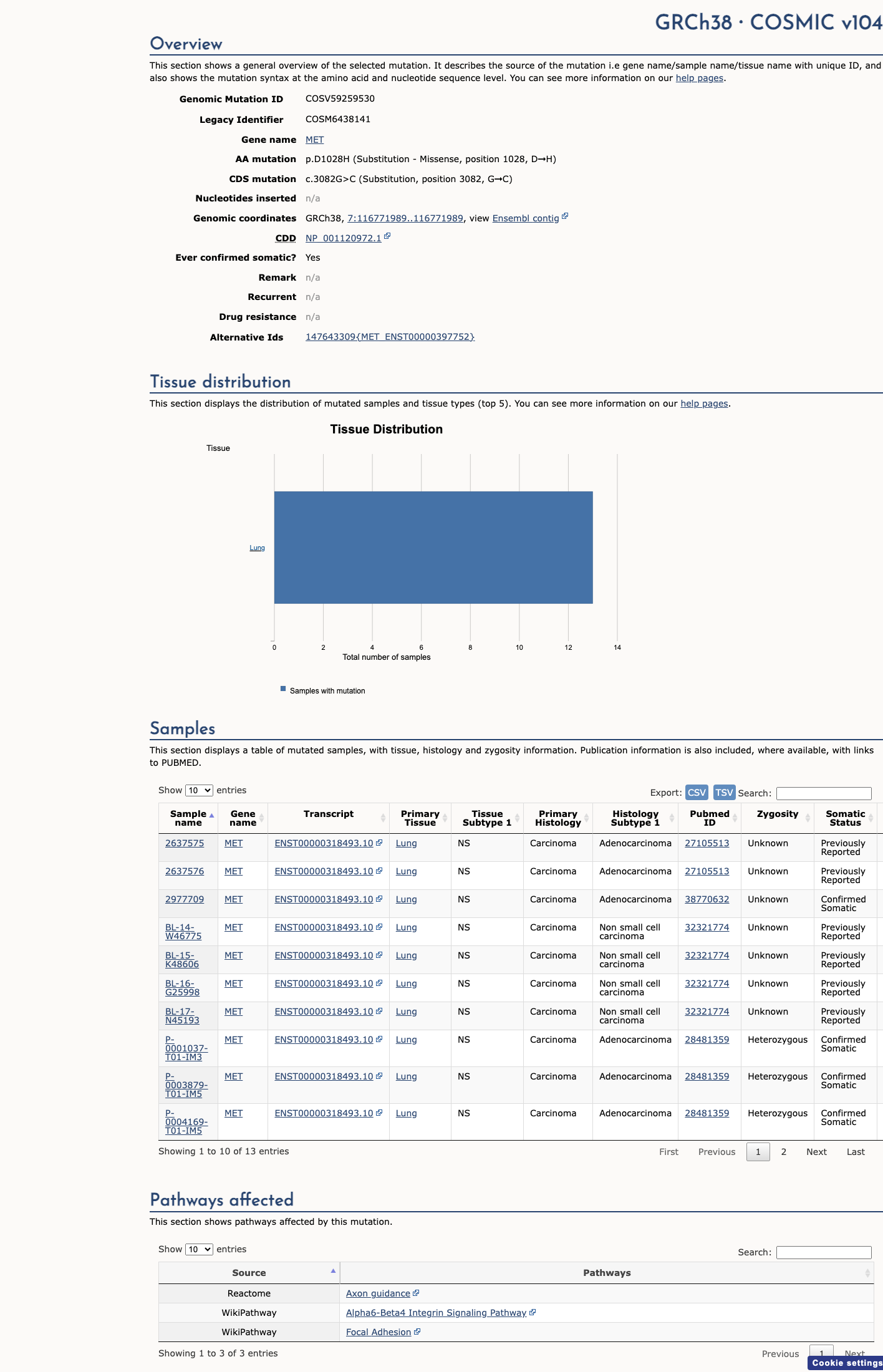
This variant does not lie in a statistically significant hotspot. This variant has previously been reported in somatic cancers (COSMIC; COSV59259530, n = 13 times).
Hotspots
This variant does not lie in a statistically significant hotspot.