Analysis in progress
Initialising…
0%
complete
This report is still being assembled — sections appear as each stage finishes. It isn't final yet.
KRAS
Final classification
VUS
PS3PM1PP3
KRAS
c.35G>T
p.Gly12Val
missense · exon 2

KRAS encodes a small GTPase in the RAS family that cycles between active and inactive states to regulate cell growth and signaling through pathways such as MAPK/ERK and PI3K/AKT/mTOR. Activating changes in KRAS are common drivers of many cancers, including pancreatic, colorectal, and lung cancers, where they promote uncontrolled cell proliferation. Germline alterations in KRAS also cause developmental disorders such as Noonan syndrome and cardio-facio-cutaneous syndrome, which carry an increased predisposition to cancer.

This variant

KRAS activating changes drive cancers and developmental RASopathy syndromes such as Noonan syndrome, and p.Gly12Val is a canonical activating alteration of this GTPase. Functional and domain evidence point to a gain-of-function effect, but the RASopathy VCEP framework did not reach Pathogenic thresholds, so this variant is reported as a variant of uncertain significance (VUS).

Transcript
NM_033360.3
HGVS · transcript:coding
NM_033360.3:c.35G>T
GRCh38
chr12:25245350 C>A
GRCh37
chr12:25398284 C>A
Basis With only PM1 (Moderate) and PP3/PS3 (Supporting) met, no KRAS VCEP v2.3 combination rule for Pathogenic or Likely Pathogenic is satisfied, so the classification is Uncertain Significance.
With only PM1 (Moderate) and PP3/PS3 (Supporting) met, no KRAS VCEP v2.3 combination rule for Pathogenic or Likely Pathogenic is satisfied, so the classification is Uncertain Significance.
Classification rationale
PS3PM1PP3 VUS
KRAS c.35G>T missense · exon 2

PS3 (Moderate): VCEP-approved functional assays (PMID 20949621) show p.Gly12Val locks RAS in its active GTP-bound state and elevates MEK/ERK signaling. PM1 (Moderate): Gly12 falls within the VCEP-defined P-loop functional domain (amino acids 10-17). PP3 (Supporting): REVEL score 0.91 exceeds the VCEP-specified >=0.7 threshold for missense variants. Synthesis: with one Moderate and two Supporting criteria, no VCEP combination rule for Pathogenic or Likely Pathogenic is met, and the variant is classified as Uncertain Significance (VUS).

PS3 + PM1 + PP3 VUS
Gene diagram · NM_033360.3 · variants mapped to exon structure
KRAS NM_033360.3
Fetching transcript structure from UCSC…
Applied criteria · 3 applied · 14 assessed
MetEvidence satisfies this criterion.
Not metEvaluated against available evidence; threshold not reached.
Not assessedApplies in principle, but no evidence was found to evaluate it.
N/ADoesn't apply to this variant type.
Applied · 3
Strength Supporting Moderate Strong Very strong
PS3 moderate Pathogenic
Met (Moderate): VCEP-approved assays (PMID 20949621) show p.G12V locks RAS in its active state with elevated MEK/ERK signaling, covering two approved assay categories.
KRAS RASopathy VCEP v2.3 cspec PS3 rule: 'Two or more different approved assays' = Moderate; 'One approved assay' = Supporting.VCEP SVI-RASopathy-VCEP-V2-Approved-Functional-Studies table lists PMID 20949621 (with 23059812) as validated sources for the KRAS 'RAS Activation Assay' and separately for the KRAS 'MEK Activation Assay' / 'ERK Activation Assay', with G12V listed among pathogenic validation controls for these assays.PMID 20949621 full text: 'we used RAS wt, a GTPase deficient mutant (RAS G12V) and a self-activating (fast-cycling) mutant (RAS F28L)' as controls in purified-protein biochemical characterization; all data summarized in Table 1 and Supp. Table S4.
PM1 moderate Pathogenic
Met (Moderate): Gly12 falls within the VCEP-defined P-loop functional domain (amino acids 10-17).
cspec (KRAS RASopathy VCEP v2.3) PM1 rule: domain table lists P-loop as AA 10-17 (Moderate strength), applicable only to the listed critical/well-established functional domains.VCEP alignment material (Alignment-with-PM1-domains.pptx) confirms the P-loop spans HRAS/KRAS residues 10-17, encompassing codon 12.
PP3 supporting Pathogenic
Met (Supporting): REVEL score 0.91 exceeds the VCEP's >=0.7 threshold for missense variants.
ClinGen RASopathy VCEP cspec v2.3 specifies PP3 (Supporting) rule: 'For missense variants: REVEL >= 0.7.'Local REVEL predictor lookup returns score 0.91 for NM_033360.3:c.35G>T (p.Gly12Val), which is >= 0.7.
Assessed · not applied · 5 not met · 9 not assessed
Pathogenic
PS2 Not assessed: no parental testing results, maternity/paternity confirmation, or confirmed de novo observation were available.
PS4 Not assessed: the only supporting report (1 of 65 sebaceous nevi) is a somatic cohort, not a germline case-control study.
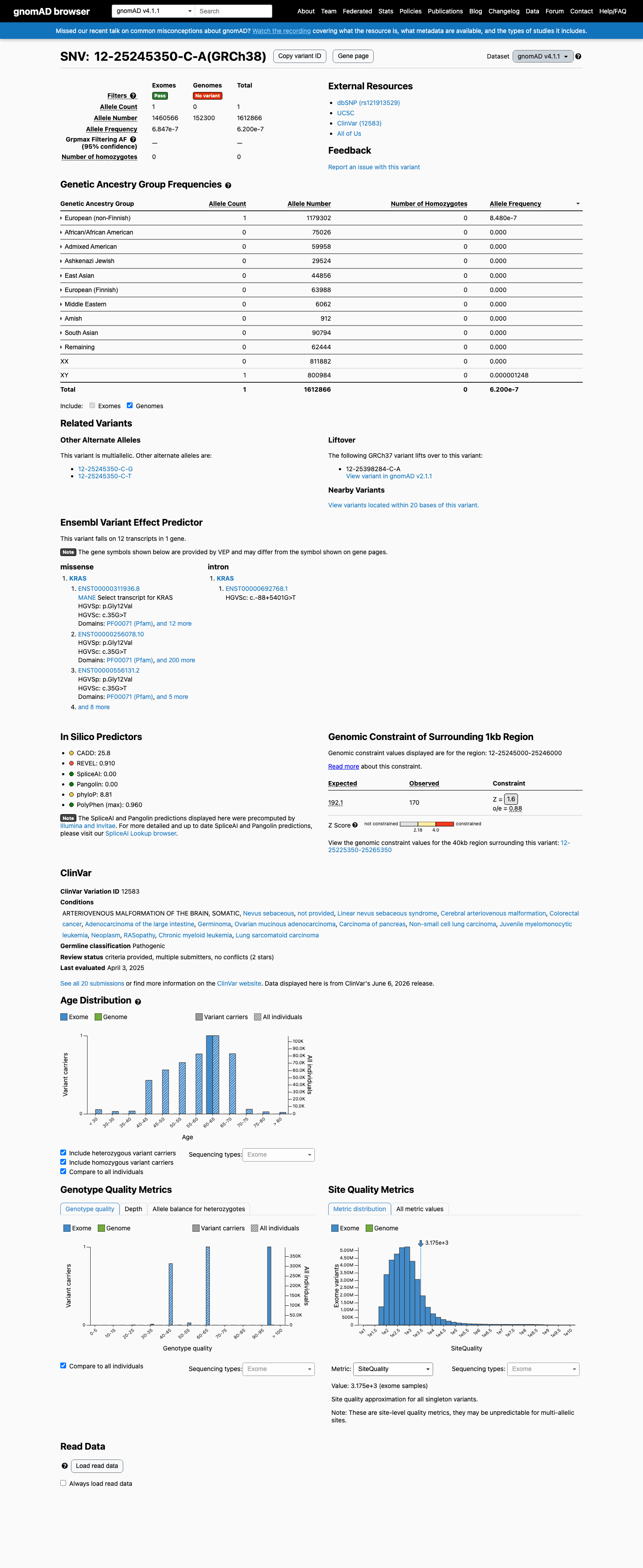
PM2 Not met: gnomAD v4.1 reports one allele (AF 6.2e-07), so the variant is not absent as the VCEP rule requires.
PM4 Not met: as a single-nucleotide missense substitution, it does not alter protein length as PM4 requires.
PM5 Not assessed: no verified, individually cited alternate pathogenic codon-12 substitutions (e.g., G12D, G12C) were available to count.
PM6 Not assessed: no parental genotypes or proband phenotype supporting an assumed de novo occurrence were available.
PP1 Not assessed: no affected relatives, pedigree, or segregation results were reported.
Benign
BA1 Not met: highest gnomAD allele frequency is 0.000062%, far below the 0.05% BA1 threshold.
BS1 Not met: highest population allele frequency is 0.000085%, below the 0.025% BS1 threshold.
BS2 Not assessed: no documented healthy adult carrier with adequate phenotype and penetrance information was available.
BS4 Not assessed: no affected family members with documented absence of the variant or informative non-segregating meiosis were reported.
BP2 Not assessed: no alternative molecular cause, second pathogenic KRAS variant, or phase data were documented.
BP4 Not met: REVEL 0.91 is well above the VCEP's <=0.3 BP4 threshold.
BP5 Not assessed: no evidence of an alternative molecular explanation for the phenotype was available.
N/A · 11 PVS1 · PS1 · PM3 · PP2 · PP4 · PP5 · BS3 · BP1 · BP3 · BP6 · BP7
Research & evidence
Population frequency
gnomAD v4.1 screenshot
gnomAD v4.1
gnomAD v2.1 screenshot
gnomAD v2.1
v4.1
This variant is present in gnomAD v4.1 (AF= 6.20014e-07; MAF= 0.00006%, 1/1612866 alleles, homozygotes = 0) and has highest observed frequency in the European (non-Finnish) population (AF= 8.47959e-07; MAF= 0.00008%, 1/1179302 alleles, homozygotes = 0).
v2.1
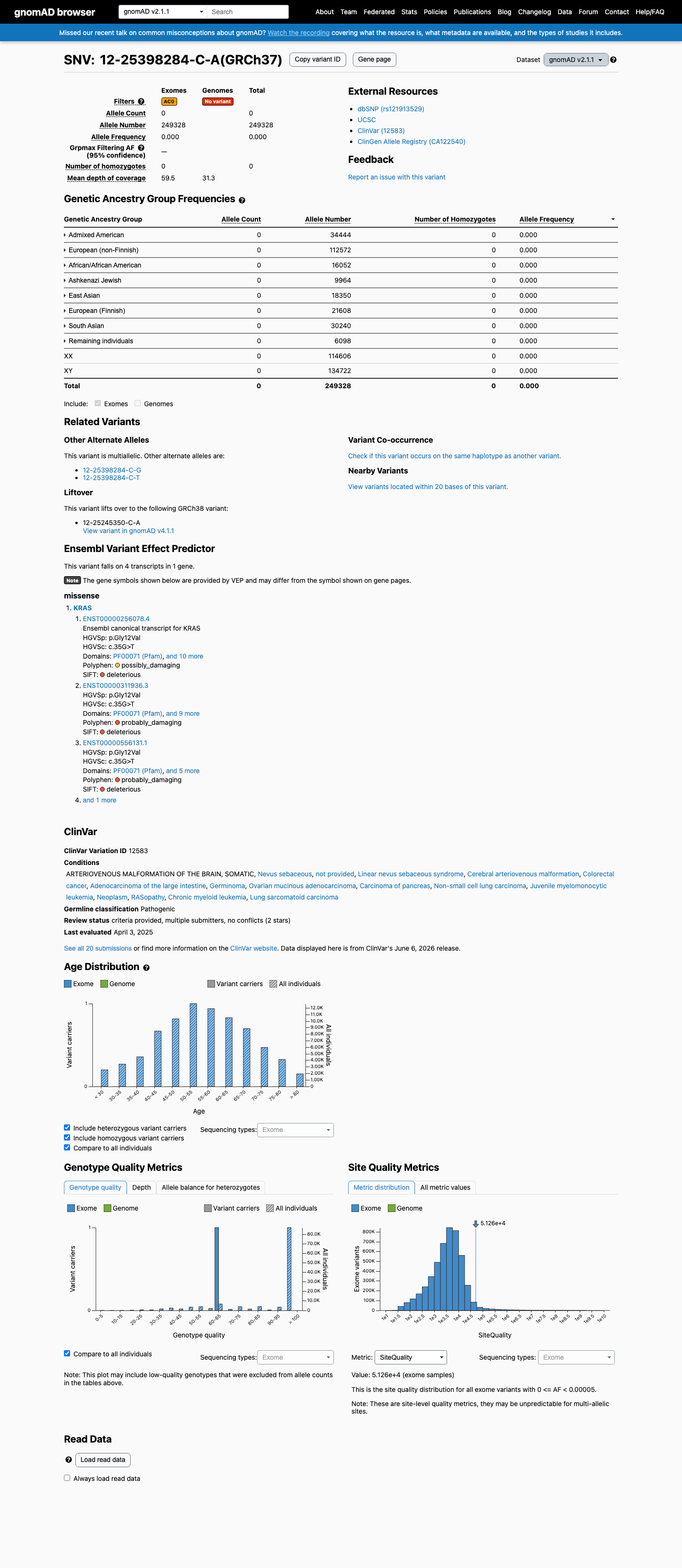
This variant is present in gnomAD v2.1 (AF= 0; MAF= 0.00000%, 0/249328 alleles, homozygotes = 0) and has highest observed frequency in the African/African American population (AF= 0; MAF= 0.00000%, 0/16052 alleles, homozygotes = 0).
🇨🇦 CA
Absent from gnomAD-Canada v1.0.
Allele frequency by ancestry
three datasets · side by side
gnomAD v4.1
6.2e-05% · 1 / 1,612,866
0 hom
European (non-Finnish)
1 / 1,179,302
8.5e-05%
+ 9 not observed (Remaining individuals, Admixed American, European (Finnish), Amish, East Asian, Middle Eastern, South Asian, Ashkenazi Jewish, African/African American)
gnomAD v2.1
Absent · 0 / 249,328
0 hom
Not observed in any ancestry group.
+ 8 not observed (African/African American, Admixed American, Ashkenazi Jewish, East Asian, European (Finnish), European (non-Finnish), Remaining individuals, South Asian)
gnomAD Canada 🇨🇦
Absent · 0 / ?
0 hom
Not observed in any ancestry group.
ClinVar screenshot
ClinVar
This variant has been reported in ClinVar as Pathogenic (10 clinical laboratories). (ClinVarID = 12583)
SpliceAI screenshot
In silico
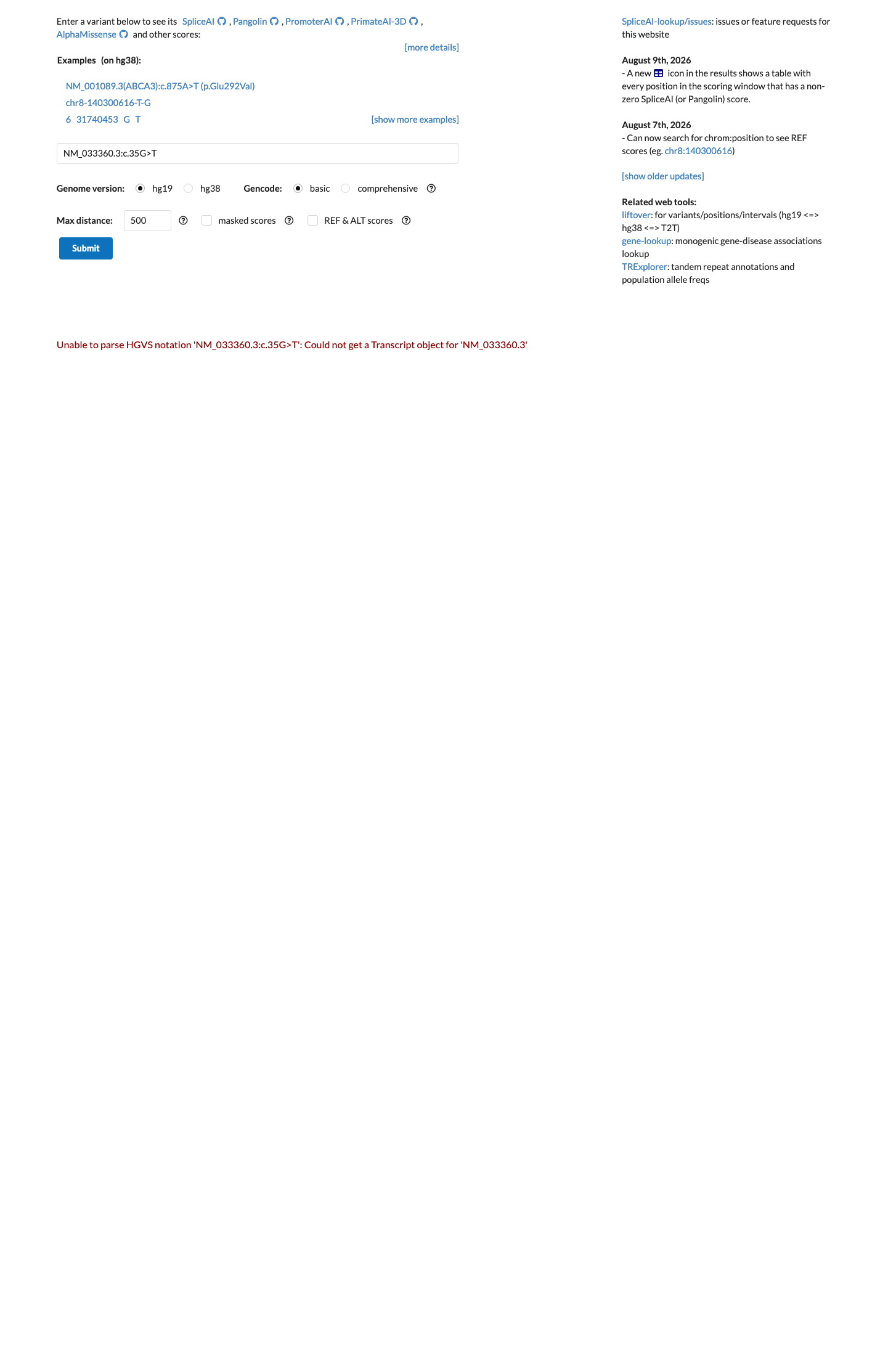
SpliceAI predicts no significant splice impact for this variant (max delta score = 0.01). REVEL score = 0.91. BayesDel score = 0.316354.
Functional / OncoKB screenshot
Functional Oncogenic
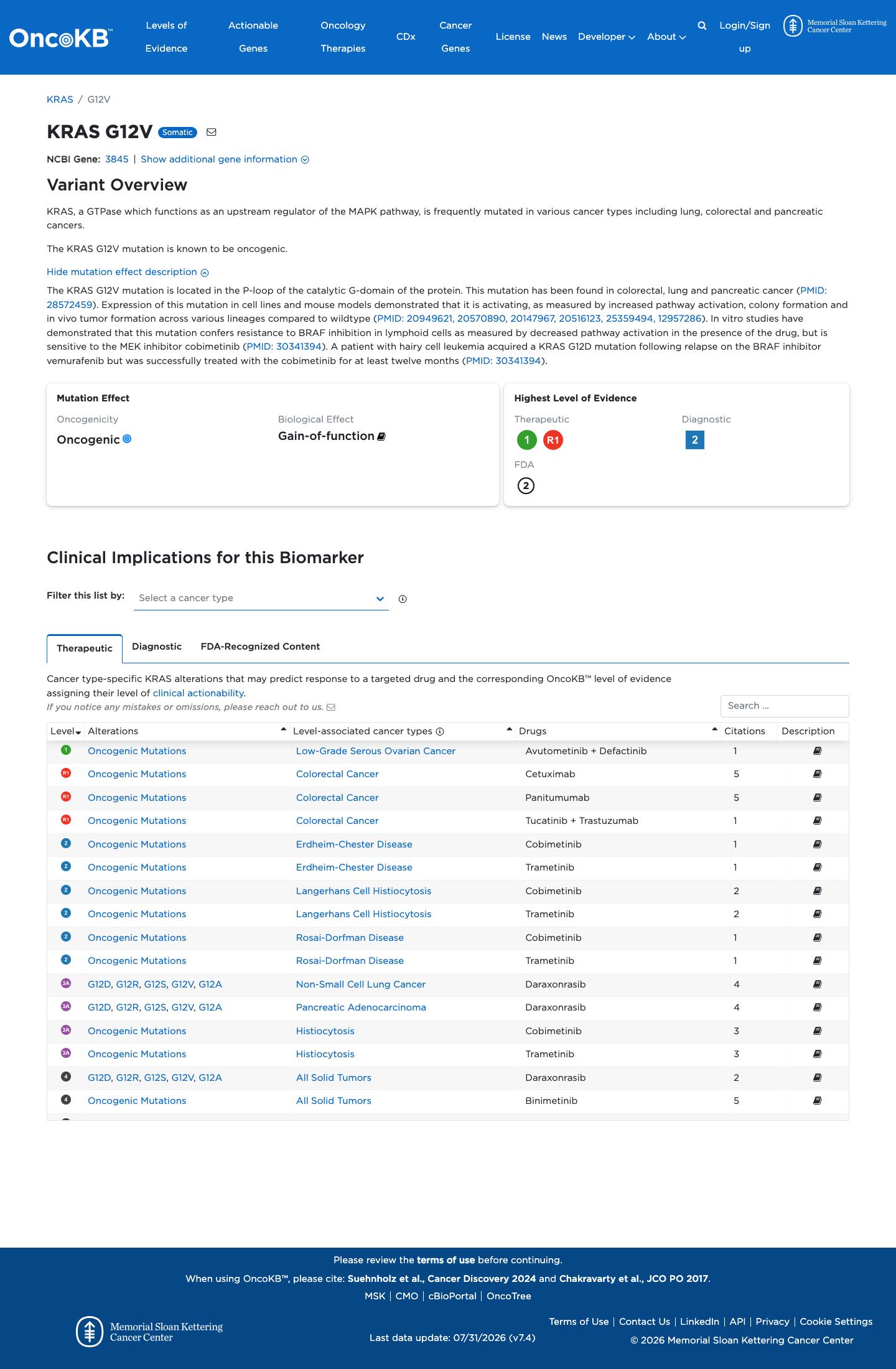
OncoKB identified variant-specific curated literature and context relevant to functional review; biological-effect context: Gain-of-function; curated oncogenicity label: Oncogenic.
OncoKB ↗
COSMIC screenshot
COSMIC
Cancer hotspots screenshot
Cancer hotspots
Somatic evidence Hotspot
COSMIC
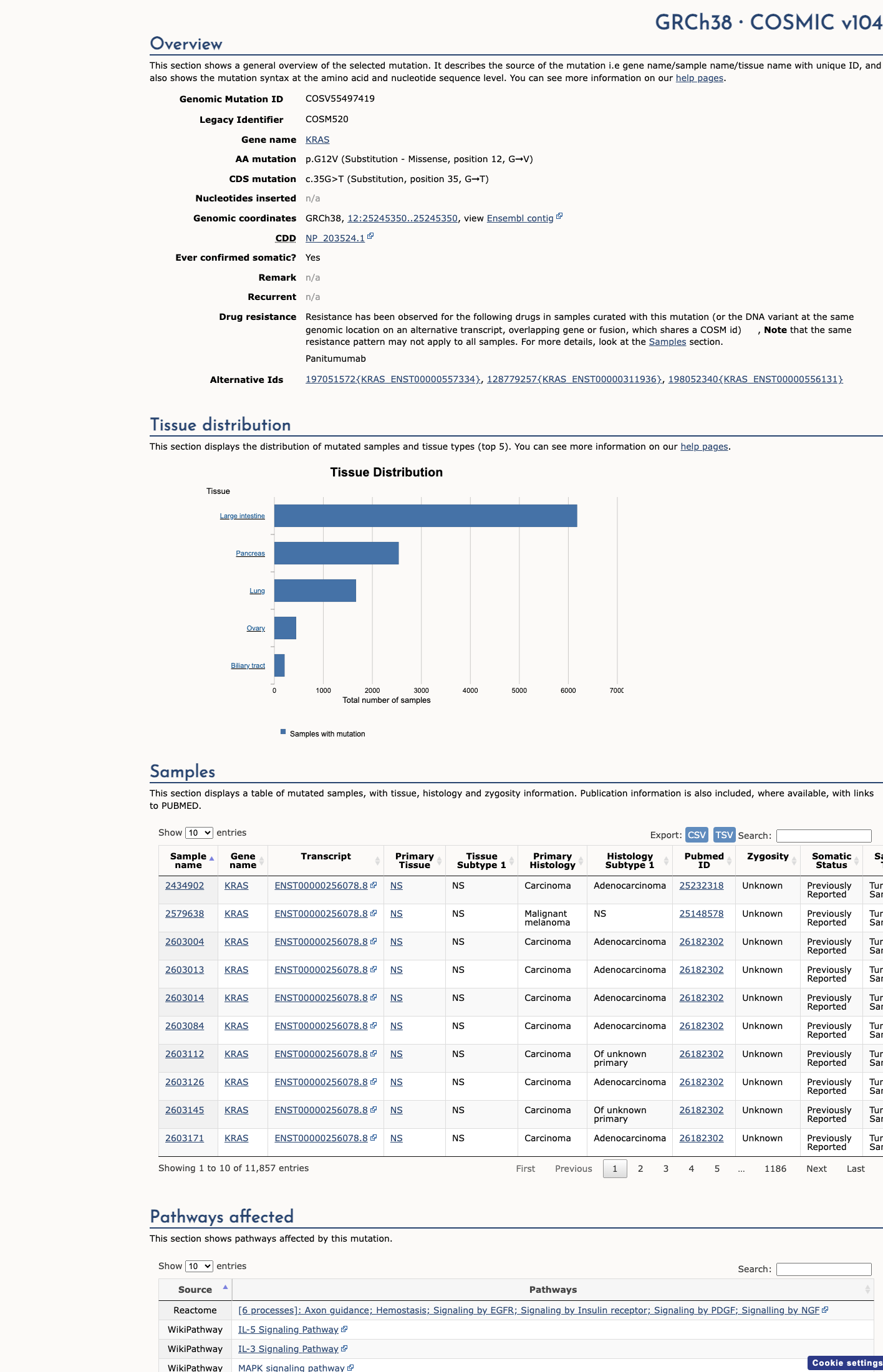
This variant lies in a statistically significant hotspot. This variant has previously been reported in somatic cancers (COSMIC; COSV55497419, n = 11539 times).
Hotspots
This variant lies in a statistically significant hotspot.
Literature · how each cited paper was used
1papers cited
Each card is an audit: what was searched, what was found, whether it names the variant, which criteria it fed, and why. 7 further PMIDs triaged but not cited — see Sources & references.
Germline KRAS mutations cause aberrant biochemical and physical properties leading to developmental disorders.
Searched
G12VGly12Valc.35G>TGTPase deficientMEK activationERK activation
Found
Denayer et al. performed comprehensive biochemical and cellular characterization of purified germline RAS mutant proteins, using RAS-wt, the well-established oncogenic/GTPase-deficient mutant RAS-G12V, and the fast-cycling mutant RAS-F28L as reference controls. RAS-G12V consistently showed reduced intrinsic and GAP-stimulated GTP hydrolysis (favoring the active GTP-bound state) and the highest downstream MEK/ERK/AKT phosphorylation among the proteins tested, confirming its constitutive gain-of-function behavior via two distinct VCEP-approved assay readouts.
Variant
✓ Names this variant — characterised directly
Applied to
PS3 moderate
VCEP-listed approved-assay source (RAS Activation Assay and MEK/ERK Activation Assay) reporting direct biochemical/cellular functional data for p.G12V showing GTPase deficiency and downstream pathway activation consistent with the RASopathy/oncogenic gain-of-function mechanism.
As controls, we used RAS wt, a GTPase deficient mutant (RAS G12V) and a self-activating ("fast-cycling") mutant (RAS F28L) [Reinstein et al., 1991]. All data are summarized in Table 1 and Supp. Table S4.
Location Results/Methods narrative referencing Table 1 and Supp. Table S4; Fig. 4A-B; Fig. 5  ·  Context Purified recombinant RAS protein biochemistry (intrinsic and NF1-GAP-stimulated GTP hydrolysis kinetics) plus cellular assays of downstream pMEK1/2, pERK1/2, and pAKT levels, comparing germline RASopathy mutants against RAS-wt and validated oncogenic control RAS-G12V.  ·  full text
Sources & reference links
9Sources
CSpec VCEP
ClinVar
gnomAD v2.1
gnomAD v4.1
gnomAD-Canada
SpliceAI
OncoKB
COSMIC
Cancer hotspots
Triaged references · 7 PMIDs not cited in assessment
12957286 ↗ Tumor induction by an endogenous K-ras oncogene is highly dependent on cellular ONCOKB
20147967 ↗ Activating K-Ras mutations outwith 'hotspot' codons in sporadic colorectal tumou ONCOKB
20516123 ↗ A mouse model of melanoma driven by oncogenic KRAS. ONCOKB
17704260 ↗ Cardio-facio-cutaneous and Noonan syndromes due to mutations in the RAS/MAPK signalling pathway: genotype-phenotype relationships and overlap with Costello syndrome. CLINVAR
21044336 ↗ TLN-4601 suppresses growth and induces apoptosis of pancreatic carcinoma cells through inhibition of Ras-ERK MAPK signaling. CLINVAR
22683711 ↗ Postzygotic HRAS and KRAS mutations cause nevus sebaceous and Schimmelpenning syndrome. CLINVAR
23096712 ↗ Whole-exome sequencing reveals somatic mutations in HRAS and KRAS, which cause n CLINVAR