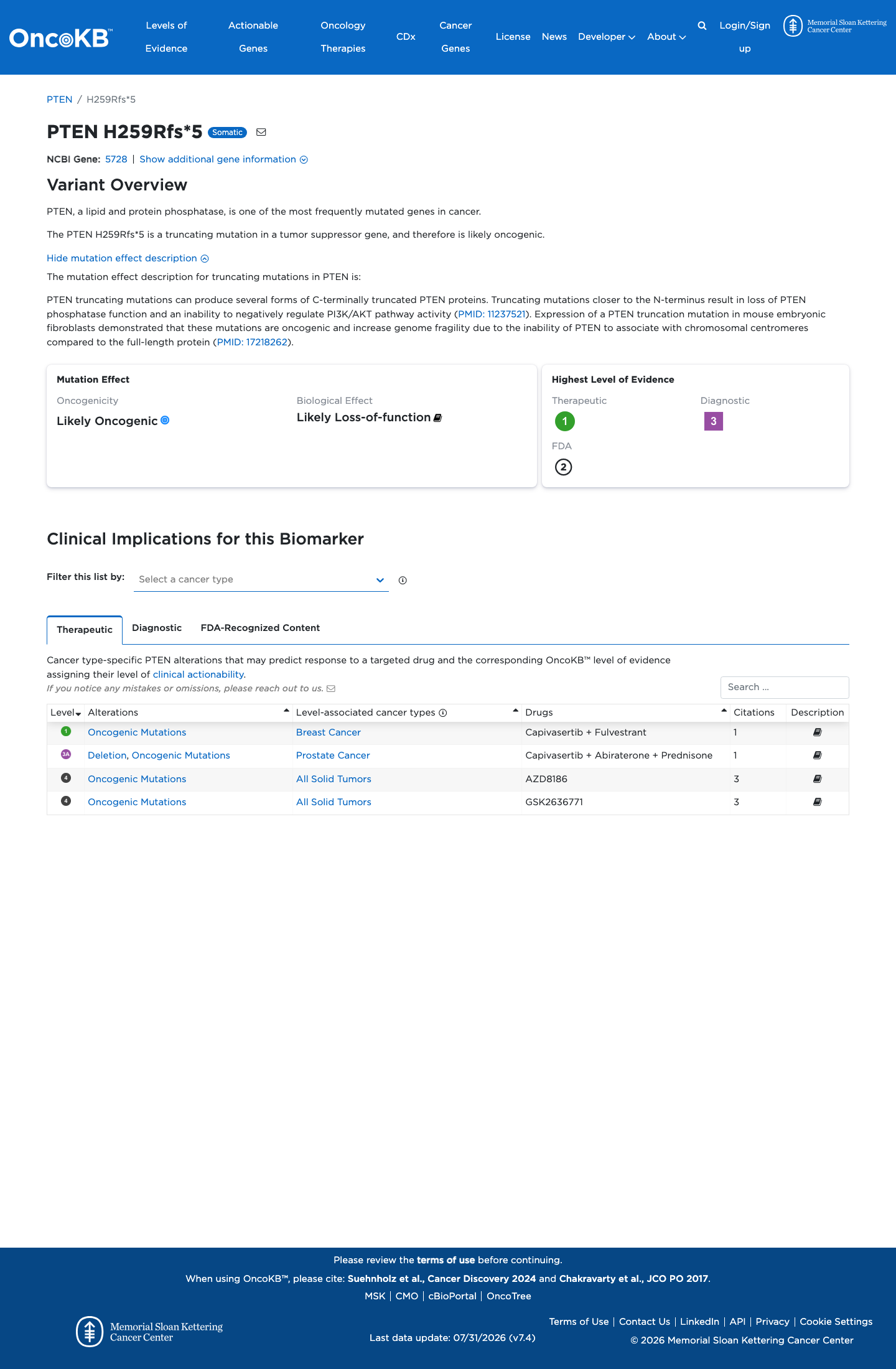
PTEN is a tumor suppressor gene that encodes a phosphatase converting the lipid messenger PIP3 back to PIP2 at the cell membrane, thereby restraining the AKT/mTOR signaling pathway that drives cell growth, proliferation, and survival. It is one of the most frequently mutated genes across many types of human cancer, and its loss promotes unchecked cell growth, survival, and genomic instability, partly through impaired DNA repair. Germline loss-of-function variants in PTEN cause Cowden syndrome, an inherited cancer predisposition disorder associated with elevated risk of breast and thyroid cancer.
This variant
PTEN is a tumor suppressor whose germline loss-of-function variants cause Cowden syndrome, an inherited cancer-predisposition disorder. This frameshift is predicted to trigger nonsense-mediated decay and eliminate PTEN function, so a Likely Pathogenic classification aligns with the gene's established disease mechanism.
Transcript
NM_000314.8
HGVS · transcript:coding
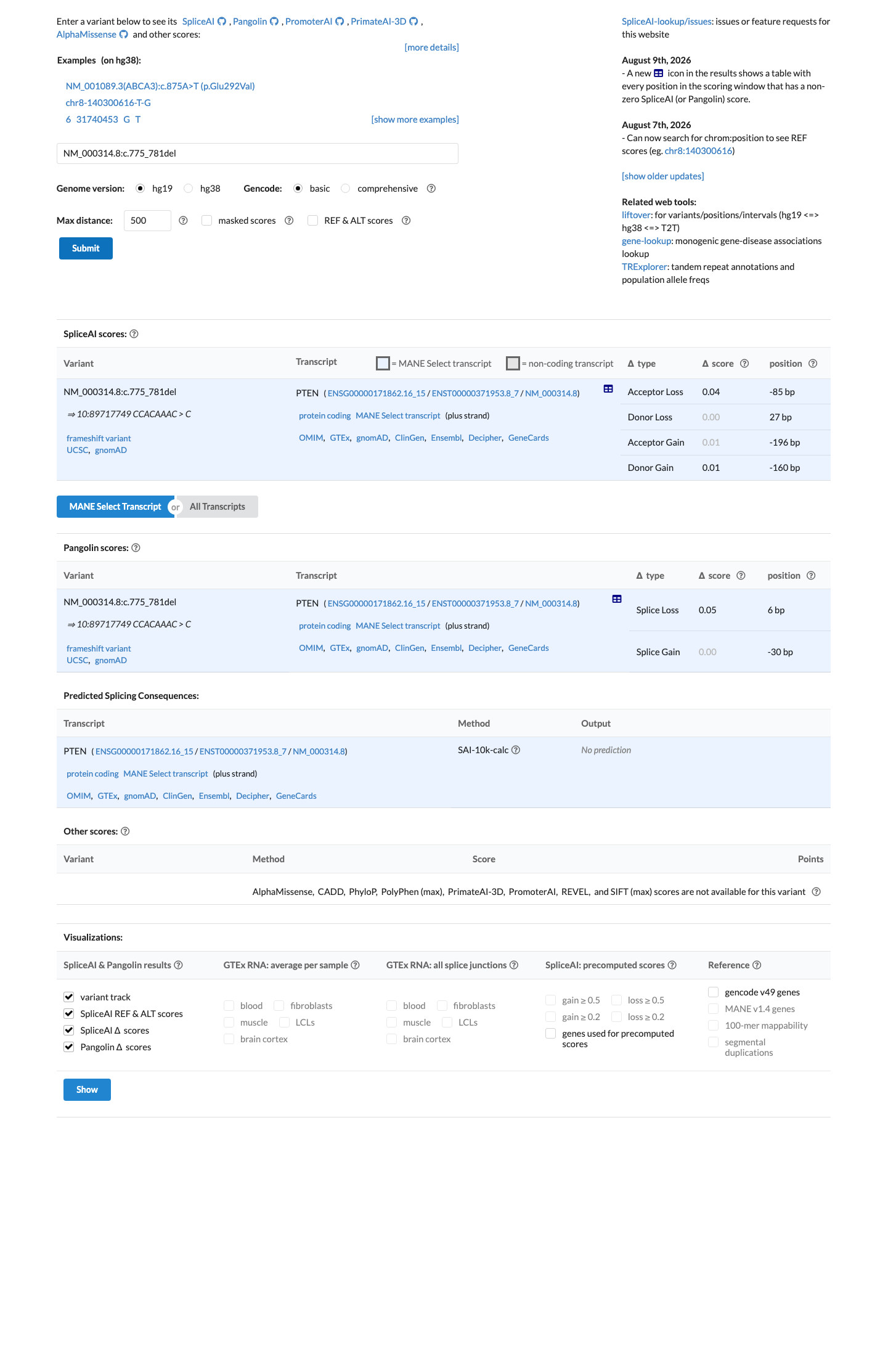
NM_000314.8:c.775_781del
GRCh38
chr10:87957991 TCCACAAA>T
GRCh37
chr10:89717748 TCCACAAA>T
BasisAdjudicated criteria PVS1 (Very Strong) plus PM2 (Supporting) match ClinGen PTEN VCEP Rule 20 (PVS1 + one supporting-level code), yielding Likely Pathogenic.▾
Adjudicated criteria PVS1 (Very Strong) plus PM2 (Supporting) match ClinGen PTEN VCEP Rule 20 (PVS1 + one supporting-level code), yielding Likely Pathogenic.
Classification rationale
PVS1PM2Likely Pathogenic
PTEN c.775_781delframeshift · exon 7
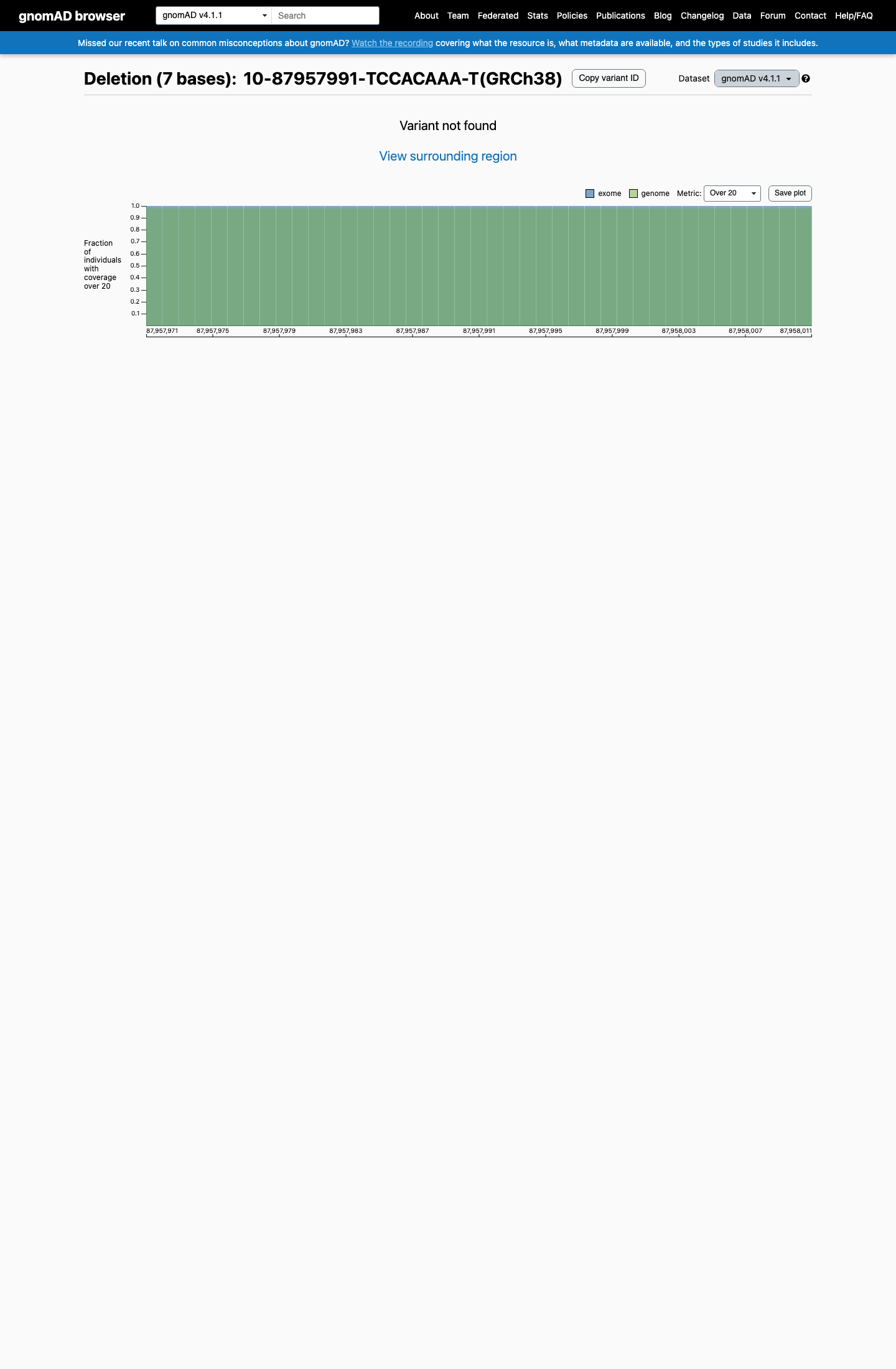
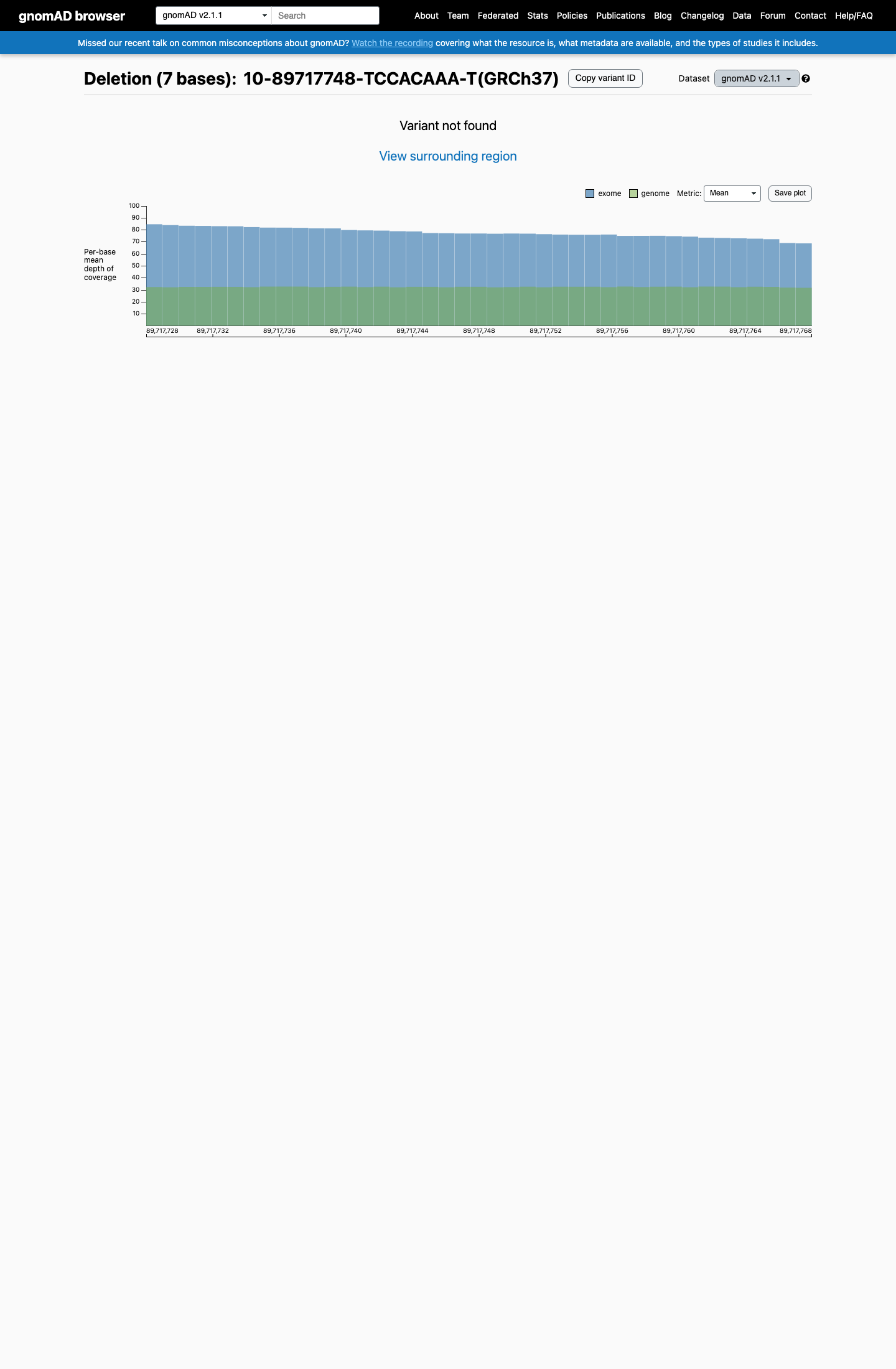
PVS1 (Very Strong): frameshift p.(His259ArgfsTer5) truncates upstream of the PTEN NMD cutoff at c.1121, predicting nonsense-mediated decay. PM2 (Supporting): variant is absent from gnomAD v2.1 and v4.1, below the 0.001% allele-frequency threshold. Combined, PVS1 plus PM2 matches ClinGen PTEN VCEP Rule 20, supporting a classification of Likely Pathogenic.
PVS1 + PM2→Likely Pathogenic
Gene diagram
· NM_000314.8 · variants mapped to exon structure
PTENNM_000314.8
Fetching transcript structure from UCSC…
Exons
—
Transcript span
—
Strand
—
Variants mapped
—
Source
UCSC ncbiRefSeqCurated
All variants in PTEN—click a row to locate it on the plot · use the link column to open its page
Variant ↕
Protein
Location
Classification
Link
Applied criteria · 2 applied · 14 assessed
MetEvidence satisfies this criterion.
Not metEvaluated against available evidence; threshold not reached.
Not assessedApplies in principle, but no evidence was found to evaluate it.
N/ADoesn't apply to this variant type.
Applied · 2
Strength Supporting Moderate Strong Very strong
✓
PVS1very strongPathogenic
Met (Very Strong): frameshift p.(His259ArgfsTer5) truncates well before the PTEN VCEP NMD cutoff at c.1121, predicting nonsense-mediated decay.
PTEN VCEP PVS1 decision tree: frameshift variants with stop codon or disruption at or 5' to p.D375 (c.1121) in biologically-relevant transcript NM_000314.8 are assigned full PVS1.Variant truncates protein at residue ~264 (p.His259ArgfsTer5), which is at/5' of the c.1121/p.D375 cutoff, so NMD is predicted per the VCEP rule rather than escape.pvs1_gene_context.json confirms germline LoF is an established PTEN disease mechanism per official CSPEC (pvs1_gene_gate: eligible).
Assessed · not applied
· 4 not met · 10 not assessed
Pathogenic
PS2Not assessed: no parental test results or parentage confirmation were available to establish a confirmed de novo occurrence.
PS3Not assessed: VCEP functional-evidence rules cover only missense (Mighell assay) or splice variants, and no variant-specific functional study of this frameshift was available.
PS4Not assessed: no affected-case observations or case-control enrichment data for this exact variant were available.
PM6Not assessed: no parental testing or family-history data were available to document a presumed de novo occurrence.
PP1Not assessed: no pedigree or affected-relative genotype data were available to evaluate co-segregation.
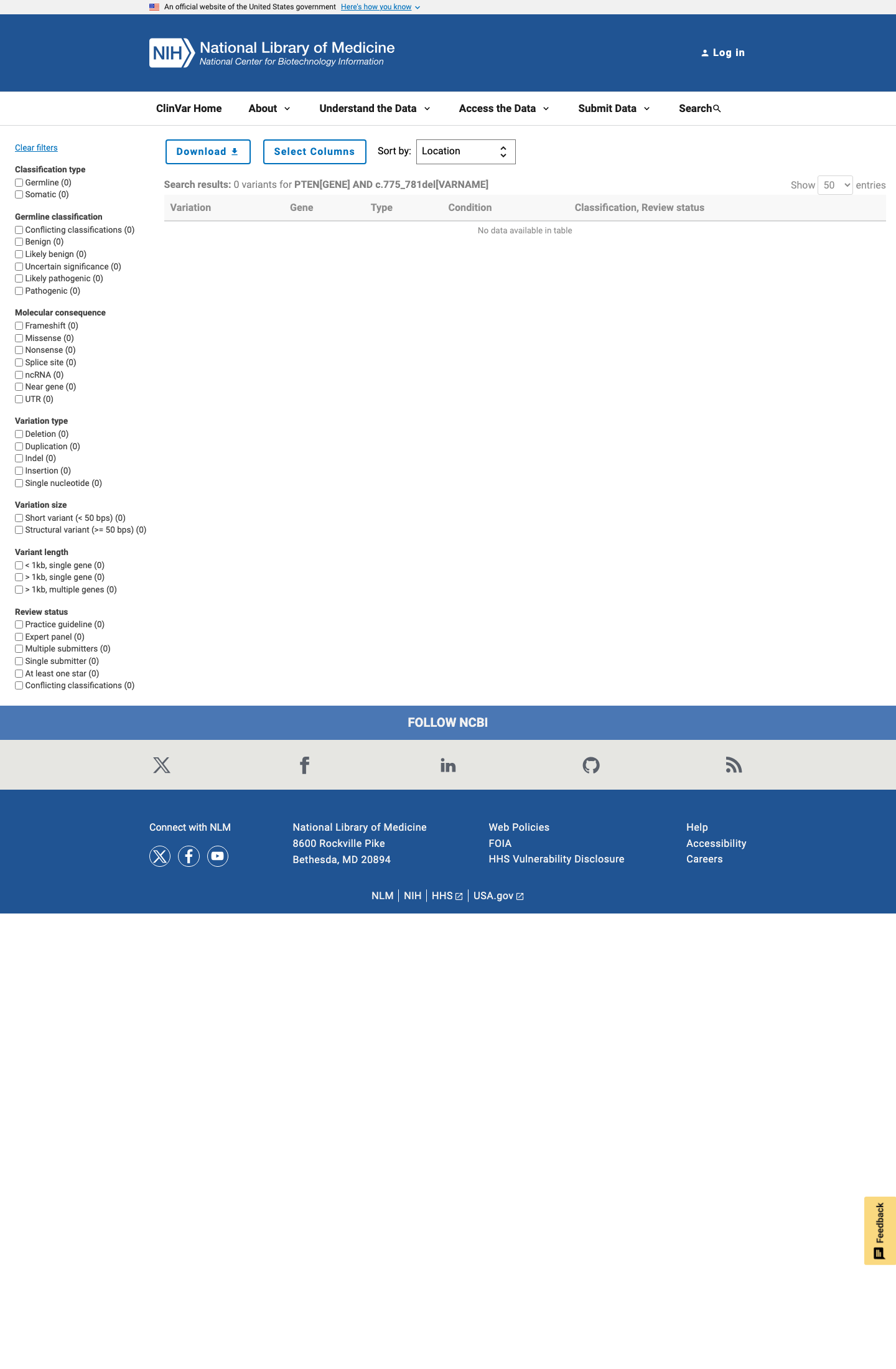
PP5Not met: the exact variant is absent from ClinVar, so no expert-panel pathogenic assertion exists to support PP5.
Benign
BA1Not met: absent from gnomAD v2.1 and v4.1, far below the PTEN BA1 threshold of >0.056% allele frequency.
BS1Not met: absent from gnomAD v2.1 and v4.1, below the PTEN BS1 frequency ranges.
BS2Not assessed: no homozygous observations were available to evaluate presence in healthy individuals.
BS3Not assessed: VCEP BS3 rules (Mighell missense assay, splice assays) do not cover frameshifts, and no variant-specific benign functional study was available.
BS4Not assessed: no variant-negative affected relatives were documented, so non-segregation could not be evaluated.
BP2Not assessed: no second pathogenic PTEN variant or phase data were available to evaluate.
BP5Not assessed: no data documented an alternate molecular diagnosis explaining the phenotype.
BP6Not met: the exact variant is absent from ClinVar, so no expert-panel benign assertion exists to support BP6.