This variant was interpreted by pipeline
7.1.5.
The current version is
8.0.0.
Re-running queues a fresh interpretation; the result replaces this page when complete.
Re-runs are not free. Blank = draws on today's public interpretation allowance.
With a code = uses 1 of that code's uses.
NOTCH1 encodes a transmembrane receptor that mediates an evolutionarily conserved signaling pathway through which adjacent cells communicate: binding of ligands on neighboring cells triggers cleavage of the receptor, releasing a fragment that enters the nucleus to regulate gene expression involved in cell differentiation, growth, proliferation, and survival. It is essential for the development of numerous cell and tissue types. Mutations in NOTCH1 are associated with aortic valve disease and Adams-Oliver syndrome, and it plays a dual role in cancer: activating mutations drive T-cell acute lymphoblastic leukemia, chronic lymphocytic leukemia, and adenoid cystic carcinoma, while loss-of-function mutations are common in squamous cell carcinomas and other solid tumors.
This variant
NOTCH1 is a transmembrane receptor in a conserved cell-cell signaling pathway, and its mutations cause aortic valve disease and Adams-Oliver syndrome while driving or suppressing different cancers depending on the alteration type. This missense change, p.Arg1962His, is rare in the general population but lacks functional, case-series, hotspot, or comparator evidence, so its effect on NOTCH1 signaling cannot currently be determined - hence VUS rather than a pathogenic or benign call.
Transcript
NM_017617.5
HGVS · transcript:coding
NM_017617.5:c.5885G>A
GRCh38
chr9:136500601 C>T
GRCh37
chr9:139395053 C>T
No ClinGen VCEP exists for NOTCH1, so generic ACMG/AMP 2015 rules applied; only PM2 was met (supporting), and a single supporting criterion satisfies no pathogenic or benign combination rule - the result is VUS.
Classification rationale
PM2VUS
NOTCH1 c.5885G>Amissense · exon 31
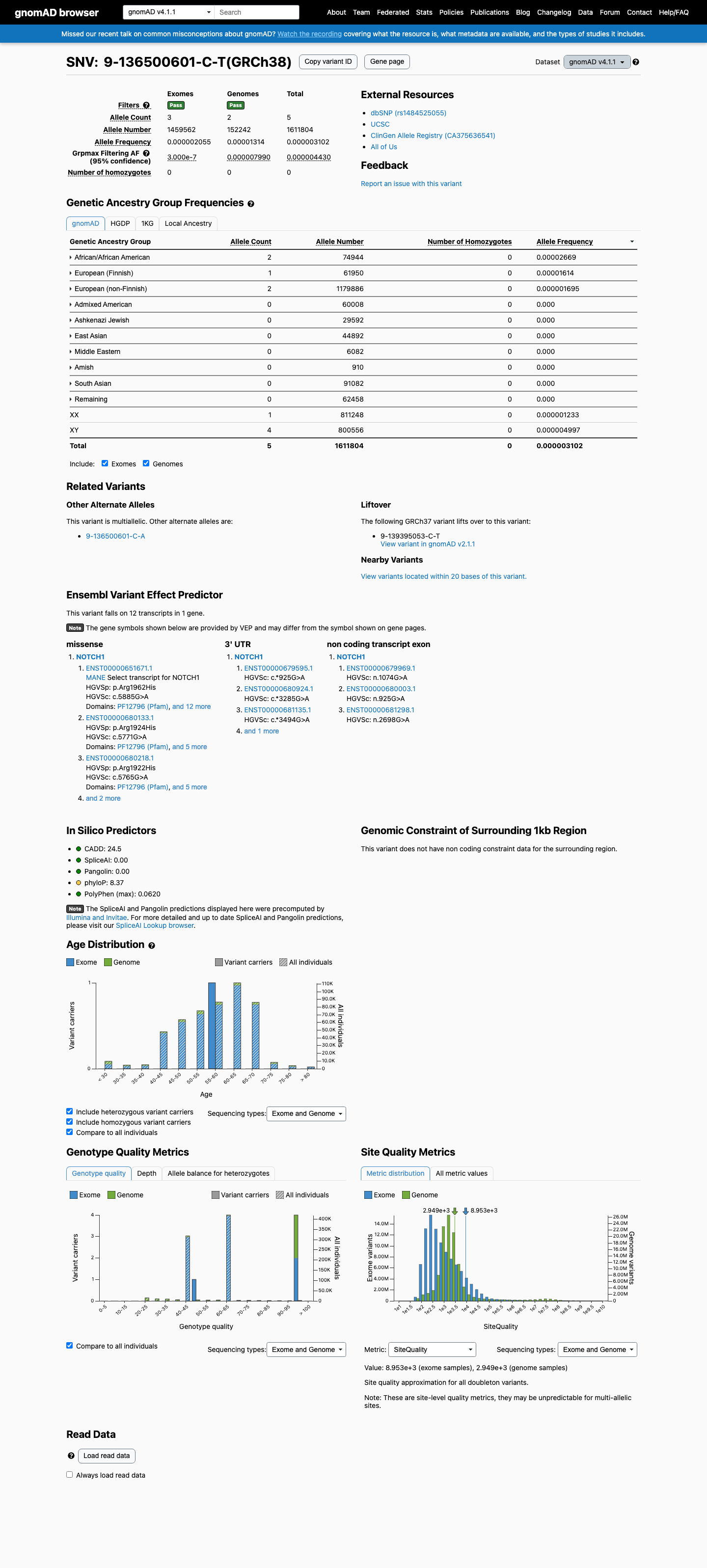
PM2 (Supporting): present in only 5 of 1,611,804 gnomAD v4.1 alleles (AF 0.00031%) with no homozygotes, consistent with rarity in population databases. Only PM2 (Supporting) was met; no ACMG/AMP 2015 combination rule for Pathogenic, Likely Pathogenic, Benign, or Likely Benign is satisfied, so the variant is classified as VUS.
PM2→VUS
LYFE Sciences is an AI system, and it can make mistakes. Criteria
may be applied incorrectly, sources may be misread, and a confident-looking
classification can still be wrong. Double-check every criterion and
its underlying evidence before relying on any call.
Gene diagram
· NM_017617.5 · variants mapped to exon structure
NOTCH1NM_017617.5
Fetching transcript structure from UCSC…
Exons
—
Transcript span
—
Strand
—
Variants mapped
—
Source
UCSC ncbiRefSeqCurated
All variants in NOTCH1—click a row to locate it on the plot · use the link column to open its page
Protein
Location
Classification
Link
Applied criteria · 1 applied · 23 assessed
MetEvidence satisfies this criterion.
Not metEvaluated against available evidence; threshold not reached.
Not assessedApplies in principle, but no evidence was found to evaluate it.
N/ADoesn't apply to this variant type.
Applied · 1
Strength Supporting Moderate Strong Very strong
✓
PM2supportingPathogenic
Met (Supporting): found in only 5 of 1,611,804 gnomAD v4.1 alleles (AF 0.00031%), with no homozygotes.
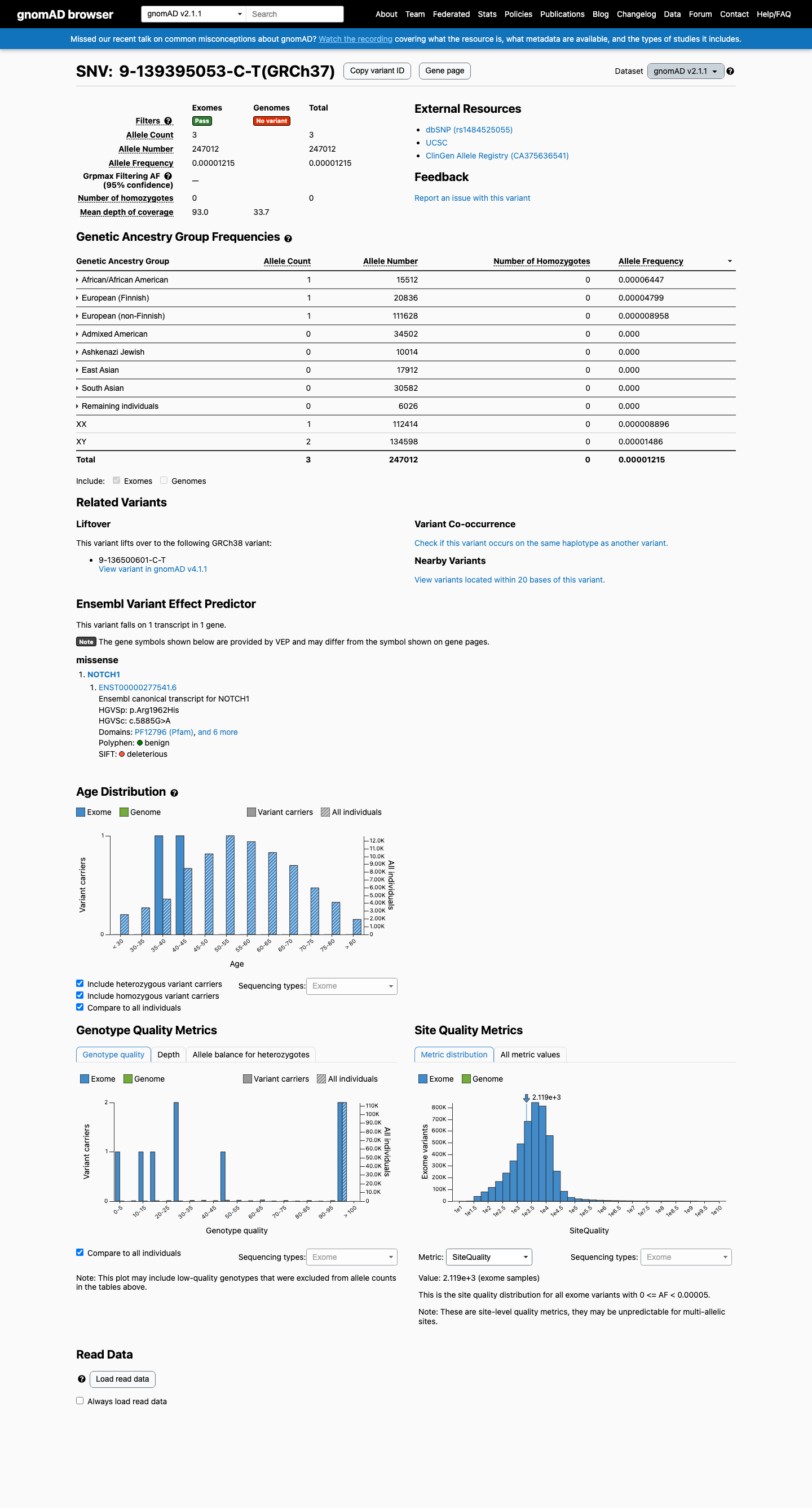
gnomAD v4.1 observed 5/1,611,804 alleles (AF 0.000310%), joint grpmax FAF 0.000443%, and zero homozygotes.gnomAD v2.1 observed 3/247,012 alleles (AF 0.00121%) and zero homozygotes.gnomAD-Canada v1.0 observed 2/18,414 alleles (AF 0.01086% overall); its NFE stratum had AF 0.01704% with FAF95 0.00301% and zero homozygotes. The record is RF-flagged, so this higher point estimate is interpreted cautiously.
Assessed · not applied
· 6 not met · 17 not assessed
Pathogenic
PS1Not assessed: no previously classified pathogenic variant producing the same amino acid change at this codon was identified.
PS2Not assessed: no de novo occurrence could be evaluated because no parental genotypes or proband phenotype were available.
PS3Not assessed: no functional or biochemical assay data for p.Arg1962His were available.
PS4Not assessed: no affected-case series, case-control dataset, or enrichment analysis for this variant was available.
PM1Not assessed: residue 1962 is not in a statistically significant hotspot, and no domain annotation was available.
PM3Not assessed: no affected proband with a second pathogenic NOTCH1 variant or phase data was identified.
PM5Not assessed: no pathogenic variant at codon 1962 was available to serve as a comparator.
PM6Not assessed: no de novo occurrence or parental testing result was available.
PP1Not assessed: no pedigree, relative genotypes, or informative meioses were provided.
PP2Not assessed: no gene-specific missense constraint data were available to evaluate this criterion.
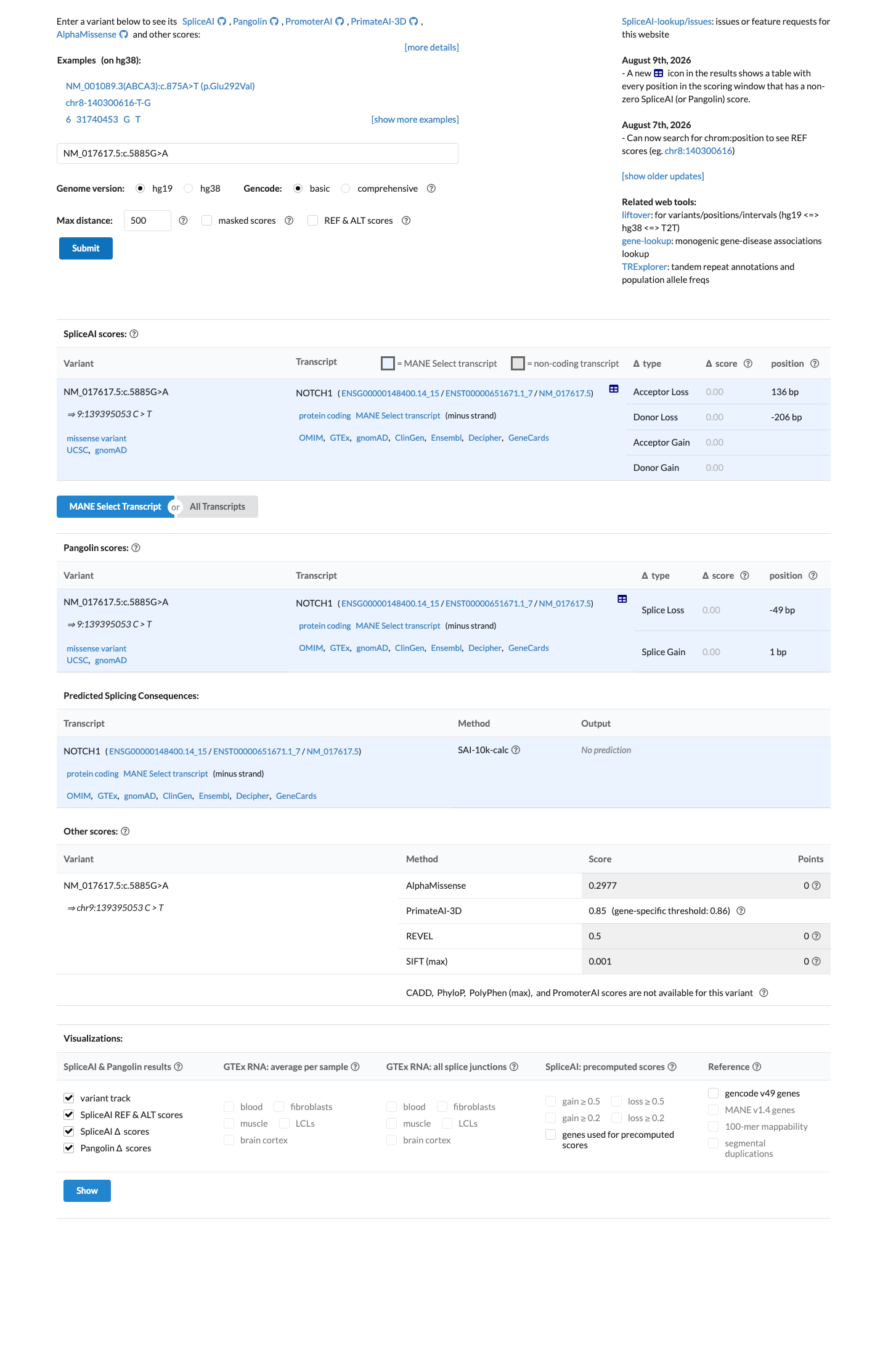
PP3Not met: REVEL 0.5 falls between the PP3 threshold (>=0.644) and the BP4 threshold (<=0.290).
PP4Not assessed: no phenotype for the tested individual was provided, so phenotype specificity could not be evaluated.
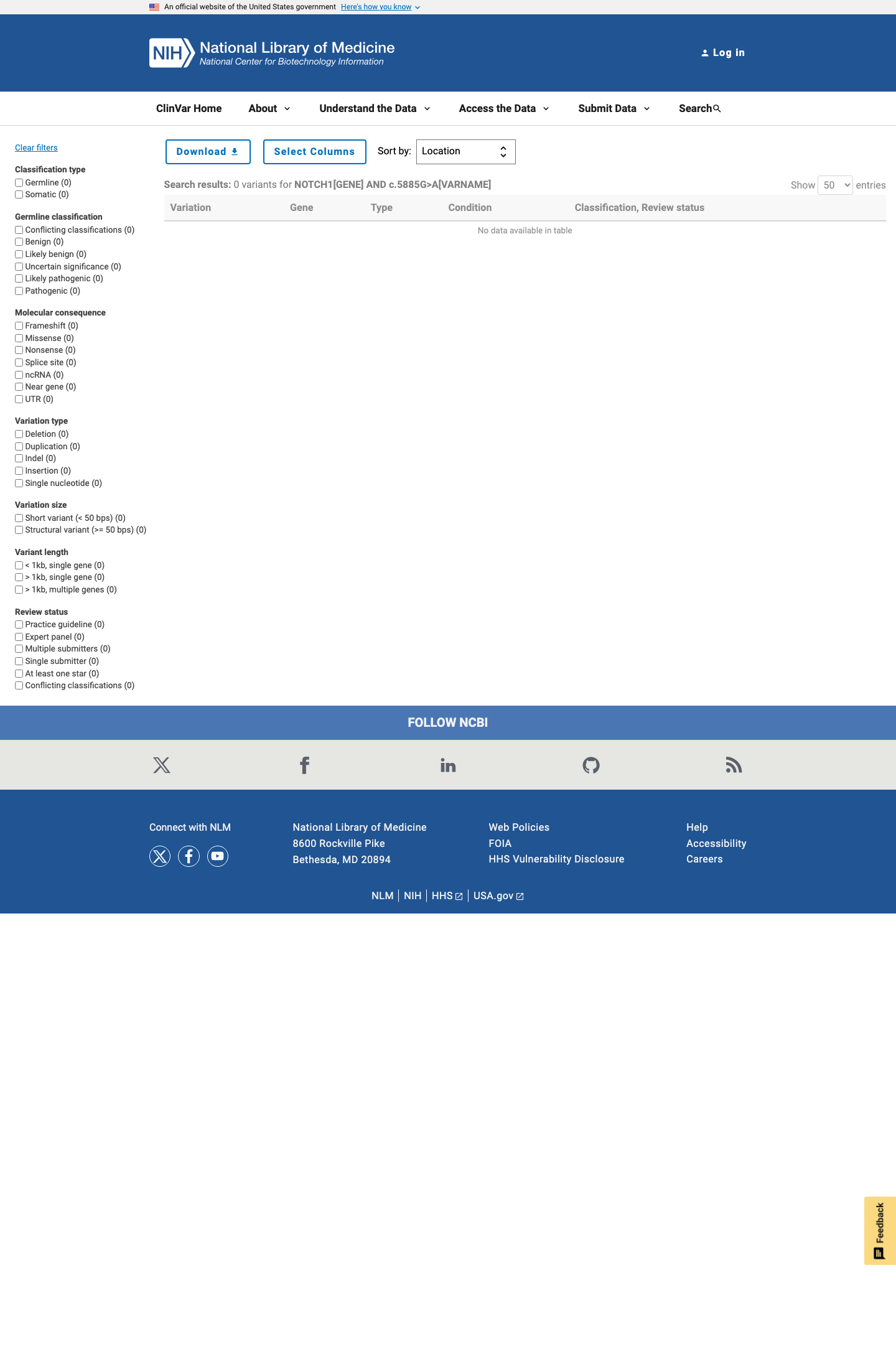
PP5Not met: no ClinVar record exists for this exact variant, so no expert-panel pathogenic assertion was available.
Benign
BA1Not met: the highest population frequency is 0.00645%, far below the stand-alone benign frequency range.
BS1Not met: the highest observed frequency (0.01704%) does not exceed the benign-supporting frequency threshold.
BS2Not assessed: no phenotype-ascertained healthy adult carriers were identified.
BS3Not assessed: no functional studies were available to evaluate whether the variant has no damaging effect.
BS4Not assessed: no affected relative lacking the variant or other non-segregation observation was provided.
BP1Not assessed: no gene-specific data establishing a truncating-predominant mechanism of disease was available.
BP2Not assessed: no observation of this variant in cis or trans with a pathogenic NOTCH1 variant was available.
BP4Not met: REVEL 0.5 does not fall below the BP4 supporting threshold (<=0.290).
BP5Not assessed: no affected individual or independently established alternative molecular diagnosis was provided.
BP6Not met: no ClinVar record exists for this exact variant, so no expert-panel benign assertion was available.
N/A · 4PVS1 · PM4 · BP3 · BP7
Research & evidence
Population frequency
gnomAD v4.1
gnomAD v2.1
v4.1
This variant is present in gnomAD v4.1 (AF= 3.10211e-06; MAF= 0.00031%, 5/1611804 alleles, homozygotes = 0) and has highest observed frequency in the African/African American population (AF= 2.66866e-05; MAF= 0.00267%, 2/74944 alleles, homozygotes = 0); grpmax FAF= 4.43e-06.
v2.1
This variant is present in gnomAD v2.1 (AF= 1.21452e-05; MAF= 0.00121%, 3/247012 alleles, homozygotes = 0) and has highest observed frequency in the African/African American population (AF= 6.44662e-05; MAF= 0.00645%, 1/15512 alleles, homozygotes = 0).
🇨🇦 CA
This variant is present in gnomAD-Canada v1.0 (AF= 0.0001086130118388183, 2/18414 alleles, homozygotes = 0).
Allele frequency by ancestry
three datasets · side by side
gnomAD v4.1
0.00031%
· 5 / 1,611,804
0 hom · FAF 0.00044%
African/African American
2 / 74,944
0.0027%
European (Finnish)
1 / 61,950
0.0016%
European (non-Finnish)
2 / 1,179,886
0.00017%
+ 7 not observed (Remaining individuals, Admixed American, Amish, East Asian, Middle Eastern, South Asian, Ashkenazi Jewish)
gnomAD v2.1
0.0012%
· 3 / 247,012
0 hom
African/African American
1 / 15,512
0.0064%
European (Finnish)
1 / 20,836
0.0048%
European (non-Finnish)
1 / 111,628
0.0009%
+ 5 not observed (Admixed American, Ashkenazi Jewish, East Asian, Remaining individuals, South Asian)
gnomAD Canada 🇨🇦
0.011%
· 2 / 18,414
0 hom · FAF 0.003%
European (non-Finnish)
2 / 11,736
0.017%
+ 8 not observed (African/African American, Latino/Admixed American, Ashkenazi Jewish, East Asian, European (Finnish), Middle Eastern, Remaining individuals, South Asian)
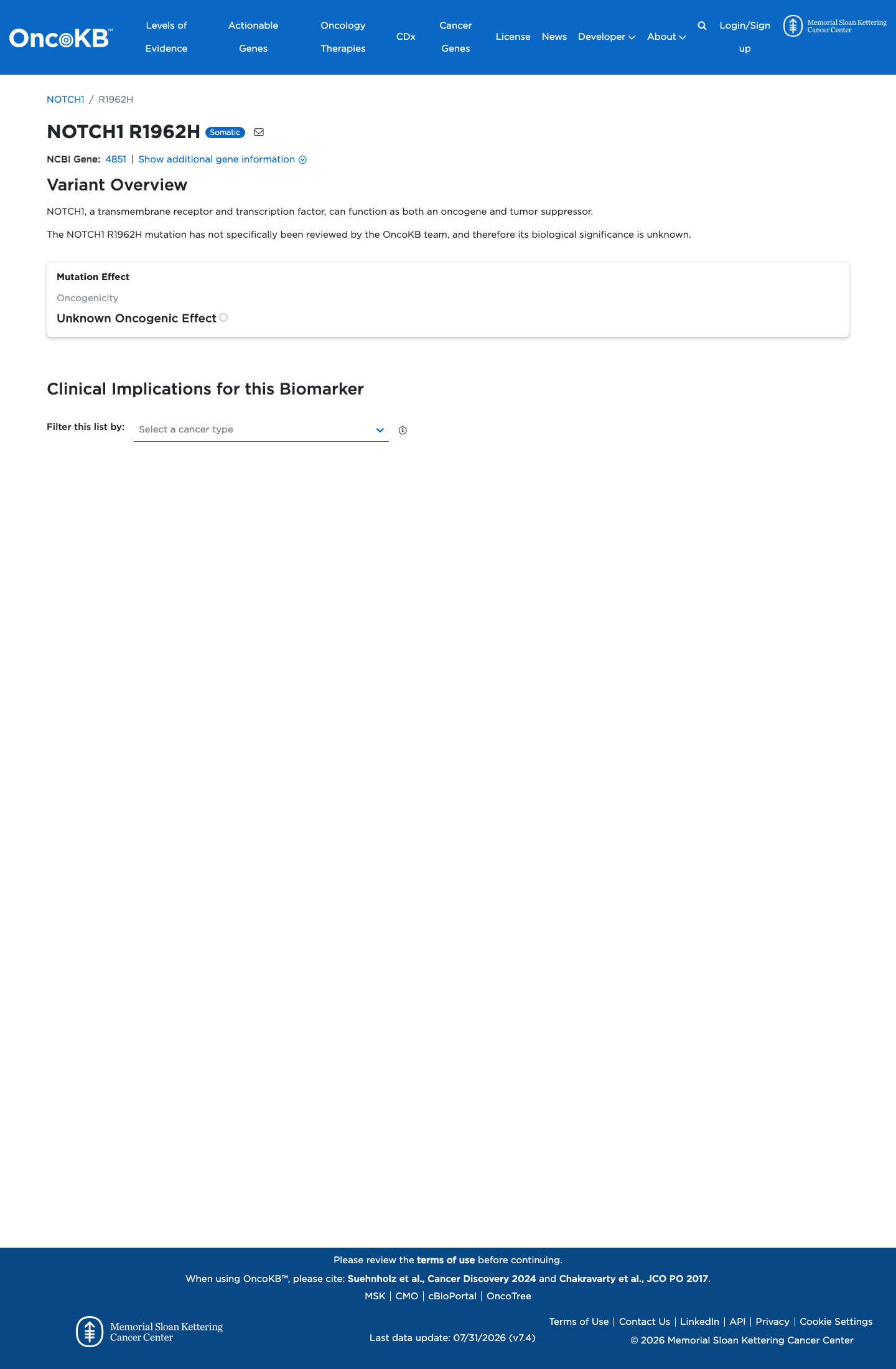
OncoKB did not identify variant-specific reviewed functional evidence for this variant; gene-level curated context is available for reviewer follow-up. NOTCH1, a transmembrane receptor and transcription factor, can function as both an oncogene and tumor suppressor.
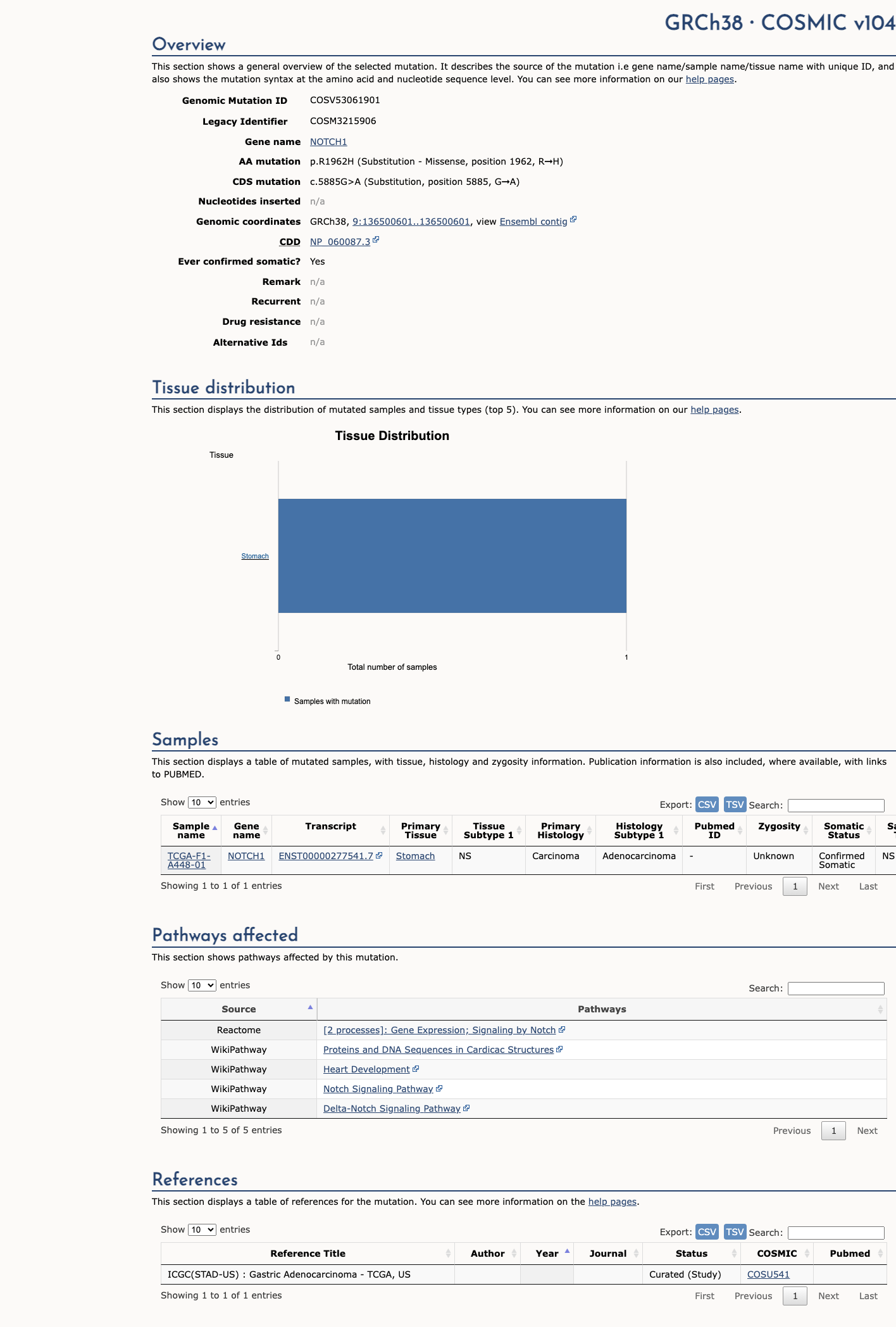
This variant does not lie in a statistically significant hotspot. This variant has previously been reported in somatic cancers (COSMIC; COSV53061901, n = 1 times).
Hotspots
This variant does not lie in a statistically significant hotspot.