Analysis in progress
Initialising…
0%
complete
This report is still being assembled — sections appear as each stage finishes. It isn't final yet.
CDKN2A
Final classification
Pathogenic
PS3PM1PM2PP2PP3
CDKN2A
c.341C>T
p.Pro114Leu
missense · exon 2

CDKN2A encodes two key proteins, p16(INK4a) and p14(ARF), that help control cell division. p16 blocks the cell cycle by inhibiting CDK4 and CDK6, preventing progression from the G1 to S phase, while p14 stabilizes the tumor suppressor p53 by preventing its degradation. CDKN2A is an important tumor suppressor: it is frequently mutated, deleted, or silenced in many cancers, including melanoma, lymphoma, and pancreatic and lung cancer, and inherited changes in the gene can predispose people to familial melanoma and pancreatic cancer.

This variant

CDKN2A is a tumor suppressor that controls cell division, and pathogenic variants in it predispose to familial melanoma and pancreatic cancer. The Pathogenic classification of c.341C>T (p.Pro114Leu) - based on loss of p16's cell-cycle arrest function at a mutational hotspot - identifies this change as a disease-causing variant conferring hereditary cancer predisposition.

Transcript
NM_001195132.1
HGVS · transcript:coding
NM_001195132.1:c.341C>T
GRCh38
chr9:21971018 G>A
GRCh37
chr9:21971017 G>A
Basis Pathogenic: generic ACMG/AMP 2015 rules applied - PS3 (Strong) plus PM1, PM2, and PP3 (Moderate each) satisfies '(1 PS) + (3 PM) -> Pathogenic', corroborated by PP2 (Supporting).
Pathogenic: generic ACMG/AMP 2015 rules applied - PS3 (Strong) plus PM1, PM2, and PP3 (Moderate each) satisfies '(1 PS) + (3 PM) -> Pathogenic', corroborated by PP2 (Supporting).
Classification rationale
PS3PM1PM2PP2PP3 Pathogenic
CDKN2A c.341C>T missense · exon 2

PS3 (Strong): validated cell-cycle arrest assay shows p.Pro114Leu impairs cell-cycle inhibitory function, with ~100% assay PPV for pathogenicity. PM1 (Moderate): p.Pro114Leu lies in the ankyrin-repeat CDK4/6-binding domain, a mutational hotspot with 92 somatic COSMIC occurrences. PM2 (Moderate): the variant is absent from population databases (AC=0/AN=239,394; AF=0 in gnomAD v2.1). PP3 (Moderate): REVEL 0.872 exceeds the 0.773 pathogenic-moderate threshold. PP2 (Supporting): missense substitution is an established disease mechanism in CDKN2A. Overall classification: Pathogenic, reached by the combination rule (1 PS) + (3 PM) with PP2 corroborating.

PS3 + PM1 + PM2 + PP2 + PP3 Pathogenic
Gene diagram · NM_001195132.1 · variants mapped to exon structure
CDKN2A NM_001195132.1
Fetching transcript structure from UCSC…
Applied criteria · 5 applied · 18 assessed
MetEvidence satisfies this criterion.
Not metEvaluated against available evidence; threshold not reached.
Not assessedApplies in principle, but no evidence was found to evaluate it.
N/ADoesn't apply to this variant type.
Applied · 5
Strength Supporting Moderate Strong Very strong
PS3 strong review Pathogenic
Met (Strong): a validated cell-cycle arrest assay showed p.Pro114Leu causes loss of cell-cycle inhibitory function (~100% assay PPV). Flagged for human review: the original assay data trace to Greenblatt et al. 2003, which was not directly reviewed.
PMID:21462282 Figure 1: flow-cytometry G0/G1 cell-cycle arrest assay methodology in U2OS cells with vector-only negative control, nonfunctional 2-bp-deletion control, and wild-type positive control.PMID:21462282 Figure 3B: p.P114L shown as a familial-melanoma-associated (red) variant with markedly reduced G0/G1 arrest relative to wild-type, grouped among clear loss-of-function variants; results 'previously reported [Greenblatt et al., 2003]' and re-confirmed in this cohort.PMID:21462282 Table 2: p.P114L listed under 'Cdk4 loss/Cdk6 normal' impaired-binding category, FM-associated -- a second, independent biochemical assay concordant with loss of function.
PM1 moderate review Pathogenic
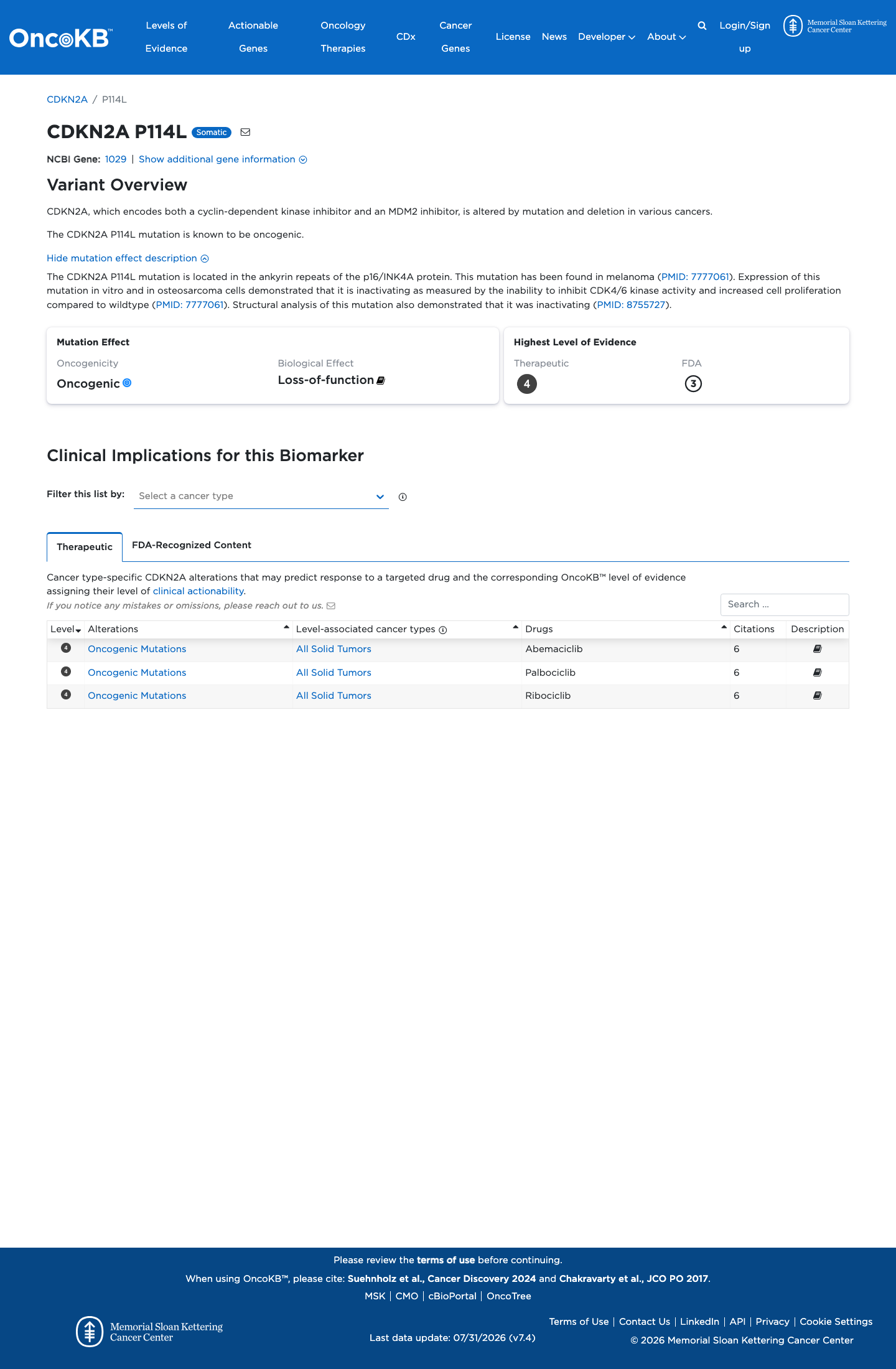
Met (Moderate): p.Pro114Leu lies in the ankyrin-repeat CDK4/6-binding domain, a mutational hotspot with 92 somatic COSMIC occurrences. Flagged for human review: the hotspot determination carries a parsing caveat.
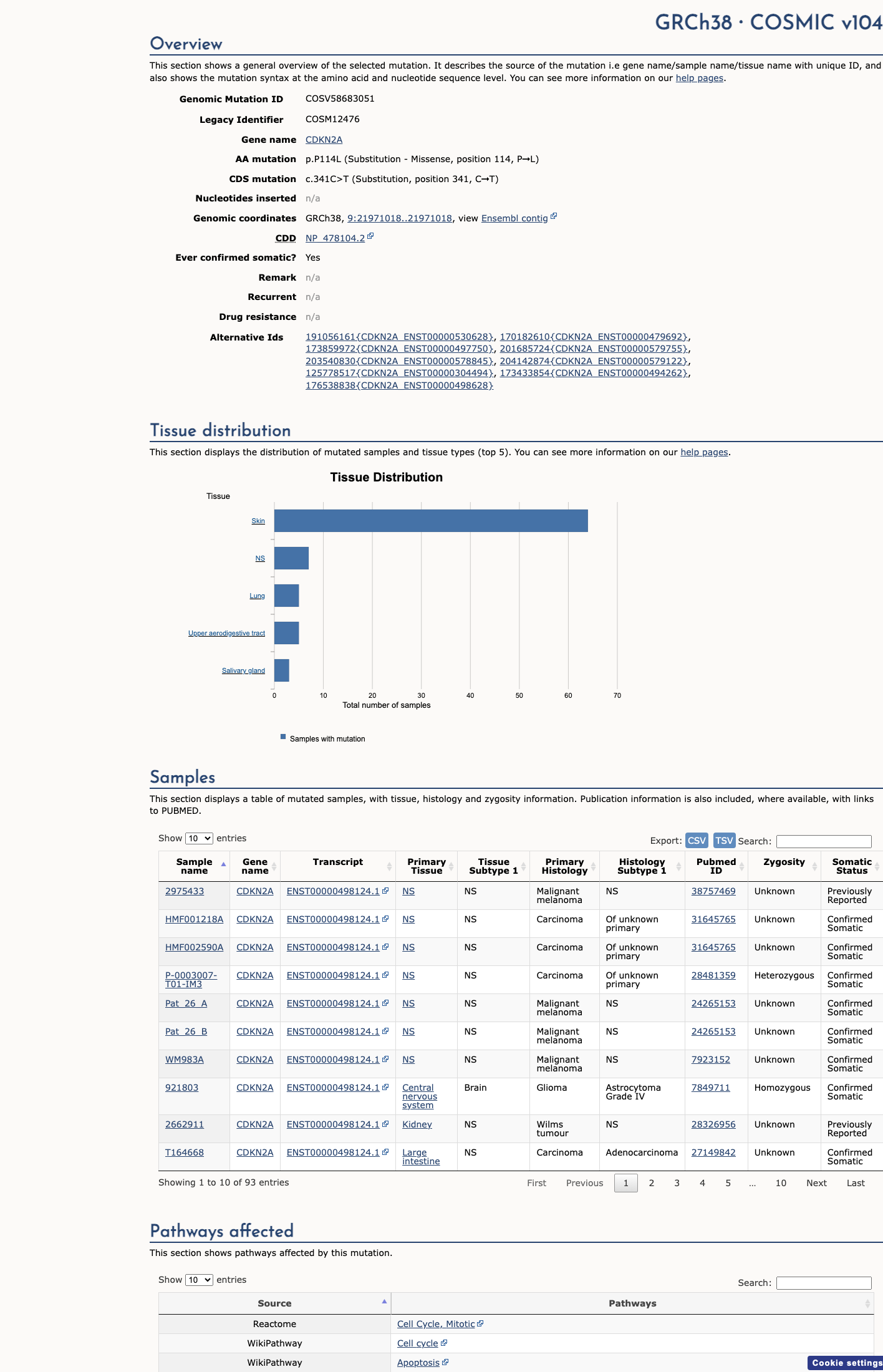
Cancerhotspots.org (queried as 'CDKN2A P114') returned 'This variant lies in a statistically significant hotspot,' though the row extraction was only partially parsed and the tool flagged 'Regex extraction partial; verify screenshot.'COSMIC (COSV58683051) reports this exact variant recurrent in somatic cancers 92 times.OncoKB curates p.P114L as 'Oncogenic' with biological effect 'Loss-of-function', citing PMID:7777061 and PMID:8755727 as its supporting functional literature.
PM2 moderate Pathogenic
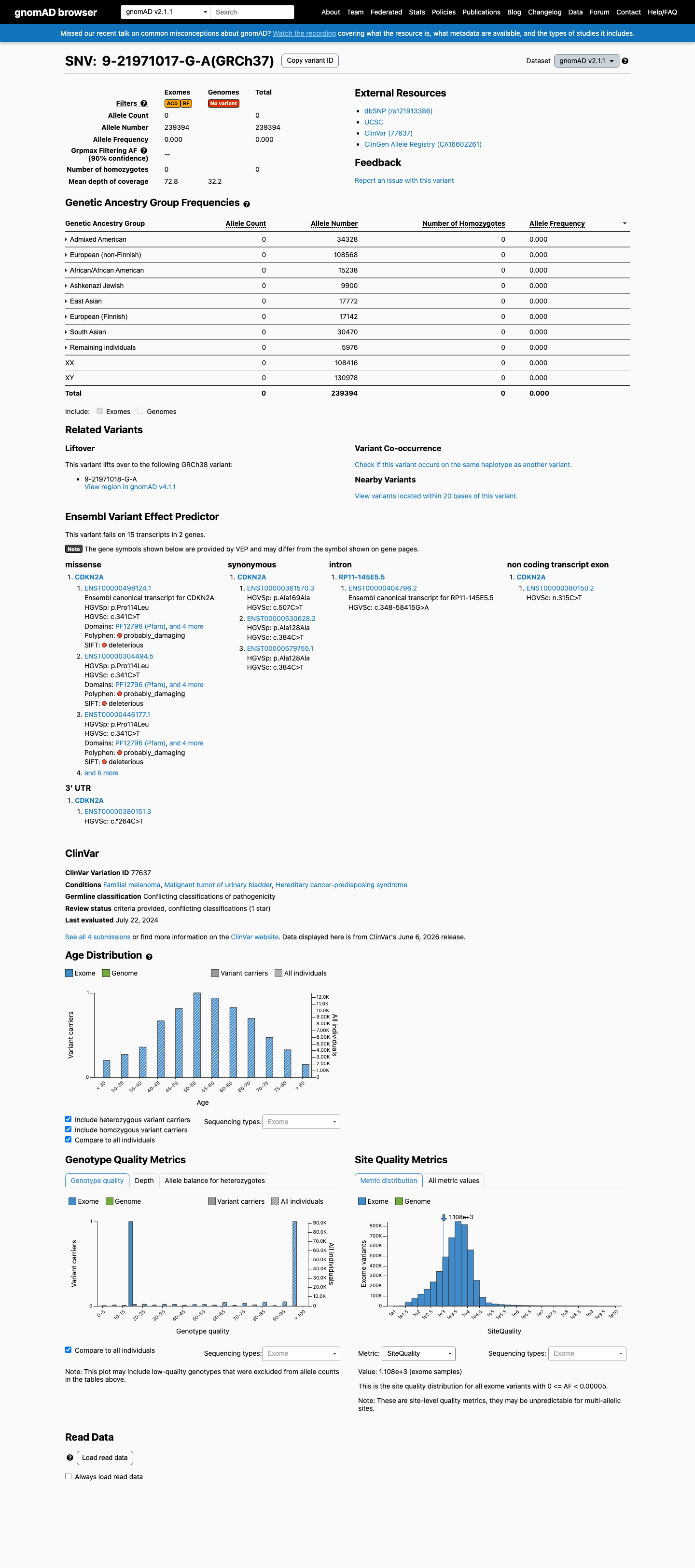
Met (Moderate): the variant is absent from population databases, with AF=0 and AC=0/AN=239,394 in gnomAD v2.1.
gnomAD v2.1 reports AC=0/AN=239394 (AF=0) and 0 homozygotes; the largest reported ancestry stratum, African/African American, is AC=0/AN=15238.The variant is absent from gnomAD v4.1 and gnomAD-Canada v1.0, corroborating absence across independently queried population resources.No CDKN2A VCEP or gene-specific PM2 specification was retrieved, so the generic ACMG/AMP 2015 PM2 strength is used.
PP2 supporting Pathogenic
Met (Supporting): missense substitution is an established, recurrent disease mechanism in CDKN2A, which relies on the CDK4/6-binding domain.
ClinVar record for this exact variant (VCV000077637) shows independent classifications of Likely pathogenic and Pathogenic from separate laboratories based on missense change p.Pro114Leu, indicating missense variation at this locus is treated as a disease-causing mechanism rather than incidental.PMID:21462282 (Miller et al. 2011), 'Classifying variants of CDKN2A using computational and laboratory studies,' establishes a dedicated framework for interpreting CDKN2A missense variants, reflecting that missense substitution is a recognized, common mechanism of CDKN2A pathogenicity requiring systematic functional/computational classification.PMID:17992122 documents an independent pathogenic CDKN2A missense variant (p.Gly23Ser) acting through disruption of the ankyrin-repeat domain, corroborating that missense substitution (not only truncation) is an established disease mechanism for this gene.
PP3 moderate Pathogenic
Met (Moderate): REVEL score 0.872 exceeds the 0.773 pathogenic-moderate threshold (ClinGen SVI calibration).
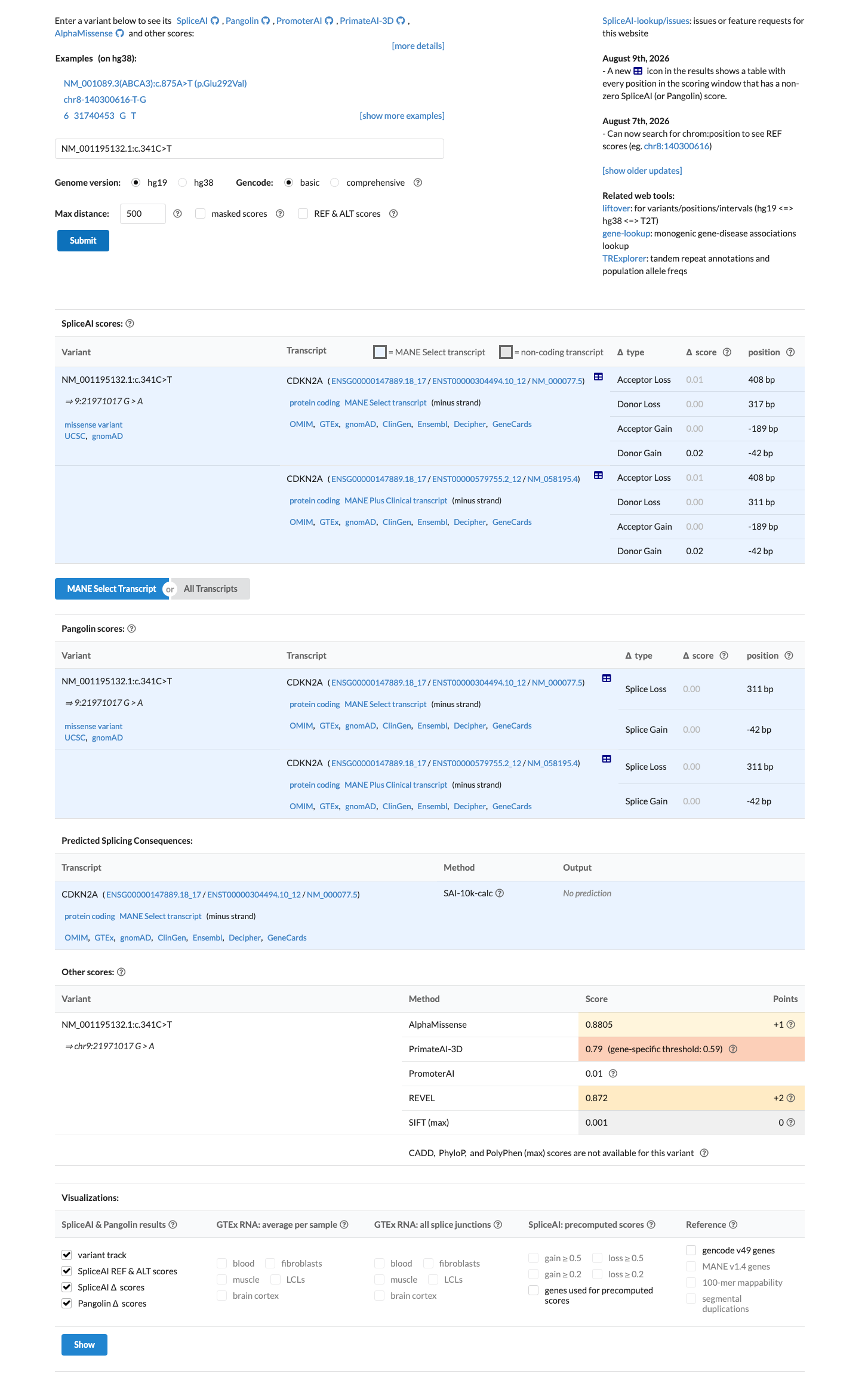
REVEL score = 0.872 for NM_001195132.1:c.341C>T (NP_001182061.1:p.(Pro114Leu)), from local REVEL v1.3 lookup (source_registry key 'revel').ClinGen SVI-recommended REVEL calibration (Pejaver V et al., PMID 36413997, Am J Hum Genet 2022): REVEL >=0.773 corresponds to PP3_Moderate; 0.872 falls in the Moderate band (below the >=0.932 Strong threshold).SpliceAI max delta score = 0.00 (source_registry key 'spliceai') indicates no predicted splicing disruption; not used to support PP3 since PP3 here is being applied via the missense in-silico path, avoiding double counting.
Assessed · not applied · 7 not met · 11 not assessed
Pathogenic
PS1 Not assessed: no alternate nucleotide change at the same codon producing the identical p.Pro114Leu change with an established pathogenic classification was identified.
PS2 Not assessed: no de novo observation is documented; no proband-parent trio or parental testing results were available.
PS4 Not assessed: no case-control enrichment data were available; the single familial observation is not a case-control comparison.
PM5 Not assessed: no different missense change at residue Pro114 with an established pathogenic classification was identified.
PM6 Not assessed: no assumed de novo observation is documented; no parental testing results were available.
PP1 Not assessed: no informative co-segregation data were available; only a single carrier was reported.
PP4 Not assessed: no individual-level phenotype or family-history data were available to evaluate phenotype specificity.
PP5 Not met: ClinVar has no expert-panel Pathogenic or Likely pathogenic assertion for this exact variant.
Benign
BA1 Not met: the variant is absent from population databases (AF=0 in gnomAD), so the stand-alone high-frequency threshold is not approached.
BS1 Not met: with zero observed alleles and AF=0, the frequency cannot exceed the threshold expected for a dominant cancer-predisposition gene.
BS2 Not assessed: the variant is absent rather than observed in healthy adults, and incomplete penetrance limits any BS2 inference.
BS3 Not met: functional assays demonstrate a damaging loss-of-function effect, the opposite of the wild-type result BS3 requires.
BS4 Not assessed: no evidence of an affected relative lacking the variant or other non-segregation data was available.
BP1 Not met: missense variation is an established pathogenic mechanism in CDKN2A, so BP1's truncation-dominant premise does not hold.
BP2 Not assessed: no cis or trans occurrence with a pathogenic CDKN2A variant was documented.
BP4 Not met: REVEL 0.872 is far above the benign supporting threshold (<=0.183), arguing against a benign computational call.
BP5 Not assessed: no phenotype or molecular diagnostic data were available to evaluate an alternate molecular cause.
BP6 Not met: ClinVar has no expert-panel Benign or Likely benign assertion for this exact variant.
N/A · 5 PVS1 · PM3 · PM4 · BP3 · BP7
Research & evidence
Population frequency · supports pathogenic
gnomAD v4.1 screenshot
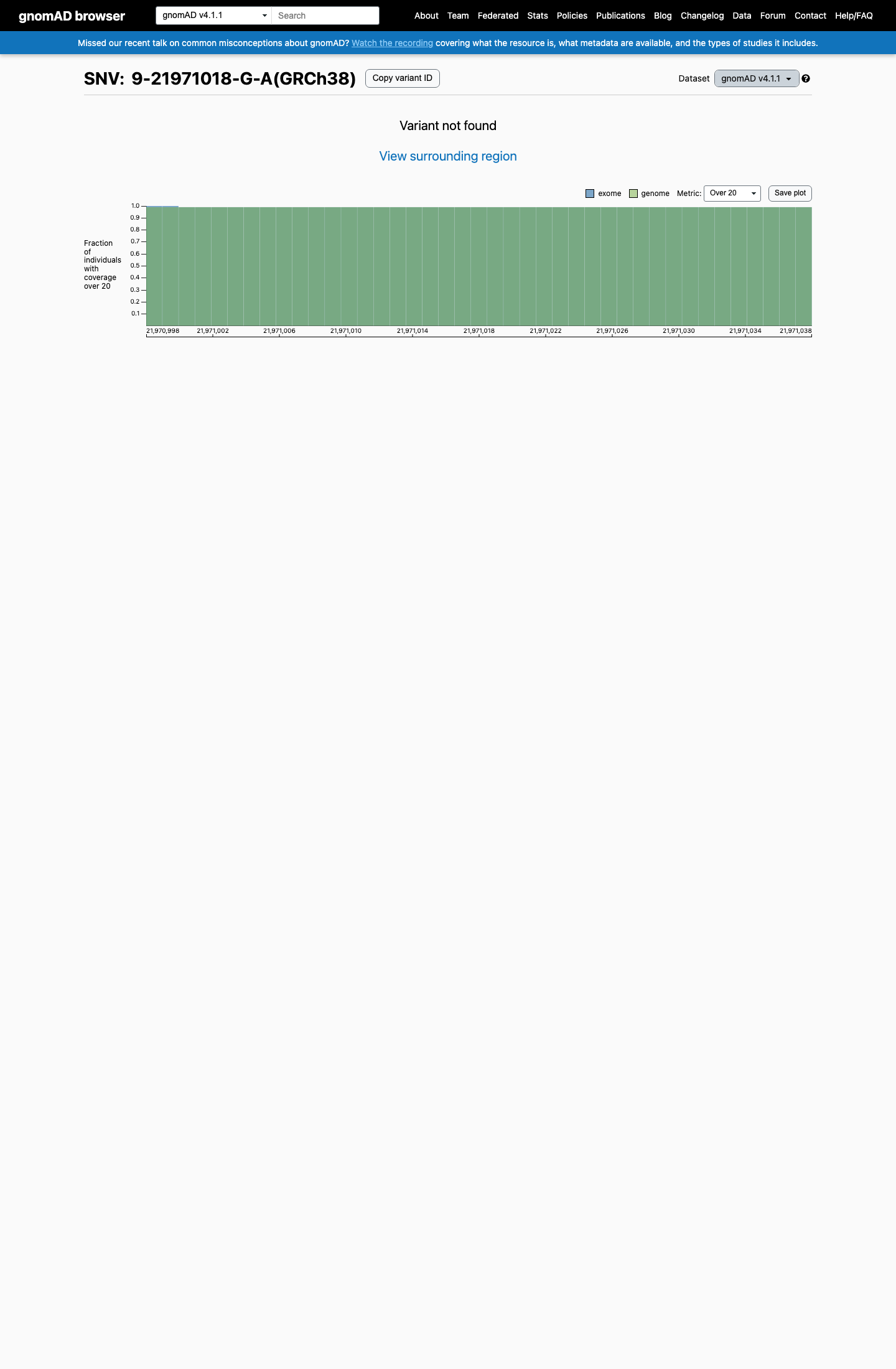
gnomAD v4.1
gnomAD v2.1 screenshot
gnomAD v2.1
v4.1
Absent from gnomAD v4.1.
v2.1
This variant is present in gnomAD v2.1 (AF= 0; MAF= 0.00000%, 0/239394 alleles, homozygotes = 0) and has highest observed frequency in the African/African American population (AF= 0; MAF= 0.00000%, 0/15238 alleles, homozygotes = 0).
🇨🇦 CA
Absent from gnomAD-Canada v1.0.
Allele frequency by ancestry
three datasets · side by side
gnomAD v4.1
Absent · 0 / ?
0 hom
Not observed in any ancestry group.
gnomAD v2.1
Absent · 0 / 239,394
0 hom
Not observed in any ancestry group.
+ 8 not observed (African/African American, Admixed American, Ashkenazi Jewish, East Asian, European (Finnish), European (non-Finnish), Remaining individuals, South Asian)
gnomAD Canada 🇨🇦
Absent · 0 / ?
0 hom
Not observed in any ancestry group.
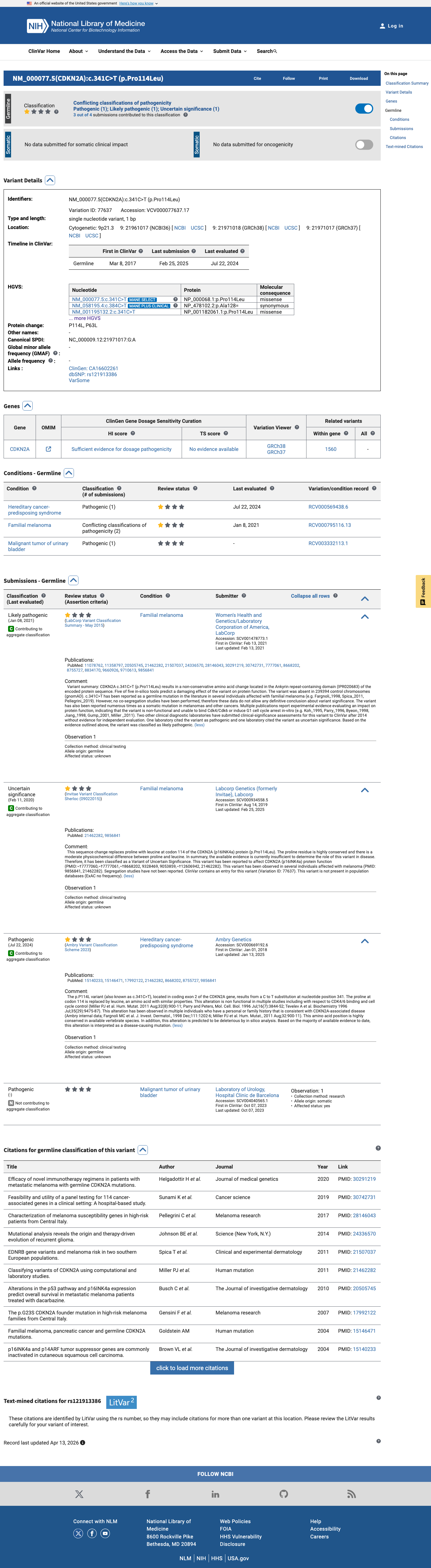
ClinVar screenshot
ClinVar
This variant has been reported in ClinVar as Likely pathogenic (1 clinical laboratory) and as Uncertain significance (1 clinical laboratory) and as Pathogenic (1 clinical laboratory). (ClinVarID = 77637)
SpliceAI screenshot
In silico
SpliceAI predicts no significant splice impact for this variant (max delta score = 0.00). REVEL score = 0.872. BayesDel score = 0.521199.
Functional / OncoKB screenshot
Functional Oncogenic
OncoKB identified variant-specific curated literature and context relevant to functional review; biological-effect context: Loss-of-function; curated oncogenicity label: Oncogenic.
OncoKB ↗
COSMIC screenshot
COSMIC
Cancer hotspots screenshot
Cancer hotspots
Somatic evidence Hotspot
COSMIC
This variant lies in a statistically significant hotspot. This variant has previously been reported in somatic cancers (COSMIC; COSV58683051, n = 92 times).
Hotspots
This variant lies in a statistically significant hotspot.
Literature · how each cited paper was used
2papers cited
Each card is an audit: what was searched, what was found, whether it names the variant, which criteria it fed, and why. 6 further PMIDs triaged but not cited — see Sources & references.
Classifying variants of CDKN2A using computational and laboratory studies.
Searched
CDKN2A missense variant classificationp.Pro114Leu
Found
Develops a systematic framework combining computational and laboratory (functional) evidence to classify CDKN2A missense variants of uncertain significance, reflecting that missense variation is a recognized and common route to CDKN2A pathogenicity requiring dedicated interpretive methodology.
Variant
✓ Names this variant — characterised directly
Applied to
PS3 strong
Validated, controlled, replicated cell-cycle arrest assay and concordant CDK4-binding assay both show p.P114L has loss-of-function effect consistent with CDKN2A tumor-suppressor mechanism.
PP2 supporting
Establishes that missense variation is a common, systematically studied mechanism of CDKN2A pathogenicity, supporting PP2 for this gene.
Variants in the CDKN2A tumor suppressor are associated with Familial Melanoma (FM), although for many variants the linkage is weak. The effects of missense variants on protein function and pathogenicity are often unclear. Multiple methods (e.g., laboratory, computational, epidemiological) have been developed to analyze whether a missense variant is pathogenic or not.
Location Abstract  ·  Context Review/method paper combining computational predictors and laboratory functional assay results to classify CDKN2A missense variants.  ·  full text
Rule & framework references · cited for criterion definitions, not variant evidence
17992122 ↗ The p.G23S CDKN2A founder mutation in high-risk melanoma families from Central Italy.
Sources & reference links
8Sources
ClinVar
gnomAD v2.1
gnomAD v4.1
gnomAD-Canada
SpliceAI
OncoKB
COSMIC
Cancer hotspots
Triaged references · 6 PMIDs not cited in assessment
8755727 ↗ Tumor suppressor p16INK4A: structural characterization of wild-type and mutant proteins by NMR and circular dichroism. ONCOKB
7777061 ↗ Tumour-derived p16 alleles encoding proteins defective in cell-cycle inhibition. ONCOKB
11358797 ↗ The COOH terminus of p18INK4C distinguishes function from p16INK4A. CLINVAR
15146471 ↗ Familial melanoma, pancreatic cancer and germline CDKN2A mutations. CLINVAR
28146043 ↗ Characterization of melanoma susceptibility genes in high-risk patients from Central Italy. CLINVAR
28492532 ↗ Sherloc: a comprehensive refinement of the ACMG-AMP variant classification criteria. CLINVAR