Analysis in progress
Initialising…
0%
complete
This report is still being assembled — sections appear as each stage finishes. It isn't final yet.
BRCA1
Final classification
VUS
PVS1
BRCA1
c.1387A>T
p.Lys463Ter
nonsense · exon 10

BRCA1 encodes a large nuclear protein that helps maintain genomic stability by coordinating the repair of DNA double-strand breaks through homologous recombination, and it also regulates transcription and the cell cycle. It acts as a tumor suppressor, working with proteins such as RAD51, BRCA2, BARD1, and PALB2 to preserve genome integrity. Inherited alterations in BRCA1 cause hereditary breast and ovarian cancer syndrome, with elevated risks of breast, ovarian, prostate, and pancreatic cancers, and biallelic loss underlies a rare form of Fanconi anemia. Because BRCA1-driven tumors rely on impaired DNA repair, they are treatable with PARP inhibitors.

This variant

BRCA1 is a tumor suppressor whose loss-of-function alterations cause hereditary breast and ovarian cancer syndrome, and this nonsense variant, predicted to trigger nonsense-mediated decay, is the type of change most consistent with that mechanism. It is nevertheless classified VUS because the sole PVS1 (Very Strong) criterion satisfies no Pathogenic or Likely Pathogenic combination under the ENIGMA specification, so its clinical significance is not yet established.

Transcript
NM_007294.4
HGVS · transcript:coding
NM_007294.4:c.1387A>T
GRCh38
chr17:43094144 T>A
GRCh37
chr17:41246161 T>A
Basis VUS: PVS1 at Very Strong is the sole met criterion, satisfying no Pathogenic, Likely Pathogenic, or benign combination under ENIGMA Table 3.
VUS: PVS1 at Very Strong is the sole met criterion, satisfying no Pathogenic, Likely Pathogenic, or benign combination under ENIGMA Table 3.
Classification rationale
PVS1 VUS
BRCA1 c.1387A>T nonsense · exon 10

PVS1 (Very Strong): nonsense p.(Lys463Ter) in the large exon E10(11) is predicted to trigger nonsense-mediated decay, consistent with the established BRCA1 loss-of-function disease mechanism. Overall: VUS, because the sole PVS1 (Very Strong) criterion satisfies no Pathogenic or Likely Pathogenic combination under the ENIGMA Table 3 framework.

PVS1 VUS
Gene diagram · NM_007294.4 · variants mapped to exon structure
BRCA1 NM_007294.4
Fetching transcript structure from UCSC…
Applied criteria · 1 applied · 15 assessed
MetEvidence satisfies this criterion.
Not metEvaluated against available evidence; threshold not reached.
Not assessedApplies in principle, but no evidence was found to evaluate it.
N/ADoesn't apply to this variant type.
Applied · 1
Strength Supporting Moderate Strong Very strong
PVS1 very strong Pathogenic
Met at Very Strong: nonsense p.(Lys463Ter) in the large exon E10(11) is predicted to trigger nonsense-mediated decay.
The ENIGMA BRCA1/2 VCEP specification v1.2 identifies NM_007294.4 as the preferred BRCA1 transcript and permits PVS1 for null variants in BRCA1, a gene with established loss-of-function disease mechanism.The case normalization identifies c.1387A>T as NP_009225.1:p.(Lys463Ter), a nonsense change. The bundled transcript exon coordinates place c.1387 in the c.671–4096 coding exon (E10[11]), and the ENIGMA Table 4 summary lists E10(11) and PTC_NMD predicted among PVS1-applicable entries.
Assessed · not applied · 2 not met · 13 not assessed
Pathogenic
PS3 Not assessed: no variant-specific functional assay result for c.1387A>T or p.(Lys463Ter) was available.
PS4 Not assessed: no case-control dataset reporting c.1387A>T prevalence in affected individuals and controls was available.
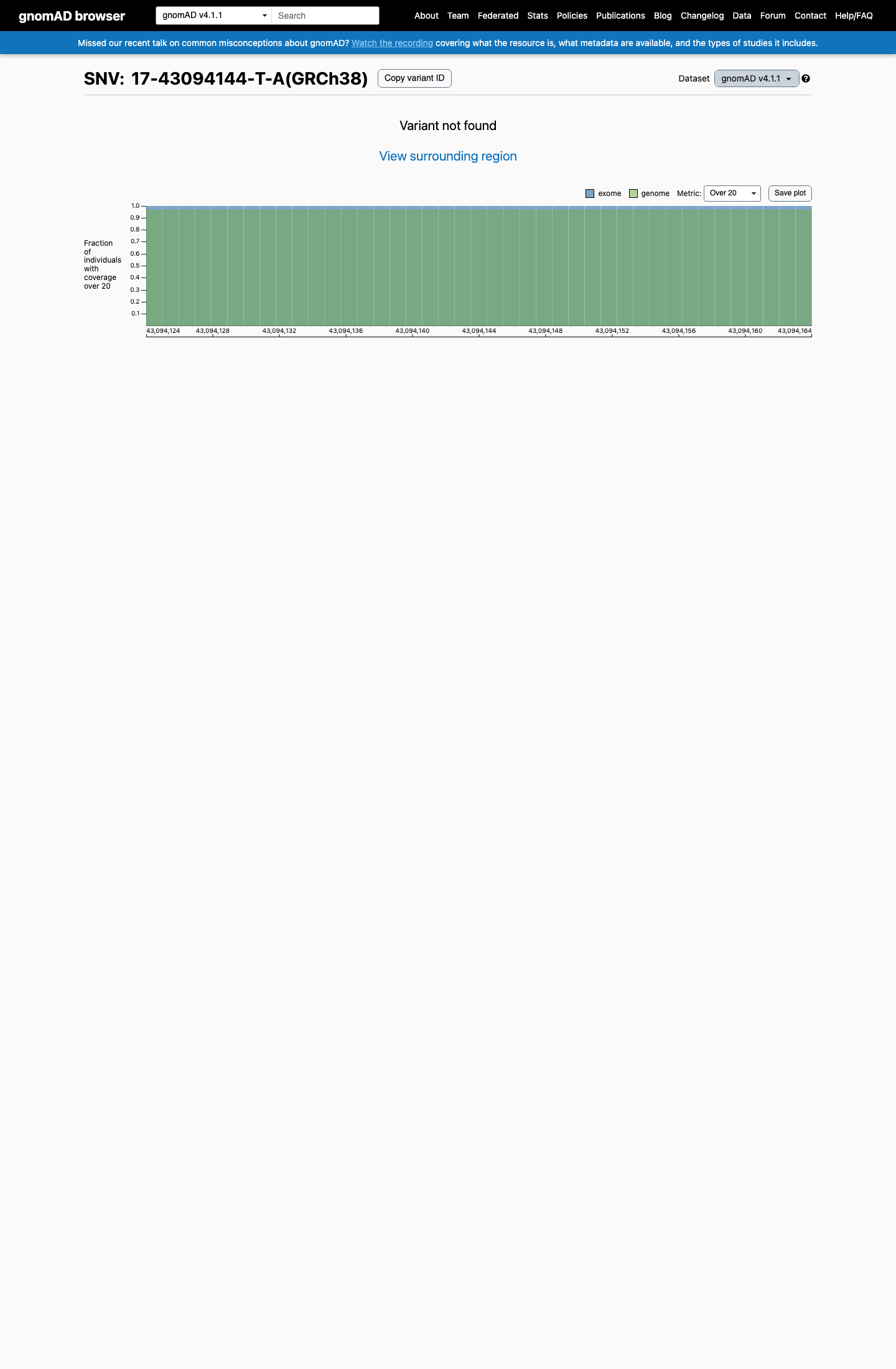
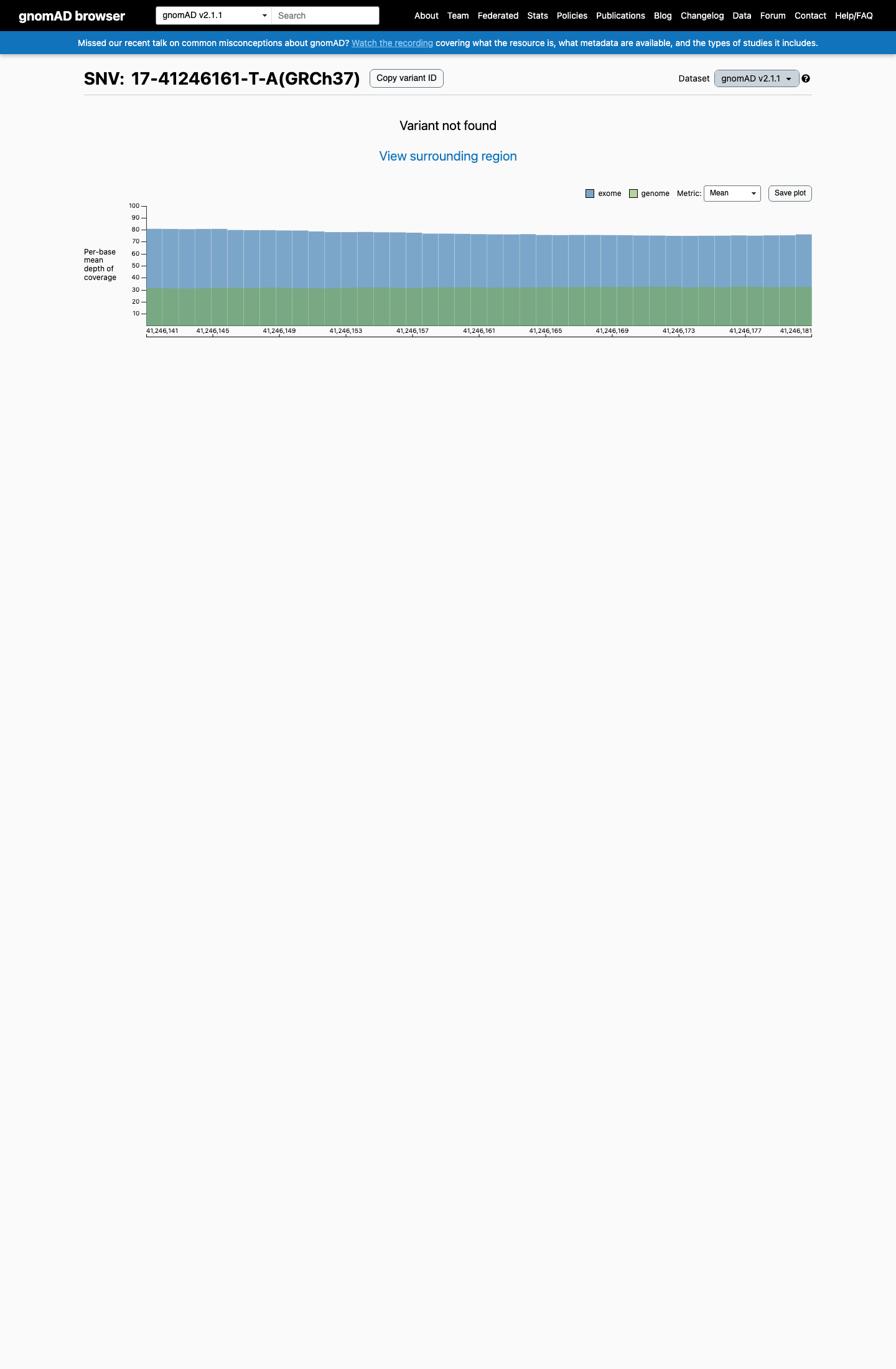
PM2 Not assessed: variant is absent from gnomAD v2.1 and v4.1, but the required average regional read depth (>=25) was unavailable.
PM3 Not assessed: no Fanconi-anemia phenotype, second BRCA1 variant, or phase information establishing trans configuration was available.
PM5 Not assessed: no proven pathogenic premature-termination-codon variant in exon 10 was identified as a comparator.
PP1 Not assessed: no affected-relative genotypes or segregation likelihood ratio was available.
PP4 Not assessed: no c.1387A>T clinical-history likelihood ratio was present in the ENIGMA table.
PP5 Not assessed: no ClinVar expert-panel Pathogenic or Likely pathogenic assertion exists for this exact variant.
Benign
BA1 Not met: variant absent from gnomAD v2.1 and v4.1, so no allele frequency above the 0.1% BA1 threshold is observed.
BS1 Not met: variant absent from gnomAD v2.1 and v4.1, so no allele frequency above the BS1 threshold of 0.0001 is observed.
BS2 Not assessed: no documented healthy adult carrier, homozygote observation, or recessive-disease exclusion data was available.
BS3 Not assessed: no variant-specific functional assay showing preserved protein function was available.
BS4 Not assessed: no affected-relative genotypes or segregation likelihood ratio was available.
BP5 Not assessed: no c.1387A>T clinical-history likelihood ratio was present in the ENIGMA table.
BP6 Not assessed: no ClinVar expert-panel Benign or Likely benign assertion exists for this exact variant.
N/A · 12 PS1 · PS2 · PM1 · PM4 · PM6 · PP2 · PP3 · BP1 · BP2 · BP3 · BP4 · BP7
Research & evidence
Population frequency
gnomAD v4.1 screenshot
gnomAD v4.1
gnomAD v2.1 screenshot
gnomAD v2.1
v4.1
Absent from gnomAD v4.1.
v2.1
Absent from gnomAD v2.1.
🇨🇦 CA
Absent from gnomAD-Canada v1.0.
Allele frequency by ancestry
three datasets · side by side
gnomAD v4.1
Absent · 0 / ?
0 hom
Not observed in any ancestry group.
gnomAD v2.1
Absent · 0 / ?
0 hom
Not observed in any ancestry group.
gnomAD Canada 🇨🇦
Absent · 0 / ?
0 hom
Not observed in any ancestry group.
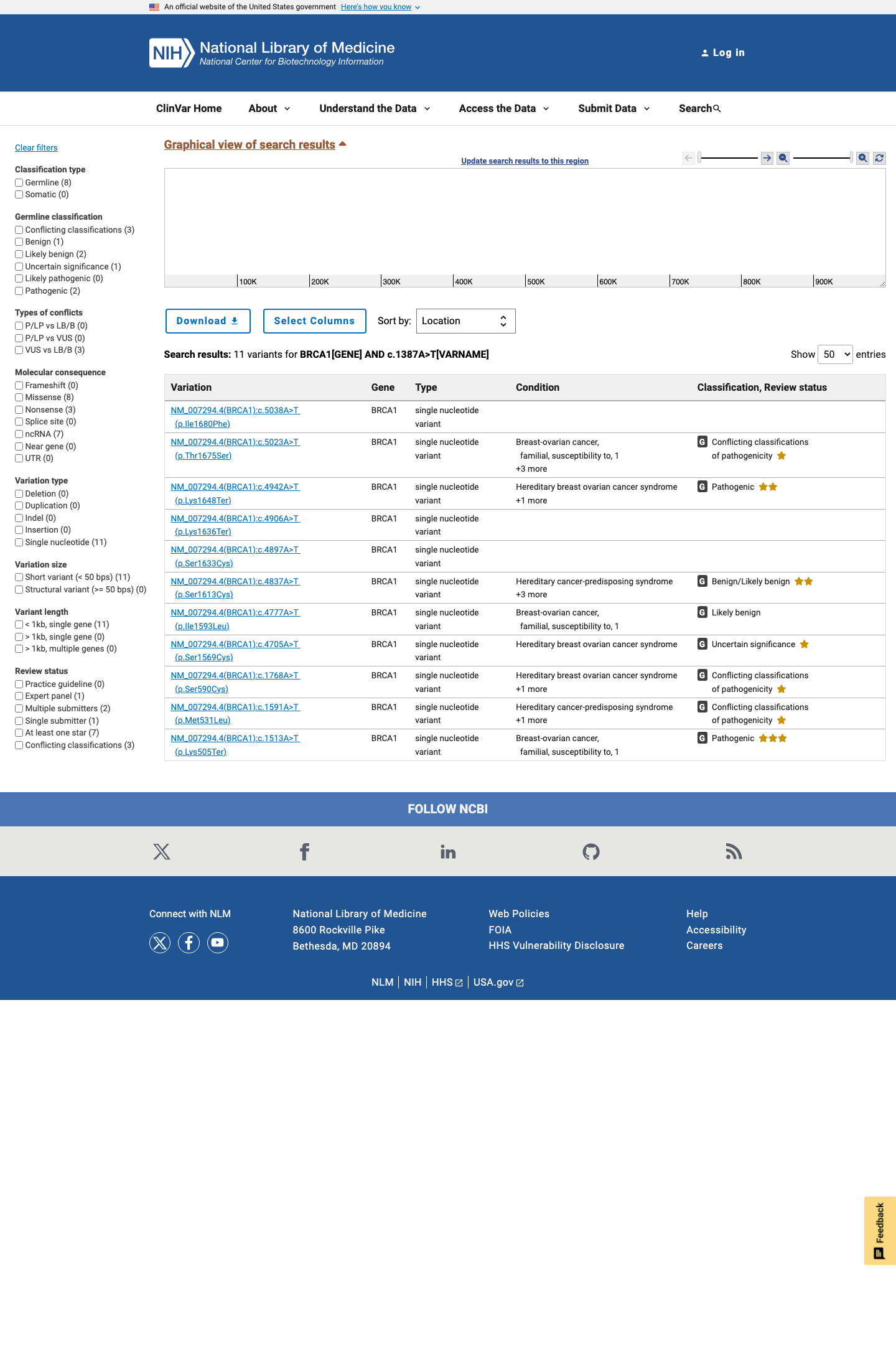
ClinVar screenshot
ClinVar
This variant is absent from ClinVar.
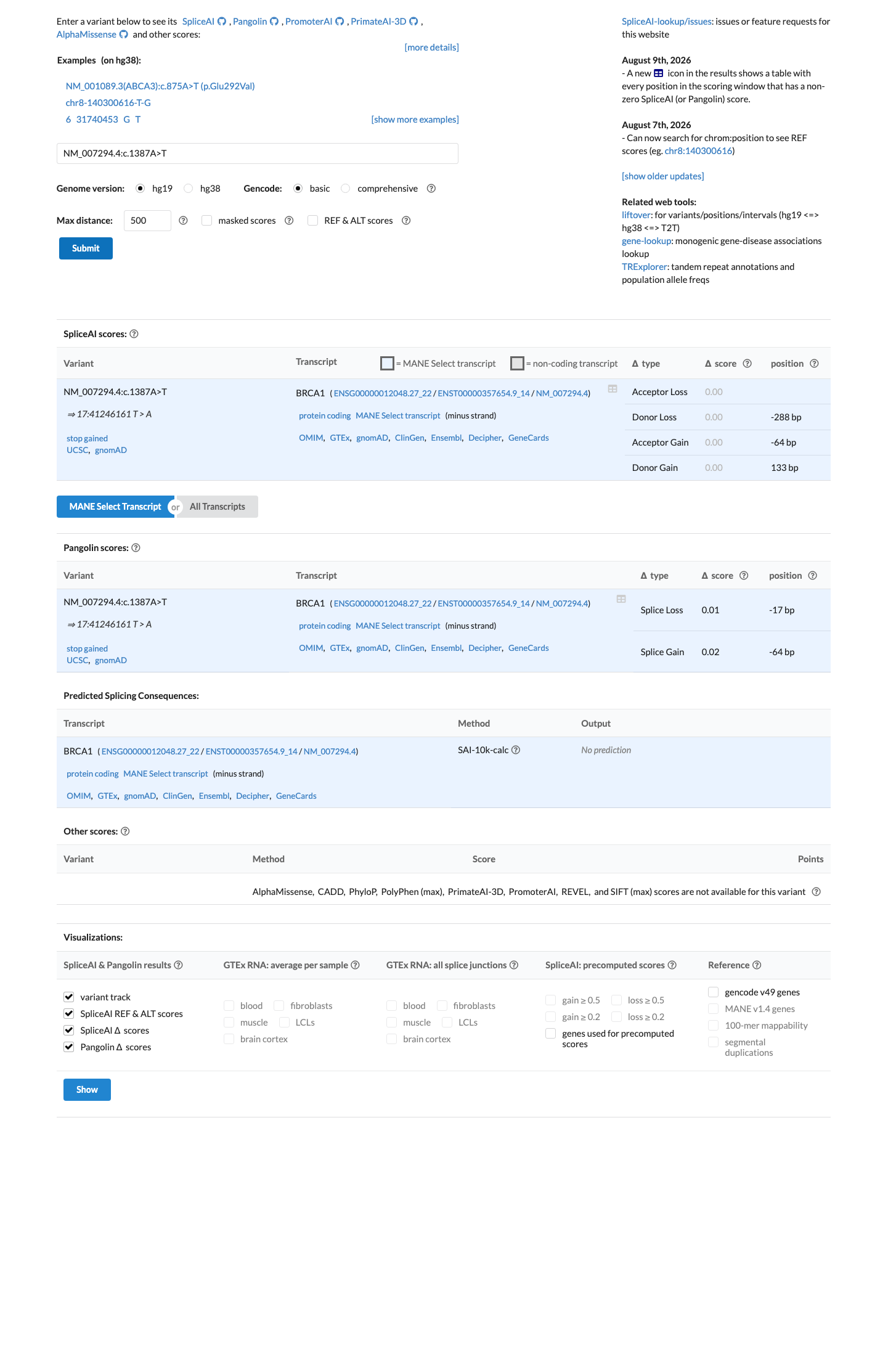
SpliceAI screenshot
In silico
SpliceAI predicts no significant splice impact for this variant (max delta score = 0.00). BayesDel score = 0.60222.
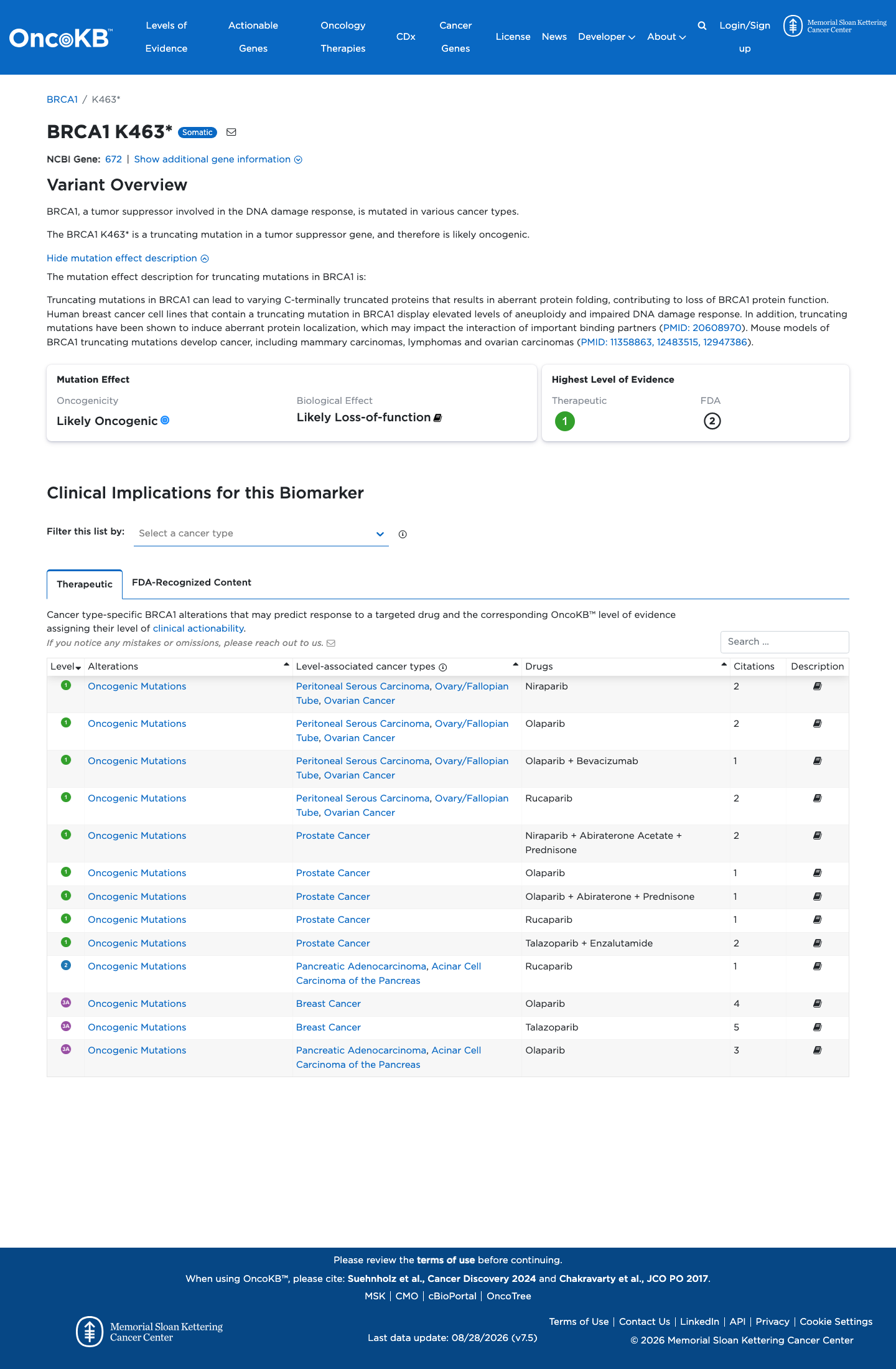
Functional / OncoKB screenshot
Functional Likely Oncogenic
OncoKB identified variant-specific curated literature and context relevant to functional review; biological-effect context: Likely Loss-of-function; curated oncogenicity label: Likely Oncogenic.
OncoKB ↗
COSMIC screenshot
COSMIC
Cancer hotspots screenshot
Cancer hotspots
Somatic evidence Not in COSMIC / hotspots
COSMIC
This variant does not lie in a statistically significant hotspot. This variant has not previously been reported in somatic cancers (COSMIC).
Hotspots
This variant does not lie in a statistically significant hotspot.
Sources & reference links
9Sources
CSpec VCEP
ClinVar
gnomAD v2.1
gnomAD v4.1
gnomAD-Canada
SpliceAI
OncoKB
COSMIC
Cancer hotspots
Triaged references · 8 PMIDs not cited in assessment
11358863 ↗ Tumorigenesis in mice carrying a truncating Brca1 mutation. ONCOKB
12483515 ↗ The cancer connection: BRCA1 and BRCA2 tumor suppression in mice and humans. ONCOKB
12947386 ↗ Roles of BRCA1 and BRCA2 in homologous recombination, DNA replication fidelity and the cellular response to ionizing radiation. ONCOKB
20608970 ↗ BRCA1 16 years later: risk-associated BRCA1 mutations and their functional implications. ONCOKB
17508274 ↗ Risk assessment and genetic counseling for hereditary breast and ovarian cancer: recommendations of the National Society of Genetic Counselors. CLINVAR
18163131 ↗ The emerging landscape of breast cancer susceptibility. CLINVAR
20301425 ↗ BRCA1- and BRCA2-Associated Hereditary Breast and Ovarian Cancer. CLINVAR
23188549 ↗ NSGC practice guideline: risk assessment and genetic counseling for hereditary breast and ovarian cancer. CLINVAR