NM_000051.4(ATM):c.8155C>T (p.Arg2719Cys) is a missense variant in exon 56 of ATM, a gene in which loss of function is an established mechanism for ataxia-telangiectasia (autosomal recessive) and in which pathogenic variants confer moderate risk for hereditary breast, ovarian, and pancreatic cancer.1 This variant is present in gnomAD v4.1 at an overall allele frequency of 1.24e-05 (20/1,611,848 alleles; 0 homozygotes) with a grpmax filtering allele frequency of 9.55e-06. The allele frequency slightly exceeds the ATM VCEP PM2_Supporting threshold of ≤0.001%, and no subpopulation has a singleton observation.2 In silico predictors are inconclusive: REVEL score is 0.613 (intermediate, not meeting PP3 threshold of >0.7333 nor BP4 threshold of ≤0.249). BayesDel score is -0.091 (weakly favoring benign). SpliceAI predicts no splicing impact (max delta = 0.03).3 A comprehensive functional screen of all ATM SNVs by Lee et al. (2025, PMID:40580951, Cell) using saturation prime editing classified p.Arg2719Cys as 'Functional' with 'High' confidence in a PARP inhibitor (olaparib) fitness assay, indicating the variant retains ATM DNA damage response function. Per ATM VCEP v1.5.0, this supports BS3_Supporting (variant rescues an ATM-specific feature).4 This variant has been reported in ClinVar as Uncertain Significance by 14 clinical laboratories (Variation ID: 185832). No expert panel classification is available. Three ClinVar submissions with criterion-level data (Ambry Genetics, Invitae, Color Health) also classify the variant as Uncertain Significance.5 This variant has been observed in somatic cancers (COSMIC COSV53736920, n=7), but somatic occurrence does not independently inform germline classification under the ATM VCEP framework. No evidence was found for: a pathogenic missense variant at the same residue (PS1), case-control enrichment (PS4), compound heterozygosity with a pathogenic variant in an A-T patient (PM3), cosegregation with disease (PP1), or observation in trans with a pathogenic variant in an unaffected individual (BP2). Applying the ATM VCEP v1.5.0 criteria, BS3_Supporting is the only criterion met. All pathogenic criteria are either not met or not applicable. Under the ACMG/AMP 2015 combining rules (adopted by the VCEP), one supporting benign criterion without any pathogenic criteria results in an overall classification of Uncertain Significance.6
Final classification
VUS
BS3
ATM
c.8155C>T
p.Arg2719Cys
This variant
NM_000051.4(ATM):c.8155C>T (p.Arg2719Cys) is a missense variant in exon 56 of ATM, a gene in which loss of function is an established mechanism for ataxia-telangiectasia (autosomal recessive) and in which pathogenic variants confer moderate risk for hereditary breast, ovarian, and pancreatic cancer.
Richards et.al., 2015 - Combining rules v1.5.0 criteria-combination framework was evaluated deterministically with applied criteria: BS3 supporting benign; no rule matched the adjudicated criteria.
Classification rationale
BS3
VUS
ATM c.8155C>T
BS3
→
VUS
1
cspec ↗pvs1_gene_context
3
revelbayesdelspliceai ↗
LYFE Sciences is an AI system, and it can make mistakes. Criteria
may be applied incorrectly, sources may be misread, and a confident-looking
classification can still be wrong. Double-check every criterion and
its underlying evidence before relying on any call.
Gene diagram
· NM_000051.4 · variants mapped to exon structure
ATM
NM_000051.4
Fetching transcript structure from UCSC…
Applied criteria · 1 applied · 12 assessed
MetEvidence satisfies this criterion.
Not metEvaluated against available evidence; threshold not reached.
Not assessedApplies in principle, but no evidence was found to evaluate it.
N/ADoesn't apply to this variant type.
Applied · 1
Strength
Supporting
Moderate
Strong
Very strong
BS3
supporting
Benign
The ATM VCEP BS3_Supporting rule applies when a variant rescues EITHER an ATM-specific feature OR radiosensitivity. Lee et al. 2025 (PMID:40580951, Cell) performed saturation prime editing of all 27,513 possible ATM SNVs and assessed cell fitness in the presence of olaparib, a PARP inhibitor that creates synthetic lethality with ATM deficiency. NM_000051.4:c.8155C>T (p.Arg2719Cys) was classified as 'Functional' with 'High' confidence, indicating the variant retains ATM activity in the DNA damage response and rescues an ATM-specific function.
Lee et al. 2025 (CellSuppl Table S1): R2719C classified as Functional (High confidence) in prime editing PARPi fitness screenindicating rescue of ATM-specific DNA damage response function
Assessed · not applied
· 12 not met · 0 not assessed
Pathogenic
PS1
No established pathogenic or likely pathogenic missense variant at the same amino acid residue (Arg2719) was identified.
PS3
The ATM VCEP PS3 rules require a variant to fail to rescue ATM-specific function(s).
PS4
The ATM VCEP PS4 rule requires case-control studies with p-value ≤0.05 and OR ≥2 (or lower 95% CI ≥1.5).
PM2
The ATM VCEP PM2_Supporting rule requires allele frequency ≤0.001% in gnomAD v4.
PM3
The ATM VCEP PM3 rule requires observation of the variant in trans with a pathogenic variant in probands with ataxia-telangiectasia (A-T).
PP1
The ATM VCEP PP1 rule requires cosegregation with disease in families with ataxia-telangiectasia (AR condition: 1 affected relative = supporting, 2 = moderate, ≥3 = strong).
PP3
The ATM VCEP PP3 rule for missense variants requires REVEL >0.7333.
Benign
BA1
The ATM VCEP BA1 rule requires a grpmax filtering allele frequency >0.5% in gnomAD v4.
BS1
The ATM VCEP BS1 rule requires a grpmax filtering allele frequency >0.05% in gnomAD v4.
BP2
The ATM VCEP BP2 rule assigns points when the variant is observed in trans with a pathogenic or likely pathogenic ATM variant in an unaffected (non-A-T) individual.
BP4
The ATM VCEP BP4 rule for missense variants requires REVEL ≤0.249.
BP7
The ATM VCEP BP7 rule applies to synonymous and deep intronic variants (further than +7 and -21 from donor/acceptor sites).
N/A · 15
PVS1 · PS2 · PM1 · PM4 · PM5 · PM6 · PP2 · PP4 · PP5 · BS2 · BS4 · BP1 · BP3 · BP5 · BP6
Research & evidence
Population frequency
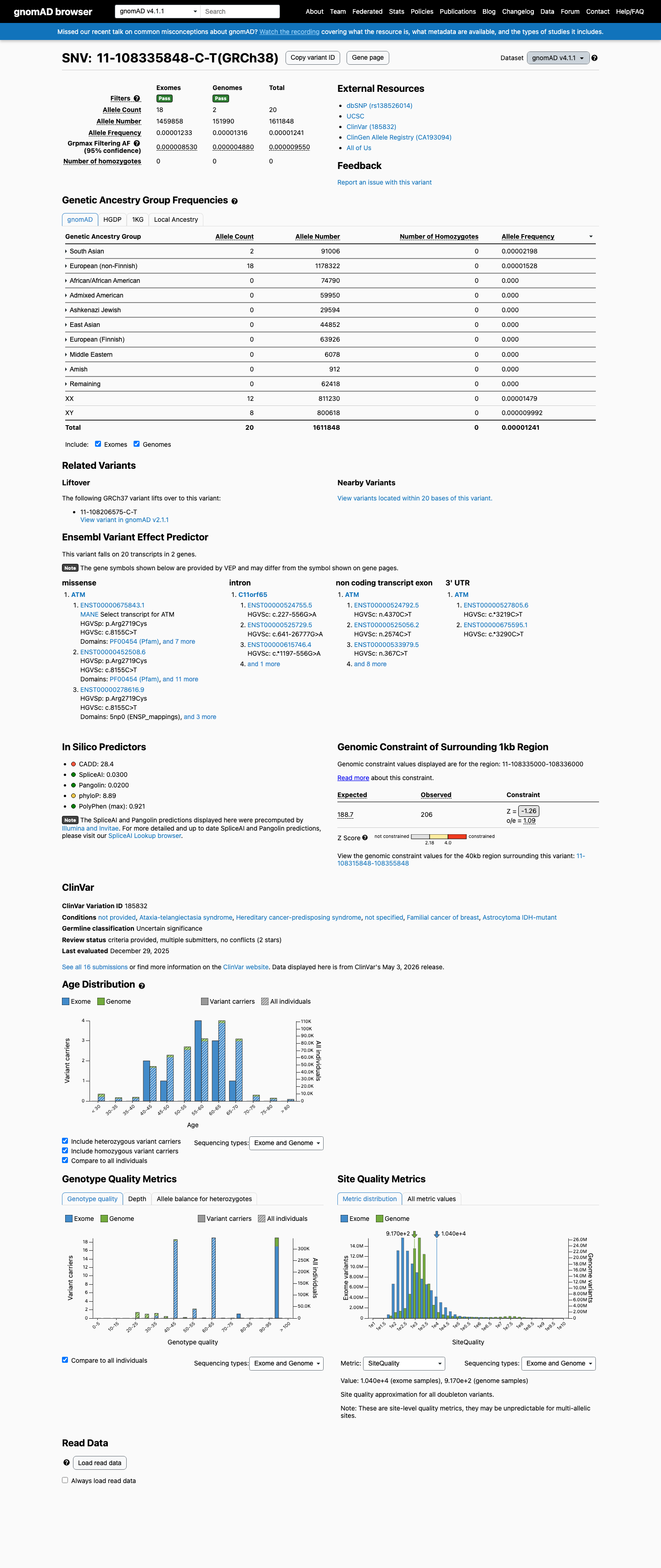
gnomAD v4.1
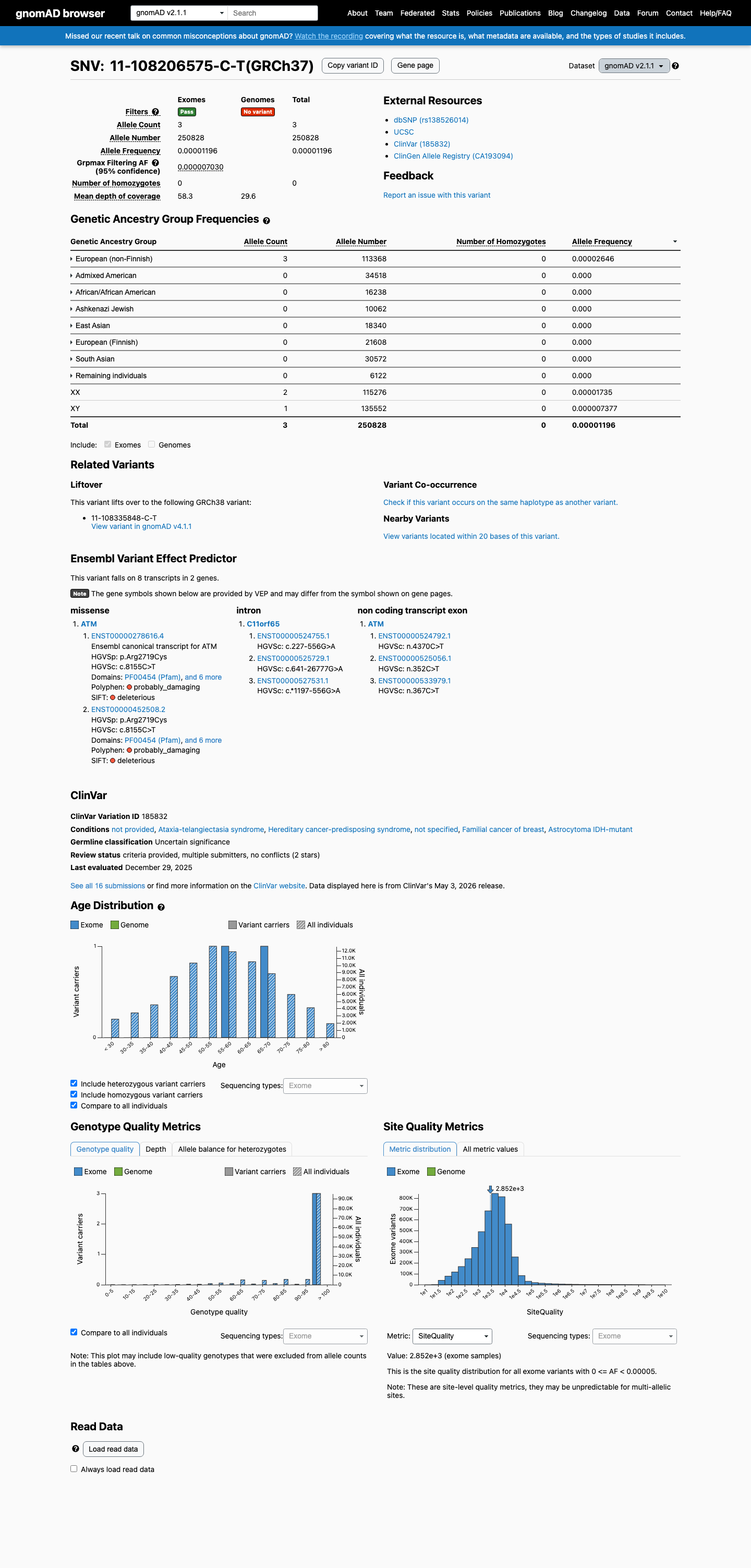
gnomAD v2.1
v4.1
This variant is present in gnomAD v4.1 (AF= 1.24081e-05; MAF= 0.00124%, 20/1611848 alleles, homozygotes = 0) and has highest observed frequency in the South Asian population (AF= 2.19766e-05; MAF= 0.00220%, 2/91006 alleles, homozygotes = 0); grpmax FAF= 9.55e-06.
v2.1
This variant is present in gnomAD v2.1 (AF= 1.19604e-05; MAF= 0.00120%, 3/250828 alleles, homozygotes = 0) and has highest observed frequency in the European (non-Finnish) population (AF= 2.64625e-05; MAF= 0.00265%, 3/113368 alleles, homozygotes = 0); grpmax FAF= 7.03e-06.
🇨🇦 CA
Absent from gnomAD-Canada v1.0.
Allele frequency by ancestry
three datasets · side by side
gnomAD v4.1
0.0012%
· 20 / 1,611,848
0 hom · FAF 0.00096%
0 hom · FAF 0.00096%
South Asian 2 / 91,006 |
0.0022% |
European (non-Finnish) 18 / 1,178,322 |
0.0015% |
+ 8 not observed (Remaining individuals, Admixed American, European (Finnish), Amish, East Asian, Middle Eastern, Ashkenazi Jewish, African/African American)
gnomAD v2.1
0.0012%
· 3 / 250,828
0 hom · FAF 0.0007%
0 hom · FAF 0.0007%
European (non-Finnish) 3 / 113,368 |
0.0026% |
+ 7 not observed (African/African American, Admixed American, Ashkenazi Jewish, East Asian, European (Finnish), Remaining individuals, South Asian)
gnomAD Canada 🇨🇦
Absent
· 0 / ?
0 hom
0 hom
Not observed in any ancestry group.

ClinVar
This variant has been reported in ClinVar as Uncertain significance (14 clinical laboratories). (ClinVarID = 185832)
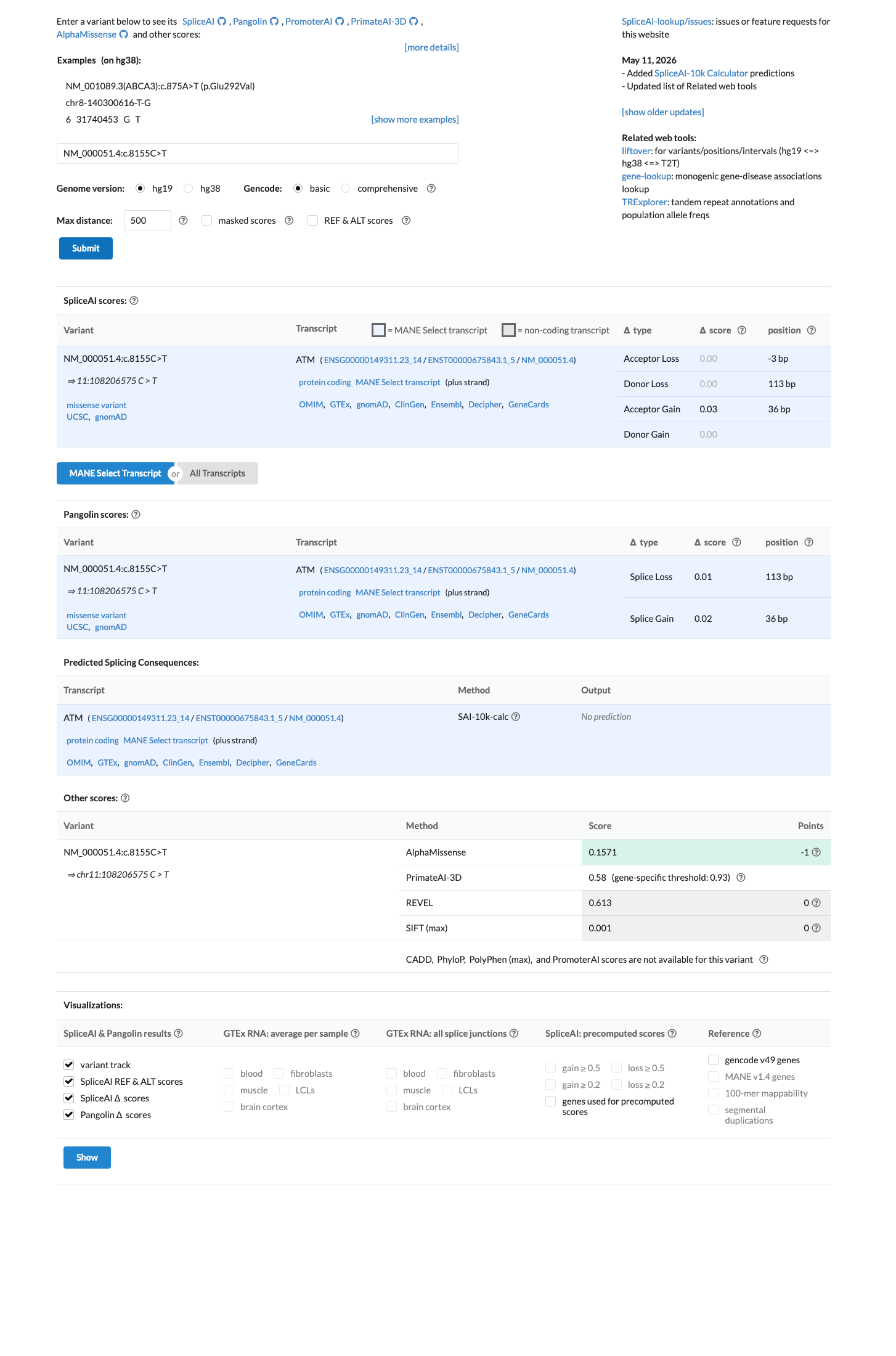
In silico
SpliceAI predicts no significant splice impact for this variant (max delta score = 0.03). REVEL score = 0.613. BayesDel score = -0.0911133.
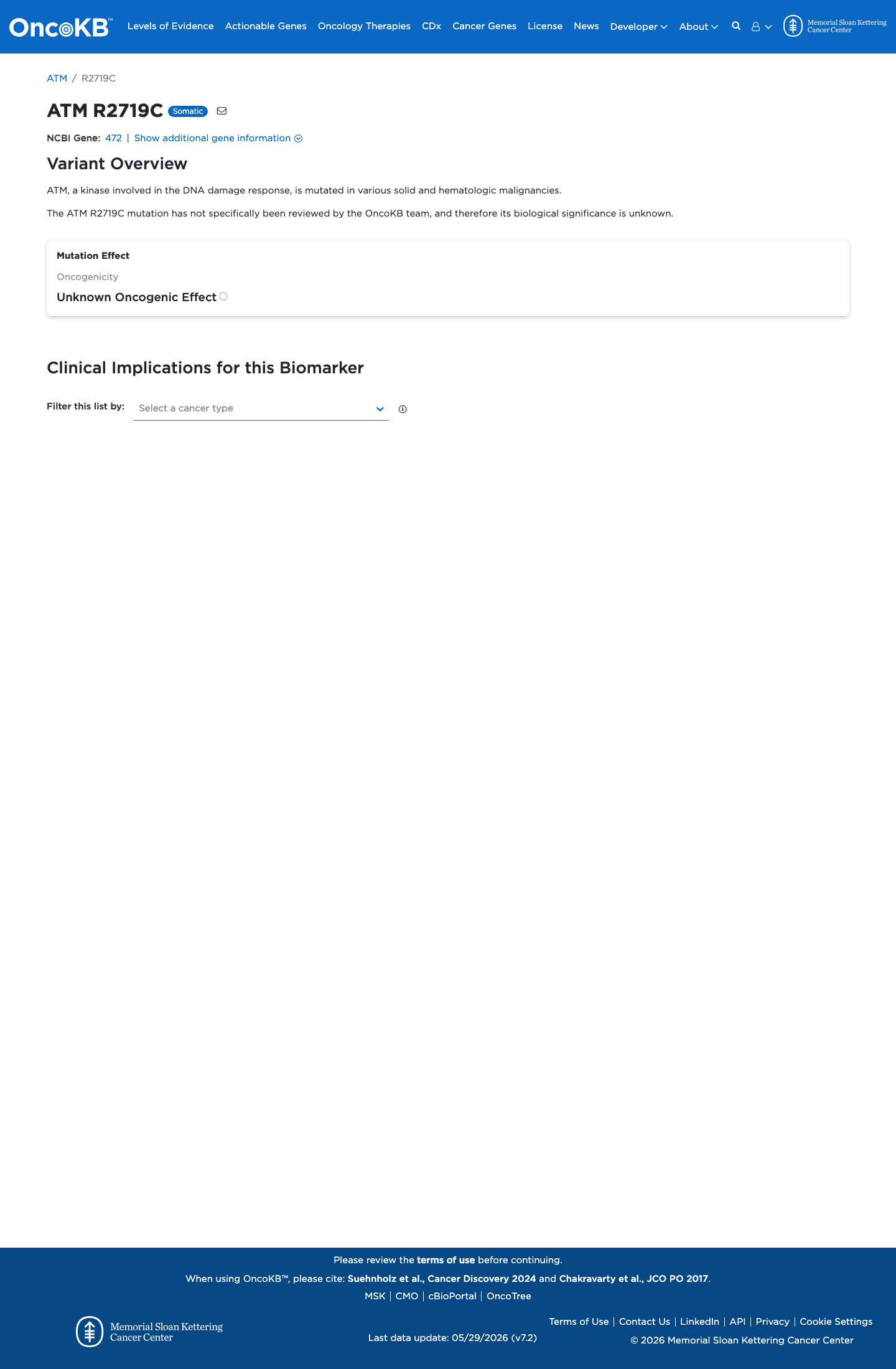
Functional
Unknown Oncogenic Effect
OncoKB did not identify variant-specific reviewed functional evidence for this variant; gene-level curated context is available for reviewer follow-up. ATM, a kinase involved in the DNA damage response, is mutated in various solid and hematologic malignancies.
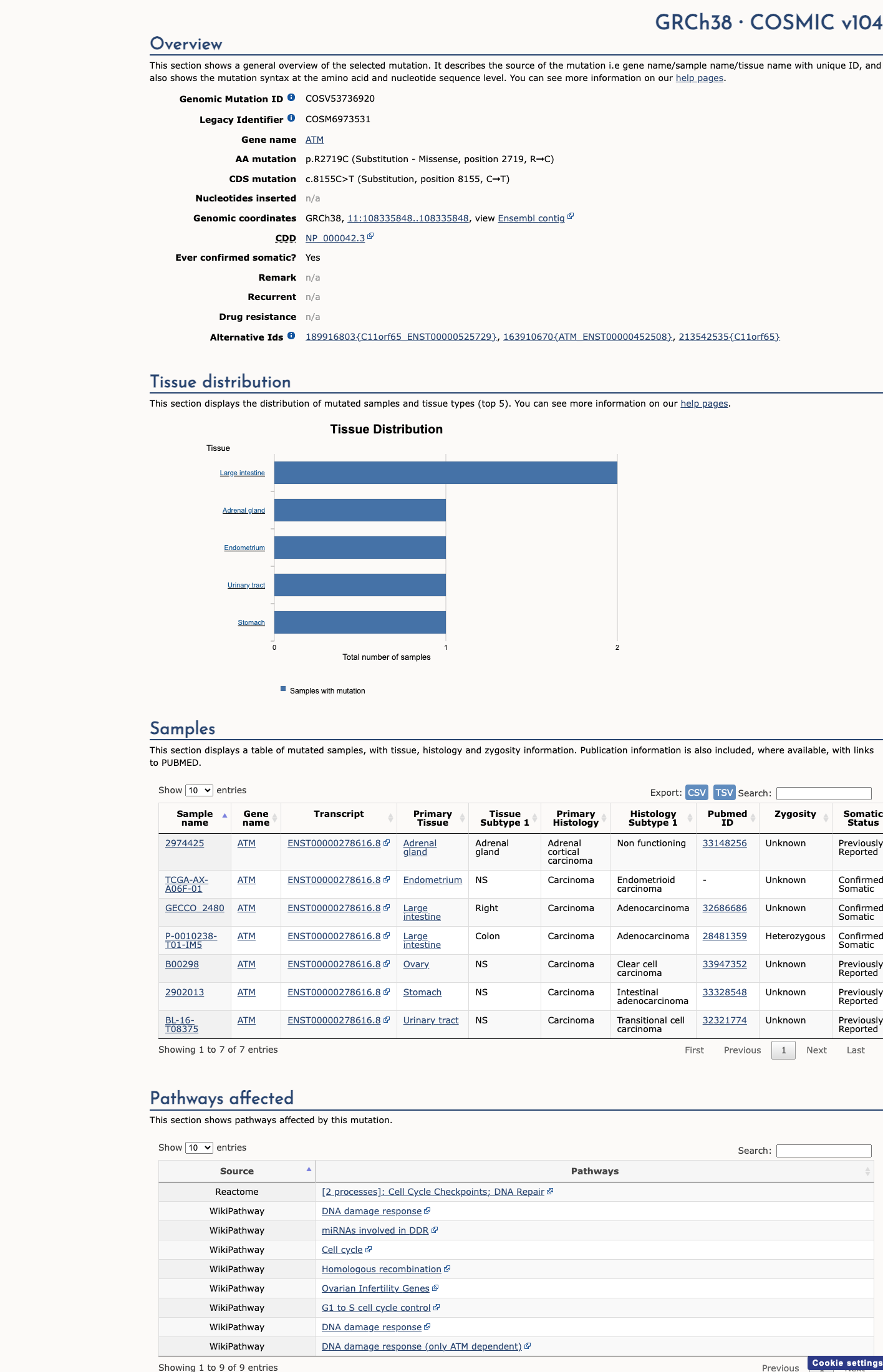
COSMIC
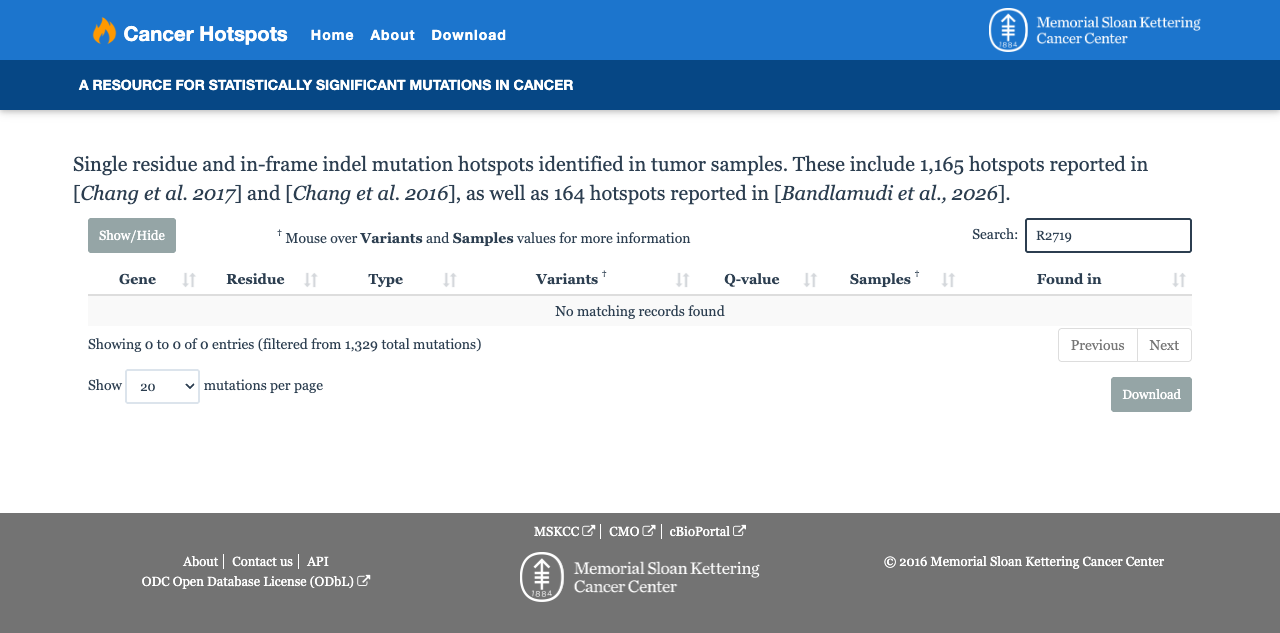
Cancer hotspots
Somatic evidence
Not in COSMIC / hotspots
COSMIC
This variant does not lie in a statistically significant hotspot. This variant has previously been reported in somatic cancers (COSMIC; COSV53736920, n = 7 times).
Hotspots
This variant does not lie in a statistically significant hotspot.
Literature · how each cited paper was used
1papers cited
Each card is an audit: what was searched, what was found, whether it names the variant, which criteria it fed, and why. 8 further PMIDs triaged but not cited — see Sources & references.
Functional assessment of all ATM SNVs using prime editing and deep learning.
Found
Structured finding pending for this record — see source link.
Applied to
→BS3
supporting benign
Sources & reference links
9Sources
Triaged references · 8 PMIDs not cited in assessment
25741868 ↗
Standards and guidelines for the interpretation of sequence variants: a joint consensus recommendation of the American College of Medical Genetics and Genomics and the Association for Molecular Pathology.
CLINVAR
28779002 ↗
Rare, protein-truncating variants in ATM, CHEK2 and PALB2, but not XRCC2, are associated with increased breast cancer risks.
CLINVAR
34242744 ↗
Customizing local and systemic therapies for women with early breast cancer: the St. Gallen International Consensus Guidelines for treatment of early breast cancer 2021.
CLINVAR
15604628 ↗
Genetic cancer risk assessment and counseling: recommendations of the national society of genetic counselors.
CLINVAR
17508274 ↗
Risk assessment and genetic counseling for hereditary breast and ovarian cancer: recommendations of the National Society of Genetic Counselors.
CLINVAR
28492532 ↗
Sherloc: a comprehensive refinement of the ACMG-AMP variant classification criteria.
CLINVAR