Analysis in progress
Initialising…
0%
complete
This report is still being assembled — sections appear as each stage finishes. It isn't final yet.
MLH1
Final classification
Pathogenic
MLH1 c.1875T>G · p.Tyr625Ter
MLH1

NM_000249.4:c.1875T>G (p.Tyr625Ter) is a nonsense variant in MLH1 introducing a premature termination codon at position 625, upstream of the VCEP threshold at codon 753, meeting PVS1 at Very Strong strength.

Gene
MLH1
Transcript
NM_000249.4
HGVS · transcript:coding
NM_000249.4:c.1875T>G
Consequence
N/A
GRCh38
chr3:37047662 T>G
GRCh37
chr3:37089153 T>G
Basis ClinGen InSiGHT Hereditary Colorectal Cancer/Polyposis Expert Panel Specifications to the ACMG/AMP Variant Interpretation Guidelines for MLH1 Version 2.0.0 v2.0.0 criteria-combination framework: matched Rule4 (1 Pathogenic.Very Strong + Pathogenic.Supporting >=2) with applied criteria: PVS1 very strong, PM2 supporting, PP5 supporting; maps to Pathogenic.
ClinGen InSiGHT Hereditary Colorectal Cancer/Polyposis Expert Panel Specifications to the ACMG/AMP Variant Interpretation Guidelines for MLH1 Version 2.0.0 v2.0.0 criteria-combination framework: matched Rule4 (1 Pathogenic.Very Strong + Pathogenic.Supporting >=2) with applied criteria: PVS1 very strong, PM2 supporting, PP5 supporting; maps to Pathogenic.
Classification rationale
PVS1PM2PP5 Pathogenic
MLH1 c.1875T>G

NM_000249.4:c.1875T>G (p.Tyr625Ter) is a nonsense variant in MLH1 introducing a premature termination codon at position 625, upstream of the VCEP threshold at codon 753, meeting PVS1 at Very Strong strength.1 The variant is absent from gnomAD v4.1, v2.1, and gnomAD-Canada, meeting PM2 at Supporting strength under the InSiGHT VCEP threshold of fewer than 1 in 50,000 alleles.2 This variant has been classified as Pathogenic by the International Society for Gastrointestinal Hereditary Tumours (InSiGHT) expert panel in ClinVar (ClinVar ID: 89914).3

PVS1 + PM2 + PP5 Pathogenic
Gene diagram · NM_000249.4 · variants mapped to exon structure
MLH1 NM_000249.4
Fetching transcript structure from UCSC…
Applied criteria · 3 applied · 10 assessed
Applied · 3
Strength Supporting Moderate Strong Very strong
PVS1 very strong Pathogenic
NM_000249.4:c.1875T>G is a nonsense variant introducing a premature termination codon at position 625 (p.Tyr625Ter), which is before codon 753 in MLH1, satisfying the InSiGHT VCEP v2.0.0 criterion for PVS1 at Very Strong strength.
Nonsense variant at codon 625upstream of the VCEP threshold at codon 753MLH1 loss-of-function is an established disease mechanism for Lynch syndrome per VCEP
PM2 supporting Pathogenic
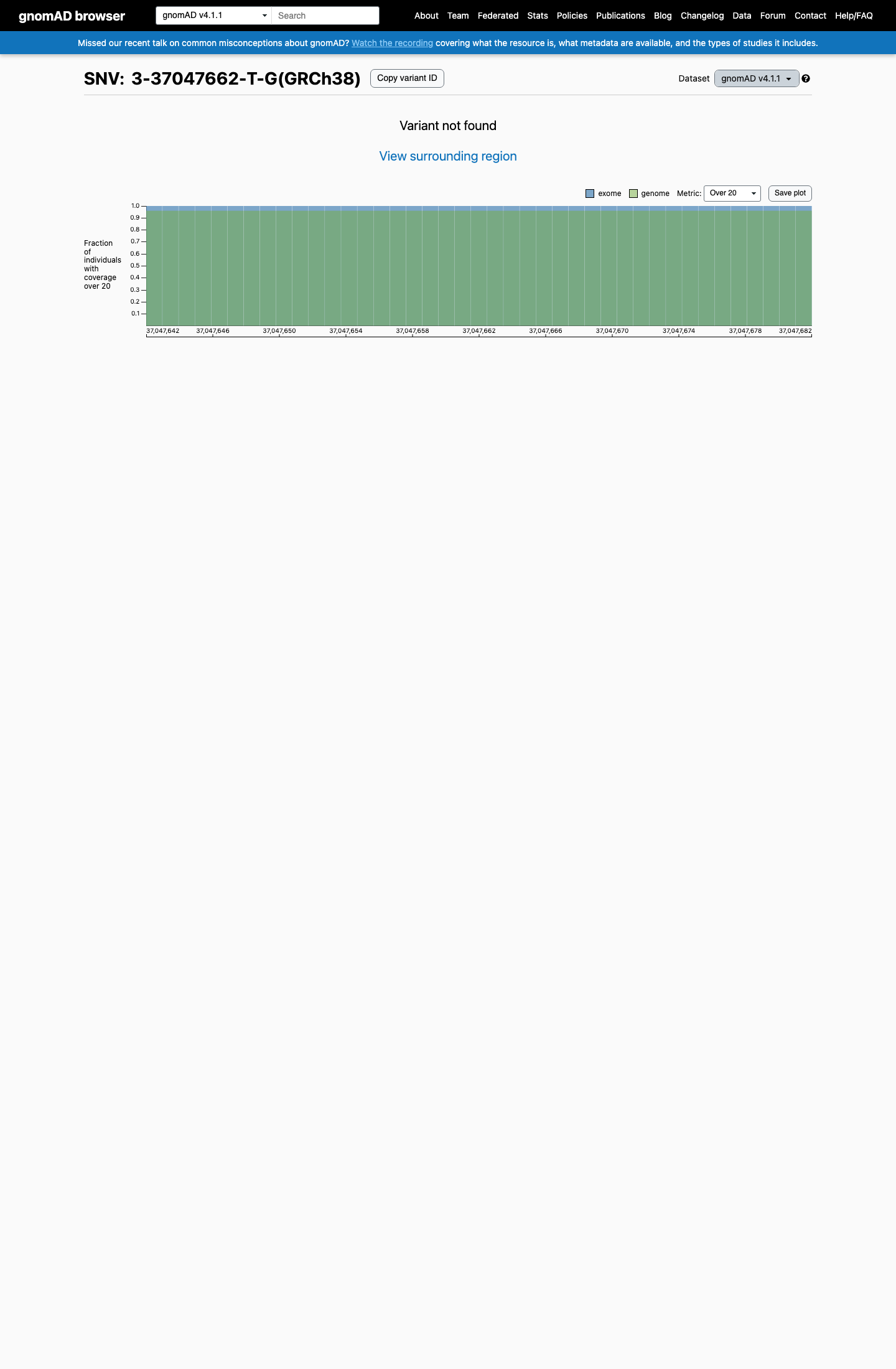
NM_000249.4:c.1875T>G is absent from gnomAD v4.1 (0 alleles), meeting the InSiGHT VCEP threshold of <0.00002 (fewer than 1 in 50,000 alleles) for PM2_Supporting.
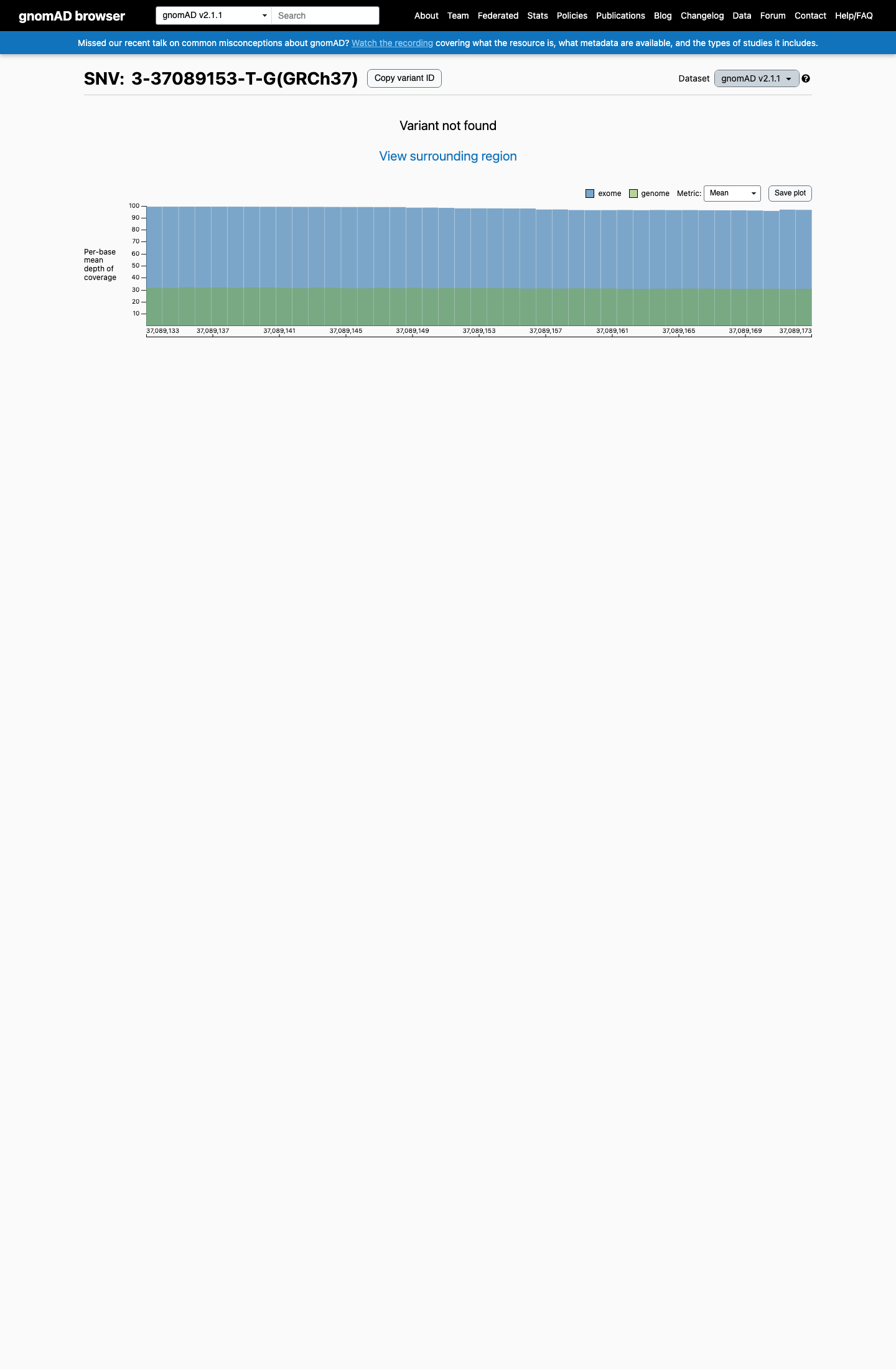
Absent from gnomAD v4.1 (0 alleles)Absent from gnomAD v2.1 (0 alleles)Absent from gnomAD-Canada v1.0 (0 alleles)
PP5 supporting Pathogenic
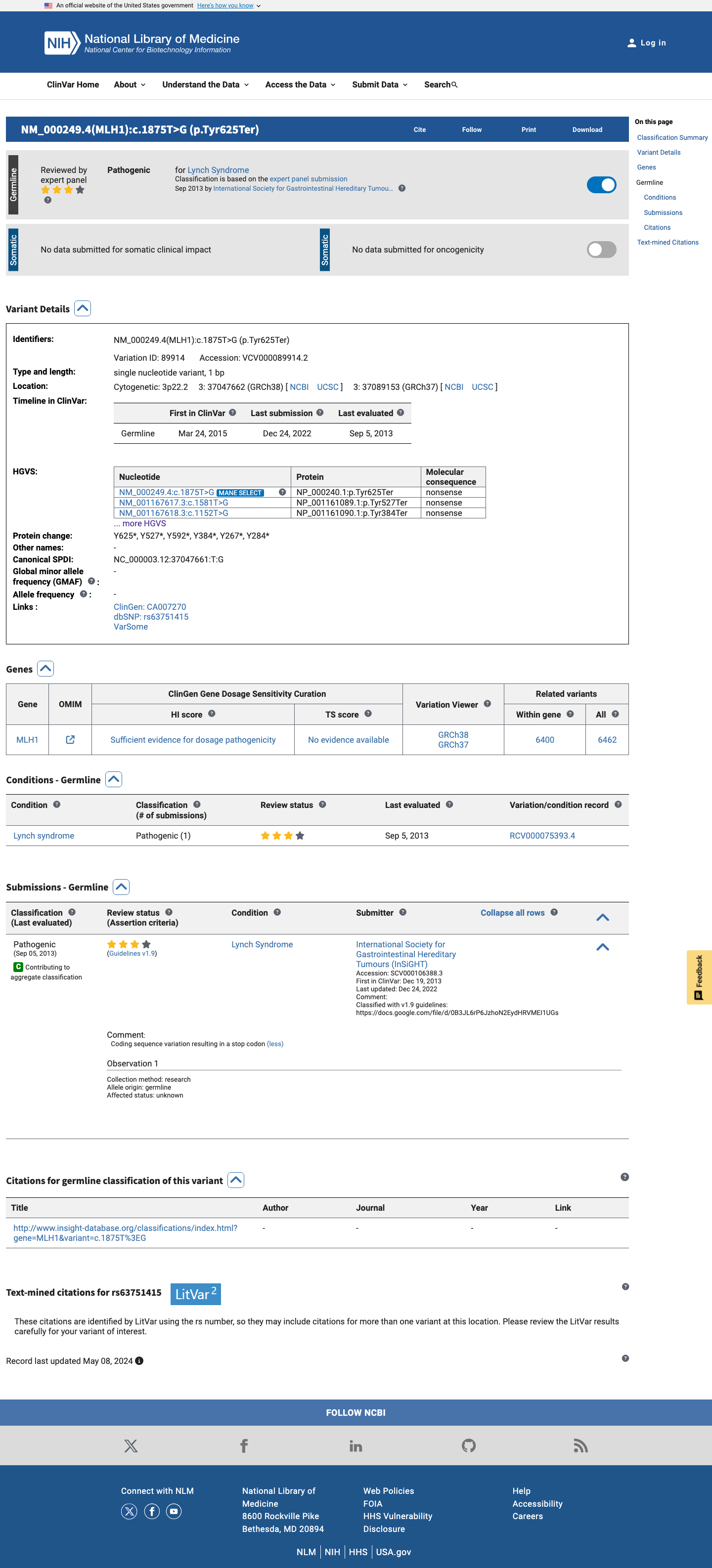
Expert panel International Society for Gastrointestinal Hereditary Tumours (InSiGHT) classified as Pathogenic.
ClinVar expert panel classification
Assessed · not applied
Pathogenic
PS2 No de novo observations are available for this variant.
PS3 No variant-specific functional assay data were identified in the VCEP functional assay spreadsheet or the reviewed literature for NM_000249.4:c.1875T>G.
PP1 No co-segregation data are available for this variant.
PP4 No tumor phenotype data (MSI status, IHC for MMR protein expression) are available in the case evidence for this variant.
Benign
BA1 The variant is absent from gnomAD v4.1.
BS1 The variant is absent from gnomAD v4.1.
BS2 No evidence of co-occurrence in trans with a known pathogenic variant in MLH1 in a patient with colorectal cancer after age 45 and without CMMRD features.
BS3 No variant-specific functional assay data demonstrating proficient MMR function are available.
BS4 No segregation data demonstrating lack of co-segregation with disease are available for this variant.
BP5 No tumor phenotype data (MSS status, MMR protein expression, BRAF V600E, or MLH1 methylation status) are available in the case evidence.
N/A · 12 PS1 · PS4 · PM1 · PM5 · PM6 · PP2 · PP3 · BP1 · BP2 · BP4 · BP6 · BP7
Research & evidence
Population frequency · supports pathogenic
gnomAD v4.1 screenshot
gnomAD v4.1
gnomAD v2.1 screenshot
gnomAD v2.1
v4.1
Absent from gnomAD v4.1.
v2.1
Absent from gnomAD v2.1.
🇨🇦 CA
Absent from gnomAD-Canada v1.0.
Allele frequency by ancestry
three datasets · side by side
gnomAD v4.1
Absent · 0 / ?
0 hom
Not observed in any ancestry group.
gnomAD v2.1
Absent · 0 / ?
0 hom
Not observed in any ancestry group.
gnomAD Canada 🇨🇦
Absent · 0 / ?
0 hom
Not observed in any ancestry group.
ClinVar screenshot
ClinVar
This variant has been reported in ClinVar as Pathogenic by International Society for Gastrointestinal Hereditary Tumours (InSiGHT) (expert panel). (ClinVarID = 89914)
SpliceAI screenshot
In silico
SpliceAI predicts no significant splice impact for this variant (max delta score = 0.00). REVEL score = 0.366. BayesDel score = 0.66.
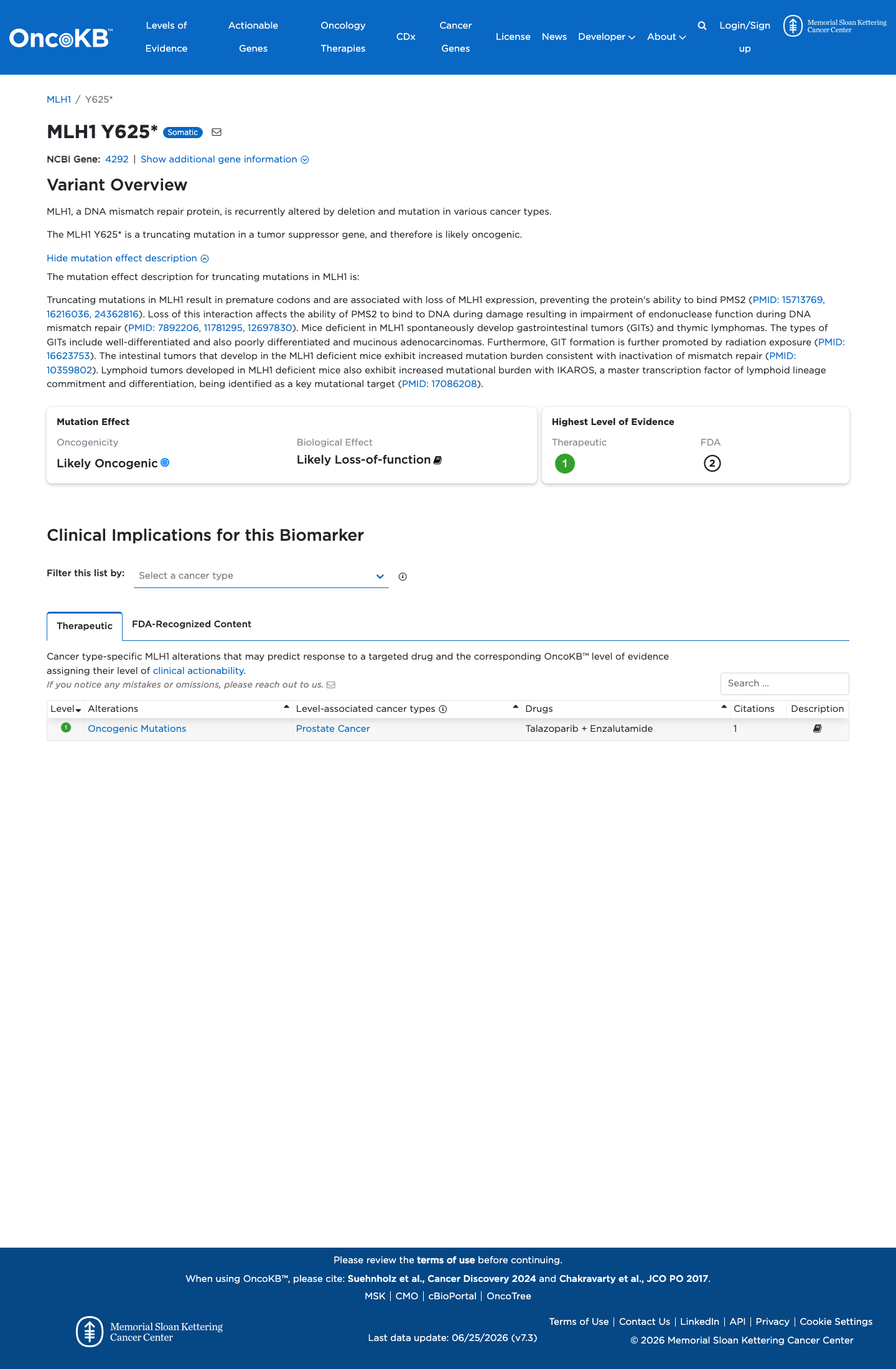
Functional / OncoKB screenshot
Functional Likely Oncogenic
OncoKB identified variant-specific curated literature and context relevant to functional review; biological-effect context: Likely Loss-of-function; curated oncogenicity label: Likely Oncogenic.
OncoKB ↗
COSMIC screenshot
COSMIC
Cancer hotspots screenshot
Cancer hotspots
Somatic evidence Not in COSMIC / hotspots
COSMIC
This variant does not lie in a statistically significant hotspot. This variant has not previously been reported in somatic cancers (COSMIC).
Hotspots
This variant does not lie in a statistically significant hotspot.
Sources & reference links
9Sources
CSpec VCEP
ClinVar
gnomAD v2.1
gnomAD v4.1
gnomAD-Canada
SpliceAI
OncoKB
COSMIC
Cancer hotspots
Triaged references · 8 PMIDs not cited in assessment
10359802 ↗ Different mutator phenotypes in Mlh1- versus Pms2-deficient mice. ONCOKB
11781295 ↗ Functional analysis of hMLH1 variants and HNPCC-related mutations using a human expression system. ONCOKB
12697830 ↗ Dimerization of MLH1 and PMS2 limits nuclear localization of MutLalpha. ONCOKB
15713769 ↗ Conversion analysis for mutation detection in MLH1 and MSH2 in patients with colorectal cancer. ONCOKB
16216036 ↗ Tumours from MSH2 mutation carriers show loss of MSH2 expression but many tumours from MLH1 mutation carriers exhibit weak positive MLH1 staining. ONCOKB
24493721 ↗ American Society of Clinical Oncology Expert Statement: collection and use of a cancer family history for oncology providers. CLINVAR
25711197 ↗ Lynch Syndrome: A Primer for Urologists and Panel Recommendations. CLINVAR
26324357 ↗ American Society of Clinical Oncology Policy Statement Update: Genetic and Genomic Testing for Cancer Susceptibility. CLINVAR