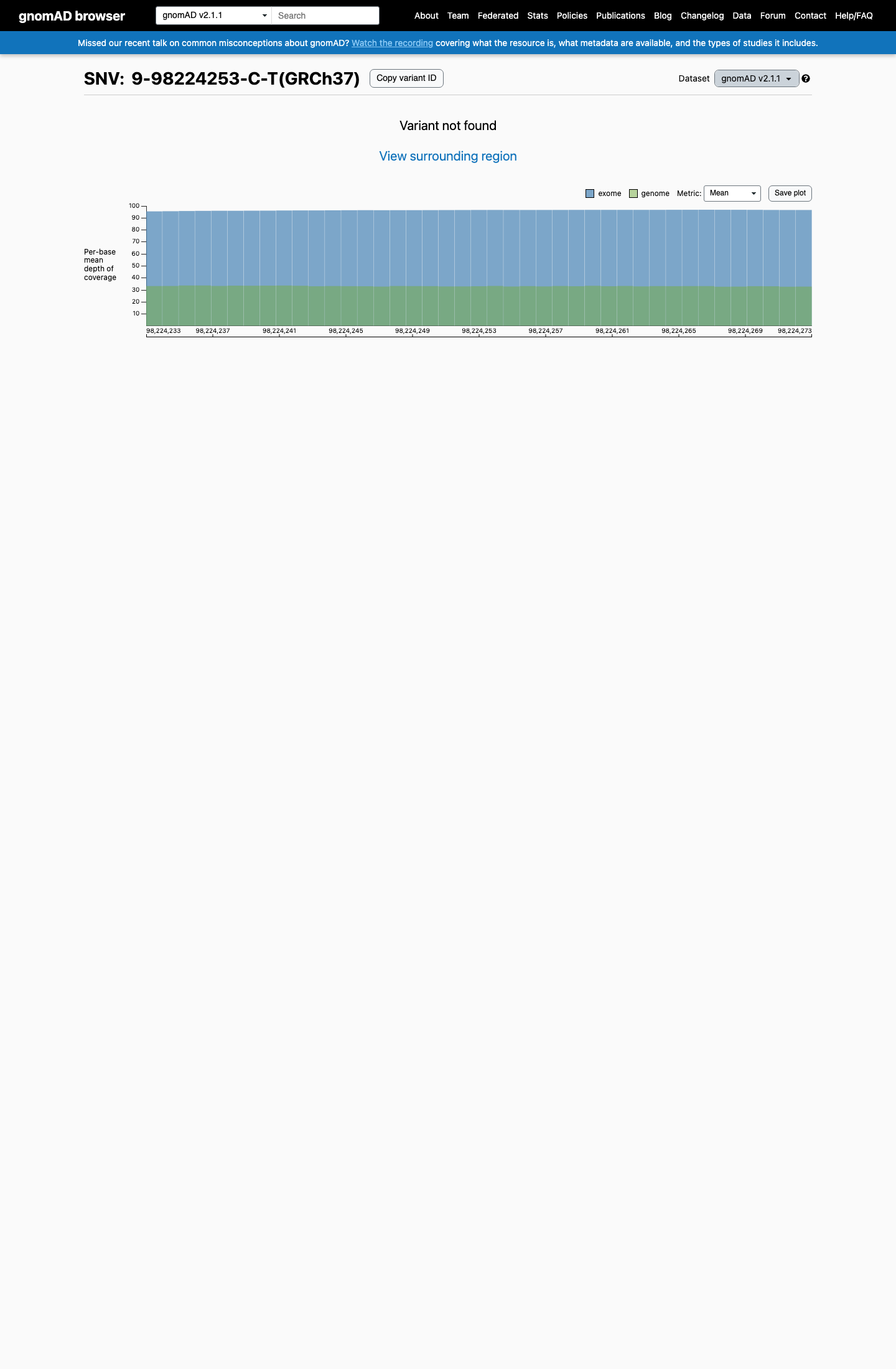
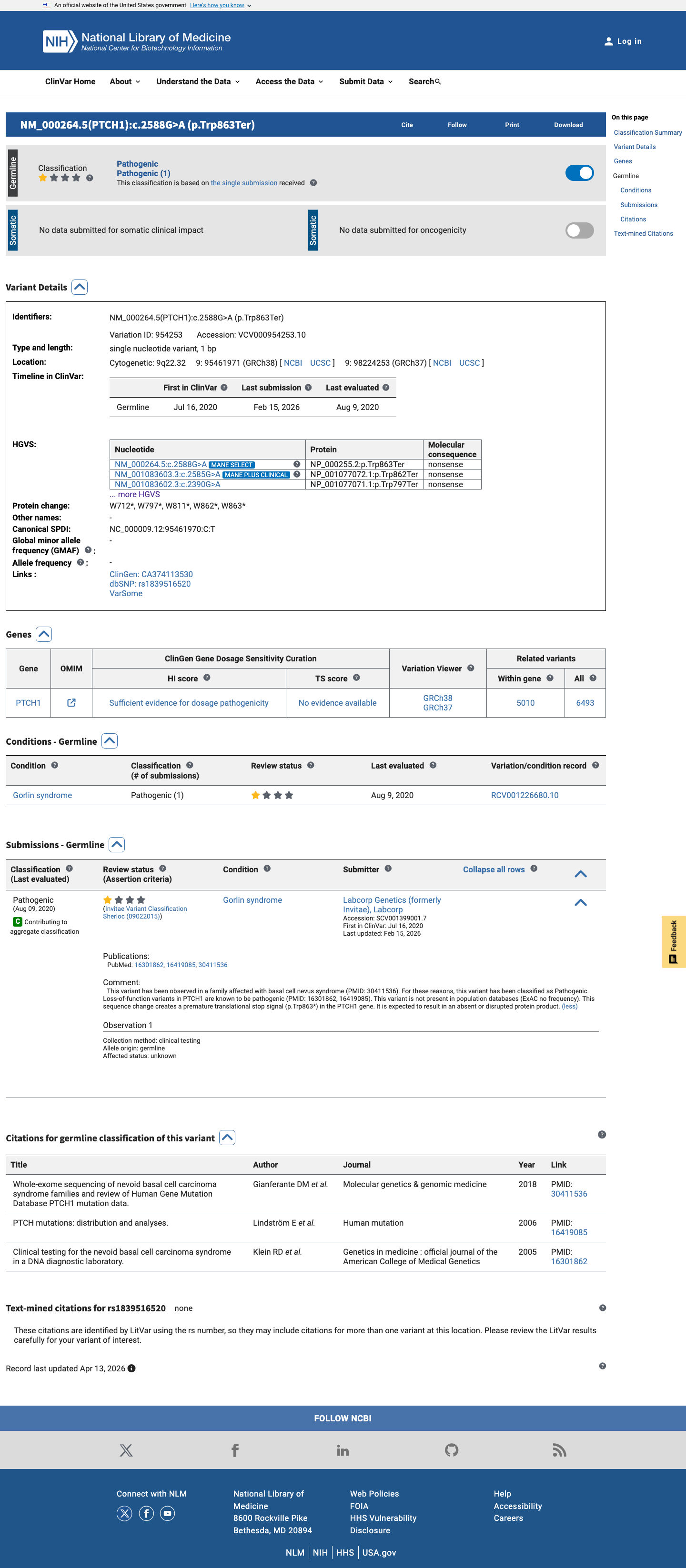
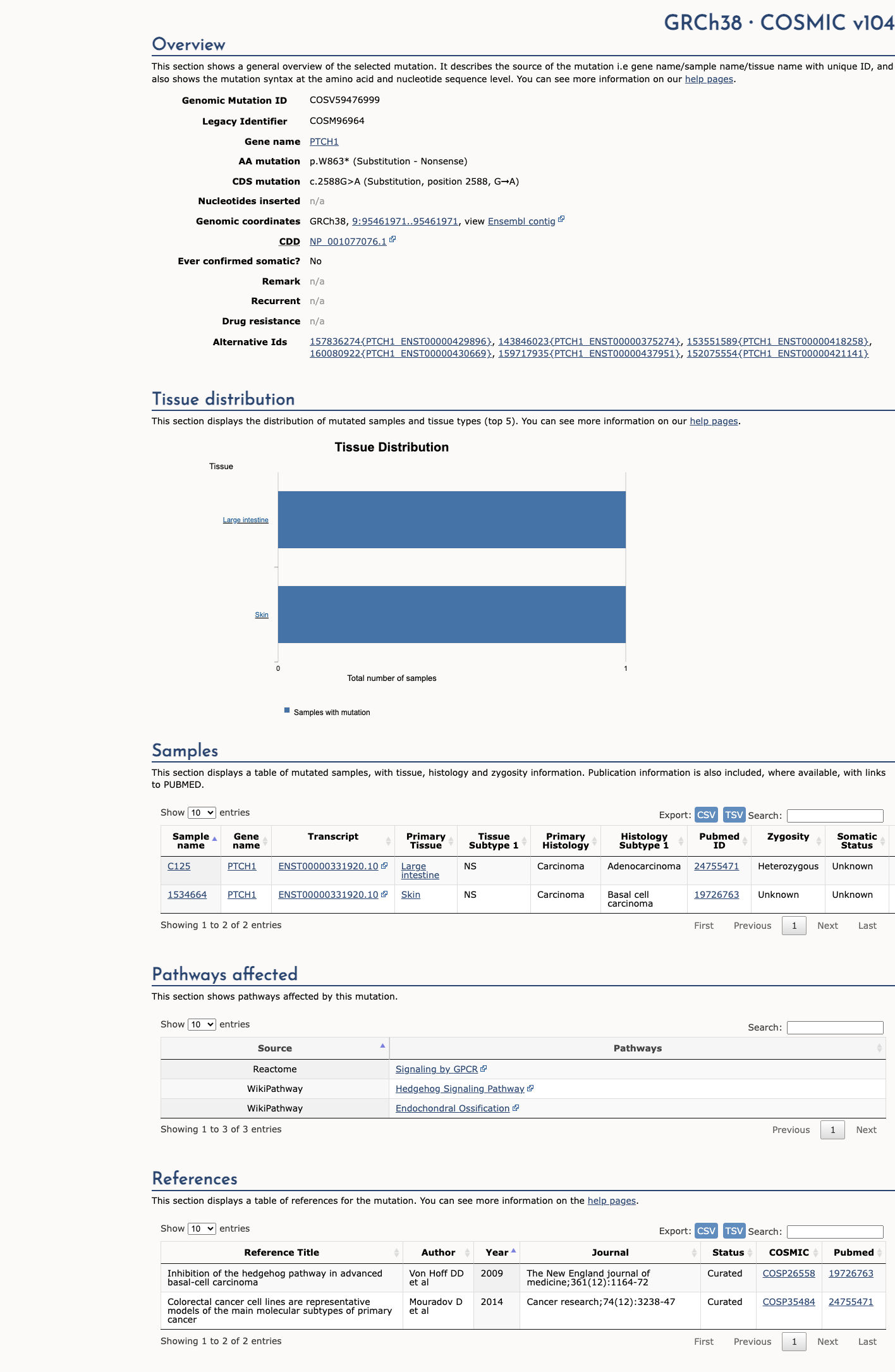
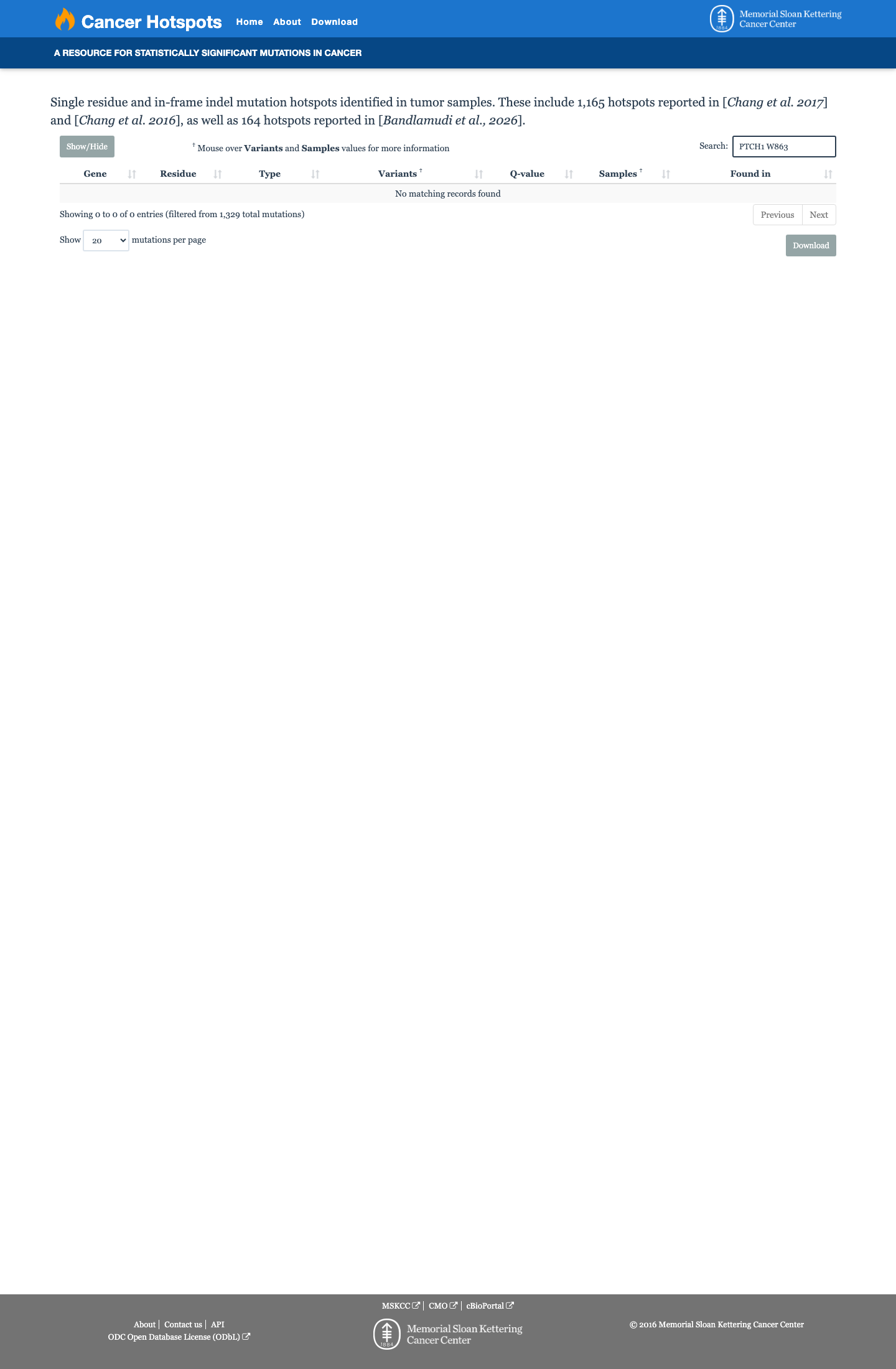
PVS1 very strong: the exon 16 nonsense variant truncates PTCH1 at residue 863 of 1,448 and is expected to undergo nonsense-mediated decay. PM2 supporting: the variant is absent from gnomAD v2.1 and v4.1, supporting rarity in reference populations.
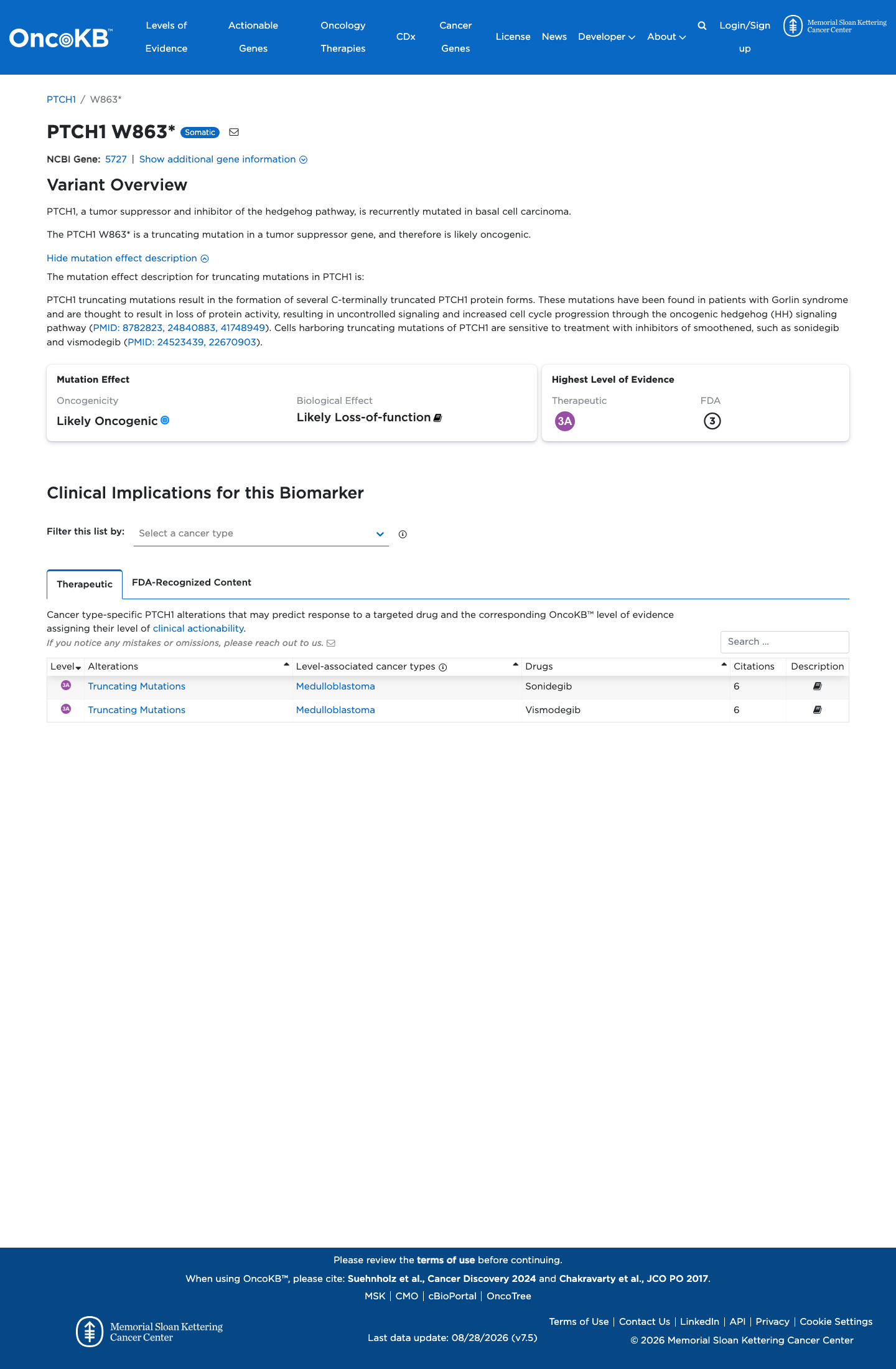
PTCH1 encodes a transmembrane receptor for hedgehog signaling proteins such as sonic hedgehog, a pathway that guides embryonic development. The protein normally keeps hedgehog signaling in check by inhibiting the Smoothened protein, so when PTCH1 is inactivated the pathway becomes overactive. Inherited changes in PTCH1 cause Gorlin syndrome (nevoid basal cell carcinoma syndrome), which predisposes to basal cell carcinoma and medulloblastoma, and can also contribute to holoprosencephaly. As a tumor suppressor, its loss drives basal cell carcinoma and medulloblastoma.
This PTCH1 loss-of-function variant is relevant to Gorlin syndrome, in which disruption of the tumor-suppressor receptor can cause constitutive Hedgehog-pathway activation.
PVS1 very strong: the exon 16 nonsense variant truncates PTCH1 at residue 863 of 1,448 and is expected to undergo nonsense-mediated decay. PM2 supporting: the variant is absent from gnomAD v2.1 and v4.1, supporting rarity in reference populations.