Classification rationale
PM1PM2
VUS
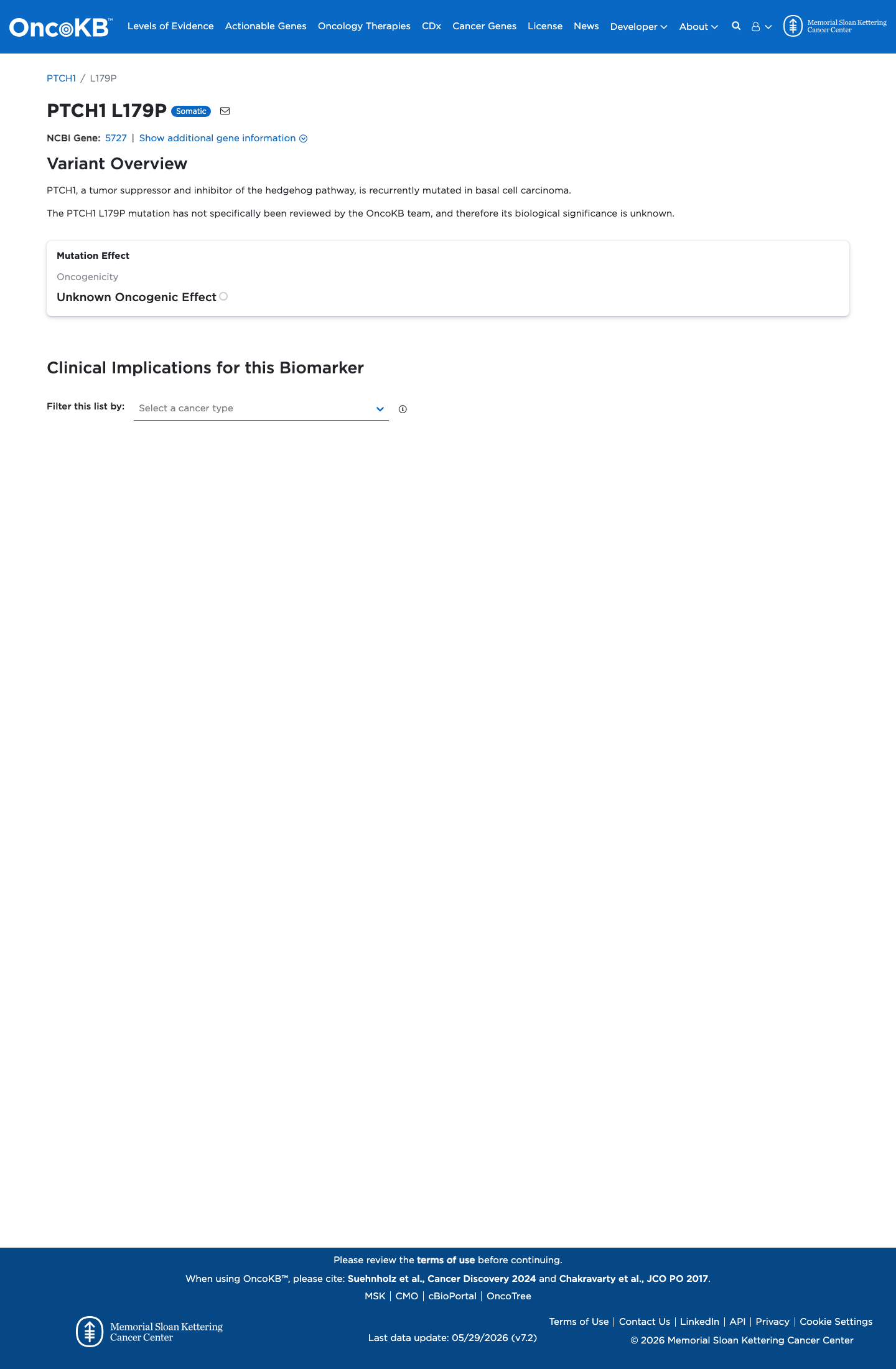
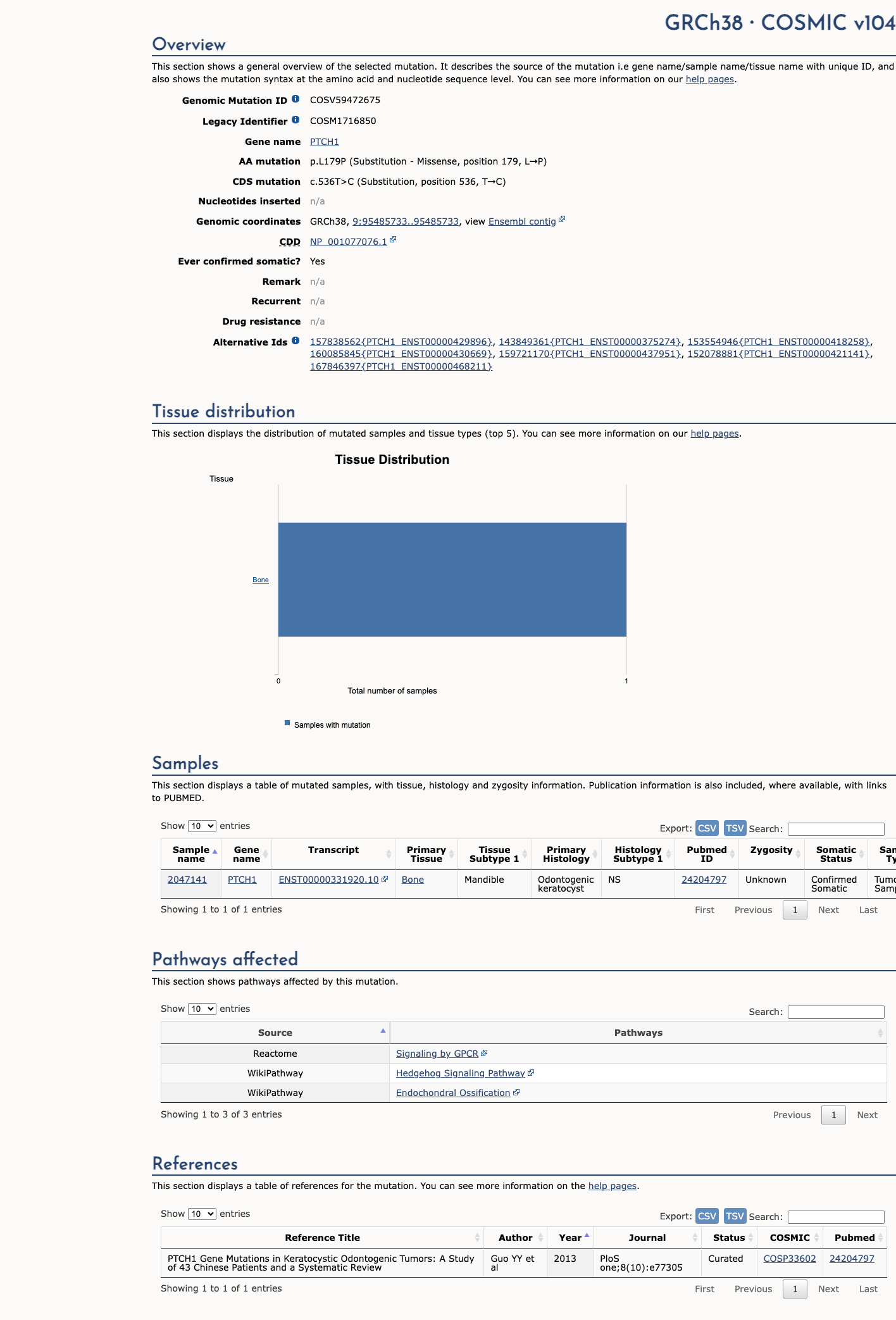
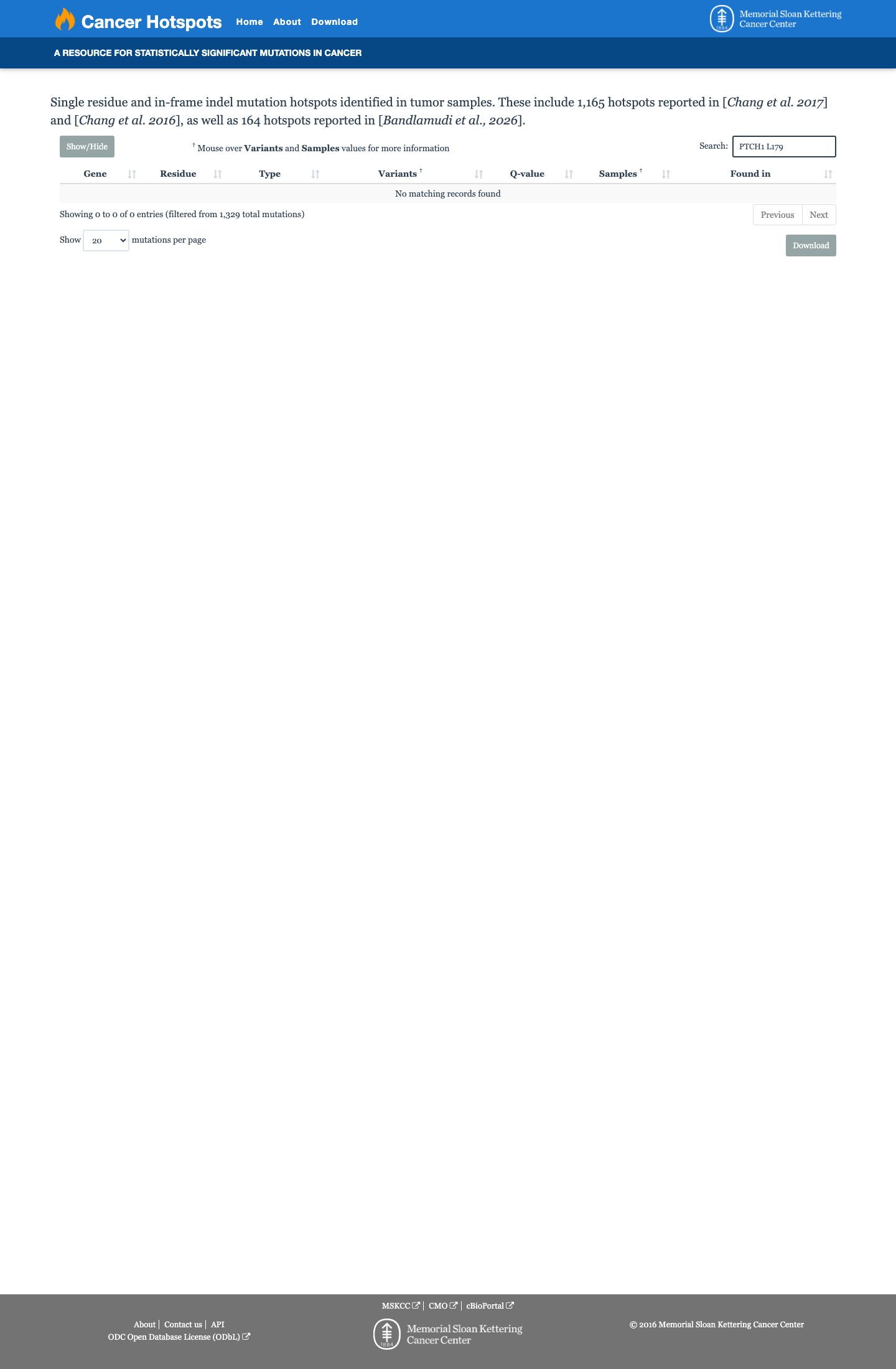
PTCH1 c.536T>C
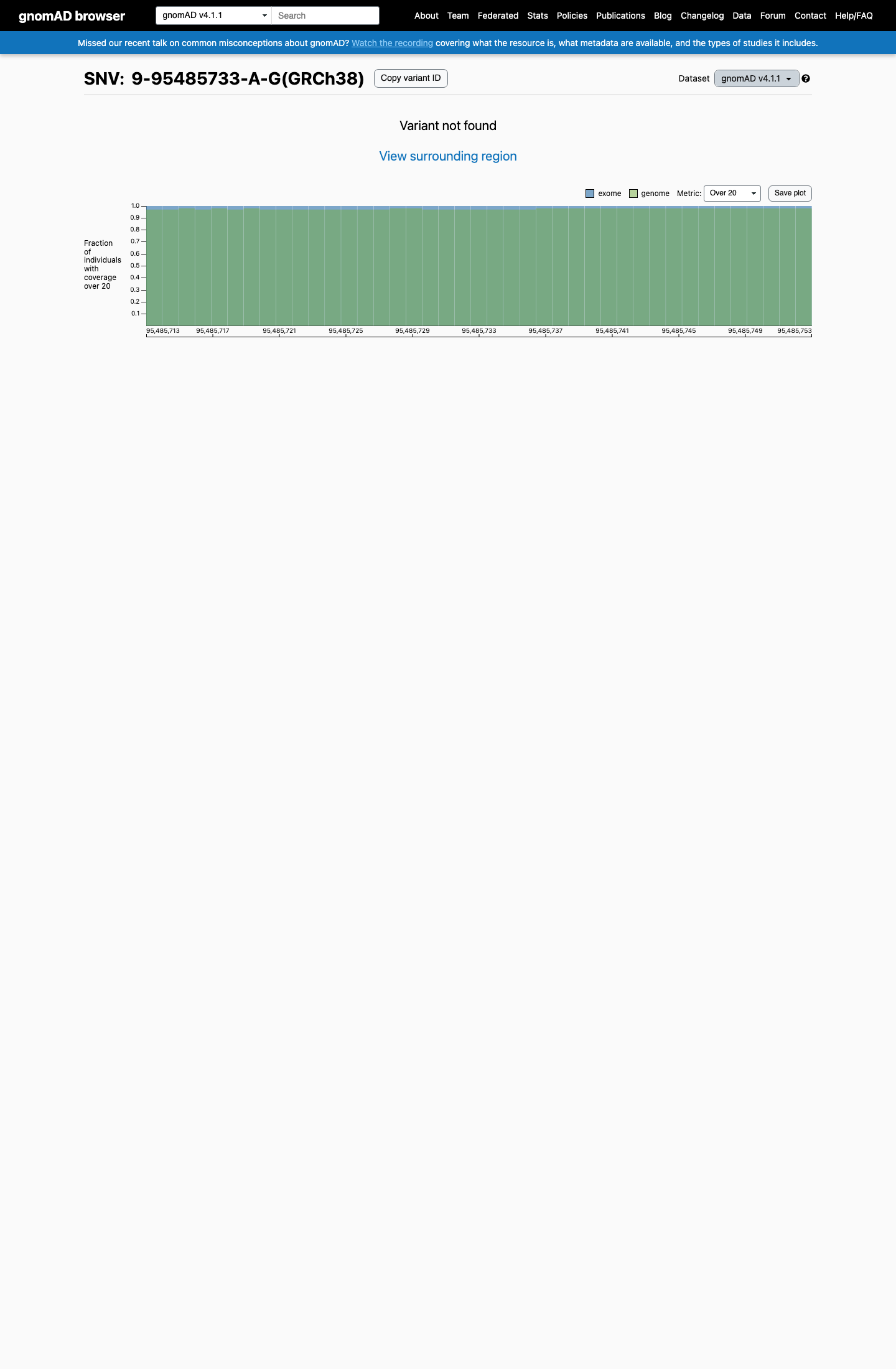
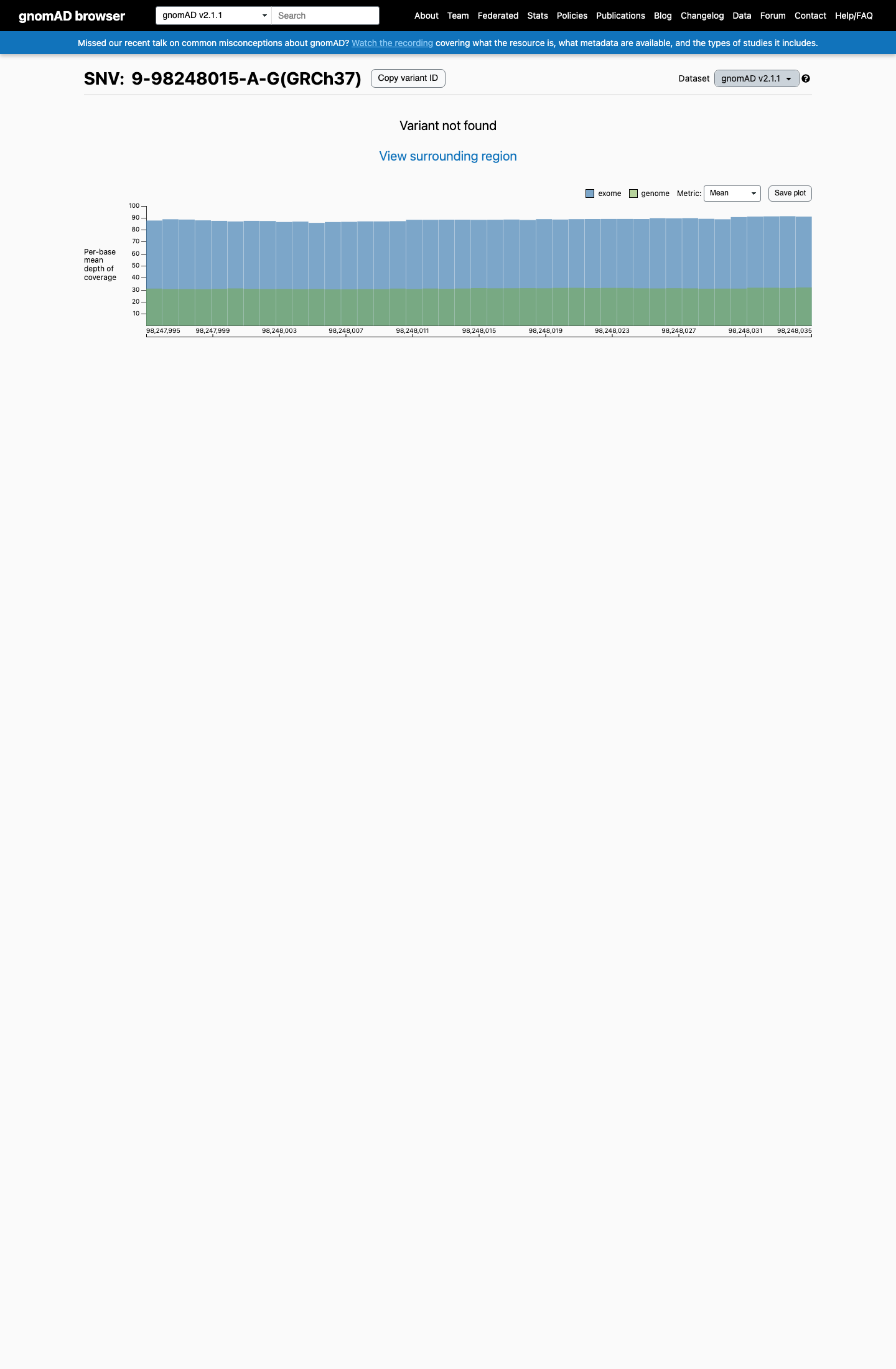
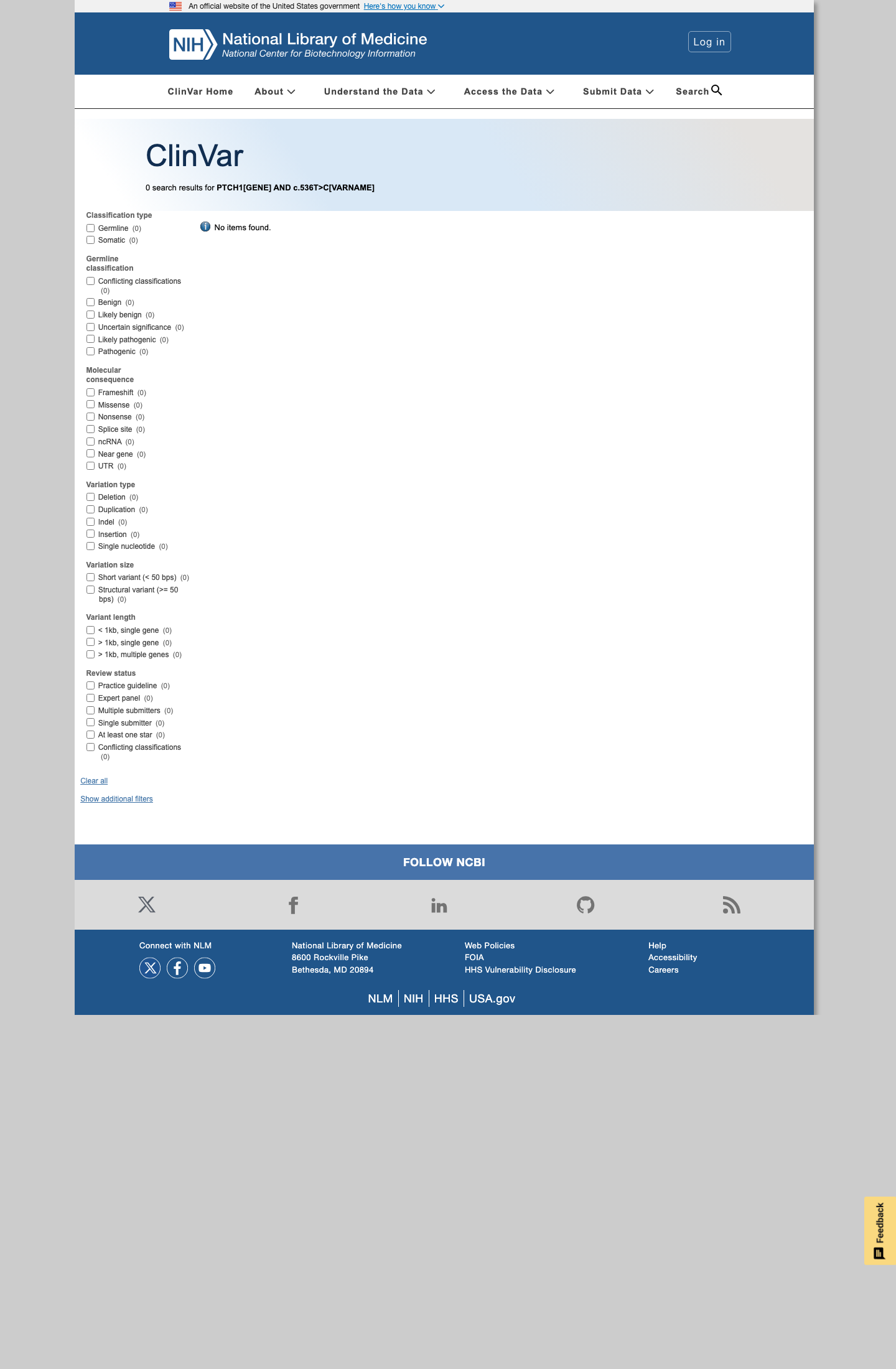
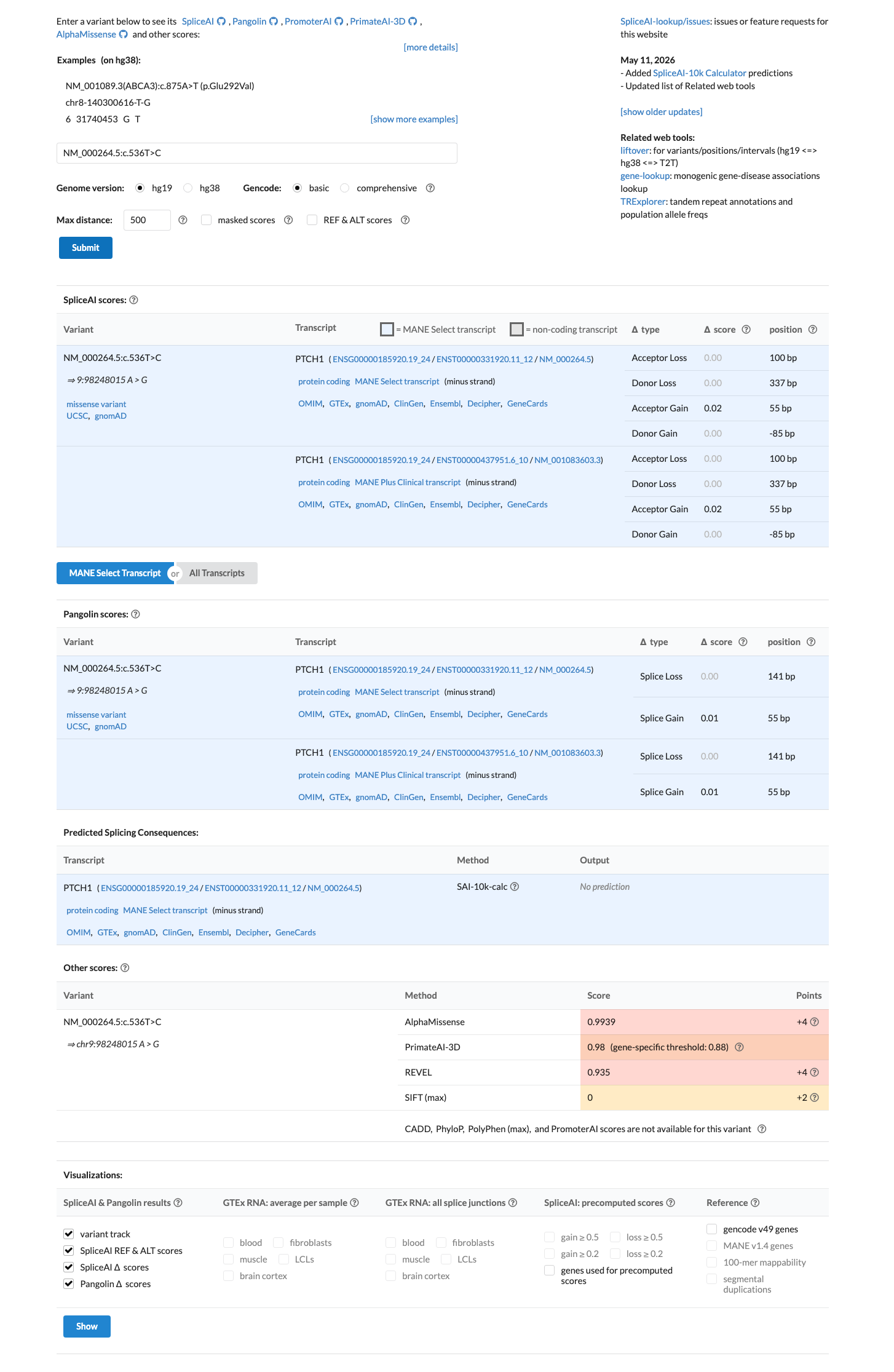
PM1 (moderate): p.Leu179Pro is located within the first extracellular loop (aa 115–210) of PTCH1, a critical Hedgehog ligand-binding domain that is a well-established mutational hotspot in Gorlin syndrome. PM2 (supporting): NM_000264.5:c.536T>C is absent from gnomAD v2.1 and v4.1 population databases (allele frequency 0%), consistent with a rare variant.1 Overall, one moderate criterion (PM1) and one supporting criterion (PM2) are met. Per the ACMG/AMP 2015 generic combination rules (PMID:25741868), this combination is insufficient to reach Likely Pathogenic (minimum: 3 moderate, 2 moderate + 2 supporting, or 1 moderate + 4 supporting). The variant is classified as a Variant of Uncertain Significance (VUS).2
PM1 + PM2
→
VUS
2
generic_acmg_combination_rules