NM_000267.3:c.7039G>T (p.Glu2347Ter) is a nonsense variant in NF1 exon 42 of 60 exons. NF1 loss-of-function is an established disease mechanism for neurofibromatosis type 1. The premature termination codon is predicted to trigger nonsense-mediated decay, satisfying PVS1 at very_strong strength per ClinGen SVI PVS1 recommendations (PMC6185798).1 The variant is absent from all population databases, including gnomAD v2.1, gnomAD v4.1, and gnomAD-Canada v1.0, meeting PM2 at supporting strength.2 ClinVar classifies this variant as Pathogenic (GeneDx, SCV005333207, criteria provided, single submitter), meeting PP5 at supporting strength.3 Classification: Pathogenic. PVS1 (very_strong) plus PM2 (supporting) plus PP5 (supporting) satisfies the generic ACMG/AMP 2015 rule requiring 1 Very Strong and 2 Supporting criteria for a Pathogenic classification.4
Final classification
Pathogenic
PVS1PM2PP5
NF1
c.7039G>T
p.Glu2347Ter
This variant
NM_000267.3:c.7039G>T (p.Glu2347Ter) is a nonsense variant in NF1 exon 42 of 60 exons. NF1 loss-of-function is an established disease mechanism for neurofibromatosis type 1. The premature termination codon is predicted to trigger nonsense-mediated decay, satisfying PVS1 at very_strong strength per ClinGen SVI PVS1 recommendations (PMC6185798).
Neurofibromatosis and Schwannomatosis Specification v1.0.0 lacked a usable explicit final combination framework, so generic ACMG/AMP 2015 final-combination rules were applied as fallback; applied criteria: PVS1 very strong, PM2 supporting, PP5 supporting; combination = 1 very strong + 2 supporting, which maps to Pathogenic.
Classification rationale
PVS1PM2PP5
Pathogenic
NF1 c.7039G>T
PVS1 + PM2 + PP5
→
Pathogenic
1
pvs1_generic_framework ↗pvs1_gene_contextpvs1_variant_assessment
4
generic_acmg_combination_rules
LYFE Sciences is an AI system, and it can make mistakes. Criteria
may be applied incorrectly, sources may be misread, and a confident-looking
classification can still be wrong. Double-check every criterion and
its underlying evidence before relying on any call.
Gene diagram
· NM_000267.3 · variants mapped to exon structure
NF1
NM_000267.3
Fetching transcript structure from UCSC…
Applied criteria · 3 applied · 16 assessed
MetEvidence satisfies this criterion.
Not metEvaluated against available evidence; threshold not reached.
Not assessedApplies in principle, but no evidence was found to evaluate it.
N/ADoesn't apply to this variant type.
Applied · 3
Strength
Supporting
Moderate
Strong
Very strong
PVS1
very strong
Pathogenic
Nonsense variant NM_000267.3:c.7039G>T (p.Glu2347Ter) in exon 42 of 60 exons. NF1 loss-of-function is an established disease mechanism for neurofibromatosis type 1. The premature termination codon is located >50 nucleotides upstream of the last exon-exon junction, predicting nonsense-mediated decay. Per ClinGen SVI PVS1 recommendations (PMC6185798), nonsense variants in genes with an established LoF mechanism are assigned PVS1 at very_strong strength when NMD is predicted.
Nonsense variant p.Glu2347Ter in NF1 exon 42/60NF1 loss-of-function is an established disease mechanism for neurofibromatosis type 1PTC located >1400 nt upstream of final exon-exon junction
PM2
supporting
Pathogenic
NM_000267.3:c.7039G>T is absent from all queried population databases, including gnomAD v2.1 (exomes), gnomAD v4.1 (exomes), and gnomAD-Canada v1.0 (genomes). Absence from large population cohorts supports pathogenicity.
Absent from gnomAD v2.1 (exomes)Absent from gnomAD v4.1 (exomes)Absent from gnomAD-Canada v1.0 (genomes)
PP5
supporting
Pathogenic
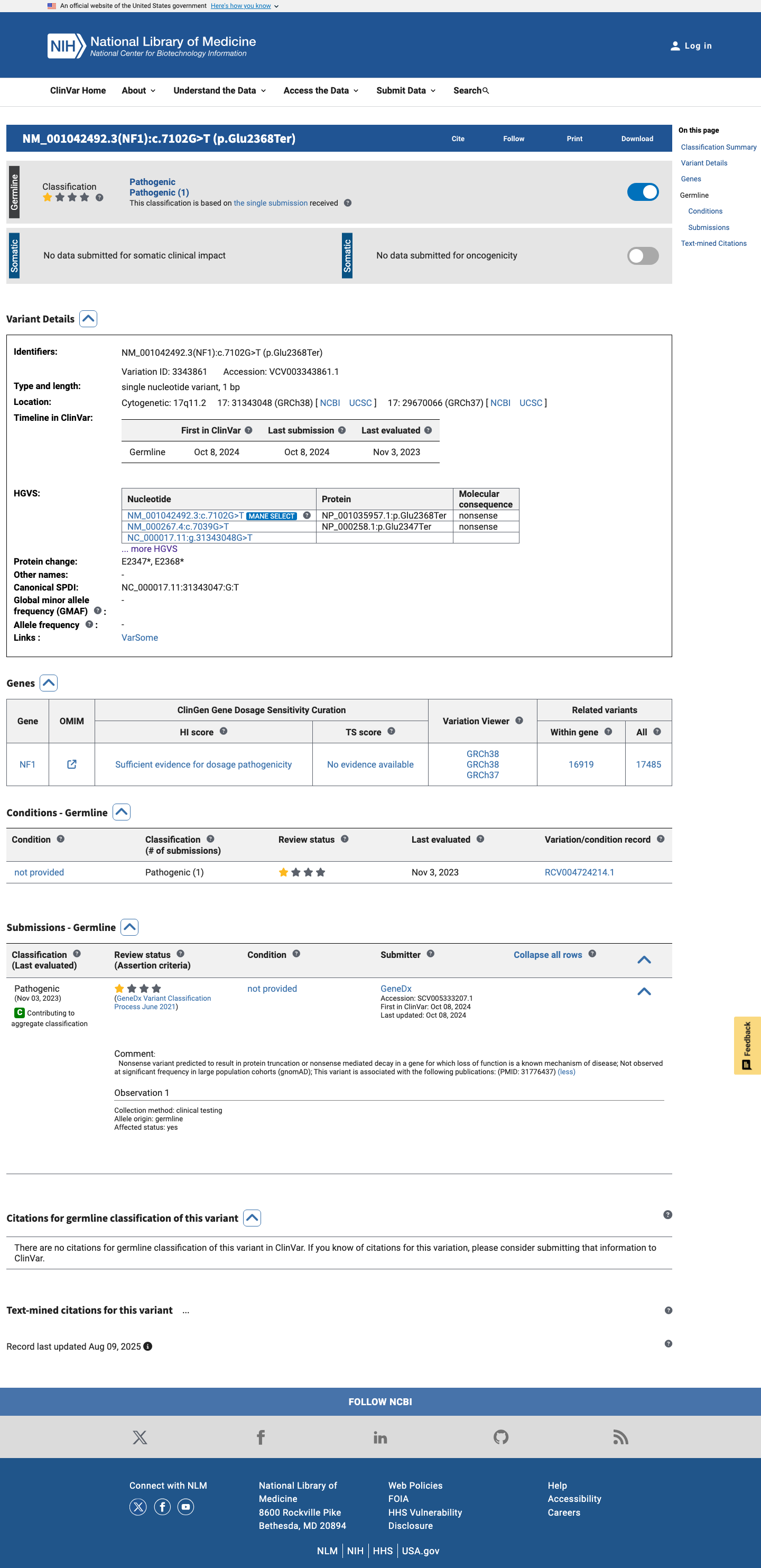
ClinVar reports this variant as Pathogenic by a clinical testing laboratory (GeneDx, SCV005333207). Although from a single submitter with criteria provided and no expert panel review, the clinical laboratory classification supports pathogenicity.
ClinVar: Pathogeniccriteria providedsingle submitter (GeneDx
Assessed · not applied
· 16 not met · 0 not assessed
Pathogenic
PS1
PS1 applies when a different nucleotide change at the same position produces the same amino acid change and is known to be pathogenic.
PS2
No de novo confirmation with confirmed maternity/paternity is available for this variant in the reviewed evidence.
PS3
No well-established functional studies demonstrate a damaging effect specific to NM_000267.3:c.7039G>T.
PS4
No case-control prevalence data are available to demonstrate statistically significant enrichment of this variant in affected individuals compared to controls.
PM1
This variant does not lie in a known mutational hotspot or critical functional domain as assessed by CancerHotspots.org.
PM6
No de novo observation (without confirmation of paternity/maternity) has been documented for this variant in the reviewed evidence.
PP1
No co-segregation data in affected family members are available for this variant.
PP4
No patient-specific phenotype or family history data are available to assess whether the individual's presentation is highly specific for NF1-related disease.
Benign
BA1
Allele frequency is well below 1% in all population databases.
BS1
Allele frequency is well below 0.3% in all population databases.
BS2
No data are available regarding observation of this variant in healthy adults in a homozygous or heterozygous state inconsistent with disease penetrance.
BS3
No well-established functional studies demonstrate no deleterious effect for this specific variant.
BS4
No segregation data demonstrate lack of co-segregation with disease for this variant.
BP2
No data are available regarding observation of this variant in trans with a known pathogenic NF1 variant.
BP5
No alternate molecular basis for disease has been identified that would make this variant irrelevant to the phenotype.
BP6
ClinVar classifies this variant as Pathogenic.
N/A · 9
PM3 · PM4 · PM5 · PP2 · PP3 · BP1 · BP3 · BP4 · BP7
Research & evidence
Population frequency · supports pathogenic
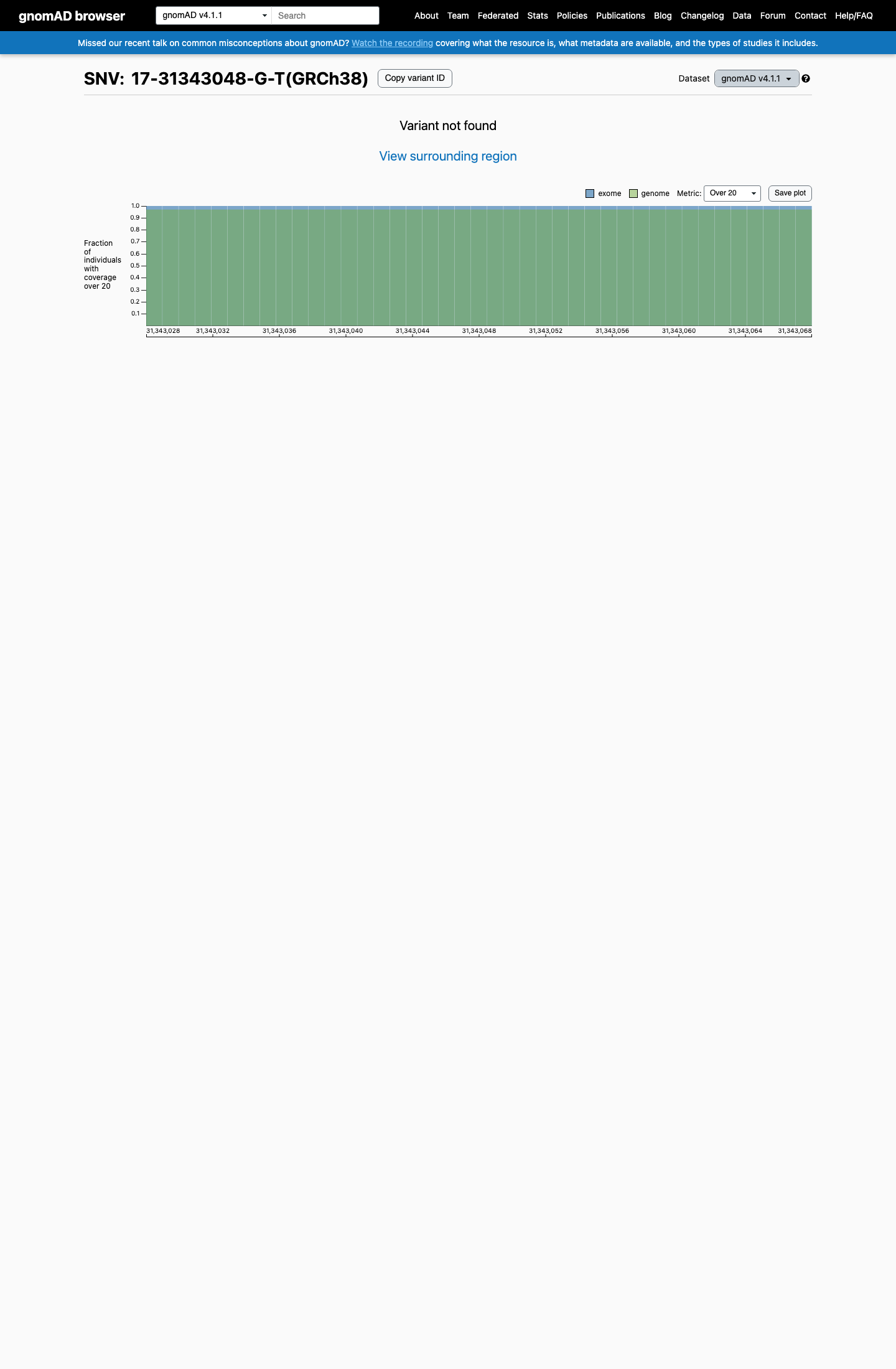
gnomAD v4.1
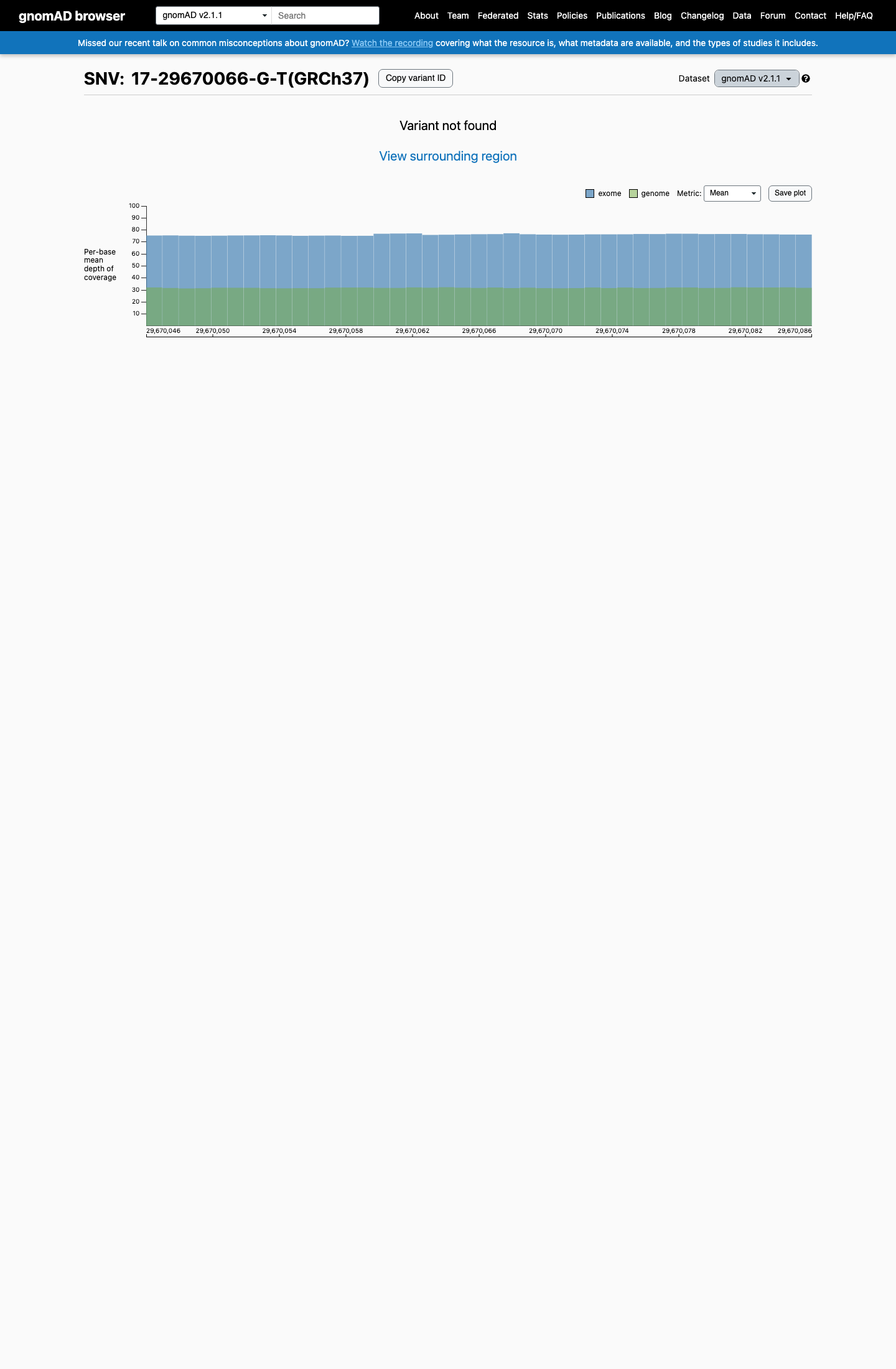
gnomAD v2.1
v4.1
Absent from gnomAD v4.1.
v2.1
Absent from gnomAD v2.1.
🇨🇦 CA
Absent from gnomAD-Canada v1.0.
Allele frequency by ancestry
three datasets · side by side
gnomAD v4.1
Absent
· 0 / ?
0 hom
0 hom
Not observed in any ancestry group.
gnomAD v2.1
Absent
· 0 / ?
0 hom
0 hom
Not observed in any ancestry group.
gnomAD Canada 🇨🇦
Absent
· 0 / ?
0 hom
0 hom
Not observed in any ancestry group.
In silico
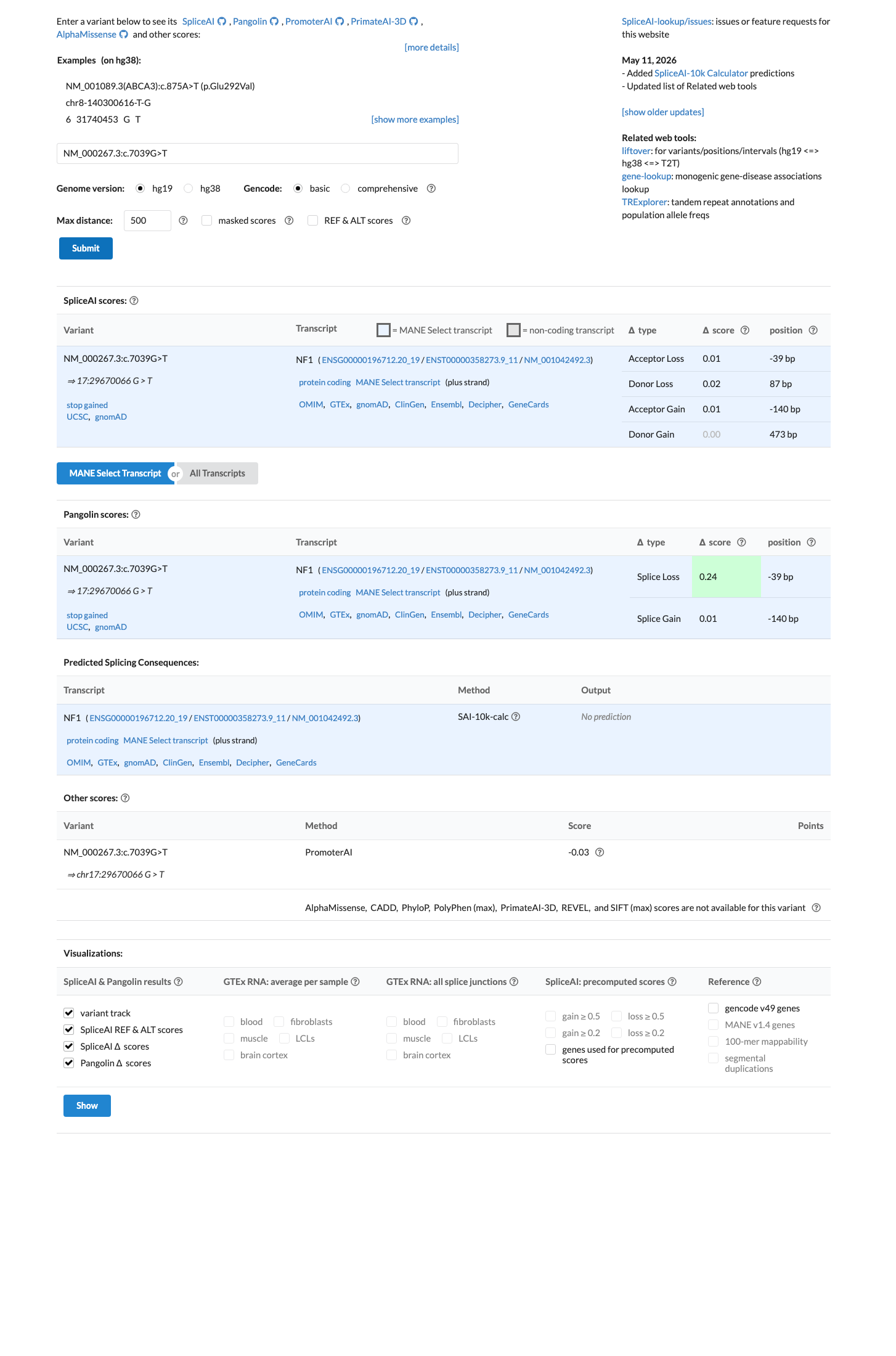
SpliceAI predicts no significant splice impact for this variant (max delta score = 0.02). BayesDel score = 0.652534.
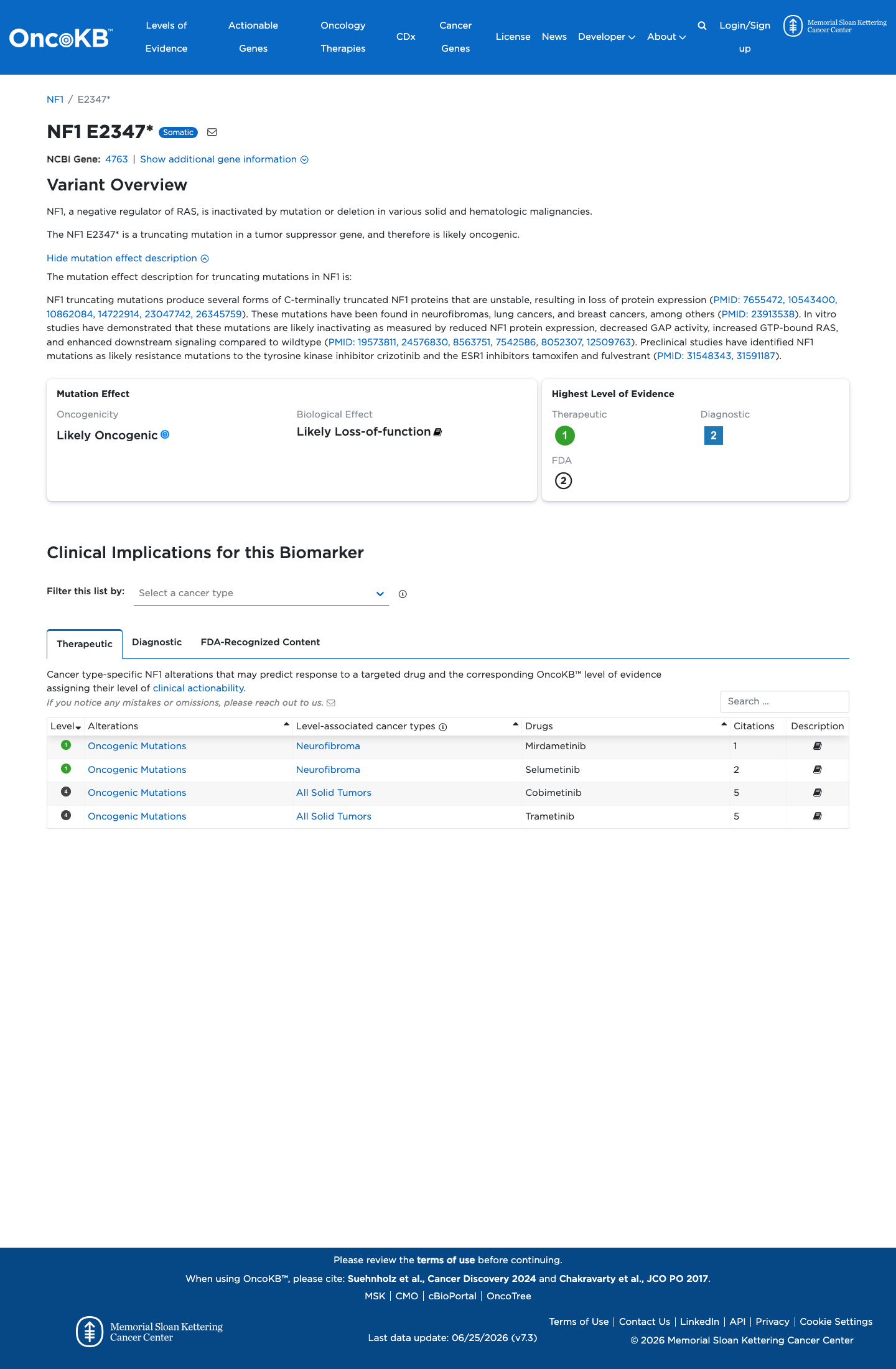
Functional
Likely Oncogenic
OncoKB identified variant-specific curated literature and context relevant to functional review; biological-effect context: Likely Loss-of-function; curated oncogenicity label: Likely Oncogenic.

COSMIC

Cancer hotspots
Somatic evidence
Not in COSMIC / hotspots
COSMIC
This variant does not lie in a statistically significant hotspot. This variant has not previously been reported in somatic cancers (COSMIC).
Hotspots
This variant does not lie in a statistically significant hotspot.
Sources & reference links
9Sources
Triaged references · 5 PMIDs not cited in assessment
10543400 ↗
Evaluation of the protein truncation test and mutation detection in the NF1 gene: mutational analysis of 15 known and 40 unknown mutations.
ONCOKB
10862084 ↗
Exhaustive mutation analysis of the NF1 gene allows identification of 95% of mutations and reveals a high frequency of unusual splicing defects.
ONCOKB
14722914 ↗
Screening 500 unselected neurofibromatosis 1 patients for deletions of the NF1 gene.
ONCOKB
19573811 ↗
Proteasomal and genetic inactivation of the NF1 tumor suppressor in gliomagenesis.
ONCOKB