NM_000268.3:c.316G>T (p.Glu106Ter) is a nonsense variant in exon 3 of the NF2 gene, predicted to undergo nonsense-mediated decay and result in complete loss of merlin protein expression.1 NF2 loss of function is an established disease mechanism for NF2-related schwannomatosis, an autosomal dominant tumor predisposition syndrome characterized by bilateral vestibular schwannomas, meningiomas, and spinal tumors.2 This variant is absent from gnomAD v2.1 and v4.1 population databases, supporting its rarity and consistent with a pathogenic role in a rare disease.3 The variant truncates merlin within the FERM domain (codon 106), a well-established critical functional domain required for membrane localization, cytoskeletal organization, and tumor suppressor signaling through the Hippo, mTOR, and CRL4-DCAF1 pathways.4 Under ACMG/AMP 2015 combination rules (PMID:25741868), one very strong criterion (PVS1) plus two moderate criteria (PM1, PM2) meets the threshold for a pathogenic classification.5
Final classification
Pathogenic
PVS1PM1PM2
NF2
c.316G>T
p.Glu106Ter
This variant
NM_000268.3:c.316G>T (p.Glu106Ter) is a nonsense variant in exon 3 of the NF2 gene, predicted to undergo nonsense-mediated decay and result in complete loss of merlin protein expression.
gene-specific framework lacked a usable explicit final combination framework, so generic ACMG/AMP 2015 final-combination rules were applied as fallback; applied criteria: PVS1 very strong, PM1 moderate, PM2 moderate; combination = 1 very strong + 2 moderate, which maps to Pathogenic.
Classification rationale
PVS1PM1PM2
Pathogenic
NF2 c.316G>T
PVS1 + PM1 + PM2
→
Pathogenic
1
pvs1_variant_assessmentpvs1_gene_contextPMID:19545378 ↗
2
pvs1_gene_contextPMID:19545378 ↗
5
generic_acmg_combination_rules
LYFE Sciences is an AI system, and it can make mistakes. Criteria
may be applied incorrectly, sources may be misread, and a confident-looking
classification can still be wrong. Double-check every criterion and
its underlying evidence before relying on any call.
Gene diagram
· NM_000268.3 · variants mapped to exon structure
NF2
NM_000268.3
Fetching transcript structure from UCSC…
Applied criteria · 3 applied · 15 assessed
MetEvidence satisfies this criterion.
Not metEvaluated against available evidence; threshold not reached.
Not assessedApplies in principle, but no evidence was found to evaluate it.
N/ADoesn't apply to this variant type.
Applied · 3
Strength
Supporting
Moderate
Strong
Very strong
PVS1
very strong
Pathogenic
Nonsense variant NM_000268.3:c.316G>T (p.Glu106Ter) in exon 3 of 16 coding exons. Nonsense-mediated decay is expected as the premature termination codon at position 106 is >50-55 nucleotides upstream of the last exon-exon junction. NF2 loss of function is an established disease mechanism for NF2-related schwannomatosis, an autosomal dominant tumor predisposition syndrome, as demonstrated by multiple germline studies showing truncating variants as causative. No gnomAD population LoF enrichment concerns. Under ClinGen SVI PVS1 recommendations (PMC6185798), a nonsense variant in a gene with established LoF mechanism qualifies for PVS1 at very strong strength.
Nonsense variant (p.Glu106Ter) in exon 3/16NMD expectedNF2 loss of function is an established germline disease mechanism for NF2-related schwannomatosis (autosomal dominant)
PM1
moderate
Pathogenic
Variant truncates merlin at codon 106 within the FERM domain (N-terminal, approximately residues 20-300), a well-established critical functional domain required for merlin tumor suppressor activity. The FERM domain mediates merlin's localization to the plasma membrane and cytoskeleton, and its interaction with multiple signaling partners including the Hippo pathway, mTOR, and CRL4-DCAF1. Truncation at this position removes the entire FERM domain and all downstream functional domains (coiled-coil, C-terminal), resulting in complete loss of merlin's tumor suppressor function. The FERM domain is recognized as critical in the NF2 literature and has no reported benign population variation.
Merlin/NF2 is a FERM domain protein (PMID:22825583)The FERM domain is critical for merlin tumor suppressor function including plasma membrane localizationcytoskeletal organization
PM2
moderate
Pathogenic
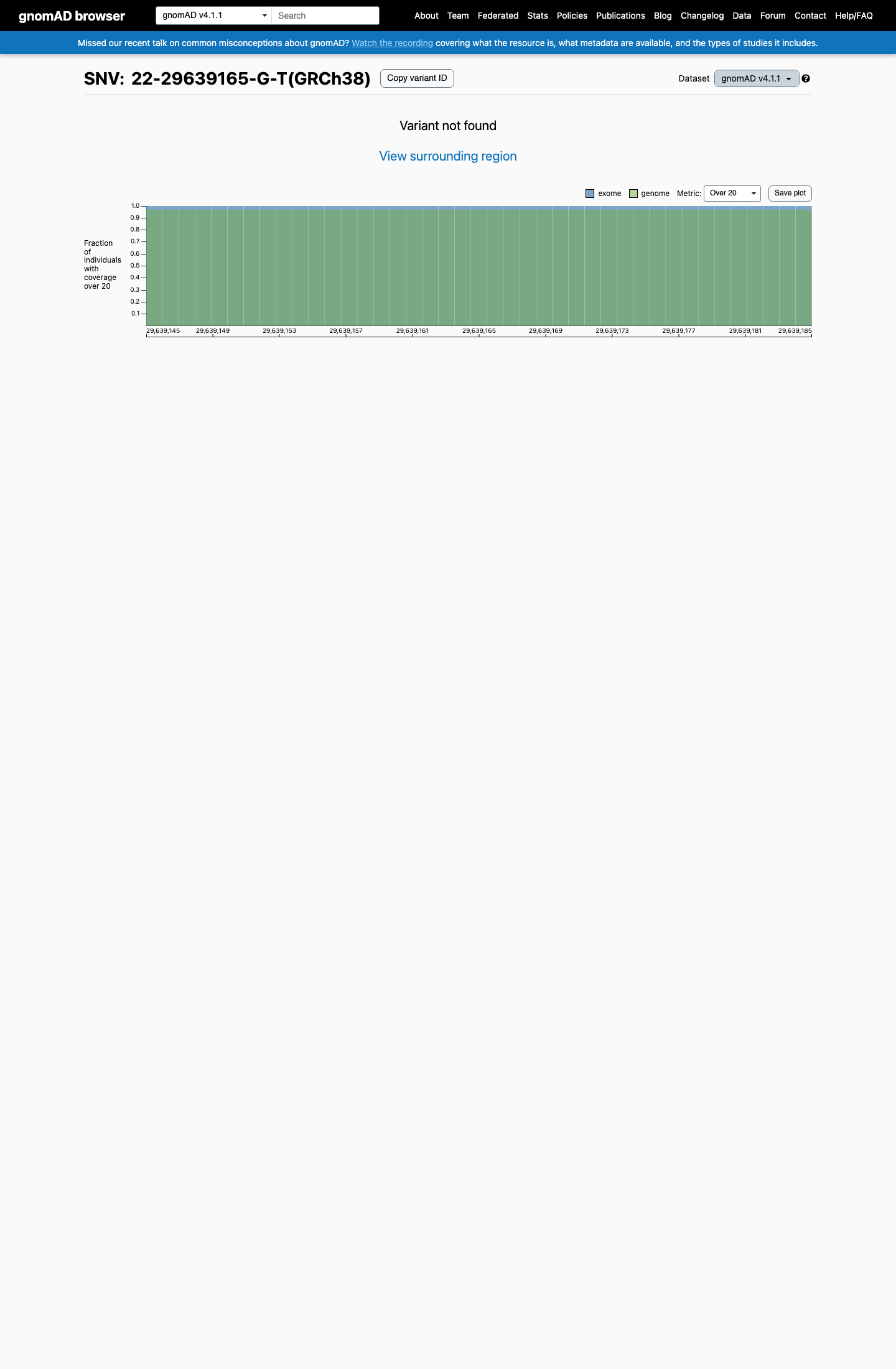
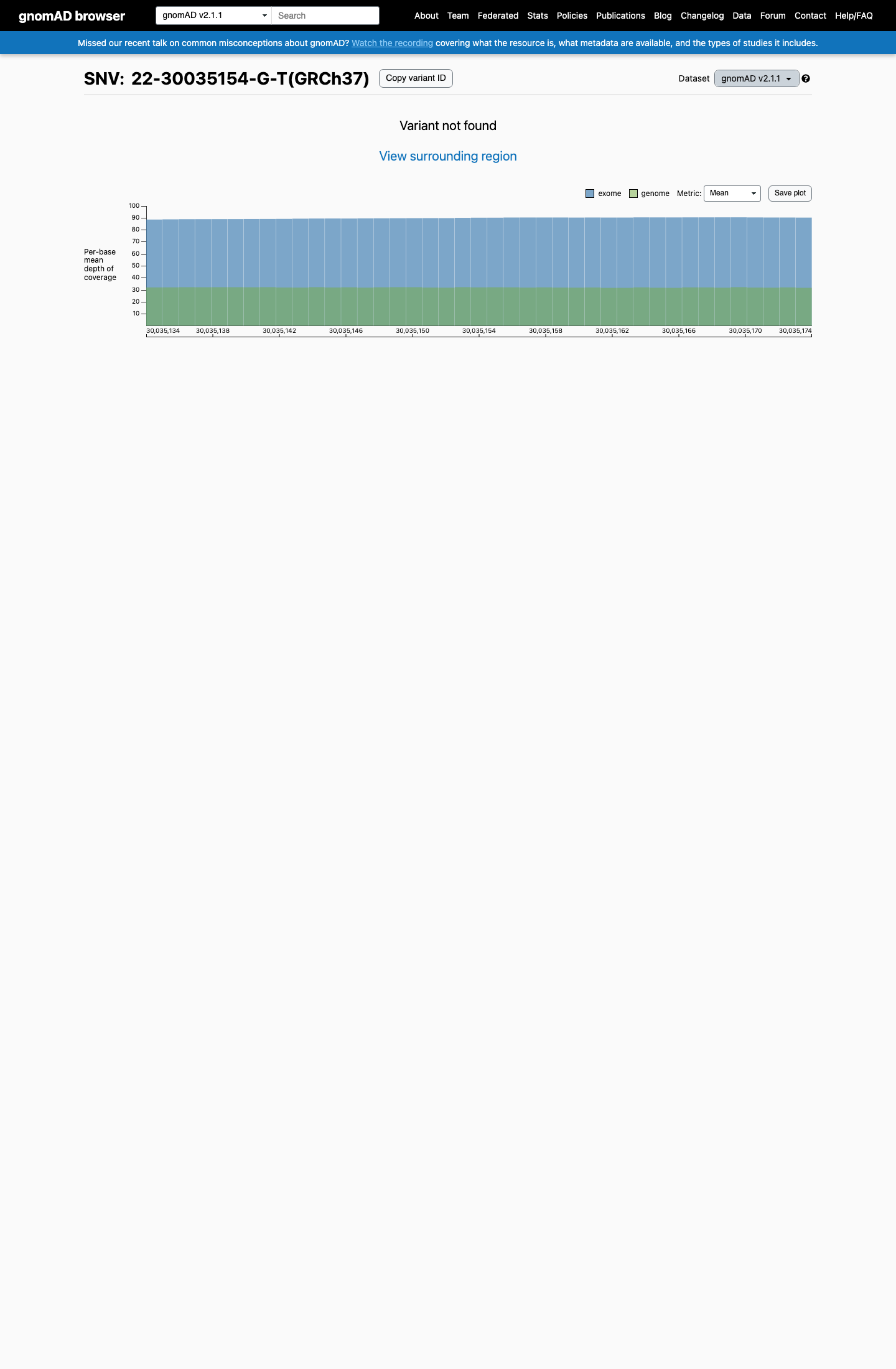
Absent from gnomAD v2.1 (exomes) and gnomAD v4.1 (exomes/genomes) with allele frequency of 0. This is well below the 0.1% threshold for PM2 application in a gene where absent/reduced population frequency supports pathogenicity. Also absent from gnomAD-Canada v1.0.
Absent from gnomAD v2.1 (AF=0)Absent from gnomAD v4.1 (AF=0)Absent from gnomAD-Canada v1.0
Assessed · not applied
· 8 not met · 7 not assessed
Pathogenic
PS2
No de novo data available for this variant.
PS3
No variant-specific functional data exists for NM_000268.3:c.316G>T in the reviewed literature.
PS4
No case observations of this variant in affected individuals beyond the single ClinVar submission (Variation ID 3257850).
PM6
No de novo data available.
PP1
No segregation data available.
PP4
No patient phenotype data provided.
PP5
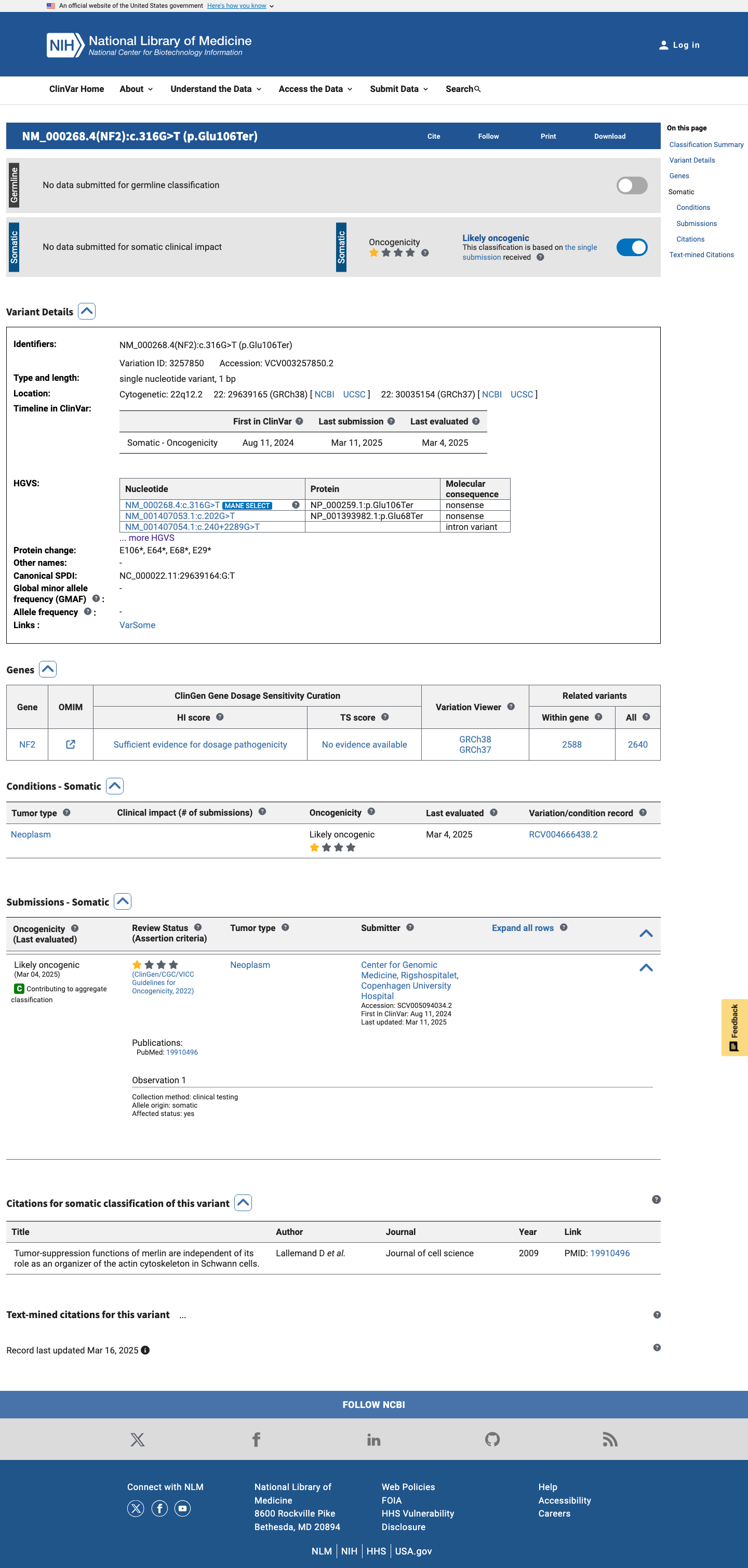
ClinVar Variation ID 3257850 has a classification of 'Likely oncogenic' with review status 'criteria provided, single submitter' (1-star).
Benign
BA1
Absent from gnomAD v2.1 and v4.1.
BS1
Absent from gnomAD v2.1 and v4.1.
BS2
No data available on homozygous observations or observations in trans with a known pathogenic variant.
BS3
No well-established functional studies demonstrate a benign effect for this variant.
BS4
No segregation data available.
BP4
BayesDel score of 0.66 supports a deleterious prediction, which is inconsistent with BP4 (multiple lines of computational evidence suggest no impact).
BP5
No data available on an alternative molecular basis for disease in a case with this variant.
BP6
No reputable source classifies this variant as benign or likely benign.
N/A · 7
PS1 · PM5 · PP2 · PP3 · BP1 · BP2 · BP7
Research & evidence
Population frequency · supports pathogenic
gnomAD v4.1
gnomAD v2.1
v4.1
Absent from gnomAD v4.1.
v2.1
Absent from gnomAD v2.1.
🇨🇦 CA
Absent from gnomAD-Canada v1.0.
Allele frequency by ancestry
three datasets · side by side
gnomAD v4.1
Absent
· 0 / ?
0 hom
0 hom
Not observed in any ancestry group.
gnomAD v2.1
Absent
· 0 / ?
0 hom
0 hom
Not observed in any ancestry group.
gnomAD Canada 🇨🇦
Absent
· 0 / ?
0 hom
0 hom
Not observed in any ancestry group.
ClinVar
This variant has been reported in ClinVar but submission details could not be extracted. (ClinVarID = 3257850)
In silico
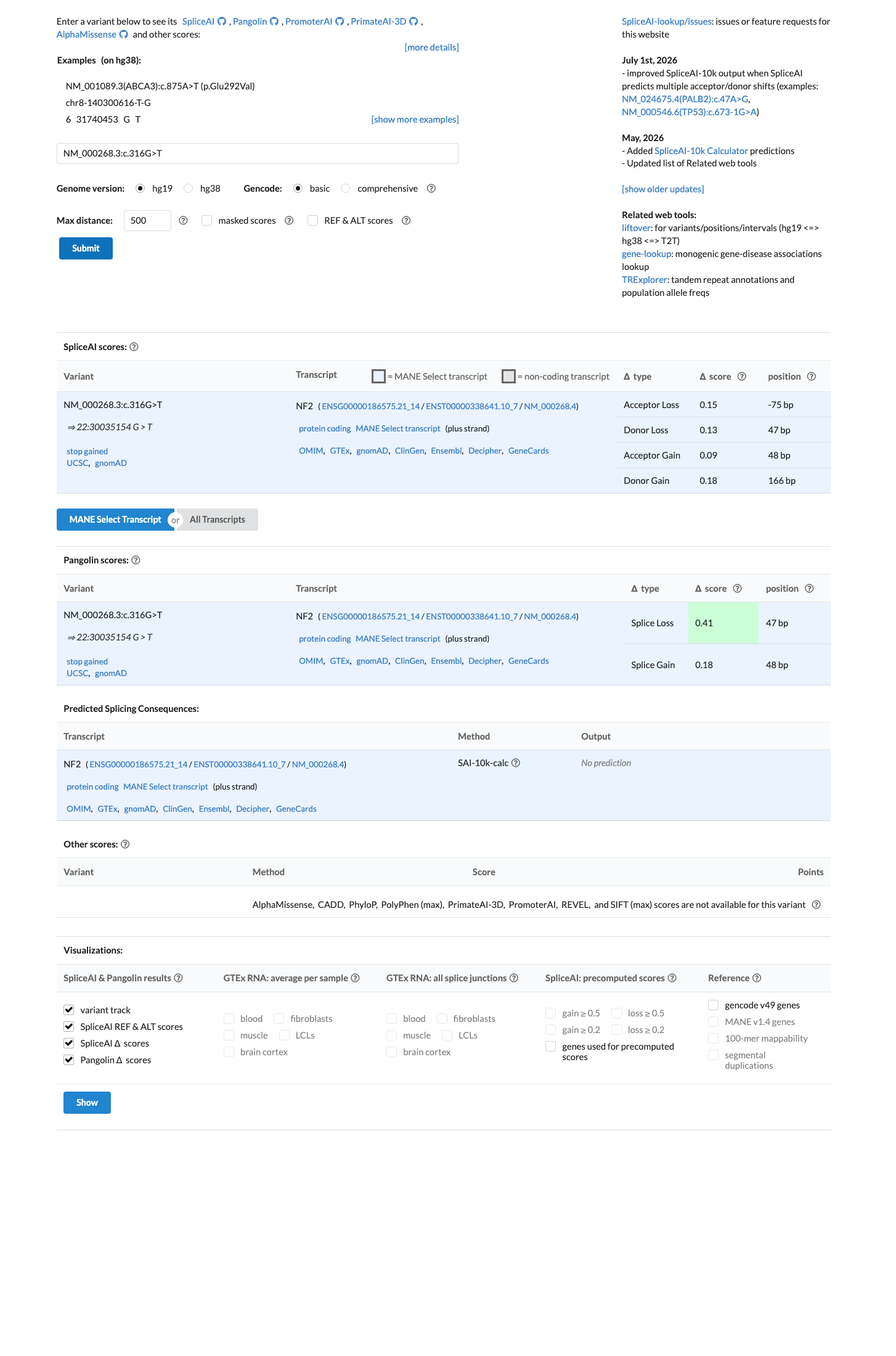
SpliceAI predicts no significant splice impact for this variant (max delta score = 0.18). BayesDel score = 0.66.
Functional
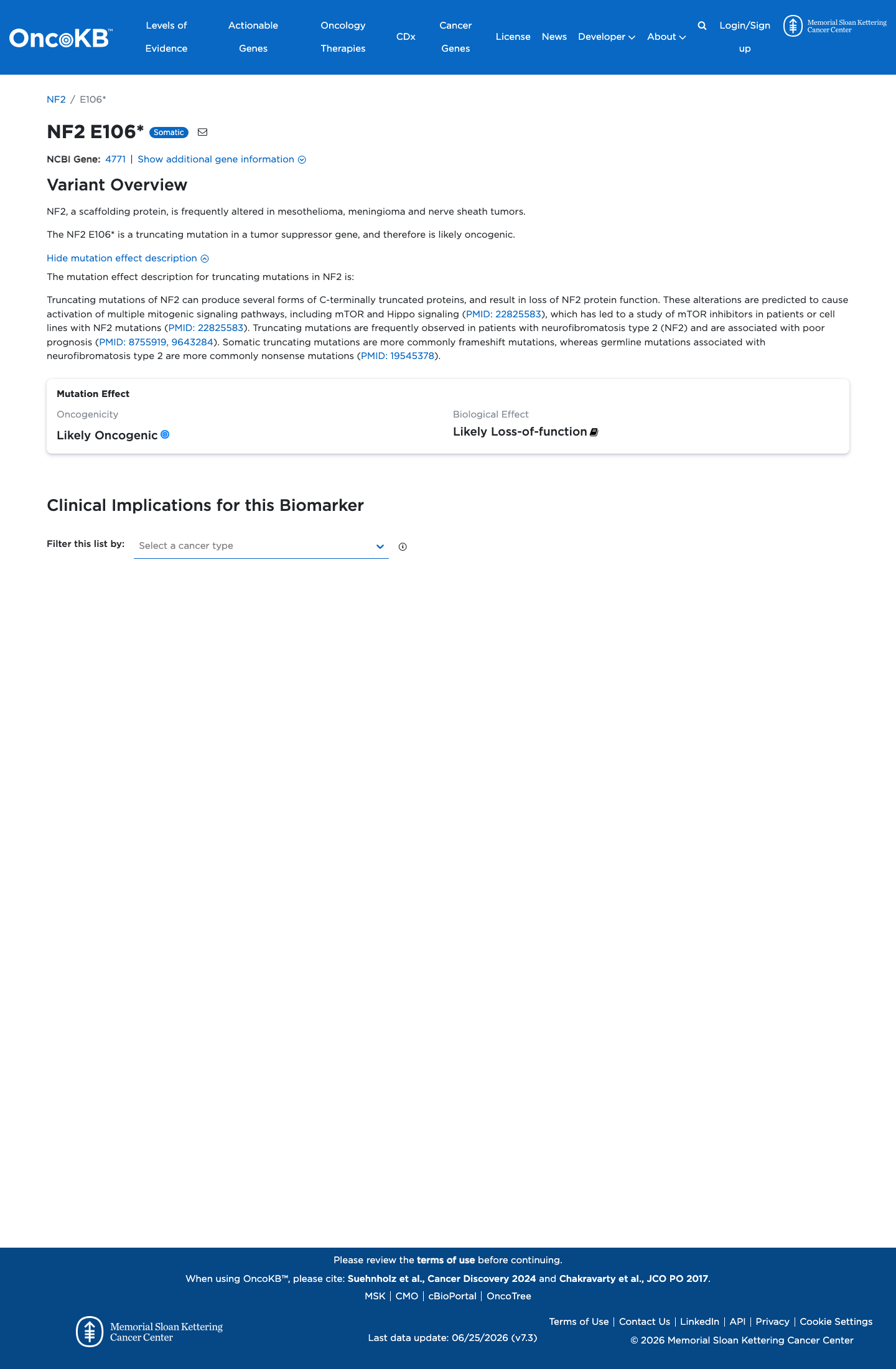
Likely Oncogenic
OncoKB identified variant-specific curated literature and context relevant to functional review; biological-effect context: Likely Loss-of-function; curated oncogenicity label: Likely Oncogenic.
COSMIC

Cancer hotspots
Somatic evidence
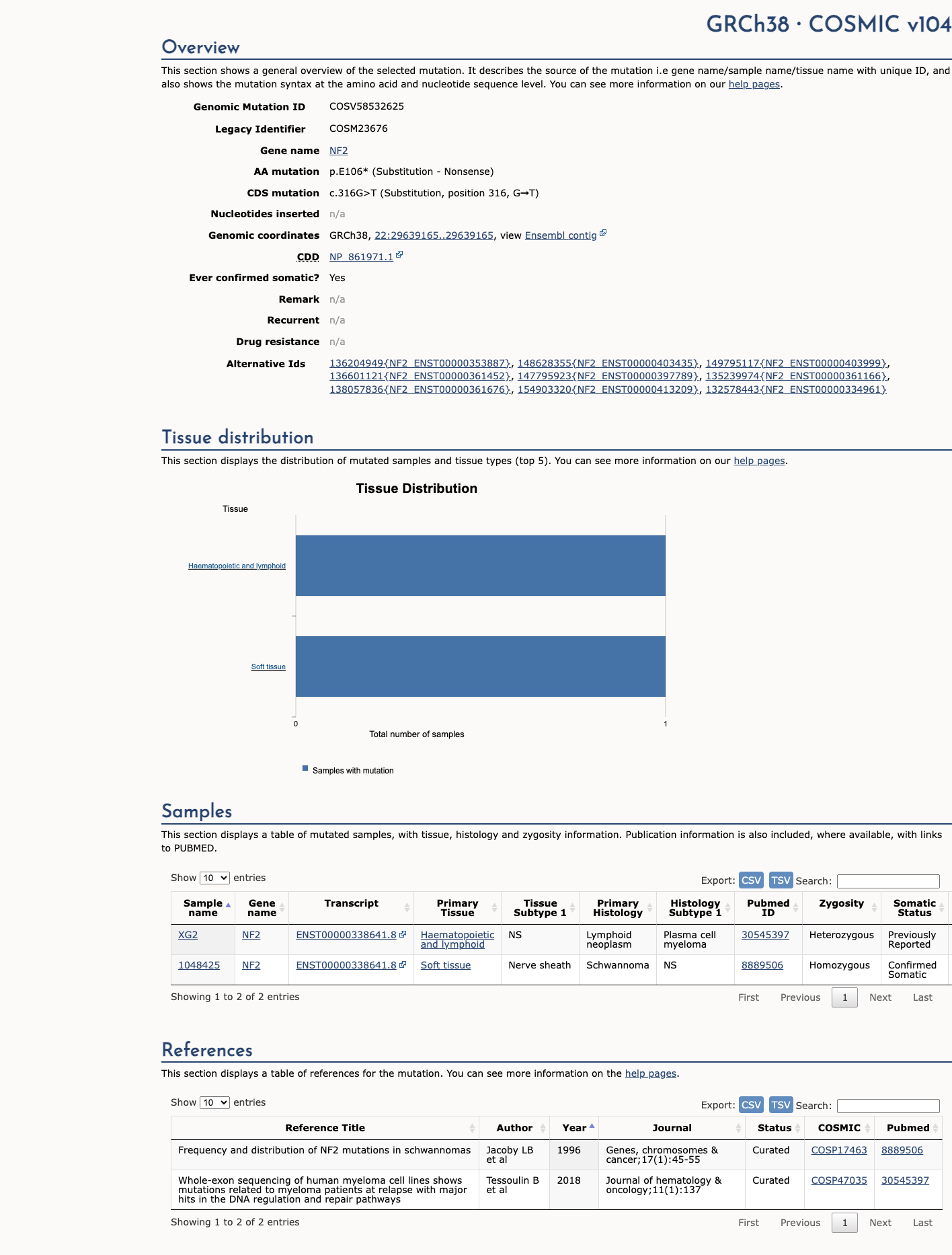
Not in COSMIC / hotspots
COSMIC
This variant does not lie in a statistically significant hotspot. This variant has previously been reported in somatic cancers (COSMIC; COSV58532625, n = 2 times).
Hotspots
This variant does not lie in a statistically significant hotspot.
Sources & reference links
Triaged references · 9 PMIDs not cited in assessment
22825583 ↗
New strategies in pleural mesothelioma: BAP1 and NF2 as novel targets for therapeutic development and risk assessment.
ONCOKB
8755919 ↗
Type of mutation in the neurofibromatosis type 2 gene (NF2) frequently determines severity of disease.
ONCOKB
9643284 ↗
Genotype/phenotype correlations in type 2 neurofibromatosis (NF2): evidence for more severe disease associated with truncating mutations.
ONCOKB
19910496 ↗
Tumor-suppression functions of merlin are independent of its role as an organizer of the actin cytoskeleton in Schwann cells.
CLINVAR
35101336 ↗
Standards for the classification of pathogenicity of somatic variants in cancer (oncogenicity): Joint recommendations of Clinical Genome Resource (ClinGen), Cancer Genomics Consortium (CGC), and Variant Interpretation for Cancer Consortium (VICC).
CLINVAR
22918138 ↗
Opportunities and challenges associated with clinical diagnostic genome sequencing: a report of the Association for Molecular Pathology.
CLINVAR
34131312 ↗
Chromosomal microarray analysis, including constitutional and neoplastic disease applications, 2021 revision: a technical standard of the American College of Medical Genetics and Genomics (ACMG).
CLINVAR
23619274 ↗
American College of Medical Genetics and Genomics technical standards and guidelines: microarray analysis for chromosome abnormalities in neoplastic disorders.
CLINVAR