NM_000535.7:c.736_741delinsTGTGTGTGAAG (p.Pro246CysfsTer3) is a frameshift indel in exon 7 of PMS2 that introduces a premature termination codon at amino acid position 248, meeting PVS1 at Very Strong strength under the InSiGHT PMS2 VCEP v2.0.0 (PTC ≤ codon 798).1 The variant is absent from gnomAD v2.1, v4.1, and gnomAD-Canada v1.0 population databases, meeting PM2_Supporting under InSiGHT PMS2 VCEP (allele frequency <0.00002).2 This variant has been classified as Pathogenic by the InSiGHT expert panel (ClinVar variation ID 91366) and reported in 24 clinical laboratories as Pathogenic. It is a well-characterized founder mutation prevalent in Europe and North America, originally described by Clendenning et al. (2006) and extensively phenotyped by Senter et al. (2008) in 12 probands with Lynch syndrome-associated tumors showing isolated PMS2 loss by IHC.3
Final classification
Pathogenic
PVS1PM2PP5
PMS2
c.736_741delinsTGTGTGTGAAG
p.Pro246CysfsTer3
This variant
NM_000535.7:c.736_741delinsTGTGTGTGAAG (p.Pro246CysfsTer3) is a frameshift indel in exon 7 of PMS2 that introduces a premature termination codon at amino acid position 248, meeting PVS1 at Very Strong strength under the InSiGHT PMS2 VCEP v2.0.0 (PTC ≤ codon 798).
ClinGen InSiGHT Hereditary Colorectal Cancer/Polyposis Expert Panel Specifications to the ACMG/AMP Variant Interpretation Guidelines for PMS2 Version 2.0.0 v2.0.0 criteria-combination framework: matched Rule4 (1 Pathogenic.Very Strong + Pathogenic.Supporting >=2) with applied criteria: PVS1 very strong, PM2 supporting, PP5 supporting; maps to Pathogenic.
Classification rationale
PVS1PM2PP5
Pathogenic
PMS2 c.736_741delinsTGTGTGTGAAG
PVS1 + PM2 + PP5
→
Pathogenic
1
cspec ↗pvs1_gene_context
LYFE Sciences is an AI system, and it can make mistakes. Criteria
may be applied incorrectly, sources may be misread, and a confident-looking
classification can still be wrong. Double-check every criterion and
its underlying evidence before relying on any call.
Gene diagram
· NM_000535.7 · variants mapped to exon structure
PMS2
NM_000535.7
Fetching transcript structure from UCSC…
Applied criteria · 3 applied · 11 assessed
MetEvidence satisfies this criterion.
Not metEvaluated against available evidence; threshold not reached.
Not assessedApplies in principle, but no evidence was found to evaluate it.
N/ADoesn't apply to this variant type.
Applied · 3
Strength
Supporting
Moderate
Strong
Very strong
PVS1
very strong
Pathogenic
NM_000535.7:c.736_741delinsTGTGTGTGAAG is a frameshift indel in exon 7 introducing a premature termination codon at codon 248 (p.Pro246CysfsTer3). Under InSiGHT PMS2 VCEP v2.0.0, nonsense/frameshift variants introducing a PTC at codon ≤798 meet PVS1 at Very Strong strength. The PTC at codon 248 falls well within this boundary.
Frameshift indel introducing premature termination codon (PTC) at amino acid position 248PMS2 PTC threshold for PVS1_VeryStrong is ≤ codon 798 per InSiGHT VCEP v2.0.0PMS2 germline loss-of-function is an established disease mechanism for Lynch syndrome
PM2
supporting
Pathogenic
This variant is absent from gnomAD v2.1, v4.1, and gnomAD-Canada v1.0. Under InSiGHT PMS2 VCEP v2.0.0, PM2_Supporting is met when the allele frequency is <0.00002 (<1 in 50,000 alleles) in the gnomAD v4 dataset.
Absent from gnomAD v2.1 (exomes)Absent from gnomAD v4.1 (exomes)Absent from gnomAD-Canada v1.0 (genomes)
Assessed · not applied
· 8 not met · 3 not assessed
Pathogenic
PS2
No de novo occurrence data were identified for this variant.
PS3
No calibrated functional assay data with functional odds for pathogenicity are available for this specific variant.
PP1
No co-segregation data (pedigrees with Bayes Likelihood Ratio) were available in the case materials to evaluate PP1.
PP3
PP3 under InSiGHT PMS2 VCEP v2.0.0 applies to missense variants with MAPP/PP2 Prior P score >0.68 or non-canonical splice variants with SpliceAI delta ≥0.2.
PP4
No patient-specific tumor MSI or IHC data were available in the case materials to evaluate PP4.
Benign
BA1
BA1 under InSiGHT PMS2 VCEP v2.0.0 requires gnomAD v4 Grpmax filtering allele frequency ≥0.0028 (0.28%).
BS1
BS1 under InSiGHT PMS2 VCEP v2.0.0 requires gnomAD v4 Grpmax filtering allele frequency ≥0.00028 (0.028%).
BS2
BS2 under InSiGHT PMS2 VCEP v2.0.0 requires documented co-occurrence in trans with a known pathogenic PMS2 variant in a colorectal cancer patient diagnosed after age 45 without clinical manifestations of CMMRD.
BS3
No calibrated functional assay data demonstrating functional odds for pathogenicity ≤0.48 or variant-specific proficient function are available.
BS4
No lack-of-segregation data available.
BP5
No patient-specific tumor data (MSS status, IHC results, BRAF V600E, or MLH1 methylation testing) were available in the case materials.
N/A · 13
PS1 · PS4 · PM1 · PM4 · PM5 · PM6 · PP2 · BP1 · BP2 · BP3 · BP4 · BP6 · BP7
Research & evidence
Population frequency · supports pathogenic
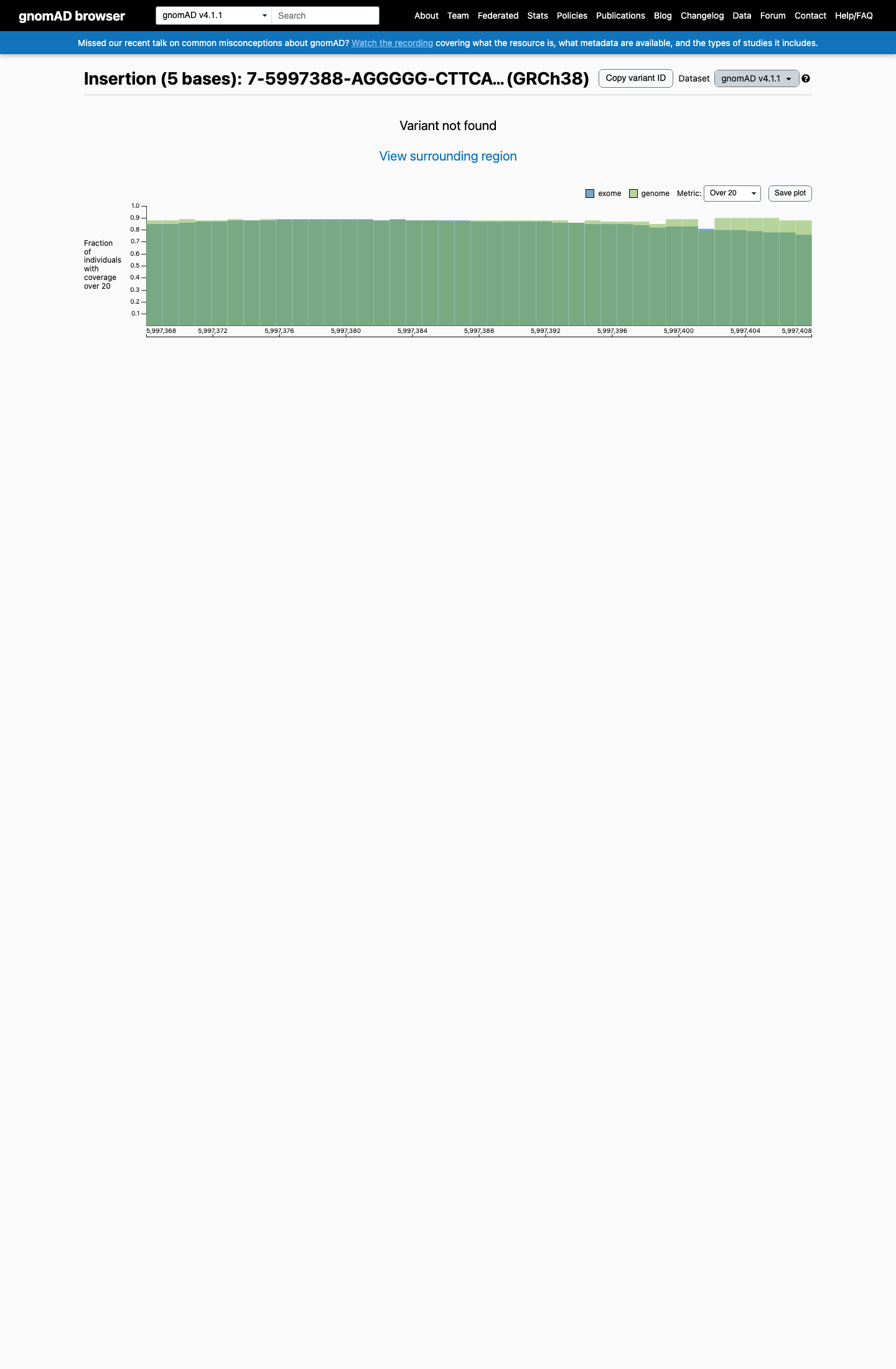
gnomAD v4.1
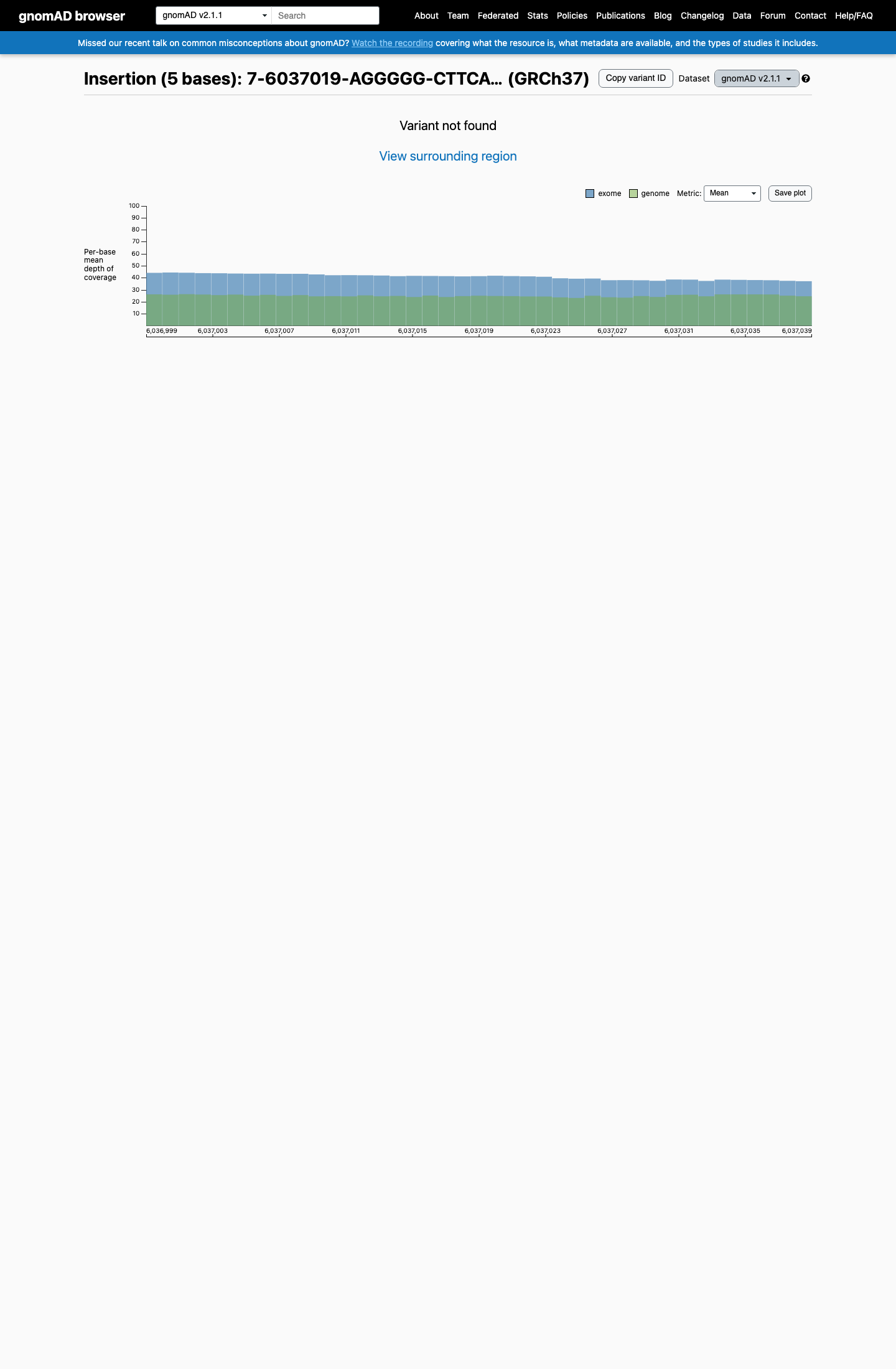
gnomAD v2.1
v4.1
Absent from gnomAD v4.1.
v2.1
Absent from gnomAD v2.1.
🇨🇦 CA
Absent from gnomAD-Canada v1.0.
Allele frequency by ancestry
three datasets · side by side
gnomAD v4.1
Absent
· 0 / ?
0 hom
0 hom
Not observed in any ancestry group.
gnomAD v2.1
Absent
· 0 / ?
0 hom
0 hom
Not observed in any ancestry group.
gnomAD Canada 🇨🇦
Absent
· 0 / ?
0 hom
0 hom
Not observed in any ancestry group.

ClinVar
This variant has been reported in ClinVar as Pathogenic (24 clinical laboratories) and as Pathogenic by International Society for Gastrointestinal Hereditary Tumours (InSiGHT) (expert panel). (ClinVarID = 91366)
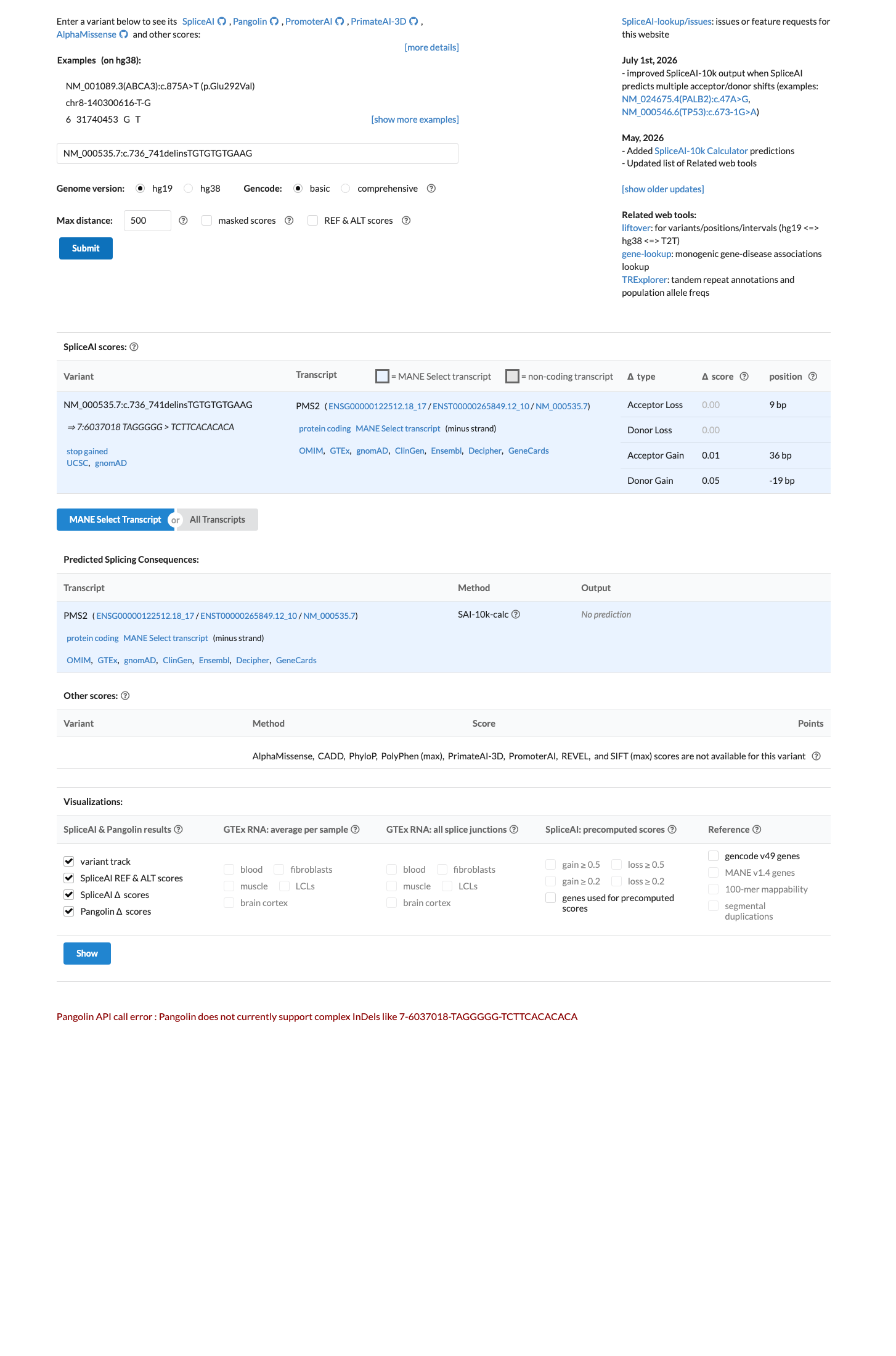
In silico
SpliceAI predicts no significant splice impact for this variant (max delta score = 0.05).
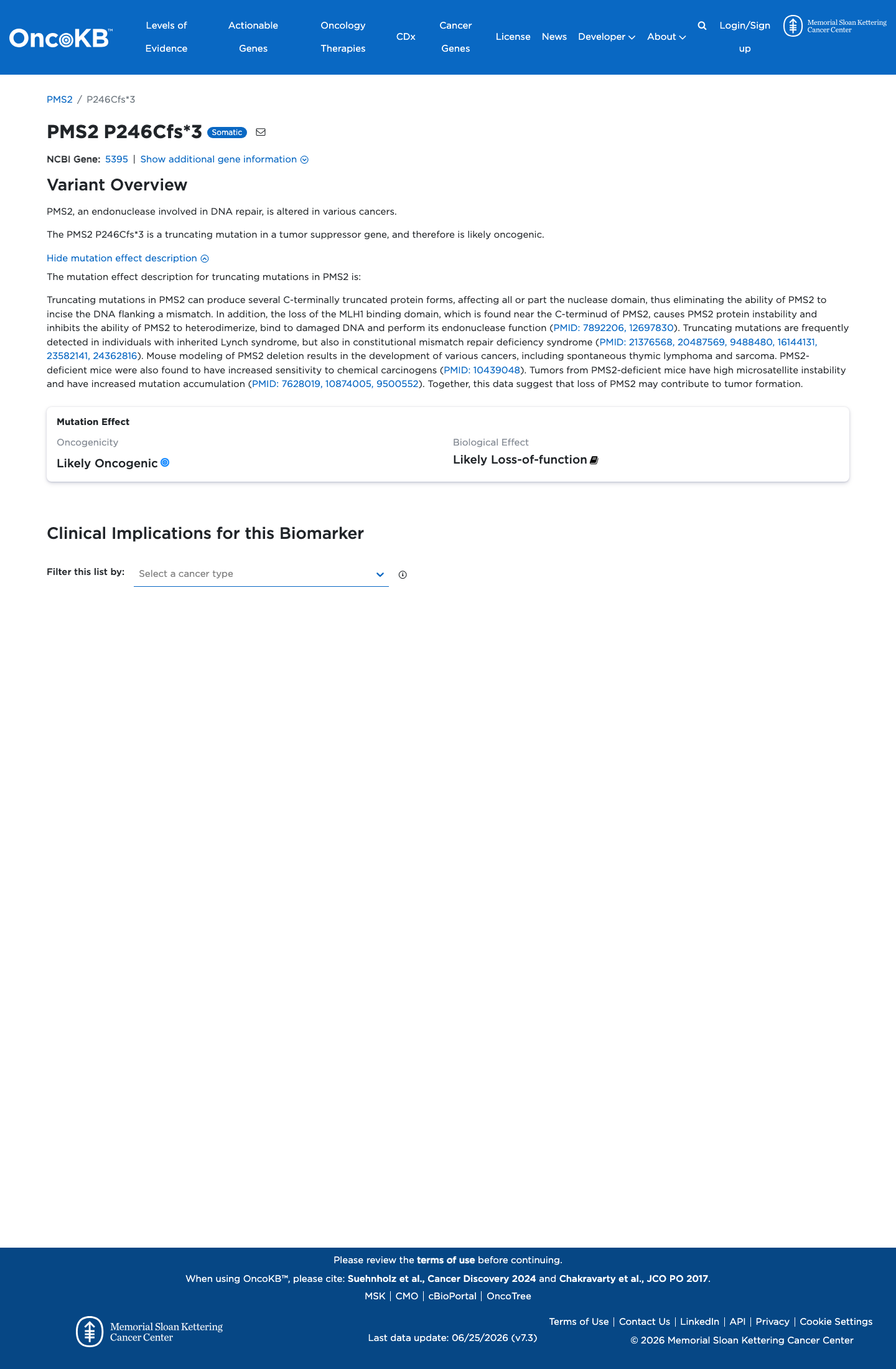
Functional
Likely Oncogenic
OncoKB identified variant-specific curated literature and context relevant to functional review; biological-effect context: Likely Loss-of-function; curated oncogenicity label: Likely Oncogenic.

COSMIC

Cancer hotspots
Somatic evidence
Not in COSMIC / hotspots
COSMIC
This variant does not lie in a statistically significant hotspot. This variant has not previously been reported in somatic cancers (COSMIC).
Hotspots
This variant does not lie in a statistically significant hotspot.
Literature · how each cited paper was used
4papers cited
Each card is an audit: what was searched, what was found, whether it names the variant, which criteria it fed, and why. 4 further PMIDs triaged but not cited — see Sources & references.
Long-range PCR facilitates the identification of PMS2-specific mutations.
Searched
c.736_741del6ins11c.736_741delinsTGTGTGTGAAGP246FfsX7P246Cfs
Found
First reported identification of c.736_741del6ins11 (p.P246FfsX7) as a novel deleterious PMS2 mutation. Detected in a colorectal cancer cohort screened by long-range PCR; described as one of four strong candidate deleterious mutations among five novel mutations identified.
Variant
✓ Names this variant — characterised directly
Applied to
→PVS1
met
Why
Initial identification and characterization of the variant as a pathogenic frameshift mutation in PMS2; supports PVS1 classification.
Of these changes, four (c.705+1G>T, c.862_863del, c.736_741del6ins11, and c.2007-1G>A) are strong candidates for being deleterious.
Location Abstract; Results paragraph 3; Figure 1c; Table 2 · full text
A frame-shift mutation of PMS2 is a widespread cause of Lynch syndrome.
Searched
c.736_741del6ins11PMS2 frameshift
Found
Characterizes the c.736_741del6ins11 PMS2 frameshift mutation as a widespread founder cause of Lynch syndrome. The paper describes its prevalence and likely origin.
Variant
✓ Names this variant
Applied to
→PVS1
met
Why
Title-based and abstract-based citation; confirms variant as a known pathogenic founder mutation in Lynch syndrome. No full text available for direct verification.
A frame-shift mutation of PMS2 is a widespread cause of Lynch syndrome.
Location Title and abstract
The clinical phenotype of Lynch syndrome due to germ-line PMS2 mutations.
Searched
c.736_741del6ins11P246CfsX3P246Cfs
Found
Comprehensive clinical characterization of PMS2 mutation carriers. The c.736_741del6ins11 (P246CfsX3) frameshift mutation was the most frequently observed PMS2 mutation, found in 12 ostensibly unrelated probands with Lynch syndrome-associated tumors showing isolated PMS2 loss on IHC. Founder haplotype analysis traced the mutation to the first millennium, likely originating in Sweden or England. Among 47 probands tested for BRAF, two c.736_741del6ins11 carriers harbored the BRAF V600E mutation.
Variant
✓ Names this variant — characterised directly
Applied to
→PVS1
met
Why
Confirms variant as a recurrent pathogenic PMS2 founder mutation with clinical phenotype consistent with Lynch syndrome; referenced in PVS1 assessment.
The most notable of the 5 exceptions was an insertion/deletion frameshift mutation in exon 7, which was seen in 12 ostensibly unrelated probands.
Location Results (Figure 1; Table 1); BRAF Results paragraph · full text
MSH6 and PMS2 mutation positive Australian Lynch syndrome families: novel mutations, cancer risk and age of diagnosis of colorectal cancer.
Searched
c.736_741del6ins11P246Cfs736
Found
Austrian Lynch syndrome study reporting PMS2 mutations. The c.736_741del6ins11 mutation was identified in three PMS2 families: CRC diagnosed at ages 41 and 47 years, and one cancer-free carrier at age 67. Described as a truncating mutation previously reported.
Variant
✓ Names this variant — characterised directly
Applied to
→PVS1
met
Why
Additional independent observation of variant in Lynch syndrome families; supports PVS1.
Family PMS2_1, PMS2_2, PMS2_5: c.736_741del6ins11, Truncating
Location Table 4: PMS2 probands mutation list · full text
Sources & reference links
9Sources
Triaged references · 4 PMIDs not cited in assessment
10439048 ↗
Mice defective in the DNA mismatch gene PMS2 are hypersensitive to MNU induced thymic lymphoma and are partially protected by transgenic expression of human MGMT.
ONCOKB
10874005 ↗
Mutagenesis in PMS2- and MSH2-deficient mice indicates differential protection from transversions and frameshifts.
ONCOKB