Starting
Initialising…
0%
TP53
Final classification
Likely Pathogenic
TP53 c.267del · p.Ser90ProfsTer33
TP53

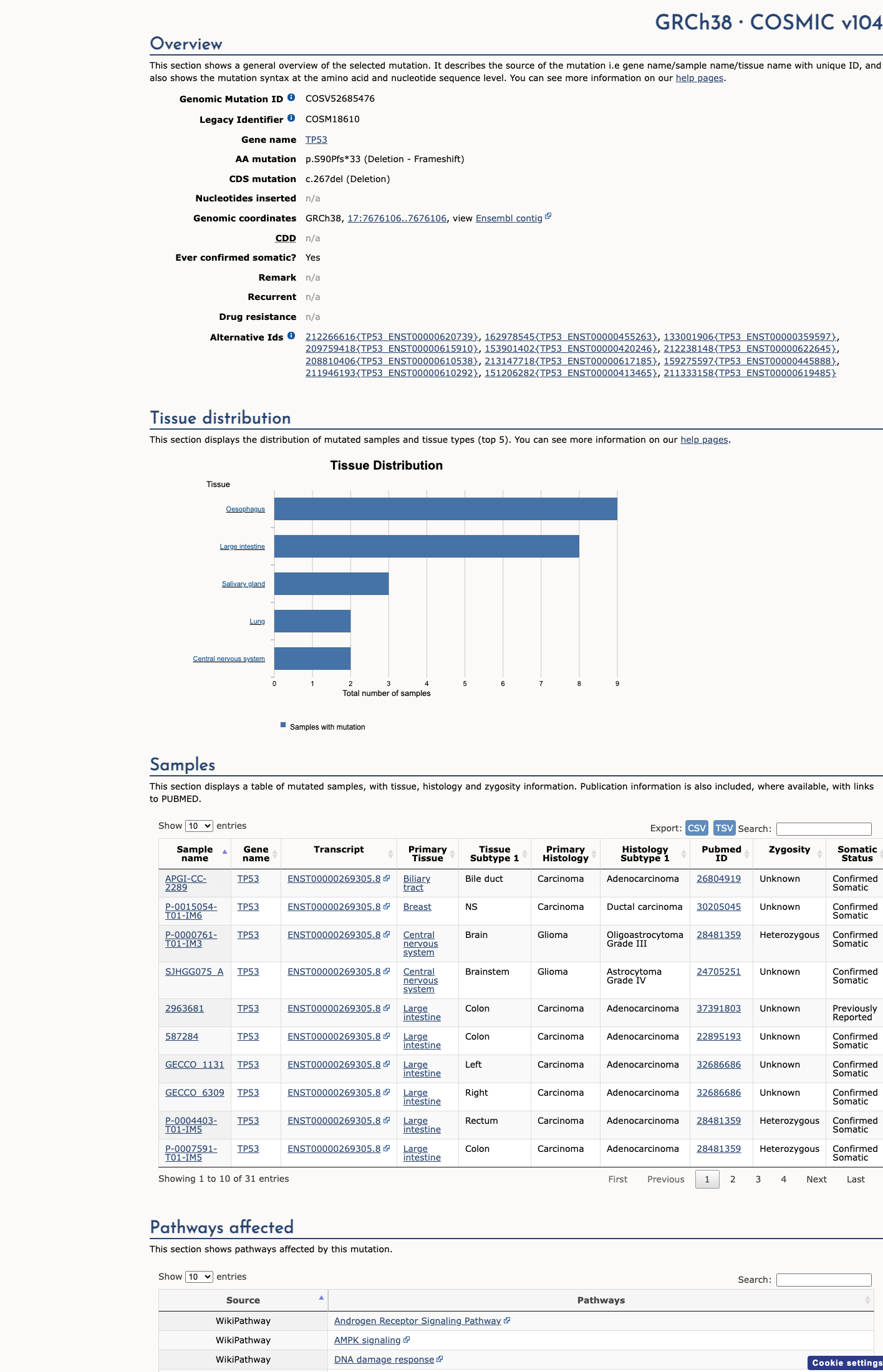
The TP53 c.267del (p.Ser90ProfsTer33) variant has been observed in somatic cancers in COSMIC (30 occurrences) and has been reported in ClinVar with Pathogenic and Likely pathogenic germline submissions.

Gene
TP53
Transcript
NM_000546.6
HGVS · transcript:coding
NM_000546.6:c.267del
Consequence
N/A
GRCh38
chr17:7676101 AG>A
GRCh37
chr17:7579419 AG>A
Basis Tavtigian et.al., 2020 - Bayesian adaptation of Richards et.al., 2015 v2.4.0 point-based framework: PVS1 very strong (+8) + PM2 supporting (+1) = 9 points, which maps to Likely Pathogenic.
Tavtigian et.al., 2020 - Bayesian adaptation of Richards et.al., 2015 v2.4.0 point-based framework: PVS1 very strong (+8) + PM2 supporting (+1) = 9 points, which maps to Likely Pathogenic.
Classification rationale
PVS1PM2 Likely Pathogenic
TP53 c.267del

The TP53 c.267del (p.Ser90ProfsTer33) variant has been observed in somatic cancers in COSMIC (30 occurrences) and has been reported in ClinVar with Pathogenic and Likely pathogenic germline submissions.1 This variant is absent from gnomAD v2.1, gnomAD v4.1, and gnomAD-Canada v1.0, placing its allele frequency below the TP53 PM2 threshold of less than 0.00003.2 This early frameshift creates a premature stop at codon 122, which is well upstream of the TP53 VCEP p.Lys351 cutoff for predicted nonsense-mediated decay and supports PVS1 at very strong strength.3 SpliceAI predicts no significant splice impact for this variant (max delta score 0.07), and this does not weaken the TP53 null-variant interpretation.4

PVS1 + PM2 Likely Pathogenic
3 cspec ↗pvs1_gene_contextpvs1_variant_assessmentvcep_pvs1_flowchart
4 spliceai ↗vcep_pvs1_flowchart
Gene diagram · NM_000546.6 · variants mapped to exon structure
TP53 NM_000546.6
Fetching transcript structure from UCSC…
Applied criteria · 2 met · select any tile
Met
Not met
Not assessed
N/A
Strength very strong supporting
Pathogenic evidence
PVS
PS
PM
PP
Benign evidence
BA
BS
BP
Rationale
Select a criterion.
Sources
Evidence used
    Gaps remaining
      Rule
      Research & evidence
      Population frequency · supports pathogenic
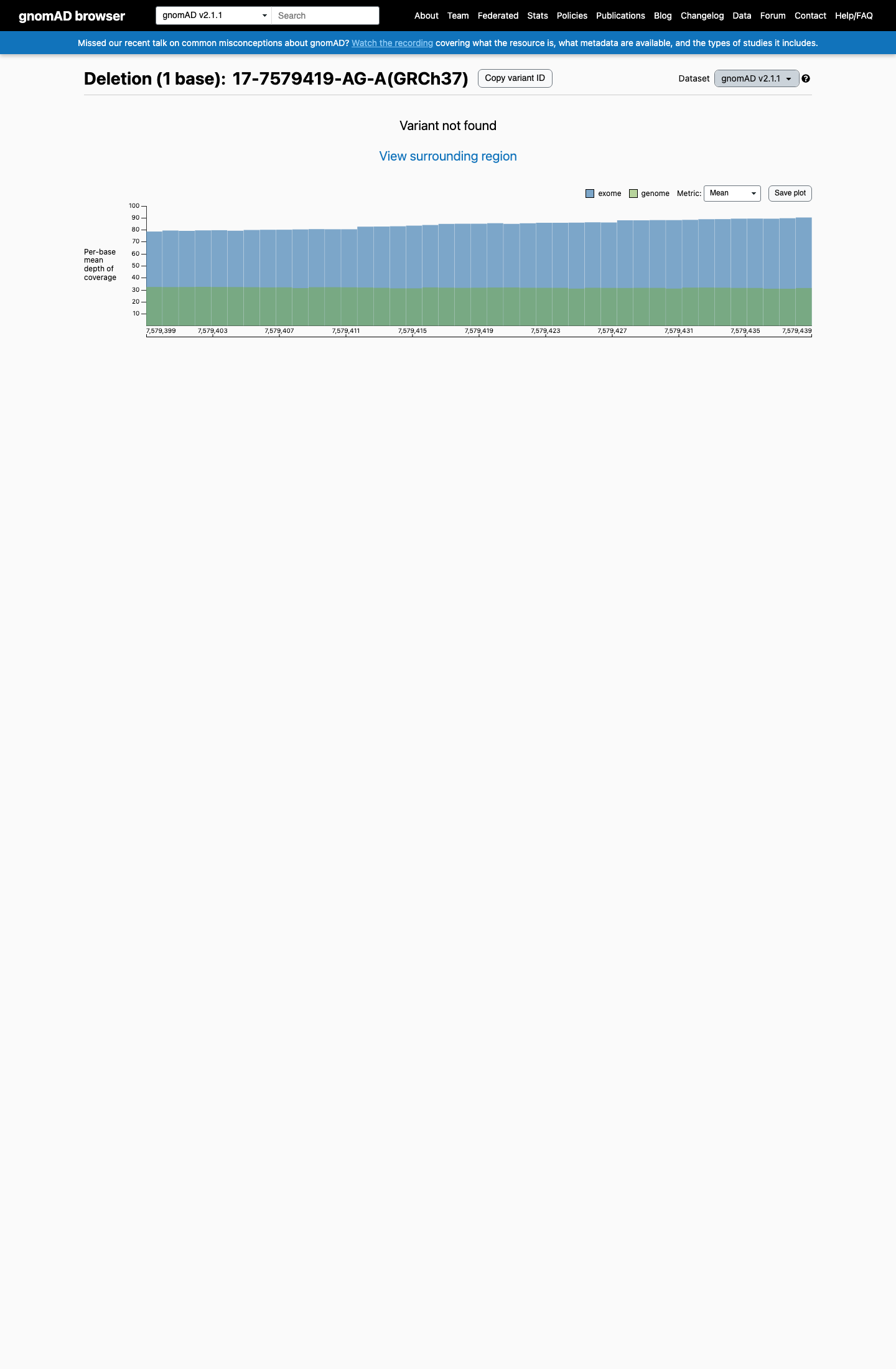
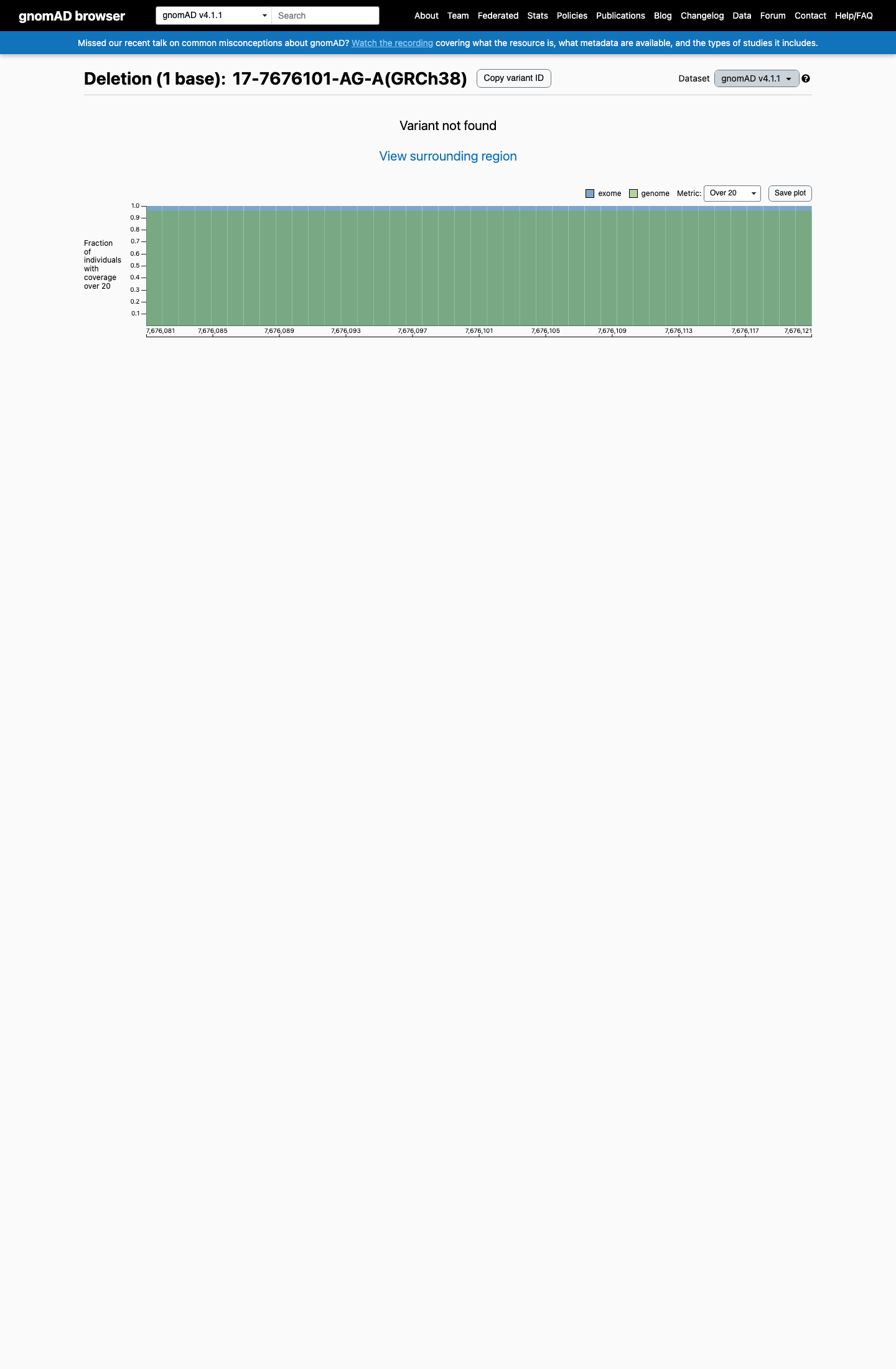
      gnomAD v4.1 screenshot
      gnomAD v4.1
      gnomAD v2.1 screenshot
      gnomAD v2.1
      v4.1
      Absent from gnomAD v4.1.
      v2.1
      Absent from gnomAD v2.1.
      🇨🇦 CA
      Absent from gnomAD-Canada v1.0.
      Allele frequency by ancestry
      three datasets · side by side
      gnomAD v4.1
      Absent · 0 / ?
      0 hom
      Not observed in any ancestry group.
      gnomAD v2.1
      Absent · 0 / ?
      0 hom
      Not observed in any ancestry group.
      gnomAD Canada 🇨🇦
      Absent · 0 / ?
      0 hom
      Not observed in any ancestry group.
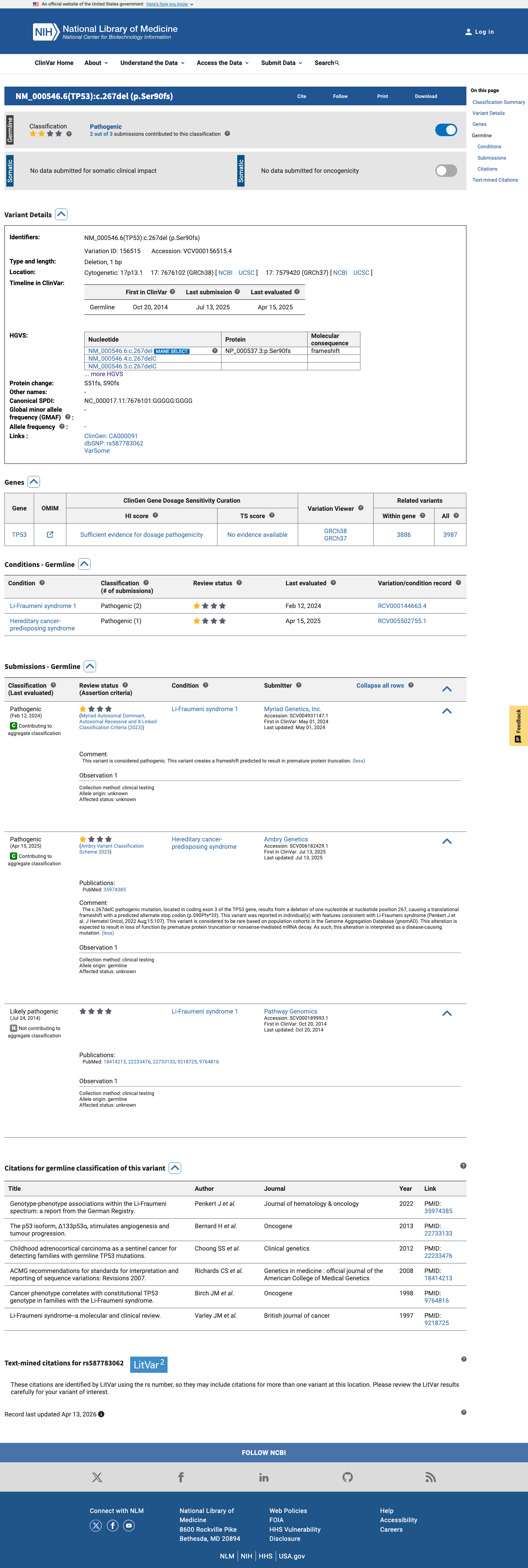
      ClinVar screenshot
      ClinVar
      This variant has been reported in ClinVar as Pathogenic (2 clinical laboratories) and as Likely pathogenic (1 clinical laboratory). (ClinVarID = 156515)
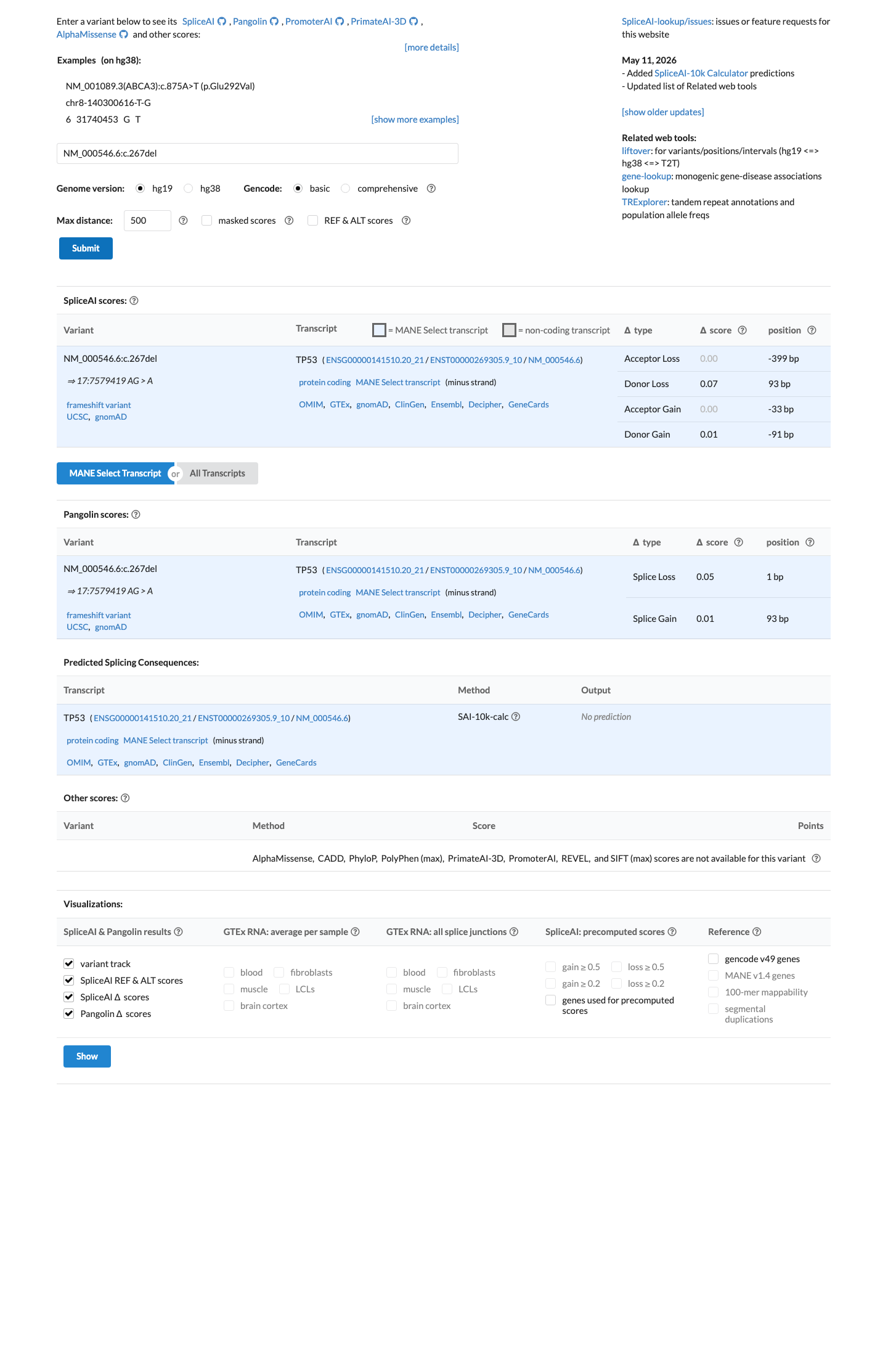
      SpliceAI screenshot
      In silico
      SpliceAI predicts no significant splice impact for this variant (max delta score = 0.07).
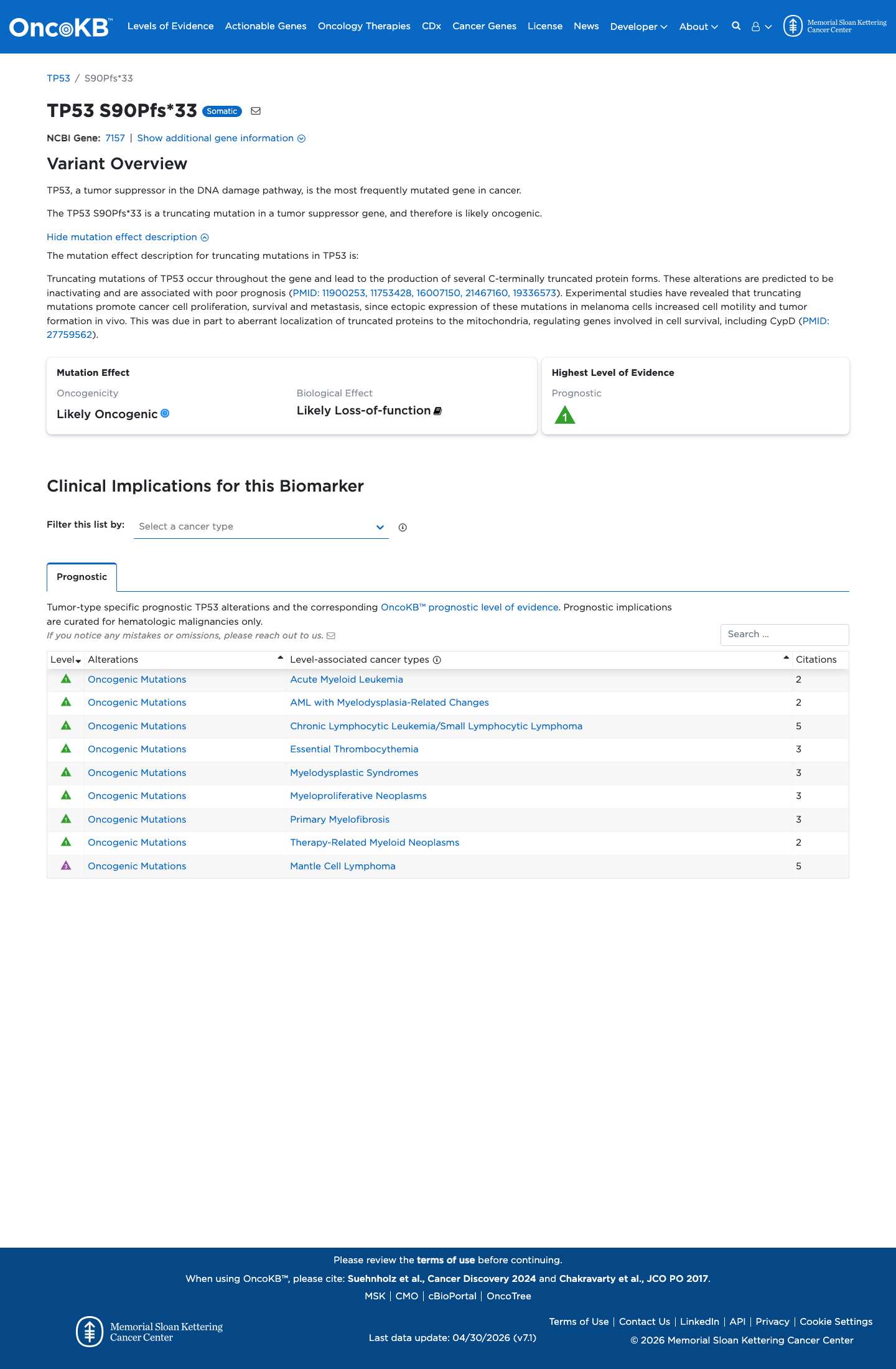
      Functional / OncoKB screenshot
      Functional Likely Oncogenic
      OncoKB identified variant-specific curated literature and context relevant to functional review; biological-effect context: Likely Loss-of-function; curated oncogenicity label: Likely Oncogenic.
      OncoKB ↗
      COSMIC screenshot
      COSMIC
      Cancer hotspots screenshot
      Cancer hotspots
      Somatic evidence Not in COSMIC / hotspots
      COSMIC
      This variant does not lie in a statistically significant hotspot. This variant has previously been reported in somatic cancers (COSMIC; COSV52685476, n = 30 times).
      Hotspots
      This variant does not lie in a statistically significant hotspot.
      Sources & reference links
      9Sources
      CSpec VCEP
      ClinVar
      gnomAD v2.1
      gnomAD v4.1
      gnomAD-Canada
      SpliceAI
      OncoKB
      COSMIC
      Cancer hotspots
      Triaged references · 9 PMIDs not cited in assessment
      11753428 ↗ A novel mechanism of tumorigenesis involving pH-dependent destabilization of a mutant p53 tetramer. ONCOKB
      11900253 ↗ Rescuing the function of mutant p53. ONCOKB
      16007150 ↗ The relationship among p53 oligomer formation, structure and transcriptional activity using a comprehensive missense mutation library. ONCOKB
      19336573 ↗ High incidence of protein-truncating TP53 mutations in BRCA1-related breast cancer. ONCOKB
      21467160 ↗ Prognostic significance of truncating TP53 mutations in head and neck squamous cell carcinoma. ONCOKB
      27759562 ↗ TP53 exon-6 truncating mutations produce separation of function isoforms with pro-tumorigenic functions. ONCOKB
      22233476 ↗ Childhood adrenocortical carcinoma as a sentinel cancer for detecting families with germline TP53 mutations. CLINVAR
      22733133 ↗ The p53 isoform, Δ133p53α, stimulates angiogenesis and tumour progression. CLINVAR
      18414213 ↗ ACMG recommendations for standards for interpretation and reporting of sequence variations: Revisions 2007. CLINVAR