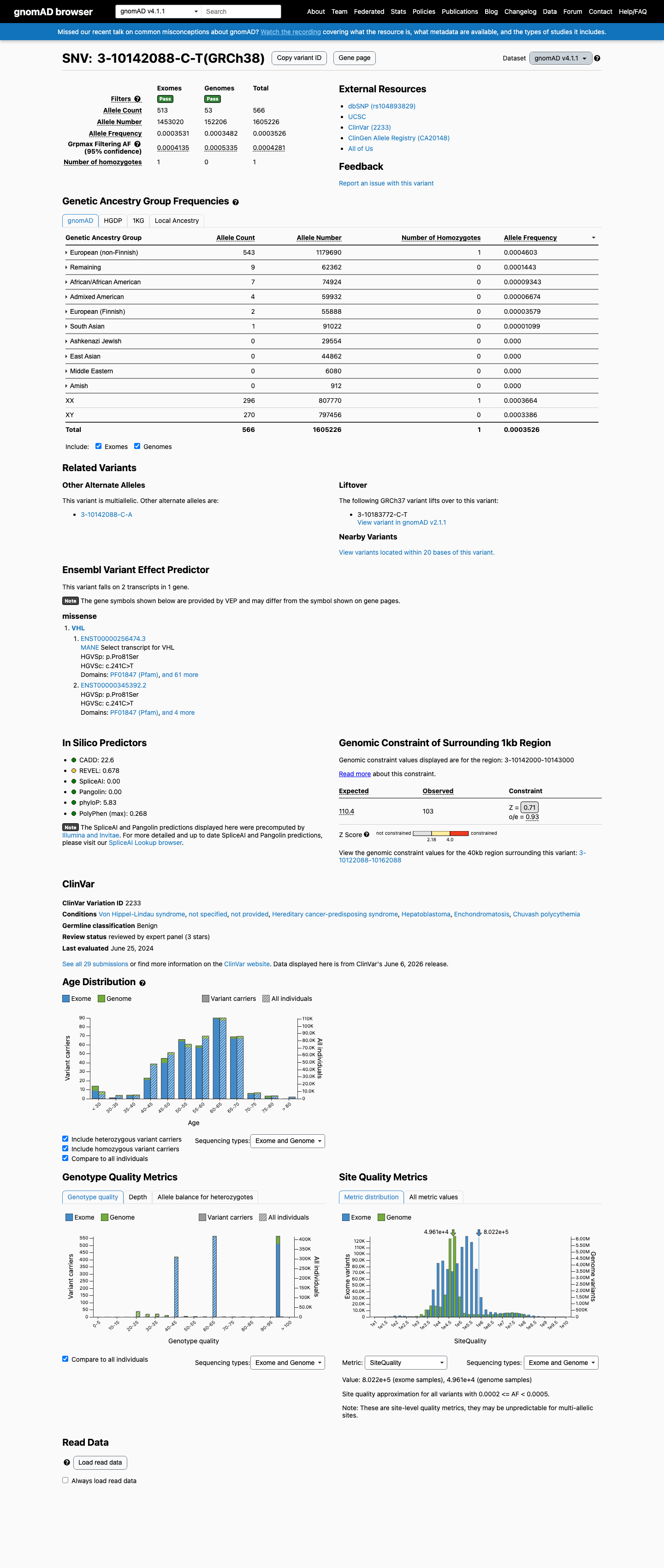
NM_000551.3:c.241C>T (p.Pro81Ser) is present in gnomAD v4.1 at an allele frequency of 0.035% (566/1,605,226 alleles, 1 homozygote) with a GroupMax Filtering AF of 0.0428%, exceeding the VHL VCEP BA1 stand-alone benign threshold of 0.0156%.1 BA1 is met at stand-alone strength, independently establishing this variant as Benign per ACMG/AMP 2015 framework and VHL VCEP specifications. This is concordant with the ClinGen VHL Variant Curation Expert Panel classification of Benign (ClinVar VariationID 2233).2 The variant also meets BS1 at strong benign strength (grpmax FAF 0.0428% ≥ 0.00156% threshold) and BP4 at supporting benign strength (SpliceAI delta 0.00, no predicted splicing impact).3 Pathogenic criteria met at supporting strength only: PS3_Supporting (functional data from PMID:23990666 showing VBC complex disruption and HIF1A stabilization; tempered by mild effects in PMID:19228690), PM1_Supporting (located in beta domain at TCEB1/Elongin C binding site), and PP3 (REVEL 0.678 ≥ 0.664). These are insufficient to offset BA1 stand-alone benign evidence.4 This variant has been observed in COSMIC (n=20 somatic occurrences) and is reported in the literature as a trichloroethylene-associated somatic hotspot in clear cell renal cell carcinoma, but somatic mutation frequency does not alter the germline classification.5
Final classification
Benign
PS3PM1PP3BA1BS1BP4BP6
VHL
c.241C>T
p.Pro81Ser
This variant
NM_000551.3:c.241C>T (p.Pro81Ser) is present in gnomAD v4.1 at an allele frequency of 0.035% (566/1,605,226 alleles, 1 homozygote) with a GroupMax Filtering AF of 0.0428%, exceeding the VHL VCEP BA1 stand-alone benign threshold of 0.0156%.
ClinGen VHL Expert Panel Specifications to the ACMG/AMP Variant Interpretation Guidelines for VHL Version 1.1.0 v1.1.0 criteria-combination framework: matched Rule17 (1 Benign.Stand Alone) with applied criteria: PS3 supporting, PM1 supporting, PP3 supporting, BA1 stand-alone benign, BS1 strong benign, BP4 supporting benign, BP6 supporting benign; maps to Benign.
Classification rationale
PS3PM1PP3
BA1BS1BP4BP6
Benign
VHL c.241C>T
PS3 + PM1 + PP3 + BA1 + BS1 + BP4 + BP6
→
Benign
LYFE Sciences is an AI system, and it can make mistakes. Criteria
may be applied incorrectly, sources may be misread, and a confident-looking
classification can still be wrong. Double-check every criterion and
its underlying evidence before relying on any call.
Gene diagram
· NM_000551.3 · variants mapped to exon structure
VHL
NM_000551.3
Fetching transcript structure from UCSC…
Applied criteria · 7 applied · 12 assessed
MetEvidence satisfies this criterion.
Not metEvaluated against available evidence; threshold not reached.
Not assessedApplies in principle, but no evidence was found to evaluate it.
N/ADoesn't apply to this variant type.
Applied · 7
Strength
Supporting
Moderate
Strong
Very strong
PS3
supporting
review
Pathogenic
Variant-specific functional data from PMID:23990666 demonstrates that P81S VHL disrupts VBC complex interaction (fails to co-immunoprecipitate TCEB1/Elongin C) and stabilizes HIF1A under normoxia in murine ES cells. P81S teratomas showed 3-fold increased volume, reduced apoptosis, and metabolic reprogramming. However, PMID:19228690 found P81S alone has only mild structural effects with preserved HIF-1α regulation in RCC4 cells, indicating partial or context-dependent functional impact. Two independent publications with direct variant testing support PS3 at supporting strength per VCEP rules.
PMID:23990666: P81S disrupts VBC complex (loss of Elongin C co-IP)stabilizes HIF1A under normoxiaalters metabolic programming
PM1
supporting
Pathogenic
The variant is located at codon 81 in the beta domain of VHL (AA 63-155), a key functional domain. Codons 81 and 82 are direct TCEB1 (Elongin C) binding sites critical for VBC E3 ubiquitin ligase complex formation, as confirmed by structural modeling in PMID:23990666. However, cancerhotspots.org does not flag this residue as a statistically significant hotspot, limiting strength to supporting per VCEP rules (PM1_Supporting: <10 instances at the same AA in cancerhotspots.org). COSMIC reports n=20 somatic occurrences, but the VCEP PM1 rule references cancerhotspots.org specifically.
Position 81 is a direct TCEB1/Elongin C binding site in the VHL beta domain.COSMIC: n=20 somatic occurrences (COSV56546019).cancerhotspots.org: not a statistically significant hotspot.
PP3
supporting
Pathogenic
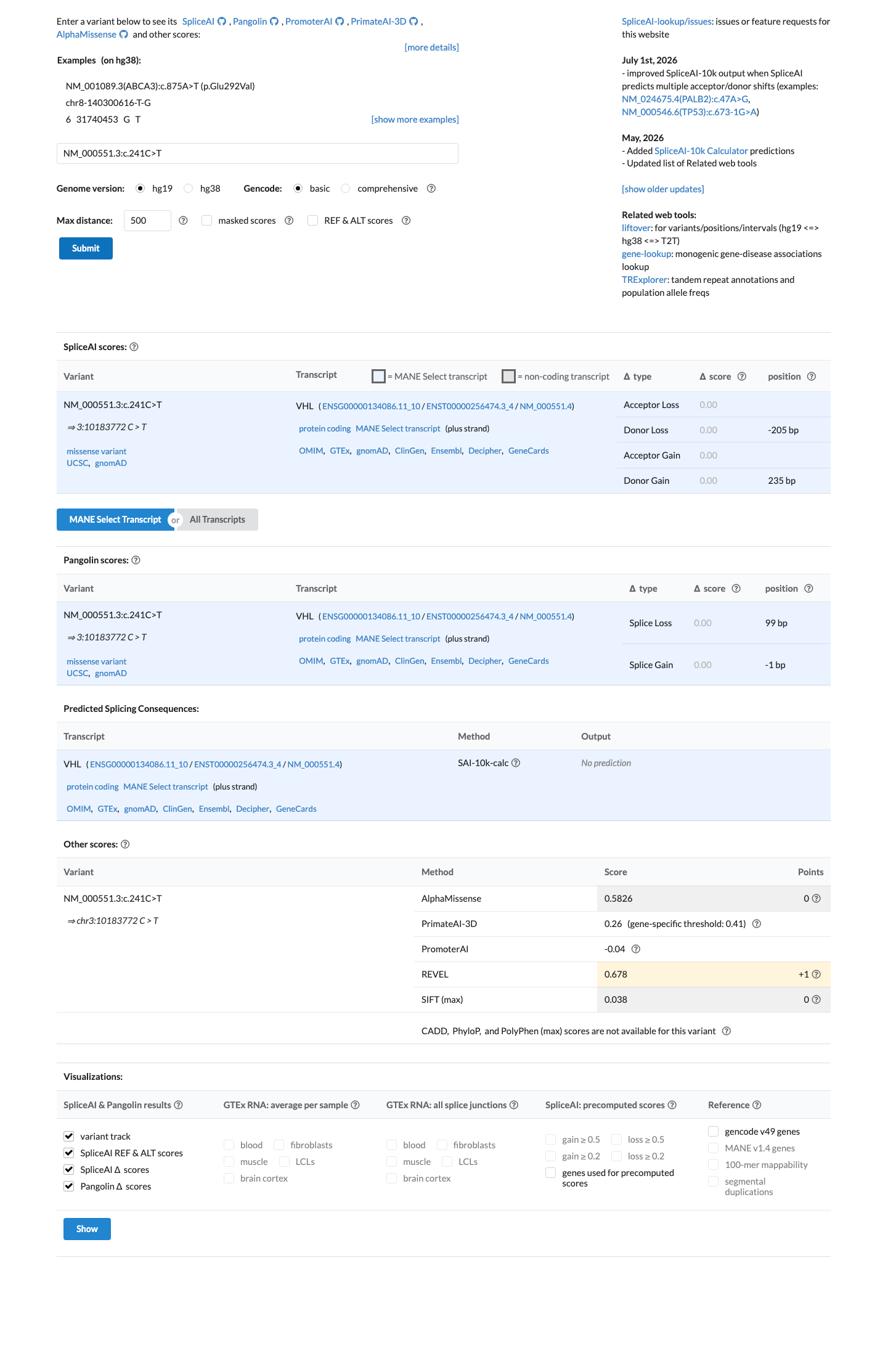
REVEL score 0.678 meets the VHL VCEP PP3 threshold of ≥0.664. This supports a deleterious effect prediction for the missense change p.Pro81Ser.
REVEL score: 0.678 (local lookup chr3:10142088 C>T).VCEP PP3 threshold: REVEL ≥ 0.664.SpliceAI max delta: 0.00 (no predicted splicing impact).
BA1
stand-alone
Benign
gnomAD v4.1 grpmax Filtering AF is 0.00042807 (0.0428%), which exceeds the VHL VCEP BA1 threshold of ≥0.000156 (0.0156%). The variant is present in 566 of 1,605,226 alleles including 1 homozygote. This allele frequency is incompatible with a highly penetrant autosomal dominant disorder. BA1 at stand-alone strength independently classifies this variant as Benign.
gnomAD v4.1: AF 0.000352598 (566/1605226 alleles)
BS1
strong
Benign
gnomAD v4.1 grpmax Filtering AF is 0.00042807 (0.0428%), which exceeds the VHL VCEP BS1 threshold of ≥0.0000156 (0.00156%). The variant is too common in the general population to be a cause of VHL disease. Note: BA1 is also met at stand-alone level, which independently establishes benign classification.
gnomAD v4.1: grpmax FAF 0.00042807.VCEP BS1 threshold: ≥0.0000156.0.00042807 ≥ 0.0000156 → BS1 met at Strong.
BP4
supporting
Benign
SpliceAI max delta score is 0.00 (≤0.1), indicating no predicted splicing impact. Per VHL VCEP, BP4 can be applied to assess lack of splicing impact with SpliceAI ≤0.1. Missense predictors are explicitly excluded from BP4 per VCEP rules.
SpliceAI max delta: 0.00 (no predicted splice impact).VCEP BP4: SpliceAI ≤0.1 indicates lack of splicing impact.REVEL and BayesDel not used per VCEP exclusion of missense predictors for BP4.
Assessed · not applied
· 12 not met · 0 not assessed
Pathogenic
PS1
No different nucleotide change resulting in the same amino acid substitution (p.Pro81Ser) has been established as pathogenic under VHL VCEP specifications.
PS2
No de novo observation data available for this variant.
PS4
No proband counting or case-control data available to apply the VHL VCEP PS4 point scoring system.
PM2
gnomAD v4.1 grpmax Filtering AF is 0.00042807 (0.0428%), which exceeds the VHL VCEP PM2_Supporting threshold of ≤0.00000156 (0.000156%).
PM5
No different pathogenic missense variant at the same amino acid residue (P81) has been identified that is classified under VHL VCEP specifications.
PM6
No de novo observation data (assumed or confirmed) available for this variant.
PP1
No co-segregation data available for this variant.
Benign
BS2
Although gnomAD v4 contains 1 homozygote for this variant, no phenotype or age data are available for this individual.
BS3
Functional data is conflicting.
BS4
No lack-of-segregation data available.
BP2
No evidence of this variant observed in trans with a known pathogenic VHL variant, in homozygous state with phenotype data, or in cis with multiple pathogenic VHL variants.
BP5
No evidence of co-occurrence with a pathogenic variant in a different gene that fully explains the patient's phenotype, per VHL VCEP BP5 requirements.
N/A · 7
PVS1 · PP2 · PP4 · PP5 · BP1 · BP3 · BP7
Research & evidence
Population frequency · supports benign
gnomAD v4.1
gnomAD v2.1
v4.1
This variant is present in gnomAD v4.1 (AF= 0.000352598; MAF= 0.03526%, 566/1605226 alleles, homozygotes = 1) and has highest observed frequency in the European (non-Finnish) population (AF= 0.00046029; MAF= 0.04603%, 543/1179690 alleles, homozygotes = 1); grpmax FAF= 0.00042807.
v2.1
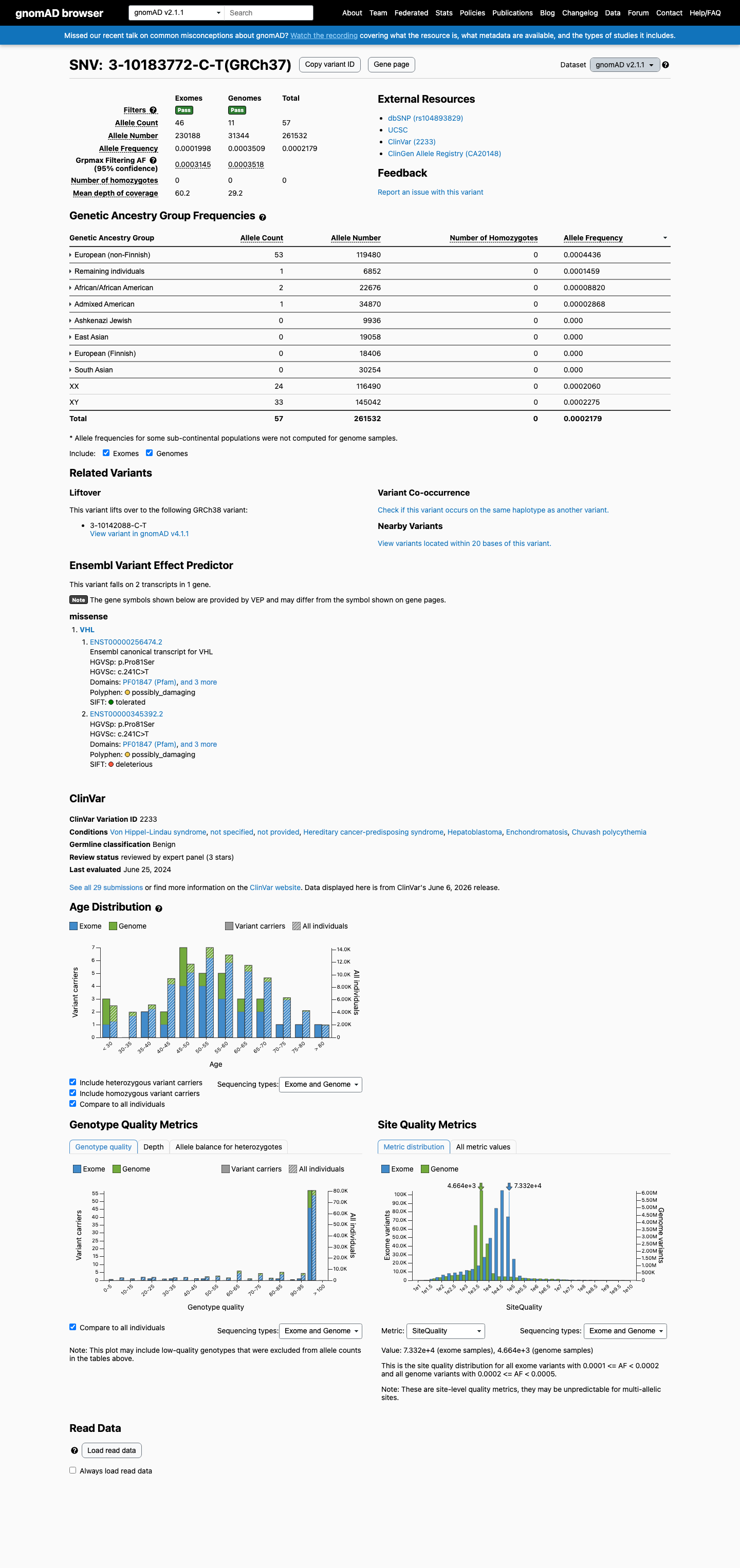
This variant is present in gnomAD v2.1 (AF= 0.000217947; MAF= 0.02179%, 57/261532 alleles, homozygotes = 0) and has highest observed frequency in the European (non-Finnish) population (AF= 0.000443589; MAF= 0.04436%, 53/119480 alleles, homozygotes = 0); grpmax FAF= 0.0003518.
🇨🇦 CA
This variant is present in gnomAD-Canada v1.0 (AF= 0.0003800629818655663, 7/18418 alleles, homozygotes = 0).
Allele frequency by ancestry
three datasets · side by side
gnomAD v4.1
0.035%
· 566 / 1,605,226
1 hom · FAF 0.043%
1 hom · FAF 0.043%
European (non-Finnish) 543 / 1,179,690 |
0.046% 1 hom |
Remaining individuals 9 / 62,362 |
0.014% |
African/African American 7 / 74,924 |
0.0093% |
Admixed American 4 / 59,932 |
0.0067% |
European (Finnish) 2 / 55,888 |
0.0036% |
South Asian 1 / 91,022 |
0.0011% |
+ 4 not observed (Amish, East Asian, Middle Eastern, Ashkenazi Jewish)
gnomAD v2.1
0.022%
· 57 / 261,532
0 hom · FAF 0.035%
0 hom · FAF 0.035%
European (non-Finnish) 53 / 119,480 |
0.044% |
Remaining individuals 1 / 6,852 |
0.015% |
African/African American 2 / 22,676 |
0.0088% |
Admixed American 1 / 34,870 |
0.0029% |
+ 4 not observed (Ashkenazi Jewish, East Asian, European (Finnish), South Asian)
gnomAD Canada 🇨🇦
0.038%
· 7 / 18,418
0 hom
0 hom
African/African American 1 / 1,020 |
0.098% |
European (non-Finnish) 6 / 11,738 |
0.051% |
+ 7 not observed (Latino/Admixed American, Ashkenazi Jewish, East Asian, European (Finnish), Middle Eastern, Remaining individuals, South Asian)

ClinVar
This variant has been reported in ClinVar as Uncertain significance (10 clinical laboratories) and as Likely benign (7 clinical laboratories) and as Benign (3 clinical laboratories) and as Likely Benign (1 clinical laboratory) and as likely benign (1 clinical laboratory) and as Benign by ClinGen VHL Variant Curation Expert Panel, ClinGen (expert panel). (ClinVarID = 2233)
In silico
SpliceAI predicts no significant splice impact for this variant (max delta score = 0.00). REVEL score = 0.678. BayesDel score = 0.207126.
Functional
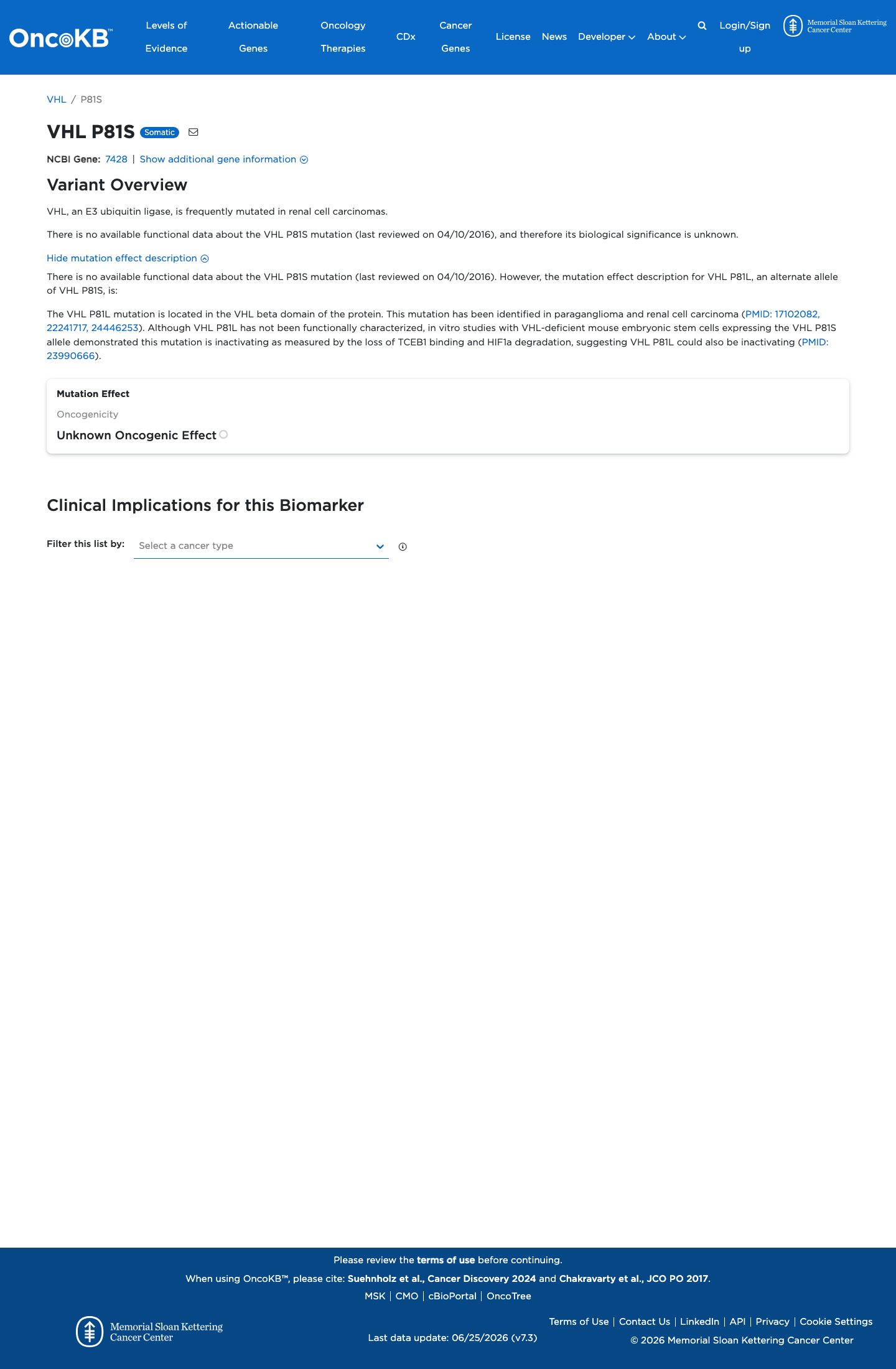
Unknown Oncogenic Effect
OncoKB did not identify variant-specific reviewed functional evidence for this variant; gene-level curated context is available for reviewer follow-up. VHL, an E3 ubiquitin ligase, is frequently mutated in renal cell carcinomas.
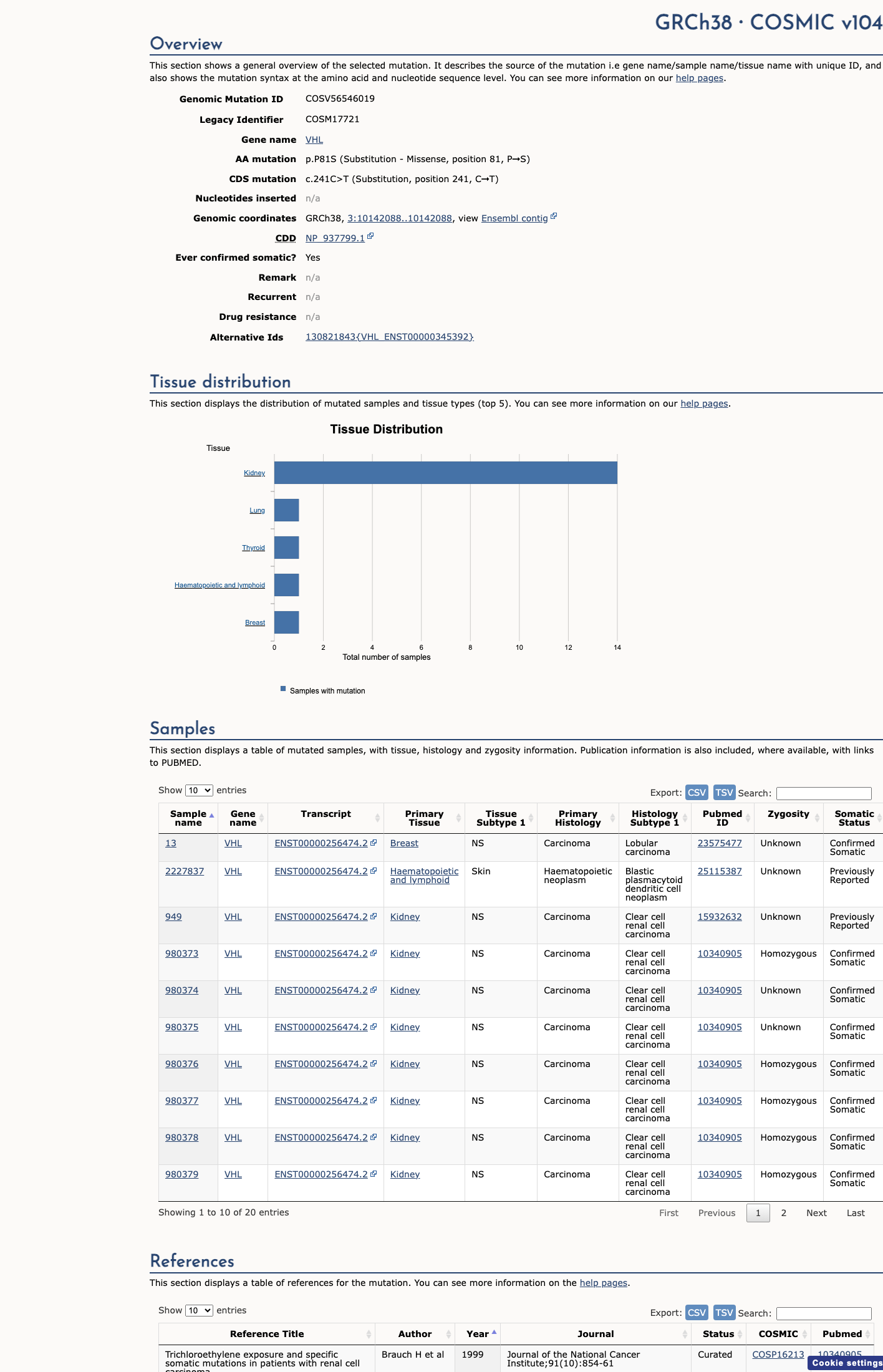
COSMIC

Cancer hotspots
Somatic evidence
Not in COSMIC / hotspots
COSMIC
This variant does not lie in a statistically significant hotspot. This variant has previously been reported in somatic cancers (COSMIC; COSV56546019, n = 20 times).
Hotspots
This variant does not lie in a statistically significant hotspot.
Literature · how each cited paper was used
2papers cited
Each card is an audit: what was searched, what was found, whether it names the variant, which criteria it fed, and why. 5 further PMIDs triaged but not cited — see Sources & references.
VHL mutations linked to type 2C von Hippel-Lindau disease cause extensive structural perturbations in pVHL.
Searched
P81Sc.241C>TPro81Ser
Found
Structural and biochemical analysis of type 2C VHL disease-associated pVHL mutants, including P81S alone and P81S/L188V double mutant. P81S single mutant shows only mild effects: HIF-1α binding affinity reduced 3-fold (Kd 15.8 vs 5.7 nM WT), slight VCB complex instability at 37°C, and near-normal NMR spectrum. In RCC4 cells, P81S alone preserves normal HIF-1α regulation and CBC-VHL complex stability. P81S/L188V double mutant shows more severe structural perturbations. Authors note P81S single mutation has been linked to low-penetrance type 1 VHL disease.
Variant
✓ Names this variant — characterised directly
Applied to
→PS3
met
Why
P81S alone shows only mild structural/functional perturbation with preserved HIF-1α regulation in RCC4 cells. Referenced in PS3 (supporting mild effect) and considered for BS3 but not applied due to conflicting evidence from PMID:23990666.
The P81S single mutation, in turn, has been linked to low penetrance type 1 von Hippel-Lindau disease (36) and, in combination with additional VHL mutations, to sporadic, trichloroethylene-induced renal cell carcinomas (37, 38).
Location Introduction (para 5); Table 1; Results 'Type 2C-associated pVHL Mutant Proteins Are Proficient in Substrate Binding'; Figures 1-6 · Context Recombinant VCB complexes expressed in E. coli; in vitro translation in reticulocyte lysate; RCC4 VHL-/- renal cell carcinoma cells; 293T cells; NMR spectroscopy; tryptic proteolysis; size exclusion chromatography · full text
Pleiotropic effects of the trichloroethylene-associated P81S VHL mutation on metabolism, apoptosis, and ATM-mediated DNA damage response.
Searched
P81Sc.241C>TPro81SerC454T
Found
Comprehensive functional characterization of the trichloroethylene-associated P81S VHL mutation. P81S disrupts VBC E3 ubiquitin ligase complex interaction (loss of Elongin C/TCEB1 co-immunoprecipitation), stabilizes HIF1A under normoxia, and differentially activates HIF target genes. In murine teratoma models, P81S produced 3-fold larger tumors with reduced apoptosis and suppressed ATM-mediated DNA damage response. Demonstrates P81S confers pleiotropic effects including metabolic reprogramming toward fatty acid oxidation and glutaminolysis.
Variant
✓ Names this variant — characterised directly
Applied to
→PS3
met
→PM1
met
Why
Variant-specific functional data confirmed VBC complex disruption and HIF stabilization in somatic context; referenced in PS3 and PM1 assessments. Somatic/TCE-exposure context limits germline applicability.
This mutation results in a single amino acid change from proline to serine at codon 81 of the VHL protein (P81S) and is observed in more than 39% of TCE-exposed individuals who developed ccRCC.
Location Abstract; Results paragraphs 1-6; Figures 1-7 · Context Vhl-/- murine ES cells expressing HA-tagged human WT, P81S, or R167Q VHL; teratoma xenografts in Foxn1nu/nu mice; co-immunoprecipitation; Western blot; RT-PCR; microarray · full text
Sources & reference links
9Sources
Triaged references · 5 PMIDs not cited in assessment
17102082 ↗
Genetic mutation screening in an italian cohort of nonsyndromic pheochromocytoma/paraganglioma patients.
ONCOKB
22241717 ↗
Head and neck paragangliomas: genetic spectrum and clinical variability in 79 consecutive patients.
ONCOKB
24446253 ↗
VHL and HIF-1α: gene variations and prognosis in early-stage clear cell renal cell carcinoma.
ONCOKB
19906784 ↗
Pathogenicity of DNA variants and double mutations in multiple endocrine neoplasia type 2 and von Hippel-Lindau syndrome.
CLINVAR
25741868 ↗
Standards and guidelines for the interpretation of sequence variants: a joint consensus recommendation of the American College of Medical Genetics and Genomics and the Association for Molecular Pathology.
CLINVAR