NM_001098209.2:c.110C>T (p.Ser37Phe) in CTNNB1 is absent from all population databases (gnomAD v2.1, v4.1, gnomAD-Canada), meeting PM2 at moderate strength.1 Ser37 is a critical phosphorylation residue within the N-terminal β-TRCP degron motif (DpSGXXpS, residues 32-37), a well-characterized functional domain mediating β-catenin ubiquitination and degradation. This position is a statistically significant cancer mutational hotspot, meeting PM1 at moderate strength.2 Saturation genome editing across all 342 possible missense substitutions in the CTNNB1 exon 3 degron (positions 31-48) demonstrated that p.Ser37Phe confers gain-of-function Wnt pathway activation (PMID:41629672). Independently, direct functional testing of β-catenin S37F in melanoma cell lines confirmed constitutive TCF/LEF transcriptional activity, IL-10 induction, and immune suppression (PMID:22815287). Two or more independent publications with systematic functional characterization meet PS3 at strong strength.3 Combined classification: PS3 (strong) + PM1 (moderate) + PM2 (moderate) = Likely Pathogenic per generic ACMG/AMP 2015 combination rules (1 strong + 2 moderate).4
Final classification
Likely Pathogenic
PS3PM1PM2
CTNNB1
c.110C>T
p.Ser37Phe
This variant
NM_001098209.2:c.110C>T (p.Ser37Phe) in CTNNB1 is absent from all population databases (gnomAD v2.1, v4.1, gnomAD-Canada), meeting PM2 at moderate strength.
gene-specific framework lacked a usable explicit final combination framework, so generic ACMG/AMP 2015 final-combination rules were applied as fallback; applied criteria: PS3 strong, PM1 moderate, PM2 moderate; combination = 1 strong + 2 moderate, which maps to Likely Pathogenic.
Classification rationale
PS3PM1PM2
Likely Pathogenic
CTNNB1 c.110C>T
PS3 + PM1 + PM2
→
Likely Pathogenic
4
generic_acmg_combination_rules
LYFE Sciences is an AI system, and it can make mistakes. Criteria
may be applied incorrectly, sources may be misread, and a confident-looking
classification can still be wrong. Double-check every criterion and
its underlying evidence before relying on any call.
Gene diagram
· NM_001098209.2 · variants mapped to exon structure
CTNNB1
NM_001098209.2
Fetching transcript structure from UCSC…
Applied criteria · 3 applied · 18 assessed
MetEvidence satisfies this criterion.
Not metEvaluated against available evidence; threshold not reached.
Not assessedApplies in principle, but no evidence was found to evaluate it.
N/ADoesn't apply to this variant type.
Applied · 3
Strength
Supporting
Moderate
Strong
Very strong
PS3
strong
Pathogenic
Saturation genome editing (PMID:41629672) systematically characterized all 342 possible missense mutations in the CTNNB1 exon 3 degron hotspot (positions 31–48), directly including p.Ser37Phe, and demonstrated gain-of-function signaling activation via an endogenous-locus reporter assay. Independently, PMID:22815287 directly tested the β-catenin S37F variant in luciferase reporter assays, chromatin immunoprecipitation, and IL-10 induction experiments in human melanoma cell lines, confirming constitutive Wnt pathway activation. PMID:10192393 independently identified S37F as a β-catenin-stabilizing mutation in pilomatricomas. Two or more independent publications provide systematic functional evidence supporting a gain-of-function pathogenic effect for this variant.
Saturation mutagenesis of CTNNB1 exon 3 degron (positions 31-48) in mouse ES cells at endogenous Ctnnb1 locusS37F assigned a high mutational effect score confirming gain-of-function signaling activation.Direct functional testing of β-catenin S37F in melanoma cell lines: luciferase reporter assays
PM1
moderate
Pathogenic
Ser37 is a critical GSK3β phosphorylation residue within the N-terminal β-TRCP degron motif (DpSGXXpS, residues 32–37). This well-characterized functional domain mediates phosphorylation-dependent ubiquitination and degradation of β-catenin. Saturation mutagenesis (PMID:41629672) confirms this position is essential for degron function, and the variant lies within a statistically significant cancer mutational hotspot (cancerhotspots.org). Missense variants in this domain are a recognized gain-of-function mechanism.
Ser37 is a phosphorylation site within the β-TRCP degron docking motif (residues 32-37)a critical functional domain for β-catenin degradation.cancerhotspots.org identifies this position as a statistically significant mutational hotspot.
PM2
moderate
Pathogenic
The variant is absent from all population databases: gnomAD v2.1, gnomAD v4.1, and gnomAD-Canada v1.0 (allele frequency = 0). This meets the non-VCEP PM2 threshold of <0.1%.
Absent from gnomAD v2.1 (exomes).Absent from gnomAD v4.1 (exomes).Absent from gnomAD-Canada v1.0 (genomes).
Assessed · not applied
· 18 not met · 0 not assessed
Pathogenic
PS2
No de novo occurrence report for this variant was identified in the reviewed literature.
PS4
No case-control or prevalence data comparing affected vs.
PM5
Automated PM5 candidate harvesting (pm5_candidates.json) returned zero same-residue comparator variants.
PM6
No de novo occurrence report for this variant was identified in the reviewed literature.
PP1
No segregation data or family studies were identified in the reviewed literature.
PP2
CTNNB1 germline disease (CTNNB1 syndrome, MIM 615075) is primarily caused by loss-of-function variants (nonsense, frameshift).
PP3
Computational evidence is equivocal and does not reach consensus support for a deleterious effect.
PP4
No specific patient phenotype or clinical data were provided for this case to assess whether the variant's phenotype is highly specific for a disease.
PP5
The ClinVar classification is 'Pathogenic' from OMIM (SCV000039439) with 'no assertion criteria provided' and somatic disease context (pilomatricoma).
Benign
BA1
Variant is absent from gnomAD (allele frequency = 0), well below the BA1 threshold of >1%.
BS1
Variant is absent from gnomAD (allele frequency = 0), well below the BS1 threshold of >0.3%.
BS2
No observation of this variant in healthy adults has been documented.
BS3
Functional evidence from saturation mutagenesis (PMID:41629672) and direct testing (PMID:22815287) demonstrates gain-of-function — constitutive Wnt pathway activation — rather than a benign or normal functional effect.
BS4
No cosegregation data in affected families is available to assess lack of segregation with disease.
BP1
Although CTNNB1 syndrome (MIM 615075) is primarily caused by loss-of-function truncating variants, p.Ser37Phe is a well-characterized gain-of-function missense variant with a distinct functional mechanism (β-catenin stabilization) rather than a variant of uncertain significance.
BP2
No observation in trans with a pathogenic variant has been reported.
BP4
Computational evidence is equivocal and does not provide multiple consistent lines supporting no impact.
BP5
No alternative molecular cause for the disease has been identified in this case to support BP5.
N/A · 5
PVS1 · PS1 · BP3 · BP6 · BP7
Research & evidence
Population frequency · supports pathogenic
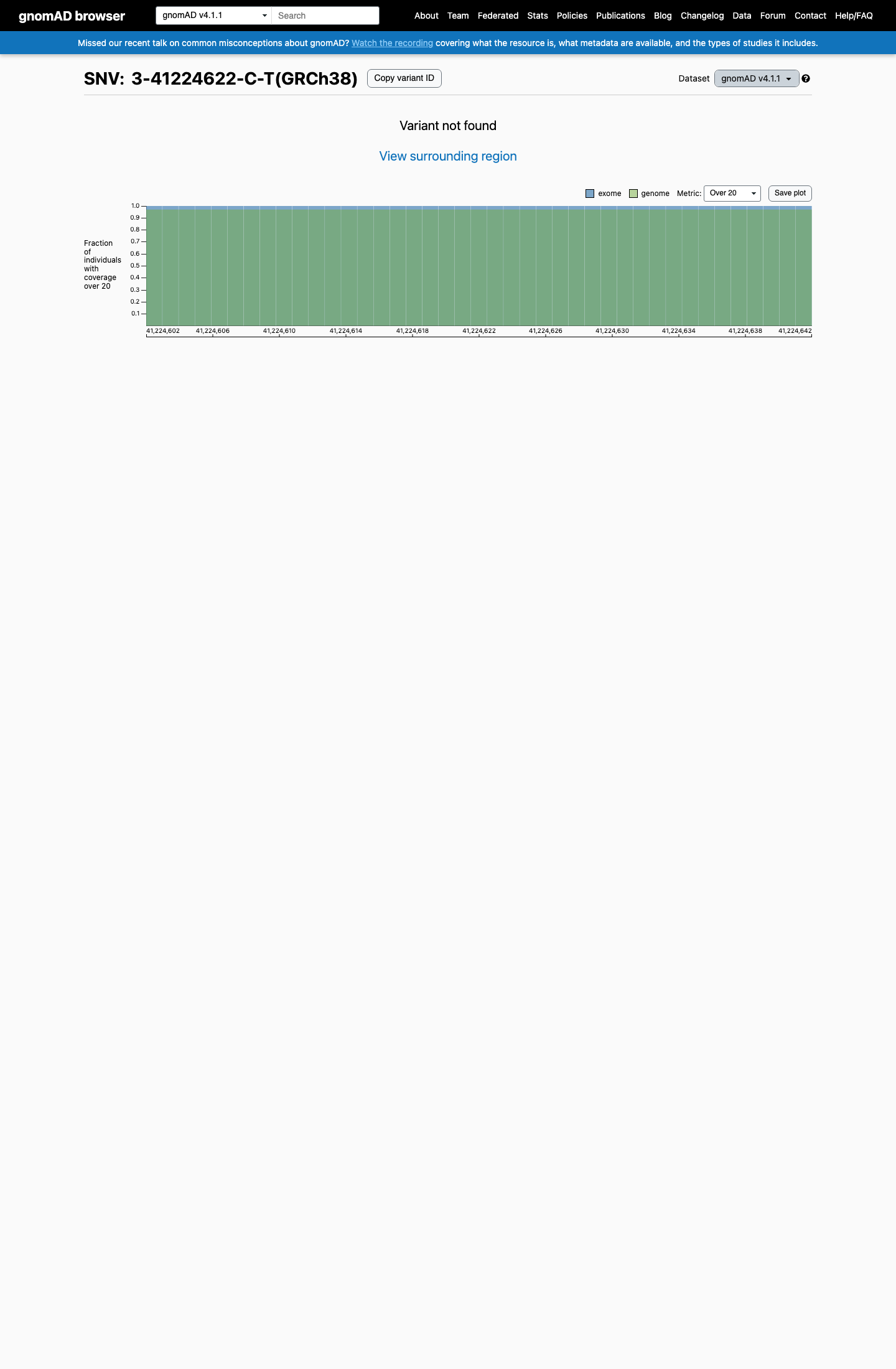
gnomAD v4.1
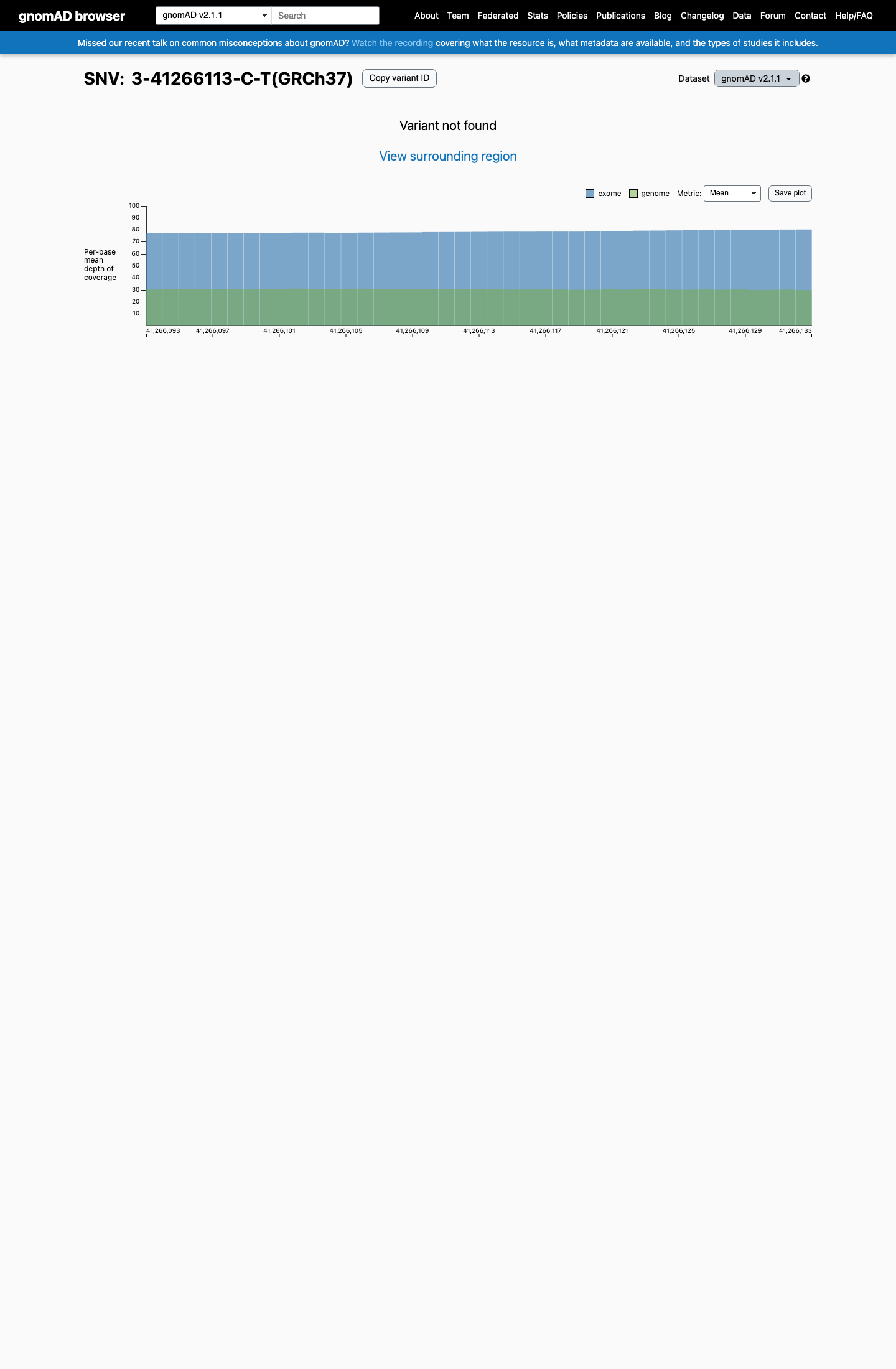
gnomAD v2.1
v4.1
Absent from gnomAD v4.1.
v2.1
Absent from gnomAD v2.1.
🇨🇦 CA
Absent from gnomAD-Canada v1.0.
Allele frequency by ancestry
three datasets · side by side
gnomAD v4.1
Absent
· 0 / ?
0 hom
0 hom
Not observed in any ancestry group.
gnomAD v2.1
Absent
· 0 / ?
0 hom
0 hom
Not observed in any ancestry group.
gnomAD Canada 🇨🇦
Absent
· 0 / ?
0 hom
0 hom
Not observed in any ancestry group.

ClinVar
This variant has been reported in ClinVar but submission details could not be extracted. (ClinVarID = 17586)
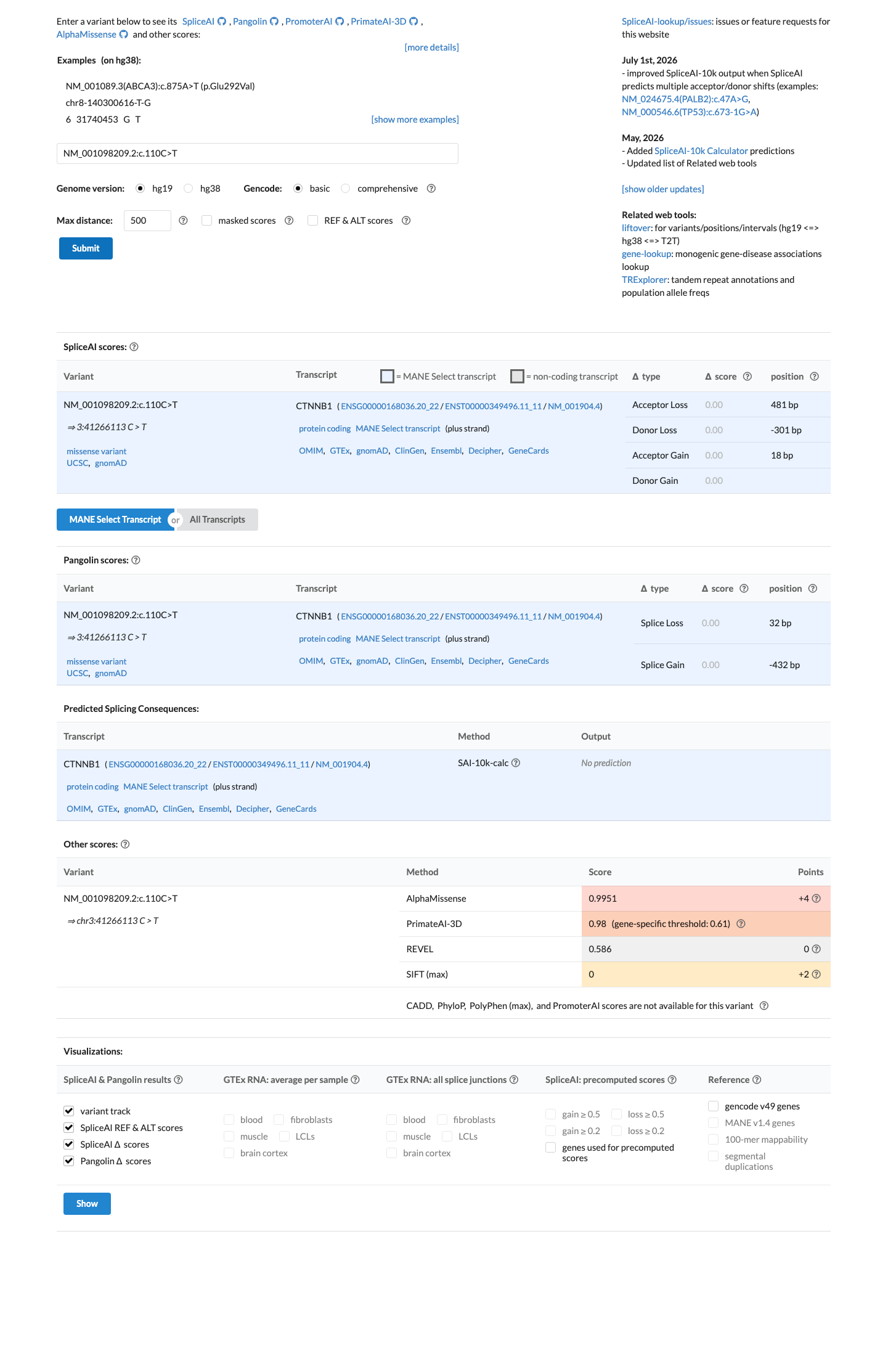
In silico
SpliceAI predicts no significant splice impact for this variant (max delta score = 0.00). REVEL score = 0.586. BayesDel score = 0.14345.
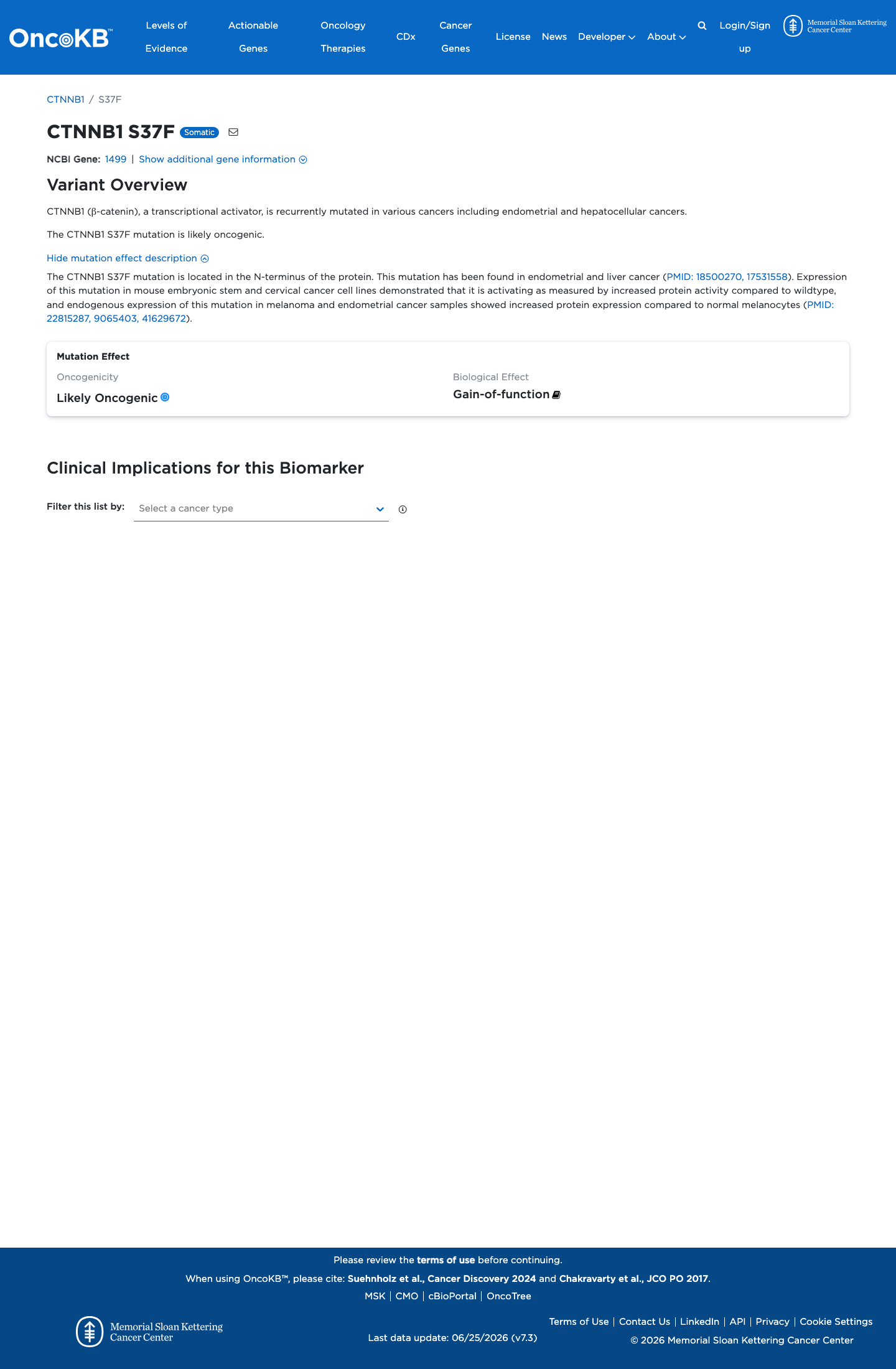
Functional
Likely Oncogenic
OncoKB identified variant-specific curated literature and context relevant to functional review; biological-effect context: Gain-of-function; curated oncogenicity label: Likely Oncogenic.
COSMIC

Cancer hotspots
Somatic evidence
Hotspot
COSMIC
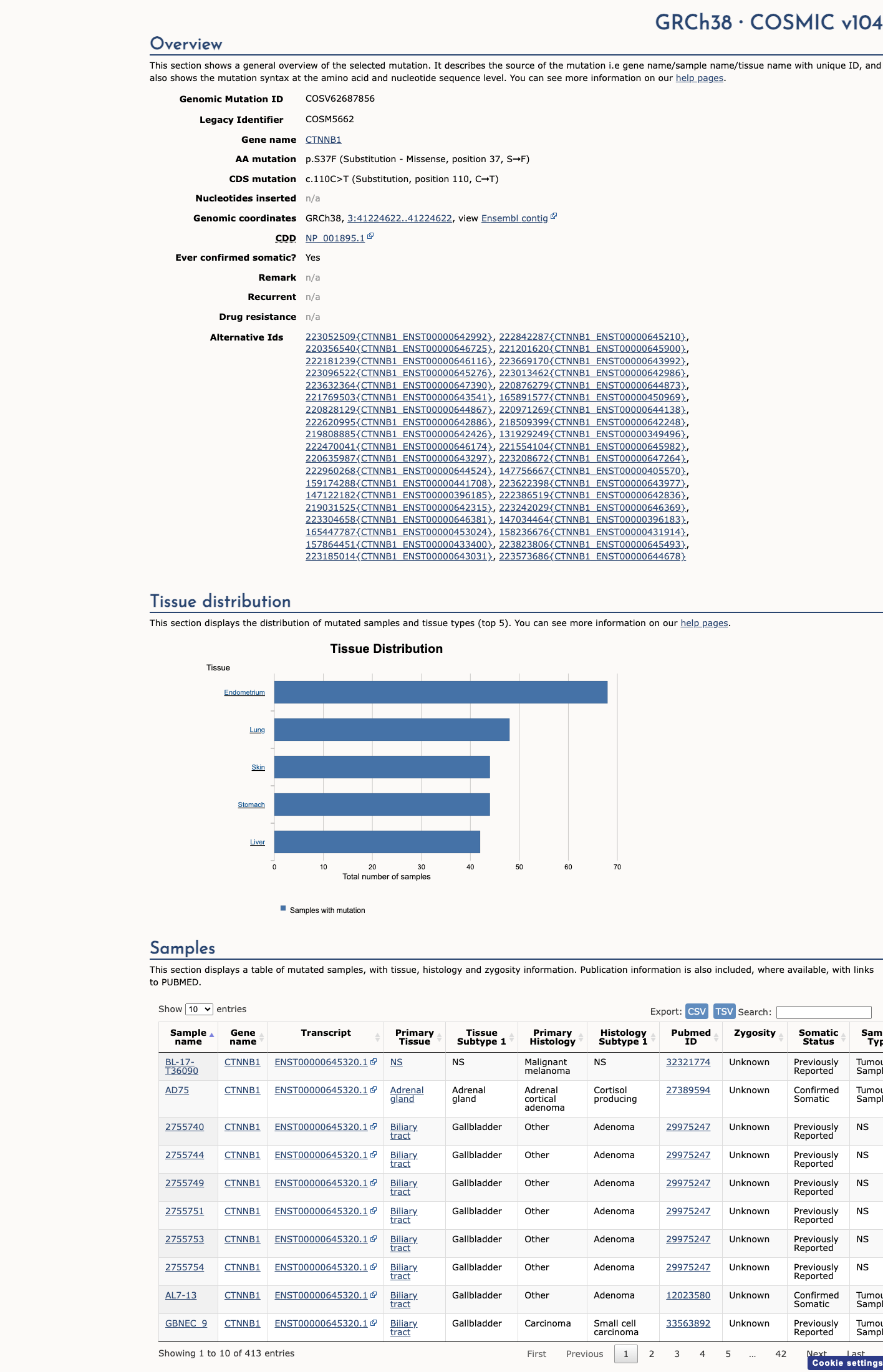
This variant lies in a statistically significant hotspot. This variant has previously been reported in somatic cancers (COSMIC; COSV62687856, n = 410 times).
Hotspots
This variant lies in a statistically significant hotspot.
Literature · how each cited paper was used
3papers cited
Each card is an audit: what was searched, what was found, whether it names the variant, which criteria it fed, and why. 4 further PMIDs triaged but not cited — see Sources & references.
A common human skin tumour is caused by activating mutations in beta-catenin.
Searched
S37FS37CSer37TCT→TTT
Found
CTNNB1 exon 3 was sequenced in 16 human pilomatricomas. S37F (TCT→TTT) was one of eight distinct missense mutations identified. All mutations mapped to the N-terminal phosphorylation-dependent degradation domain. S37F was characterized as a β-catenin-stabilizing activating mutation that ablates a GSK3β phosphorylation site essential for ubiquitin-mediated degradation.
Variant
✓ Names this variant — characterised directly
Applied to
→PS3
met
→PM1
met
Why
Independent identification of S37F as an activating mutation in the β-catenin degradation domain; supports PS3 and PM1 assessments.
S37C (TCT→TGT), S37F (TCT→TTT) and T41I (ACC→ATC)
Location Results paragraphs describing Figure 3; Figure 5a (schematic of mutations) · Context PCR amplification and direct sequencing of exon 3 from microdissected formalin-fixed paraffin-embedded pilomatricoma tissue; HinfI restriction endonuclease confirmation · full text
Immune suppression and resistance mediated by constitutive activation of Wnt/β-catenin signaling in human melanoma cells.
Searched
S37Fb-cateninS37FS37
Found
β-catenin S37F, identified as a melanoma antigen recognized by T cells, was directly tested in functional assays. Overexpression of β-catenin-S37F in human melanoma cell lines (397mel, 938mel) induced high IL-10 production, suppressed dendritic cell maturation, promoted regulatory DC generation, and inhibited melanoma-specific CTL function both in vitro and in vivo. β-catenin/TCF was shown to directly bind and transactivate the IL-10 promoter via a TCF binding element at -2438 bp. The S37F mutation was characterized as resistant to degradation and constitutively activating Wnt/β-catenin signaling.
Variant
✓ Names this variant — characterised directly
Applied to
→PS3
met
Why
Direct variant-specific functional data confirming constitutive Wnt pathway activation, IL-10 induction, and immune evasion; referenced in PS3 assessment at strong strength.
We have previously identified a mutation of β-catenin (S37F) as a melanoma Ag recognized by T cells.
Location Abstract line 137; Results sections 'High IL-10 expression', 'b-catenin directly promotes IL-10 expression', 'DC impairment', 'CTL impairment'; Figures 2, 4, 5, 6 · Context Human melanoma cell lines (624mel, 888mel, 397mel, 928mel, 938mel); luciferase reporter assays in HeLa and HEK293T cells; ChIP in 888mel; in vivo xenograft models in nude and NOG mice · full text
Mutational scanning reveals oncogenic CTNNB1 mutations have diverse effects on signaling.
Searched
S37Ser37S37Fc.110C>T
Found
Saturation genome editing quantified signaling activity for all 342 possible missense mutations in the CTNNB1 exon 3 degron motif (positions 31-48). Ser37 substitutions, including S37F, were among the most activating mutations in the hotspot. The screen was conducted at the endogenous mouse Ctnnb1 locus (100% conserved with human at amino acid level) using a Tcf/Lef-H2B-GFP reporter in mouse ES cells. Mutational effect scores correlated with endogenous β-catenin target gene expression in both mouse ES cells and human HCC cohorts.
Variant
✓ Names this variant — characterised directly
Applied to
→PS3
met
→PM1
met
Why
Systematic range characterization of all degron hotspot missense mutations confirms S37F as a gain-of-function activating variant; referenced in PS3 (strong) and PM1 (moderate) assessments.
Residues T41 and S45 were most frequently affected, comprising 27% and 25% of hotspot missense mutations, respectively, followed by S37, S33, D32 and G34.
Location Figure 1e, Figure 2a (heatmap), Figure 3a, Results section 'Mutational scanning reveals diverse consequences of Ctnnb1 hotspot mutations' · Context Saturation genome editing (CRISPR HDR) in mouse ES cells; Tcf/Lef-H2B-GFP fluorescent reporter assay quantifying Wnt pathway activation · full text
Sources & reference links
Triaged references · 4 PMIDs not cited in assessment
18500270 ↗
Clinicopathological and molecular analysis of endometrial carcinoma associated with tamoxifen.
ONCOKB
10347231 ↗
The ubiquitin-proteasome pathway and serine kinase activity modulate adenomatous polyposis coli protein-mediated regulation of beta-catenin-lymphocyte enhancer-binding factor signaling.
CLINVAR