NM_001122740.1:c.1613A>G (p.Asp538Gly) in ESR1 is a missense variant in exon 9 encoding a substitution in helix 12 of the ligand-binding domain. This variant is absent from gnomAD v2.1, v4.1, and gnomAD-Canada population databases, satisfying PM2 (moderate).1 The variant is located at a statistically significant mutational hotspot within helix 12 of the ESR1 ligand-binding domain, a critical functional domain, satisfying PM1 (moderate).2 Multiple independent functional studies demonstrate that p.Asp538Gly confers constitutive, ligand-independent transcriptional activity, promotes coactivator recruitment in the absence of estrogen, and confers resistance to antiestrogen therapies. Evidence includes luciferase reporter assays, co-immunoprecipitation, X-ray crystallography, HDX-MS, and cell proliferation assays across multiple laboratories, satisfying PS3 (strong).3 The REVEL meta-predictor score of 0.914 supports a deleterious effect, satisfying PP3 (supporting).4 Caveat: all functional evidence derives from somatic cancer studies of acquired endocrine resistance; no germline-specific functional or clinical evidence is available. The variant has not been reported as a germline pathogenic variant. Classification should be interpreted with the understanding that this variant's clinical significance in a germline context is uncertain. PVS1 is not applicable as this is a missense variant. PS1, PS2, PS4, PS5, PM5, PM6, PP1, PP4, PP5, BA1, BS1, BS2, BS3, BS4, BP1, BP2, BP4, BP5, BP6, and BP7 are not met or not applicable.
Final classification
Likely Pathogenic
PS3PM1PM2PP3
ESR1
c.1613A>G
p.Asp538Gly
This variant
NM_001122740.1:c.1613A>G (p.Asp538Gly) in ESR1 is a missense variant in exon 9 encoding a substitution in helix 12 of the ligand-binding domain.
gene-specific framework lacked a usable explicit final combination framework, so generic ACMG/AMP 2015 final-combination rules were applied as fallback; applied criteria: PS3 strong, PM1 moderate, PM2 moderate, PP3 supporting; combination = 1 strong + 2 moderate + 1 supporting, which maps to Likely Pathogenic.
Classification rationale
PS3PM1PM2PP3
Likely Pathogenic
ESR1 c.1613A>G
PS3 + PM1 + PM2 + PP3
→
Likely Pathogenic
LYFE Sciences is an AI system, and it can make mistakes. Criteria
may be applied incorrectly, sources may be misread, and a confident-looking
classification can still be wrong. Double-check every criterion and
its underlying evidence before relying on any call.
Gene diagram
· NM_001122740.1 · variants mapped to exon structure
ESR1
NM_001122740.1
Fetching transcript structure from UCSC…
Applied criteria · 4 applied · 9 assessed
MetEvidence satisfies this criterion.
Not metEvaluated against available evidence; threshold not reached.
Not assessedApplies in principle, but no evidence was found to evaluate it.
N/ADoesn't apply to this variant type.
Applied · 4
Strength
Supporting
Moderate
Strong
Very strong
PS3
strong
review
Pathogenic
Well-established functional studies from multiple independent research groups consistently demonstrate that p.Asp538Gly (D538G) confers constitutive, ligand-independent transcriptional activity of ESR1, promotes coactivator recruitment in the absence of estrogen, and confers resistance to antiestrogen therapies. Evidence includes luciferase reporter assays in MCF-7, MDA-MB-231, and HEK293T cells (PMIDs: 24185510, 24185512, 24217577), X-ray crystallography and hydrogen-deuterium exchange mass spectrometry demonstrating stabilized agonist conformation of helix 12 (PMID: 26836308), co-immunoprecipitation showing constitutive SRC-1 binding (PMID: 24217577), and CRISPR/Cas9-engineered heterozygous D538G endometrial cancer cell models (PMID: 31362937). The functional data are replicated across five independent laboratories and multiple orthogonal assays. Caveat: all functional evidence derives from somatic cancer studies; germline-specific functional data are not available.
Constitutive ligand-independent transcriptional activity in luciferase reporter assays (MCF-7MDA-MB-231HEK293T cells).
PM1
moderate
Pathogenic
p.Asp538 is located in helix 12 of the ESR1 ligand-binding domain (LBD), a critical functional domain governing receptor activation and coactivator recruitment. The residue lies within a statistically significant mutational hotspot (cancerhotspots.org). Multiple structural studies confirm that D538G alters the conformation of helix 12, and the residue is part of a well-characterized cluster of gain-of-function somatic mutations (Y537S, Y537N, Y537C, D538G) that constitutively activate ESR1.
Located in helix 12 of the ligand-binding domaina critical functional domain.Statistically significant hotspot residue per cancerhotspots.org (external database
PM2
moderate
Pathogenic
This variant is absent from all population databases, including gnomAD v2.1 (exomes), gnomAD v4.1 (exomes/genomes), and gnomAD-Canada v1.0 (genomes). Under non-VCEP generic ACMG guidance, PM2 is applied when allele frequency is below 0.1% in population databases.
Absent from gnomAD v2.1.Absent from gnomAD v4.1.Absent from gnomAD-Canada v1.0.
PP3
supporting
Pathogenic
The REVEL meta-predictor score of 0.914 strongly supports a deleterious effect. SpliceAI predicts no splicing impact (max delta score = 0.00). BayesDel score of 0.346 is below typical pathogenicity thresholds. While BayesDel does not reach the damaging threshold, REVEL (which integrates multiple individual predictors including conservation, evolutionary, and protein-level features) strongly supports a deleterious effect, satisfying PP3 at supporting level.
REVEL score: 0.914 (strongly damaging).BayesDel score: 0.346 (below typical threshold of 0.5).SpliceAI max delta score: 0.00 (no splicing impact).
Assessed · not applied
· 7 not met · 2 not assessed
Pathogenic
PS1
No prior germline pathogenic or likely pathogenic classification exists for p.Asp538Gly in ClinVar or the literature.
PS4
No germline case-control data are available.
PP2
PP2 requires gene-specific calibration (low rate of benign missense variation where missense variants are a common disease mechanism).
PP4
No patient phenotype or clinical history is available for the proband.
PP5
No reputable source has reported this variant as germline pathogenic or likely pathogenic.
Benign
BA1
The variant is absent from all population databases (gnomAD v2.1, v4.1, gnomAD-Canada).
BS1
The variant is absent from all population databases.
BS3
Multiple well-established functional studies (see PS3) demonstrate that p.Asp538Gly is a gain-of-function mutation conferring constitutive ligand-independent transcriptional activity and antiestrogen resistance.
BP4
BP4 requires multiple lines of computational evidence suggesting no impact on the gene or gene product.
N/A · 12
PVS1 · PS2 · PM5 · PM6 · PP1 · BS2 · BS4 · BP1 · BP2 · BP5 · BP6 · BP7
Research & evidence
Population frequency · supports pathogenic

gnomAD v4.1
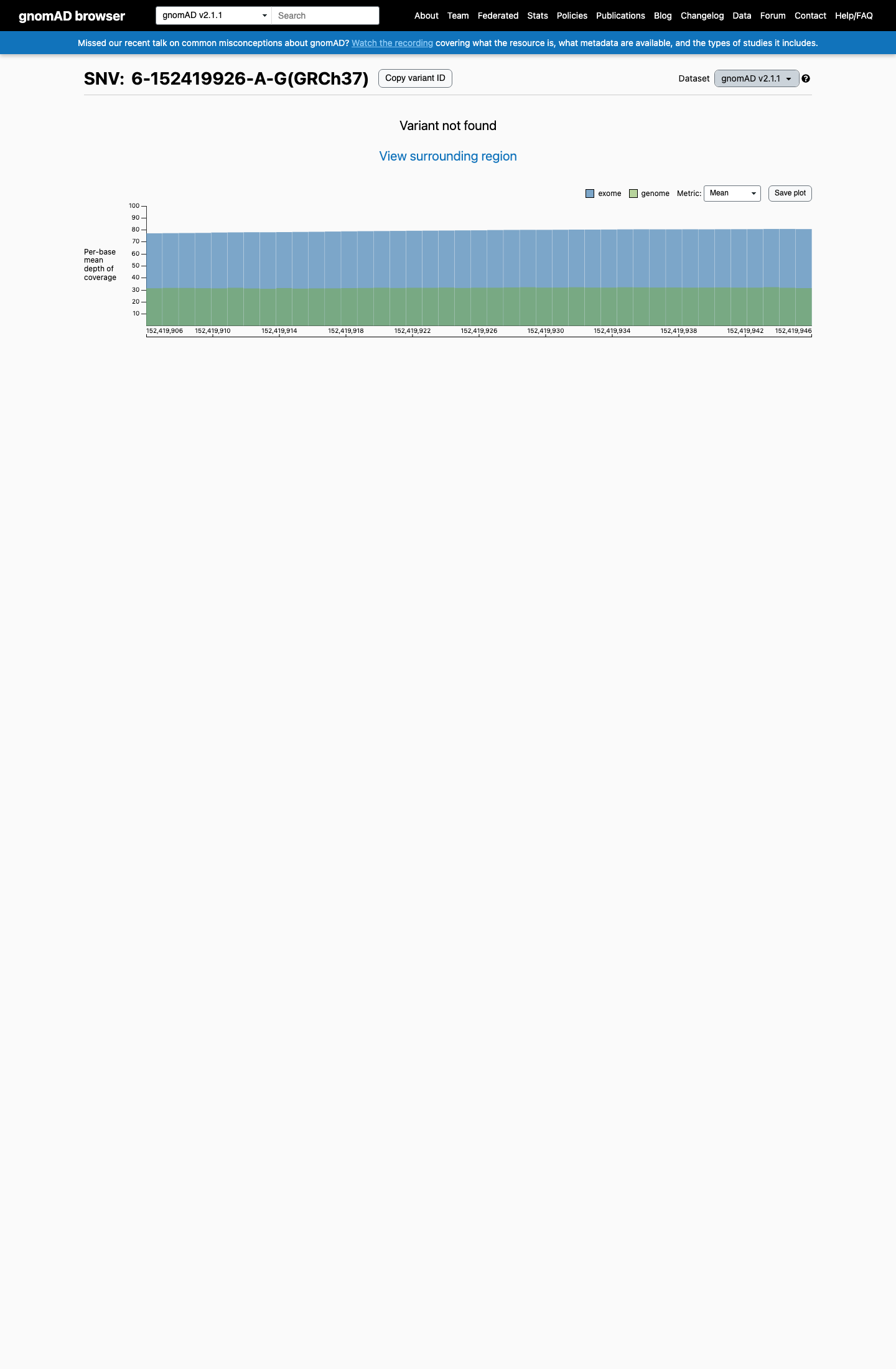
gnomAD v2.1
v4.1
Absent from gnomAD v4.1.
v2.1
Absent from gnomAD v2.1.
🇨🇦 CA
Absent from gnomAD-Canada v1.0.
Allele frequency by ancestry
three datasets · side by side
gnomAD v4.1
Absent
· 0 / ?
0 hom
0 hom
Not observed in any ancestry group.
gnomAD v2.1
Absent
· 0 / ?
0 hom
0 hom
Not observed in any ancestry group.
gnomAD Canada 🇨🇦
Absent
· 0 / ?
0 hom
0 hom
Not observed in any ancestry group.
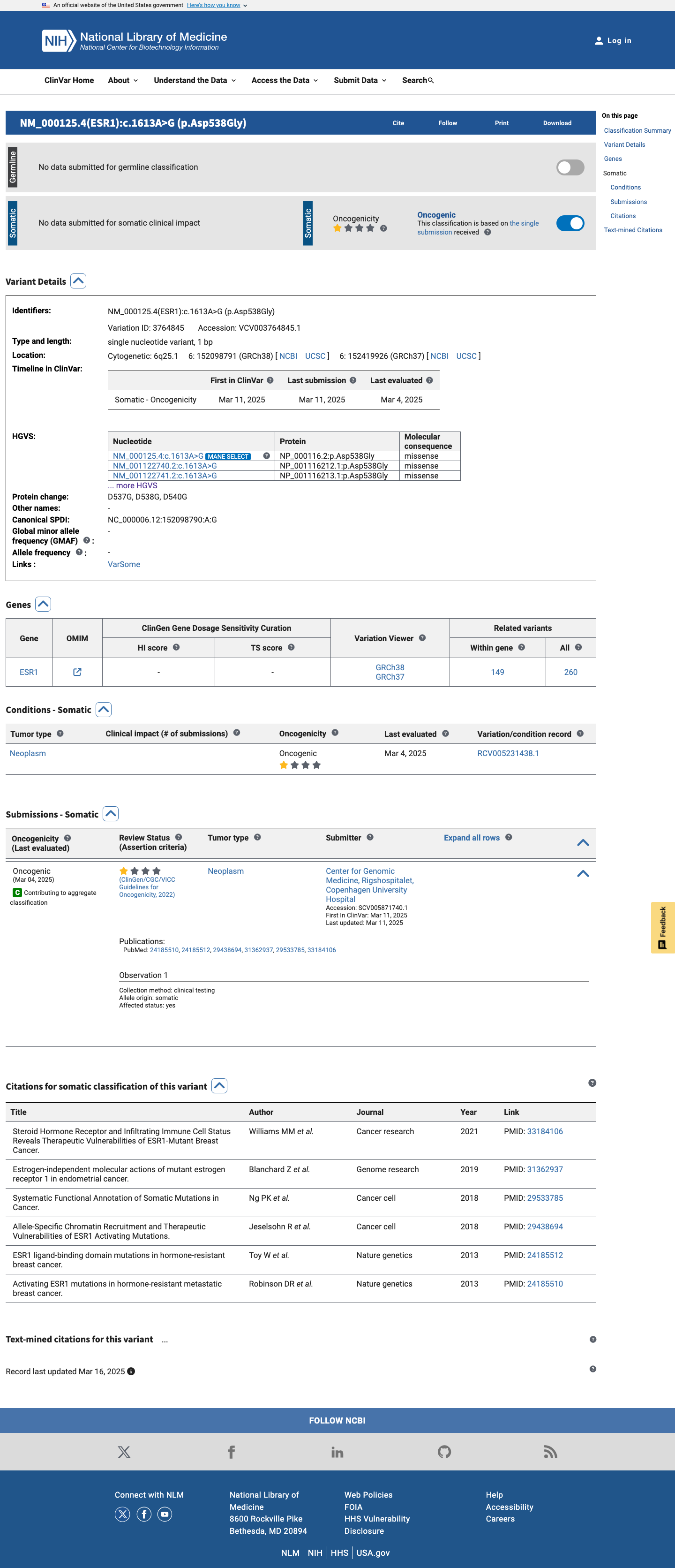
ClinVar
This variant has been reported in ClinVar but submission details could not be extracted. (ClinVarID = 3764845)
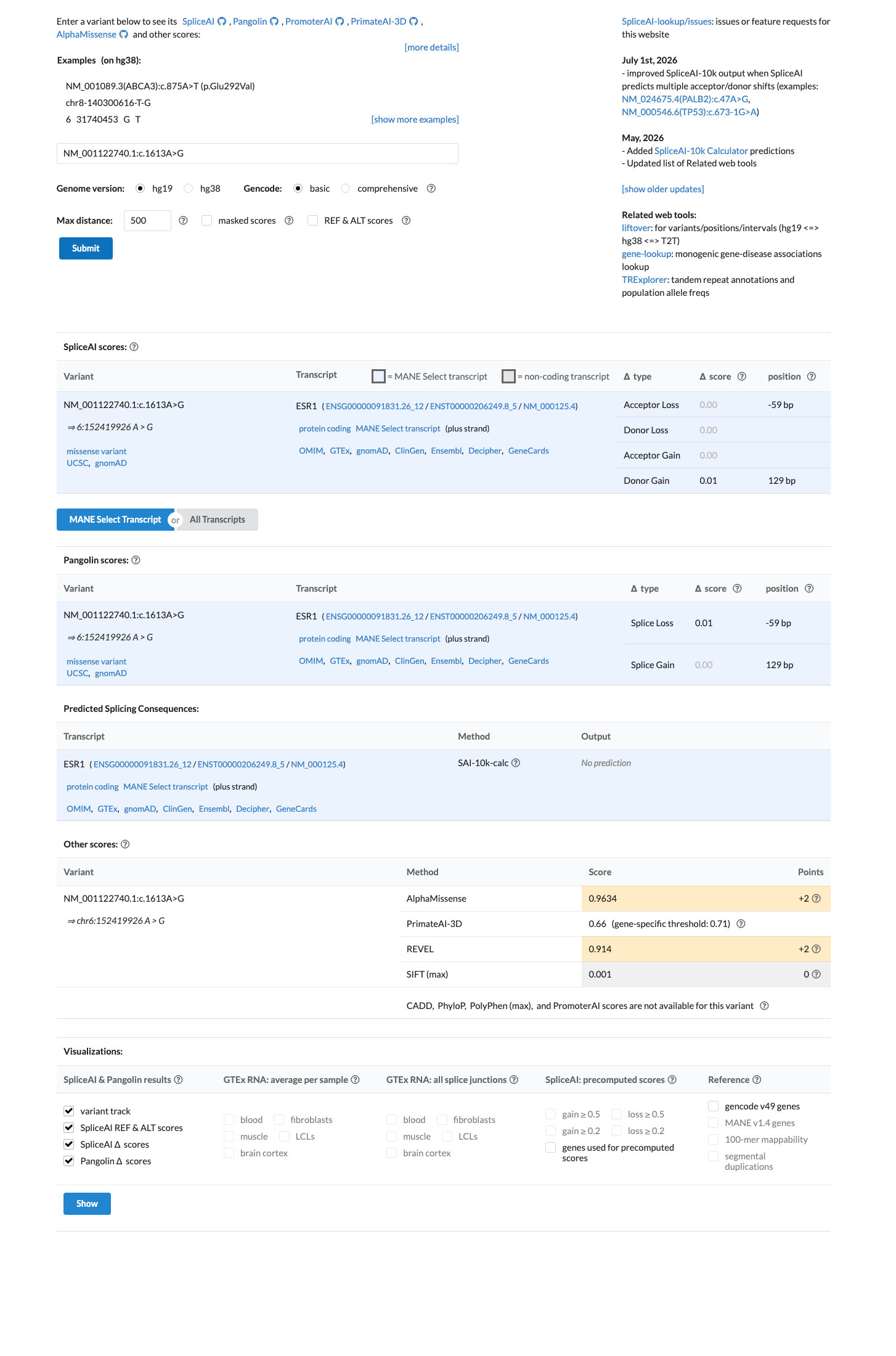
In silico
SpliceAI predicts no significant splice impact for this variant (max delta score = 0.00). REVEL score = 0.914. BayesDel score = 0.345967.
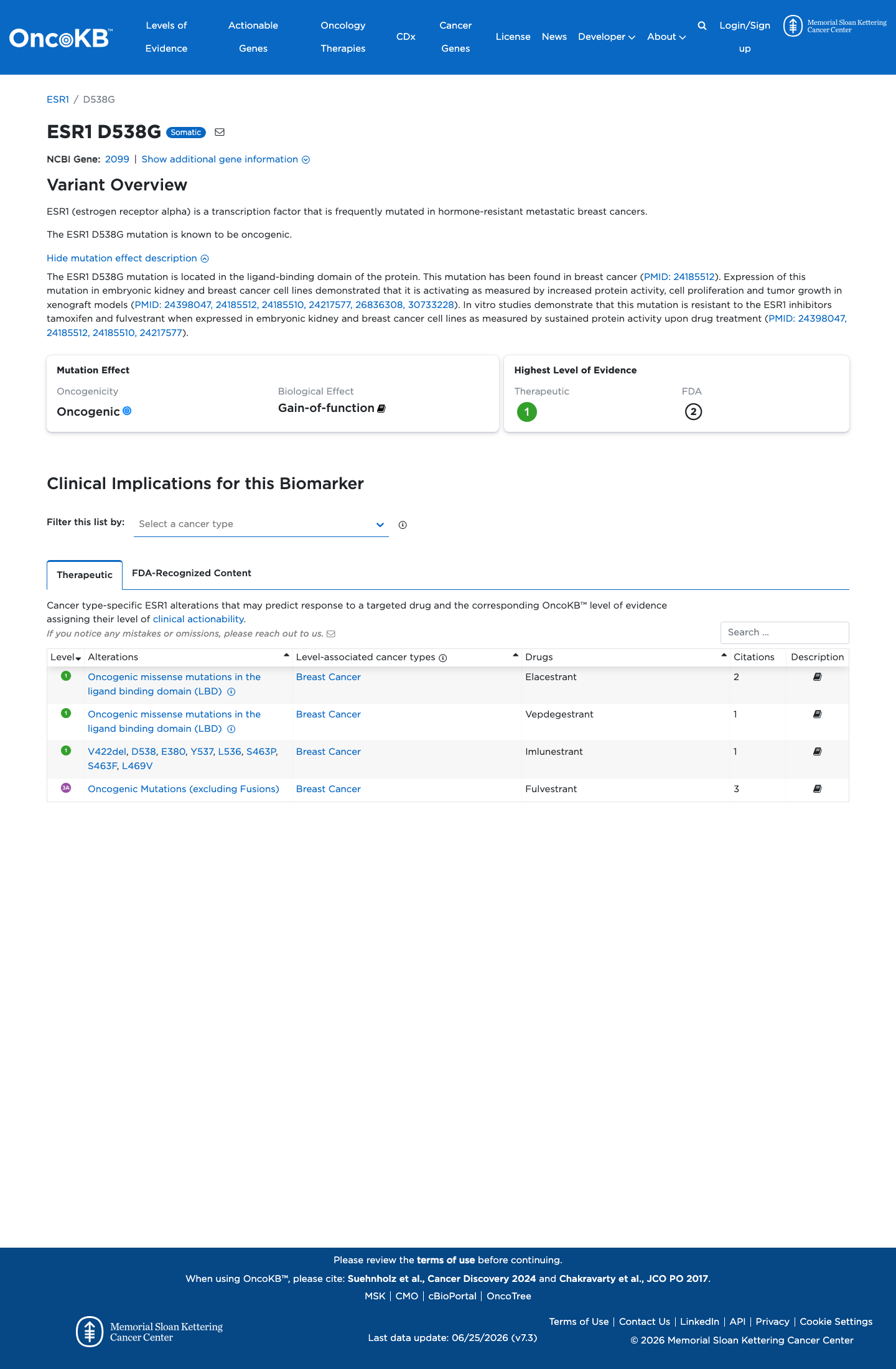
Functional
Oncogenic
OncoKB identified variant-specific curated literature and context relevant to functional review; biological-effect context: Gain-of-function; curated oncogenicity label: Oncogenic.
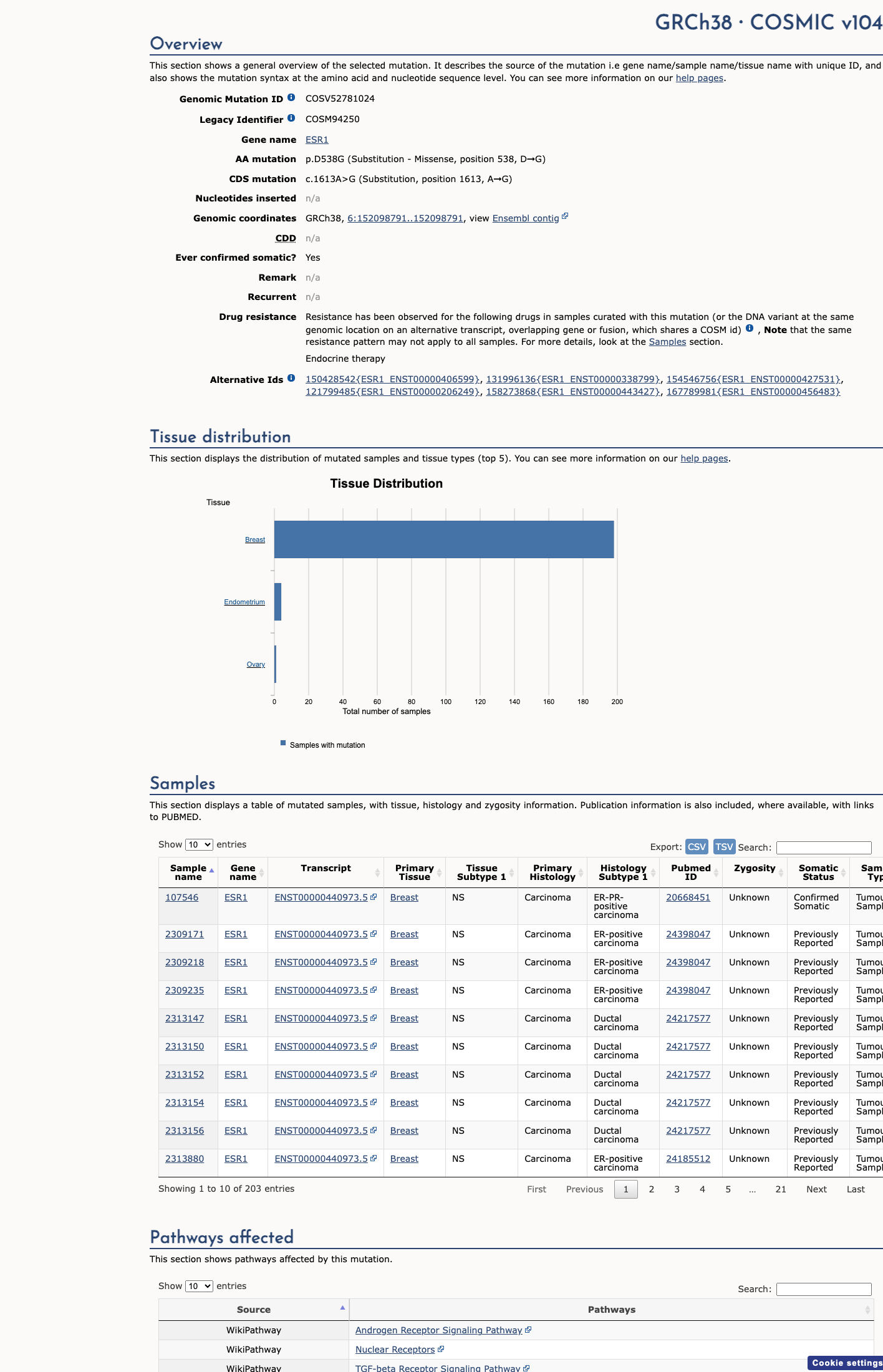
COSMIC

Cancer hotspots
Somatic evidence
Hotspot
COSMIC
This variant lies in a statistically significant hotspot. This variant has previously been reported in somatic cancers (COSMIC; COSV52781024, n = 162 times).
Hotspots
This variant lies in a statistically significant hotspot.
Literature · how each cited paper was used
6papers cited
Each card is an audit: what was searched, what was found, whether it names the variant, which criteria it fed, and why. 1 further PMID triaged but not cited — see Sources & references.
Activating ESR1 mutations in hormone-resistant metastatic breast cancer.
Searched
c.1613A>Gp.Asp538GlyD538GAsp538
Found
Robinson et al. identified ESR1 ligand-binding domain mutations including p.Asp538Gly in 6 of 11 patients with ER-positive metastatic breast cancer previously treated with anti-estrogen therapies. Functional characterization in HEK293T cells demonstrated that ESR1-D538G confers constitutive ligand-independent transcriptional activity.
Variant
✓ Names this variant — characterised directly
Applied to
→PS3
met
→PM1
met
Why
Variant identified in patient tumor samples and functionally characterized; supports PS3 and PM1 assessments.
The five new LBD-localized ESR1 mutations identified here (encoding p.Leu536Gln, p.Tyr537Ser, p.Tyr537Cys, p.Tyr537Asn and p.Asp538Gly) were shown to result in constitutive activity and continued responsiveness to anti-estrogen therapies in vitro.
Location Abstract; Results (index patient MO_1051 and MO_1167); Figure 3 (functional assays) · Context Luciferase reporter assays with estrogen response element (ERE) reporter in HEK293T cells; whole-exome and transcriptome sequencing of metastatic breast cancer samples. · full text
ESR1 ligand-binding domain mutations in hormone-resistant breast cancer.
Searched
c.1613A>Gp.Asp538GlyD538GAsp538
Found
Toy et al. identified ESR1 LBD mutations including p.Asp538Gly in 5 of 44 (11%) metastatic ER-positive breast tumors after prolonged hormonal treatment. Functional assays in multiple cell lines demonstrated that Asp538Gly confers estrogen-independent receptor activation (approximately 15-fold above wild-type basal levels) and reduced sensitivity to tamoxifen and fulvestrant.
Variant
✓ Names this variant — characterised directly
Applied to
→PS3
met
→PM1
met
Why
Variant identified and functionally characterized; supports PS3 and PM1 assessments.
Asp538Gly (15X WT levels) ... the already high levels driven by the Tyr537Ser (1.4X basal Tyr537Ser level), Asp538Gly (1.5X basal Asp538Gly level), and Ser463Pro/Asp538Gly (1.6X basal Ser463Pro/Asp538Gly level) mutants.
Location Results; Figure 2 (luciferase reporter assays); Supplementary Table 2 · Context ERE-luciferase reporter assays in MCF-7, T47D, ZR75-1, MDA-MB-231, and Ishikawa cell lines; targeted sequencing of 230 cancer genes (MSKCC panel). · full text
D538G mutation in estrogen receptor-α: A novel mechanism for acquired endocrine resistance in breast cancer.
Searched
c.1613A>GA1613GD538GAsp538Glyposition 1,613
Found
Merenbakh-Lamin et al. identified the D538G ESR1 mutation (c.1613A>G) in liver metastases of 5 of 13 patients with ER-positive metastatic breast cancer who developed endocrine resistance. The mutation was absent in matched primary tumors obtained prior to treatment. Structural modeling and luciferase reporter assays demonstrated that D538G induces a conformational change in helix 12 enabling ligand-independent coactivator binding and constitutive transcriptional activity. The mutant conferred tamoxifen resistance and enhanced proliferation in MCF-7 cells.
Variant
✓ Names this variant — characterised directly
Applied to
→PS3
met
→PM1
met
Why
Exact variant (c.1613A>G) confirmed in full text. Provides robust functional evidence supporting PS3 and hotspot/functional domain evidence supporting PM1.
a mutation of A to G at position 1,613 of ERα, resulting in a substitution of aspartic acid at position 538 to glycine (D538G), was identified in liver metastases.
Location Abstract lines 57-66; Results 'Identification of D538G mutation' (line 263-278); Figure 1 (structural modeling); Figure 2 (luciferase assays); Table 1 (clinical characteristics) · Context ERE-luciferase reporter assays in MCF-7 and MDA-MB-231 cells; co-immunoprecipitation for SRC-1 binding; structural modeling with Rosetta; molecular docking; MTT proliferation assays; Foundation One clinical sequencing panel. · full text
Emergence of constitutively active estrogen receptor-α mutations in pretreated advanced estrogen receptor-positive breast cancer.
Searched
c.1613A>GD538GAsp538Gly
Found
Jeselsohn et al. identified ESR1 LBD mutations including D538G in 9 of 76 (12%) ER-positive metastatic breast tumor specimens, with D538G representing 33% of detected mutations. The mutation was detected in metastatic samples but absent in matched untreated primary tumors. Site-directed mutagenesis was used to generate the D538G construct for functional studies, and the mutation was confirmed to confer constitutive activity.
Variant
✓ Names this variant — characterised directly
Applied to
→PS3
met
→PM1
met
Why
Variant identified and functionally studied; supports PS3 and PM1 assessments.
The specific mutations include: Y537N (33%), D538G (33%), Y537S (22%) and Y537C (11%).
Location Results; Methods (site-directed mutagenesis primers for D538G) · Context Targeted sequencing of ER+ metastatic tumors; site-directed mutagenesis using GeneArt system; matched primary-metastatic pair analysis. · full text
Estrogen receptor alpha somatic mutations Y537S and D538G confer breast cancer endocrine resistance by stabilizing the activating function-2 binding conformation.
Searched
c.1613A>GD538GAsp538Gly
Found
Fanning et al. performed comprehensive biophysical and structural characterization of the D538G ESR1 mutation. X-ray crystallography (1.90 Å resolution), hydrogen-deuterium exchange mass spectrometry (HDX-MS), and tr-FRET coactivator binding assays demonstrated that D538G stabilizes the agonist conformation of helix 12, enabling constitutive SRC3 coactivator recruitment in the absence of hormone. The D538G mutant showed reduced estradiol binding affinity (Kd = 1.30 ± 0.63 nM vs WT 0.26 ± 0.13 nM) and approximately 10-fold reduced tamoxifen affinity (Ki = 3.42 ± 0.50 nM vs WT 0.337 ± 0.018 nM).
Variant
✓ Names this variant — characterised directly
Applied to
→PS3
met
→PM1
met
Why
Comprehensive structural and biophysical characterization of D538G; provides the strongest functional evidence supporting PS3 and PM1 assessments.
the Y537S and D538G mutations elevate the basal or constitutive activity of ERα and confer resistance to the beneficial effects of the SERM, SERD, and AI therapies.
Location Abstract; Results (tr-FRET coactivator binding, radioligand binding assays, proteolytic susceptibility, HDX-MS, X-ray crystallography); Figures 1-5; Tables 1-3 · Context tr-FRET coactivator binding assays with purified ERα LBD and SRC3 NRD; radioligand binding assays with 3H-E2; trypsin proteolysis assays; HDX-MS; X-ray crystallography (D538G-E2 complex at 1.90 Å); molecular dynamics simulations. · full text
Estrogen-independent molecular actions of mutant estrogen receptor 1 in endometrial cancer.
Searched
c.1613A>GD538GAsp538Gly
Found
Blanchard et al. generated CRISPR/Cas9-engineered Ishikawa endometrial cancer cell lines heterozygous for the D538G ESR1 LBD mutation. The study demonstrated that D538G-mutant endometrial cancer cells exhibit estrogen-independent genomic binding and transcriptional activity distinct from wild-type ESR1, extending functional characterization of this variant to the endometrial cancer context.
Variant
✓ Names this variant — characterised directly
Applied to
→PS3
met
Why
Variant-specific functional data confirmed in endometrial cancer context; supports PS3 assessment.
we created endometrial cancer cells that are heterozygous for the D538G ESR1 ligand binding domain mutation (or wild-type ESR1 for controls) coupled with a FLAG epitope tag.
Location Abstract; Results 'Generation of D538G ESR1 mutant and wild-type cell lines'; Figure 1 · Context CRISPR/Cas9-mediated epitope tagging in Ishikawa endometrial cancer cells; ChIP-seq; RNA-seq; western blot. · full text
Sources & reference links
Triaged references · 1 PMID not cited in assessment