Variant is completely absent from gnomAD v2.1, v4.1, and gnomAD-Canada v1.0 population databases, meeting PM2 at supporting strength.1 TET2 loss-of-function variants are an established germline disease mechanism; this missense variant (p.His1380Pro) occurs in a gene where truncating variants are the primary known cause of disease, meeting BP1 at supporting strength.2 Multiple computational tools predict no significant impact: BayesDel score 0.120 (benign) and SpliceAI max delta 0.00 (no splicing alteration), meeting BP4 at supporting strength.3 REVEL score of 0.657 is intermediate and does not qualify for PP3; no other pathogenic criteria are met. Overall classification: Variant of Uncertain Significance (VUS) per ACMG/AMP 2015 combination rules (PM2_supporting + BP1_supporting + BP4_supporting).4
Final classification
Likely Benign
PM2BP1BP4
TET2
c.4139A>C
p.His1380Pro
This variant
Variant is completely absent from gnomAD v2.1, v4.1, and gnomAD-Canada v1.0 population databases, meeting PM2 at supporting strength.
gene-specific framework lacked a usable explicit final combination framework, so generic ACMG/AMP 2015 final-combination rules were applied as fallback; applied criteria: PM2 supporting, BP1 supporting benign, BP4 supporting benign; combination = 1 supporting + 2 supporting benign, which maps to Likely Benign.
Classification rationale
PM2
BP1BP4
Likely Benign
TET2 c.4139A>C
PM2 + BP1 + BP4
→
Likely Benign
LYFE Sciences is an AI system, and it can make mistakes. Criteria
may be applied incorrectly, sources may be misread, and a confident-looking
classification can still be wrong. Double-check every criterion and
its underlying evidence before relying on any call.
Gene diagram
· NM_001127208.2 · variants mapped to exon structure
TET2
NM_001127208.2
Fetching transcript structure from UCSC…
Applied criteria · 3 applied · 19 assessed
MetEvidence satisfies this criterion.
Not metEvaluated against available evidence; threshold not reached.
Not assessedApplies in principle, but no evidence was found to evaluate it.
N/ADoesn't apply to this variant type.
Applied · 3
Strength
Supporting
Moderate
Strong
Very strong
PM2
supporting
Pathogenic
This variant is absent from all population databases, including gnomAD v2.1 (exomes), gnomAD v4.1 (exomes), and gnomAD-Canada v1.0 (genomes). Complete absence from large population cohorts supports a rare variant consistent with potential pathogenicity.
Absent from gnomAD v2.1 (allele count 0)Absent from gnomAD v4.1 (allele count 0)Absent from gnomAD-Canada v1.0 (allele count 0)
BP1
supporting
Benign
TET2 loss-of-function (truncating) variants are an established germline disease mechanism, associated with an autoimmune lymphoproliferative syndrome-like phenotype and hematologic malignancies (PMID:36066697, PMID:40031954). This variant is a missense substitution (p.His1380Pro) in a gene where primarily truncating variants are known to cause disease.
TET2 LOF mechanism supported by germline literature (PMID:36066697PMID:40031954)Truncating variants are established disease mechanism in TET2-related ALPS-like phenotype
BP4
supporting
Benign
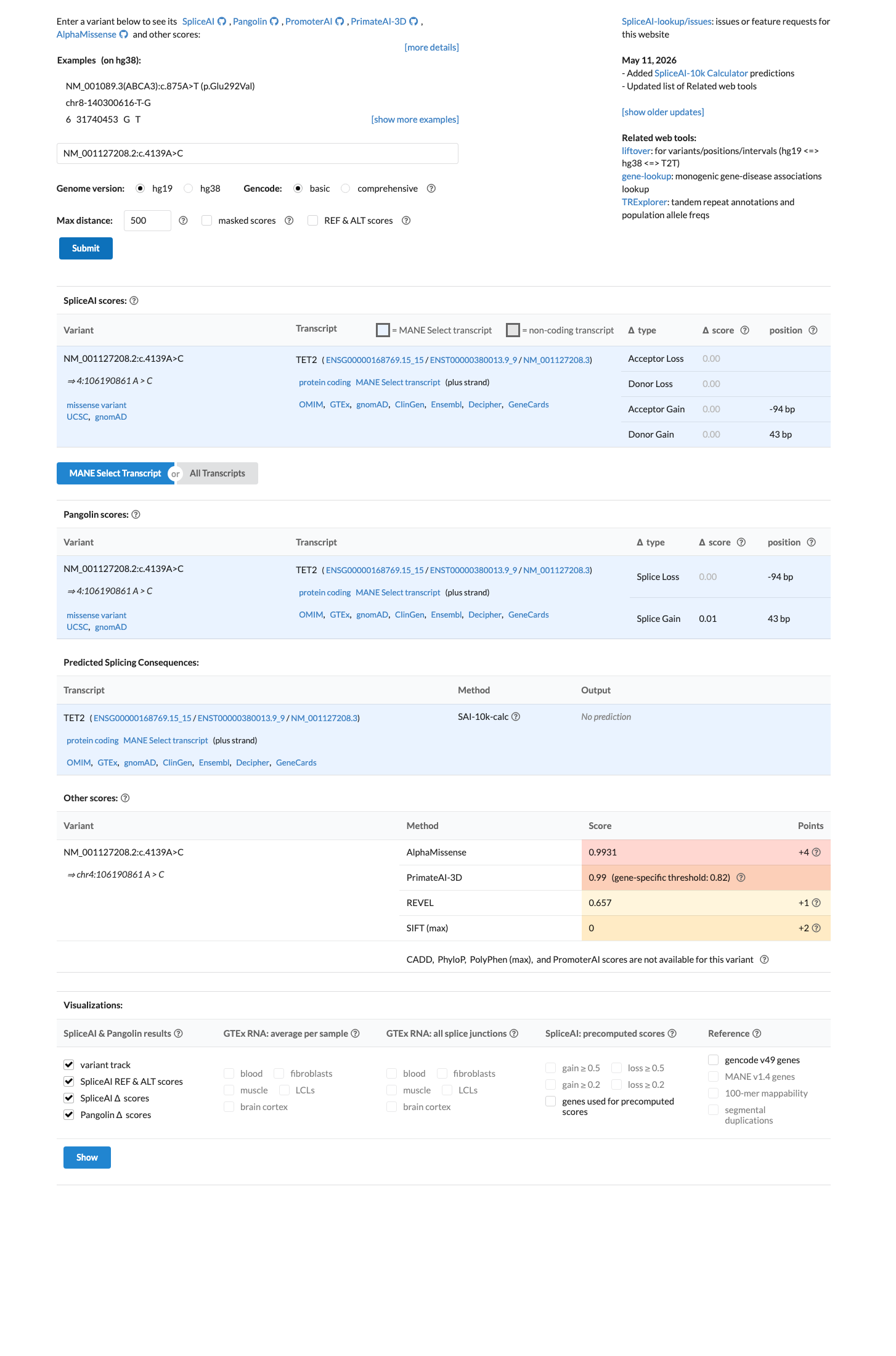
Multiple lines of computational evidence suggest no significant impact on the gene product. BayesDel score is 0.120 (predicting benign). SpliceAI max delta score is 0.00 (no predicted splicing alteration). Although REVEL score is 0.657 (intermediate), two independent in silico methods converge on a benign or neutral prediction.
BayesDel: 0.120 (benign-predicting)SpliceAI: max delta 0.00 (no splicing impact)REVEL: 0.657 (intermediate
Assessed · not applied
· 7 not met · 12 not assessed
Pathogenic
PS1
No prior report of a pathogenic variant resulting in the same amino acid change (p.His1380Pro) was identified.
PS2
No de novo data available for this variant.
PS3
No variant-specific functional studies identified.
PS4
No case-control or prevalence data available to assess enrichment of this variant in affected individuals versus controls.
PM1
This variant does not lie within a statistically significant mutational hotspot in TET2.
PM6
No de novo data available for this variant.
PP1
No cosegregation data available for this variant.
PP2
HCI prior data are not available for TET2; the rate of benign missense variation in this gene cannot be assessed.
PP3
Multiple in silico tools do not converge on a deleterious prediction.
PP4
No patient-specific phenotypic data available to assess whether this variant is found in a patient with a phenotype highly specific for TET2-related disease.
PP5
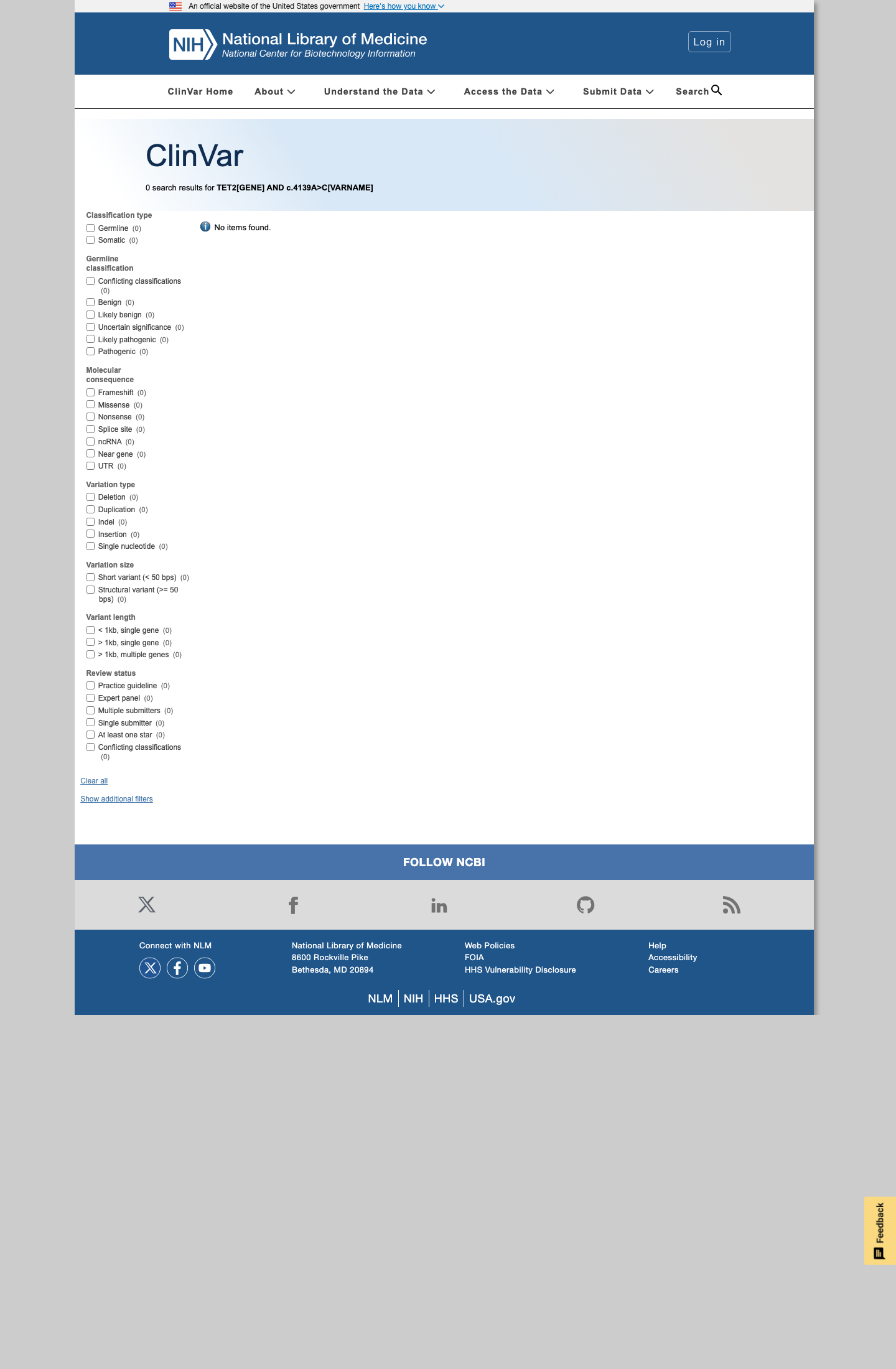
This variant is absent from ClinVar and has not been classified by any reputable source or expert panel.
Benign
BA1
BA1 requires an allele frequency above 1% in population databases.
BS1
BS1 requires an allele frequency above 0.3% in population databases.
BS2
No data on observation of this variant in healthy adults with full penetrance expected.
BS3
No variant-specific functional studies demonstrating no damaging effect on protein function or splicing.
BS4
No segregation data available to assess lack of cosegregation with disease.
BP2
No data on observation of this variant in trans with a known pathogenic variant in a recessive disorder.
BP5
No data on an alternate molecular basis for disease that would rule out this variant as causative.
BP6
This variant is absent from ClinVar and has not been classified as benign by any reputable source.
N/A · 6
PVS1 · PM3 · PM4 · PM5 · BP3 · BP7
Research & evidence
Population frequency · supports benign
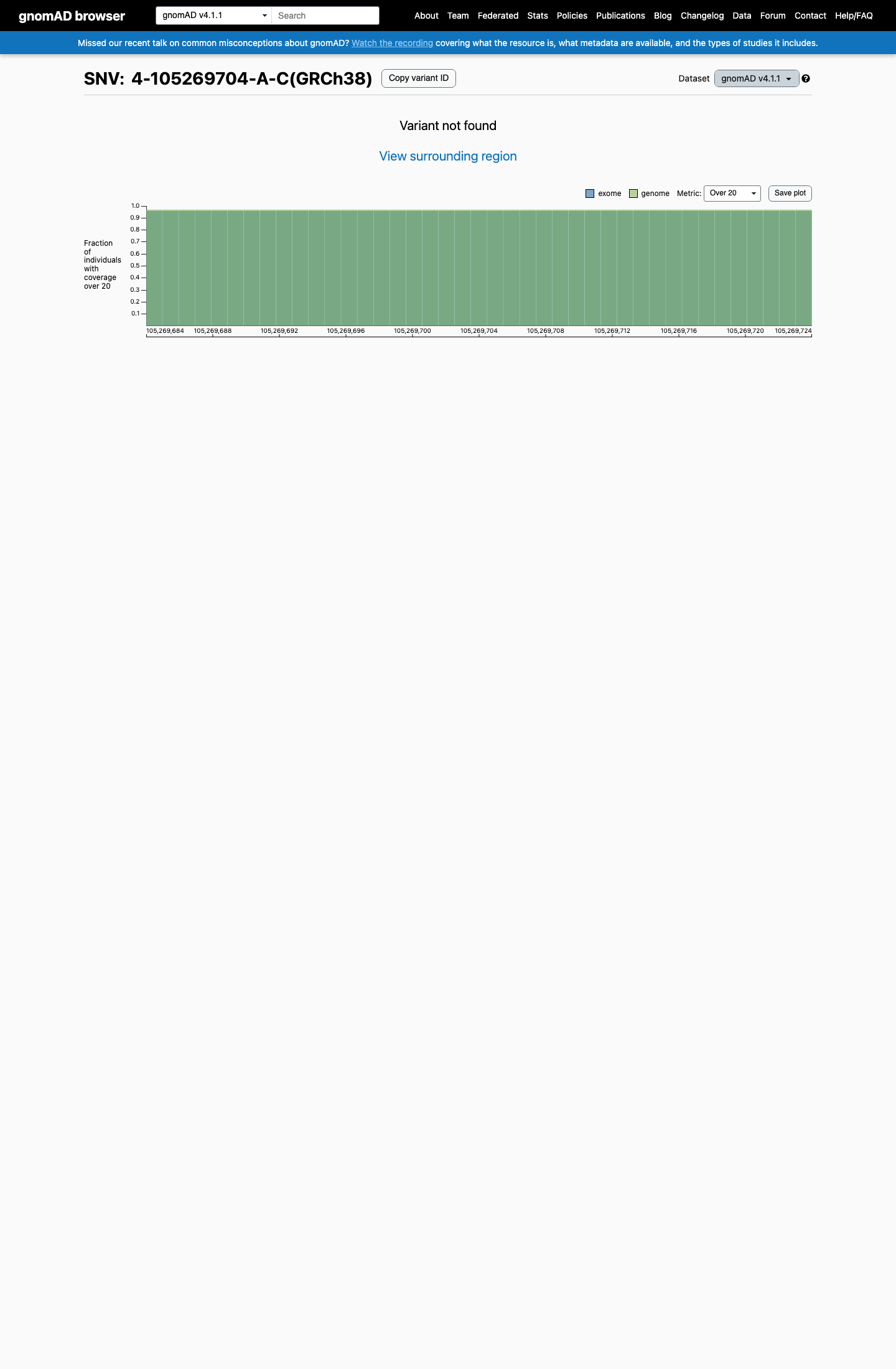
gnomAD v4.1
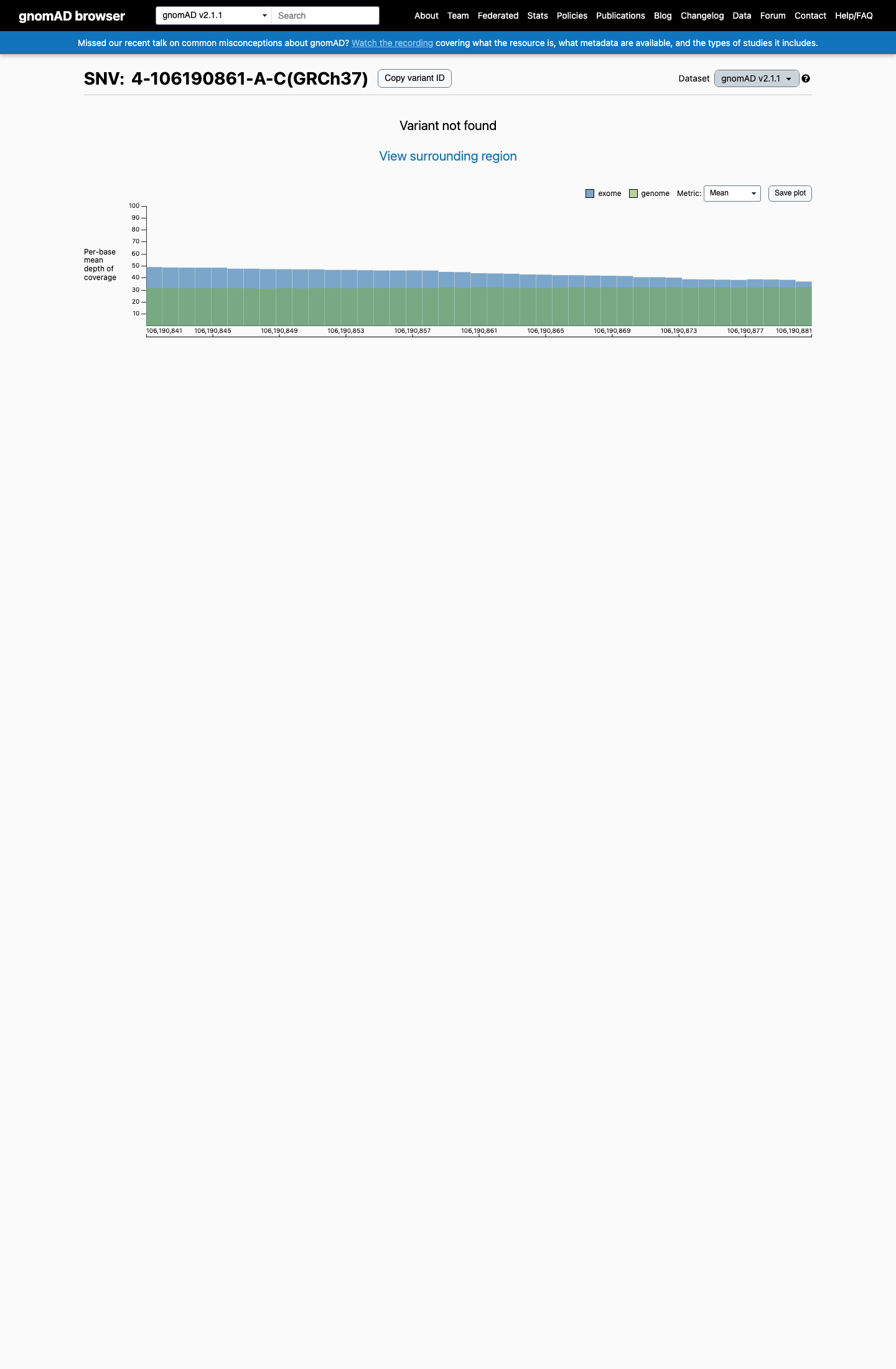
gnomAD v2.1
v4.1
Absent from gnomAD v4.1.
v2.1
Absent from gnomAD v2.1.
🇨🇦 CA
Absent from gnomAD-Canada v1.0.
Allele frequency by ancestry
three datasets · side by side
gnomAD v4.1
Absent
· 0 / ?
0 hom
0 hom
Not observed in any ancestry group.
gnomAD v2.1
Absent
· 0 / ?
0 hom
0 hom
Not observed in any ancestry group.
gnomAD Canada 🇨🇦
Absent
· 0 / ?
0 hom
0 hom
Not observed in any ancestry group.
In silico
SpliceAI predicts no significant splice impact for this variant (max delta score = 0.00). REVEL score = 0.657. BayesDel score = 0.120127.
Functional
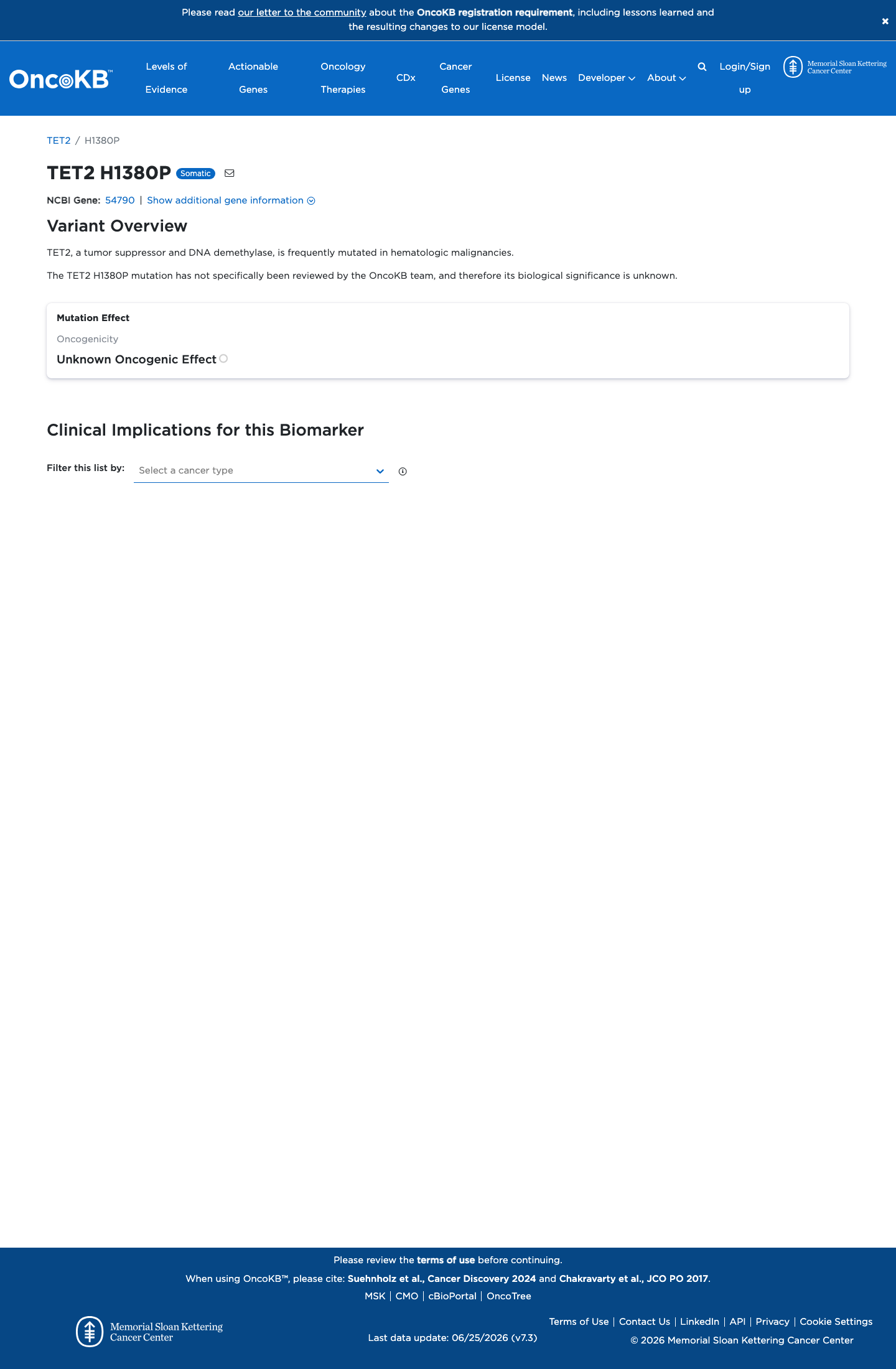
Unknown Oncogenic Effect
OncoKB did not identify variant-specific reviewed functional evidence for this variant; gene-level curated context is available for reviewer follow-up. TET2, a tumor suppressor and DNA demethylase, is frequently mutated in hematologic malignancies.
COSMIC

Cancer hotspots
Somatic evidence
Not in COSMIC / hotspots
COSMIC
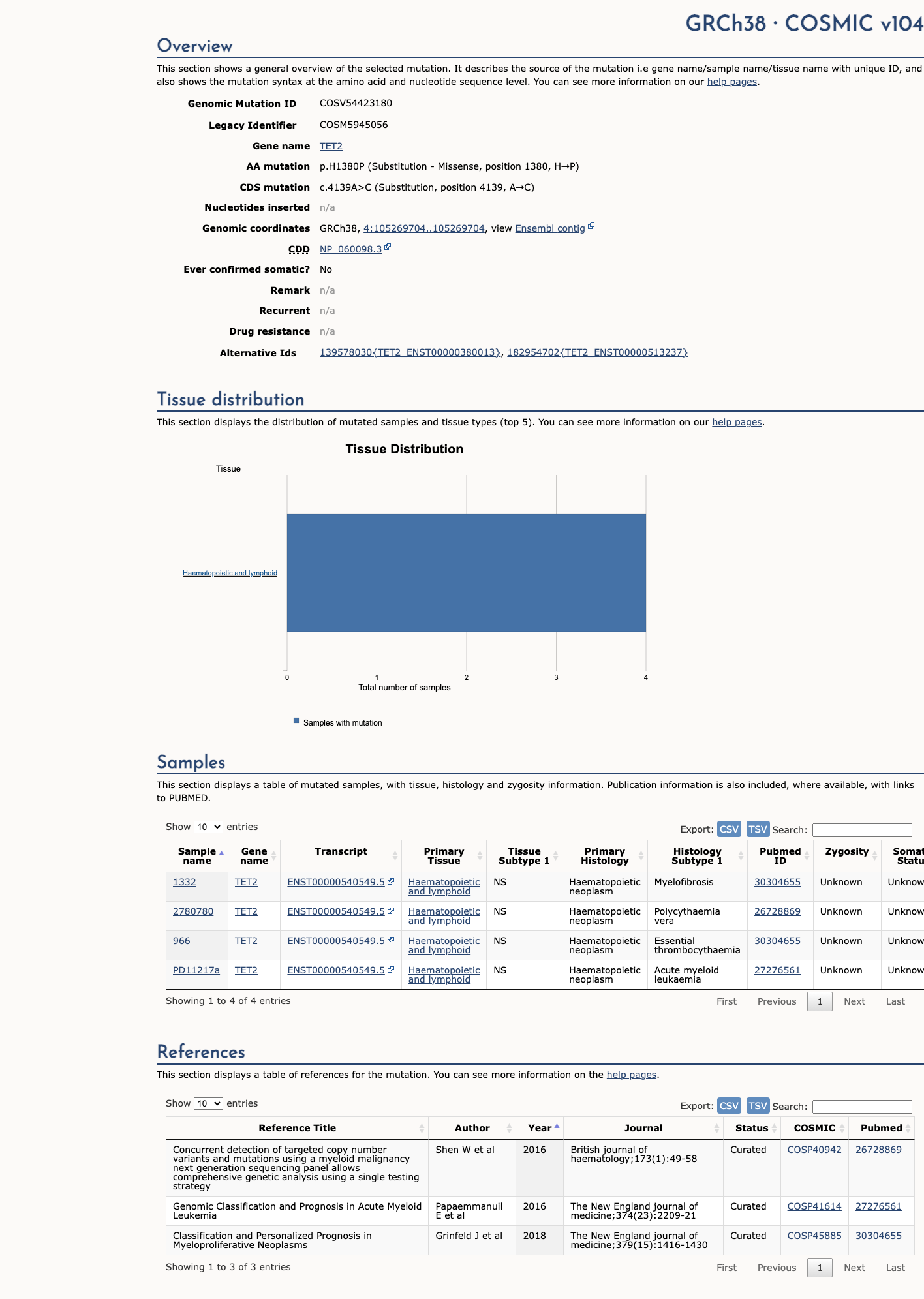
This variant does not lie in a statistically significant hotspot. This variant has previously been reported in somatic cancers (COSMIC; COSV54423180, n = 4 times).
Hotspots
This variant does not lie in a statistically significant hotspot.
Sources & reference links