Analysis in progress
Initialising…
0%
complete
This report is still being assembled — sections appear as each stage finishes. It isn't final yet.
MET
Final classification
VUS
PM2PP3
MET
c.3082G>C
p.Asp1028His
missense · exon 14

MET encodes a receptor tyrosine kinase that serves as the cell-surface receptor for hepatocyte growth factor (HGF). Upon HGF binding, the receptor activates signaling pathways that promote cell growth, survival, movement, and blood vessel formation, and it plays important roles in embryonic development and tissue repair. Mutations in MET are associated with papillary renal cell carcinoma, hepatocellular carcinoma, and various head and neck cancers, and amplification or overexpression of the gene is found in many human cancers, where it can drive tumor growth and spread.

This variant

MET encodes an HGF receptor tyrosine kinase linked to papillary renal cell carcinoma, hepatocellular carcinoma, and head and neck cancers, where altered signaling can drive tumor growth. This c.3082G>C (p.Asp1028His) variant is classified as a VUS: it is absent from population databases and predicted to affect splicing, but no functional, segregation, or clinical phenotype data establish pathogenicity. The classification means this variant cannot currently be used to guide clinical decisions, and any splicing effect should be confirmed experimentally before interpretation changes.

Transcript
NM_001127500.2
HGVS · transcript:coding
NM_001127500.2:c.3082G>C
GRCh38
chr7:116771989 G>C
GRCh37
chr7:116412043 G>C
Basis VUS: two supporting criteria — PM2 (absent from gnomAD) and PP3 (SpliceAI donor-loss 0.925) — do not reach the evidence threshold for pathogenic or benign classification.
VUS: two supporting criteria — PM2 (absent from gnomAD) and PP3 (SpliceAI donor-loss 0.925) — do not reach the evidence threshold for pathogenic or benign classification.
Classification rationale
PM2PP3 VUS
MET c.3082G>C missense · exon 14

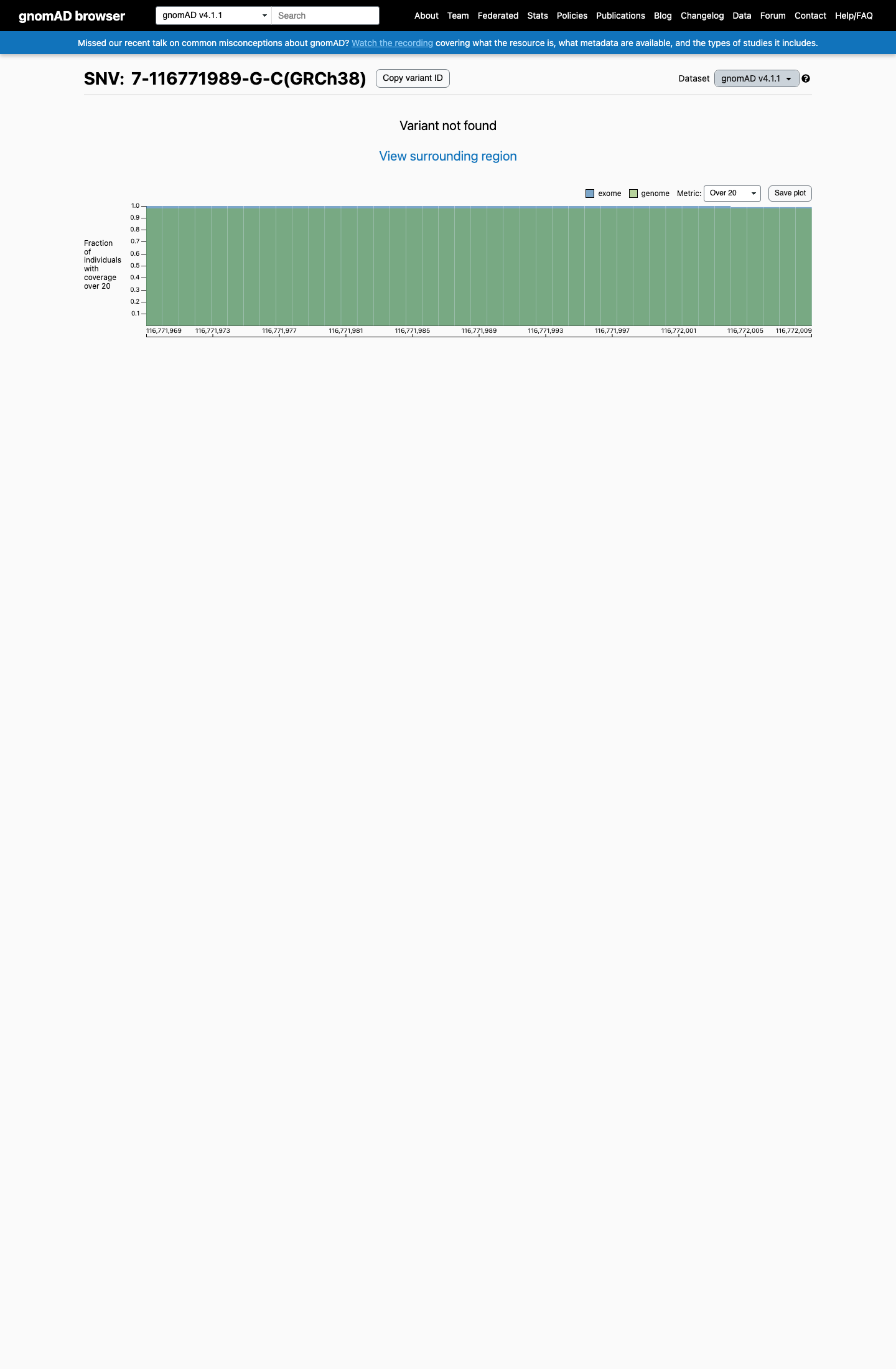
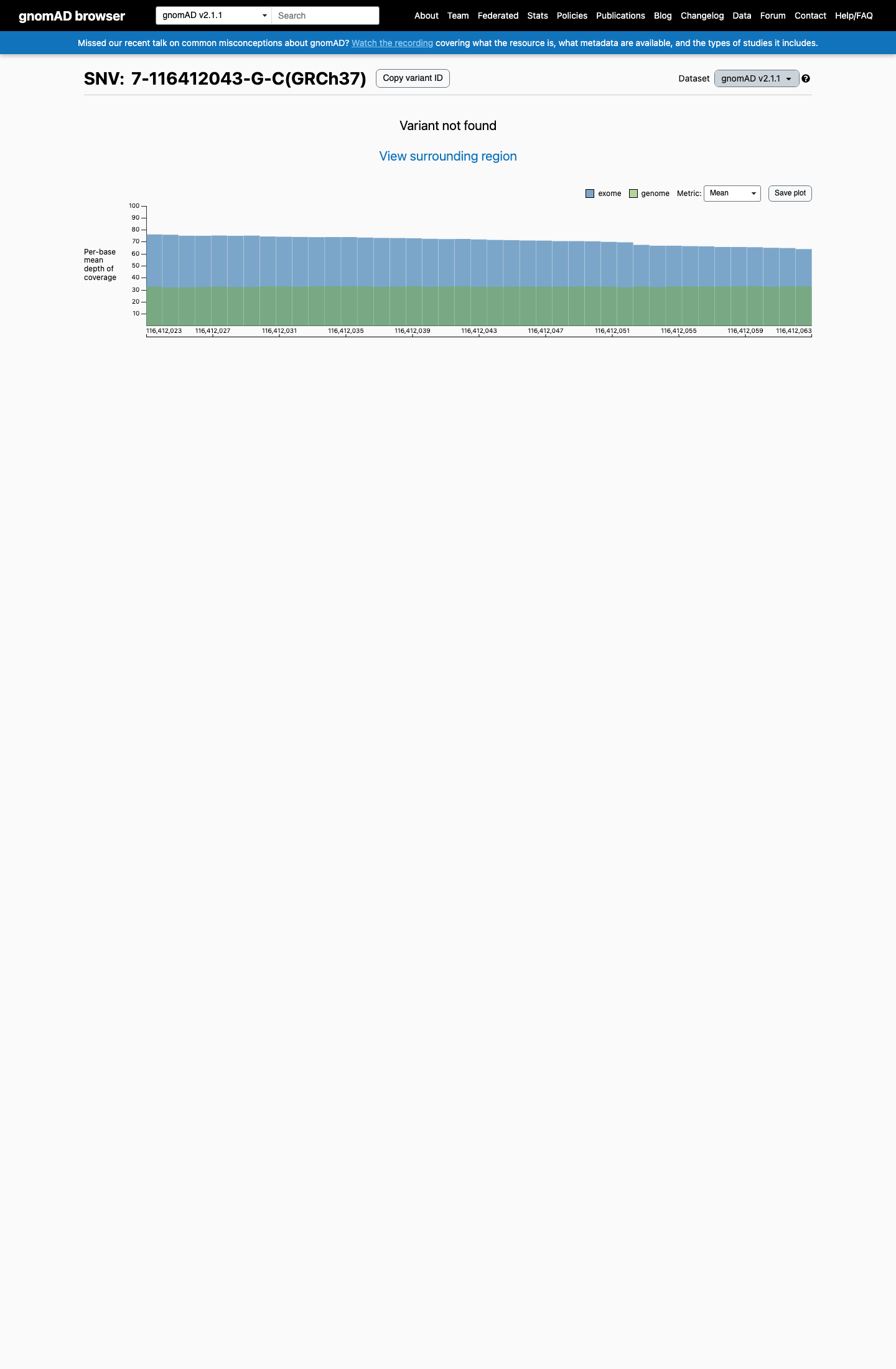
PM2 (Supporting): variant absent from gnomAD v2.1, gnomAD v4.1, and gnomAD-Canada v1.0. PP3 (Supporting): SpliceAI predicts splice-donor loss at the annotated donor position (max delta 0.925, above the 0.8 high-precision tier). Final classification: VUS — under generic ACMG/AMP 2015 rules, two supporting criteria (PM2 and PP3) do not combine to pathogenic or benign.

PM2 + PP3 VUS
Gene diagram · NM_001127500.2 · variants mapped to exon structure
MET NM_001127500.2
Fetching transcript structure from UCSC…
Applied criteria · 2 applied · 21 assessed
MetEvidence satisfies this criterion.
Not metEvaluated against available evidence; threshold not reached.
Not assessedApplies in principle, but no evidence was found to evaluate it.
N/ADoesn't apply to this variant type.
Applied · 2
Strength Supporting Moderate Strong Very strong
PM2 supporting review Pathogenic
Met (Supporting): allele absent from gnomAD v2.1, gnomAD v4.1, and gnomAD-Canada v1.0.
gnomAD v2.1 reports NM_001127500.2:c.3082G>C as absent.gnomAD v4.1 reports NM_001127500.2:c.3082G>C as absent.gnomAD-Canada v1.0 reports NM_001127500.2:c.3082G>C as absent.
PP3 supporting Pathogenic
Met (Supporting): SpliceAI predicts splice-donor loss at the donor position itself (max delta 0.925, above the 0.8 high-precision cutoff).
SpliceAI donor-loss delta score DS_DL=0.925 (DP_DL=0), donor-gain DS_DG=0.477, max delta score=0.925, from the SpliceAI Lookup tool run for NM_001127500.2:c.3082G>C.SpliceAI's own precision-recall calibration (Jaganathan et al. 2019, PMID 30661751) reports that delta scores >=0.8 fall in a high-precision band strongly consistent with a splice-altering effect; this variant's max delta of 0.925 exceeds that band.REVEL score 0.374 (local REVEL v1.3 lookup) is in an indeterminate range that does not meet a supporting-strength pathogenic or benign REVEL threshold, so it is not used to support PP3.
Assessed · not applied · 5 not met · 16 not assessed
Pathogenic
PS1 Not assessed: no established pathogenic variant producing the identical p.Asp1028His change via a different nucleotide was found.
PS2 Not assessed: no parental testing or genotype data were available to evaluate a possible de novo occurrence.
PS3 Not assessed: no functional assay data (kinase, splicing, or cell-based) for this variant were available.
PS4 Not assessed: no germline case-control cohort or enrichment statistic was available for this variant.
PM1 Not assessed: no germline mutational-hotspot or critical-domain annotation for residue 1028 was available.
PM3 Not assessed: no affected-proband, segregation, or trans-phase data were available.
PM6 Not assessed: no documented unconfirmed de novo occurrence was available.
PP1 Not assessed: no familial segregation data were available for this variant.
PP2 Not assessed: no MET missense-constraint metric or curated benign-missense-rate data were available.
PP4 Not assessed: no patient phenotype or clinical diagnosis was provided.
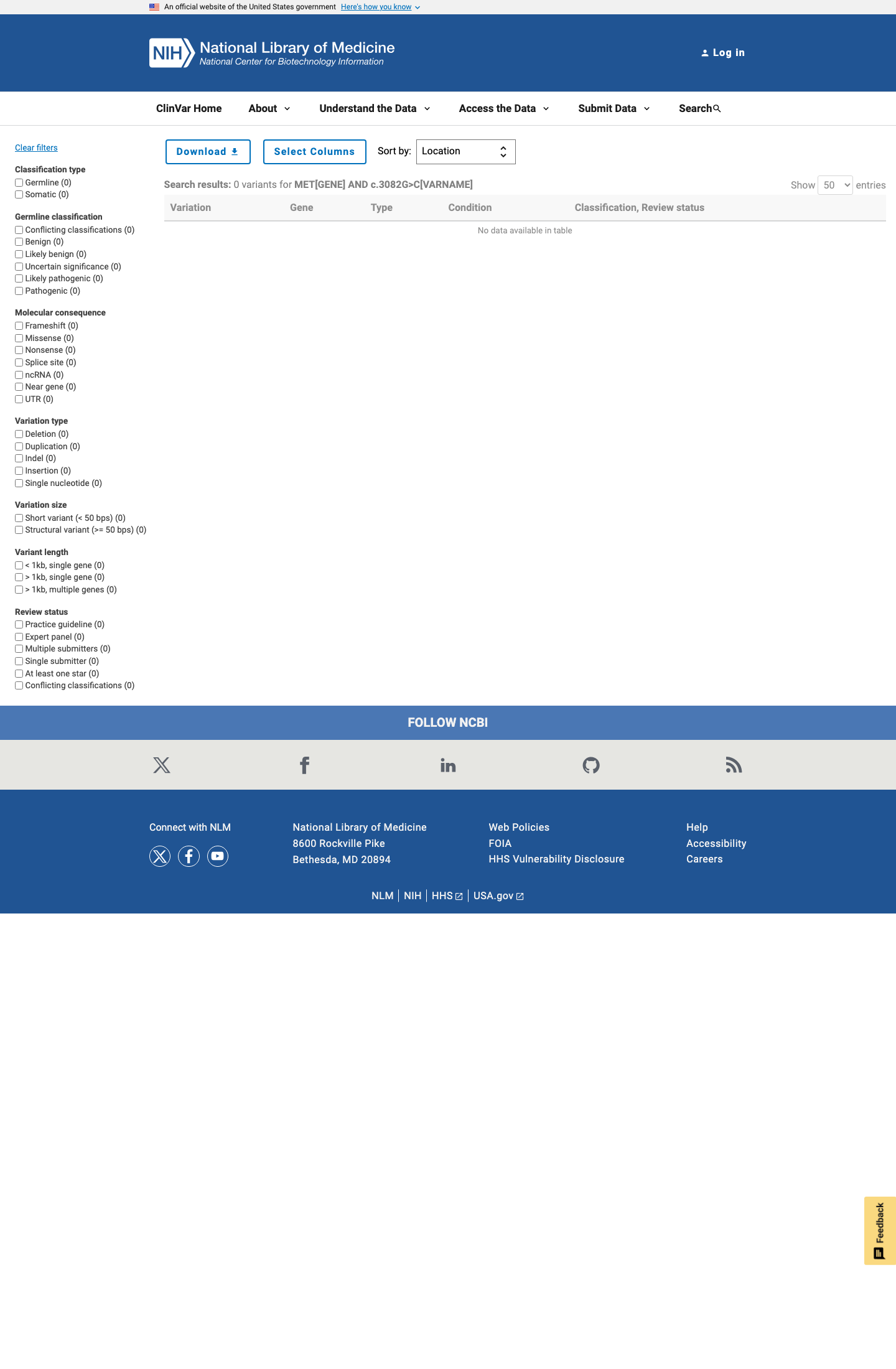
PP5 Not met: ClinVar has no record for this exact variant and no expert-panel pathogenic classification.
Benign
BA1 Not met: allele is absent from gnomAD, so no population frequency approaches the BA1 threshold.
BS1 Not met: absent from gnomAD v2.1, v4.1, and gnomAD-Canada v1.0, so no elevated allele frequency supports BS1.
BS2 Not assessed: no observations of the variant in healthy adults or unaffected individuals were documented.
BS3 Not assessed: no functional assay evidence showing normal protein function was available.
BS4 Not assessed: no affected individual lacking the variant (non-segregation) was documented.
BP1 Not assessed: no citable evidence that MET disease is primarily caused by truncating variants was available.
BP2 Not assessed: no observations of this variant in trans or in cis with a pathogenic variant were available.
BP4 Not met: the dominant in-silico signal (SpliceAI donor loss, max delta 0.925) indicates damage, not a benign effect.
BP5 Not assessed: no clinical phenotype or independent alternate molecular basis for disease was provided.
BP6 Not met: ClinVar has no record for this exact variant and no expert-panel benign classification exists.
N/A · 5 PVS1 · PM4 · PM5 · BP3 · BP7
Research & evidence
Population frequency
gnomAD v4.1 screenshot
gnomAD v4.1
gnomAD v2.1 screenshot
gnomAD v2.1
v4.1
Absent from gnomAD v4.1.
v2.1
Absent from gnomAD v2.1.
🇨🇦 CA
Absent from gnomAD-Canada v1.0.
Allele frequency by ancestry
three datasets · side by side
gnomAD v4.1
Absent · 0 / ?
0 hom
Not observed in any ancestry group.
gnomAD v2.1
Absent · 0 / ?
0 hom
Not observed in any ancestry group.
gnomAD Canada 🇨🇦
Absent · 0 / ?
0 hom
Not observed in any ancestry group.
ClinVar screenshot
ClinVar
This variant is absent from ClinVar.
SpliceAI screenshot
In silico
SpliceAI predicts possible splice impact for this variant (max delta score = 0.93). REVEL score = 0.374. BayesDel score = -0.0818303.
Functional / OncoKB screenshot
Functional
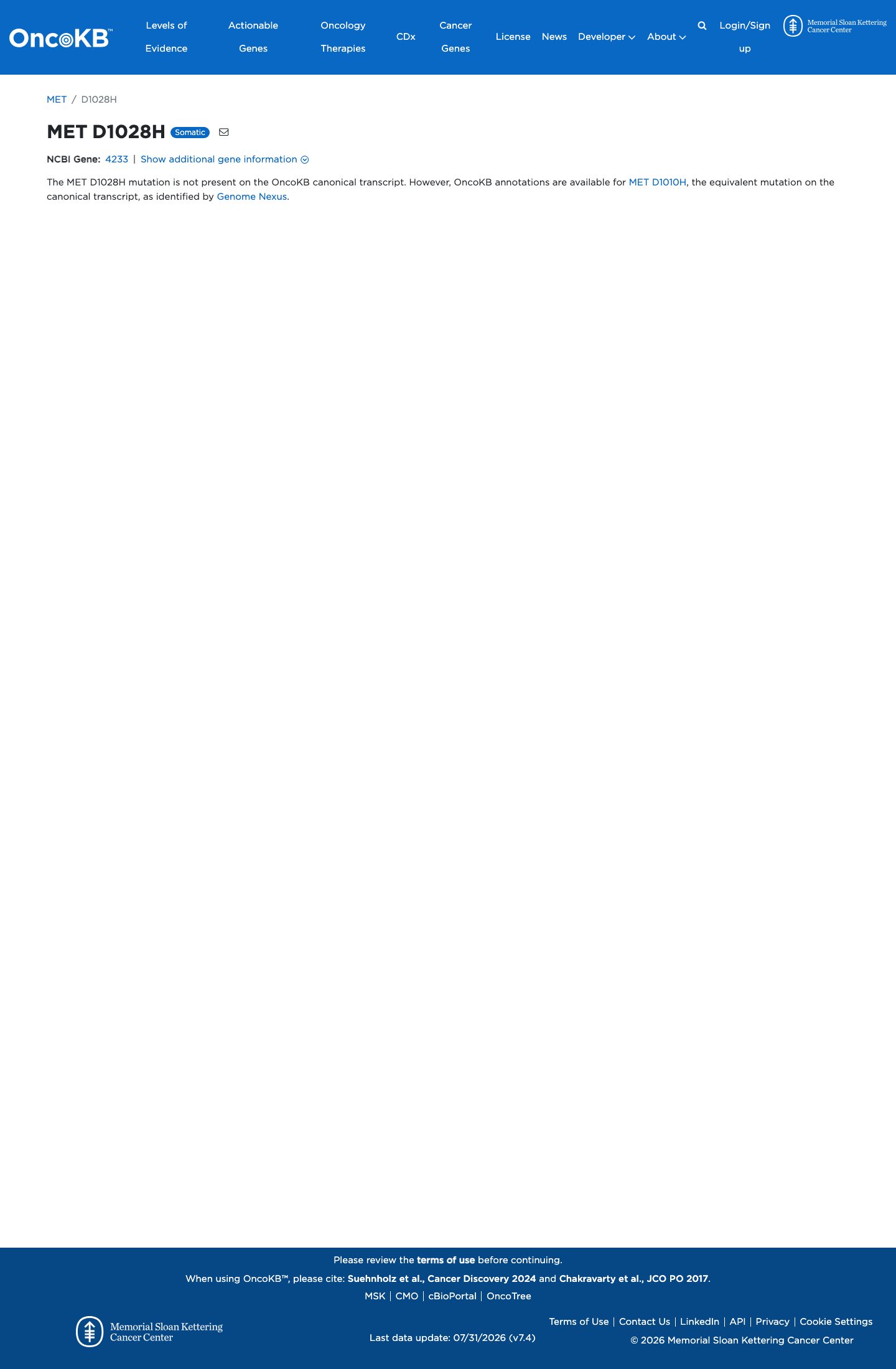
OncoKB identified curated literature and non-variant-specific oncogenicity context for review; listed oncogenicity label: not classified.
OncoKB ↗
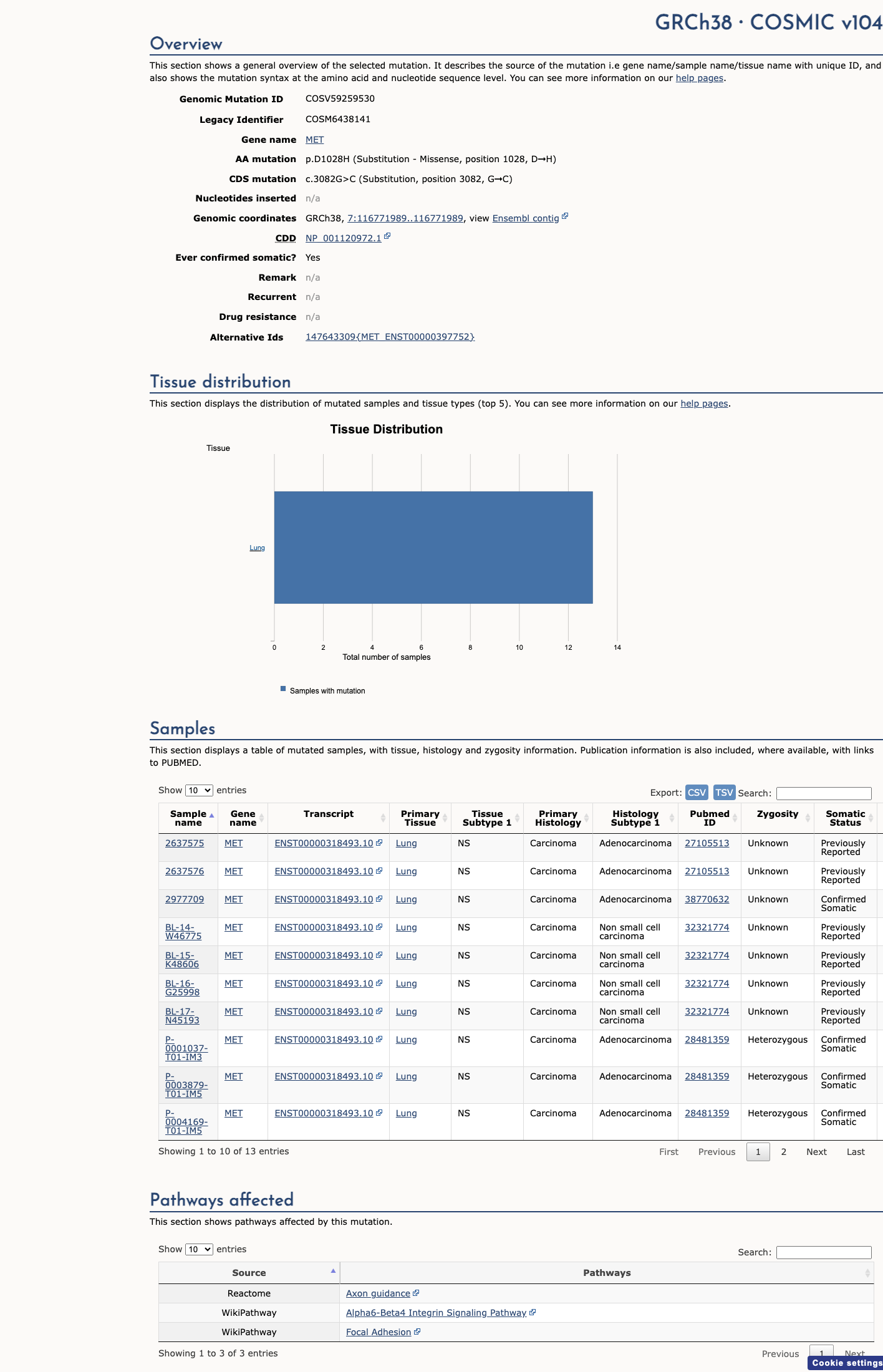
COSMIC screenshot
COSMIC
Cancer hotspots screenshot
Cancer hotspots
Somatic evidence Not in COSMIC / hotspots
COSMIC
This variant does not lie in a statistically significant hotspot. This variant has previously been reported in somatic cancers (COSMIC; COSV59259530, n = 13 times).
Hotspots
This variant does not lie in a statistically significant hotspot.
Sources & reference links
8Sources
ClinVar
gnomAD v2.1
gnomAD v4.1
gnomAD-Canada
SpliceAI
OncoKB
COSMIC
Cancer hotspots