NM_001904.3:c.101_102delGAinsTT (p.Gly34Val) is an in-frame indel in exon 3 of CTNNB1, within the well-established β-catenin degron hotspot (PM1). This variant is absent from gnomAD v2.1, v4.1, and gnomAD-Canada population databases (PM2).1 The variant is absent from ClinVar and has no germline classification from any reputable source.2 OncoKB classifies this variant as Likely Oncogenic based on somatic cancer context; this does not constitute a germline pathogenicity assertion.3 No functional studies have been performed on the specific c.101_102delinsTT indel. The G34V protein change has been observed via SNV in somatic cancers (HCC, medulloblastoma) and demonstrates gain-of-function through impaired β-catenin degradation, but this mechanism does not clearly support germline loss-of-function pathogenicity for CTNNB1 syndrome (PS3 not met). SpliceAI predicts no significant splice impact (max delta score = 0.08), and REVEL/BayesDel scores are unavailable for this indel (PP3 not assessed).4 Two moderate criteria (PM1 + PM2) are met. Under ACMG/AMP 2015 combination rules, two moderate criteria alone do not reach the threshold for Likely Pathogenic (requires ≥3 moderate, or 1 strong + 1-2 moderate, or 2 moderate + ≥2 supporting). This variant is classified as a Variant of Uncertain Significance (VUS).5
Final classification
VUS
PM1PM2
CTNNB1
c.101_102delinsTT
p.Gly34Val
This variant
NM_001904.3:c.101_102delGAinsTT (p.Gly34Val) is an in-frame indel in exon 3 of CTNNB1, within the well-established β-catenin degron hotspot (PM1).
gene-specific framework lacked a usable explicit final combination framework, so generic ACMG/AMP 2015 final-combination rules were applied as fallback; applied criteria: PM1 moderate, PM2 moderate; combination = 2 moderate, which maps to VUS.
Classification rationale
PM1PM2
VUS
CTNNB1 c.101_102delinsTT
PM1 + PM2
→
VUS
3
oncokb ↗
5
generic_acmg_combination_rules
LYFE Sciences is an AI system, and it can make mistakes. Criteria
may be applied incorrectly, sources may be misread, and a confident-looking
classification can still be wrong. Double-check every criterion and
its underlying evidence before relying on any call.
Gene diagram
· NM_001904.3 · variants mapped to exon structure
CTNNB1
NM_001904.3
Fetching transcript structure from UCSC…
Applied criteria · 2 applied · 20 assessed
MetEvidence satisfies this criterion.
Not metEvaluated against available evidence; threshold not reached.
Not assessedApplies in principle, but no evidence was found to evaluate it.
N/ADoesn't apply to this variant type.
Applied · 2
Strength
Supporting
Moderate
Strong
Very strong
PM1
moderate
Pathogenic
This variant alters codon 34 (Gly34Val) within the CTNNB1 exon 3 degron hotspot (residues 31-48), a well-established mutational hotspot and critical functional domain for β-TRCP binding and β-catenin degradation. The residue lies in a statistically significant CancerHotspots region.
Alters Gly34 in the CTNNB1 degron hotspotCancerHotspots confirms statistically significant enrichment of mutations at this residue.
PM2
moderate
Pathogenic
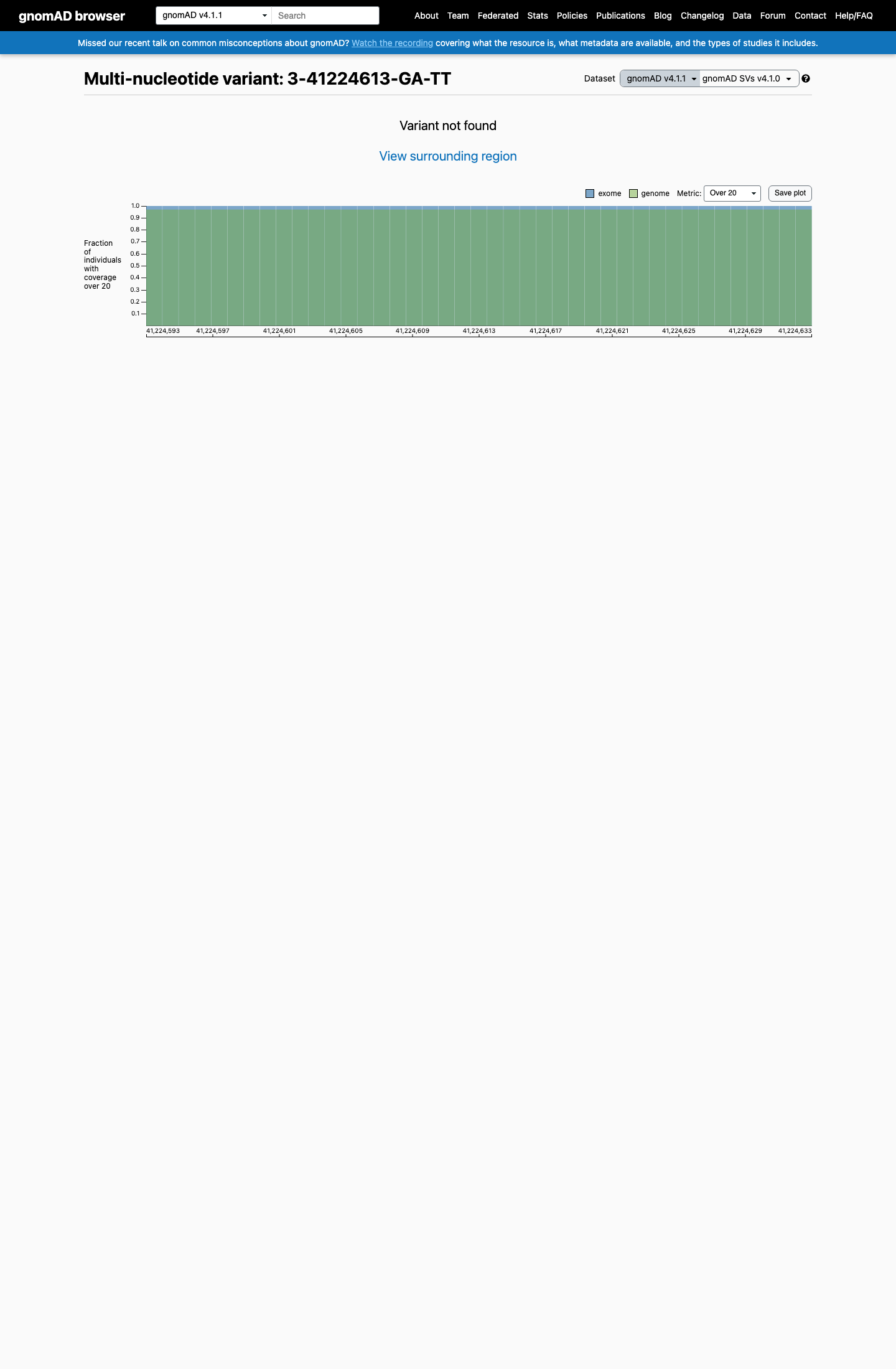
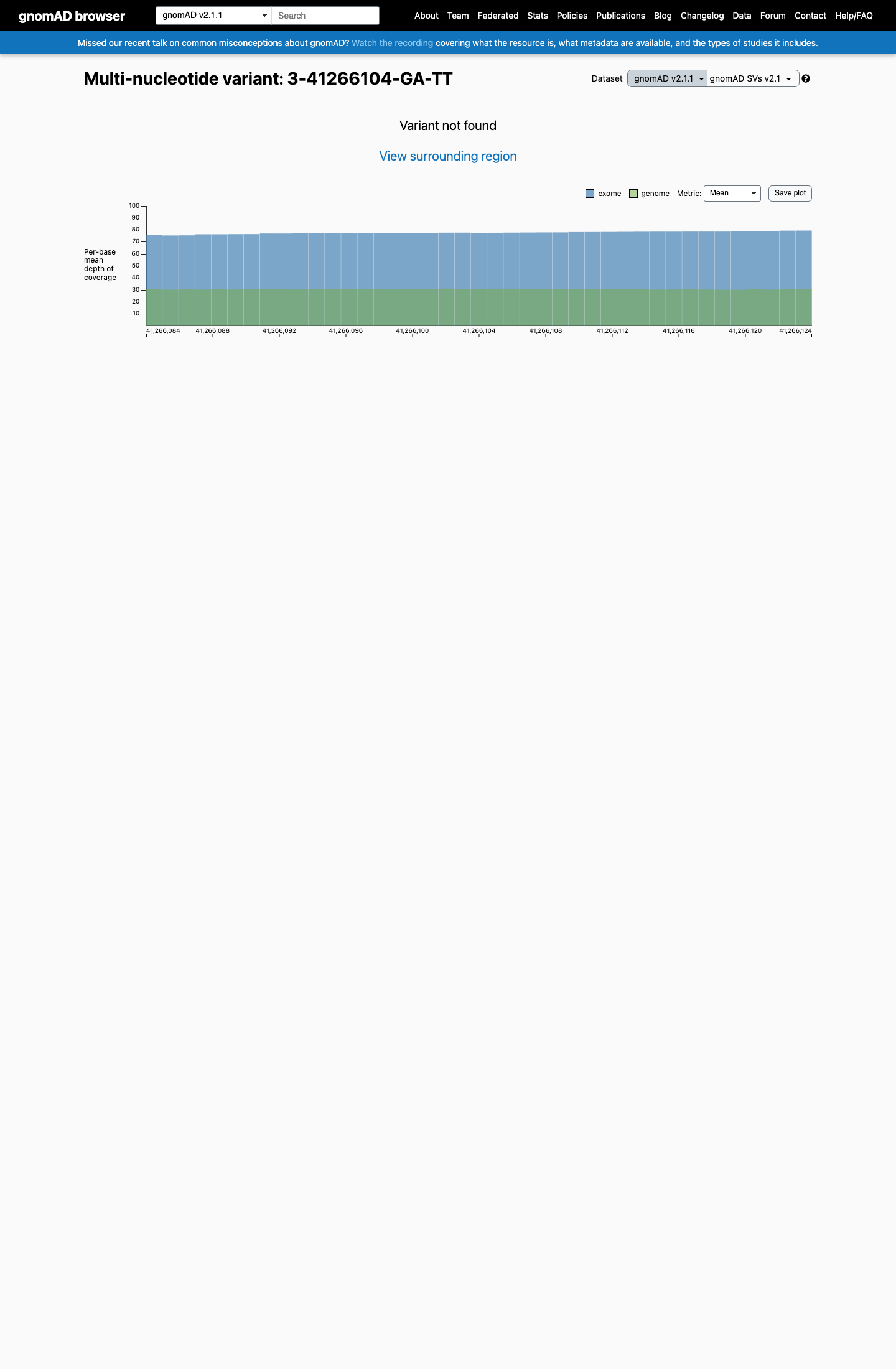
This variant is completely absent from gnomAD v2.1, v4.1, and gnomAD-Canada population databases, well below the PM2 threshold of 0.1% allele frequency.
Absent from gnomAD v2.1 (0 alleles)gnomAD v4.1 (0 alleles)gnomAD-Canada (0 alleles).
Assessed · not applied
· 9 not met · 11 not assessed
Pathogenic
PS1
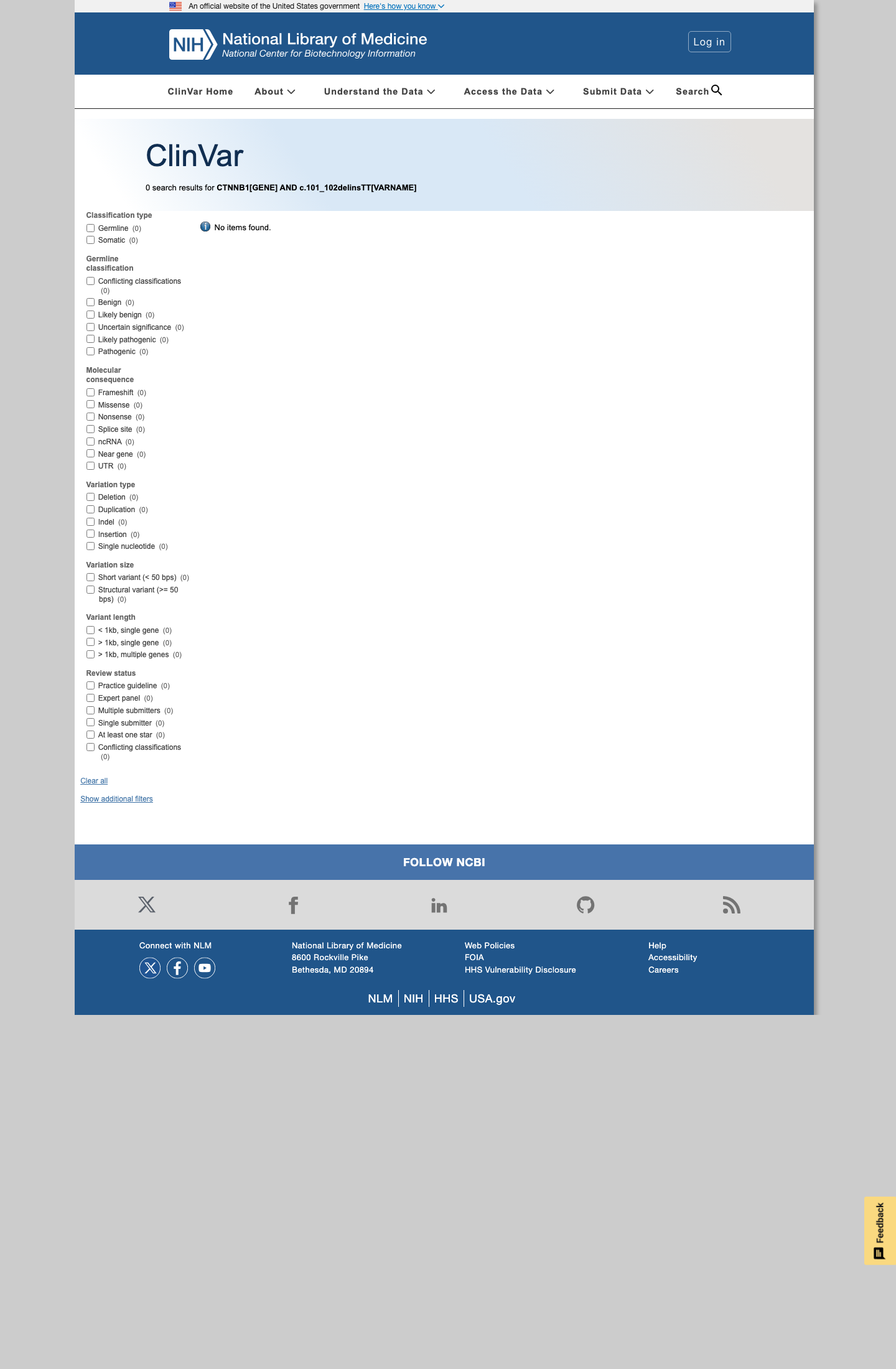
The same amino acid change (G34V) has been observed via SNV in somatic cancer (medulloblastoma, HCC) but is not established as a germline pathogenic variant in ClinVar or the literature.
PS2
No de novo occurrence data are available for this variant.
PS3
Functional evidence from somatic cancer studies demonstrates that G34V (via SNV) impairs β-catenin degradation, leading to gain-of-function and Wnt pathway activation.
PS4
No case-control or prevalence data are available comparing affected versus unaffected individuals.
PM6
No de novo occurrence data are available.
PP1
No segregation data are available for this variant.
PP3
REVEL and BayesDel scores are not available for indels.
PP4
No patient phenotype or clinical data are available for evaluation of phenotype specificity.
PP5
OncoKB classifies the variant as 'Likely Oncogenic' but this is a somatic cancer designation.
Benign
BA1
The variant is absent from gnomAD v2.1, v4.1, and gnomAD-Canada.
BS1
The variant is absent from gnomAD v2.1, v4.1, and gnomAD-Canada.
BS2
No data are available on observation of this variant in healthy adult individuals for a fully penetrant disorder.
BS3
Available functional evidence demonstrates that G34V (via SNV) is activating (gain-of-function), leading to β-catenin stabilization and Wnt pathway activation.
BS4
No segregation data are available to assess lack of cosegregation with disease.
BP1
CTNNB1 germline disease (CTNNB1 syndrome / neurodevelopmental disorder with spastic diplegia and visual defects) is associated with both truncating and missense variants.
BP2
No data are available on observation of this variant in trans with a known pathogenic variant.
BP3
The variant does not lie within a repetitive region.
BP4
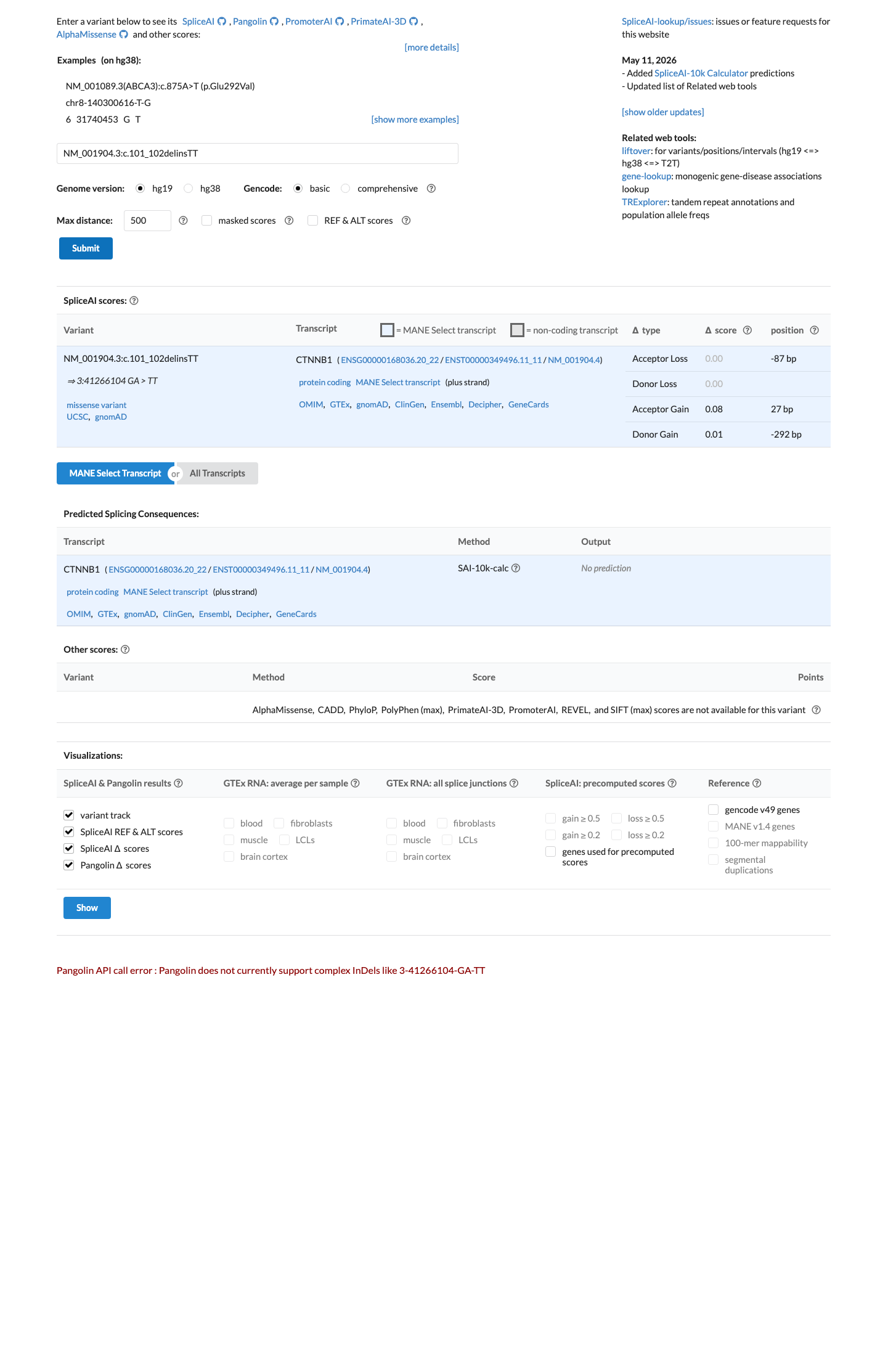
SpliceAI predicts no significant splice impact (max delta score = 0.08), but comprehensive in silico predictors for indels are not available.
BP5
No data are available regarding an alternate molecular basis for disease in a case harboring this variant.
BP6
No reputable source has classified this variant as benign.
N/A · 5
PVS1 · PM4 · PM5 · PP2 · BP7
Research & evidence
Population frequency
gnomAD v4.1
gnomAD v2.1
v4.1
Absent from gnomAD v4.1.
v2.1
Absent from gnomAD v2.1.
🇨🇦 CA
Absent from gnomAD-Canada v1.0.
Allele frequency by ancestry
three datasets · side by side
gnomAD v4.1
Absent
· 0 / ?
0 hom
0 hom
Not observed in any ancestry group.
gnomAD v2.1
Absent
· 0 / ?
0 hom
0 hom
Not observed in any ancestry group.
gnomAD Canada 🇨🇦
Absent
· 0 / ?
0 hom
0 hom
Not observed in any ancestry group.
In silico
SpliceAI predicts no significant splice impact for this variant (max delta score = 0.08).
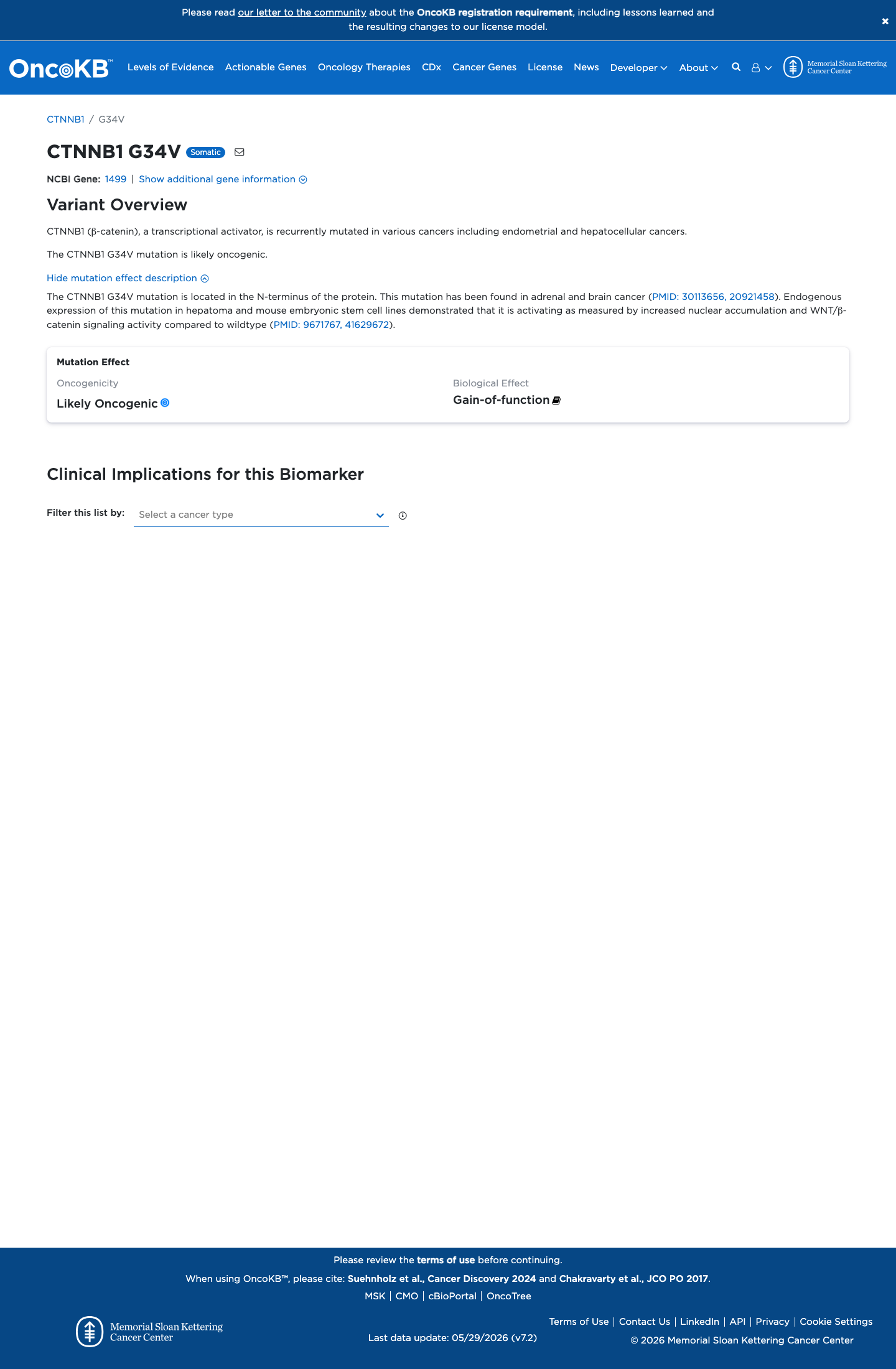
Functional
Likely Oncogenic
OncoKB identified variant-specific curated literature and context relevant to functional review; biological-effect context: Gain-of-function; curated oncogenicity label: Likely Oncogenic.

COSMIC

Cancer hotspots
Somatic evidence
Hotspot
COSMIC
This variant lies in a statistically significant hotspot. This variant has not previously been reported in somatic cancers (COSMIC).
Hotspots
This variant lies in a statistically significant hotspot.
Sources & reference links
Triaged references · 4 PMIDs not cited in assessment
20921458 ↗
Definition of disease-risk stratification groups in childhood medulloblastoma using combined clinical, pathologic, and molecular variables.
ONCOKB
30113656 ↗
Targeted Molecular Analysis in Adrenocortical Carcinomas: A Strategy Toward Improved Personalized Prognostication.
ONCOKB
41629672 ↗
Mutational scanning reveals oncogenic CTNNB1 mutations have diverse effects on signaling.
ONCOKB
9671767 ↗
Somatic mutations of the beta-catenin gene are frequent in mouse and human hepatocellular carcinomas.
ONCOKB