CTNNB1 encodes beta-catenin, a protein with dual roles in cell adhesion and gene regulation. It is part of the adherens junctions that maintain epithelial cell layers by controlling cell growth and cell-cell adhesion, and it also anchors the actin cytoskeleton and helps transmit the signal that stops cells from dividing once a tissue layer is complete. In the WNT signaling pathway, beta-catenin acts as a transcriptional activator that switches on growth-related genes such as Cyclin D1 and MYC. The gene is associated with colorectal cancer, pilomatrixoma, medulloblastoma, and ovarian cancer, and it acts as an oncogene: excessive beta-catenin activity is common in many solid tumors, including uterine, ovarian, liver, and colorectal cancers.
This variant
CTNNB1 encodes beta-catenin, whose Wnt-pathway overactivation drives multiple cancers, and Ser45 lies in the phosphodegron where missense changes stabilize the protein. Although p.(Ser45Tyr) sits at this oncogenic hotspot, germline CTNNB1 disease is predominantly loss-of-function, and without variant-specific functional or clinical evidence the classification remains Variant of Uncertain Significance.
Transcript
NM_001904.4
HGVS · transcript:coding
NM_001904.4:c.134C>A
GRCh38
chr3:41224646 C>A
GRCh37
chr3:41266137 C>A
BasisVariant of Uncertain Significance: only PM1 and PM2 (both moderate) are met, which reaches no ACMG/AMP Pathogenic or Benign combination under generic rules.▾
Variant of Uncertain Significance: only PM1 and PM2 (both moderate) are met, which reaches no ACMG/AMP Pathogenic or Benign combination under generic rules.
Classification rationale
PM1PM2VUS
CTNNB1 c.134C>Amissense · exon 3
PM1 (Moderate): Ser45 is a conserved phospho-residue of the beta-catenin destruction-complex degron, a hotspot lacking benign variation. PM2 (Moderate): the variant is absent from gnomAD v2.1, v4.1, and gnomAD-Canada v1.0 population databases. With only PM1 and PM2 (both moderate) met, no Pathogenic or Benign ACMG/AMP combination is reached, so the variant is classified as Variant of Uncertain Significance.
PM1 + PM2→VUS
Gene diagram
· NM_001904.4 · variants mapped to exon structure
CTNNB1NM_001904.4
Fetching transcript structure from UCSC…
Exons
—
Transcript span
—
Strand
—
Variants mapped
—
Source
UCSC ncbiRefSeqCurated
All variants in CTNNB1—click a row to locate it on the plot · use the link column to open its page
Variant ↕
Protein
Location
Classification
Link
Applied criteria · 2 applied · 21 assessed
MetEvidence satisfies this criterion.
Not metEvaluated against available evidence; threshold not reached.
Not assessedApplies in principle, but no evidence was found to evaluate it.
N/ADoesn't apply to this variant type.
Applied · 2
Strength Supporting Moderate Strong Very strong
✓
PM1moderatereviewPathogenic
Met (Moderate): Ser45 is a conserved phospho-residue of the beta-catenin degron, a functional hotspot lacking benign variation.
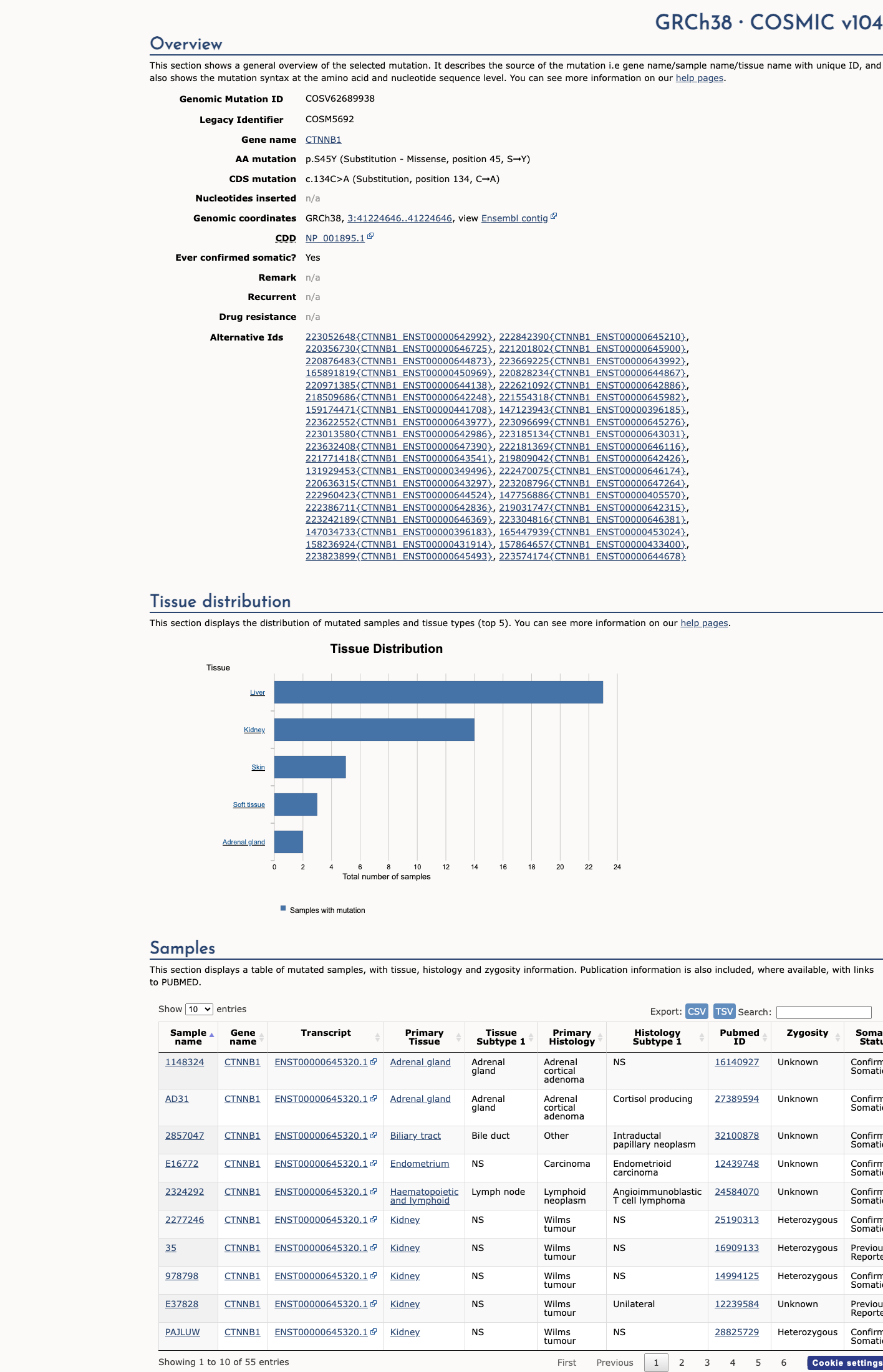
case_summary.json/evidence.json report that this variant lies in a statistically significant mutational hotspot per cancerhotspots.org (CTNNB1 S45 query), and COSMIC lists 55 independent somatic occurrences at this exact substitution (COSV62689938) -- both corroborating recurrence at this residue, though the underlying hotspots/COSMIC tools have no source_registry key to cite formally.PMID:12000790 (Amit et al. 2002) shows via mass spectrometry and phosphopeptide antibodies that an axin-CKI complex phosphorylates beta-catenin specifically at serine 45, and that this CKI phosphorylation event is necessary and sufficient to initiate the destruction cascade -- establishing S45 as a functionally indispensable residue.PMID:11955436 (Liu et al. 2002) identifies S33, S37, T41 and S45 as the conserved N-terminal phospho-degron residues whose mutation is the recurrent mechanism of beta-catenin stabilization in human cancers.
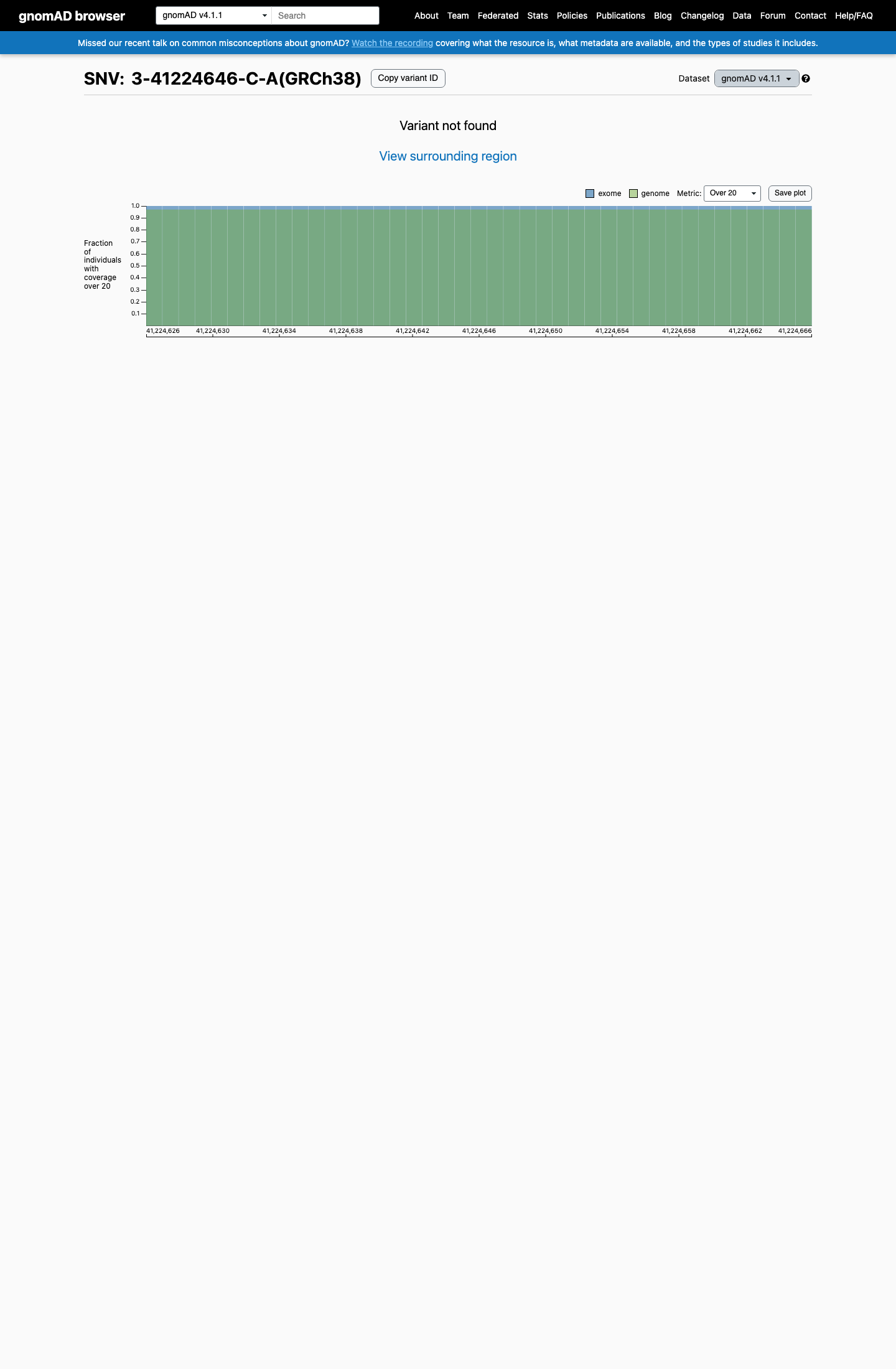
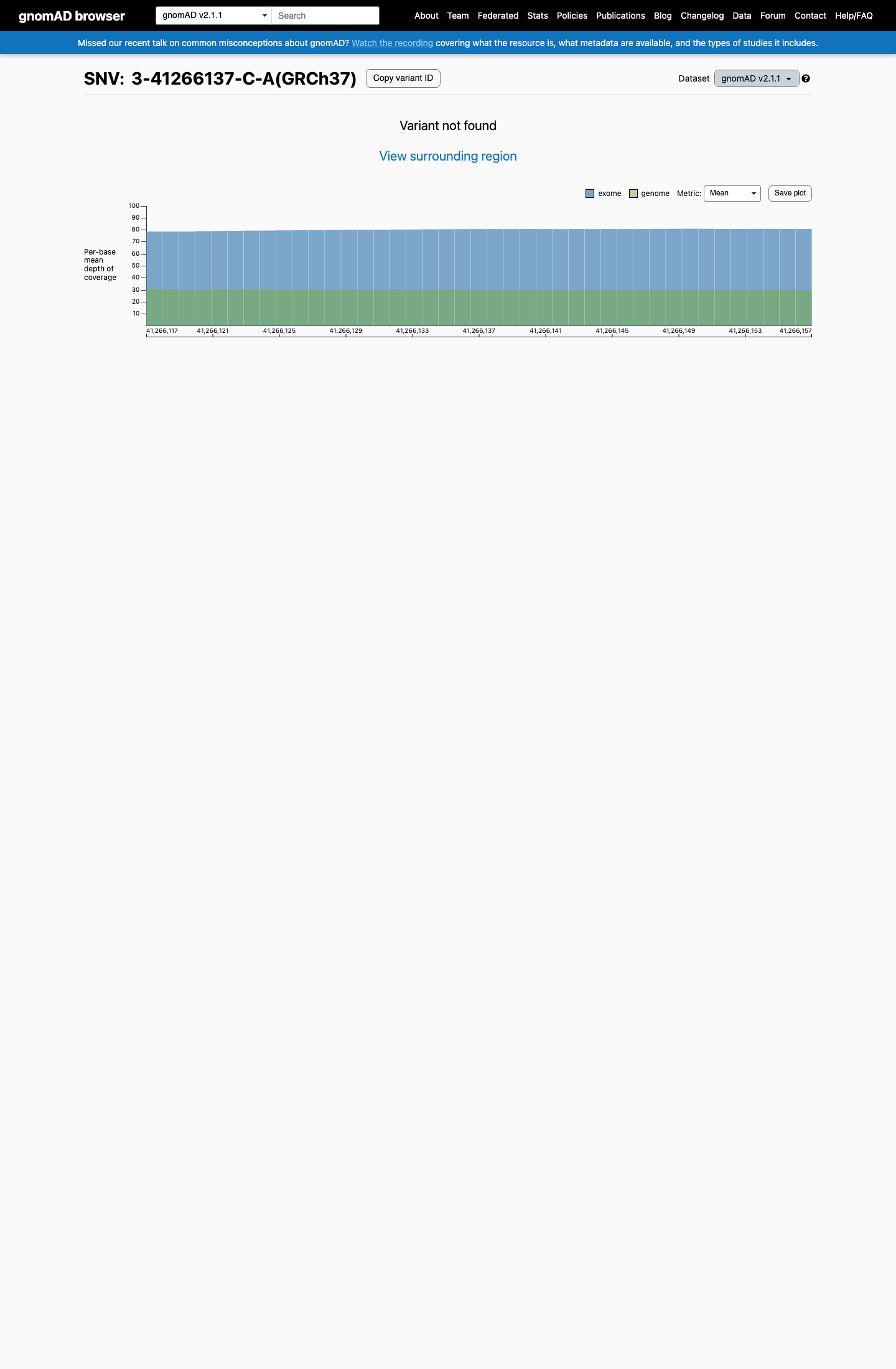
Met (Moderate): absent from gnomAD v2.1, v4.1, and gnomAD-Canada v1.0 population databases.
The normalized CTNNB1 NM_001904.4:c.134C>A (p.Ser45Tyr) variant was reported absent from gnomAD v2.1, gnomAD v4.1, and gnomAD-Canada v1.0.No CTNNB1-specific VCEP/ClinGen specification was retrieved; generic ACMG/AMP assessment is applicable.
PP4Not assessed: no phenotype or diagnostic workup evidence specific to a CTNNB1-related germline disorder was available.
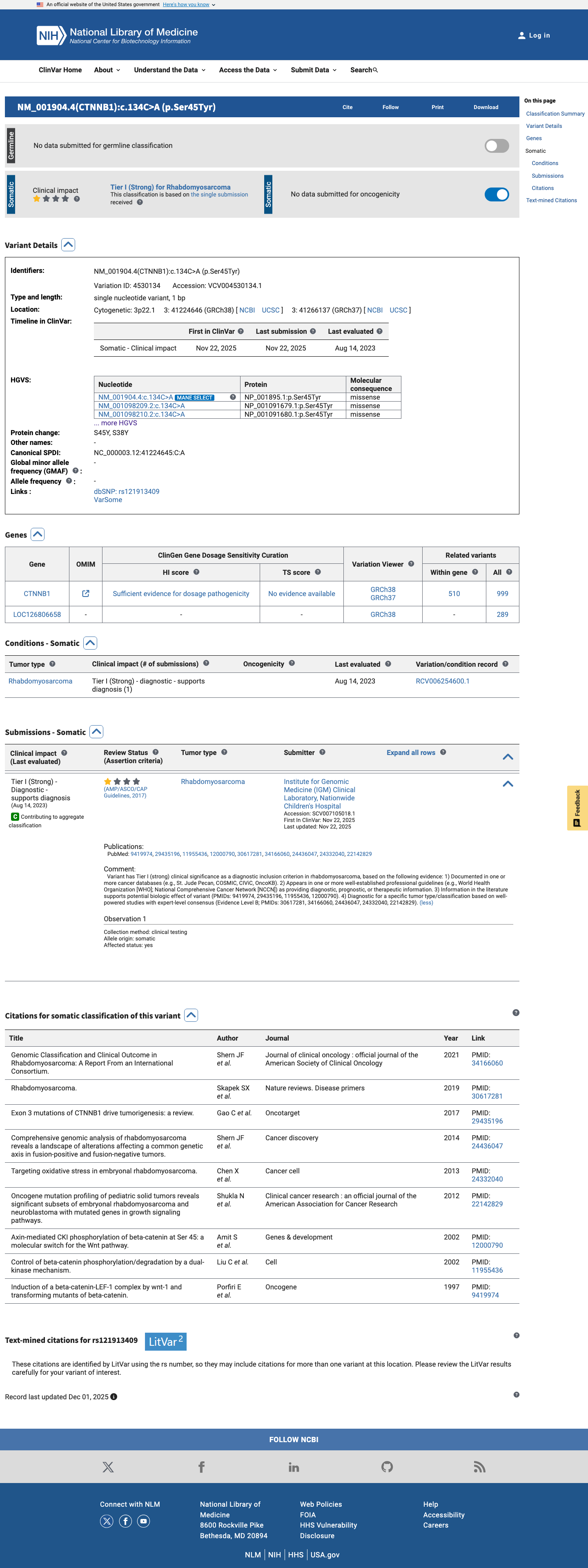
PP5Not assessed: the ClinVar record has no expert-panel assertion, only a somatic laboratory submission.
Benign
BA1Not met: absent from gnomAD, so population frequency is far below the >1% BA1 threshold.
BS1Not met: absent from gnomAD, with no population frequency exceeding that expected for a CTNNB1-associated disorder.
BS2Not assessed: no unaffected adult carrier or homozygote observations with phenotype and age data were supplied.
BS3Not assessed: no functional assay result for p.Ser45Tyr showing normal function was available.
BS4Not assessed: no unaffected carriers or other informative non-segregation observations were provided.
BP1Not met: despite loss-of-function being the germline disease mechanism, Ser45 is a documented oncogenic hotspot with functional evidence of missense pathogenicity.
BP2Not assessed: no observation of the variant in cis or in trans with a pathogenic variant was documented.
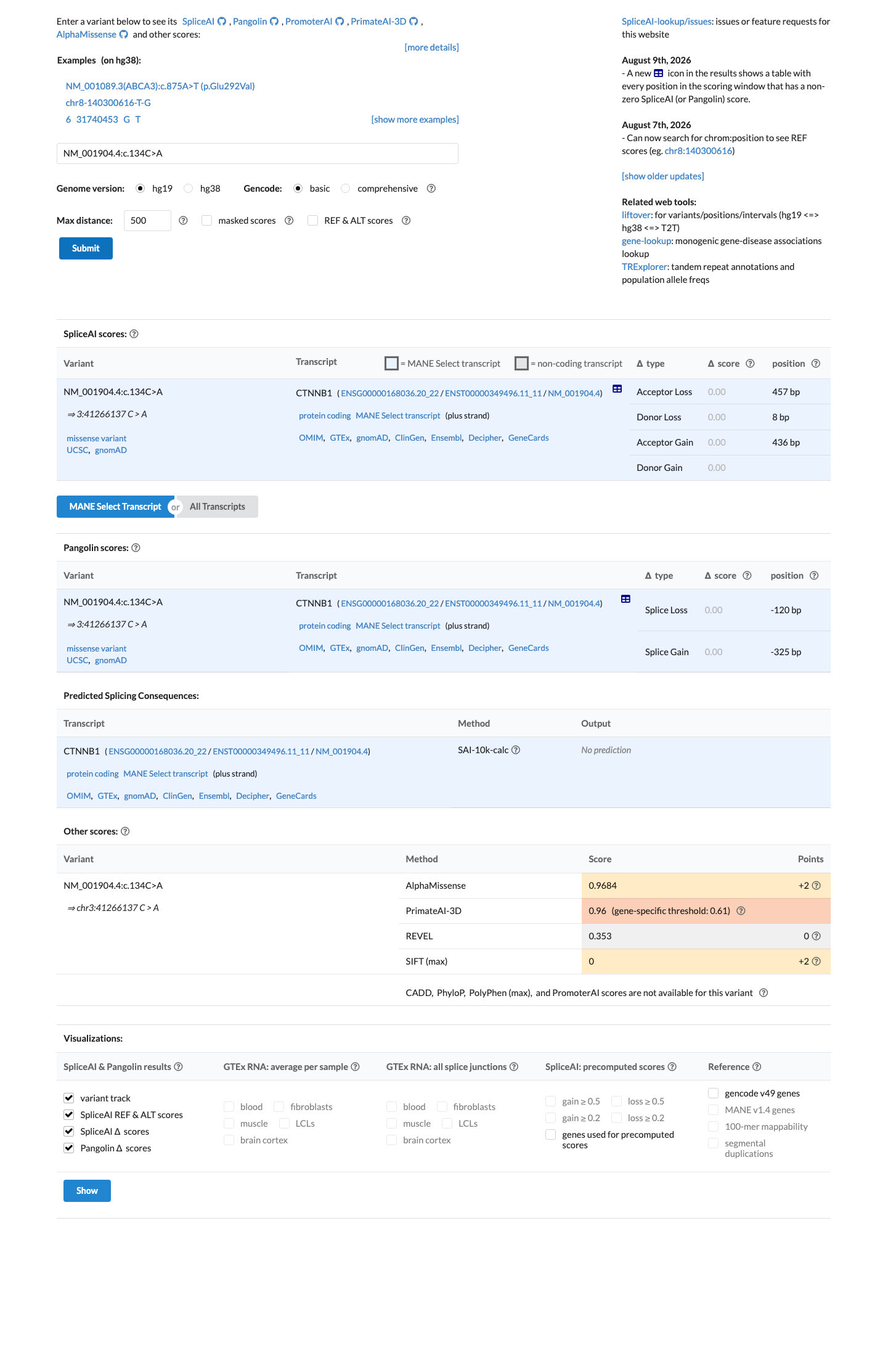
BP4Not met: REVEL 0.353 exceeds the calibrated <=0.290 BP4 threshold, in the indeterminate zone.
BP5Not assessed: no evidence of an alternative molecular diagnosis fully explaining the phenotype was available.
BP6Not assessed: the ClinVar record has no expert-panel benign or likely benign assertion.
This variant lies in a statistically significant hotspot. This variant has previously been reported in somatic cancers (COSMIC; COSV62689938, n = 55 times).
Hotspots
This variant lies in a statistically significant hotspot.
Each card is an audit: what was searched, what was found, whether it names the variant, which criteria it fed, and why. 4 further PMIDs triaged but not cited — see Sources & references.
Rule & framework references · cited for criterion definitions, not variant evidence
11955436 ↗Control of beta-catenin phosphorylation/degradation by a dual-kinase mechanism.
12000790 ↗Axin-mediated CKI phosphorylation of beta-catenin at Ser 45: a molecular switch for the Wnt pathway.
41629672 ↗Mutational scanning reveals oncogenic CTNNB1 mutations have diverse effects on s
Sources & reference links
8Sources
ClinVar
gnomAD v2.1
gnomAD v4.1
gnomAD-Canada
SpliceAI
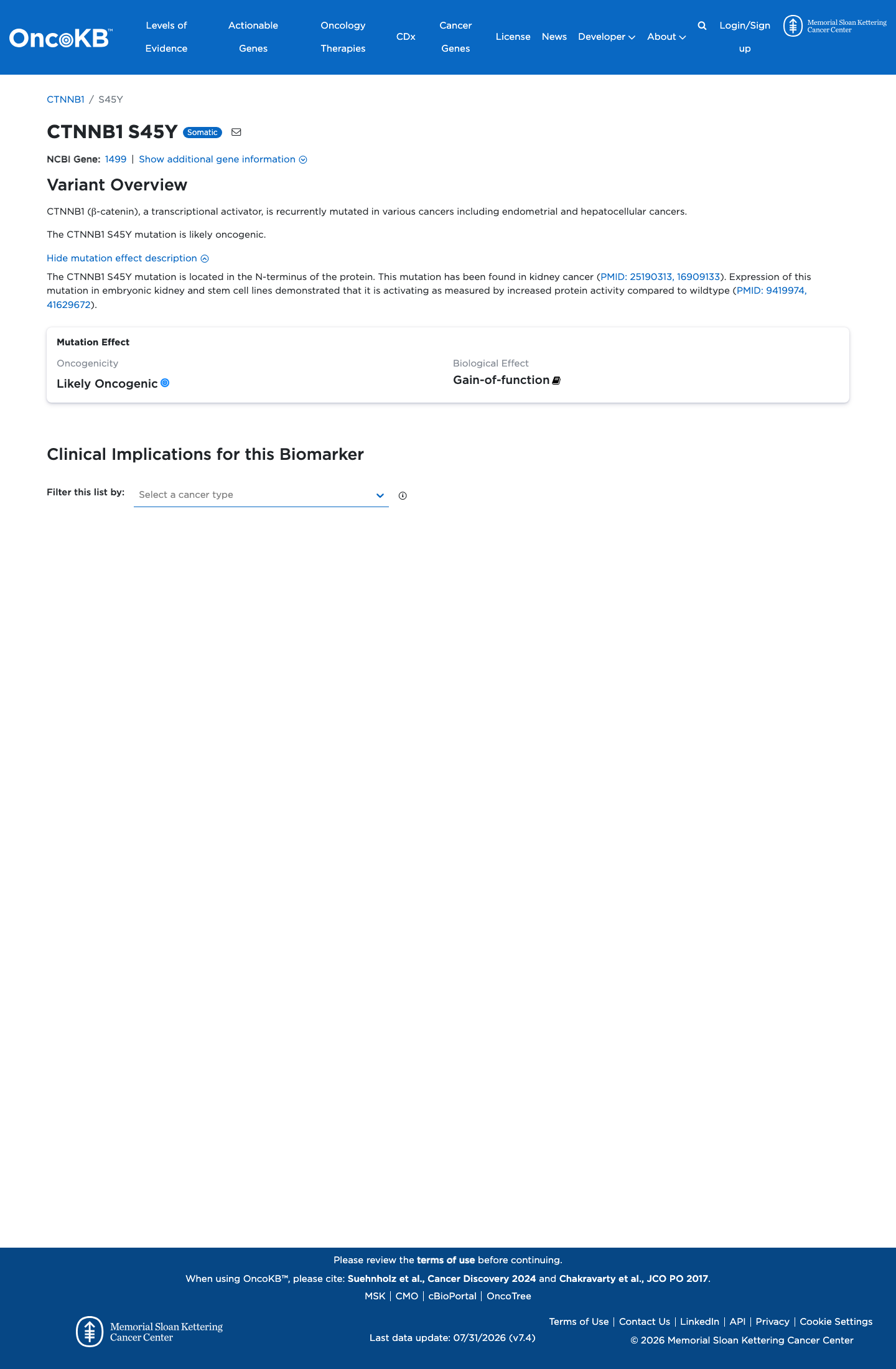
OncoKB
COSMIC
Cancer hotspots
Triaged references · 4 PMIDs not cited in assessment
9419974 ↗Induction of a beta-catenin-LEF-1 complex by wnt-1 and transforming mutants of beta-catenin.ONCOKB
16909133 ↗Genetic and epigenetic alterations on the short arm of chromosome 11 are involveONCOKB
25190313 ↗Somatic mutations in DROSHA and DICER1 impair microRNA biogenesis through distinONCOKB
24332040 ↗Targeting oxidative stress in embryonal rhabdomyosarcoma.CLINVAR