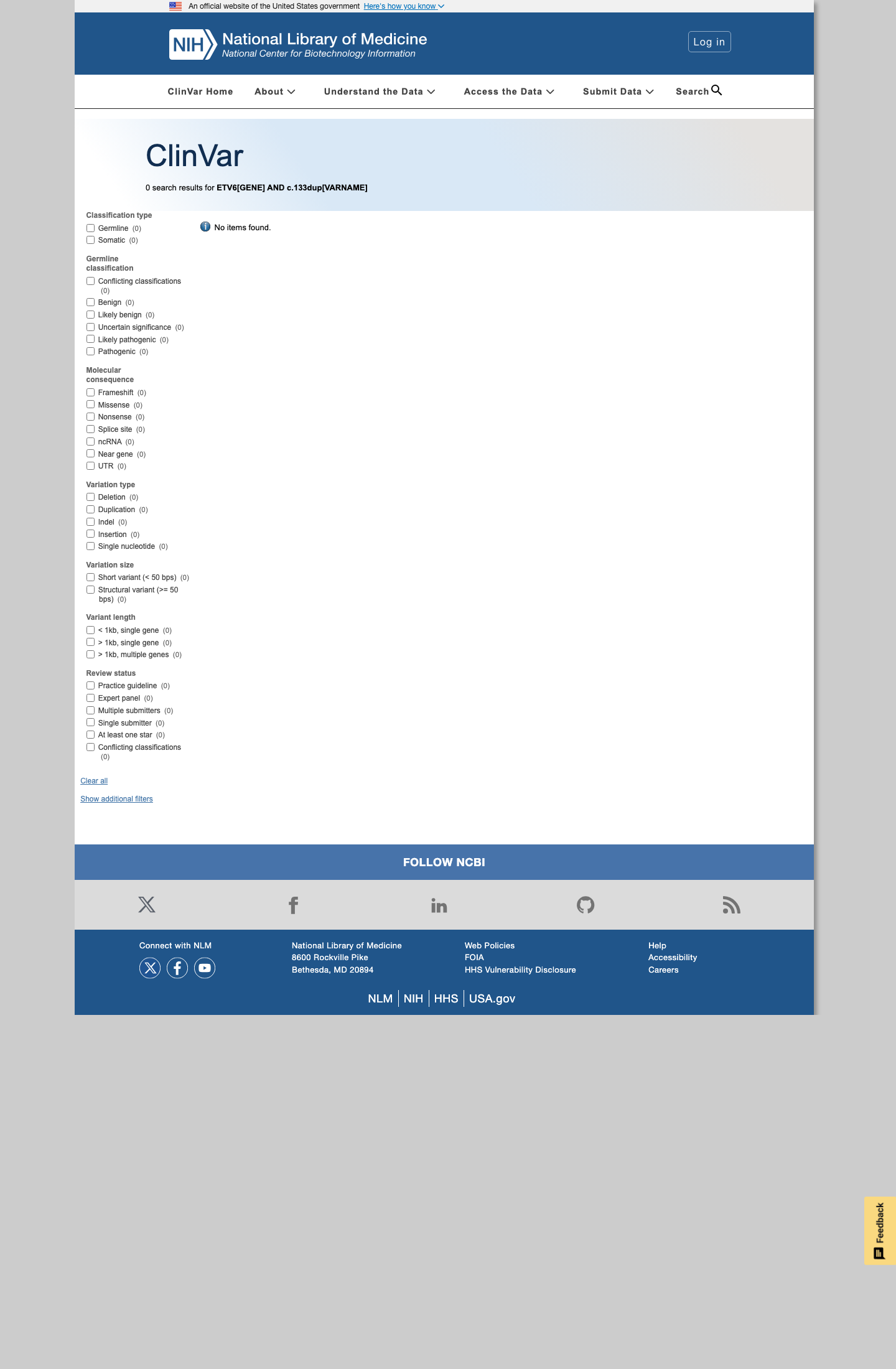
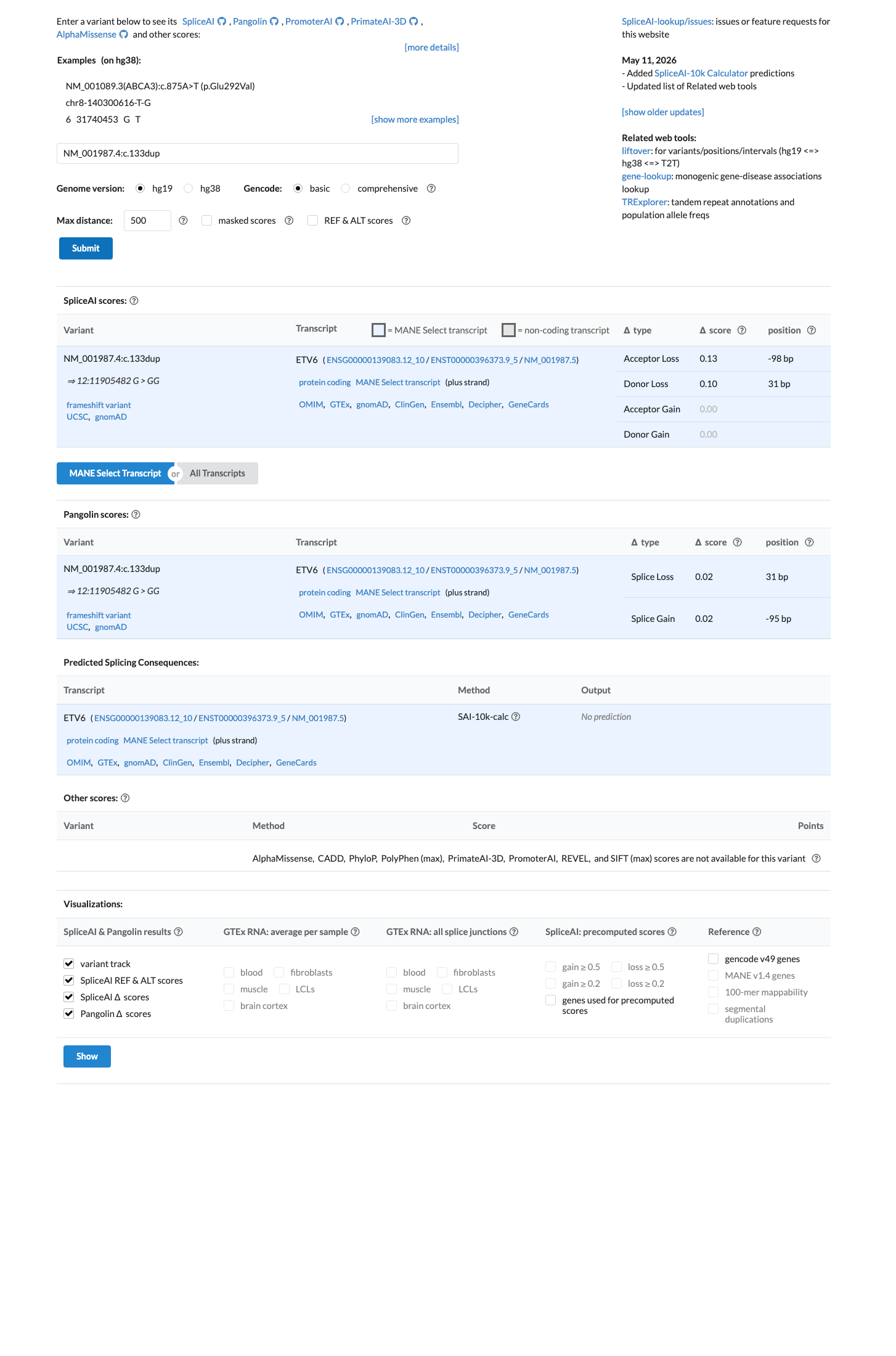
The ETV6 c.133dup (p.(Glu45GlyfsTer21), p.(E45Gfs*21)) variant has not been reported in ClinVar.1 This variant is absent from gnomAD v2.1 and gnomAD v4.1, which is below the <0.1% threshold used for PM2_supporting.2 ETV6 loss of function is supported as a germline disease mechanism, and this variant is an early frameshift predicted to truncate the protein, supporting PVS1 under the generic ClinGen SVI PVS1 framework.3 Published literature curated through OncoKB supports the biological relevance of ETV6 loss of function, but no variant-specific functional assay for c.133dup was identified.4 SpliceAI predicts no significant splice effect for this variant with a maximum delta score of 0.13, and no REVEL or BayesDel score is available for this frameshift variant.5
ETV6
Final classification
Likely Pathogenic
ETV6 c.133dup · p.Glu45GlyfsTer21
ETV6
The ETV6 c.133dup (p.(Glu45GlyfsTer21), p.(E45Gfs*21)) variant has not been reported in ClinVar.
gene-specific framework lacked a usable explicit final combination framework, so generic ACMG/AMP 2015 final-combination rules were applied as fallback; applied criteria: PVS1 very strong, PM2 supporting; combination = 1 very strong + 1 supporting, which maps to Likely Pathogenic.
Classification rationale
PVS1PM2
Likely Pathogenic
ETV6 c.133dup
PVS1 + PM2
→
Likely Pathogenic
3
pvs1_gene_contextpvs1_variant_assessmentpvs1_generic_framework ↗
Gene diagram
· NM_001987.4 · variants mapped to exon structure
ETV6
NM_001987.4
Fetching transcript structure from UCSC…
Applied criteria · 2 met · select any tile
Met
Not met
Not assessed
N/A
Strength
very strong
supporting
Pathogenic evidence
PVS
PS
PM
PP
Benign evidence
BA
BS
BP
—
—
—
Rationale
Select a criterion.
Sources
Evidence used
Gaps remaining
Rule
—
Research & evidence
Population frequency · supports pathogenic
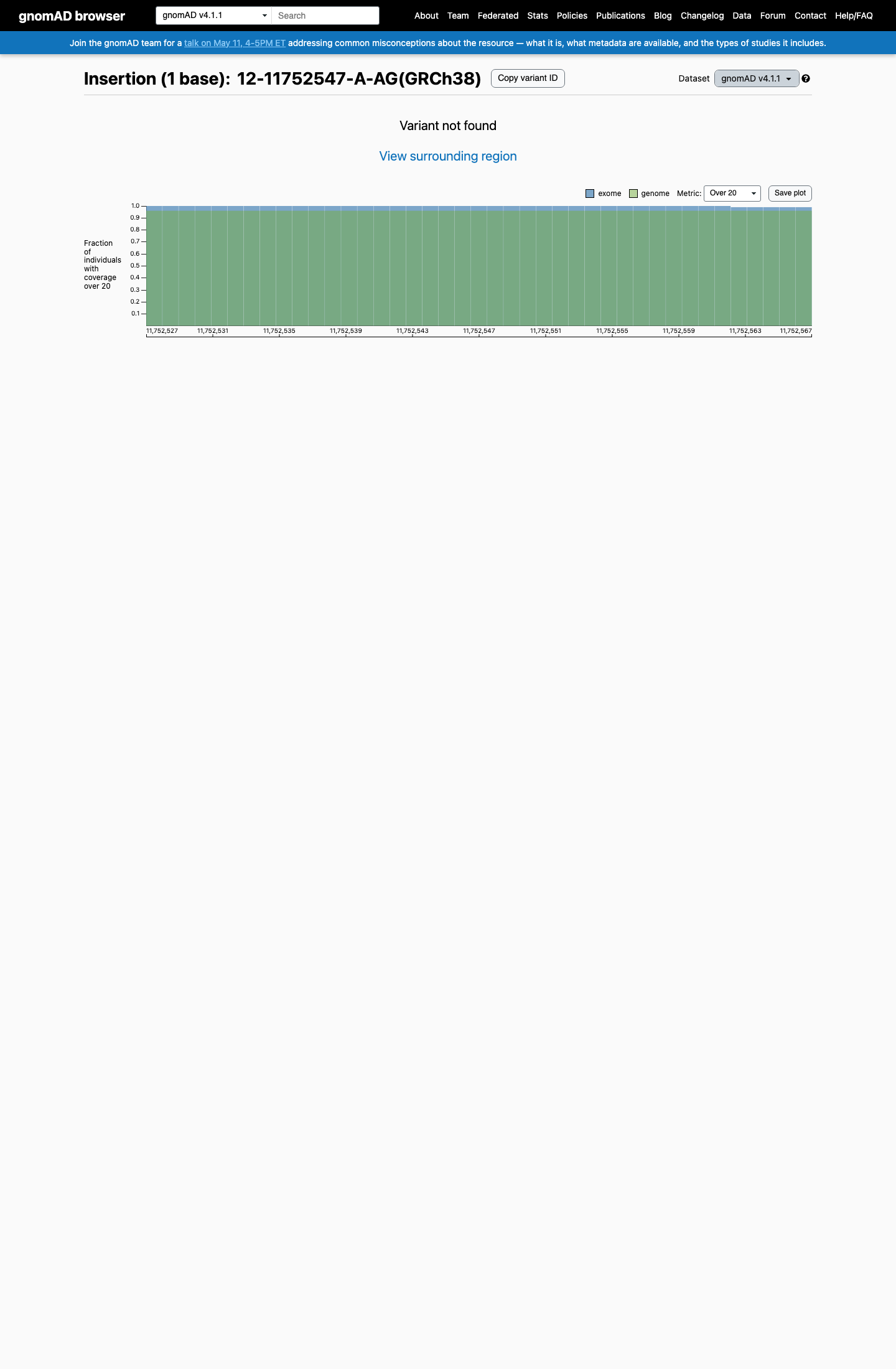
gnomAD v4.1
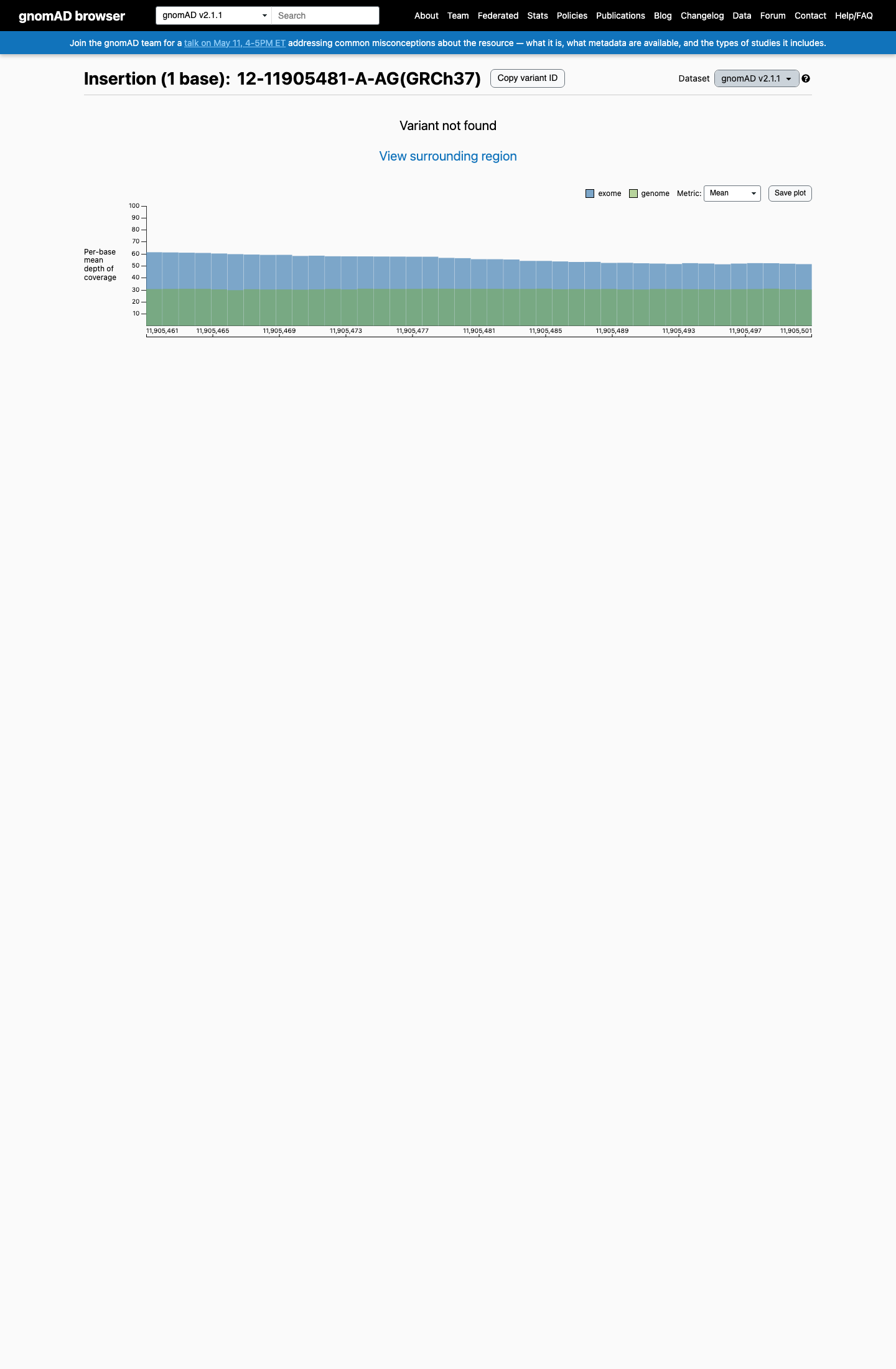
gnomAD v2.1
v4.1
Absent from gnomAD v4.1.
v2.1
Absent from gnomAD v2.1.
Allele frequency by ancestry
three datasets · side by side
gnomAD v4.1
Absent
· 0 / ?
0 hom
0 hom
Not observed in any ancestry group.
gnomAD v2.1
Absent
· 0 / ?
0 hom
0 hom
Not observed in any ancestry group.
In silico
SpliceAI predicts no significant splice impact for this variant (max delta score = 0.13).
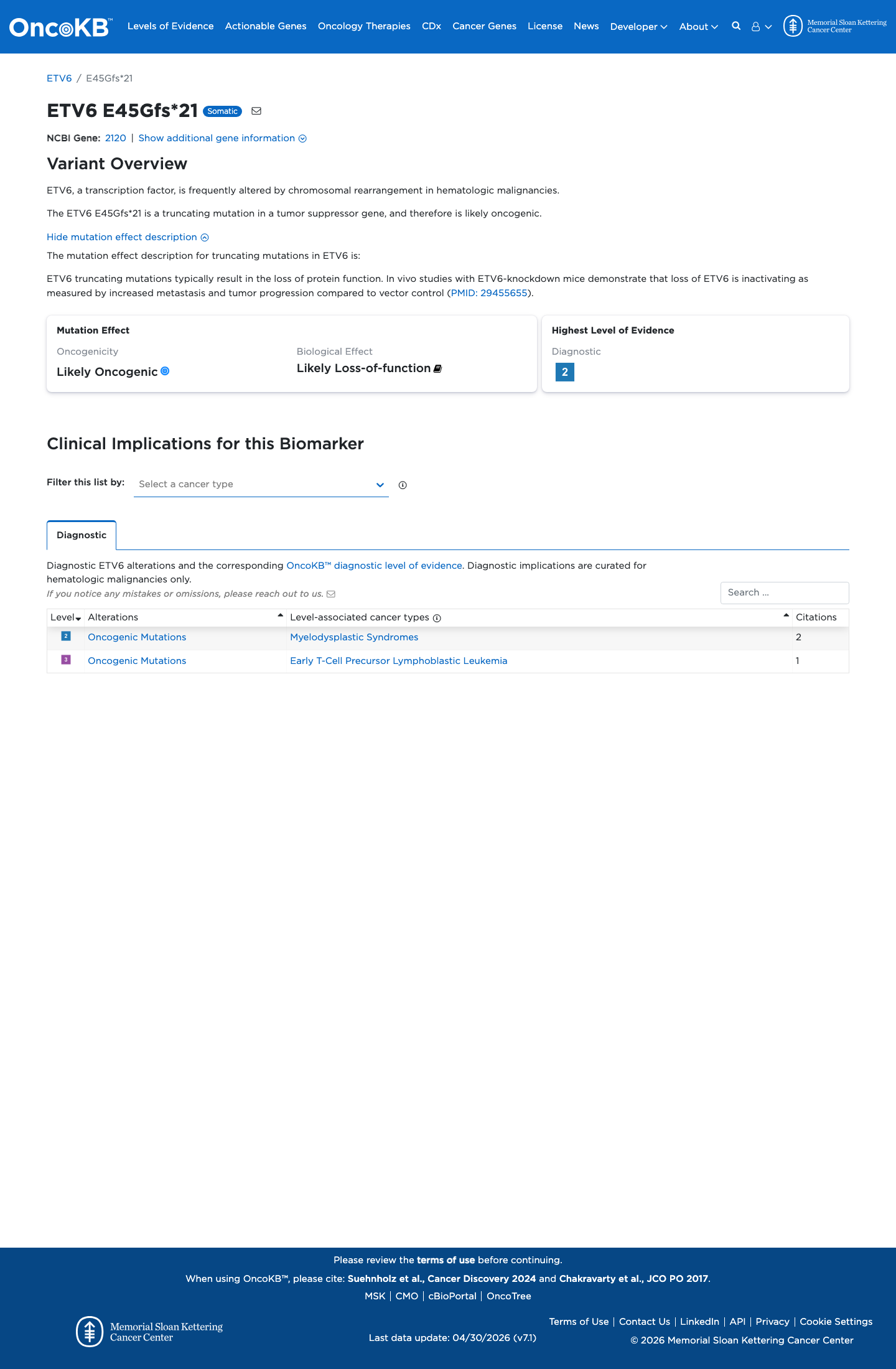
Functional
Likely Oncogenic
OncoKB identified variant-specific curated literature and context relevant to functional review; biological-effect context: Likely Loss-of-function; curated oncogenicity label: Likely Oncogenic.

COSMIC

Cancer hotspots
Somatic evidence
Not in COSMIC / hotspots
COSMIC
This variant does not lie in a statistically significant hotspot. This variant has not previously been reported in somatic cancers (COSMIC).
Hotspots
This variant does not lie in a statistically significant hotspot.
Sources & reference links
Triaged references · 1 PMID not cited in assessment
29455655 ↗
Disruption of ETV6 leads to TWIST1-dependent progression and resistance to epidermal growth factor receptor tyrosine kinase inhibitors in prostate cancer.
ONCOKB