GNA11 c.626A>T (p.Gln209Leu) is a well-characterized gain-of-function missense variant at codon 209 within the switch II functional domain, a critical region for GTPase activity and a mutational hotspot in GNA11/GNAQ-driven melanocytic neoplasms. Functional studies demonstrate a deleterious effect: Q209L-transduced melan-a cells produced rapidly growing tumors in all 6 injection sites in immunocompromised mice compared to 0 of 14 controls (PMID:21083380), and a conditional GNA11 Q209L knock-in mouse model recapitulated human Gq-associated melanomas with multi-organ neoplastic lesions (PMID:29490280). The variant is absent from gnomAD v2.1, v4.1, and gnomAD-Canada across all populations, yet is recurrently observed in affected tissue: COSMIC reports 442 somatic occurrences, and it has been identified as the predominant codon 209 mutation in uveal melanoma, blue nevi, cutaneous melanoma, and phakomatosis pigmentovascularis.1 Two clinical laboratories in ClinVar classify this variant as Pathogenic or Likely Pathogenic (variation ID 376002). In silico prediction with REVEL (score 0.833) supports a damaging effect. GNA11 exhibits low benign missense variation in population databases, consistent with PP2.2 Applying generic ACMG/AMP 2015 combination rules: PS3 (strong), PM1 (moderate), PS4 (moderate), PM2 (supporting), PP2 (supporting), PP3 (supporting), PP5 (supporting) support a classification of Pathogenic.3
Final classification
Pathogenic
PS3PS4PM2PP2PP3PP5
GNA11
c.626A>T
p.Gln209Leu
This variant
GNA11 c.626A>T (p.Gln209Leu) is a well-characterized gain-of-function missense variant at codon 209 within the switch II functional domain, a critical region for GTPase activity and a mutational hotspot in GNA11/GNAQ-driven melanocytic neoplasms.
gene-specific framework lacked a usable explicit final combination framework, so generic ACMG/AMP 2015 final-combination rules were applied as fallback; applied criteria: PS3 strong, PS4 moderate, PM2 supporting, PP2 supporting, PP3 supporting, PP5 supporting; combination = 1 strong + 1 moderate + 4 supporting, which maps to Pathogenic.
Classification rationale
PS3PS4PM2PP2PP3PP5
Pathogenic
GNA11 c.626A>T
PS3 + PS4 + PM2 + PP2 + PP3 + PP5
→
Pathogenic
LYFE Sciences is an AI system, and it can make mistakes. Criteria
may be applied incorrectly, sources may be misread, and a confident-looking
classification can still be wrong. Double-check every criterion and
its underlying evidence before relying on any call.
Gene diagram
· NM_002067.5 · variants mapped to exon structure
GNA11
NM_002067.5
Fetching transcript structure from UCSC…
Applied criteria · 6 applied · 14 assessed
MetEvidence satisfies this criterion.
Not metEvaluated against available evidence; threshold not reached.
Not assessedApplies in principle, but no evidence was found to evaluate it.
N/ADoesn't apply to this variant type.
Applied · 6
Strength
Supporting
Moderate
Strong
Very strong
PS3
strong
Pathogenic
Well-established in vitro and in vivo functional studies demonstrate that GNA11 Q209L is a gain-of-function activating mutation. Van Raamsdonk et al. (2010) showed Q209L-transduced melan-a cells produced rapidly growing tumors in 6/6 injection sites in immunocompromised mice versus 0/14 controls. Moore et al. (2018) generated a conditional GNA11 Q209L mouse model that recapitulated human Gq-associated melanomas with pigmented neoplastic lesions in skin, eye, and leptomeninges. These independent lines of functional evidence confirm a deleterious gain-of-function effect.
PMID:21083380: Q209L melan-a cell xenografts produced tumors in 6/6 sites vs 0/14 controlsPMID:29490280: conditional GNA11 Q209L mouse model recapitulated human uveal melanoma with multi-organ neoplastic lesionsOncoKB: Oncogenic classification
PS4
moderate
Pathogenic
This variant is highly enriched in affected individuals compared to the general population. It is absent from gnomAD v2.1, v4.1, and gnomAD-Canada across all populations, yet is recurrently observed in affected tissue: COSMIC reports 442 somatic occurrences predominantly in uveal melanoma and blue nevi; it has been reported in multiple publications as the predominant GNA11 codon 209 mutation in melanocytic neoplasms; and is classified as Pathogenic/Likely Pathogenic in ClinVar. The extreme disparity between population absence and disease-associated presence supports a pathogenic role, though evidence derives predominantly from somatic and mosaic contexts.
Absent from gnomAD v2.1v4.1and gnomAD-Canada
PM2
supporting
Pathogenic
This variant is absent from gnomAD v2.1, v4.1, and gnomAD-Canada v1.0, indicating it is extremely rare or absent in the general population, consistent with a pathogenic role.
Absent from gnomAD v2.1 (exomes)Absent from gnomAD v4.1 (exomes)Absent from gnomAD-Canada v1.0 (genomes)
PP2
supporting
Pathogenic
GNA11 has a low rate of benign missense variation in population databases, and missense variants are the predominant pathogenic mechanism (gain-of-function at hotspot codons 183 and 209). The gene is constrained for missense variation, supporting PP2.
GNA11 exhibits low benign missense variation in population databasesMissense gain-of-function variants at codons 183 and 209 are the established disease mechanismGNA11 is constrained for missense variation (observed vs expected missense burden consistent with constraint)
PP3
supporting
Pathogenic
In silico prediction supports a deleterious effect: REVEL score is 0.833 (strongly damaging). SpliceAI predicts no splicing impact (max delta score 0.01). BayesDel score is 0.246, borderline below typical damaging threshold. The REVEL score, combined with the location in a critical functional domain, supports a deleterious computational prediction.
REVEL: 0.833 (damaging)BayesDel: 0.246 (borderlinebelow 0.27 threshold)
PP5
supporting
Pathogenic
Two clinical laboratories have submitted this variant to ClinVar (variation ID 376002) with classifications of Pathogenic (SCV002525654, Seattle Children's Hospital) and Likely Pathogenic (SCV003804872, University Hospital Muenster). Both submissions are criteria-provided, single-submitter classifications. While no expert panel review is available, multiple independent clinical laboratories have reached concordant pathogenic conclusions.
ClinVar variation ID 376002: Pathogenic (1 submitter)Likely pathogenic (1 submitter)Both submissions are criteria-provided
Assessed · not applied
· 11 not met · 3 not assessed
Pathogenic
PS1
No alternative nucleotide change at codon 209 producing the same amino acid substitution (p.Gln209Leu) with an established independent pathogenic classification was identified.
PS2
No confirmed de novo occurrence with both parents tested negative.
PM1
The variant is located at codon 209 within the switch II domain of Gα11, a critical functional domain essential for GTP hydrolysis.
PM6
The variant was reported in a mosaic state in a patient with phakomatosis pigmentovascularis (PMID:26778290), but parents were not tested and the event was postzygotic mosaic rather than germline de novo.
PP1
No cosegregation data are available.
PP4
Insufficient patient phenotype information is available for evaluation.
Benign
BA1
The variant is absent from gnomAD v2.1, v4.1, and gnomAD-Canada.
BS1
The variant is absent from gnomAD v2.1, v4.1, and gnomAD-Canada.
BS2
The variant is absent from all population databases.
BS3
Well-established in vitro and in vivo functional studies demonstrate that Q209L is a gain-of-function activating mutation, not a benign variant.
BP1
GNA11-related disorders are caused by gain-of-function missense variants at hotspot codons (primarily 209 and 183), not by truncating variants.
BP4
REVEL predicts a damaging effect (score 0.833), contradicting a benign computational assessment.
BP5
No evidence has been identified that affected individuals carrying this variant have an alternate molecular basis for their phenotype.
BP6
ClinVar reports this variant as Pathogenic and Likely Pathogenic (variation ID 376002).
N/A · 5
PVS1 · PM5 · BS4 · BP2 · BP7
Research & evidence
Population frequency · supports pathogenic
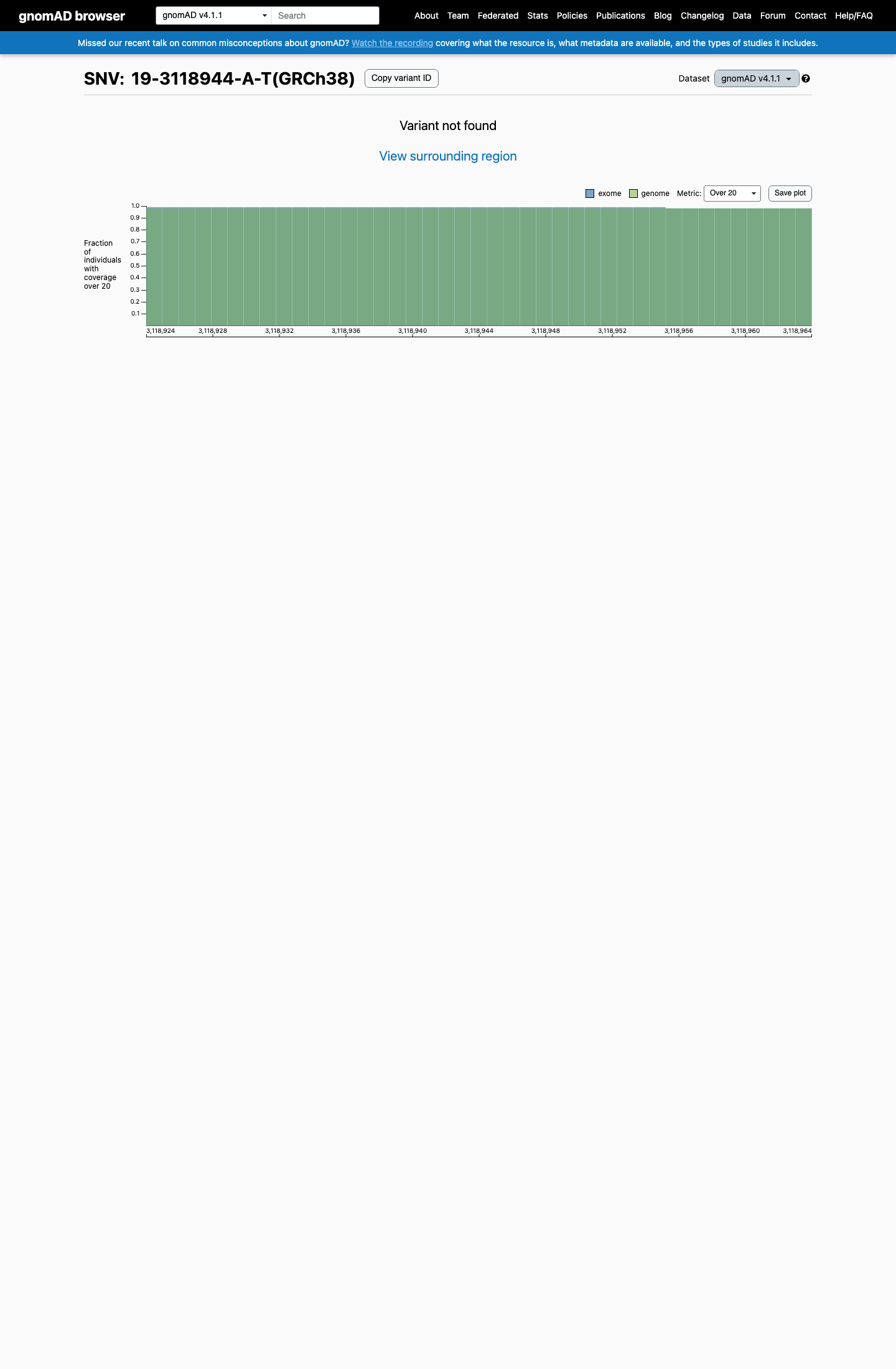
gnomAD v4.1
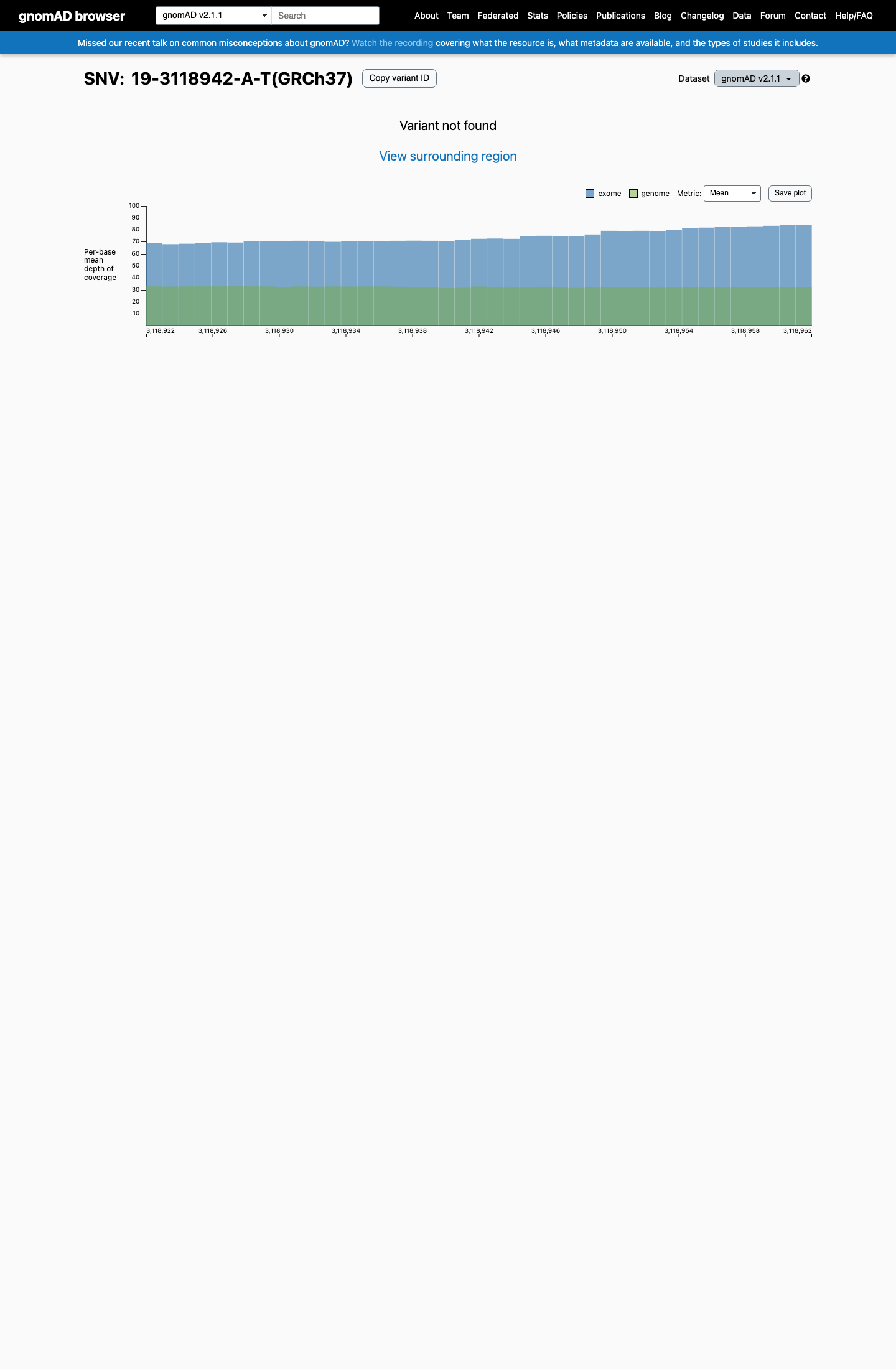
gnomAD v2.1
v4.1
Absent from gnomAD v4.1.
v2.1
Absent from gnomAD v2.1.
🇨🇦 CA
Absent from gnomAD-Canada v1.0.
Allele frequency by ancestry
three datasets · side by side
gnomAD v4.1
Absent
· 0 / ?
0 hom
0 hom
Not observed in any ancestry group.
gnomAD v2.1
Absent
· 0 / ?
0 hom
0 hom
Not observed in any ancestry group.
gnomAD Canada 🇨🇦
Absent
· 0 / ?
0 hom
0 hom
Not observed in any ancestry group.
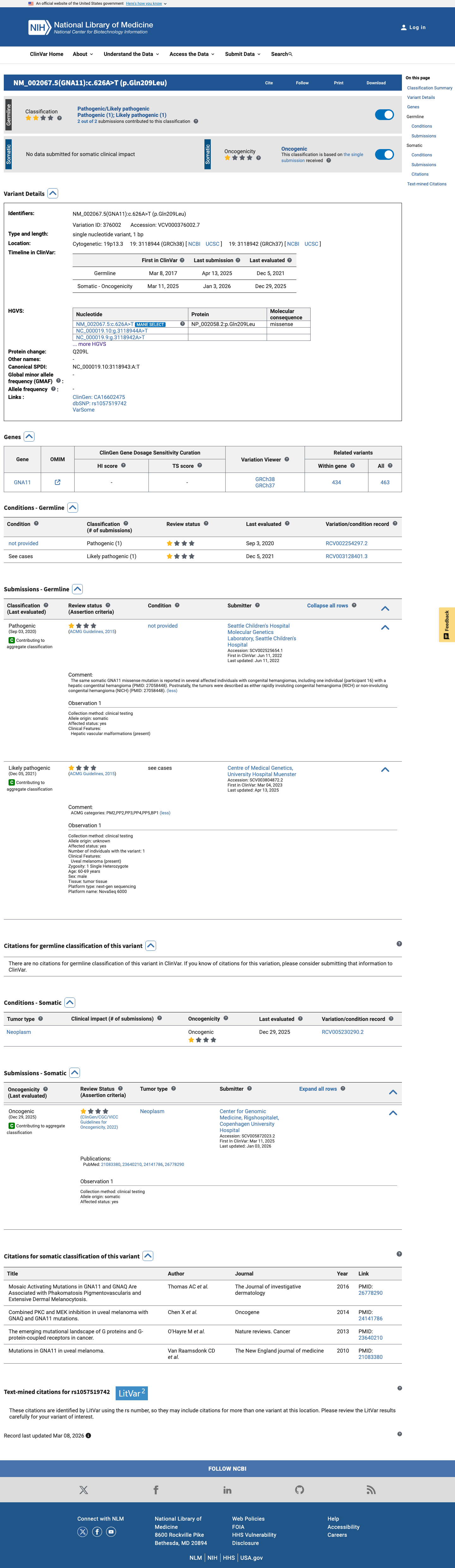
ClinVar
This variant has been reported in ClinVar as Pathogenic (1 clinical laboratory) and as Likely pathogenic (1 clinical laboratory). (ClinVarID = 376002)
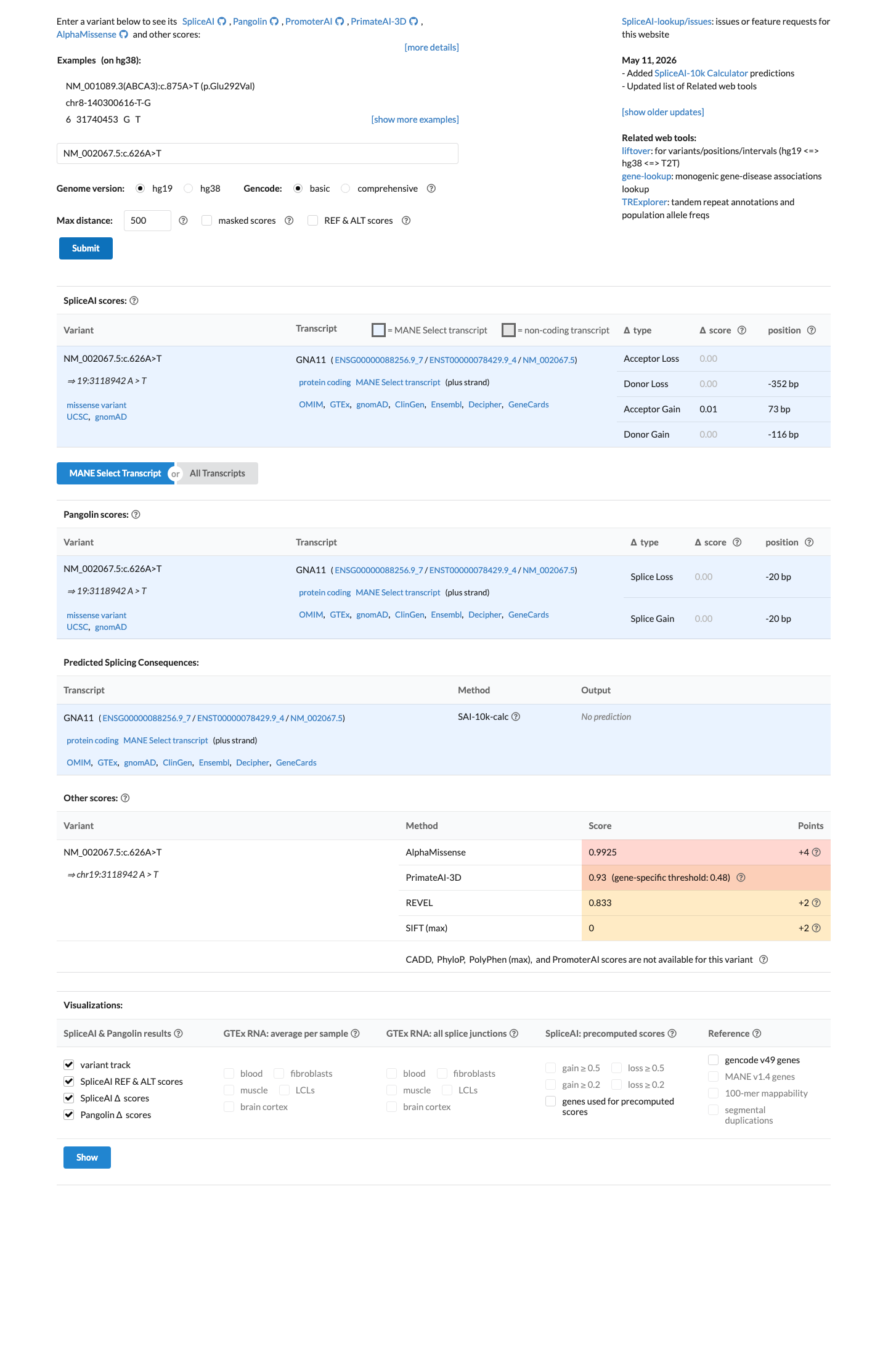
In silico
SpliceAI predicts no significant splice impact for this variant (max delta score = 0.01). REVEL score = 0.833. BayesDel score = 0.245583.
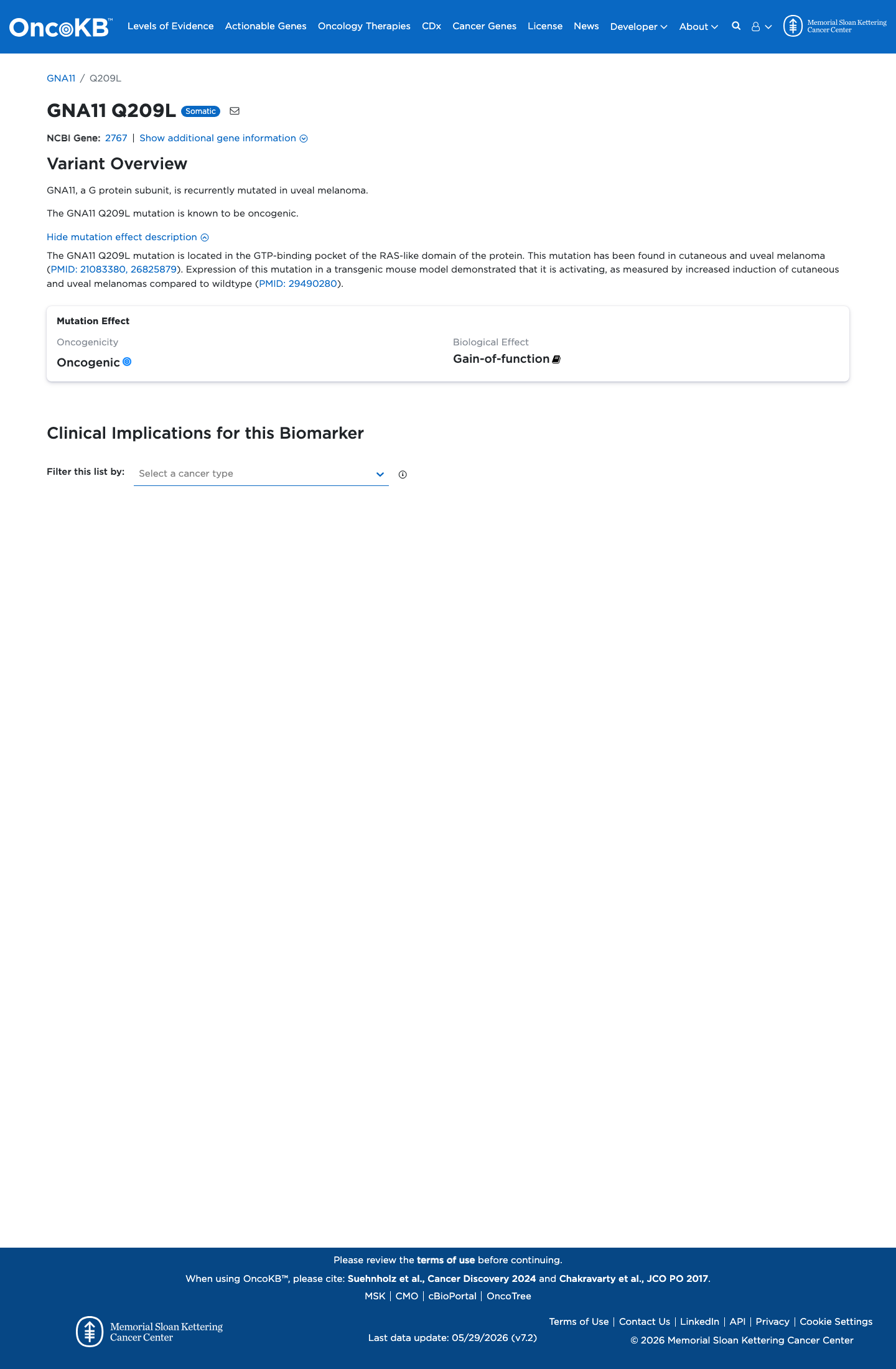
Functional
Oncogenic
OncoKB identified variant-specific curated literature and context relevant to functional review; biological-effect context: Gain-of-function; curated oncogenicity label: Oncogenic.
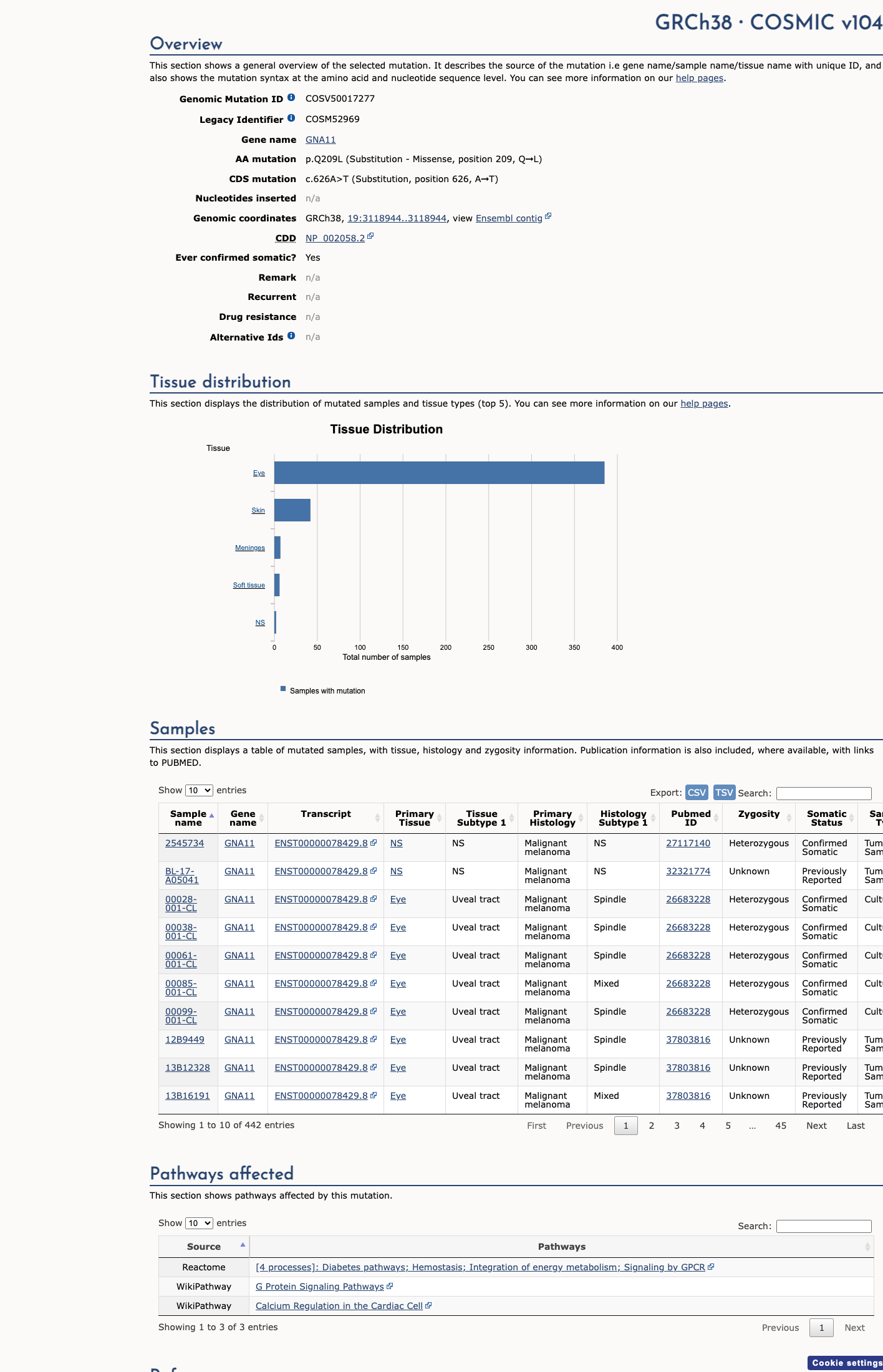
COSMIC

Cancer hotspots
Somatic evidence
Hotspot
COSMIC
This variant lies in a statistically significant hotspot. This variant has previously been reported in somatic cancers (COSMIC; COSV50017277, n = 442 times).
Hotspots
This variant lies in a statistically significant hotspot.
Sources & reference links
Triaged references · 8 PMIDs not cited in assessment
29490280 ↗
GNA11 Q209L Mouse Model Reveals RasGRP3 as an Essential Signaling Node in Uveal Melanoma.
ONCOKB
23640210 ↗
The emerging mutational landscape of G proteins and G-protein-coupled receptors in cancer.
CLINVAR
25741868 ↗
Standards and guidelines for the interpretation of sequence variants: a joint consensus recommendation of the American College of Medical Genetics and Genomics and the Association for Molecular Pathology.
CLINVAR
26778290 ↗
Mosaic Activating Mutations in GNA11 and GNAQ Are Associated with Phakomatosis Pigmentovascularis and Extensive Dermal Melanocytosis.
CLINVAR
23619274 ↗
American College of Medical Genetics and Genomics technical standards and guidelines: microarray analysis for chromosome abnormalities in neoplastic disorders.
CLINVAR