NM_002107.4:c.83A>T (p.Lys28Met) is a missense variant in exon 2 of H3-3A, which encodes the replication-independent histone H3.3. The variant is absent from gnomAD v2.1, v4.1, and gnomAD-Canada population databases (PM2_Supporting).1 This variant is distinct from the extensively characterized somatic H3.3 K27M oncohistone mutation. Full-text review of all eight available publications and abstracts of two additional papers confirmed that none mention NM_002107.4:c.83A>T (p.Lys28Met); all discuss K27M or general H3-3A biology. The ClinVar classification (Variation ID 4530459, Tier I - Strong) cites only K27M literature and could not be independently validated.2 No functional studies, case-control data, segregation data, or de novo reports specific to K28M were identified. In silico predictions are mixed (REVEL 0.371, BayesDel -0.120, SpliceAI max delta 0.00) and provide no consensus.3 Only one criterion (PM2 at supporting strength) is met, which is insufficient to reach even Likely Pathogenic or Likely Benign under generic ACMG/AMP 2015 combination rules. The variant is classified as a Variant of Uncertain Significance (VUS).4 Note: ClinVar record 4530459 may conflate K28M with the adjacent K27M mutation, as all cited PMIDs study K27M. The ClinVar entry should be interpreted with caution and ideally re-reviewed.5
Final classification
VUS
PM2
H3-3A
c.83A>T
p.Lys28Met
This variant
NM_002107.4:c.83A>T (p.Lys28Met) is a missense variant in exon 2 of H3-3A, which encodes the replication-independent histone H3.3.
gene-specific framework lacked a usable explicit final combination framework, so generic ACMG/AMP 2015 final-combination rules were applied as fallback; applied criteria: PM2 supporting; combination = 1 supporting, which maps to VUS.
Classification rationale
PM2
VUS
H3-3A c.83A>T
PM2
→
VUS
3
revelbayesdelspliceai ↗
4
generic_acmg_combination_rules
LYFE Sciences is an AI system, and it can make mistakes. Criteria
may be applied incorrectly, sources may be misread, and a confident-looking
classification can still be wrong. Double-check every criterion and
its underlying evidence before relying on any call.
Gene diagram
· NM_002107.4 · variants mapped to exon structure
H3-3A
NM_002107.4
Fetching transcript structure from UCSC…
Applied criteria · 1 applied · 22 assessed
MetEvidence satisfies this criterion.
Not metEvaluated against available evidence; threshold not reached.
Not assessedApplies in principle, but no evidence was found to evaluate it.
N/ADoesn't apply to this variant type.
Applied · 1
Strength
Supporting
Moderate
Strong
Very strong
PM2
supporting
Pathogenic
NM_002107.4:c.83A>T (p.Lys28Met) is absent from gnomAD v2.1, gnomAD v4.1, and gnomAD-Canada v1.0 population databases, meeting the PM2 threshold of <0.1% allele frequency.
Absent from gnomAD v2.1 (0 alleles)Absent from gnomAD v4.1 (0 alleles)Absent from gnomAD-Canada v1.0 (0 alleles)
Assessed · not applied
· 22 not met · 0 not assessed
Pathogenic
PVS1
NM_002107.4:c.83A>T is a missense variant (p.Lys28Met).
PS1
No evidence was identified of a previously established pathogenic variant with the same amino acid change (Lys28Met) at this position.
PS2
No de novo occurrence data with confirmed maternity and paternity is available for this variant.
PS3
No functional studies directly testing NM_002107.4:c.83A>T (p.Lys28Met) were identified.
PS4
No case-control or cohort prevalence data specific to K28M are available.
PM1
The variant (p.Lys28Met) is located in the N-terminal tail of histone H3.3, a well-characterized functional domain.
PM6
No de novo observation (without confirmed parentage) has been reported for this variant.
PP1
No co-segregation data with disease in multiple affected family members is available.
PP2
H3-3A missense variants are a known mechanism for Bryant-Li-Bhoj syndrome, but the HCI prior score is unavailable for this gene.
PP3
In silico predictions are mixed and do not provide multiple concordant lines of pathogenic evidence.
PP4
No patient phenotype or family history data are available for this case to assess disease specificity.
PP5
ClinVar reports this variant (Variation ID 4530459) with a classification of 'Tier I - Strong' and review status 'criteria provided, single submitter.' However, the ClinVar submission details could not be extracted (0 usable submissions), and all 10 ClinVar-cited PMIDs refer to the K27M oncohistone mutation, not K28M.
Benign
BA1
The variant is absent from gnomAD v2.1, v4.1, and gnomAD-Canada.
BS1
The variant is absent from population databases (AF = 0%), below the BS1 threshold of >0.3%.
BS2
No data are available on observation of this variant in healthy adults in trans with a dominant pathogenic variant or in cis with a recessive pathogenic variant.
BS3
No well-established in vitro or in vivo functional studies have been performed on K28M to demonstrate no damaging effect.
BS4
No segregation data in affected family members are available to assess lack of co-segregation.
BP1
Bryant-Li-Bhoj syndrome, the germline disorder associated with H3-3A, is caused by missense variants with gain-of-function or dominant-negative effects, not primarily by truncating variants.
BP2
No data are available on observation of this variant in trans with a pathogenic variant for a fully penetrant recessive disorder.
BP4
Computational evidence is mixed rather than uniformly benign.
BP5
No data are available showing this variant in a case with an alternate molecular basis for disease.
BP6
ClinVar classifies this variant as 'Tier I - Strong' (pathogenic-leaning), not benign.
N/A · 2
PM5 · BP7
Research & evidence
Population frequency
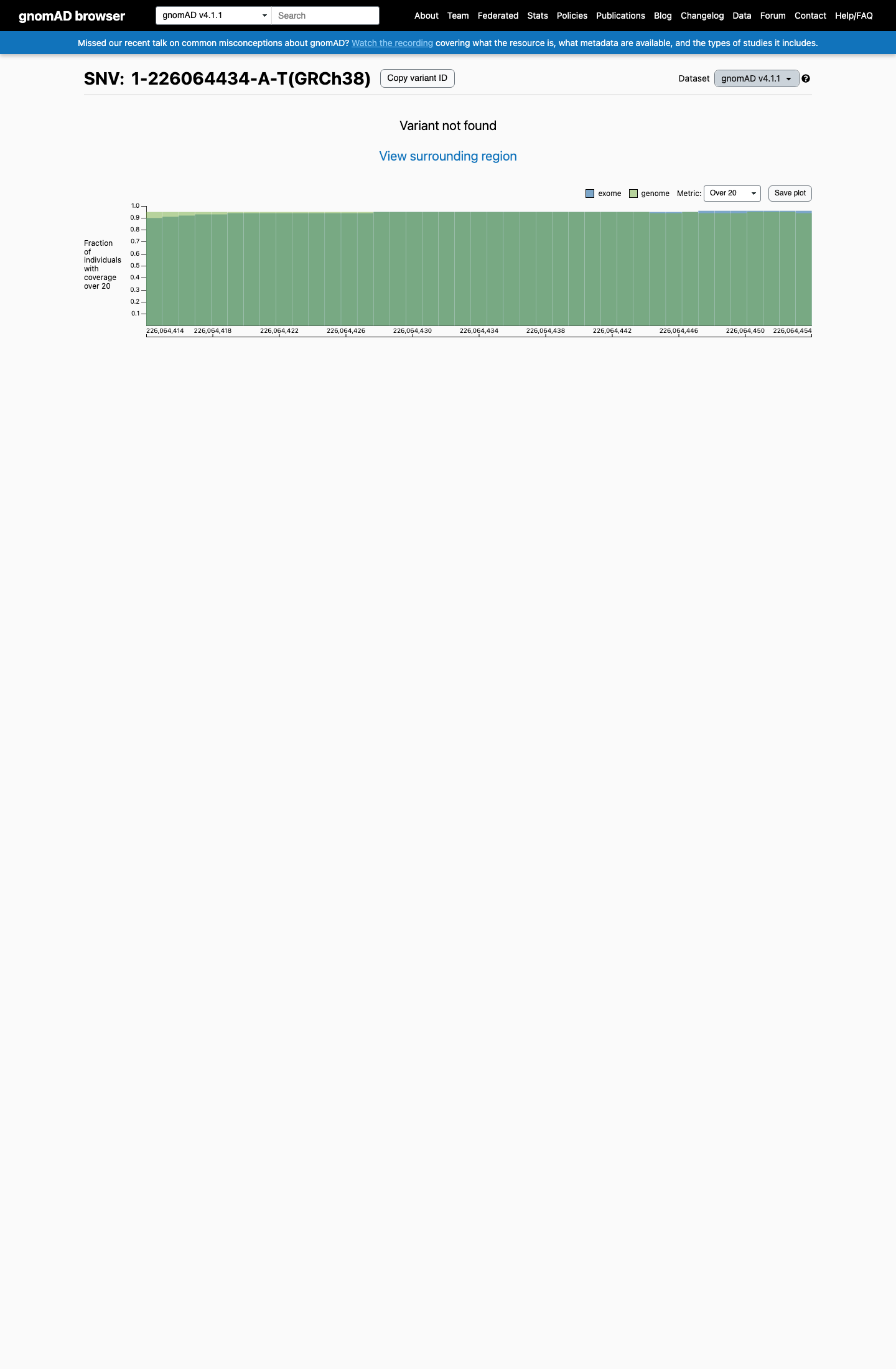
gnomAD v4.1
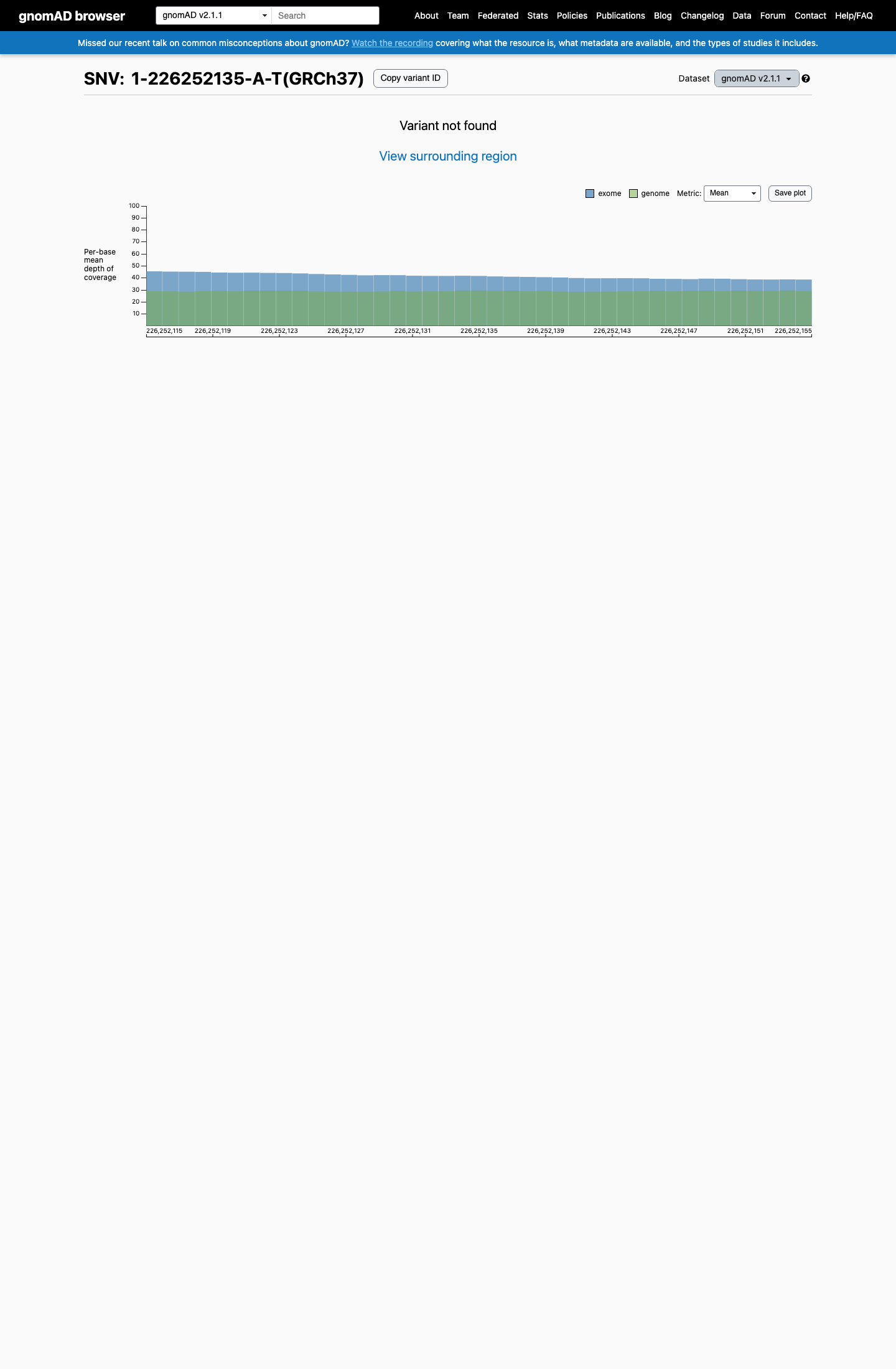
gnomAD v2.1
v4.1
Absent from gnomAD v4.1.
v2.1
Absent from gnomAD v2.1.
🇨🇦 CA
Absent from gnomAD-Canada v1.0.
Allele frequency by ancestry
three datasets · side by side
gnomAD v4.1
Absent
· 0 / ?
0 hom
0 hom
Not observed in any ancestry group.
gnomAD v2.1
Absent
· 0 / ?
0 hom
0 hom
Not observed in any ancestry group.
gnomAD Canada 🇨🇦
Absent
· 0 / ?
0 hom
0 hom
Not observed in any ancestry group.
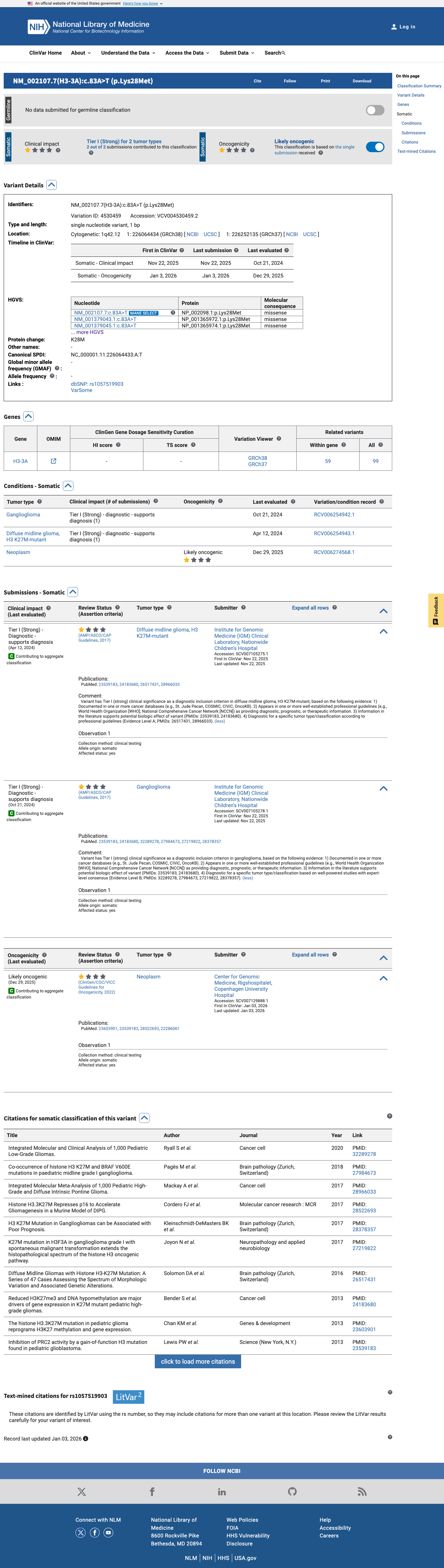
ClinVar
This variant has been reported in ClinVar but submission details could not be extracted. (ClinVarID = 4530459)
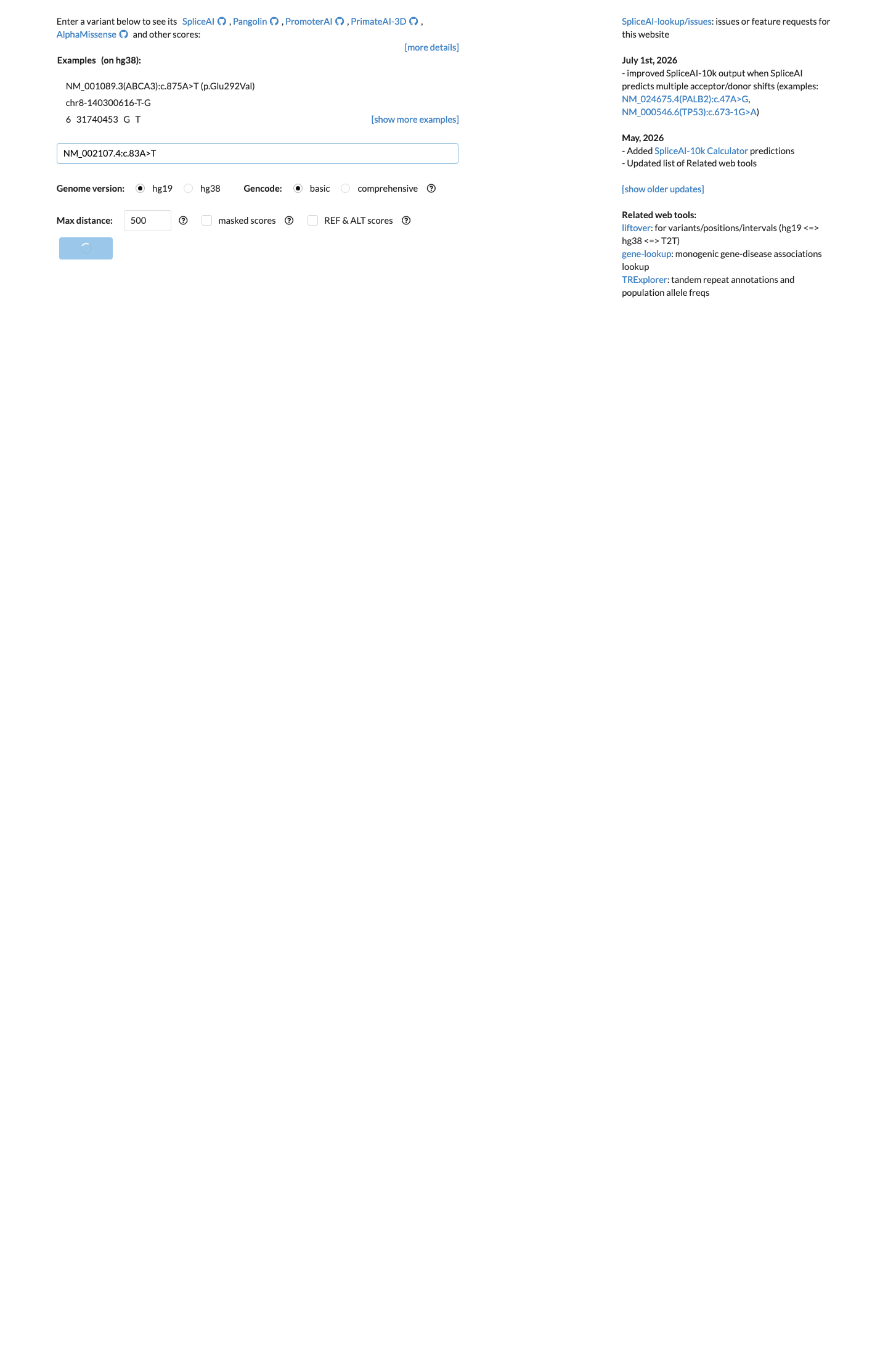
In silico
SpliceAI predicts no significant splice impact for this variant (max delta score = 0.00). REVEL score = 0.371. BayesDel score = -0.120005.
Functional
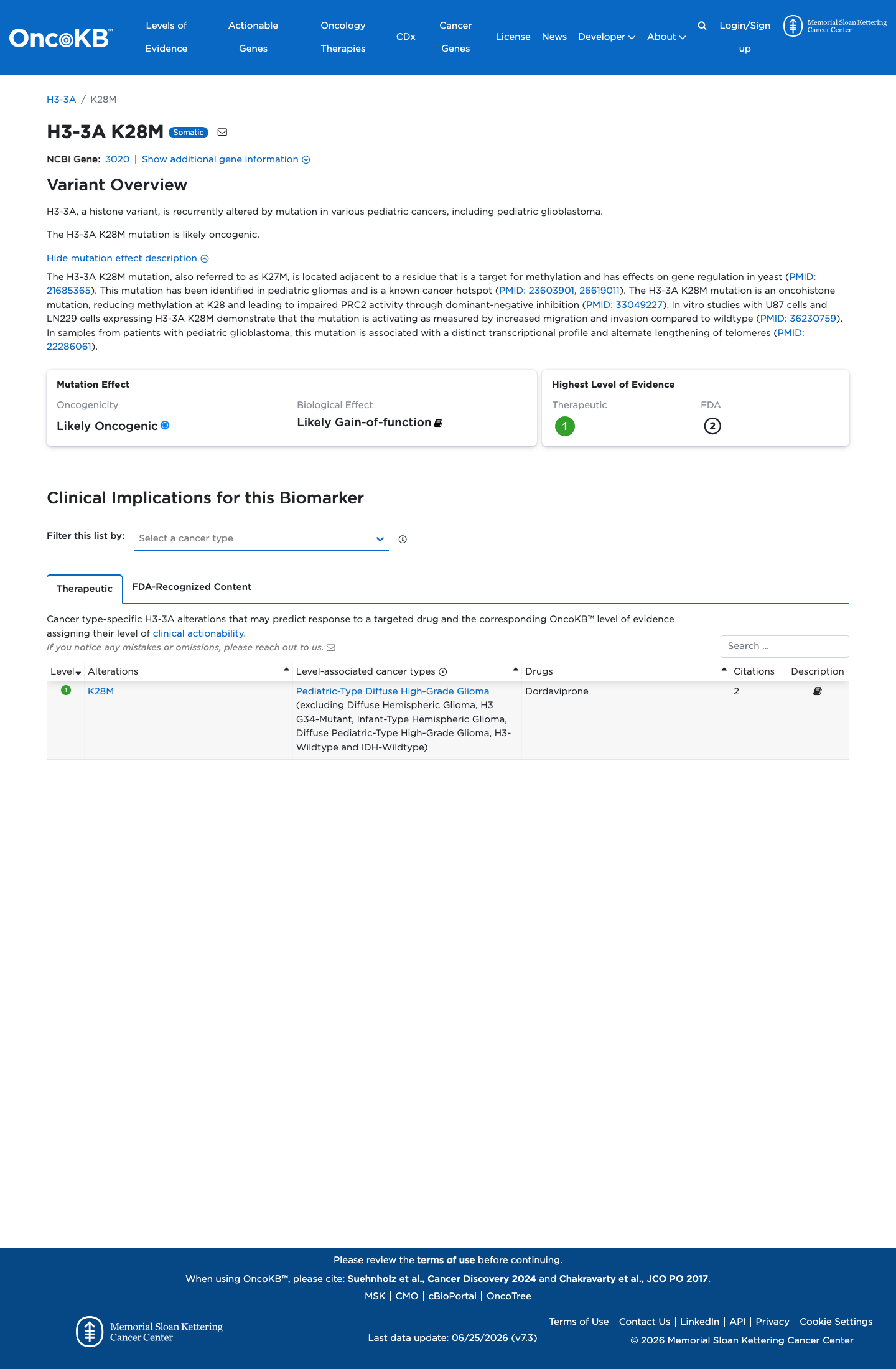
Likely Oncogenic
OncoKB identified variant-specific curated literature and context relevant to functional review; biological-effect context: Likely Gain-of-function; curated oncogenicity label: Likely Oncogenic.

COSMIC

Cancer hotspots
Somatic evidence
Not in COSMIC / hotspots
COSMIC
This variant does not lie in a statistically significant hotspot. This variant has not previously been reported in somatic cancers (COSMIC).
Hotspots
This variant does not lie in a statistically significant hotspot.
Sources & reference links
Triaged references · 8 PMIDs not cited in assessment
21685365 ↗
An evolutionarily 'young' lysine residue in histone H3 attenuates transcriptional output in Saccharomyces cerevisiae.
ONCOKB
22286061 ↗
Driver mutations in histone H3.3 and chromatin remodelling genes in paediatric glioblastoma.
ONCOKB
23603901 ↗
The histone H3.3K27M mutation in pediatric glioma reprograms H3K27 methylation and gene expression.
ONCOKB
26619011 ↗
Identifying recurrent mutations in cancer reveals widespread lineage diversity and mutational specificity.
ONCOKB
33049227 ↗
H3 K27M and EZHIP Impede H3K27-Methylation Spreading by Inhibiting Allosterically Stimulated PRC2.
ONCOKB
23539183 ↗
Inhibition of PRC2 activity by a gain-of-function H3 mutation found in pediatric glioblastoma.
CLINVAR
22918138 ↗
Opportunities and challenges associated with clinical diagnostic genome sequencing: a report of the Association for Molecular Pathology.
CLINVAR
27984673 ↗
Co-occurrence of histone H3 K27M and BRAF V600E mutations in paediatric midline grade I ganglioglioma.
CLINVAR