NM_002382.4:c.184del is a frameshift variant predicted to result in a premature termination codon (p.Gln62LysfsTer3) in exon 4 of 5, with nonsense-mediated decay expected.1 Loss of function is an established disease mechanism for MAX, supported by germline disease association with polydactyly-macrocephaly syndrome (PMID:41203296).2 This variant meets PVS1 (very strong) under the ClinGen SVI generic framework (PMC6185798) as a null variant in a gene where LoF is a known mechanism of disease.3 The variant is absent from gnomAD v2.1 and v4.1 (allele frequency 0.000 in all populations), meeting PM2 (moderate).4 No additional pathogenic criteria were met. PVS1 (very strong) + PM2 (moderate) is sufficient for a classification of Likely Pathogenic under generic ACMG/AMP 2015 rules (PMID:25741868).5
MAX
Final classification
Likely Pathogenic
MAX c.184del · p.Gln62LysfsTer3
MAX
NM_002382.4:c.184del is a frameshift variant predicted to result in a premature termination codon (p.Gln62LysfsTer3) in exon 4 of 5, with nonsense-mediated decay expected.
gene-specific framework lacked a usable explicit final combination framework, so generic ACMG/AMP 2015 final-combination rules were applied as fallback; applied criteria: PVS1 very strong, PM2 moderate; combination = 1 very strong + 1 moderate, which maps to Likely Pathogenic.
Classification rationale
PVS1PM2
Likely Pathogenic
MAX c.184del
PVS1 + PM2
→
Likely Pathogenic
1
pvs1_generic_framework ↗pvs1_variant_assessment
2
pvs1_gene_context
5
generic_acmg_combination_rules
Gene diagram
· NM_002382.4 · variants mapped to exon structure
MAX
NM_002382.4
Fetching transcript structure from UCSC…
Applied criteria · 2 met · select any tile
Met
Not met
Not assessed
N/A
Strength
very strong
supporting
Pathogenic evidence
PVS
PS
PM
PP
Benign evidence
BA
BS
BP
—
—
—
Rationale
Select a criterion.
Sources
Evidence used
Gaps remaining
Rule
—
Research & evidence
Population frequency · supports pathogenic
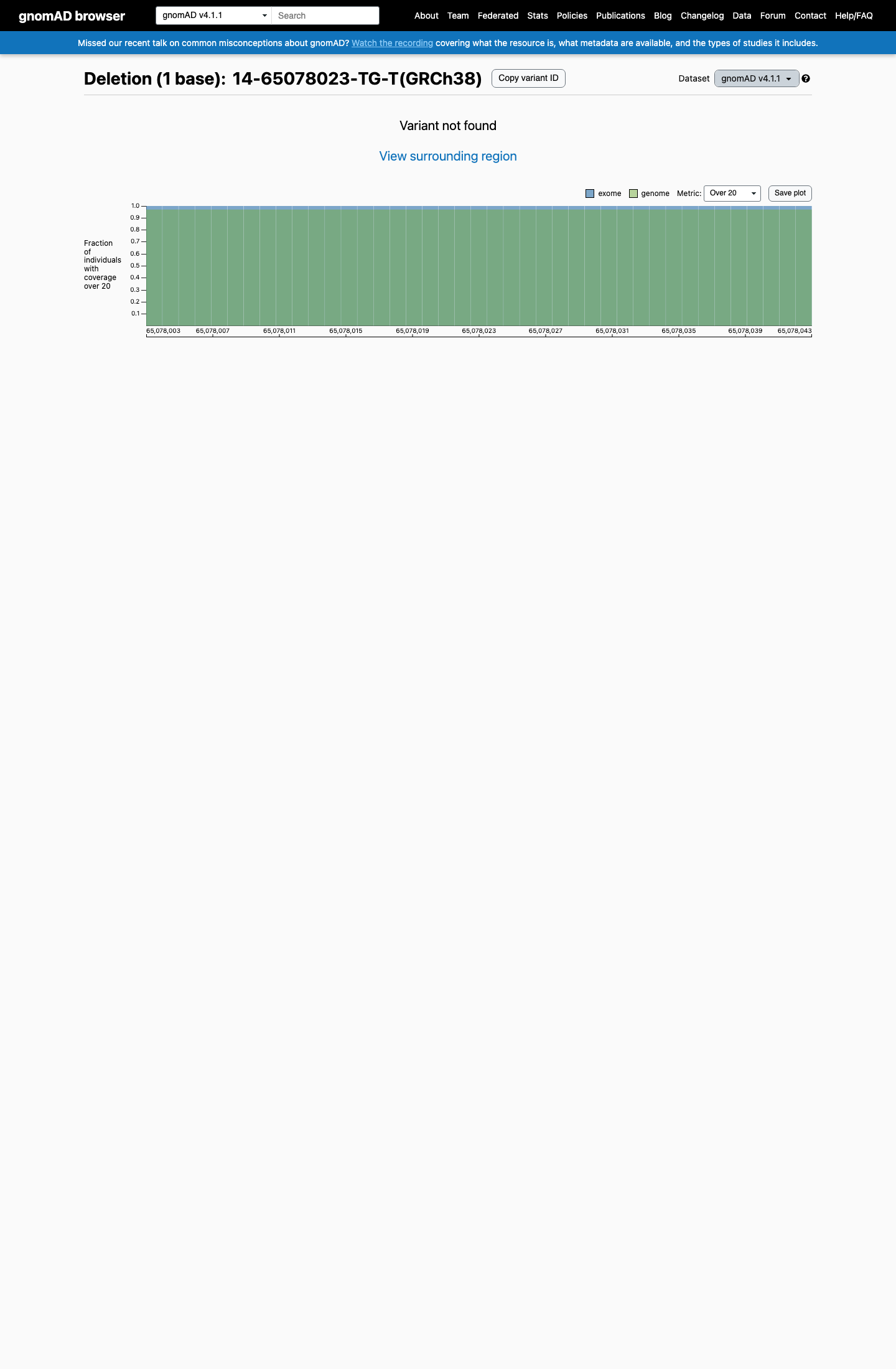
gnomAD v4.1
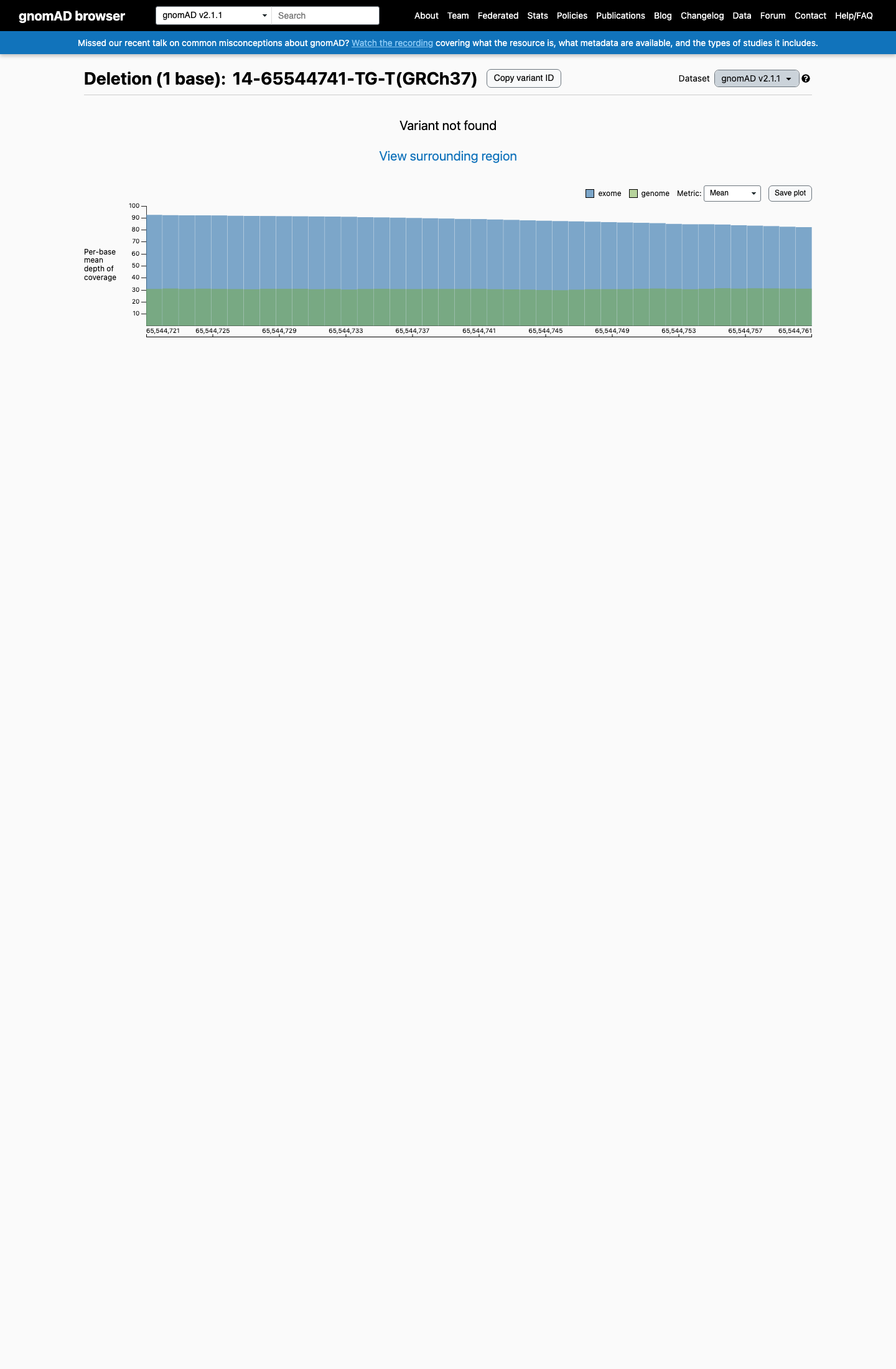
gnomAD v2.1
v4.1
Absent from gnomAD v4.1.
v2.1
Absent from gnomAD v2.1.
🇨🇦 CA
This variant is absent from gnomAD-Canada.
Allele frequency by ancestry
three datasets · side by side
gnomAD v4.1
Absent
· 0 / ?
0 hom
0 hom
Not observed in any ancestry group.
gnomAD v2.1
Absent
· 0 / ?
0 hom
0 hom
Not observed in any ancestry group.
gnomAD Canada 🇨🇦
Absent
· 0 / ?
0 hom
0 hom
Not observed in any ancestry group.
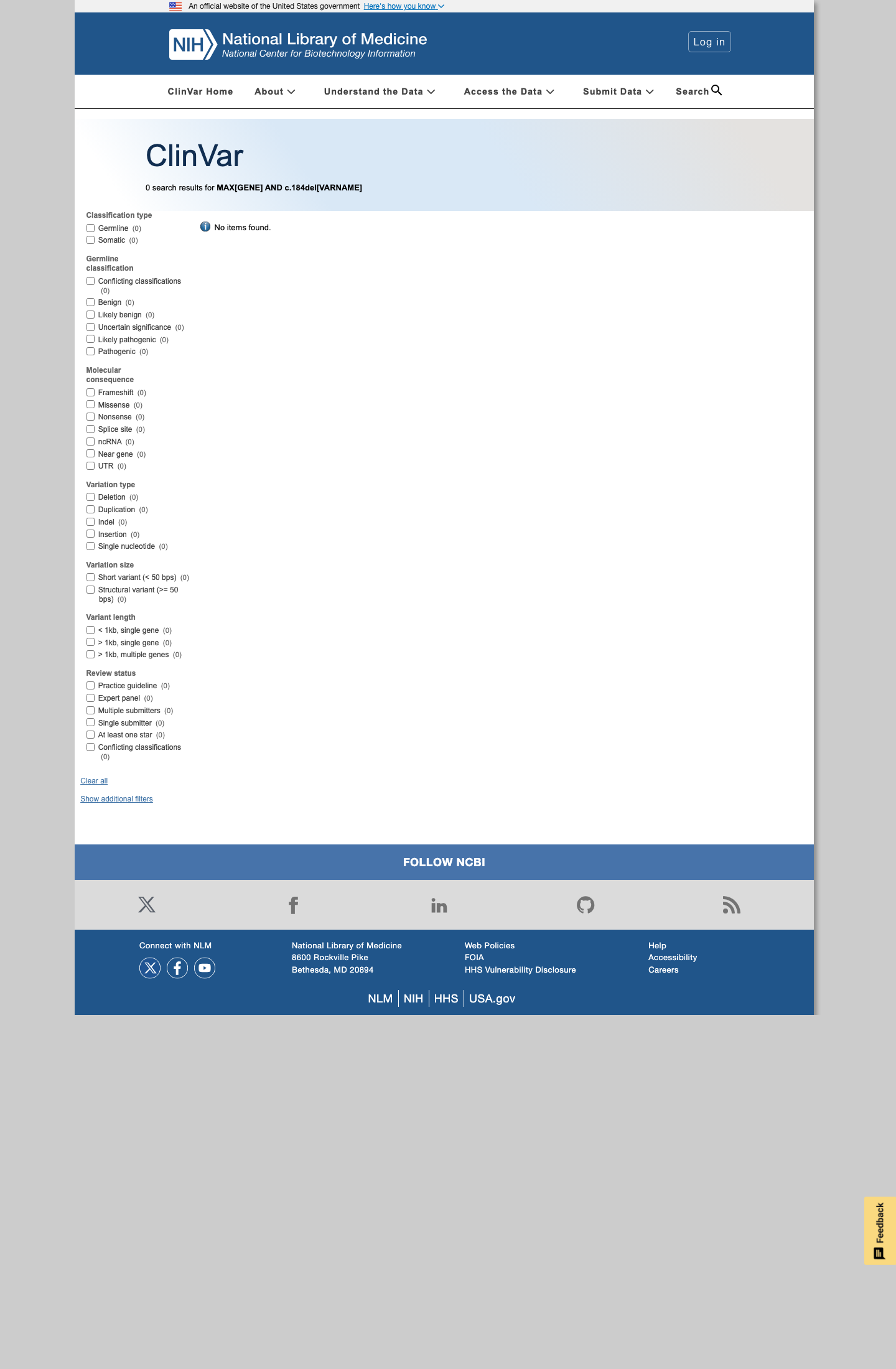
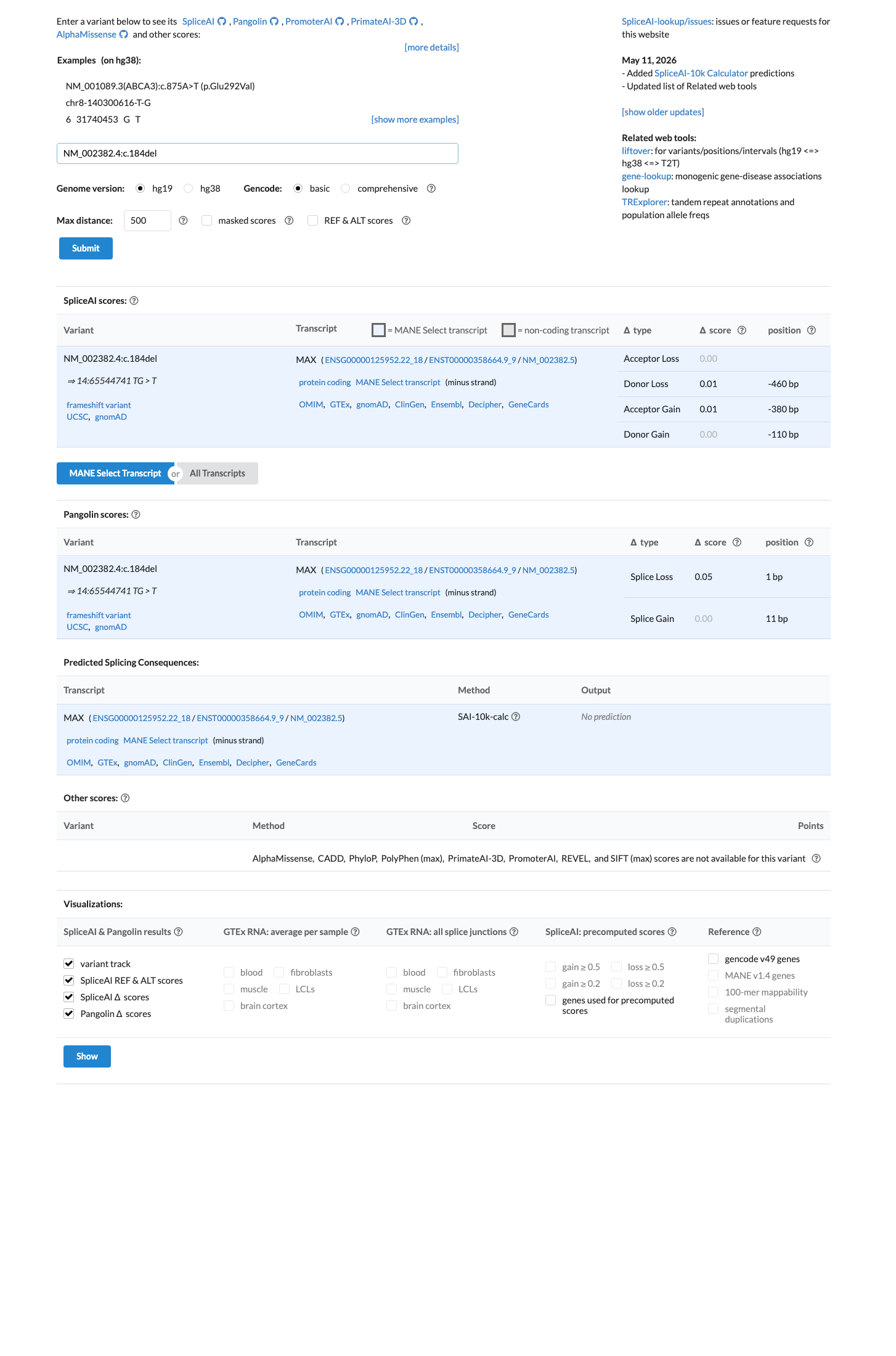
In silico
SpliceAI predicts no significant splice impact for this variant (max delta score = 0.00).
Functional
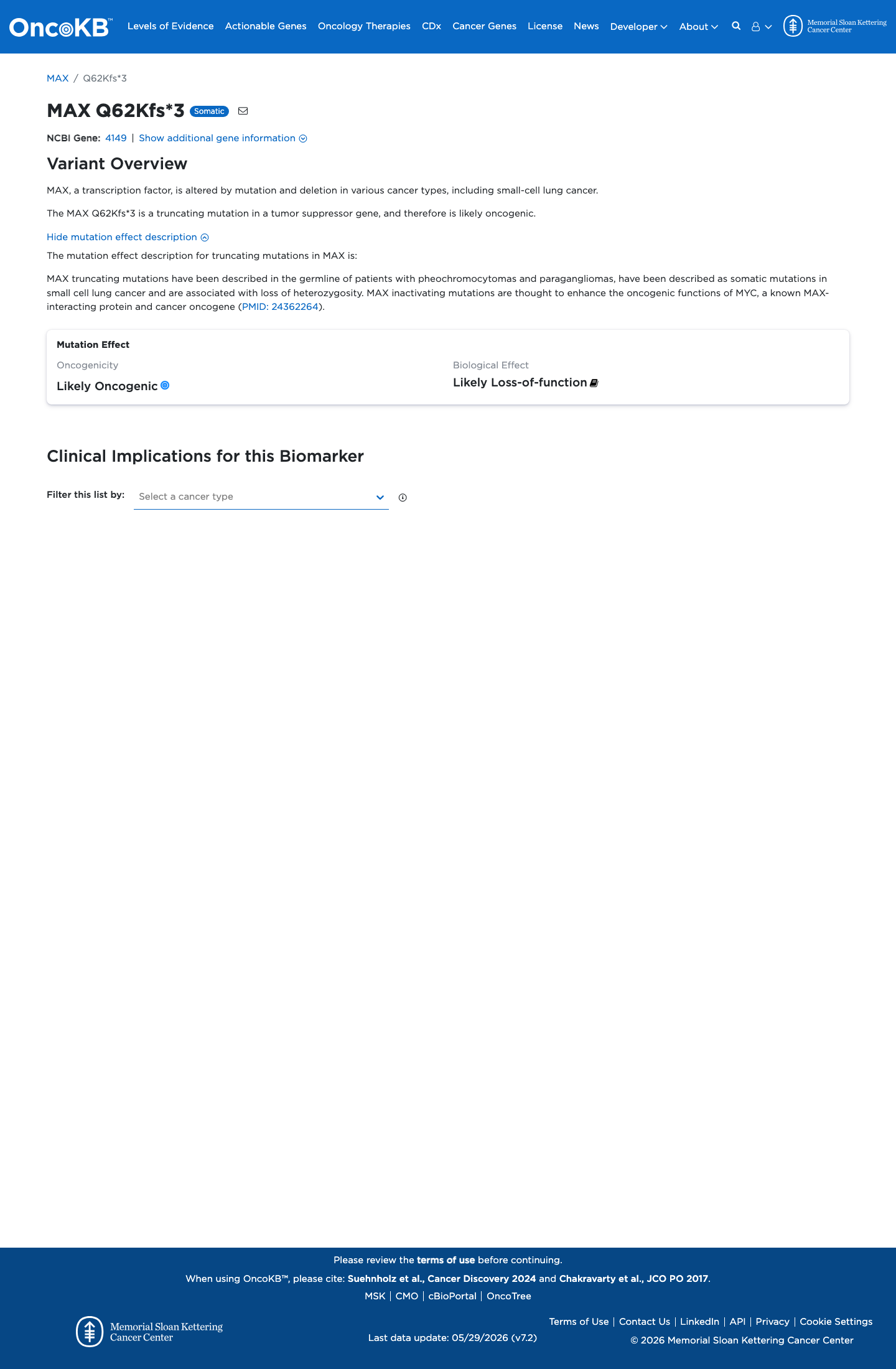
Likely Oncogenic
OncoKB identified variant-specific curated literature and context relevant to functional review; biological-effect context: Likely Loss-of-function; curated oncogenicity label: Likely Oncogenic.
COSMIC

Cancer hotspots
Somatic evidence
Not in COSMIC / hotspots
COSMIC
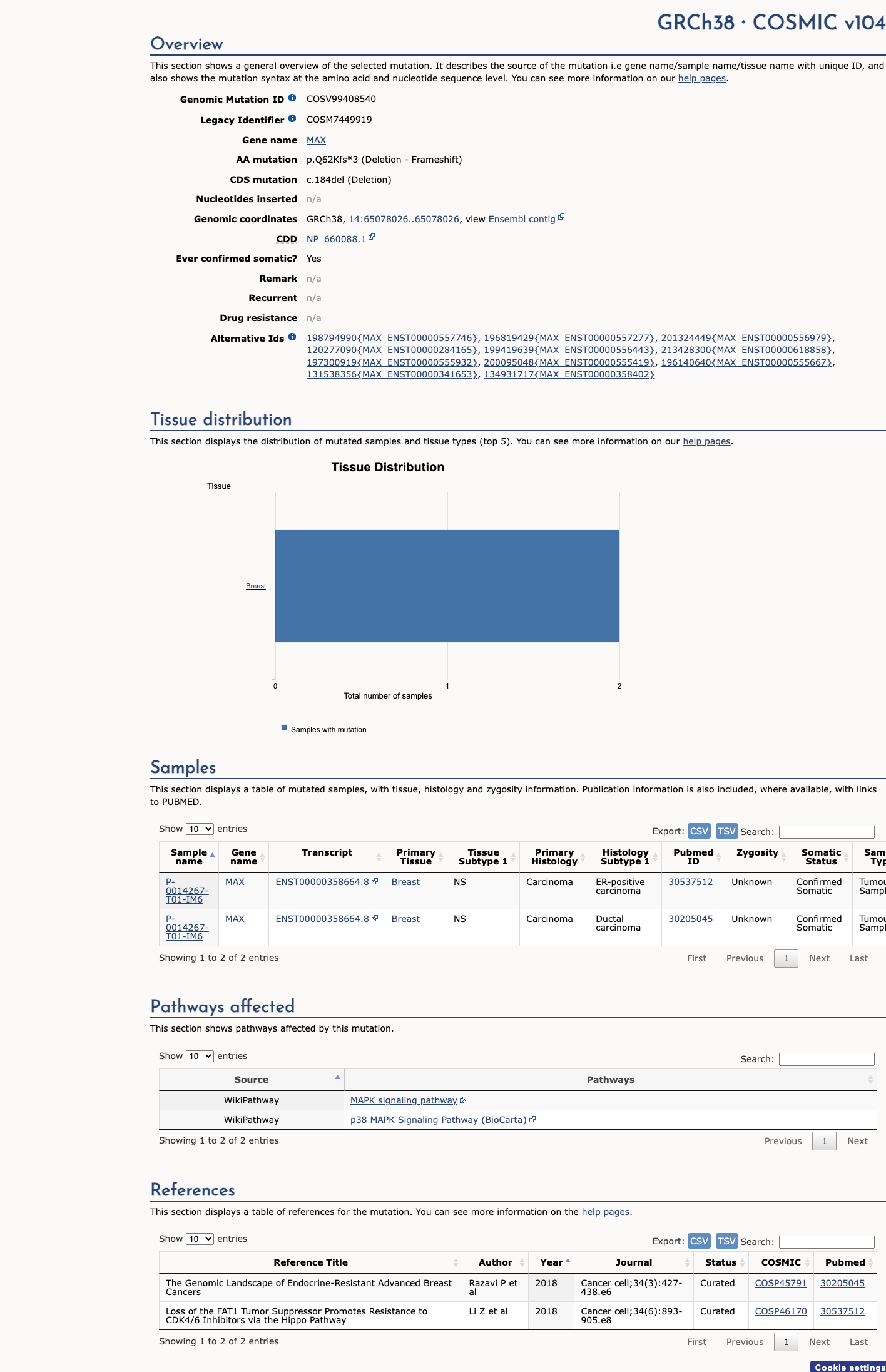
This variant does not lie in a statistically significant hotspot. This variant has previously been reported in somatic cancers (COSMIC; COSV99408540, n = 2 times).
Hotspots
This variant does not lie in a statistically significant hotspot.
Literature · how each cited paper was used
1papers cited
Each card is an audit: what was searched, what was found, whether it names the variant, which criteria it fed, and why. 1 further PMID triaged but not cited — see Sources & References.
PMID 41203296
Found
Frameshift deletion NM_002382.4:c.184del (p.Gln62LysfsTer3) in exon 4/5 Premature termination codon predicted to trigger nonsense-mediated decay Loss of function is established disease mechanism for MAX MAX germline disease association confirmed by PMID:41203296 (polydactyly-macrocephaly syndrome)
Applied to
→PVS1 supports · met
Sources & reference links
Triaged references · 1 PMID not cited in assessment
24362264 ↗
MAX inactivation in small cell lung cancer disrupts MYC-SWI/SNF programs and is synthetic lethal with BRG1.
ONCOKB