NM_002524.5:c.183A>C (p.Gln61His) is absent from gnomAD v2.1, v4.1, and gnomAD-Canada population databases (PM2_Supporting per VCEP).1 Gln61 lies within the Switch II functional domain (AA 57-64), a critical and well-established functional domain defined by the RASopathy VCEP for GTP hydrolysis and effector interaction (PM1_Moderate per VCEP).2 Multiple established pathogenic missense variants exist at the same codon (Q61R, Q61K, Q61L) in NRAS, satisfying PM5 at moderate strength per VCEP specifications.3 REVEL in silico score of 0.742 meets the VCEP threshold for PP3 at supporting strength, predicting a deleterious amino acid substitution.4 NM_002524.5:c.183A>C has been reported in ClinVar as Tier I - Strong (ClinVar ID 4530443) and classified as Oncogenic by OncoKB with gain-of-function mechanism. The variant is recurrent in somatic cancers (COSMIC n=149).5 No VCEP-approved functional assay data, de novo observations, case-control studies, or segregation data are available for this variant in the germline RASopathy context.6
Final classification
Likely Pathogenic
PM1PM2PM5PP3
NRAS
c.183A>C
p.Gln61His
This variant
NM_002524.5:c.183A>C (p.Gln61His) is absent from gnomAD v2.1, v4.1, and gnomAD-Canada population databases (PM2_Supporting per VCEP).
ClinGen RASopathy Expert Panel Specifications to the ACMG/AMP Variant Interpretation Guidelines for NRAS Version 2.3.0 v2.3.0 criteria-combination framework: matched Rule14 (2 Pathogenic.Moderate + Pathogenic.Supporting >=2) with applied criteria: PM1 moderate, PM2 supporting, PM5 moderate, PP3 supporting; maps to Likely Pathogenic.
Classification rationale
PM1PM2PM5PP3
Likely Pathogenic
NRAS c.183A>C
PM1 + PM2 + PM5 + PP3
→
Likely Pathogenic
LYFE Sciences is an AI system, and it can make mistakes. Criteria
may be applied incorrectly, sources may be misread, and a confident-looking
classification can still be wrong. Double-check every criterion and
its underlying evidence before relying on any call.
Gene diagram
· NM_002524.5 · variants mapped to exon structure
NRAS
NM_002524.5
Fetching transcript structure from UCSC…
Applied criteria · 4 applied · 13 assessed
MetEvidence satisfies this criterion.
Not metEvaluated against available evidence; threshold not reached.
Not assessedApplies in principle, but no evidence was found to evaluate it.
N/ADoesn't apply to this variant type.
Applied · 4
Strength
Supporting
Moderate
Strong
Very strong
PM1
moderate
Pathogenic
Gln61 (amino acid position 61) lies within the Switch II (SW2) functional domain (AA 57-64), one of four critical and well-established functional domains defined by the RASopathy VCEP (P-loop AA 10-17, SW1 AA 25-40, SW2 AA 57-64, SAK AA 145-156). SW2 is essential for GTP hydrolysis and effector interaction. Per VCEP, PM1 is applicable at moderate strength for variants in these domains.
CSPEC VCEP v2.3.0: PM1 moderate applicable to critical functional domains SW2 (AA 57-64)Gln61 is a catalytic residue in the Ras GTPase active site within SW2Structure/function papers confirm Q61 is critical for GTP hydrolysis
PM2
supporting
Pathogenic
NM_002524.5:c.183A>C is absent from all population databases: gnomAD v2.1, gnomAD v4.1, and gnomAD-Canada v1.0. Per VCEP RASopathy specifications, PM2 is applied at supporting strength when the variant is absent from gnomAD controls.
Absent from gnomAD v2.1 (exomes)Absent from gnomAD v4.1 (exomes)Absent from gnomAD-Canada v1.0 (genomes)
PM5
moderate
review
Pathogenic
Codon 61 in NRAS harbors multiple well-established pathogenic missense variants (Q61R, Q61K, Q61L) reported in ClinVar and the literature. Per VCEP, one [likely] pathogenic residue change at the same codon qualifies for PM5 at moderate strength. The PM5 pipeline did not collect proband counts to support PM5_Strong (≥2 different LP/P residue changes at same codon observed in ≥5 probands), though multiple Q61 variants are established as pathogenic in the literature.
CSPEC VCEP v2.3.0: PM5_Moderate with 1 LP/P residue change at same codonQ61RQ61K
PP3
supporting
Pathogenic
REVEL score for NM_002524.5:c.183A>C (p.Q61H) is 0.742, which meets the VCEP threshold of REVEL ≥ 0.7 for PP3 at supporting strength. SpliceAI predicts no significant splice impact (max delta score = 0.00), consistent with a missense effect predicted to be deleterious.
REVEL score: 0.742 (≥0.7 threshold per VCEP)SpliceAI max delta: 0.00 (no confounding splice effect)CSPEC VCEP v2.3.0: PP3_Supporting when REVEL ≥ 0.7 for missense variants
Assessed · not applied
· 12 not met · 1 not assessed
Pathogenic
PS1
PS1 per VCEP applies when the same amino acid change has been previously established as pathogenic regardless of nucleotide change across HRAS, KRAS, MRAS, NRAS, RIT1, and RRAS2.
PS2
No de novo observation data available for NM_002524.5:c.183A>C in a RASopathy proband.
PS3
No VCEP-approved functional assay has directly tested NM_002524.5:c.183A>C (p.Q61H).
PS4
No proband counts available for NM_002524.5:c.183A>C in the RASopathy clinical context.
PM6
No de novo observation data available for NM_002524.5:c.183A>C.
PP1
No co-segregation data available for NM_002524.5:c.183A>C.
Benign
BA1
NM_002524.5:c.183A>C is absent from gnomAD (allele frequency = 0).
BS1
NM_002524.5:c.183A>C is absent from gnomAD (allele frequency = 0).
BS2
No observations of NM_002524.5:c.183A>C in healthy adult individuals.
BS4
No segregation data demonstrating lack of co-segregation with a RASopathy phenotype.
BP2
No evidence of an alternative molecular cause of a RASopathy in the same gene, and no cis/trans phase data available.
BP4
REVEL score for NM_002524.5:c.183A>C is 0.742, which exceeds the VCEP BP4 threshold of REVEL ≤ 0.3.
BP5
No evidence of an alternative molecular cause for a RASopathy in a different gene.
N/A · 8
PVS1 · PP2 · PP4 · PP5 · BS3 · BP1 · BP6 · BP7
Research & evidence
Population frequency · supports pathogenic
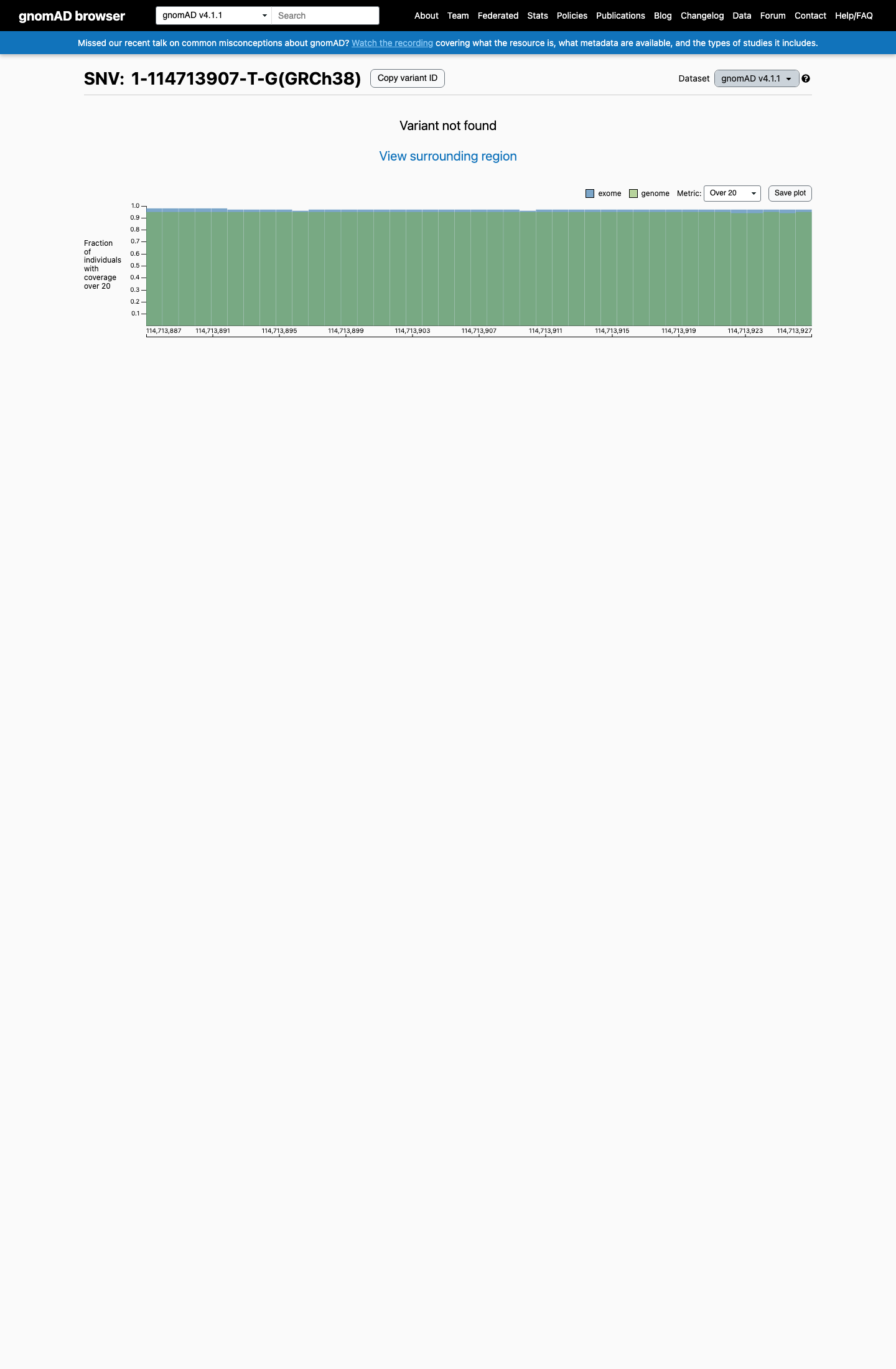
gnomAD v4.1
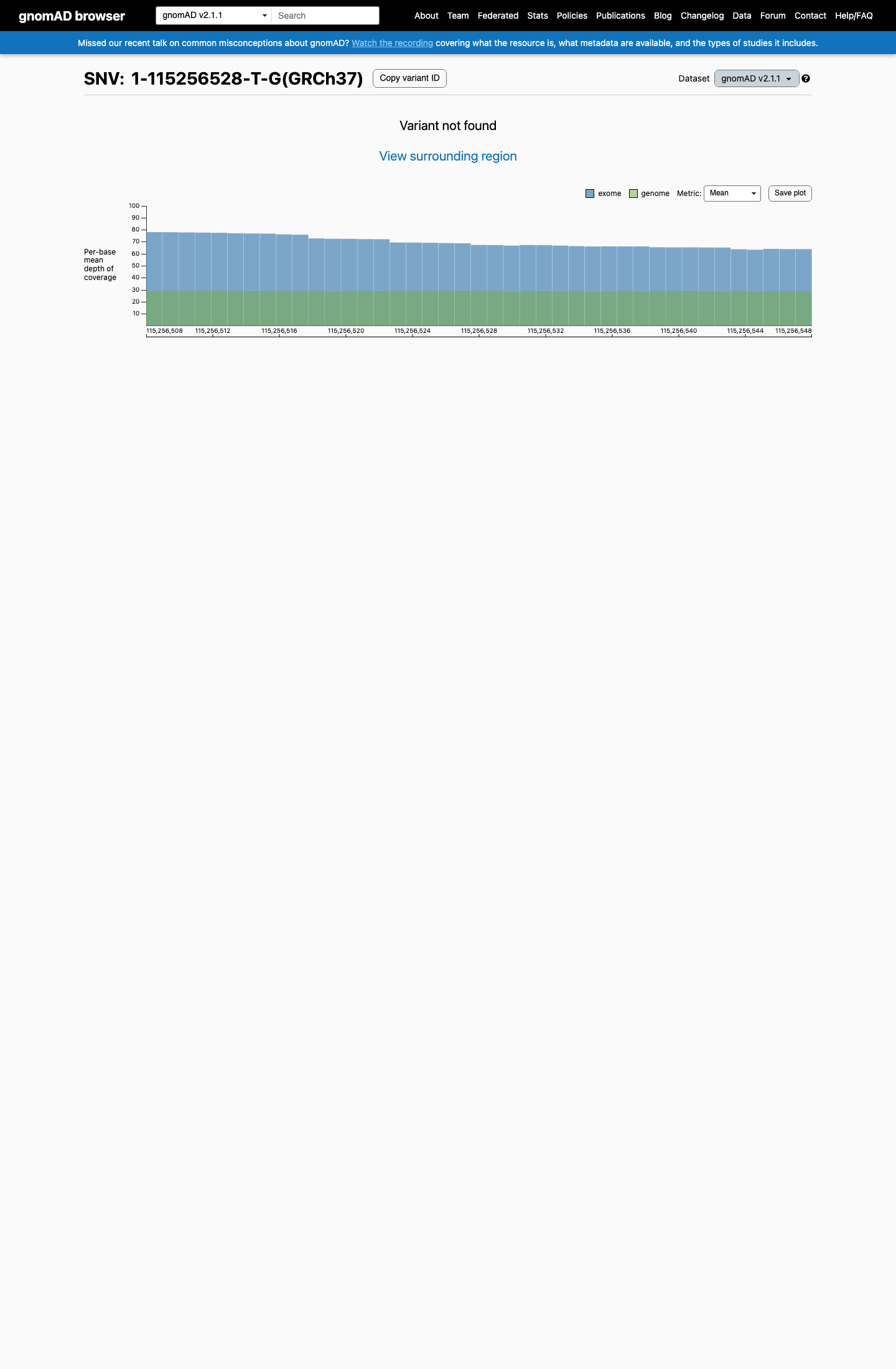
gnomAD v2.1
v4.1
Absent from gnomAD v4.1.
v2.1
Absent from gnomAD v2.1.
🇨🇦 CA
Absent from gnomAD-Canada v1.0.
Allele frequency by ancestry
three datasets · side by side
gnomAD v4.1
Absent
· 0 / ?
0 hom
0 hom
Not observed in any ancestry group.
gnomAD v2.1
Absent
· 0 / ?
0 hom
0 hom
Not observed in any ancestry group.
gnomAD Canada 🇨🇦
Absent
· 0 / ?
0 hom
0 hom
Not observed in any ancestry group.
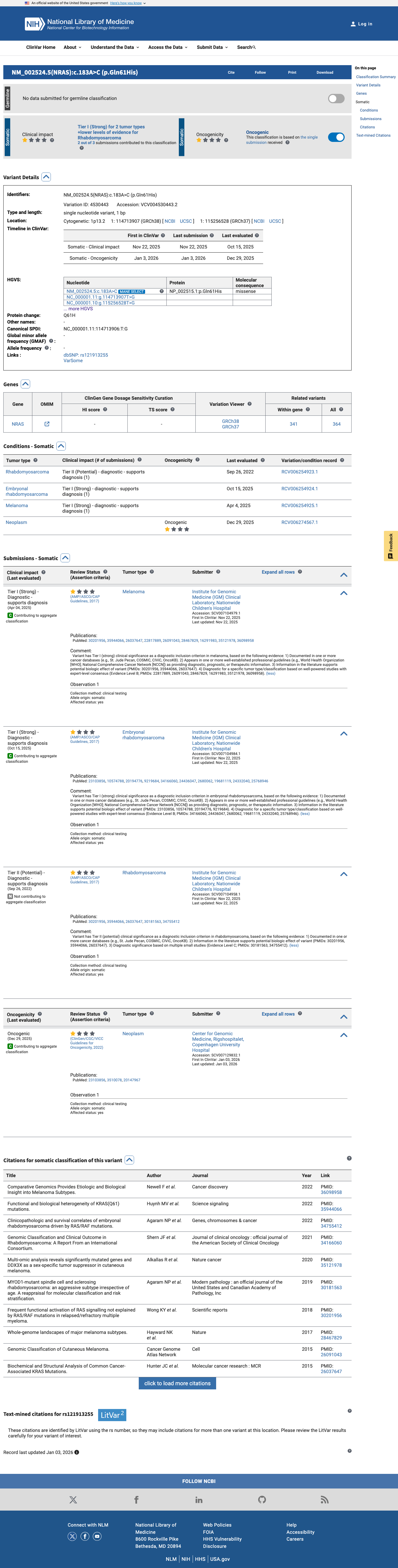
ClinVar
This variant has been reported in ClinVar but submission details could not be extracted. (ClinVarID = 4530443)
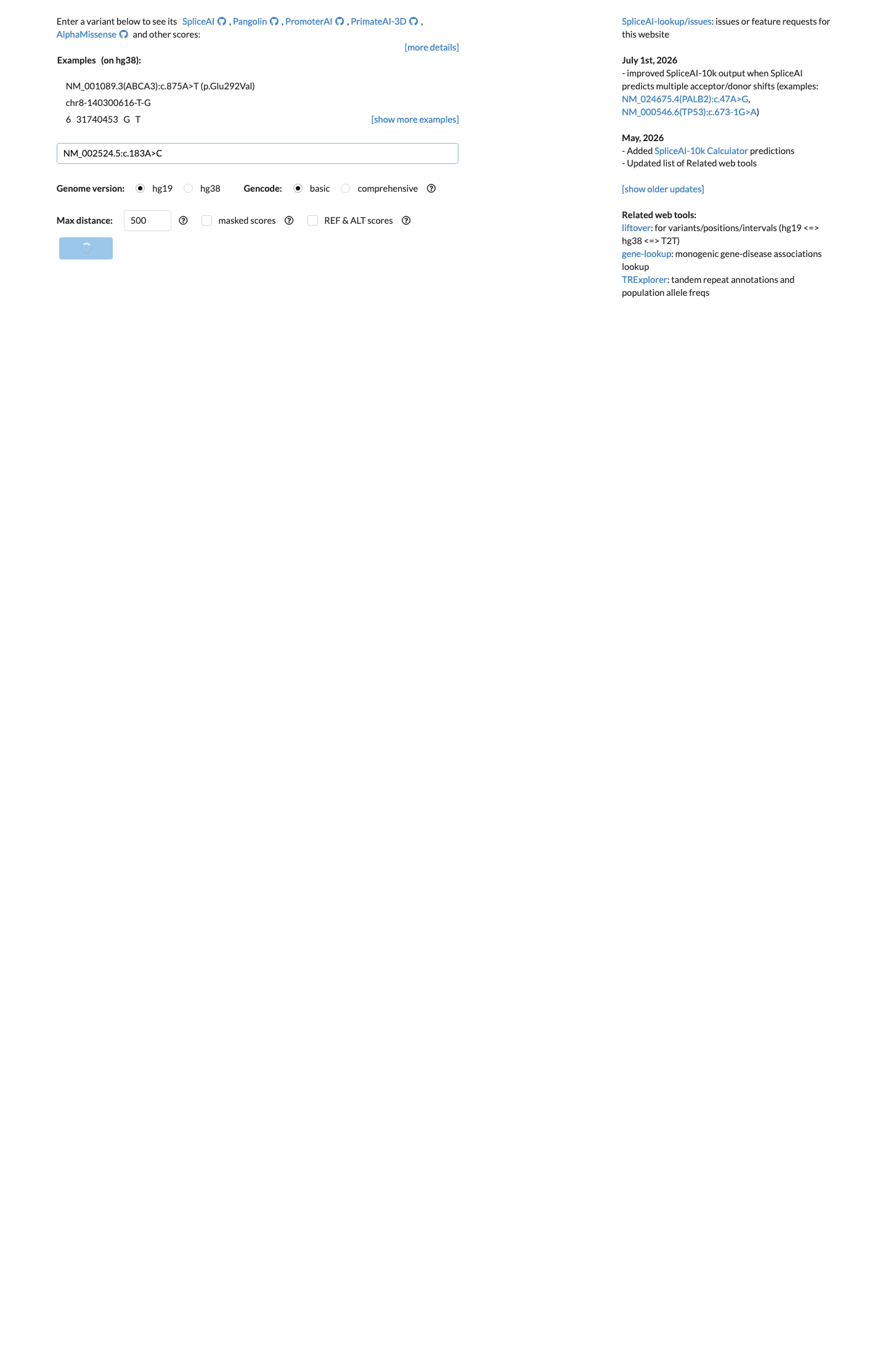
In silico
SpliceAI predicts no significant splice impact for this variant (max delta score = 0.00). REVEL score = 0.742. BayesDel score = 0.130143.
Functional
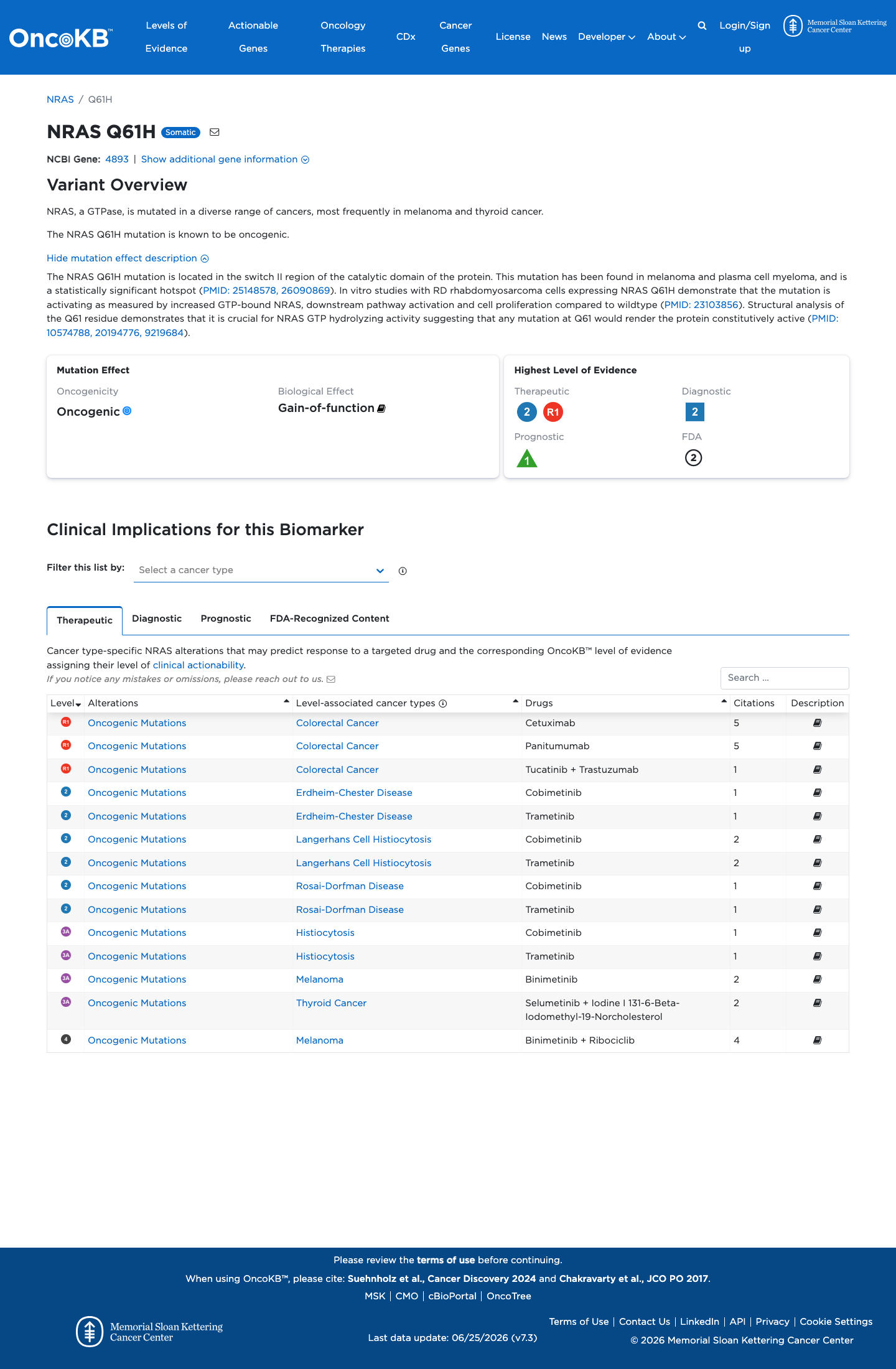
Oncogenic
OncoKB identified variant-specific curated literature and context relevant to functional review; biological-effect context: Gain-of-function; curated oncogenicity label: Oncogenic.
COSMIC
Cancer hotspots
Somatic evidence
Hotspot
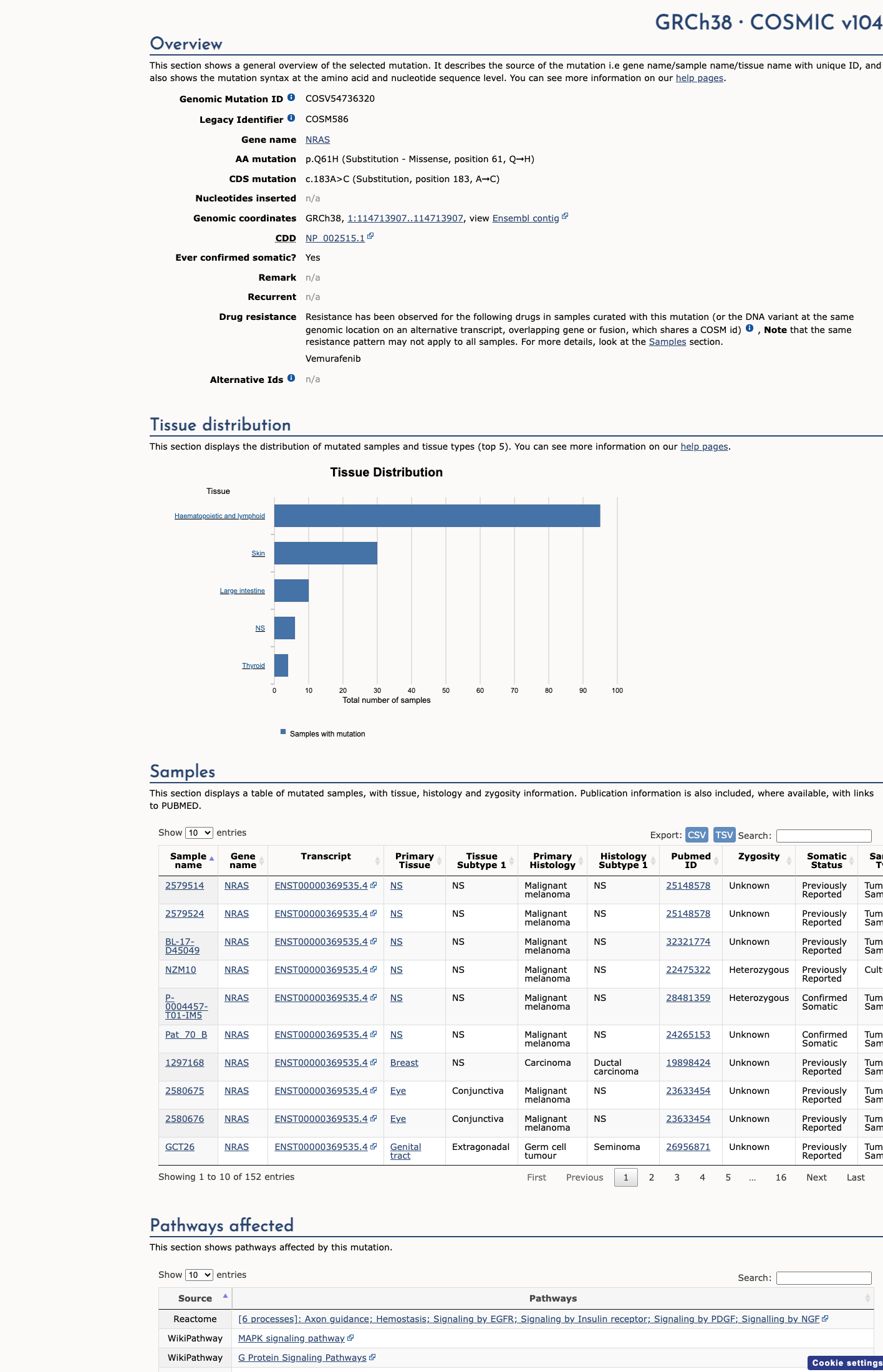
COSMIC
This variant lies in a statistically significant hotspot. This variant has previously been reported in somatic cancers (COSMIC; COSV54736320, n = 149 times).
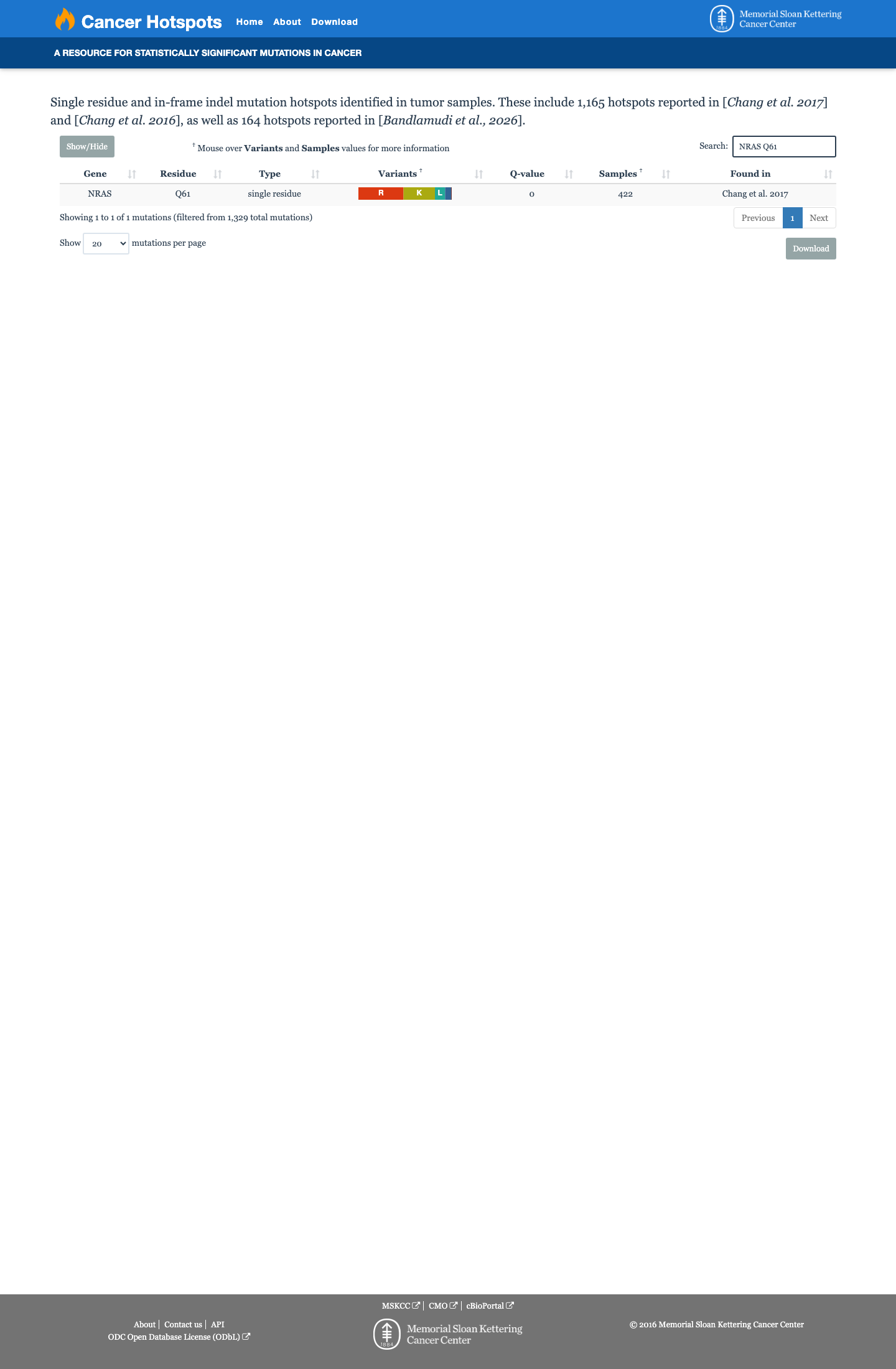
Hotspots
This variant lies in a statistically significant hotspot.
Literature · how each cited paper was used
2papers cited
Each card is an audit: what was searched, what was found, whether it names the variant, which criteria it fed, and why. 4 further PMIDs triaged but not cited — see Sources & references.
Rule & framework references · cited for criterion definitions, not variant evidence
10574788 ↗
The pre-hydrolysis state of p21(ras) in complex with GTP: new insights into the role of water molecules in the GTP hydrolysis reaction of ras-like proteins.
20194776 ↗
Allosteric modulation of Ras positions Q61 for a direct role in catalysis.
Sources & reference links
9Sources
Triaged references · 4 PMIDs not cited in assessment
23103856 ↗
Oncogenic and wild-type Ras play divergent roles in the regulation of mitogen-activated protein kinase signaling.
ONCOKB
25148578 ↗
Beyond BRAF(V600): clinical mutation panel testing by next-generation sequencing in advanced melanoma.
ONCOKB
26090869 ↗
Molecular spectrum of BRAF, NRAS and KRAS gene mutations in plasma cell dyscrasias: implication for MEK-ERK pathway activation.
ONCOKB
34166060 ↗
Genomic Classification and Clinical Outcome in Rhabdomyosarcoma: A Report From an International Consortium.
CLINVAR