Analysis in progress
Initialising…
0%
complete
This report is still being assembled — sections appear as each stage finishes. It isn't final yet.
SDHB
Final classification
Benign
BA1
SDHB
c.158G>A
p.Gly53Glu
missense · exon 2

SDHB encodes a subunit of the succinate dehydrogenase (SDH) complex, a mitochondrial enzyme that converts succinate to fumarate in the citric acid cycle and transfers electrons to the oxidative phosphorylation pathway. It functions as a tumor suppressor, and loss of its function stabilizes hypoxia-inducible factors, promoting tumor development. Inherited mutations in SDHB cause hereditary paraganglioma and pheochromocytoma, and SDH dysfunction is also linked to gastrointestinal stromal tumors, renal cell carcinoma, and pituitary adenomas. Mutations in this gene are additionally associated with mitochondrial complex II deficiency.

This variant

SDHB is a tumor suppressor whose loss-of-function mutations cause hereditary paraganglioma and pheochromocytoma. This c.158G>A (p.Gly53Glu) variant is classified Benign: at ~1.1% in the Ashkenazi Jewish population, it is far too common to be a pathogenic autosomal-dominant SDHB allele, consistent with the absence of pathogenic evidence.

Transcript
NM_003000.3
HGVS · transcript:coding
NM_003000.3:c.158G>A
GRCh38
chr1:17044803 C>T
GRCh37
chr1:17371298 C>T
Basis Benign: only BA1 is met (stand-alone benign; Ashkenazi Jewish allele frequency ~1.1% in gnomAD v4.1 and v2.1 exceeds the 1.0% threshold), so generic ACMG/AMP 2015 rules yield Benign.
Benign: only BA1 is met (stand-alone benign; Ashkenazi Jewish allele frequency ~1.1% in gnomAD v4.1 and v2.1 exceeds the 1.0% threshold), so generic ACMG/AMP 2015 rules yield Benign.
Classification rationale
BA1 Benign
SDHB c.158G>A missense · exon 2

BA1 (Stand-alone benign): Ashkenazi Jewish allele frequency ~1.1% in gnomAD v4.1 (325/29,608 alleles) and v2.1 (112/10,370) exceeds the 1.0% threshold; far too common for a pathogenic autosomal-dominant SDHB allele. Overall classification: Benign, from BA1 stand-alone under generic ACMG/AMP 2015 combination rules.

BA1 Benign
Gene diagram · NM_003000.3 · variants mapped to exon structure
SDHB NM_003000.3
Fetching transcript structure from UCSC…
Applied criteria · 1 applied · 21 assessed
MetEvidence satisfies this criterion.
Not metEvaluated against available evidence; threshold not reached.
Not assessedApplies in principle, but no evidence was found to evaluate it.
N/ADoesn't apply to this variant type.
Applied · 1
Strength Supporting Moderate Strong Very strong
BA1 stand-alone Benign
Met (stand-alone benign): Ashkenazi Jewish allele frequency 1.10% in gnomAD v4.1 (325/29,608 alleles) exceeds the 1.0% BA1 threshold.
The SDHB ClinGen Endocrine Tumor Predisposition CSpec record was reviewed first. Its rules table is empty and the record is in Pilot Rules In Prep, so it provides no applicable population-frequency thresholds; generic ACMG/AMP population thresholds were used.gnomAD v4.1 reports Ashkenazi Jewish AF 1.09768% (325/29,608 alleles) with 3 homozygotes; gnomAD v2.1 independently reports Ashkenazi Jewish AF 1.08004% (112/10,370 alleles) with 1 homozygote.The generic case framework specifies BA1 for population frequency greater than 1.0%.
Assessed · not applied · 8 not met · 13 not assessed
Pathogenic
PS1 Not met: ClinVar has no pathogenic submissions for this amino acid change; 13 labs call it Benign or Likely benign, none P/LP.
PS2 Not assessed: no proband phenotype or de novo testing data were available.
PS3 Not assessed: no functional assay data for this variant were available; the reviewed SDHB functional study did not test p.Gly53Glu.
PS4 Not assessed: no exact-variant affected-case count with appropriate controls was available to calculate enrichment.
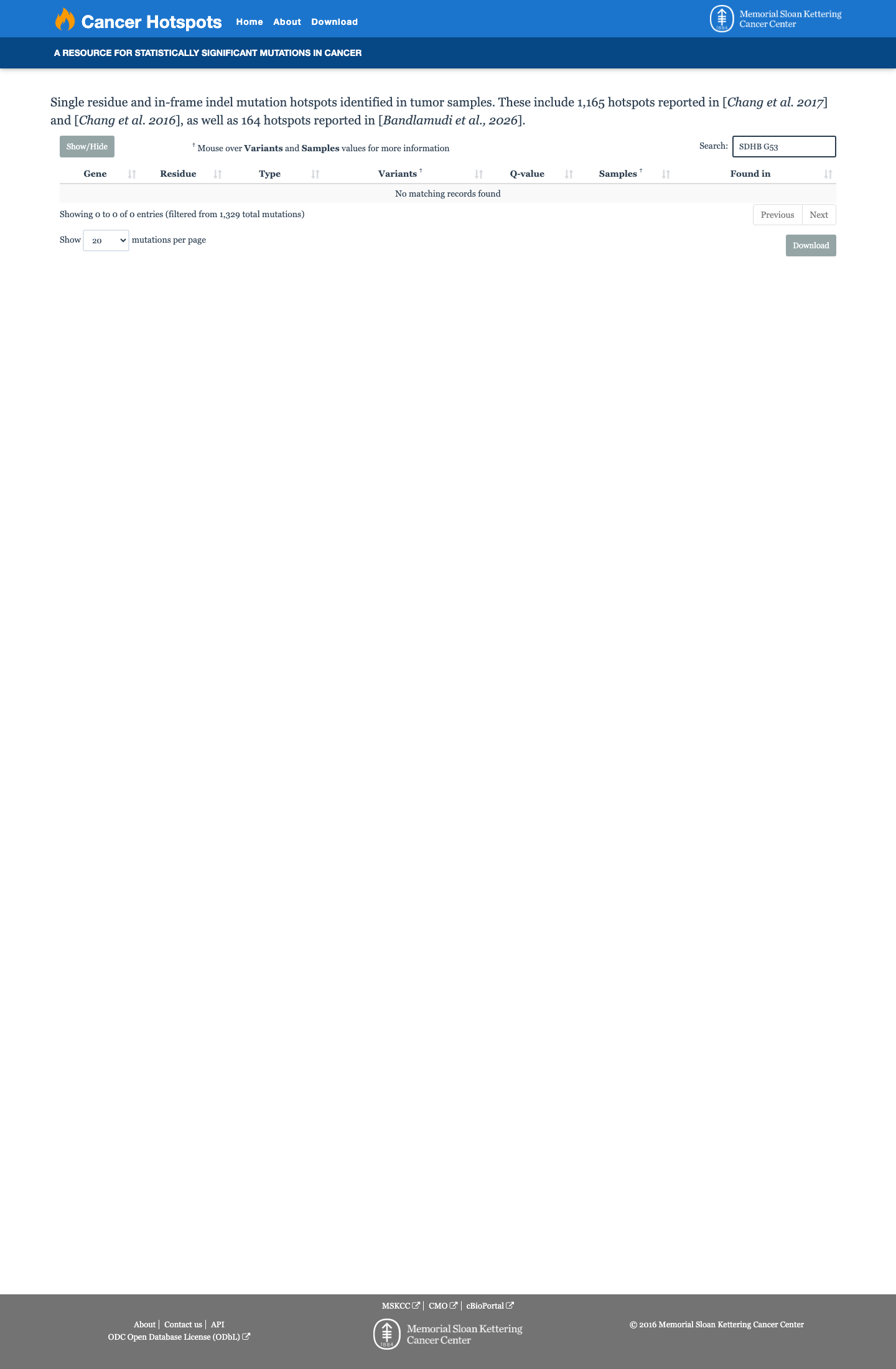
PM1 Not met: cancerhotspots.org reports no significant hotspot at SDHB codon 53, and Gly53 is not among the Fe-S cluster-binding cysteines.
PM2 Not met: allele frequency ~1.1% (Ashkenazi Jewish, gnomAD v4.1 and v2.1) far exceeds the <0.1% PM2 rarity threshold.
PM5 Not assessed: no alternate substitution at codon 53 with established pathogenicity was found; flagged for human review.
PM6 Not assessed: no reported de novo occurrence or parental testing result was available.
PP1 Not assessed: no informative relatives, genotypes, or segregation data were reported.
PP2 Not assessed: no gene-level missense-constraint metric or VCEP position on PP2 was available; flagged for human review.
PP3 Not met: REVEL 0.608 is below the PP3 supporting threshold (>=0.644) and above the BP4 threshold, an indeterminate zone.
PP4 Not assessed: no case-level phenotype was supplied to evaluate phenotype specificity.
PP5 Not met: no ClinVar expert-panel Pathogenic or Likely pathogenic assertion exists for this variant.
Benign
BS2 Not assessed: homozygotes are documented in gnomAD, but no phenotyped unaffected adult observations were available.
BS3 Not assessed: no functional assay data demonstrating normal activity for this variant were available.
BS4 Not assessed: no informative non-segregation observations were reported.
BP1 Not met: missense is an established disease mechanism in SDHB; 27 pathogenic missense variants were functionally validated, so BP1's premise does not apply.
BP2 Not assessed: no variant co-occurrence or phase data were available.
BP4 Not met: REVEL 0.608 is above the BP4 supporting threshold (<=0.29-0.30), so it provides no benign in-silico support.
BP5 Not assessed: no alternative molecular diagnosis was documented for the affected individual.
BP6 Not met: no ClinVar expert-panel Benign or Likely benign assertion exists for this variant.
N/A · 6 PVS1 · PM3 · PM4 · BS1 · BP3 · BP7
Research & evidence
Population frequency · supports benign
gnomAD v4.1 screenshot
gnomAD v4.1
gnomAD v2.1 screenshot
gnomAD v2.1
v4.1
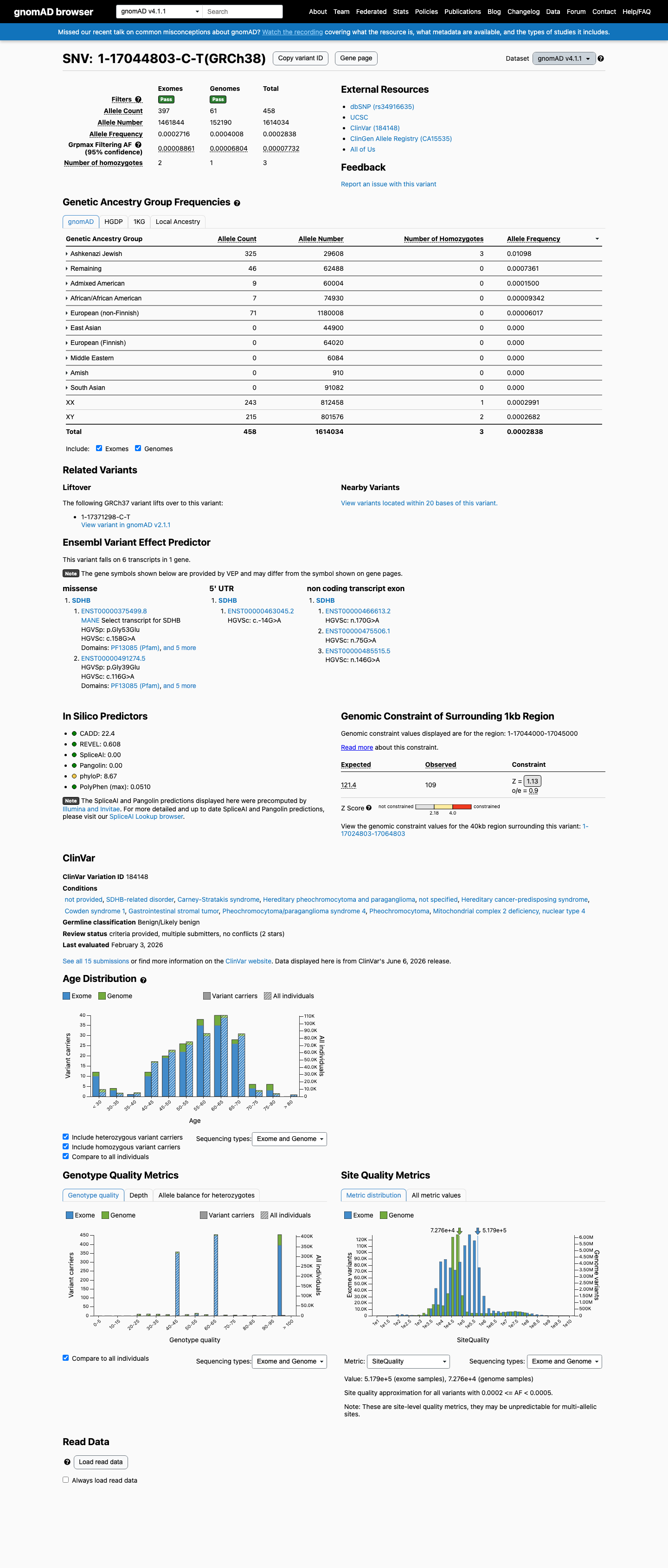
This variant is present in gnomAD v4.1 (AF= 0.000283761; MAF= 0.02838%, 458/1614034 alleles, homozygotes = 3) and has highest observed frequency in the Ashkenazi Jewish population (AF= 0.0109768; MAF= 1.09768%, 325/29608 alleles, homozygotes = 3); grpmax FAF= 7.732e-05.
v2.1
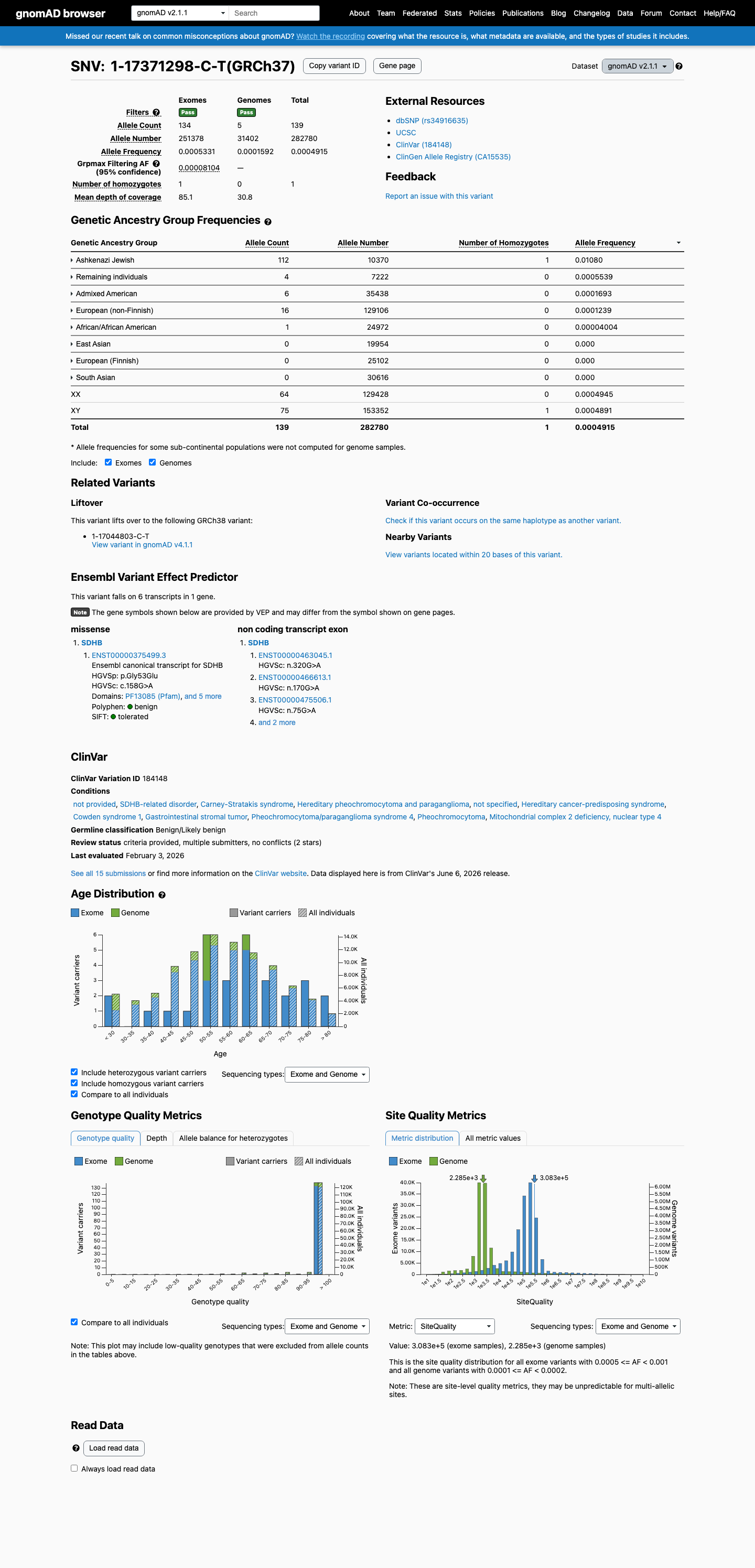
This variant is present in gnomAD v2.1 (AF= 0.000491548; MAF= 0.04915%, 139/282780 alleles, homozygotes = 1) and has highest observed frequency in the Ashkenazi Jewish population (AF= 0.0108004; MAF= 1.08004%, 112/10370 alleles, homozygotes = 1); grpmax FAF= 8.104e-05.
🇨🇦 CA
This variant is present in gnomAD-Canada v1.0 (AF= 0.0007604562737642585, 14/18410 alleles, homozygotes = 0).
Allele frequency by ancestry
three datasets · side by side
gnomAD v4.1
0.028% · 458 / 1,614,034
3 hom · FAF 0.0077%
Ashkenazi Jewish
325 / 29,608
1.1%
3 hom
Remaining individuals
46 / 62,488
0.074%
Admixed American
9 / 60,004
0.015%
African/African American
7 / 74,930
0.0093%
European (non-Finnish)
71 / 1,180,008
0.006%
+ 5 not observed (European (Finnish), Amish, East Asian, Middle Eastern, South Asian)
gnomAD v2.1
0.049% · 139 / 282,780
1 hom · FAF 0.0081%
Ashkenazi Jewish
112 / 10,370
1.1%
1 hom
Remaining individuals
4 / 7,222
0.055%
Admixed American
6 / 35,438
0.017%
European (non-Finnish)
16 / 129,106
0.012%
African/African American
1 / 24,972
0.004%
+ 3 not observed (East Asian, European (Finnish), South Asian)
gnomAD Canada 🇨🇦
0.076% · 14 / 18,410
0 hom · FAF 0.0069%
Ashkenazi Jewish
10 / 832
1.2%
Remaining individuals
1 / 1,138
0.088%
European (non-Finnish)
3 / 11,730
0.026%
+ 6 not observed (African/African American, Latino/Admixed American, East Asian, European (Finnish), Middle Eastern, South Asian)
ClinVar screenshot
ClinVar
This variant has been reported in ClinVar as Benign (7 clinical laboratories) and as Likely benign (6 clinical laboratories). (ClinVarID = 184148)
SpliceAI screenshot
In silico
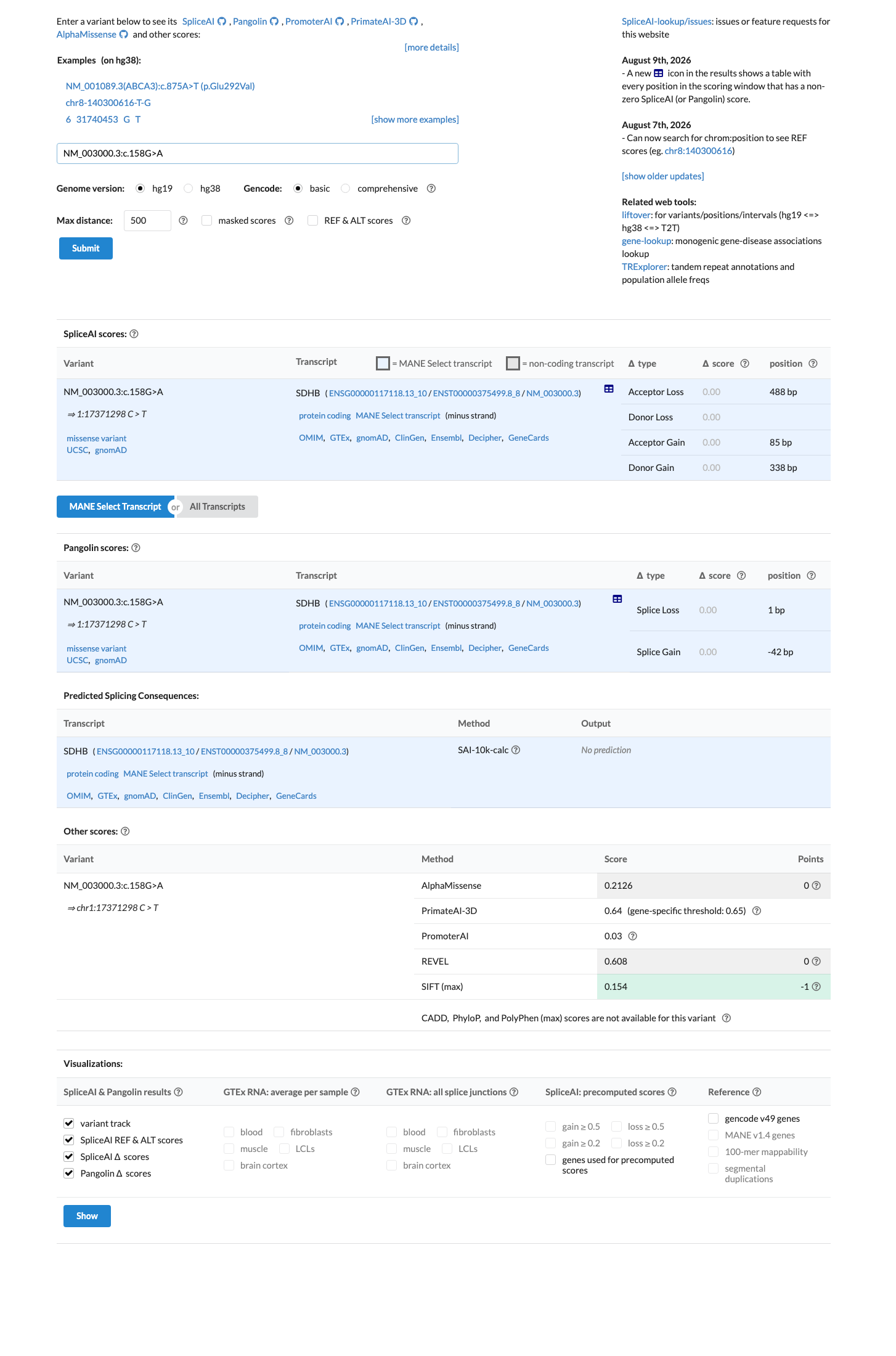
SpliceAI predicts no significant splice impact for this variant (max delta score = 0.00). REVEL score = 0.608. BayesDel score = 0.345884.
Functional / OncoKB screenshot
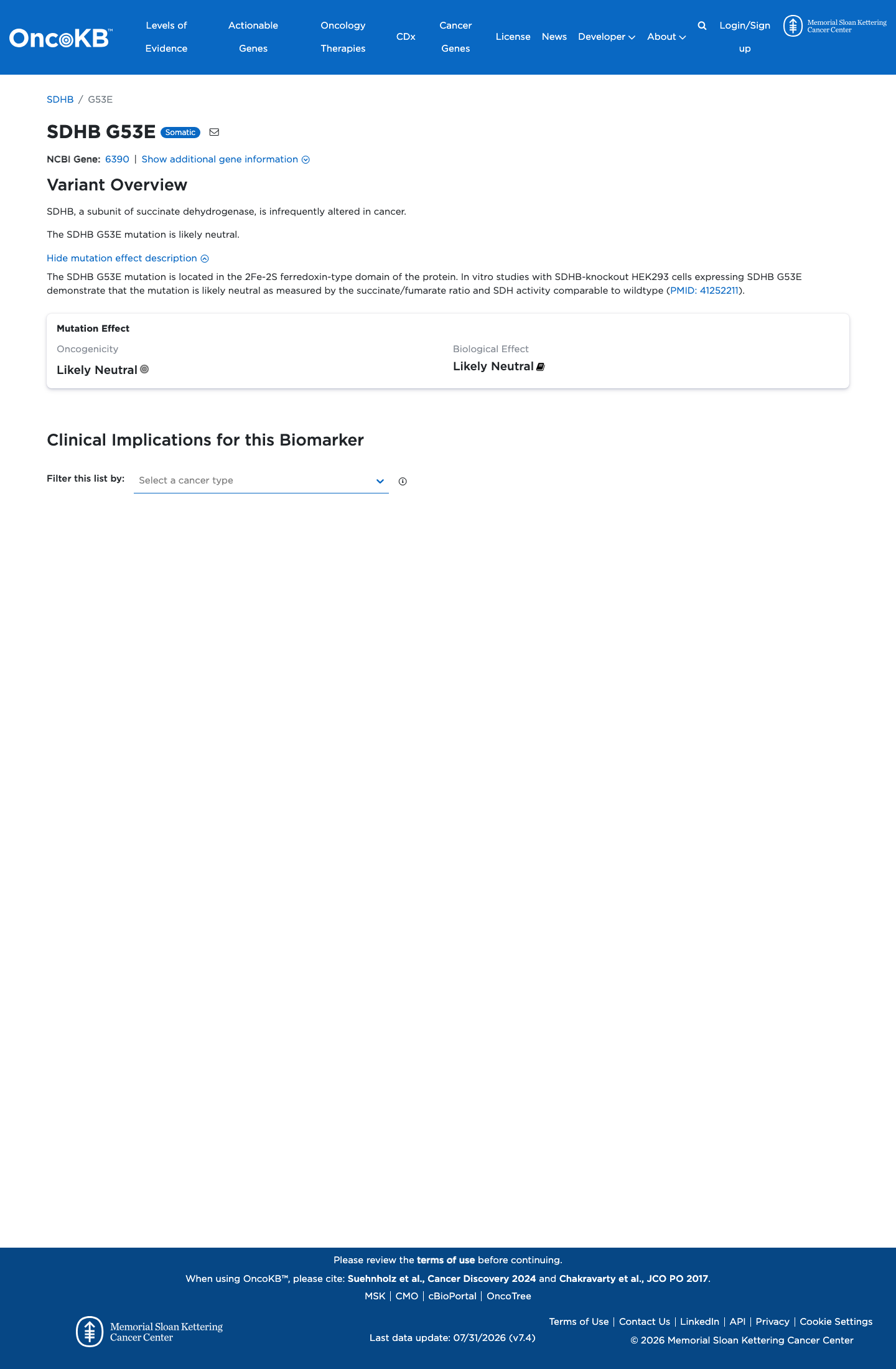
Functional Likely Neutral
OncoKB identified variant-specific curated literature and context relevant to functional review; biological-effect context: Likely Neutral; curated oncogenicity label: Likely Neutral.
OncoKB ↗
COSMIC screenshot
COSMIC
Cancer hotspots screenshot
Cancer hotspots
Somatic evidence Not in COSMIC / hotspots
COSMIC
This variant does not lie in a statistically significant hotspot. This variant has not previously been reported in somatic cancers (COSMIC).
Hotspots
This variant does not lie in a statistically significant hotspot.
Sources & reference links
9Sources
CSpec VCEP
ClinVar
gnomAD v2.1
gnomAD v4.1
gnomAD-Canada
SpliceAI
OncoKB
COSMIC
Cancer hotspots
Triaged references · 9 PMIDs not cited in assessment
41252211 ↗ Functional characterization of SDHB variants clarifies hereditary pheochromocytoma and paraganglioma risk and genotype-phenotype relationships. ONCOKB
19802898 ↗ Tumor risks and genotype-phenotype-proteotype analysis in 358 patients with germline mutations in SDHB and SDHD. CLINVAR
20923864 ↗ A novel TMEM127 mutation in a patient with familial bilateral pheochromocytoma. CLINVAR
25694510 ↗ Germline and somatic SDHx alterations in apparently sporadic differentiated thyroid cancer. CLINVAR
25741868 ↗ Standards and guidelines for the interpretation of sequence variants: a joint consensus recommendation of the American College of Medical Genetics and Genomics and the Association for Molecular Pathology. CLINVAR
26467025 ↗ A Standardized DNA Variant Scoring System for Pathogenicity Assessments in Mendelian Disorders. CLINVAR
21979946 ↗ Germline SDHx variants modify breast and thyroid cancer risks in Cowden and Cowden-like syndrome via FAD/NAD-dependant destabilization of p53. CLINVAR
23072324 ↗ Evaluation of SDHB, SDHD and VHL gene susceptibility testing in the assessment of individuals with non-syndromic phaeochromocytoma, paraganglioma and head and neck paraganglioma. CLINVAR
28492532 ↗ Sherloc: a comprehensive refinement of the ACMG-AMP variant classification criteria. CLINVAR