Analysis in progress
Initialising…
0%
complete
This report is still being assembled — sections appear as each stage finishes. It isn't final yet.
BRAF
Final classification
VUS
BRAF c.1447A>G · p.Lys483Glu
BRAF

NM_004333.5:c.1447A>G (p.Lys483Glu) is a missense variant in BRAF, a gene where missense variants are a common mechanism of RASopathy disease. REVEL score of 0.973 strongly predicts a deleterious effect on protein function, satisfying PP3 at supporting strength. The gene's missense z-score exceeds 3.09 in gnomAD, meeting PP2 at supporting strength. The variant is present at extremely low frequency in gnomAD (1/251,326 alleles in v2.1; 1/1,613,408 alleles in v4.1) but is not absent, so PM2 (supporting) is not met under the VCEP requirement for complete absence. The variant lies outside VCEP-defined functional domains (P-loop AA 459-474, CR3 AA 594-627) and no pathogenic comparator exists at codon 483, so PM1 and PM5 are not met. No de novo, segregation, or case-control data are available for germline RASopathy. Functional data from the cancer literature classifies K483E as a Class 3 BRAF mutation (kinase-impaired, activates ERK via CRAF transactivation), but this has not been tested in VCEP-approved assays. No benign criteria are met. With two supporting pathogenic criteria (PP2, PP3) and no criteria at moderate or strong level, the variant does not meet any VCEP pathogenic or likely pathogenic classification rule. Per VCEP framework rules, the variant remains a Variant of Uncertain Significance.
Gene
BRAF
Transcript
NM_004333.5
HGVS · transcript:coding
NM_004333.5:c.1447A>G
Consequence
N/A
GRCh38
chr7:140778061 T>C
GRCh37
chr7:140477861 T>C
Basis ClinGen RASopathy Expert Panel Specifications to the ACMG/AMP Variant Interpretation Guidelines for BRAF Version 2.3.0 v2.3.0 criteria-combination framework was evaluated deterministically with applied criteria: PP2 supporting, PP3 supporting; no rule matched the adjudicated criteria.
ClinGen RASopathy Expert Panel Specifications to the ACMG/AMP Variant Interpretation Guidelines for BRAF Version 2.3.0 v2.3.0 criteria-combination framework was evaluated deterministically with applied criteria: PP2 supporting, PP3 supporting; no rule matched the adjudicated criteria.
Classification rationale
PP2PP3 VUS
BRAF c.1447A>G

NM_004333.5:c.1447A>G (p.Lys483Glu) is a missense variant in BRAF, a gene where missense variants are a common mechanism of RASopathy disease. REVEL score of 0.973 strongly predicts a deleterious effect on protein function, satisfying PP3 at supporting strength. The gene's missense z-score exceeds 3.09 in gnomAD, meeting PP2 at supporting strength. The variant is present at extremely low frequency in gnomAD (1/251,326 alleles in v2.1; 1/1,613,408 alleles in v4.1) but is not absent, so PM2 (supporting) is not met under the VCEP requirement for complete absence. The variant lies outside VCEP-defined functional domains (P-loop AA 459-474, CR3 AA 594-627) and no pathogenic comparator exists at codon 483, so PM1 and PM5 are not met. No de novo, segregation, or case-control data are available for germline RASopathy. Functional data from the cancer literature classifies K483E as a Class 3 BRAF mutation (kinase-impaired, activates ERK via CRAF transactivation), but this has not been tested in VCEP-approved assays. No benign criteria are met. With two supporting pathogenic criteria (PP2, PP3) and no criteria at moderate or strong level, the variant does not meet any VCEP pathogenic or likely pathogenic classification rule. Per VCEP framework rules, the variant remains a Variant of Uncertain Significance.1

PP2 + PP3 VUS
Gene diagram · NM_004333.5 · variants mapped to exon structure
BRAF NM_004333.5
Fetching transcript structure from UCSC…
Applied criteria · 2 applied · 16 assessed
Applied · 2
Strength Supporting Moderate Strong Very strong
PP2 supporting Pathogenic
BRAF is a gene with a low rate of benign missense variation and where missense variants are a common mechanism of disease. The RASopathy VCEP applies PP2 at supporting strength when the gene's missense z-score exceeds 3.09 in gnomAD. BRAF has a well-established high missense constraint (missense z-score significantly > 3.09), consistent with a gene where missense variation is a common disease mechanism in RASopathies.
BRAF missense z-score exceeds 3.09 in gnomAD (VCEP PP2 rule)Missense variants are a well-established mechanism in RASopathies
PP3 supporting Pathogenic
The VCEP applies PP3 at supporting strength for missense variants when REVEL score is at least 0.7. The REVEL score for NM_004333.5:c.1447A>G (p.Lys483Glu) is 0.973, well above the threshold, indicating a strong in silico prediction of deleterious effect. SpliceAI predicts no splicing impact (max delta = 0.00), consistent with an amino-acid-level deleterious effect.
REVEL score: 0.973 (≥ 0.7 VCEP threshold)SpliceAI max delta: 0.00 (no splicing impact)
Assessed · not applied
Pathogenic
PS1 No evidence that the same amino acid change (p.Lys483Glu) has been previously established as pathogenic.
PS2 No de novo observation data are available for this variant.
PS3 Functional data from the cancer literature demonstrates that BRAF K483E is a Class 3 mutation with impaired kinase activity that activates ERK signaling through CRAF transactivation (Owsley 2020, Kondo 2020).
PS4 No case-control data or proband counts are available in the context of RASopathy.
PM1 The VCEP defines PM1 as applicable only to specific functional domains: P-loop (AA 459-474) and CR3 activation segment (AA 594-627).
PM2 The RASopathy VCEP requires the variant to be absent from gnomAD controls.
PM5 No [likely] pathogenic missense variant at codon 483 other than the variant under assessment has been identified.
PM6 No assumed de novo data are available.
PP1 No co-segregation data are available.
Benign
BA1 The VCEP BA1 threshold is an allele frequency of at least 0.05% in gnomAD.
BS1 The VCEP BS1 threshold is an allele frequency of at least 0.025% in gnomAD.
BS2 No data are available regarding observation of this variant in healthy adult individuals for a dominant disorder expected to be fully penetrant at an early age.
BS4 No segregation data are available to demonstrate lack of segregation in affected family members.
BP2 No data are available regarding an alternative molecular cause of a RASopathy in the same gene (e.g., observation in trans with a pathogenic variant).
BP4 The VCEP BP4 threshold for missense variants is REVEL score at most 0.3.
BP5 No data are available regarding an alternative molecular cause of a RASopathy in a different gene, or a phenotype inconsistent with a RASopathy and fully explained by a different causative variant.
N/A · 10 PVS1 · PM3 · PM4 · PP4 · PP5 · BS3 · BP1 · BP3 · BP6 · BP7
Research & evidence
Population frequency
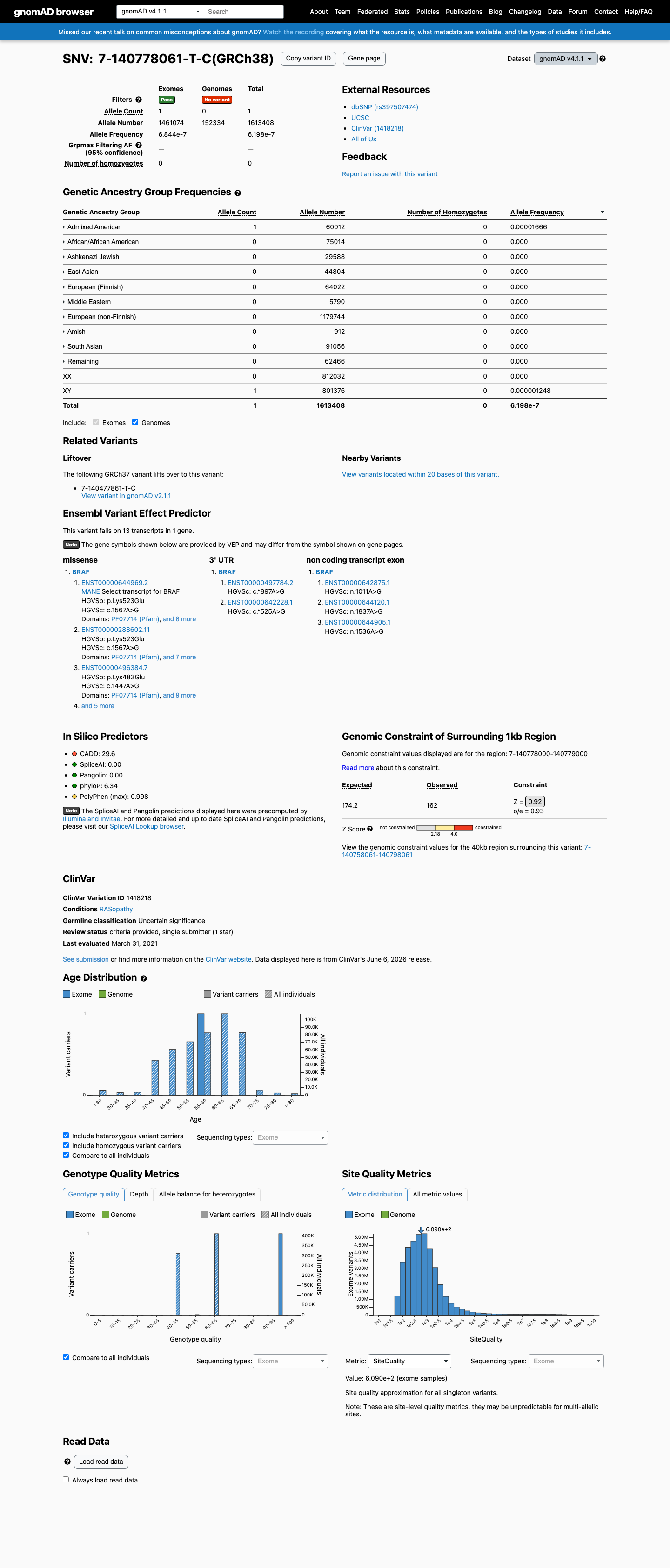
gnomAD v4.1 screenshot
gnomAD v4.1
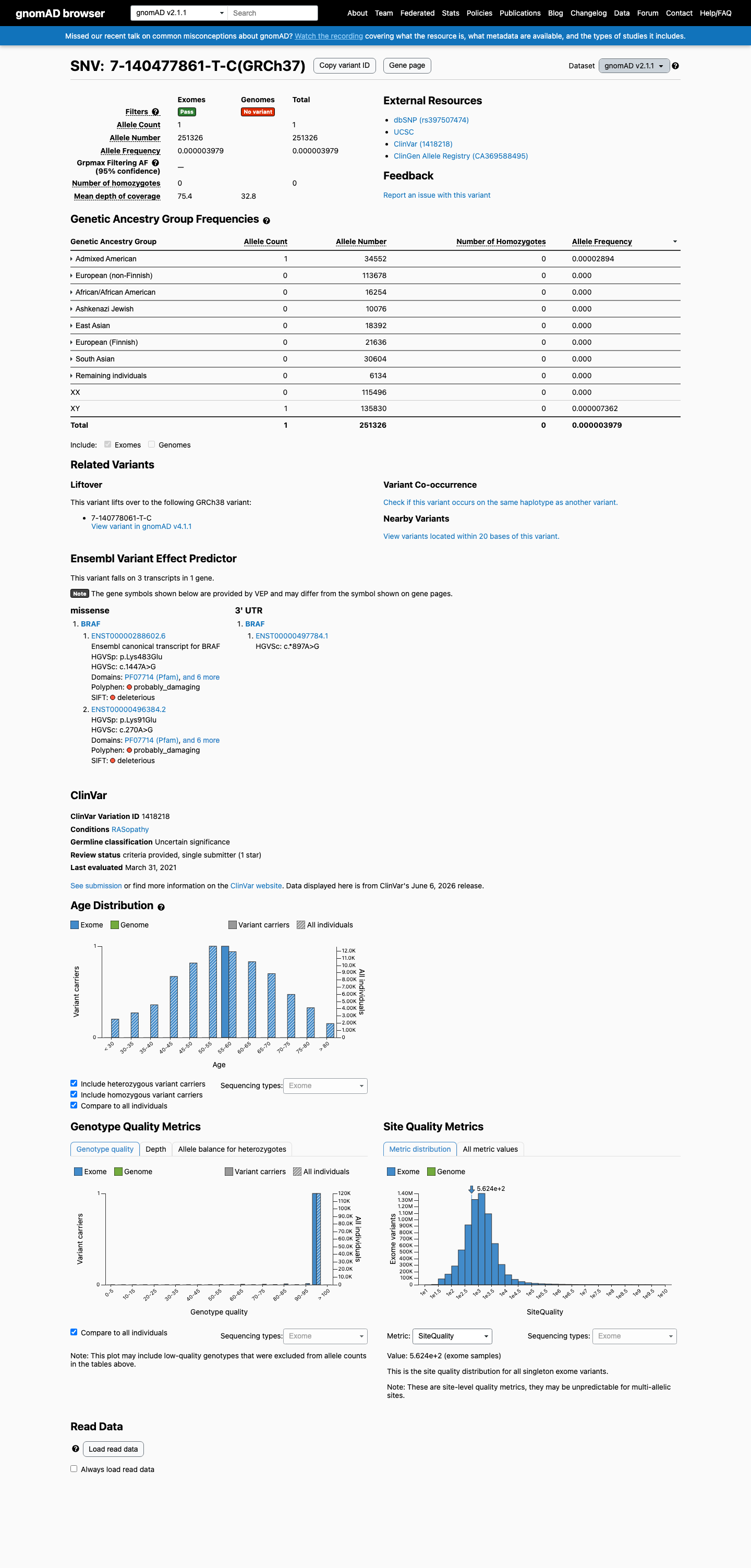
gnomAD v2.1 screenshot
gnomAD v2.1
v4.1
This variant is present in gnomAD v4.1 (AF= 6.19806e-07; MAF= 0.00006%, 1/1613408 alleles, homozygotes = 0) and has highest observed frequency in the Admixed American population (AF= 1.66633e-05; MAF= 0.00167%, 1/60012 alleles, homozygotes = 0).
v2.1
This variant is present in gnomAD v2.1 (AF= 3.9789e-06; MAF= 0.00040%, 1/251326 alleles, homozygotes = 0) and has highest observed frequency in the Admixed American population (AF= 2.89419e-05; MAF= 0.00289%, 1/34552 alleles, homozygotes = 0).
🇨🇦 CA
Absent from gnomAD-Canada v1.0.
Allele frequency by ancestry
three datasets · side by side
gnomAD v4.1
6.2e-05% · 1 / 1,613,408
0 hom
Admixed American
1 / 60,012
0.0017%
+ 9 not observed (Remaining individuals, European (Finnish), Amish, East Asian, Middle Eastern, South Asian, Ashkenazi Jewish, African/African American, European (non-Finnish))
gnomAD v2.1
0.0004% · 1 / 251,326
0 hom
Admixed American
1 / 34,552
0.0029%
+ 7 not observed (African/African American, Ashkenazi Jewish, East Asian, European (Finnish), European (non-Finnish), Remaining individuals, South Asian)
gnomAD Canada 🇨🇦
Absent · 0 / ?
0 hom
Not observed in any ancestry group.
ClinVar screenshot
ClinVar
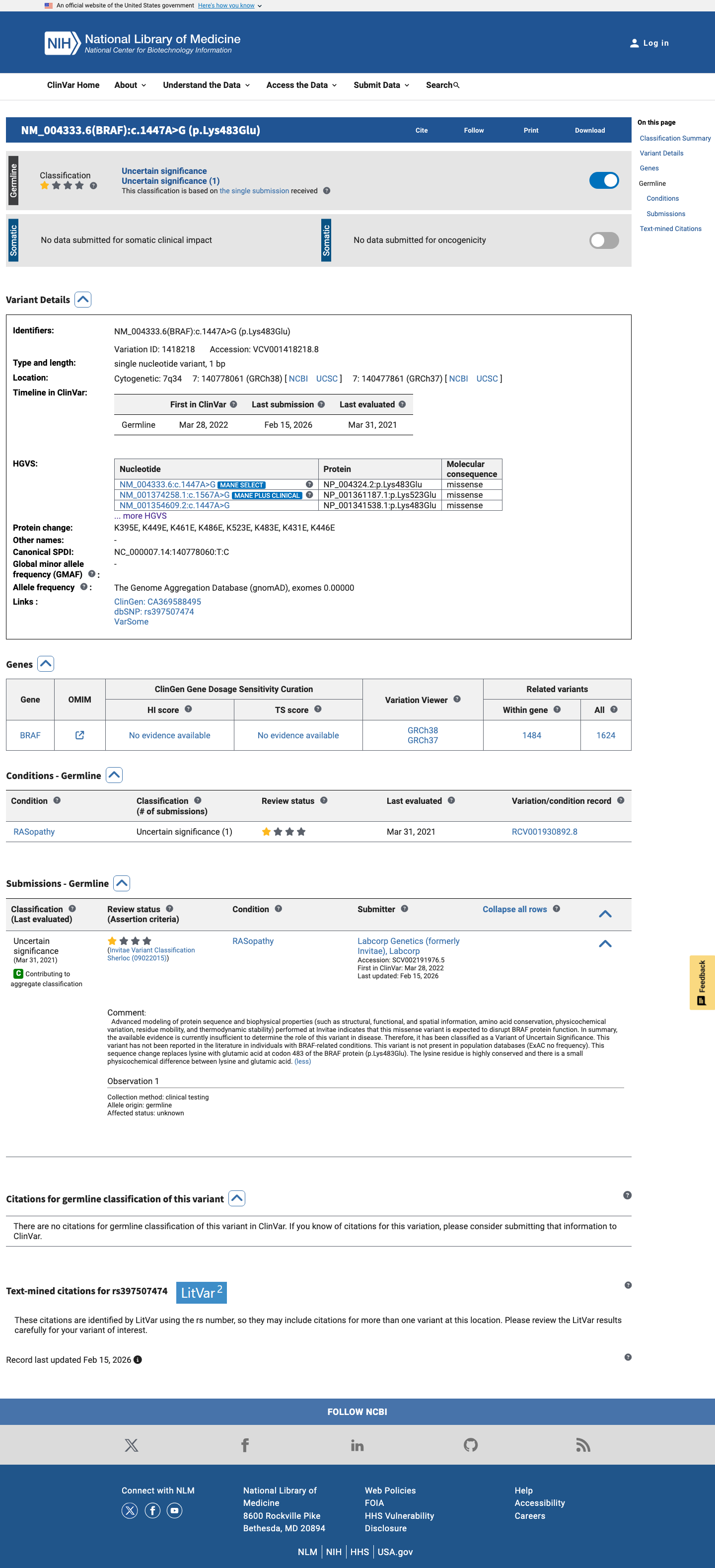
This variant has been reported in ClinVar as Uncertain significance (1 clinical laboratory). (ClinVarID = 1418218)
SpliceAI screenshot
In silico
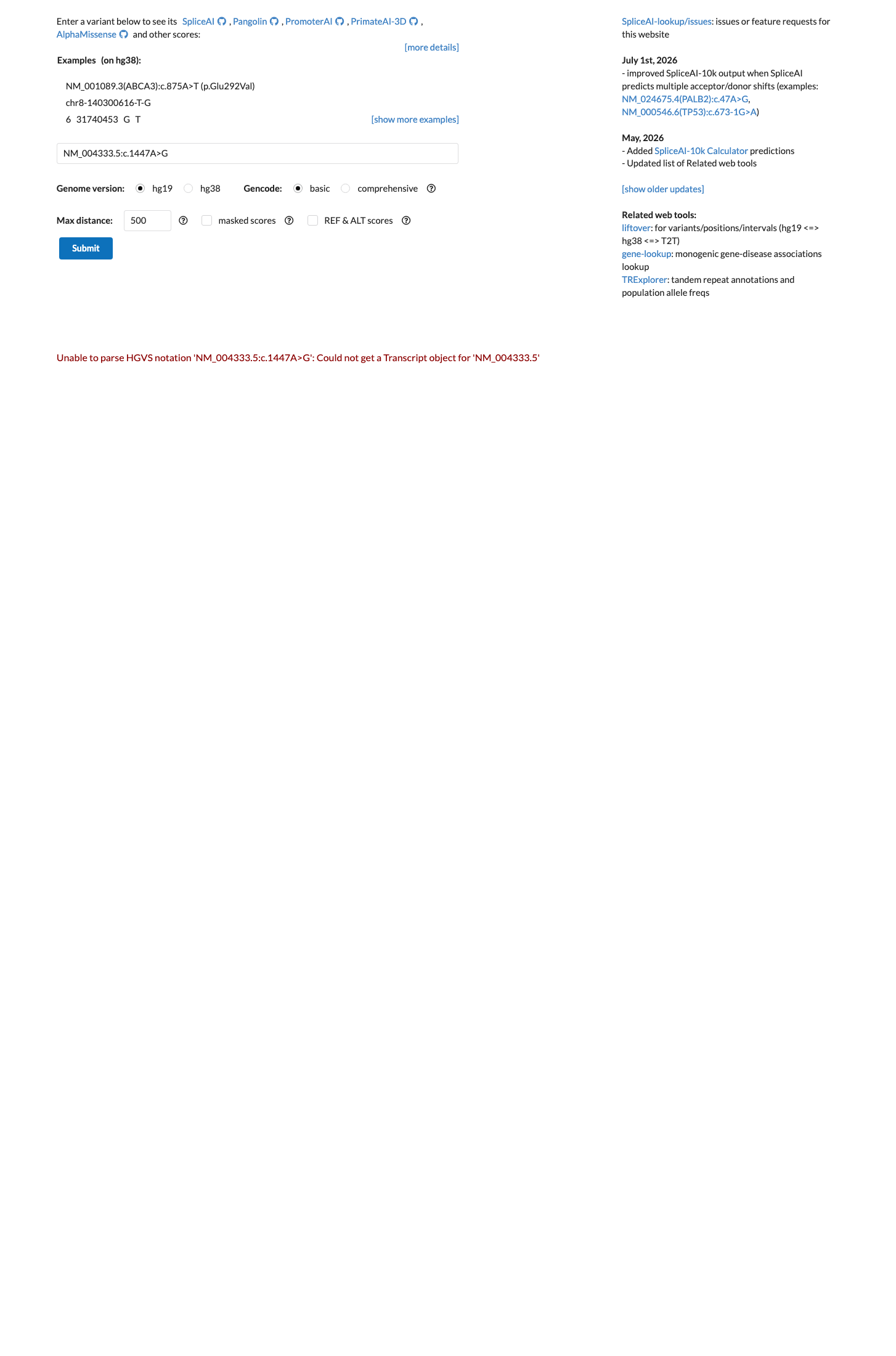
SpliceAI predicts no significant splice impact for this variant (max delta score = 0.00). REVEL score = 0.973. BayesDel score = 0.579862.
Functional / OncoKB screenshot
Functional Likely Oncogenic
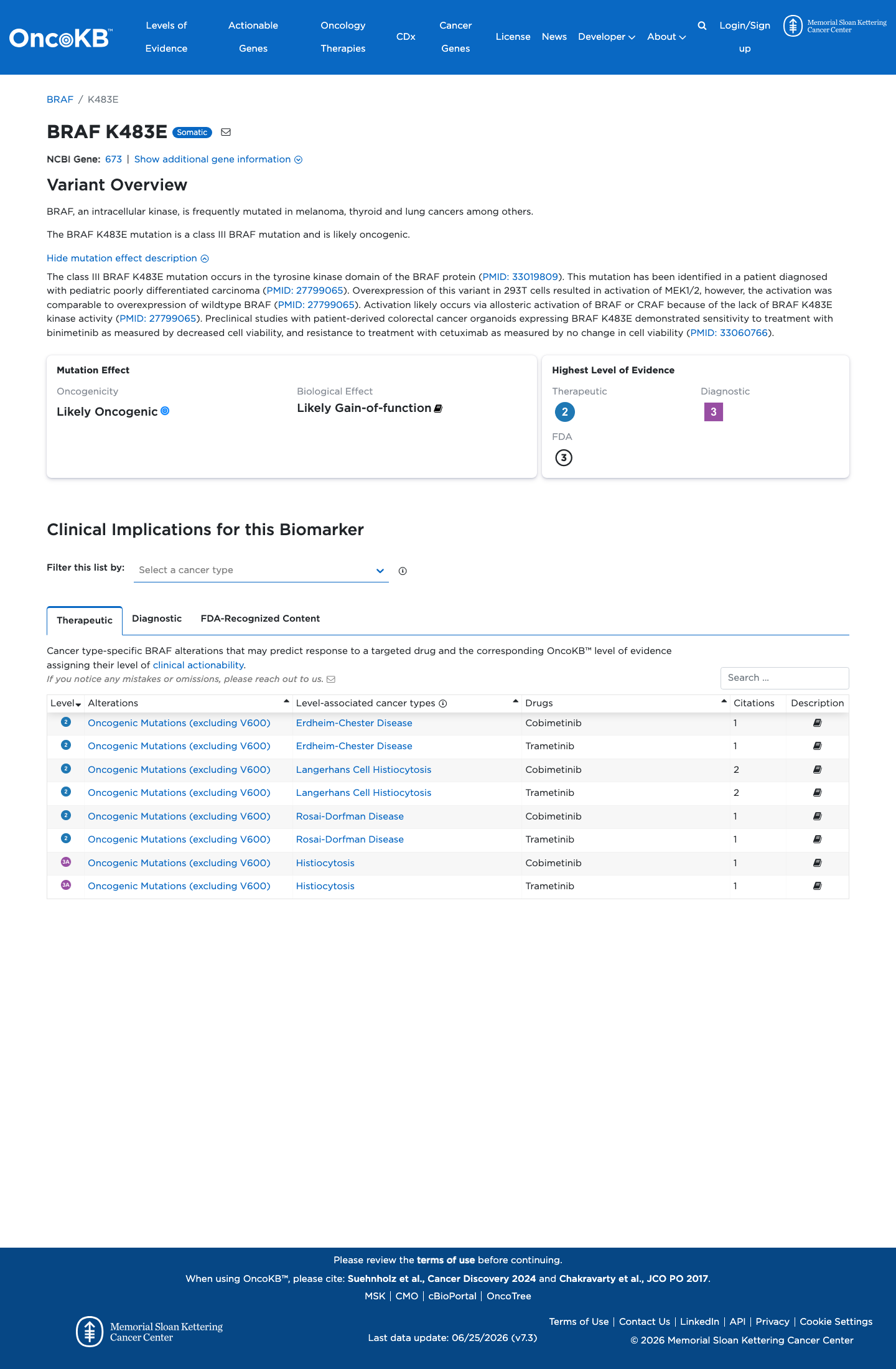
OncoKB identified variant-specific curated literature and context relevant to functional review; biological-effect context: Likely Gain-of-function; curated oncogenicity label: Likely Oncogenic.
OncoKB ↗
COSMIC screenshot
COSMIC
Cancer hotspots screenshot
Cancer hotspots
Somatic evidence Not in COSMIC / hotspots
COSMIC
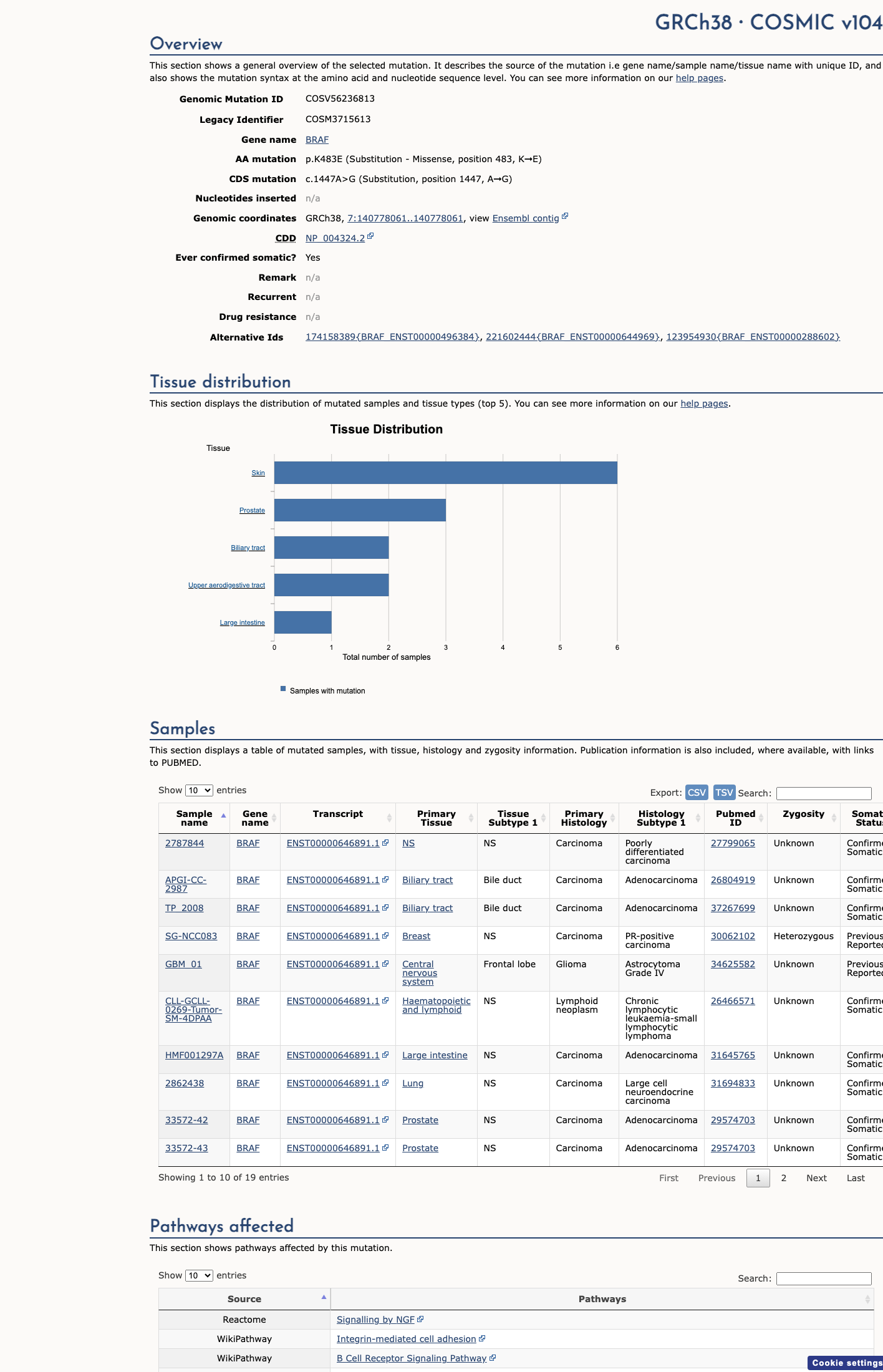
This variant does not lie in a statistically significant hotspot. This variant has previously been reported in somatic cancers (COSMIC; COSV56236813, n = 19 times).
Hotspots
This variant does not lie in a statistically significant hotspot.
Sources & reference links
9Sources
CSpec VCEP
ClinVar
gnomAD v2.1
gnomAD v4.1
gnomAD-Canada
SpliceAI
OncoKB
COSMIC
Cancer hotspots
Triaged references · 3 PMIDs not cited in assessment
27799065 ↗ A case study of an integrative genomic and experimental therapeutic approach for rare tumors: identification of vulnerabilities in a pediatric poorly differentiated carcinoma. ONCOKB
33019809 ↗ Prevalence of class I-III BRAF mutations among 114,662 cancer patients in a large genomic database. ONCOKB
33060766 ↗ Evaluation of the RAS signaling network in response to MEK inhibition using organoids derived from a familial adenomatous polyposis patient. ONCOKB