NM_004333.5:c.1661T>C (p.Ile554Thr) is a missense variant in BRAF exon 13, located in the kinase domain between the P-loop and CR3 activation segment. This variant is present at extremely low frequency in population databases: gnomAD v2.1 AF=3.98e-6 (1/251,340 alleles) and v4.1 AF=1.43e-5 (23/1,613,478 alleles), with no homozygotes observed.1 ClinVar reports conflicting interpretations: Likely benign (2 clinical laboratories) and Uncertain significance (1 clinical laboratory), with no expert panel review (ClinVar Variation ID 239870).2 PP3 (supporting): REVEL score of 0.885 exceeds the VCEP threshold of ≥0.7 for pathogenic computational prediction. SpliceAI predicts no splicing impact (max delta 0.00).3 PP2 (supporting): BRAF has a high missense constraint Z-score in gnomAD (>3.09), indicating a low rate of benign missense variation consistent with a gene where missense variants are a common disease mechanism.4 PM1 is not met because amino acid 554 lies outside the VCEP-specified domains (exon 6, exon 11, P-loop AA 459-474, CR3 activation segment AA 594-627).5 PM2 is not met because the RASopathy VCEP requires absence from gnomAD controls, and this variant is observed in both gnomAD v2.1 and v4.1.6 PM5 is not met because no other [likely] pathogenic missense variant at codon 554 was identified in ClinVar or the VCEP supplementary materials.7 BS1 is not met because the allele frequency (max 9.92e-5) is below the VCEP threshold of ≥0.025%.8 No benign criteria are met. Two pathogenic supporting criteria (PP2, PP3) are met. Under the RASopathy VCEP v2.3.0 combination rules, this does not reach the threshold for Likely Pathogenic (which requires at minimum 1 moderate + 4 supporting, or 1 strong + 1 moderate, or comparable combinations).9 Insufficient evidence exists to classify this variant as either pathogenic or benign. With only two supporting-level pathogenic criteria and no benign criteria, this variant is classified as a Variant of Uncertain Significance (VUS).
Final classification
VUS
PP2PP3
BRAF
c.1661T>C
p.Ile554Thr
This variant
NM_004333.5:c.1661T>C (p.Ile554Thr) is a missense variant in BRAF exon 13, located in the kinase domain between the P-loop and CR3 activation segment.
ClinGen RASopathy Expert Panel Specifications to the ACMG/AMP Variant Interpretation Guidelines for BRAF Version 2.3.0 v2.3.0 criteria-combination framework was evaluated deterministically with applied criteria: PP2 supporting, PP3 supporting; no rule matched the adjudicated criteria.
Classification rationale
PP2PP3
VUS
BRAF c.1661T>C
PP2 + PP3
→
VUS
LYFE Sciences is an AI system, and it can make mistakes. Criteria
may be applied incorrectly, sources may be misread, and a confident-looking
classification can still be wrong. Double-check every criterion and
its underlying evidence before relying on any call.
Gene diagram
· NM_004333.5 · variants mapped to exon structure
BRAF
NM_004333.5
Fetching transcript structure from UCSC…
Applied criteria · 2 applied · 17 assessed
MetEvidence satisfies this criterion.
Not metEvaluated against available evidence; threshold not reached.
Not assessedApplies in principle, but no evidence was found to evaluate it.
N/ADoesn't apply to this variant type.
Applied · 2
Strength
Supporting
Moderate
Strong
Very strong
PP2
supporting
Pathogenic
BRAF has a high missense constraint in gnomAD with a missense Z-score well above 3.09, meeting the VCEP threshold. BRAF has a low rate of benign missense variation and missense variants are a common mechanism of disease in RASopathies.
BRAF gnomAD missense Z-score exceeds 3.09 thresholdgene has low rate of benign missense variation consistent with established RASopathy mechanism
PP3
supporting
Pathogenic
REVEL score of 0.885 meets the VCEP threshold of ≥0.7 for missense variants. SpliceAI predicts no splicing impact (max delta 0.00), and the variant is not in a splicing-relevant context. BayesDel score is 0.301 (intermediate).
REVEL = 0.885 (≥0.7 threshold met)SpliceAI max delta = 0.00 (no splice impact)BayesDel = 0.301
Assessed · not applied
· 17 not met · 0 not assessed
Pathogenic
PS1
No previously established pathogenic variant causing the same amino acid change (p.Ile554Thr) via a different nucleotide change was identified in ClinVar, the VCEP functional studies spreadsheet, or the literature reviewed.
PS2
No de novo occurrence reports were identified for NM_004333.5:c.1661T>C in the ClinVar submissions, literature abstracts, or full-text publications reviewed.
PS3
No variant-specific functional data were identified for p.Ile554Thr in the VCEP-approved functional studies spreadsheet (BRAF Kinase Activity, MEK/ERK Activation assays) or in the reviewed literature.
PS4
No case-control or proband count data are available for NM_004333.5:c.1661T>C.
PM1
Amino acid position 554 lies outside the VCEP-specified critical functional domains for PM1 application.
PM2
The RASopathy VCEP requires the variant to be absent from gnomAD controls for PM2 application.
PM5
PM5 requires at least one [likely] pathogenic residue change at the same codon (position 554).
PM6
No de novo observations with confirmed or unconfirmed parentage were identified for NM_004333.5:c.1661T>C in the reviewed evidence.
PP1
No co-segregation data are available for NM_004333.5:c.1661T>C.
Benign
BA1
The gnomAD filtering allele frequency is well below the VCEP BA1 threshold of ≥0.05%.
BS1
The gnomAD filtering allele frequency is below the VCEP BS1 threshold of ≥0.025%.
BS2
No data are available on observation of NM_004333.5:c.1661T>C in healthy adults without a RASopathy phenotype beyond gnomAD population data.
BS4
No segregation data are available to assess lack of segregation in affected family members.
BP1
The RASopathy VCEP specifies BP1 for truncating variants (nonsense, frameshift, canonical splice sites, initiation codon, whole-gene/multi-exon deletions) in genes where LOF is not an established disease mechanism.
BP2
No evidence of an alternative molecular cause of a RASopathy in the same gene was identified.
BP4
REVEL score of 0.885 exceeds the VCEP BP4 threshold of ≤0.3, indicating computational evidence does not support a benign interpretation.
BP5
No evidence of an alternative molecular cause of a RASopathy in a different gene was identified.
N/A · 9
PVS1 · PM3 · PM4 · PP4 · PP5 · BS3 · BP3 · BP6 · BP7
Research & evidence
Population frequency
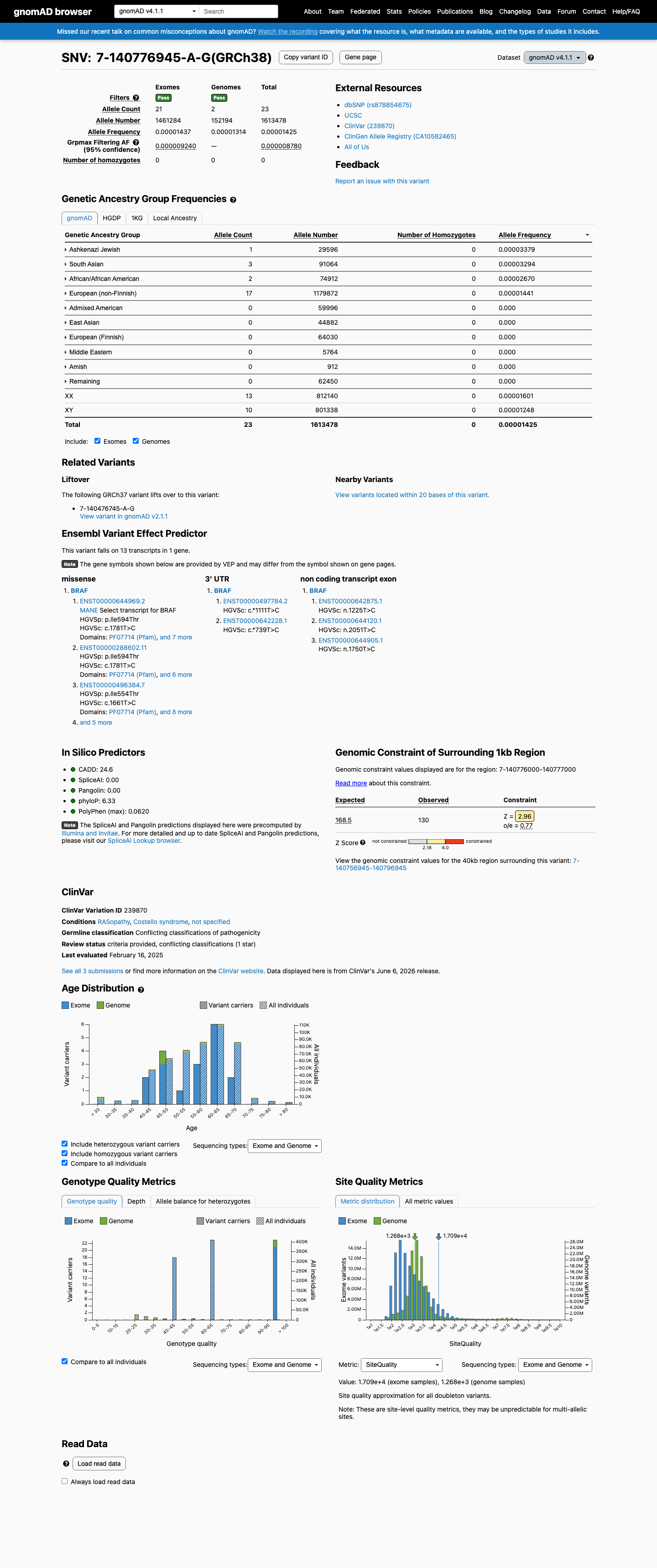
gnomAD v4.1
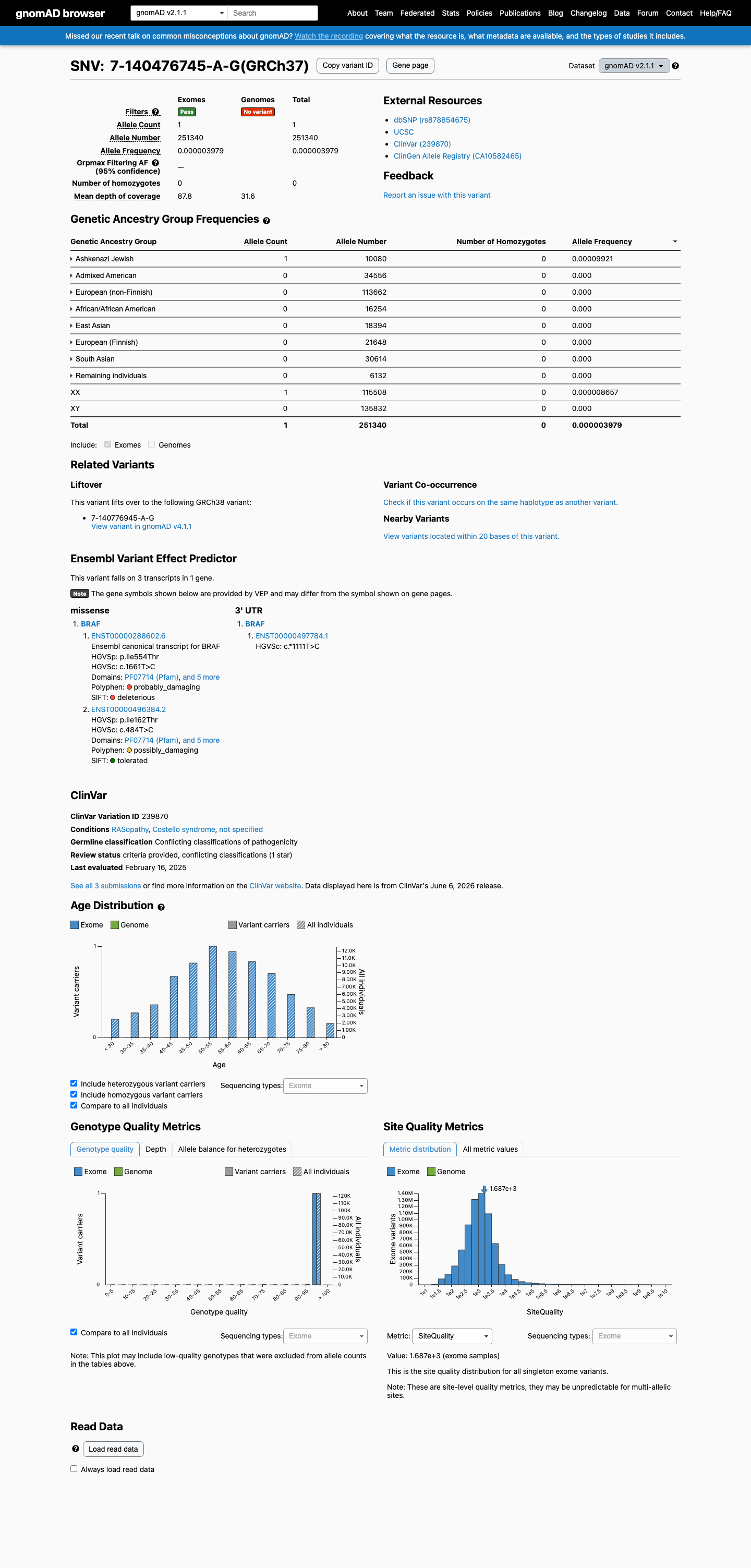
gnomAD v2.1
v4.1
This variant is present in gnomAD v4.1 (AF= 1.42549e-05; MAF= 0.00143%, 23/1613478 alleles, homozygotes = 0) and has highest observed frequency in the Ashkenazi Jewish population (AF= 3.37883e-05; MAF= 0.00338%, 1/29596 alleles, homozygotes = 0); grpmax FAF= 8.78e-06.
v2.1
This variant is present in gnomAD v2.1 (AF= 3.97867e-06; MAF= 0.00040%, 1/251340 alleles, homozygotes = 0) and has highest observed frequency in the Ashkenazi Jewish population (AF= 9.92063e-05; MAF= 0.00992%, 1/10080 alleles, homozygotes = 0).
🇨🇦 CA
Absent from gnomAD-Canada v1.0.
Allele frequency by ancestry
three datasets · side by side
gnomAD v4.1
0.0014%
· 23 / 1,613,478
0 hom · FAF 0.00088%
0 hom · FAF 0.00088%
Ashkenazi Jewish 1 / 29,596 |
0.0034% |
South Asian 3 / 91,064 |
0.0033% |
African/African American 2 / 74,912 |
0.0027% |
European (non-Finnish) 17 / 1,179,872 |
0.0014% |
+ 6 not observed (Remaining individuals, Admixed American, European (Finnish), Amish, East Asian, Middle Eastern)
gnomAD v2.1
0.0004%
· 1 / 251,340
0 hom
0 hom
Ashkenazi Jewish 1 / 10,080 |
0.0099% |
+ 7 not observed (African/African American, Admixed American, East Asian, European (Finnish), European (non-Finnish), Remaining individuals, South Asian)
gnomAD Canada 🇨🇦
Absent
· 0 / ?
0 hom
0 hom
Not observed in any ancestry group.
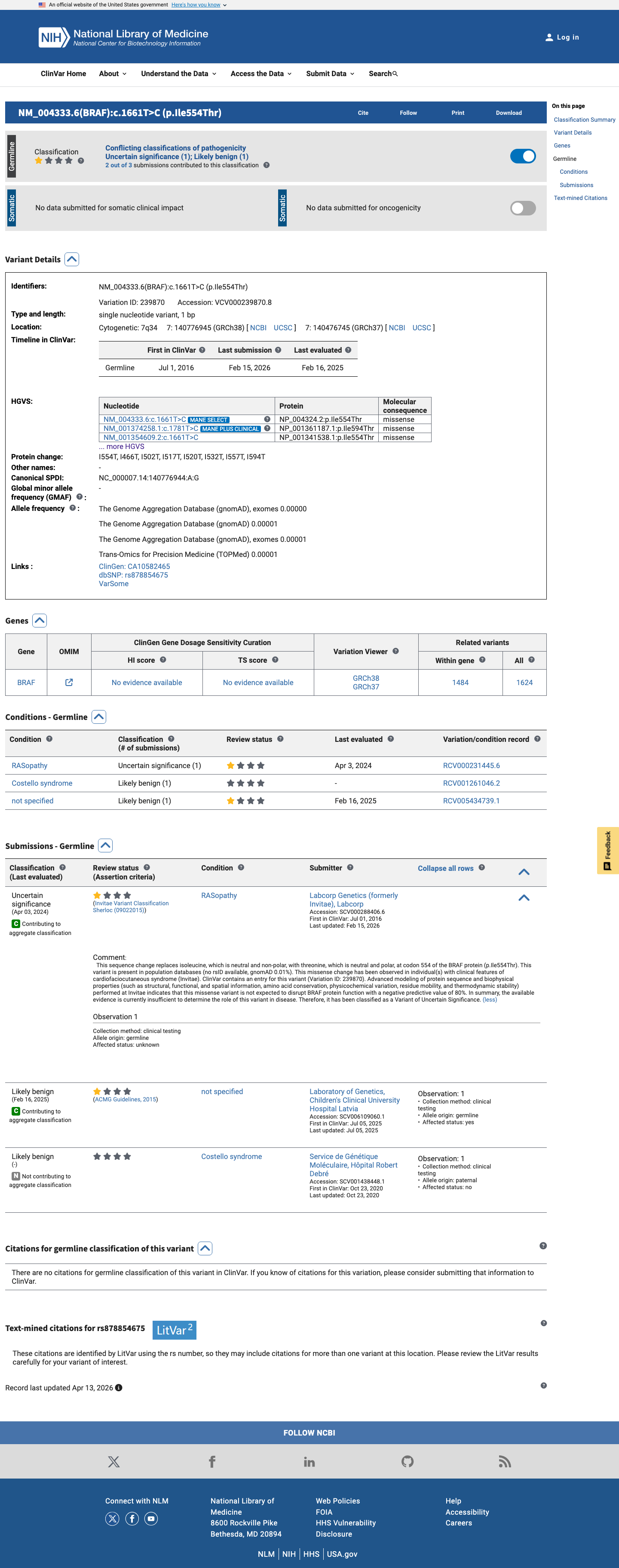
ClinVar
This variant has been reported in ClinVar as Likely benign (2 clinical laboratories) and as Uncertain significance (1 clinical laboratory). (ClinVarID = 239870)
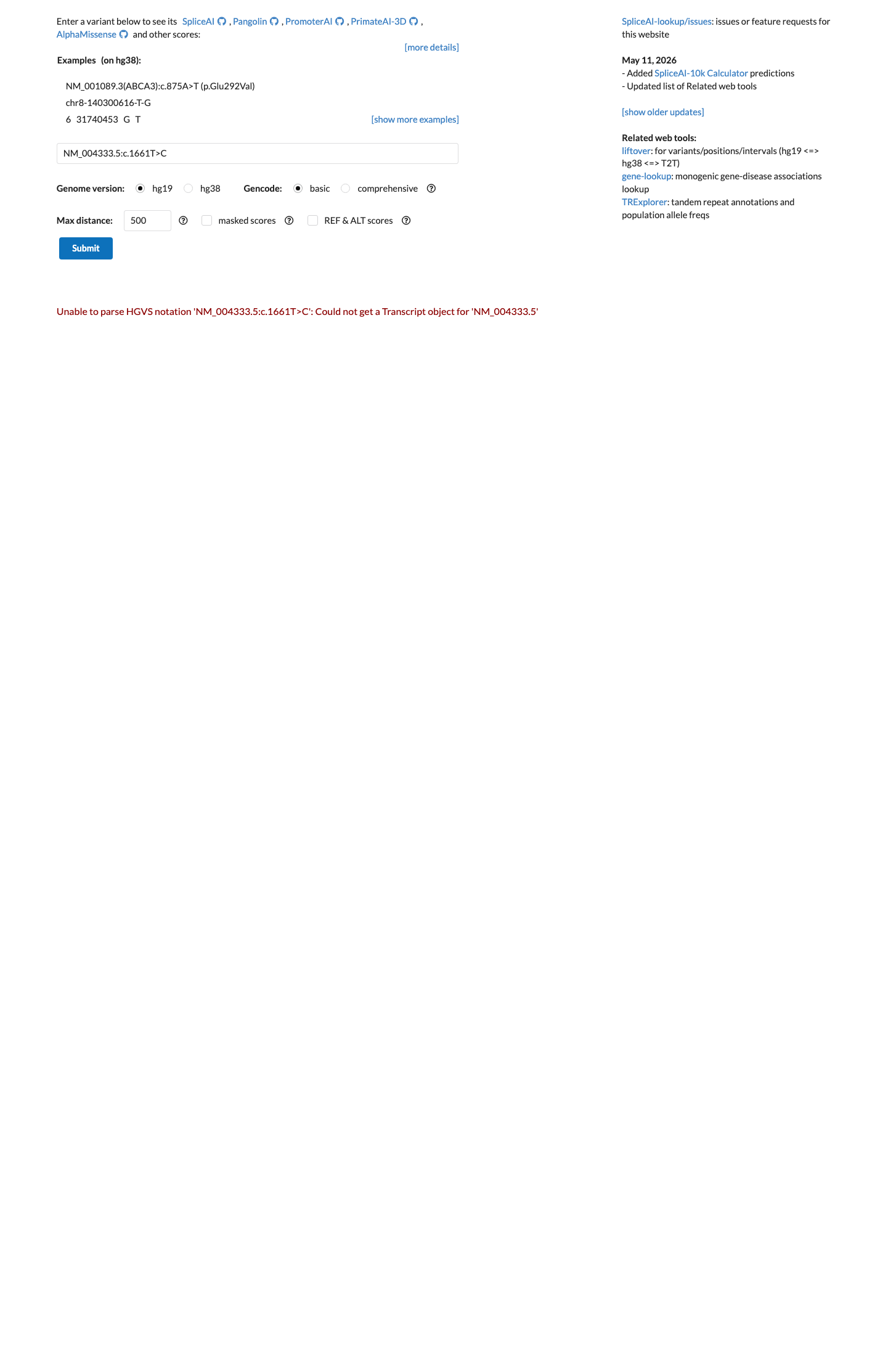
In silico
SpliceAI predicts no significant splice impact for this variant (max delta score = 0.00). REVEL score = 0.885. BayesDel score = 0.301041.
Functional
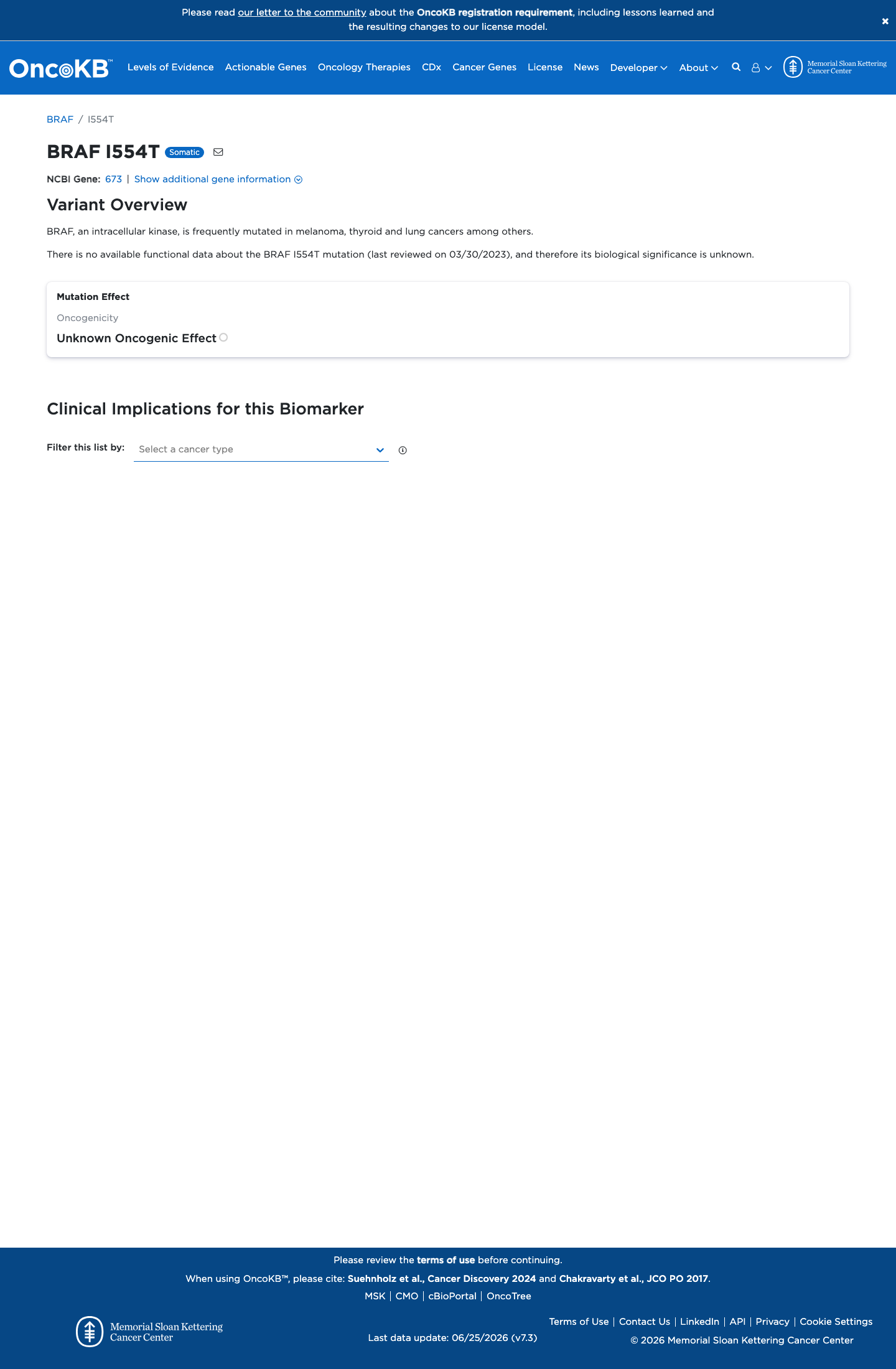
Unknown Oncogenic Effect
OncoKB did not identify variant-specific reviewed functional evidence for this variant; gene-level curated context is available for reviewer follow-up. BRAF, an intracellular kinase, is frequently mutated in melanoma, thyroid and lung cancers among others.
COSMIC

Cancer hotspots
Somatic evidence
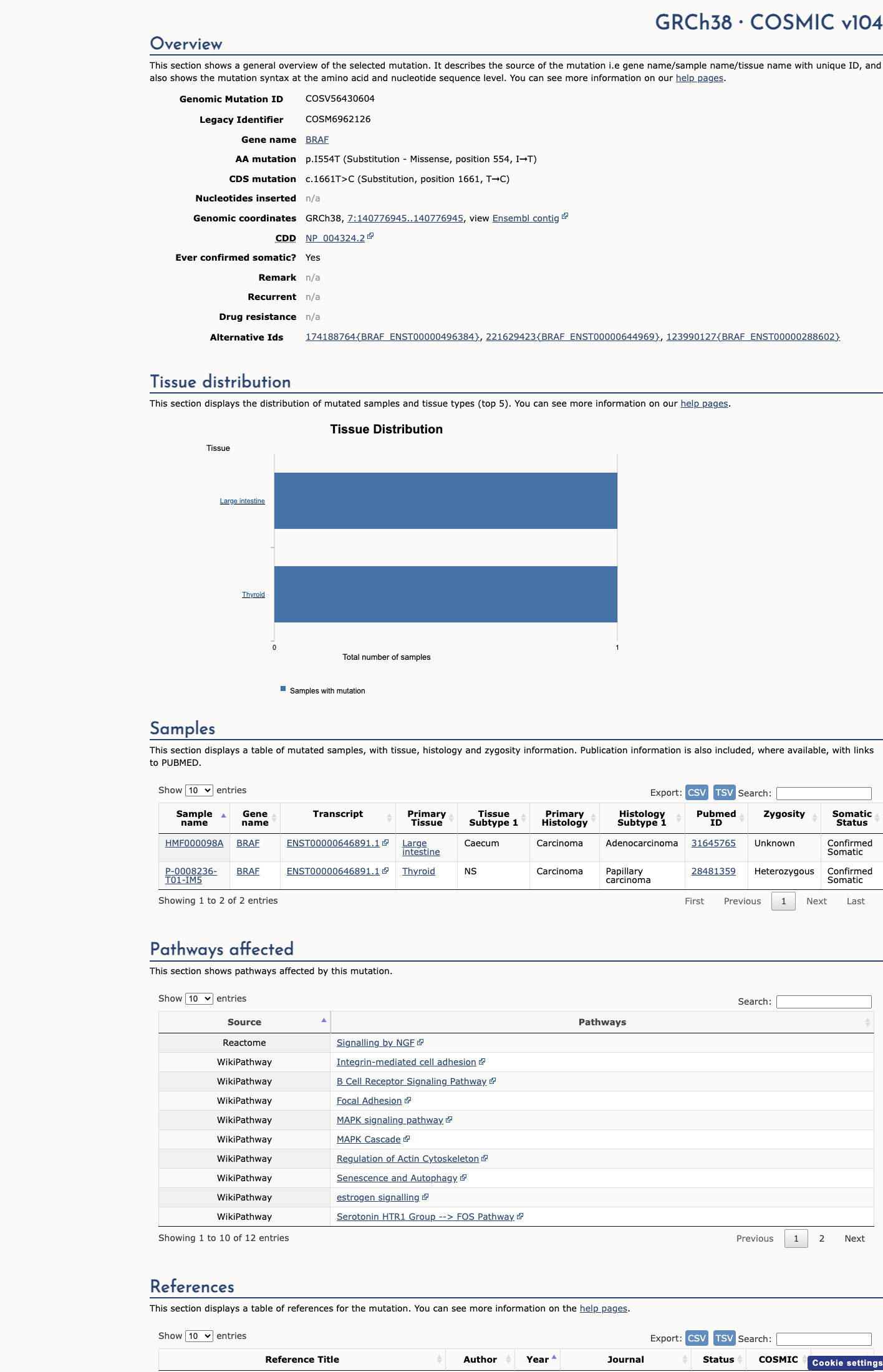
Not in COSMIC / hotspots
COSMIC
This variant does not lie in a statistically significant hotspot. This variant has previously been reported in somatic cancers (COSMIC; COSV56430604, n = 2 times).
Hotspots
This variant does not lie in a statistically significant hotspot.
Sources & reference links
9Sources
Triaged references · 3 PMIDs not cited in assessment
25741868 ↗
Standards and guidelines for the interpretation of sequence variants: a joint consensus recommendation of the American College of Medical Genetics and Genomics and the Association for Molecular Pathology.
CLINVAR
25173338 ↗
2014 ESC Guidelines on diagnosis and management of hypertrophic cardiomyopathy: the Task Force for the Diagnosis and Management of Hypertrophic Cardiomyopathy of the European Society of Cardiology (ESC).
CLINVAR