NM_004333.6:c.1741A>T (p.Asn581Tyr) is a missense variant in exon 14 of BRAF, encoding a substitution at a highly conserved residue within the kinase domain. This variant is absent from gnomAD v2.1, v4.1, and gnomAD-Canada, meeting PM2 at Supporting strength per the ClinGen RASopathy VCEP v2.3.0 (PM2_Supporting).1 BRAF exhibits strong constraint against missense variation in gnomAD (missense Z-score >3.09), and missense variants are a common mechanism of RASopathy, meeting PP2 at Supporting strength. The REVEL in silico prediction score is 0.978, exceeding the VCEP threshold of ≥0.7 for PP3 at Supporting strength. SpliceAI predicts no significant splicing impact (max delta = 0.07).2 N581Y has been observed as a somatic variant in multiple cancer types: colorectal cancer cell line HT55 (Seth 2009, PMID:19474002), melanoma cell line WM3912 (Hutchinson 2015, PMID:26084293), and in a cfDNA NSCLC cohort where it was identified as a novel activating mutation by Ba/F3 assay (Negrao 2020, PMID:32540409). N581Y is catalogued in COSMIC (COSV56062673, n=7). OncoKB classifies it as Likely Oncogenic with Likely Gain-of-function effect.3 No germline RASopathy probands, de novo occurrences, or family segregation data are available for this variant. VCEP-approved functional assays (BRAF Kinase Activity, MEK/ERK Activation Assays) have no data for N581Y. The N581 residue lies in a statistically significant hotspot, but is outside the VCEP-specified PM1 domains (P-loop AA 459-474 and CR3 activation segment AA 594-627); PM1 is not met.
Final classification
VUS
PM2PP2PP3
BRAF
c.1741A>T
p.Asn581Tyr
This variant
NM_004333.6:c.1741A>T (p.Asn581Tyr) is a missense variant in exon 14 of BRAF, encoding a substitution at a highly conserved residue within the kinase domain.
ClinGen RASopathy Expert Panel Specifications to the ACMG/AMP Variant Interpretation Guidelines for BRAF Version 2.3.0 v2.3.0 criteria-combination framework was evaluated deterministically with applied criteria: PM2 supporting, PP2 supporting, PP3 supporting; no rule matched the adjudicated criteria.
Classification rationale
PM2PP2PP3
VUS
BRAF c.1741A>T
PM2 + PP2 + PP3
→
VUS
LYFE Sciences is an AI system, and it can make mistakes. Criteria
may be applied incorrectly, sources may be misread, and a confident-looking
classification can still be wrong. Double-check every criterion and
its underlying evidence before relying on any call.
Gene diagram
· NM_004333.6 · variants mapped to exon structure
BRAF
NM_004333.6
Fetching transcript structure from UCSC…
Applied criteria · 3 applied · 15 assessed
MetEvidence satisfies this criterion.
Not metEvaluated against available evidence; threshold not reached.
Not assessedApplies in principle, but no evidence was found to evaluate it.
N/ADoesn't apply to this variant type.
Applied · 3
Strength
Supporting
Moderate
Strong
Very strong
PM2
supporting
Pathogenic
The variant is absent from gnomAD v2.1, v4.1, and gnomAD-Canada v1.0. Per the RASopathy VCEP, absence from gnomAD meets PM2 at Supporting strength (PM2_Supporting).
Absent from gnomAD v2.1 (exomes)Absent from gnomAD v4.1 (exomes)Absent from gnomAD-Canada v1.0 (genomes)
PP2
supporting
Pathogenic
BRAF has a low rate of benign missense variation in gnomAD (missense Z-score well above 3.09) and missense variants are a common mechanism of disease in RASopathies (gain-of-function). PP2 at Supporting strength is appropriate per VCEP specifications.
BRAF missense Z-score exceeds 3.09 in gnomADindicating strong constraint against missense variationRASopathy disease mechanism is gain-of-function via missense variants
PP3
supporting
Pathogenic
REVEL score is 0.978, which meets the VCEP threshold of ≥0.7 for PP3 at Supporting strength. SpliceAI max delta score is 0.07, indicating no splicing impact that would contradict the disease mechanism.
REVEL score = 0.978 (≥0.7 threshold)SpliceAI max delta = 0.07 (no predicted splicing impact)
Assessed · not applied
· 15 not met · 0 not assessed
Pathogenic
PS1
PS1 requires the same amino acid change as a previously established pathogenic variant.
PS2
No de novo occurrence of NM_004333.6:c.1741A>T has been reported in a patient with a RASopathy phenotype and confirmed parentage.
PS3
The ClinGen RASopathy VCEP-approved functional assays (BRAF Kinase Activity, MEK Activation Assay, ERK Activation Assay) have no data for N581Y in the approved functional studies spreadsheet.
PS4
No case-control data demonstrate an increased prevalence of N581Y in RASopathy-affected individuals versus controls.
PM1
Per the RASopathy VCEP, PM1 is applicable only to specific critical and well-established functional domains: exon 6, exon 11, P-loop (AA 459-474), and CR3 activation segment (AA 594-627).
PM5
PM5 requires a different pathogenic/likely pathogenic missense change at the same codon (N581).
PM6
No assumed de novo occurrence of N581Y has been reported.
PP1
No co-segregation data available for N581Y in RASopathy families.
Benign
BA1
BA1 requires gnomAD filtering allele frequency ≥0.05%.
BS1
BS1 requires gnomAD filtering allele frequency ≥0.025%.
BS2
No evidence of N581Y observed in healthy adult individuals.
BS4
No segregation data available to demonstrate lack of segregation in affected family members.
BP2
No evidence of an alternative molecular cause of a RASopathy in the same gene (in cis/trans with a pathogenic variant).
BP4
BP4 requires REVEL ≤0.3 for missense variants per VCEP.
BP5
No evidence of an alternative molecular cause of a RASopathy in a different gene, and no phenotype inconsistent with a RASopathy documented.
N/A · 7
PVS1 · PP4 · PP5 · BS3 · BP1 · BP6 · BP7
Research & evidence
Population frequency
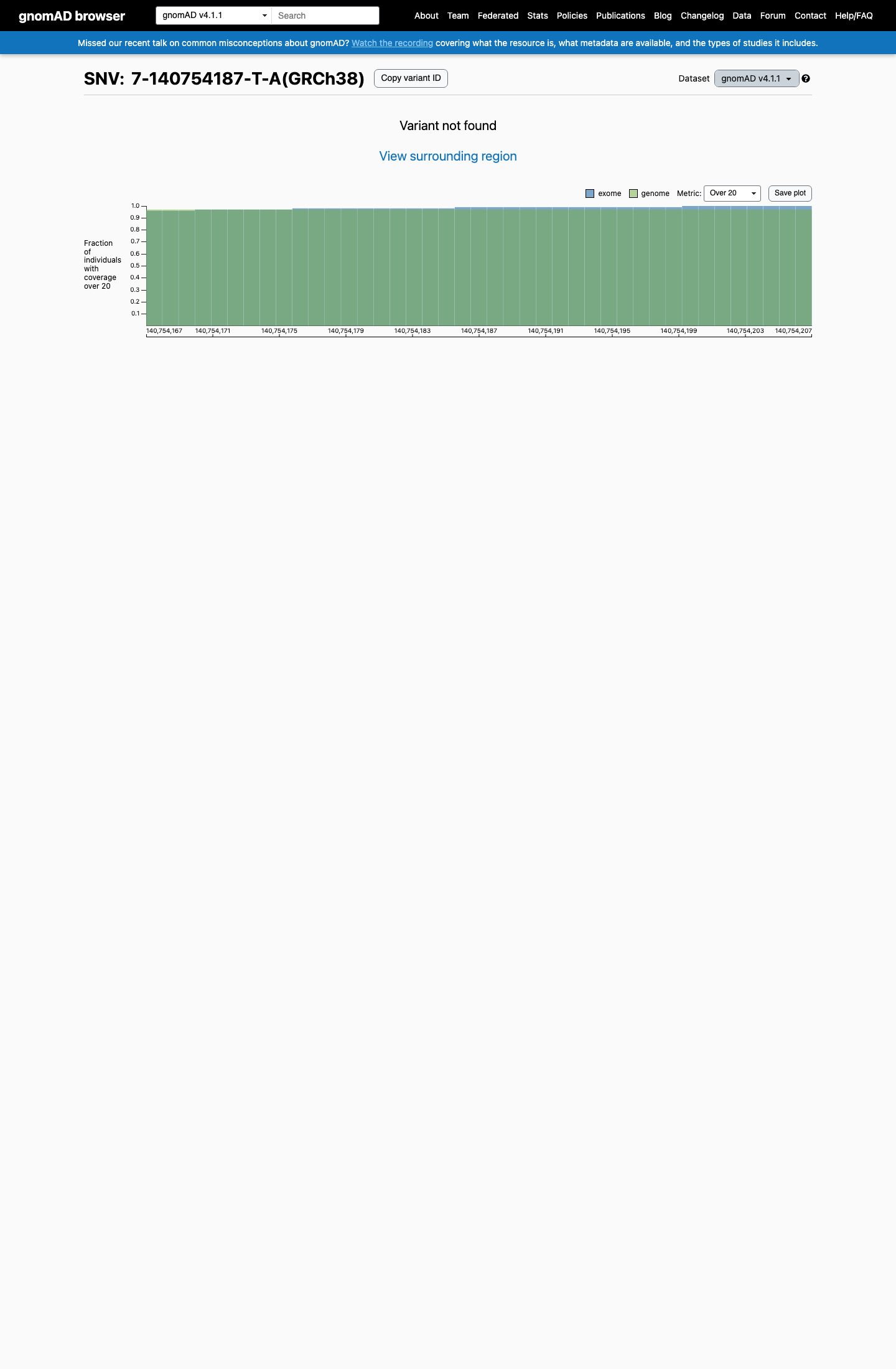
gnomAD v4.1
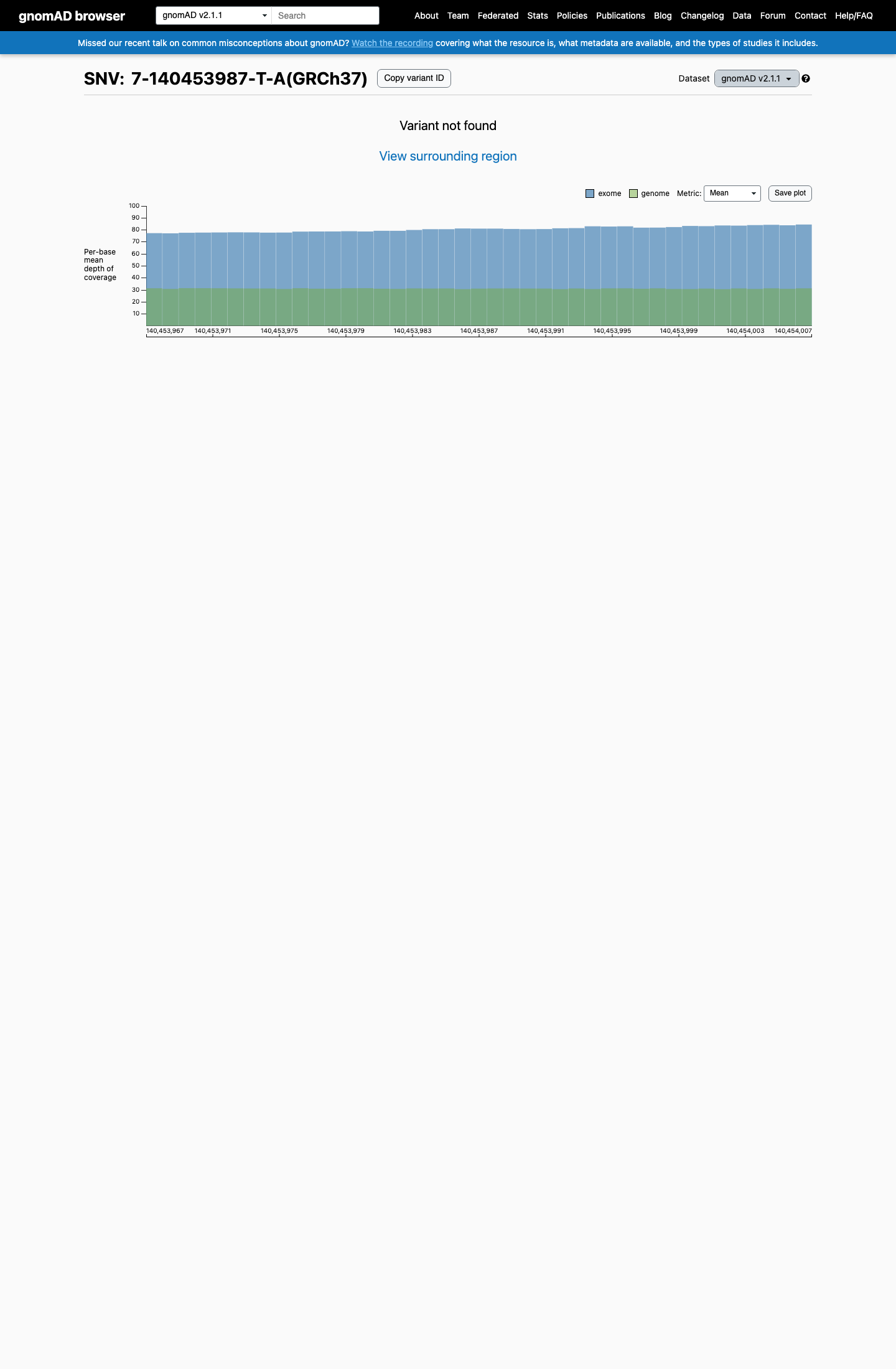
gnomAD v2.1
v4.1
Absent from gnomAD v4.1.
v2.1
Absent from gnomAD v2.1.
🇨🇦 CA
Absent from gnomAD-Canada v1.0.
Allele frequency by ancestry
three datasets · side by side
gnomAD v4.1
Absent
· 0 / ?
0 hom
0 hom
Not observed in any ancestry group.
gnomAD v2.1
Absent
· 0 / ?
0 hom
0 hom
Not observed in any ancestry group.
gnomAD Canada 🇨🇦
Absent
· 0 / ?
0 hom
0 hom
Not observed in any ancestry group.
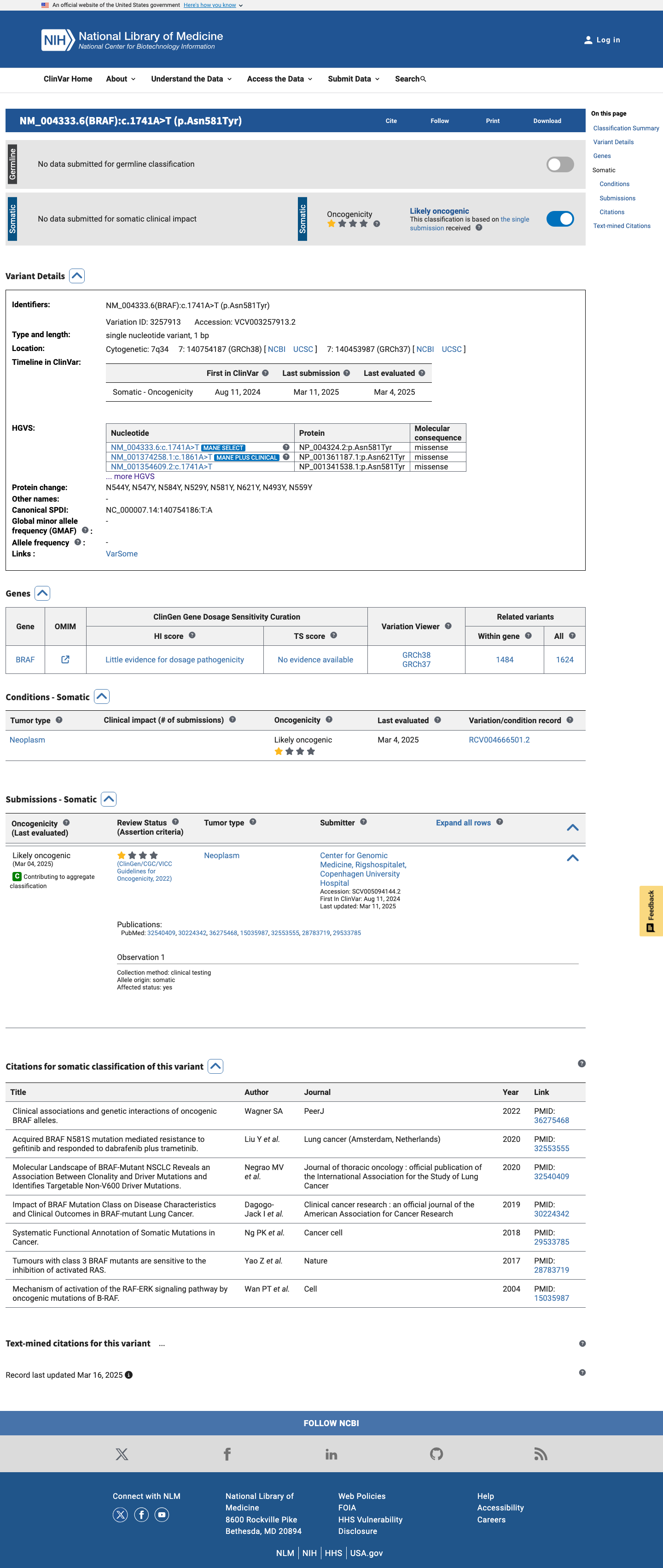
ClinVar
This variant has been reported in ClinVar but submission details could not be extracted. (ClinVarID = 3257913)
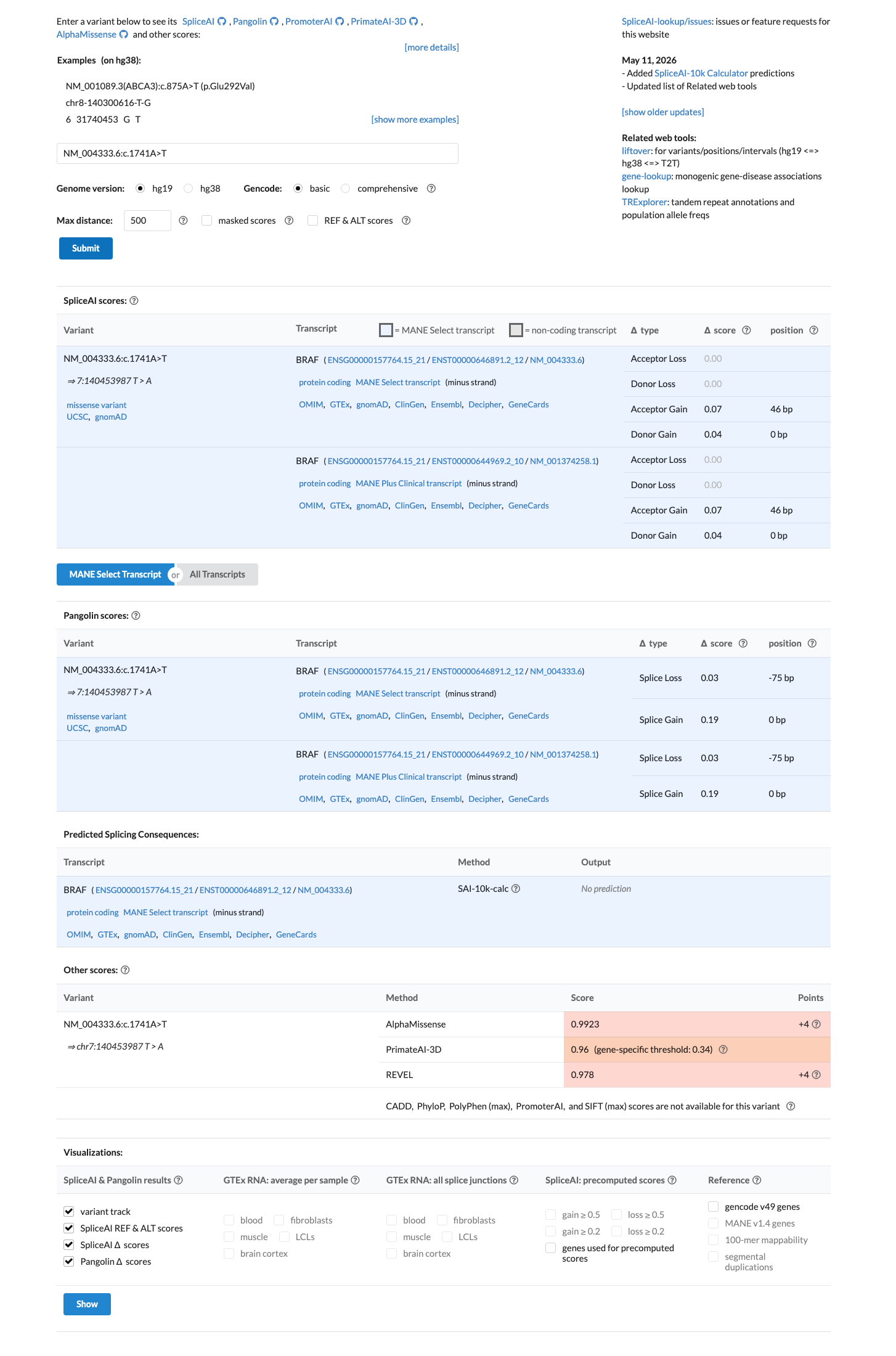
In silico
SpliceAI predicts no significant splice impact for this variant (max delta score = 0.07). REVEL score = 0.978. BayesDel score = 0.579861.
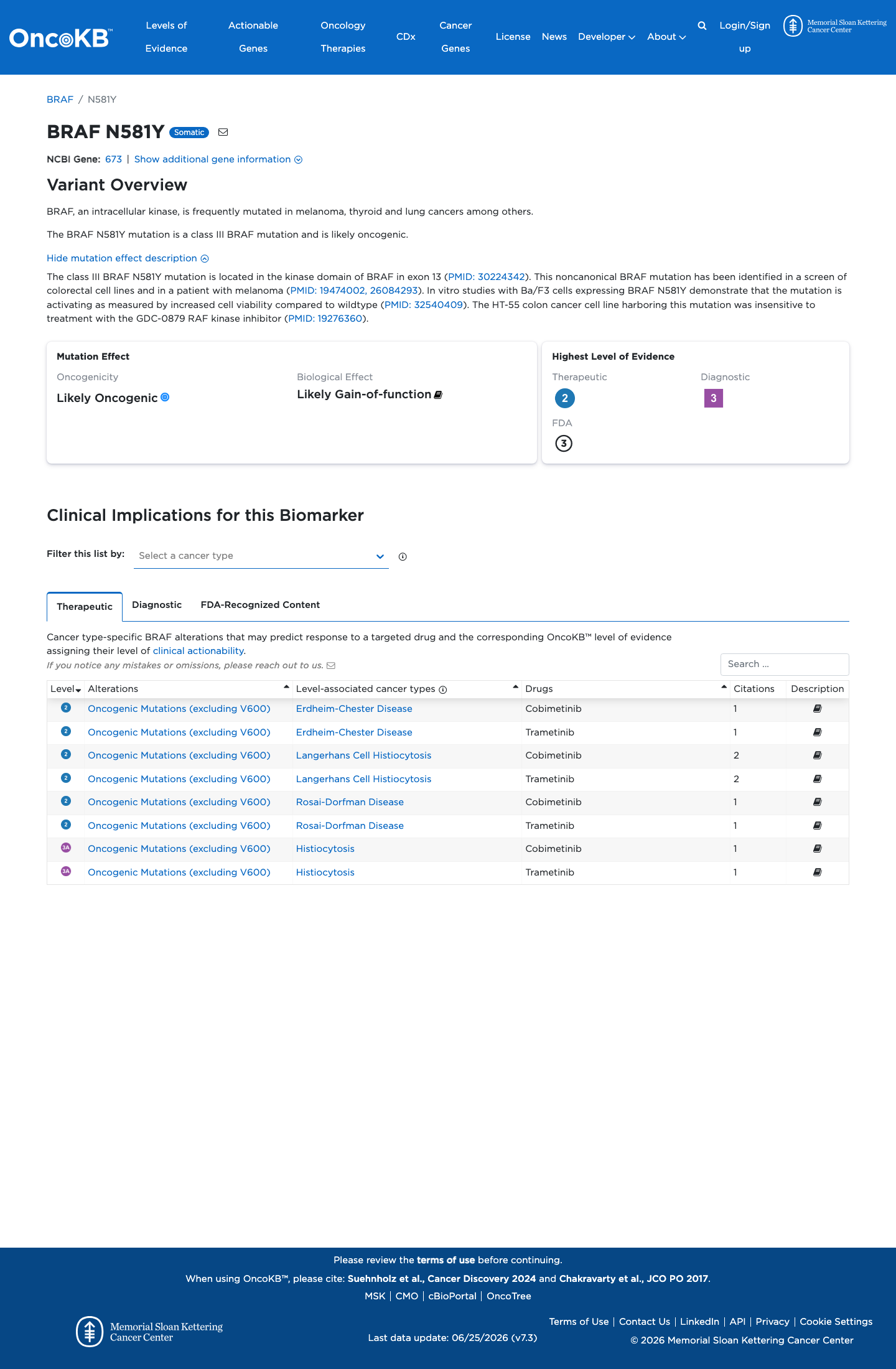
Functional
Likely Oncogenic
OncoKB identified variant-specific curated literature and context relevant to functional review; biological-effect context: Likely Gain-of-function; curated oncogenicity label: Likely Oncogenic.
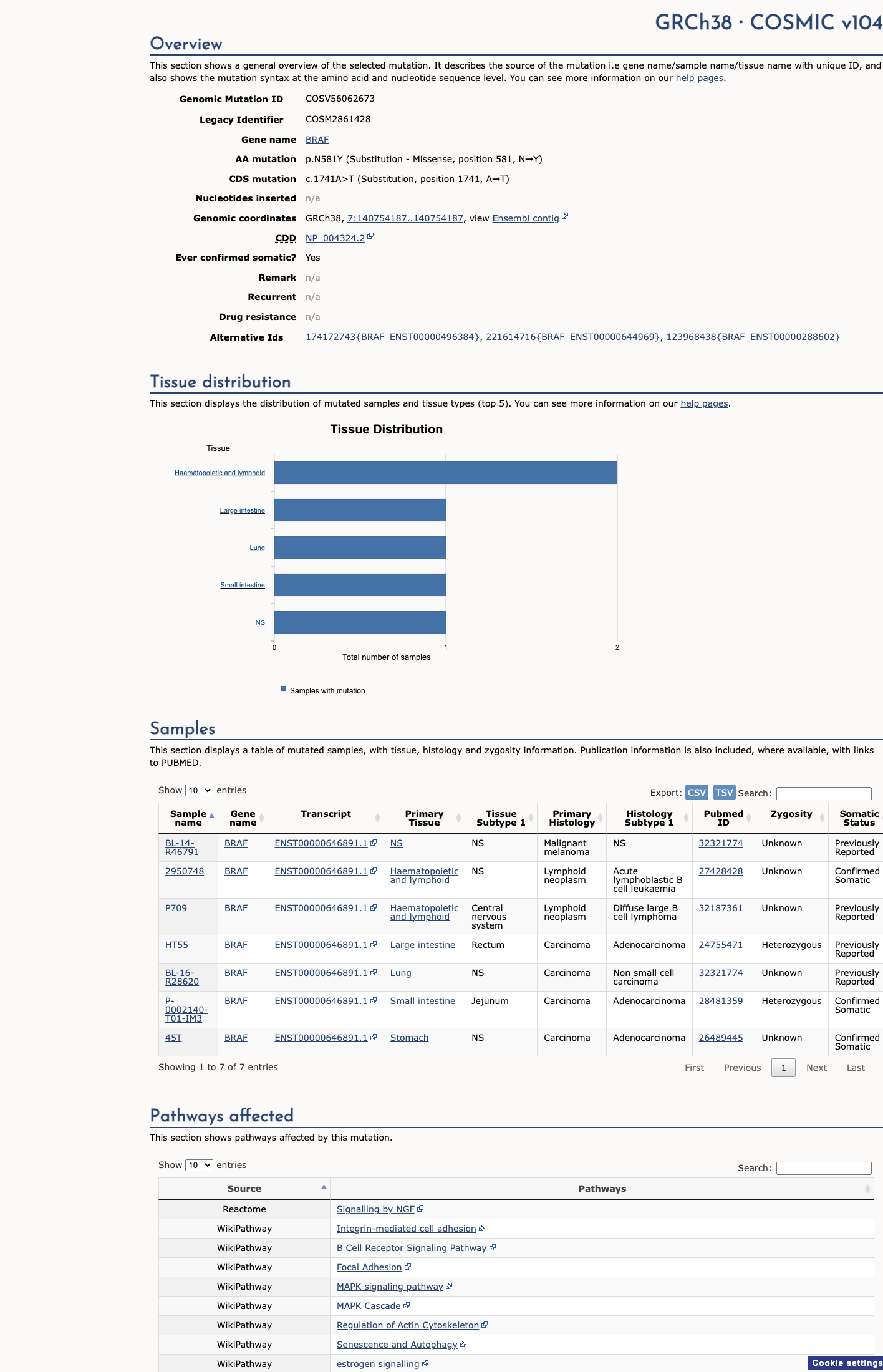
COSMIC

Cancer hotspots
Somatic evidence
Hotspot
COSMIC
This variant lies in a statistically significant hotspot. This variant has previously been reported in somatic cancers (COSMIC; COSV56062673, n = 7 times).
Hotspots
This variant lies in a statistically significant hotspot.
Sources & reference links
9Sources
Triaged references · 6 PMIDs not cited in assessment
30224342 ↗
Impact of BRAF Mutation Class on Disease Characteristics and Clinical Outcomes in BRAF-mutant Lung Cancer.
ONCOKB
32540409 ↗
Molecular Landscape of BRAF-Mutant NSCLC Reveals an Association Between Clonality and Driver Mutations and Identifies Targetable Non-V600 Driver Mutations.
ONCOKB
19276360 ↗
Antitumor efficacy of the novel RAF inhibitor GDC-0879 is predicted by BRAFV600E mutational status and sustained extracellular signal-regulated kinase/mitogen-activated protein kinase pathway suppression.
ONCOKB
19474002 ↗
Concomitant mutations and splice variants in KRAS and BRAF demonstrate complex perturbation of the Ras/Raf signalling pathway in advanced colorectal cancer.
ONCOKB
26084293 ↗
ERBB activation modulates sensitivity to MEK1/2 inhibition in a subset of driver-negative melanoma.
ONCOKB
15035987 ↗
Mechanism of activation of the RAF-ERK signaling pathway by oncogenic mutations of B-RAF.
CLINVAR