The c.182A>G (p.Gln61Arg) missense variant in HRAS is classified as Pathogenic under the ClinGen RASopathy VCEP v2.3.0 framework.1 PS1 (Strong): p.Gln61Arg is a previously established pathogenic variant at the analogous residue in KRAS and NRAS, satisfying the VCEP rule for cross-gene analogous residue application.2 PM1 (Moderate): The variant falls within the Switch II domain (SW2, AA 57-64), a VCEP-defined critical functional domain essential for GTP hydrolysis and GAP interaction. Residue Q61 is a statistically significant cancer hotspot (cancerhotspots.org) with 417 somatic occurrences in COSMIC.3 PM5 (Moderate): At least one other pathogenic missense change at codon 61 (e.g., Q61L) has been established in HRAS, meeting the VCEP threshold for PM5 at Moderate strength.4 PM2 (Supporting): The variant is absent from gnomAD v2.1, v4.1, and gnomAD-Canada population databases, meeting the VCEP requirement for absence from controls.5 PP3 (Supporting): The REVEL score of 0.811 exceeds the VCEP threshold of >=0.7 for pathogenic computational prediction. SpliceAI predicts no splice impact (max delta = 0.00).6 Combination: PS1 (1 Strong) + PM1 (1 Moderate) + PM5 (1 Moderate) + PM2 (1 Supporting) + PP3 (1 Supporting) satisfies VCEP Rule 7 (1 Strong + 2 Moderate + >=2 Supporting = Pathogenic).7
Final classification
Pathogenic
PS1PM1PM2PM5PP3
HRAS
c.182A>G
p.Gln61Arg
This variant
The c.182A>G (p.Gln61Arg) missense variant in HRAS is classified as Pathogenic under the ClinGen RASopathy VCEP v2.3.0 framework.
ClinGen RASopathy Expert Panel Specifications to the ACMG/AMP Variant Interpretation Guidelines for HRAS Version 2.3.0 v2.3.0 criteria-combination framework: matched Rule7 (1 Pathogenic.Strong + 2 Pathogenic.Moderate + Pathogenic.Supporting >=2) with applied criteria: PS1 strong, PM1 moderate, PM2 supporting, PM5 moderate, PP3 supporting; maps to Pathogenic.
Classification rationale
PS1PM1PM2PM5PP3
Pathogenic
HRAS c.182A>G
PS1 + PM1 + PM2 + PM5 + PP3
→
Pathogenic
LYFE Sciences is an AI system, and it can make mistakes. Criteria
may be applied incorrectly, sources may be misread, and a confident-looking
classification can still be wrong. Double-check every criterion and
its underlying evidence before relying on any call.
Gene diagram
· NM_005343.4 · variants mapped to exon structure
HRAS
NM_005343.4
Fetching transcript structure from UCSC…
Applied criteria · 5 applied · 12 assessed
MetEvidence satisfies this criterion.
Not metEvaluated against available evidence; threshold not reached.
Not assessedApplies in principle, but no evidence was found to evaluate it.
N/ADoesn't apply to this variant type.
Applied · 5
Strength
Supporting
Moderate
Strong
Very strong
PS1
strong
Pathogenic
The p.Gln61Arg substitution is a previously established pathogenic variant at the analogous residue in KRAS and NRAS. Per the RASopathy VCEP, PS1 is applicable for observed analogous residue positions across HRAS, KRAS, MRAS, NRAS, RIT1, and RRAS2. Q61R in KRAS and NRAS is a well-established oncogenic gain-of-function mutation catalogued in COSMIC and ClinVar.
VCEP rule: same amino acid change at analogous residues in KRAS/NRAS qualifies as established pathogenicCOSMIC: codon 61 is a recurrent somatic hotspot across RAS genesQ61R is an established activating mutation in KRAS and NRAS
PM1
moderate
Pathogenic
The variant substitutes Gln61Arg within the Switch II (SW2) domain (HRAS amino acids 57-64), a critical and well-established functional domain defined by the RASopathy VCEP. SW2 is essential for GTP hydrolysis and GAP interaction. Residue Q61 is a known cancer hotspot (cancerhotspots.org) and is recurrently mutated in somatic cancers (COSMIC n=417). No benign variation is observed at this residue.
VCEP-defined SW2 domain: AA 57-64Cancer Hotspots: statistically significant residue-level hotspotCOSMIC: 417 somatic occurrences at codon 61
PM2
supporting
Pathogenic
The variant is absent from gnomAD v2.1 (exomes), gnomAD v4.1 (exomes), and gnomAD-Canada v1.0 (genomes), meeting the VCEP requirement for absence from population controls.
Absent from gnomAD v2.1Absent from gnomAD v4.1Absent from gnomAD-Canada v1.0
PM5
moderate
Pathogenic
At least one other pathogenic missense change has been established at codon 61 of HRAS. The RASopathy VCEP recognizes Q61L (c.182A>T) and Q61K as pathogenic/likely pathogenic changes at the same codon, satisfying the requirement for one (likely) pathogenic residue change at the same codon.
VCEP PM5 rule: 1 (L)P residue change at same codon = ModerateHRAS Q61L (c.182A>T) is a known pathogenic RASopathy variantHRAS Q61K is an established oncogenic variant
PP3
supporting
Pathogenic
REVEL score of 0.811 meets the VCEP threshold of ≥0.7 for pathogenic computational evidence. SpliceAI predicts no splice impact (max delta score = 0.00), consistent with a missense effect rather than a splicing defect. The disease mechanism (gain-of-function) is consistent with a missense change.
REVEL score: 0.811 (≥0.7 threshold)SpliceAI max delta: 0.00 (no splice impact)
Assessed · not applied
· 11 not met · 1 not assessed
Pathogenic
PS2
No de novo occurrence data are available for this variant.
PS3
Primary functional study publications for HRAS Q61R were not available for full-text review in the case folder.
PS4
No proband count data are available to meet the VCEP point-based scoring threshold.
PM6
No assumed de novo data are available for this variant.
PP1
No co-segregation data are available for this variant.
Benign
BA1
The variant is absent from gnomAD (filtering allele frequency = 0), which is far below the VCEP stand-alone benign threshold of ≥0.05%.
BS1
The variant is absent from gnomAD (filtering allele frequency = 0), which is below the VCEP strong benign threshold of ≥0.025%.
BS2
No data are available documenting this variant in healthy adult individuals.
BS4
No segregation data demonstrating lack of co-segregation with disease are available.
BP2
No evidence of an alternative molecular cause for a RASopathy in HRAS (in cis/trans with another pathogenic variant) is available.
BP4
REVEL score of 0.811 exceeds the VCEP benign threshold of ≤0.3.
BP5
No evidence of an alternative molecular basis for disease in a different gene is available.
N/A · 11
PVS1 · PM3 · PM4 · PP2 · PP4 · PP5 · BS3 · BP1 · BP3 · BP6 · BP7
Research & evidence
Population frequency · supports pathogenic
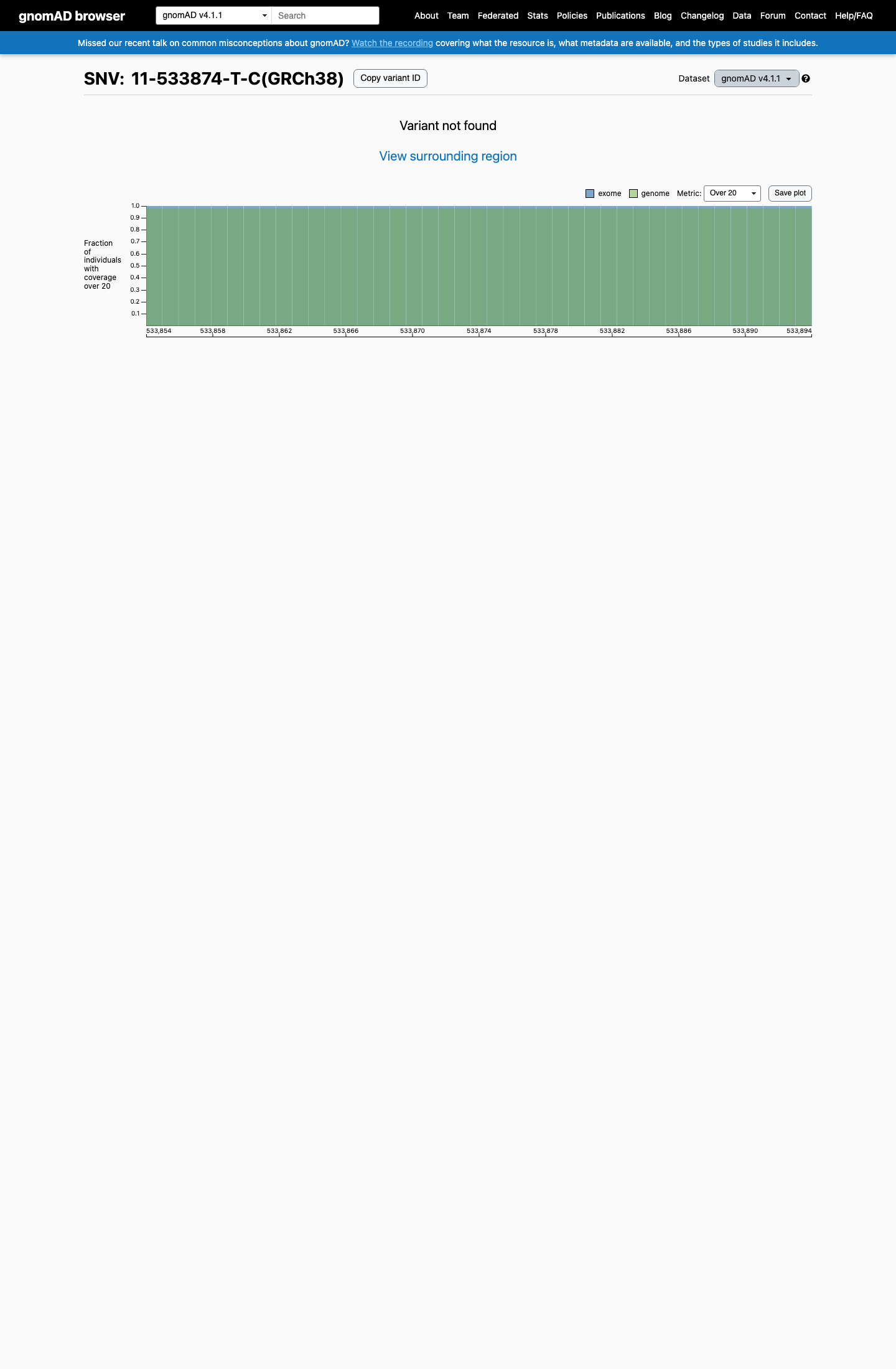
gnomAD v4.1
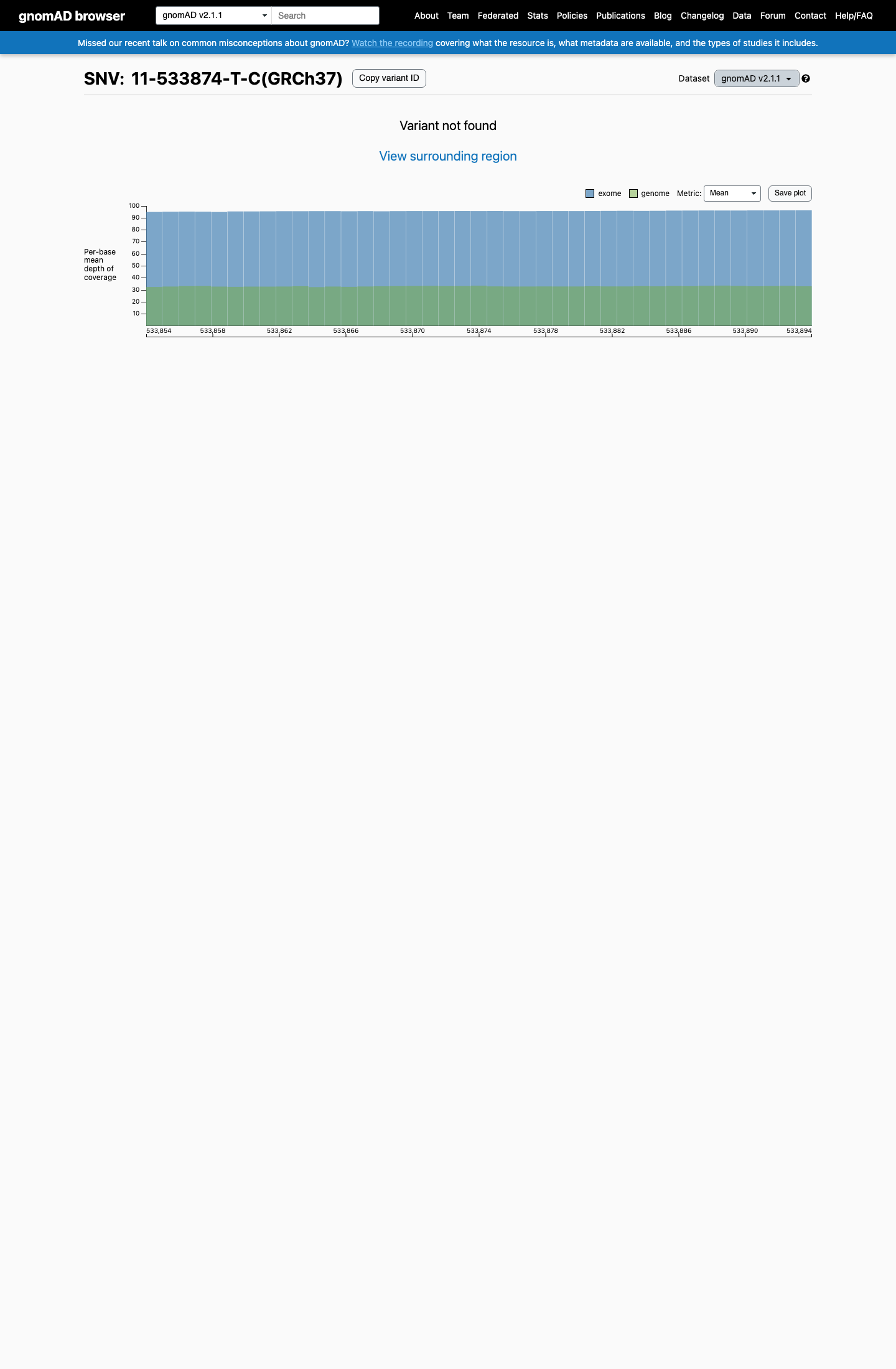
gnomAD v2.1
v4.1
Absent from gnomAD v4.1.
v2.1
Absent from gnomAD v2.1.
🇨🇦 CA
Absent from gnomAD-Canada v1.0.
Allele frequency by ancestry
three datasets · side by side
gnomAD v4.1
Absent
· 0 / ?
0 hom
0 hom
Not observed in any ancestry group.
gnomAD v2.1
Absent
· 0 / ?
0 hom
0 hom
Not observed in any ancestry group.
gnomAD Canada 🇨🇦
Absent
· 0 / ?
0 hom
0 hom
Not observed in any ancestry group.

ClinVar
This variant has been reported in ClinVar as Likely pathogenic (3 clinical laboratories) and as Pathogenic (1 clinical laboratory). (ClinVarID = 160364)
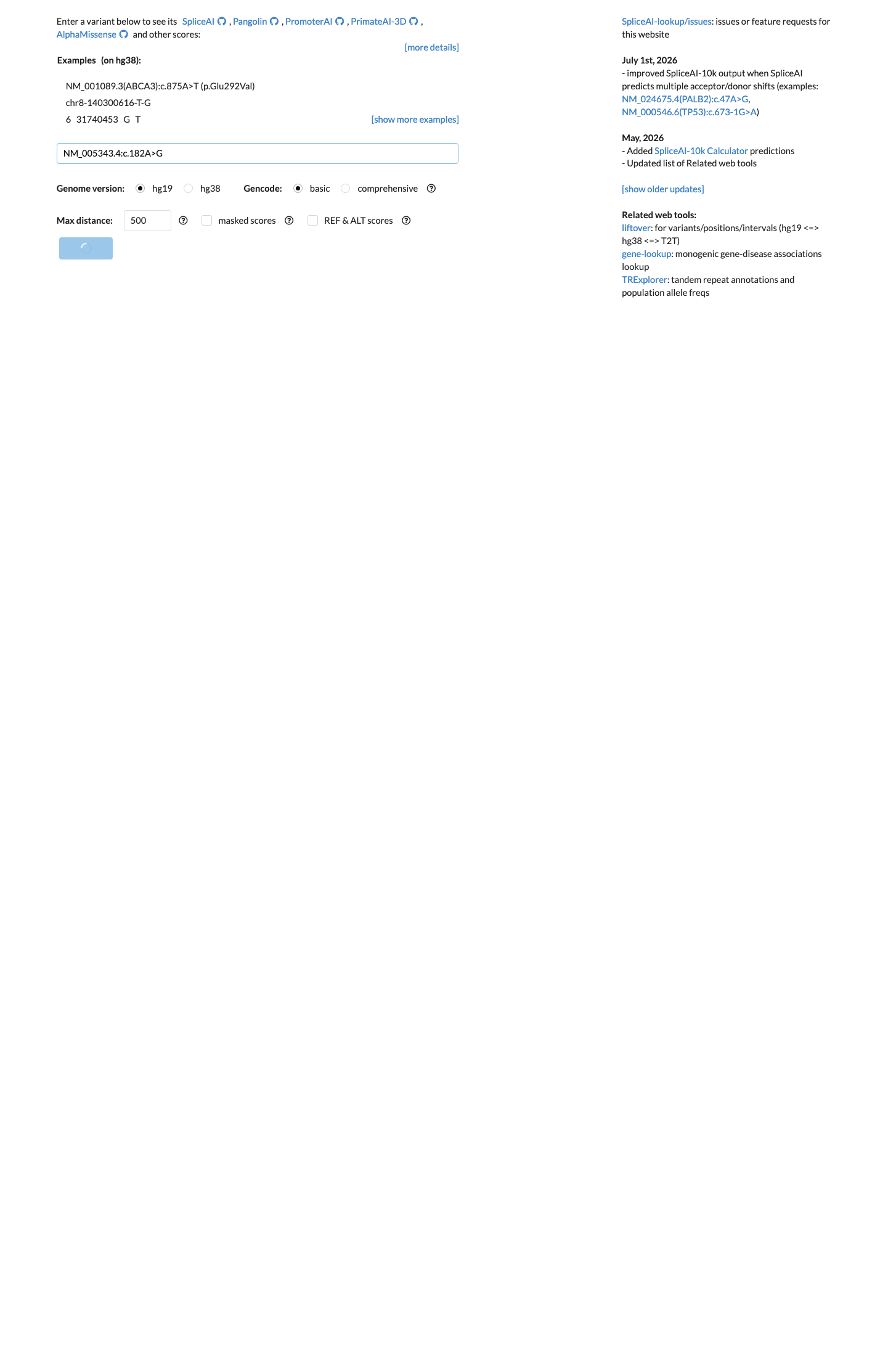
In silico
SpliceAI predicts no significant splice impact for this variant (max delta score = 0.00). REVEL score = 0.811. BayesDel score = 0.248544.
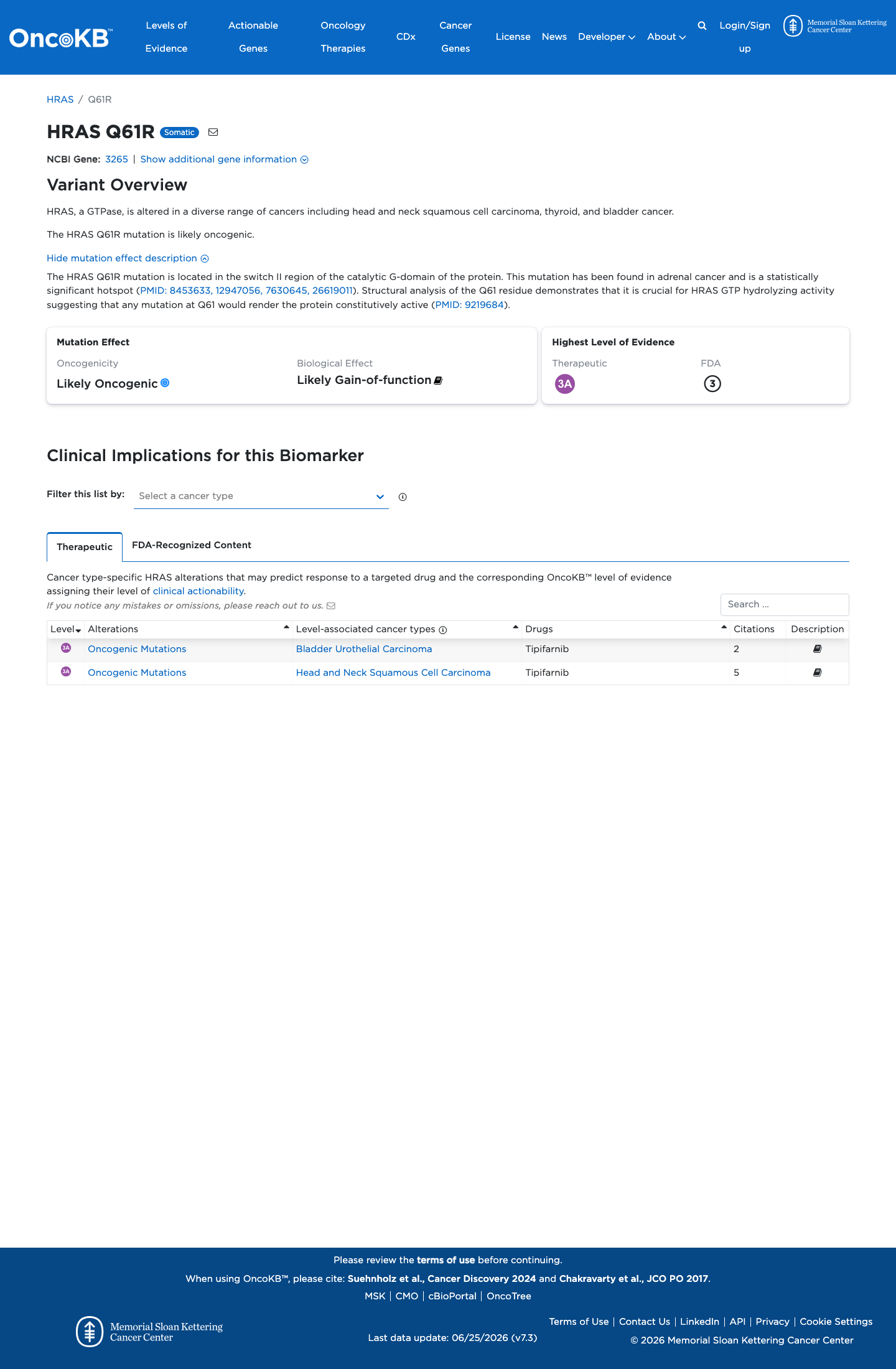
Functional
Likely Oncogenic
OncoKB identified variant-specific curated literature and context relevant to functional review; biological-effect context: Likely Gain-of-function; curated oncogenicity label: Likely Oncogenic.
COSMIC

Cancer hotspots
Somatic evidence
Hotspot
COSMIC
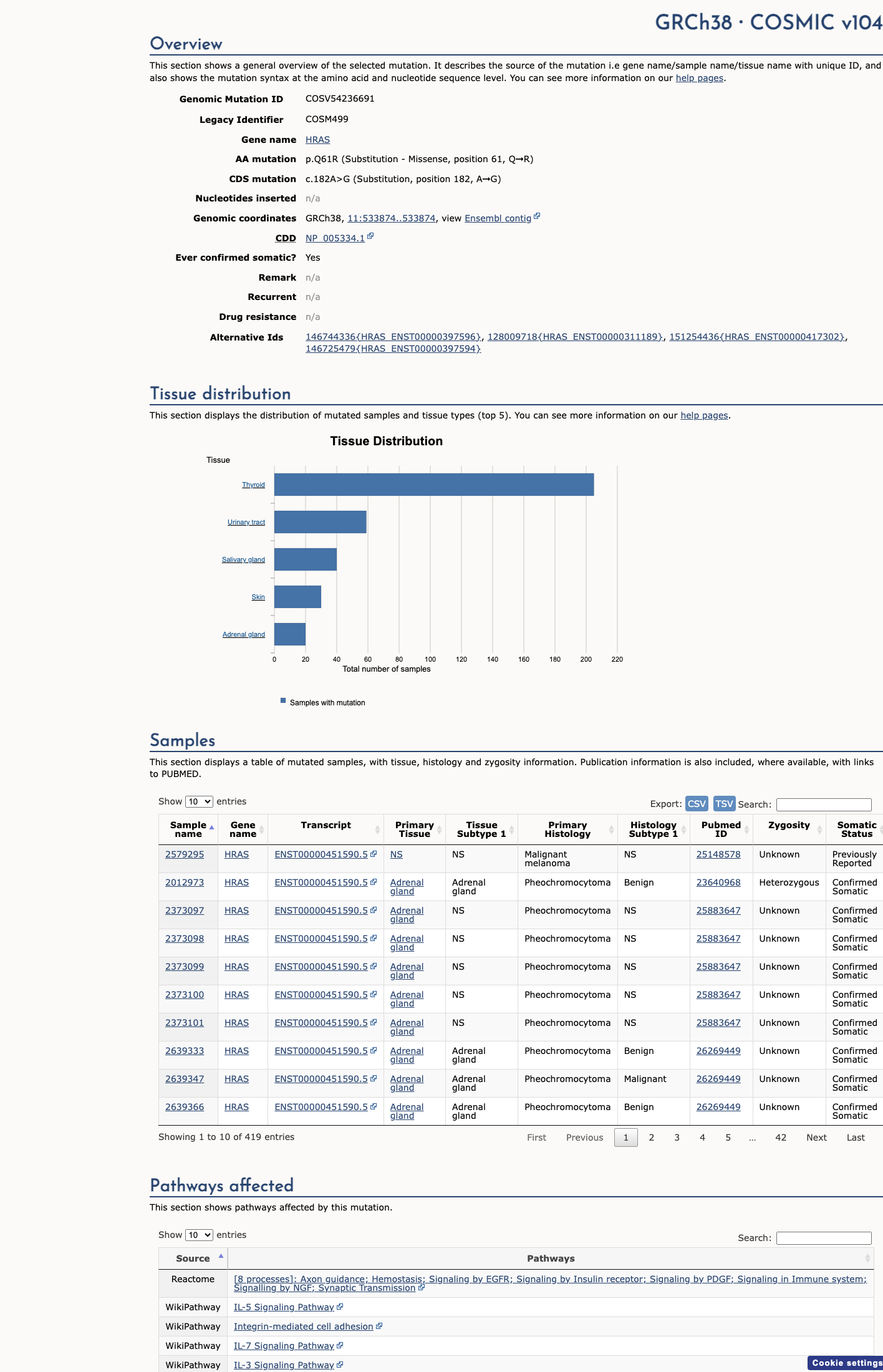
This variant lies in a statistically significant hotspot. This variant has previously been reported in somatic cancers (COSMIC; COSV54236691, n = 417 times).
Hotspots
This variant lies in a statistically significant hotspot.
Literature · how each cited paper was used
1papers cited
Each card is an audit: what was searched, what was found, whether it names the variant, which criteria it fed, and why. 9 further PMIDs triaged but not cited — see Sources & references.
Rule & framework references · cited for criterion definitions, not variant evidence
9219684 ↗
The Ras-RasGAP complex: structural basis for GTPase activation and its loss in oncogenic Ras mutants.
Sources & reference links
9Sources
Triaged references · 9 PMIDs not cited in assessment
12947056 ↗
ras mutations are associated with aggressive tumor phenotypes and poor prognosis in thyroid cancer.
ONCOKB
26619011 ↗
Identifying recurrent mutations in cancer reveals widespread lineage diversity and mutational specificity.
ONCOKB
7630645 ↗
Pattern of ras and gsp oncogene mutations in radiation-associated human thyroid tumors.
ONCOKB
8453633 ↗
High mutation frequency in ras genes of skin tumors isolated from DNA repair deficient xeroderma pigmentosum patients.
ONCOKB
25741868 ↗
Standards and guidelines for the interpretation of sequence variants: a joint consensus recommendation of the American College of Medical Genetics and Genomics and the Association for Molecular Pathology.
CLINVAR
23619274 ↗
American College of Medical Genetics and Genomics technical standards and guidelines: microarray analysis for chromosome abnormalities in neoplastic disorders.
CLINVAR
25173338 ↗
2014 ESC Guidelines on diagnosis and management of hypertrophic cardiomyopathy: the Task Force for the Diagnosis and Management of Hypertrophic Cardiomyopathy of the European Society of Cardiology (ESC).
CLINVAR