NM_006231.4:c.2778G>C (p.Glu926Asp) is a missense variant in exon 24 of POLE, located within the DNA polymerase domain (residues 393-1191). It is absent from gnomAD v2.1, v4.1, and gnomAD-Canada population databases (PM2_Supporting).1 The variant is not one of the established exonuclease-domain hotspot mutations (P286R, V411L, S297F, A456P, S459F) and does not appear in the León-Castillo et al. 2020 supplementary recurrence or in silico tables. It does not meet the custom POLE framework criteria for PM1, PS4, PP3, or BP4.2 Computational predictions are equivocal: REVEL score of 0.281 is below pathogenic thresholds, BayesDel score of -0.171963 is benign-leaning, and SpliceAI predicts no splicing impact (max delta 0.01). Multiple lines of in silico evidence do not support a deleterious effect (PP3 not met) but also do not convincingly support a benign effect (BP4 not met).3 This variant has been reported in ClinVar as Uncertain significance (Variation ID 3225427) by a single clinical laboratory. No variant-specific functional studies, segregation data, or case-control evidence were identified.4 The only publication associated with this variant (PMID:25394175) is an ACMG/NSGC practice guideline on cancer predisposition referral indications that does not mention this specific variant and does not provide variant-level evidence (PP5 not met).5 With only PM2_Supporting met and no other pathogenic or benign criteria triggered, this variant remains a Variant of Uncertain Significance (VUS) under the León-Castillo 2020 custom POLE framework and generic ACMG/AMP 2015 combination rules.6
Final classification
VUS
PM2
POLE
c.2778G>C
p.Glu926Asp
This variant
NM_006231.4:c.2778G>C (p.Glu926Asp) is a missense variant in exon 24 of POLE, located within the DNA polymerase domain (residues 393-1191). It is absent from gnomAD v2.1, v4.1, and gnomAD-Canada population databases (PM2_Supporting).
Classification rationale
PM2
VUS
POLE c.2778G>C
PM2
→
VUS
2
vcep_path_250_323_s002vcep_path_250_323_s003vcep_path_250_323_s004vcep_path_250_323
3
revelbayesdelspliceai ↗
6
final_classification_framework
LYFE Sciences is an AI system, and it can make mistakes. Criteria
may be applied incorrectly, sources may be misread, and a confident-looking
classification can still be wrong. Double-check every criterion and
its underlying evidence before relying on any call.
Gene diagram
· NM_006231.4 · variants mapped to exon structure
POLE
NM_006231.4
Fetching transcript structure from UCSC…
Applied criteria · 1 applied · 20 assessed
MetEvidence satisfies this criterion.
Not metEvaluated against available evidence; threshold not reached.
Not assessedApplies in principle, but no evidence was found to evaluate it.
N/ADoesn't apply to this variant type.
Applied · 1
Strength
Supporting
Moderate
Strong
Very strong
PM2
supporting
Pathogenic
This variant is absent from gnomAD v2.1, gnomAD v4.1, and gnomAD-Canada v1.0 population databases. The allele frequency is effectively zero in control populations, meeting the PM2 threshold for rare variants in population databases (<0.1%).
Absent from gnomAD v2.1Absent from gnomAD v4.1Absent from gnomAD-Canada v1.0
Assessed · not applied
· 8 not met · 12 not assessed
Pathogenic
PS1
No evidence of a different nucleotide change at codon 926 resulting in the same amino acid substitution (p.Glu926Asp) that has been previously classified as pathogenic.
PS2
No de novo data available for NM_006231.4:c.2778G>C in any reviewed source.
PS3
No variant-specific functional studies identified for p.Glu926Asp.
PS4
Under León-Castillo 2020 custom POLE framework, PS4_Supporting requires the exact variant to be recurrent in both COSMIC and TCGA endometrial carcinoma cohorts with a combined EC count ≥10.
PM1
Under León-Castillo 2020 custom framework, PM1 rules apply only to specified exonuclease-domain variants (Strong: P286R, V411L, S297F, A456P, S459F; Moderate: F367S, L424I, M295R, P436R, M444K, D368Y; Supporting: A465V, L424V, T278M, A428T).
PM6
No de novo data available.
PP1
No cosegregation data available for this variant.
PP2
HCI prior data not available for this variant.
PP3
Under León-Castillo 2020 custom framework, PP3_Supporting requires the variant to be present in Supplementary Table S2 or S3 with REVEL class 'likely disease causing' and benign in silico count ≤1.
PP4
No detailed phenotype or clinical specificity data available.
PP5
The sole ClinVar-attributed publication (PMID:25394175) is an ACMG/NSGC practice guideline on cancer predisposition referral indications.
Benign
BA1
Variant is absent from gnomAD v2.1, v4.1, and gnomAD-Canada.
BS1
Variant is absent from gnomAD v2.1, v4.1, and gnomAD-Canada.
BS2
No data on observation in healthy adults with full penetrance expected at an early age.
BS3
No variant-specific functional studies demonstrating no deleterious effect for p.Glu926Asp.
BS4
No cosegregation data available.
BP2
No data on observation in trans with a known pathogenic variant.
BP4
Under León-Castillo 2020 custom framework, BP4_Supporting requires the variant to be present in Supplementary Table S2 or S3 with REVEL class 'Likely benign' and ≥4 benign in silico results.
BP5
No observation of an alternate molecular basis for disease in individuals carrying this variant.
BP6
No reputable source has classified this variant as benign.
N/A · 7
PVS1 · PM3 · PM4 · PM5 · BP1 · BP3 · BP7
Research & evidence
Population frequency
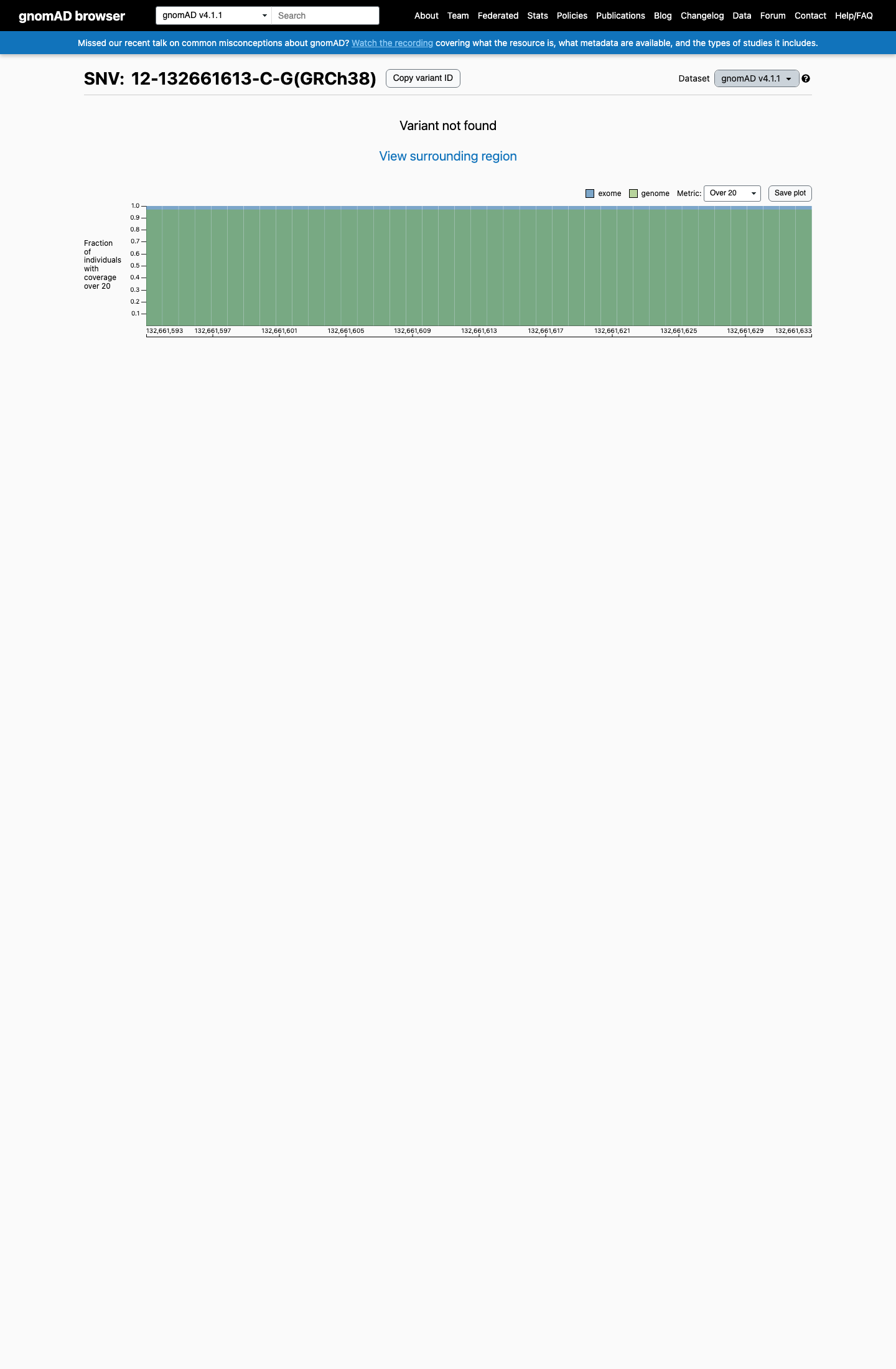
gnomAD v4.1
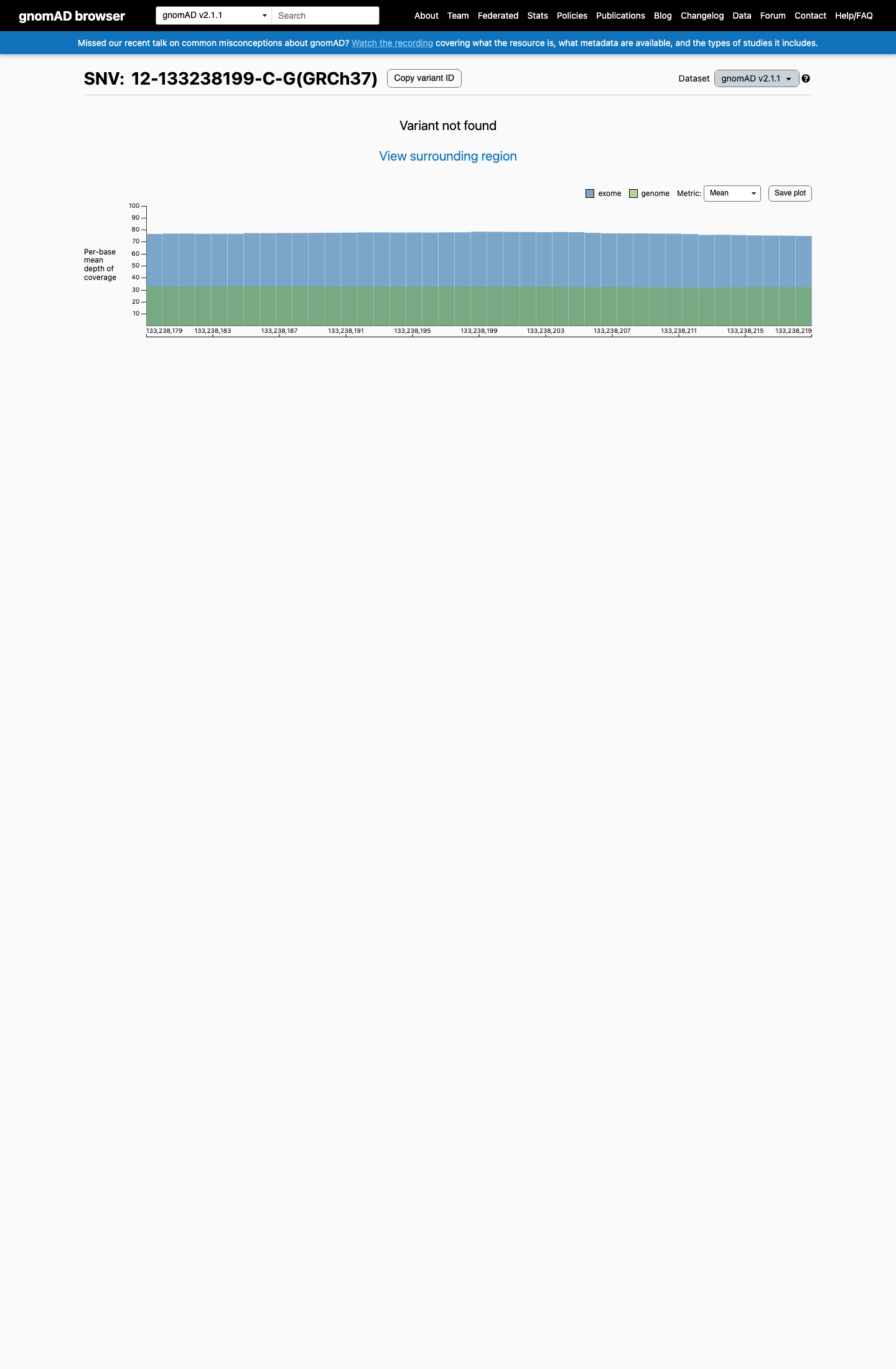
gnomAD v2.1
v4.1
Absent from gnomAD v4.1.
v2.1
Absent from gnomAD v2.1.
🇨🇦 CA
Absent from gnomAD-Canada v1.0.
Allele frequency by ancestry
three datasets · side by side
gnomAD v4.1
Absent
· 0 / ?
0 hom
0 hom
Not observed in any ancestry group.
gnomAD v2.1
Absent
· 0 / ?
0 hom
0 hom
Not observed in any ancestry group.
gnomAD Canada 🇨🇦
Absent
· 0 / ?
0 hom
0 hom
Not observed in any ancestry group.
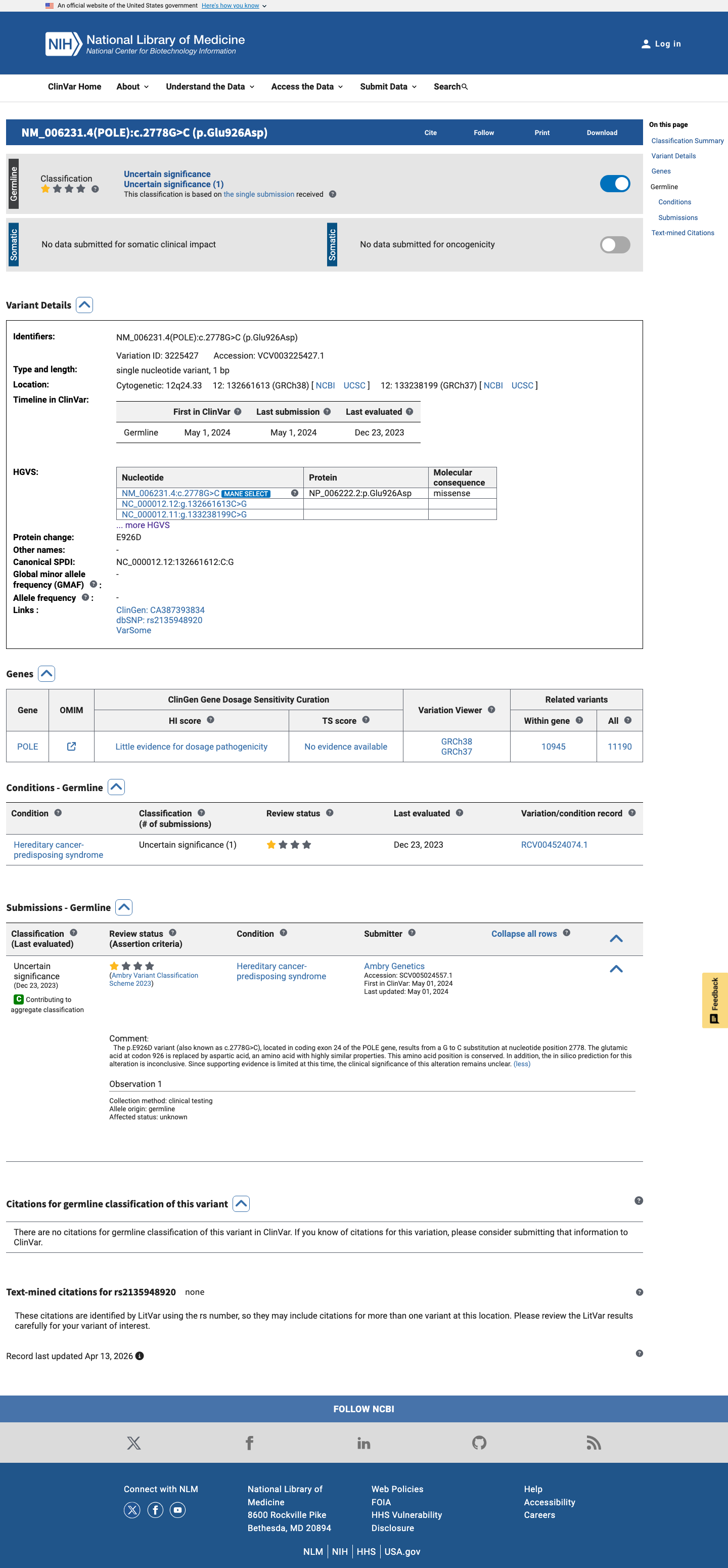
ClinVar
This variant has been reported in ClinVar as Uncertain significance (1 clinical laboratory). (ClinVarID = 3225427)
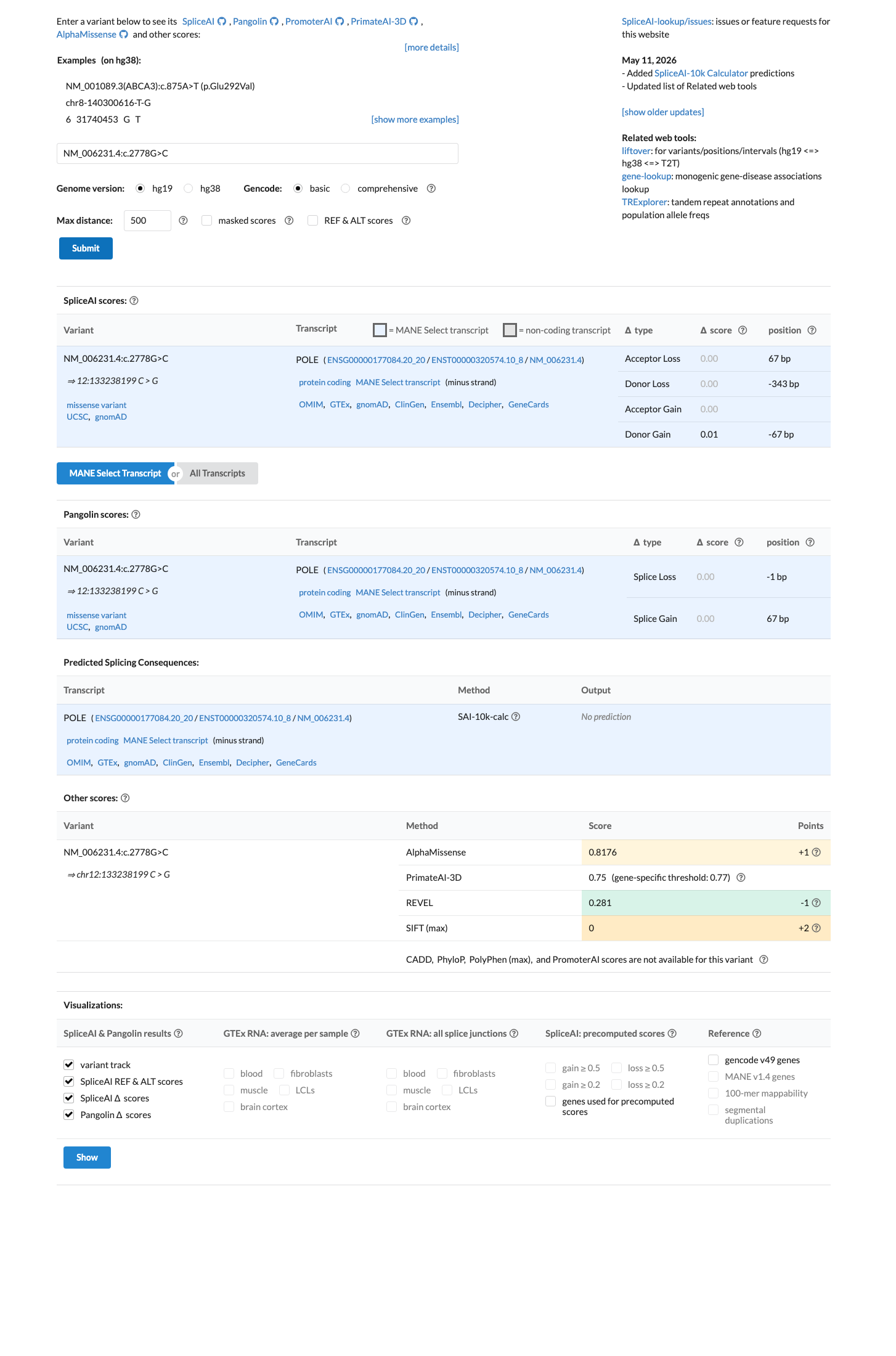
In silico
SpliceAI predicts no significant splice impact for this variant (max delta score = 0.01). REVEL score = 0.281. BayesDel score = -0.171963.

Functional
Unknown Oncogenic Effect
OncoKB did not identify variant-specific reviewed functional evidence for this variant; gene-level curated context is available for reviewer follow-up. POLE, the catalytic subunit of DNA polymerase epsilon, is an enzyme involved in DNA replication and repair. Select POLE mutations lead to ultra-high m

COSMIC

Cancer hotspots
Somatic evidence
Not in COSMIC / hotspots
COSMIC
This variant does not lie in a statistically significant hotspot. This variant has not previously been reported in somatic cancers (COSMIC).
Hotspots
This variant does not lie in a statistically significant hotspot.
Sources & reference links
Triaged references · 1 PMID not cited in assessment
25394175 ↗
A practice guideline from the American College of Medical Genetics and Genomics and the National Society of Genetic Counselors: referral indications for cancer predisposition assessment.
CLINVAR